
You need to pay attention to the wear layer when choosing vinyl plank flooring for your home. The wear layer protects vinyl flooring from scratches and daily wear, especially on concrete. Thicker wear layers mean stronger protection and longer-lasting floors.
For example, thicker wear layers can last up to 20 years with proper care.
The table below shows how wear layer thickness affects durability:
| Wear Layer Thickness | Durability Impact |
|---|---|
| 0.3mm | Less protection, suitable for low-traffic |
| 0.5mm | More protection, ideal for high-traffic |
If you want to learn how to install vinyl plank flooring on concrete, understanding the wear layer is essential.
Understanding the Wear Layer in Vinyl Flooring
What Is the Wear Layer?
You see the wear layer every time you look at luxury vinyl plank flooring. This clear, protective coating sits on top of the decorative film. It acts as the first line of defense against scratches, stains, and scuffs. You find the wear layer in both luxury vinyl plank and luxury vinyl tile. The composition of a wear layer uses durable PVC material. This layer preserves the appearance of your vinyl flooring and keeps it looking new. Once the wear layer wears through, you need to replace the flooring.
- The wear layer covers the image layer and protects it from abrasion.
- It shields your floor from daily wear and tear.
- The vinyl plank wear layer determines how long your floor lasts.
- The composition of a wear layer includes PVC and sometimes aluminum oxide for extra scratch resistance.
You rely on the wear layer quality to keep your floors beautiful. The role of material quality matters because it affects how well your vinyl plank flooring stands up to daily life.
How the Wear Layer Is Measured (mil vs. mm)
You measure the wear layer thickness in mils or millimeters. One mil equals one-thousandth of an inch. American brands use mils, while European and Asian brands use millimeters. Measuring wear layer thickness helps you compare products and choose the right option for your home.
| Mils | Millimeters |
|---|---|
| 1 mil | 0.0254 mm |
| 6 mil | 0.15 mm |
| 8 mil | 0.2 mm |
| 12 mil | 0.3 mm |
| 20 mil | 0.5 mm |
| 22-30 mil | 0.55-0.7 mm |
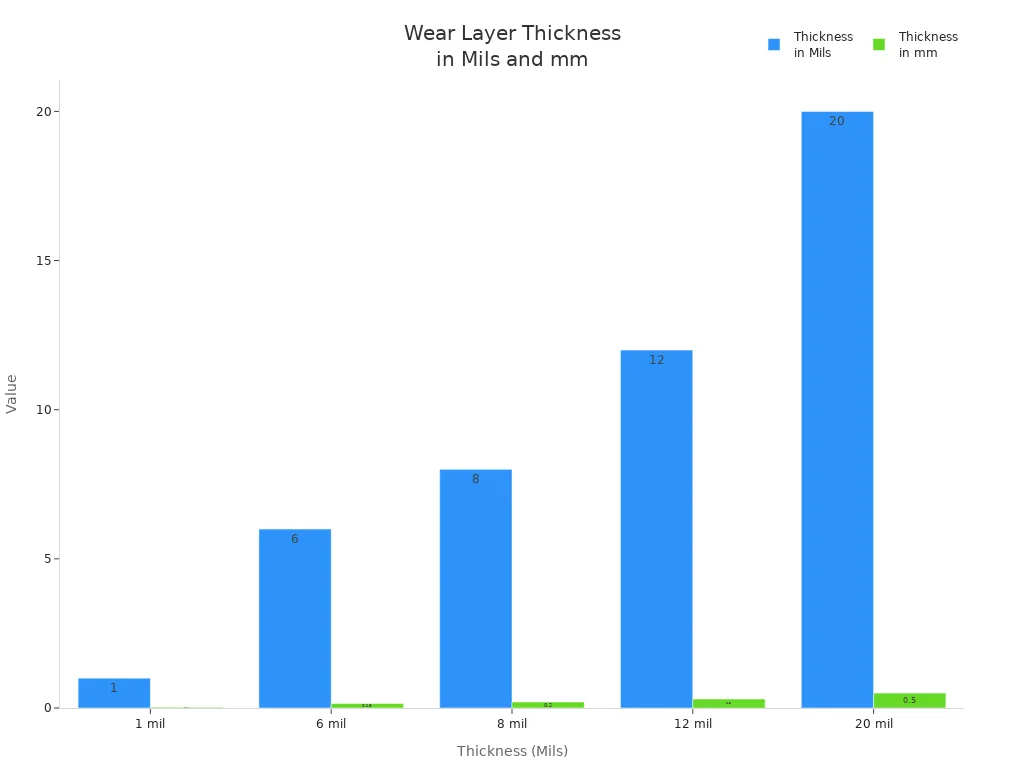
You see luxury vinyl plank options with wear layer thickness ranging from 12 to 20 mils for residential use. Light commercial spaces often use twenty to 28-mil ratings. Measuring wear layer helps you understand the level of protection you get. The thickest wear layer offers the best defense against heavy traffic and pets.
- The term ‘mil’ started during the industrial revolution for easier measurement.
- Engineers sometimes use ‘thou’ to avoid confusion with millimeters.
- Wear rating on lvp flooring uses mils to show durability.
Why the Wear Layer Matters for Quality and Durability
You want your vinyl plank flooring to last. The wear layer quality plays a big role in how well your floor stands up to daily challenges. Thicker wear layers provide more protection against scratches, stains, and fading. You find luxury vinyl plank with wear layer thicknesses that match different needs.
| Traffic Level | Recommended Wear Layer Thickness |
|---|---|
| High-traffic areas | 20 mil or higher |
| Moderate foot traffic | 12 mil |
Luxury vinyl plank flooring can last from three to over twenty years. The wear layer thickness directly affects this lifespan. You see the role of material quality in how the wear layer resists moisture, heat, and sunlight. Laboratory tests check scratch resistance, impact resistance, and water resistance. These tests show that thicker wear layers perform better.
| Test Type | Description |
|---|---|
| Scratch and Impact Resistance | Evaluates how well flooring withstands daily challenges like pet claws and furniture movement. |
| Moisture and Water Resistance | Assesses the flooring’s ability to resist damage from moisture exposure. |
| UV and Heat Resistance | Tests the flooring’s durability against UV light and heat, which can affect its appearance and longevity. |
You notice that luxury vinyl plank wear layer quality protects your investment. Wear rating on lvp flooring helps you choose the right product for your space. The composition of a wear layer and the role of material quality ensure your vinyl flooring stays strong and attractive. You get peace of mind knowing your floors can handle busy days, pets, and spills.
Vinyl Floor Wear Layer Thickness and Performance
How Thickness Affects Durability and Scratch Resistance
When you choose vinyl flooring, you want it to last. The thickness of the wear layer plays a big role in the quality and performance of your floor. Thicker wear layers give you better protection against scratches and scuffs. You see this difference in many comparative studies. For example, a 20 mil wear layer offers high scratch resistance, which works well in commercial spaces. A 12 mil wear layer gives moderate resistance and fits most homes. The table below shows how wear layer thickness affects scratch resistance and recommended use:
| Wear Layer Thickness | Scratch Resistance | Recommended Use |
|---|---|---|
| 20 mil or more | High | Commercial spaces |
| 12 mil | Moderate | Residential use |
You notice that thicker layers help your luxury vinyl plank flooring stand up to daily life. This means more longevity and less worry about damage from shoes, toys, or moving furniture.
Recommended Wear Layer Thickness for Residential Use
You want your home to look great for years. The right wear layer thickness helps you achieve this goal. Industry guidelines suggest a minimum of 12 mil for residential vinyl flooring. This thickness gives you a good balance of quality, performance, and longevity. If you have an active family or pets, you should consider a thicker wear layer, such as 20 mil or more. Here are the main points to remember:
- The minimum recommended wear layer thickness for residential vinyl plank flooring is 12 mil.
- For homes with active families or pets, a wear layer of 20 mil or more is advised.
Choosing the right thickness means your luxury vinyl plank flooring will keep its quality and appearance, even in high-traffic areas.
Best Wear Layer for High-Traffic and Pet-Friendly Homes
If you have kids, pets, or lots of visitors, you need a vinyl floor wear layer that can handle it all. Evaluating foot traffic levels in your home helps you pick the best option. The table below shows common recommendations for homes with children and pets:
| Wear Layer Thickness | Recommendation | Use Case |
|---|---|---|
| 12 mil | Recommended | Homes with pets and kids |
| Thicker than 12 mil | Better protection | High-traffic areas |
You get more longevity and better performance with a thicker wear layer. Luxury vinyl plank with a 20 mil wear layer stands up to heavy use and keeps its quality over time. When you focus on evaluating foot traffic levels and the right material, you make sure your flooring stays beautiful and strong. This choice gives you peace of mind and long-lasting results for your home.
Commercial vs. Residential Wear Layer Recommendations
You need to know the difference between commercial and residential wear layer recommendations before you choose vinyl plank flooring. The wear layer thickness changes based on where you plan to install your floor. Homes and businesses have different needs. You want your floor to last, so picking the right thickness is important.
Here is a simple table to help you compare:
| Application Type | Recommended Wear Layer Thickness |
|---|---|
| Residential Use | 2 mil – 12 mil |
| Heavy Residential / Light Commercial | 12 mil – 20 mil |
| Commercial Grade | 20+ mil |
For your home, a wear layer between 2 mil and 12 mil works well. This range gives you good protection for bedrooms, living rooms, and other low-traffic spaces. If you have a busy household or want extra durability, you can choose a thicker wear layer, up to 20 mil. For commercial spaces like offices, shops, or schools, you need a wear layer of 20 mil or more. This thickness stands up to heavy foot traffic and keeps your floor looking new.
The wear layer also affects the warranty you get from the manufacturer. Thicker wear layers usually come with longer warranties. For example, a 12 mil wear layer might have a 3-year warranty. A 20 mil wear layer can give you up to 25 years of coverage. Some products with a 28 mil wear layer even offer a lifetime warranty. If you want the best protection and peace of mind, choose a thicker wear layer.
| Wear Layer Thickness | Warranty Duration | Conditions |
|---|---|---|
| 12 mil | 3 years | Normal wear not covered |
| 20 mil | 25 years | Normal wear not covered |
| 28 mil | Lifetime | Normal wear not covered |
To keep your warranty valid, remember these tips:
- Register your floor online within 60 days after installation.
- Keep at least 2% of your flooring in unopened boxes for future repairs.
- Always follow the manufacturer’s installation guidelines.
Choosing the right wear layer for your space helps you get the most from your vinyl plank flooring. You protect your investment and enjoy beautiful, long-lasting floors.
How to Install Vinyl Plank Flooring on Concrete with skspcflooring
Preparing Concrete Subfloors for Vinyl Flooring
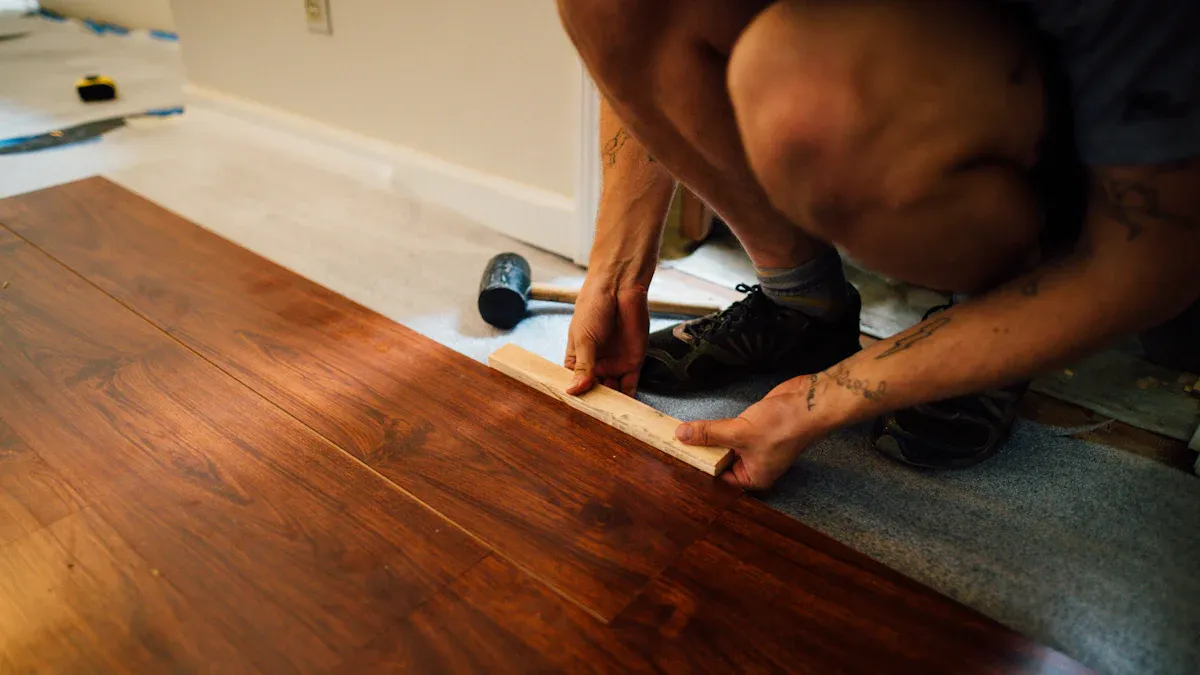
You need to follow clear steps when learning how to install vinyl plank flooring on concrete. Proper preparation helps your flooring last longer and look better. Here is a simple guide:
- Inspect and clean the surface. Remove old flooring, adhesives, and baseboards. Use a vacuum and concrete cleaners for tough spots.
- Conduct moisture testing. Use a calcium chloride test or a concrete moisture meter to check moisture levels. Make sure they meet manufacturer guidelines.
- Level and repair imperfections. Find high spots and use a grinder to smooth them. Fill low spots with a self-leveling compound. The floor should be flat within 2mm over a 3-meter span.
- Acclimate the vinyl flooring. Place the material in the installation room for 48 hours at 15-25°C. Store cartons flat and away from heat or sunlight.
Tip: A clean, flat, and dry subfloor prevents bumps and seam separation. Good preparation ensures your vinyl plank flooring wear layer performs well.
How the Wear Layer Interacts with Concrete Subfloors
The wear layer protects your vinyl plank flooring from scratches and stains. It shields the design layer and boosts durability. When you install vinyl floors on concrete, the wear layer works with the core and backing to resist moisture. This helps your flooring stay strong in busy spaces.
| Feature | Description |
|---|---|
| Durability | The wear layer provides a barrier against scratches and wear. |
| Moisture Resistance | The vinyl core and backing help prevent damage from moisture. |
| Wear Layer Thickness | A 20 mil wear layer offers defense in high traffic areas. |
You get longer-lasting floors when you choose the right material and thickness. The moisture-resistant properties help protect your vinyl flooring from concrete subfloor moisture.
Moisture Control and Subfloor Quality Tips
Moisture control is important when you learn how to install vinyl plank flooring on concrete. You need to use a vapor barrier to stop moisture from reaching your flooring. Overlap sheets by at least six inches and seal gaps to prevent leaks. Choose a barrier with the right thickness for your project.
- Perform moisture tests:
- ASTM F1869 Calcium Chloride Test checks surface moisture.
- ASTM F2170 Relative Humidity Test measures moisture inside the concrete.
| Moisture Barrier Type | Description |
|---|---|
| Polyethylene Plastic Sheeting | Placed over concrete, seams overlapped and taped. |
| Underlayment With Built-In Vapor Barrier | Combines cushioning and moisture protection. |
| Liquid-Applied Moisture Barriers | Creates a seamless layer, good for uneven slabs or high moisture. |
| Moisture-Resistant Adhesives | Used with glue-down installations for extra protection. |
Note: Walk the jobsite and check for damp spots, stains, cracks, or musty odors. These signs show moisture problems that need fixing before you install vinyl floors.
You protect your investment by following these steps. Proper material selection and preparation help your vinyl flooring stay beautiful and strong for years.
Choosing the Right Wear Layer for Your Home’s Needs
Matching Wear Layer Thickness to Your Lifestyle
You want your luxury vinyl plank floor to match your daily routine. If you have a busy home with kids or pets, you need a thicker wear layer for better quality and resistance. For quiet spaces, a thinner layer works well. The table below helps you see which wear layer thickness fits your lifestyle:
| Activity Level | Recommended Wear Layer Thickness |
|---|---|
| High-Traffic Zones | Minimum of 20 mil LVP or AC4 |
| Moderate-Traffic Zones | 12 mil LVP or AC3 |
| Low-Traffic Zones | 6-8 mil LVP or AC3 |
You get the best durability and resistance when you choose the right thickness for your space. This step is key for choosing your ideal luxury vinyl plank floor.
Factors to Consider When Selecting Vinyl Flooring
You should think about several things before choosing your ideal luxury vinyl plank floor. These factors help you find the best quality and performance for your home:
- Traffic volume in each room
- Moisture exposure, like kitchens or basements
- Aesthetic preferences for color and style
- Budget for your project
The table below shows how wear layer thickness matches different rooms and uses:
| Wear Layer Thickness | Suitable For |
|---|---|
| 6-12 mil | Light residential traffic (e.g., bedrooms) |
| 12-20 mil | Moderate to heavy residential traffic (e.g., living rooms, kitchens) |
| 20+ mil | Heavy residential and light commercial traffic |
You make a smart choice when you match the material and quality to your needs. This helps your luxury vinyl plank floor last longer.
Avoiding Common Mistakes When Choosing Wear Layer
Many people pick the wrong wear layer thickness for their luxury vinyl plank flooring. You want to avoid these mistakes to protect your investment and get the best quality. The table below shows common errors:
| Wear Layer Thickness | Recommended Use |
|---|---|
| 6-10 mil | Light Residential Use (e.g., guest bedrooms) |
| 12-20 mil | General Residential Use (e.g., living rooms, kitchens) |
| 20+ mil | Heavy-Duty / Light Commercial (e.g., entryways, mudrooms) |
Tip: If you use a thin wear layer in busy areas, you will see scratches and wear much faster. This leads to higher costs for repairs or replacement. Always match the wear layer to your lifestyle for the best results in choosing your ideal luxury vinyl plank floor.
You want your vinyl plank flooring to last and look great on concrete. The wear layer number plays a big role in this.
- Thicker wear layers help your floor resist scratches, stains, and dents.
- A 20 mil wear layer can protect your floor for up to 20 years.
- Strong wear layers keep your floor beautiful and easy to care for.
Choosing the right thickness saves you money over time. You spend less on repairs and replacements. Certified vinyl plank flooring from skspcflooring gives you even more benefits:
| Benefit | Description |
|---|---|
| Moisture Resistance | Works well in kitchens and bathrooms. |
| Low Maintenance | Easy to clean and care for. |
| Scratch Resistance | Stays strong in homes with pets or kids. |
| Noise Protection | Helps keep your home quiet. |
Trust skspcflooring for high-quality, certified vinyl flooring that fits your home’s needs.
FAQ
What does the wear layer number mean for vinyl plank flooring?
The wear layer number shows how thick the protective top layer is. You get more durability and scratch resistance with a higher number. This helps your floor last longer, especially in busy areas.
Can you install vinyl plank flooring directly on concrete?
You can install vinyl plank flooring on concrete. You need to clean, level, and dry the surface first. Using a moisture barrier helps protect your floor from damage.
How do you choose the right wear layer for your home?
You should match the wear layer to your lifestyle. For high-traffic rooms or homes with pets, pick a thicker wear layer. For bedrooms or quiet spaces, a thinner layer works well.
Does skspcflooring offer certified vinyl flooring?
Yes, skspcflooring provides certified vinyl flooring. You get products that meet ISO9001, ISO14001, EN, ASTM, and GB standards. These certifications ensure safety, durability, and eco-friendly quality.




