
Vinyl flooring thickness plays a crucial role in how your floors perform every day. When you choose the right thickness, you get better comfort, durability, and style for your home. You see more people picking vinyl flooring because of its strength and easy care. The importance of vinyl flooring thickness stands out in today’s market. For example, luxury vinyl tiles lead the way in popularity:
| Segment | Market Share (%) |
|---|---|
| Luxury Vinyl Tiles (LVT) | 37.5 |
| Vinyl Sheets | 21 |
| Vinyl Tiles | 19.5 |
| Printed Vinyl | 12 |
| Carpets | 10 |
Thicker vinyl flooring often comes with longer warranties, which means you can expect your floors to last for many years.
Vinyl Flooring Thickness and Durability
Overall Thickness and Its Role in Durability
When you look at vinyl flooring thickness, you see how it affects the strength and life of your floors. The overall thickness includes all the layers, from the backing to the top surface. This measurement is usually in millimeters. Thicker floors often feel sturdier and more stable under your feet. You notice less bending or flexing, which helps prevent damage over time.
You might think that a thicker floor always means better durability, but that is not always true. The overall thickness does help with comfort, sound insulation, and stability. However, the wear layer thickness plays a bigger part in how well your floor stands up to daily wear. Still, a solid core and a thicker base layer can protect against dents and impacts, especially in busy homes.
- Thicker vinyl flooring often uses high-quality core materials like limestone or PVC. These materials add strength and help your floor resist impacts.
- A sturdy backing layer keeps the floor flat and prevents warping.
- Floors with more overall thickness can handle uneven subfloors better, which means fewer problems during installation.
Tip: Choose a thicker overall thickness if you want extra comfort and stability, especially in rooms where you spend a lot of time standing.
Wear Layer Thickness and Surface Protection
The wear layer sits on top of your vinyl flooring. This clear, tough layer acts as a shield against scratches, scuffs, stains, and daily wear. When you pick a floor, pay close attention to the wear layer thickness. This number, measured in mils or millimeters, tells you how much protection your floor has.
Manufacturers test the wear layer using abrasion tests like the Taber Abrasion Test. These tests show how well the surface stands up to wear and tear. The results prove that thicker wear layers give you better resistance to scratches and stains. For example, a 0.7 mm wear layer offers the best protection, while a 0.3 mm layer wears out faster.
| Wear Layer Thickness | Test Method | Abrasion Resistance Result | Classification (EN 649) | Notes on Appearance and Performance |
|---|---|---|---|---|
| 0.3 mm | Taber Abrasion Test | Higher mass loss, lower wear resistance | Group P | Less durable, breaks before 5000 revolutions |
| 0.5 mm | Taber Abrasion Test | Lower mass loss, better wear resistance | Group T | Good balance of durability and appearance |
| 0.7 mm | Taber Abrasion Test | Best wear resistance, lowest mass loss | Group T | Highest durability, may affect pattern clarity |
You see that thicker wear layers mean enhanced durability. In high-traffic areas, like kitchens or hallways, you need a wear layer of at least 20 mils (about 0.5 mm). For bedrooms or guest rooms, a thinner wear layer may work, but it will not last as long. The wear layer thickness also affects how well your floor resists stains and dents. Some floors add aluminum oxide to the wear layer for even more scratch resistance.
- The wear layer protects the design layer underneath, keeping your floor looking new.
- Thicker wear layers provide greater durability and performance, especially in busy homes or commercial spaces.
- You get longer warranties and better value when you choose a floor with a thicker wear layer.
Note: The wear layer thickness is the most important factor for surface protection and long-lasting floors. Always check this number before you buy.
How Vinyl Flooring Thickness Affects Comfort and Performance
Underfoot Feel and Cushioning
When you walk on vinyl flooring, you notice the difference that thickness makes right away. Thicker luxury vinyl planks, usually between 5mm and 8mm, give you a softer, more cushioned feel underfoot. This extra thickness helps reduce foot fatigue, especially if you stand for long periods in the kitchen or laundry room. You get more comfort with each step.
Vinyl flooring comes in different thickness categories. Economy options, around 2-4mm, offer less cushioning and suit low-traffic spaces. Standard residential thickness, about 4-6mm, provides moderate comfort for most rooms. Premium options, from 6-8mm or more, deliver the best comfort and durability and often include a special core for extra softness. Some vinyl floors use a wood pulp core, called WPC, which feels warmer and softer than other types.
You can also boost comfort by choosing the right underlayment. A good underlayment adds cushioning, reduces noise, and improves thermal insulation. Backing types matter too. Cushioned backings, like cork or synthetic materials, make your floor feel warmer and softer. Hard backings do not provide the same level of comfort or insulation.
Tip: For rooms where you want maximum comfort, pick thicker vinyl flooring with a cushioned backing and a quality underlayment.
Sound Absorption and Insulation
Thicker vinyl flooring does more than just improve comfort. It also helps with sound absorption and insulation. In multi-story homes or apartments, you want to keep noise from traveling between floors. Thicker vinyl, especially when paired with a sound-absorbing underlayment, dampens both impact noise and airborne sound.
Loose lay luxury vinyl tile, about 5mm thick, naturally absorbs more sound. Rigid core click vinyl with acoustic backing can reach high Impact Insulation Class (IIC) ratings, showing strong noise control. Some products come with attached IXPE backing, which boosts insulation and reduces the need for extra underlayment.
Dense vinyl planks with quality underlayment absorb vibrations from footsteps and dropped objects. This combination keeps your home quieter and more comfortable. Proper installation, including sealing edges, prevents noise leaks and improves insulation. You get better performance and a peaceful living space.
Note: Thicker vinyl flooring with the right underlayment gives you the best results for both comfort and insulation.
Choosing the Right Vinyl Flooring Thickness for Each Room
High-Traffic Areas
When you choose vinyl plank flooring or lvt for high-traffic areas, you need to focus on durability and long-term performance. Spaces like entryways, hallways, kitchens, and living rooms see a lot of movement every day. These places often face heavy loads, moving furniture, and even pet claws. The right thickness and wear layer protect your floors from scratches, dents, and stains.
You should look for lvp or lvt with a strong wear layer and a sturdy core. Commercial case studies show that thicker vinyl flooring stands up better to high foot traffic. The table below gives you a clear guide:
| Flooring Aspect | Recommended Thickness for High-Traffic Commercial Areas |
|---|---|
| Overall Vinyl Thickness | 2.5 mm to 6 mm |
| Wear Layer Thickness | Minimum 20 mil |
For homes, you can use these commercial standards as a guide. A wear layer of at least 20 mil and an overall thickness of 5-6 mm or more will help your lvp or lvt last longer. Thicker wear layers protect against scratches, scuffs, and stains. Advanced coatings like ceramic bead or aluminum oxide add even more resistance.
- Thicker lvp and lvt keep their appearance and structure even with heavy use.
- You get better comfort and stability underfoot.
- Floors with appropriate thickness resist damage from heavy furniture and frequent cleaning.
Tip: Always check the wear layer and overall thickness before you buy vinyl plank flooring for high-traffic areas. This is one of the most important factors influencing thickness choice.
Low-Traffic Areas
Bedrooms, guest rooms, and home offices usually have less movement. In these low-traffic spaces, you can choose thinner vinyl plank flooring or lvt without sacrificing performance. Thinner floors cost less and still provide a comfortable surface.
Industry guidelines suggest the following thickness ranges for low-traffic residential spaces:
| Thickness Range | Recommended Use in Residential Spaces |
|---|---|
| 2-4 mm | Low-traffic areas such as bedrooms |
| 4-6 mm | Moderate traffic areas like living rooms |
| 7-8 mm+ | High traffic or commercial areas |
Glue-down vinyl flooring works well in these rooms. You can use products as thin as 2-3 mm for glue-down installations. Click vinyl flooring needs a minimum thickness of about 5 mm to lock securely. For lvp and lvt in low-traffic areas, a wear layer of 8-12 mils is usually enough.
- Thinner lvp and lvt reduce costs and are easier to install.
- You still get good comfort and insulation.
- Maintenance needs stay low because there is less wear and tear.
Note: Even in low-traffic rooms, a slightly thicker wear layer can help your floor look new for longer and reduce the need for repairs.
Moisture-Prone Spaces
Bathrooms, kitchens, laundry rooms, and basements need special attention. These spaces often face spills, humidity, and standing water. Vinyl plank flooring and lvt are popular here because they resist moisture and are easy to clean.
Vinyl flooring uses a waterproof core made from PVC and special stabilizers. This design keeps water out and prevents damage. For moisture-prone spaces, you should pick lvp or lvt with a waterproof core and a thicker profile. The table below shows the best thickness for each room:
| Room Type | Recommended Vinyl Thickness | Additional Notes |
|---|---|---|
| Kitchens & Bathrooms | 6mm to 8mm | Waterproof core recommended |
| Bedrooms | 2mm to 5mm | Suitable for light foot traffic |
| Living & Dining | 4mm to 6mm | Balance of durability & comfort |
| Basements | 6mm to 8mm | Moisture-resistant underlayment |
| Commercial Spaces | 8mm and above | Thick wear layer needed |
For kitchens and bathrooms, floating or click-lock vinyl flooring with at least 6 mm thickness and a 12-mil wear layer works best. Glue-down vinyl can be thinner but should still have a strong wear layer. Floating floors often provide more comfort and sound insulation.
- Thicker lvp and lvt in wet areas prevent water from seeping through.
- You get better durability and easier maintenance.
- Waterproof vinyl plank flooring keeps your home safe from mold and water damage.
Callout: Always use a moisture-resistant underlayment in basements and other damp spaces to protect your floors and subfloor.
Subfloor and Installation Considerations
When you plan to install vinyl flooring, you need to look closely at your subfloor. The subfloor is the surface beneath your vinyl planks or tiles. Its condition affects how your new floor feels, looks, and lasts. You want to make sure the subfloor is ready before you start.
Matching Vinyl Thickness to Subfloor Conditions
You should always check your subfloor for smoothness, moisture, and stability. Different subfloor conditions call for different vinyl flooring thicknesses. Here is a simple guide to help you choose:
- Thicker vinyl planks work best if your subfloor has minor bumps or uneven spots. They help hide imperfections and create a smoother surface.
- In bathrooms and kitchens, you need thicker vinyl (about 5mm or more). This extra thickness helps block moisture and keeps your floor safe from water damage.
- For busy rooms with lots of foot traffic, thicker planks (4mm to 6mm) give you better strength and longer life.
- If your subfloor is perfectly flat and smooth, you can use thinner planks (3mm to 4mm) without worry.
You also need to think about the structure under your subfloor. Here are some important points:
- Uneven subfloors benefit from thicker vinyl or extra subfloor layers. This helps keep your floor stable and prevents movement.
- If your home has wide joist spacing, you need a thicker subfloor to stop flexing. Flexing can damage your vinyl over time.
- Moisture-prone areas need both a thicker subfloor and thicker vinyl. This double layer protects against water and mold.
- Thicker subfloors reduce movement and help prevent cracks or damage in your vinyl flooring.
Tip: Always fix big dips or bumps in your subfloor before you install vinyl. This step makes your floor last longer and look better.
Installation Methods and Vinyl Thickness
The way you install vinyl flooring depends on its thickness. Thinner and thicker vinyl planks use different methods. The table below shows the main differences:
| Vinyl Flooring Thickness | Typical Installation Method | Key Characteristics | Suitable Subfloor Types | Installation Considerations |
|---|---|---|---|---|
| 2-3 mm (Thinner) | Glue-down | Offers better dimensional stability; less comfortable underfoot | Concrete subfloors; large open spaces | Requires more preparation; professional installation recommended |
| 4-10 mm (Thicker) | Floating / Click-lock | Provides added comfort, sound insulation, and ease of installation | Wood subfloors; areas needing soundproofing and comfort | More DIY-friendly; may require transition strips in large spaces |
You use glue-down methods for thinner vinyl flooring. This method works well on concrete subfloors and in big rooms. You need to prepare the subfloor carefully because thin vinyl shows every bump or dip. Many people hire professionals for glue-down jobs.
For thicker vinyl flooring, you can use floating or click-lock installation. This method is easier for do-it-yourself projects. Thicker planks feel softer and quieter underfoot. You can install them over wood subfloors or in rooms where you want less noise. Sometimes, you need transition strips if your room is very large.
Note: When measuring lvf thickness, always match the installation method to both the plank thickness and your subfloor type. This step ensures your floor performs well and lasts for years.
Recommended Thickness Ranges for Vinyl Flooring
Common Overall Thickness Options
You can find many overall thickness choices when shopping for luxury vinyl flooring. The most common thickness options for lvp and lvt range from 2mm to 8mm. Thinner vinyl plank flooring, like 2-3mm, works best for low-traffic rooms or short-term use. Mid-range thickness, such as 4mm to 6mm, gives you a good balance of comfort and durability for most homes. Premium lvp and lvt, with 6mm to 8mm or more, offer extra strength and comfort, making them perfect for busy spaces or commercial settings.
Here is a quick flooring thickness guide:
| Flooring Type | Overall Thickness | Wear Layer Thickness | Core Type |
|---|---|---|---|
| Commercial LVT | 6mm to 8mm | 0.5mm to 0.7mm | SPC (Stone Plastic Composite) |
| Residential LVT | 4mm to 5mm | Approximately 0.3mm | Flexible, often cushioned core |
Tip: Thicker lvp and lvt help hide subfloor bumps and give you a softer feel underfoot.
Common Wear Layer Thickness Options
The wear layer protects your luxury vinyl flooring from scratches, dents, and stains. For most homes, a 12 mil wear layer thickness is enough for everyday wear. If you have pets, kids, or lots of foot traffic, you should look for 20 mil or more. Commercial spaces often use 28-40 mil for the best protection.
| Usage Type | Wear Layer Thickness (mils) | Notes |
|---|---|---|
| Typical Residential Use | 12 mil | Standard thickness for normal household use |
| Higher Traffic Residential | 20 mil | Good for busy homes, pets, children |
| Light Commercial Areas | 20+ mil | Recommended for light commercial traffic |
| Commercial/Industrial | 28-40 mil | Used for heavy commercial or industrial use |
Note: Thicker wear layers mean longer warranties and better long-term value.
Quick Comparison Guide
Choosing the right vinyl flooring thickness depends on your needs. Here is a thickness options comparison for lvp and lvt:
- Thinner vinyl plank flooring (2-3mm) costs less but wears out faster and feels harder.
- Mid-range (6.5-9.5mm) gives you comfort, good sound insulation, and lasts longer.
- Thickest options (12-15mm) offer top durability and insulation for heavy wear.
| Thickness Range | Cost per sq ft (USD) | Performance Characteristics | Typical Use Case |
|---|---|---|---|
| 2-3 mm (thin) | $4-6 (budget) | Less durable, shows subfloor imperfections, poor noise reduction, less comfortable | Budget-conscious, short-term use |
| 6.5-9.5 mm (mid-range) | $4-6 (standard) | Balanced durability, good sound insulation, comfortable, suitable for most residential and some commercial | Residential, light commercial |
| 12-15 mm (thick) | $7-10 (premium) | Superior durability, excellent sound and heat insulation, ideal for heavy commercial or active households | Heavy commercial, active homes |
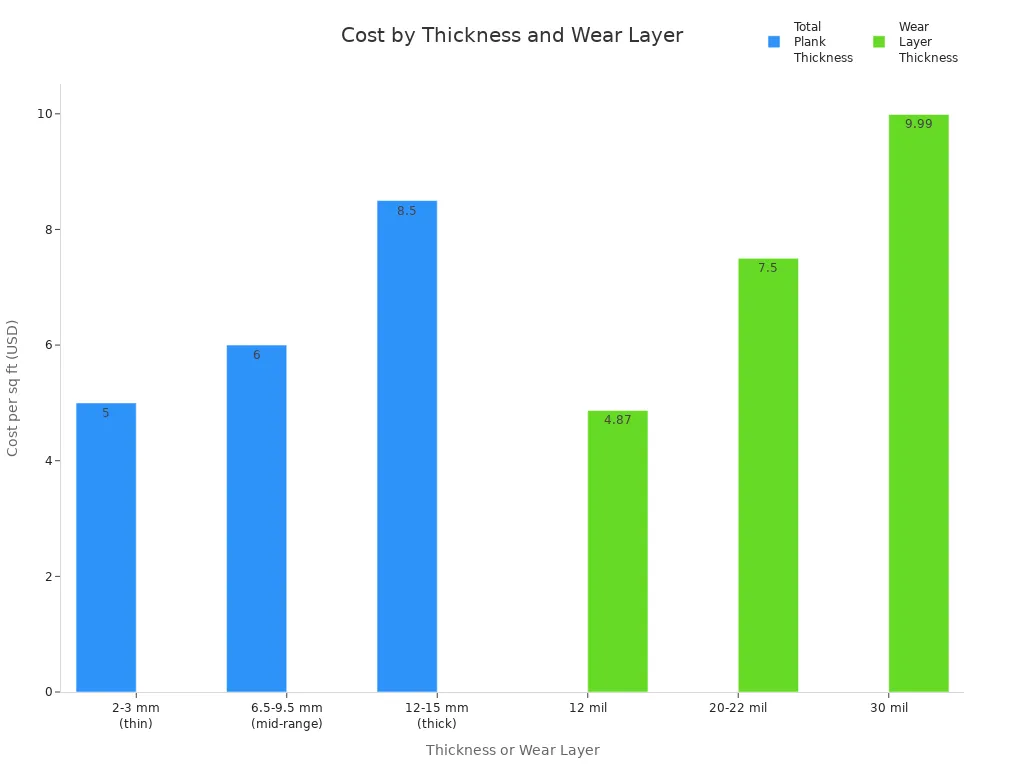
Remember: Both overall thickness and wear layer thickness affect comfort, durability, and cost. Thicker lvp and lvt usually last longer and feel better underfoot.
Balancing Cost, Durability, and Long-Term Value
Upfront Cost vs. Expected Lifespan
When you shop for vinyl plank flooring or luxury vinyl flooring, you notice a wide range of prices. The cost often depends on the thickness and quality. Thicker flooring usually costs more at first, but it can save you money over time. Take a look at this table to see how price changes with thickness:
| Flooring Category | Thickness Range (mm) | Cost Range (USD per sq ft) | Notes on Features and Quality |
|---|---|---|---|
| Standard/Value Flooring | 3 to 6 | $2 to $4 | WPC/SPC cores, 6-12 mil wear layers, some foam backing, embossed texture |
| Expensive/Premium | 6 to 8 | $4 to $6 | Thicker boards, 20-21+ mil wear layers, foam backing, high-quality textures |
| Highest Caliber | 8 to 12 | $6 to $12 | SPC cores, 20-24+ mil wear layers, foam backing, premium visuals and warranty |
Standard vinyl plank flooring costs between $2 and $7 per square foot. Luxury vinyl flooring can range from $3 to $10 per square foot. You pay more for thicker vinyl planks, but you get better durability and longer warranties. Manufacturer data shows that thicker wear layers can help your floor last up to 25 years. Thinner floors may only last 5 to 10 years, especially in busy areas. This means you replace thinner floors more often, which adds to your long-term costs.
Tip: Investing in thicker flooring up front can lead to fewer repairs and replacements, saving you money over time.
When to Invest in Thicker Vinyl Flooring
You should consider thicker vinyl flooring when you want long-term performance and enhanced durability. Here are some situations where thicker vinyl planks or commercial-grade thickness make sense:
- You have high-traffic areas, large pets, or many children at home.
- You want luxury vinyl flooring that stands up to heavy use in kitchens, hallways, or entryways.
- You plan to install flooring in a commercial space or rental property.
- You want to reduce noise and improve comfort underfoot.
- You want to avoid frequent repairs or early replacement.
Thicker vinyl flooring gives you better insulation, which can lower your energy bills. Repairs are easier, and you often only need to fix small spots instead of replacing the whole floor. You also get better soundproofing and a softer feel. Remember, thickness alone does not guarantee quality. Always check the wear layer and material quality for the best results.
Note: Choosing thicker luxury vinyl flooring with a strong wear layer helps you save money and enjoy your floors for many years.
Installation and Maintenance Tips by Thickness
Installation Considerations for Different Thicknesses
When you install vinyl flooring, thickness plays a big role in the process. You need to think about how each type of flooring will fit your space and what challenges you might face.
- Thinner glue-down vinyl flooring gives you better dimensional stability. You can use it in large open areas. It may not feel as soft underfoot, but it stays flat and secure.
- Thicker click-lock or floating vinyl floors, usually between 4 and 10mm, add comfort and help with soundproofing. You must use transition strips every 30 feet in bigger rooms. This step can make installation more complex.
- Thicker vinyl floors can create height differences at doorways or between rooms. You may need to use T-molding or reducers to make smooth transitions.
- The type of subfloor matters. Concrete subfloors work well with thicker vinyl or attached underlayment. This setup boosts comfort and reduces noise. Wood subfloors can handle both thicker floating floors and glue-down options.
- Always follow the manufacturer’s guidelines for underlayment and radiant heating. This step helps you avoid problems during installation.
Tip: Plan ahead for floor height changes and check your subfloor before you start. This will help you get the best results and avoid surprises.
Maintenance Best Practices
You want your vinyl flooring to last and look great. The main factor that affects maintenance is the thickness of the wear layer, not the overall thickness of the plank.
- Thicker wear layers protect your floor from scratches, dents, and daily wear. You will notice less damage over time, which means you do not need to replace or repair your floor as often.
- Cleaning and care routines stay the same for all vinyl flooring. Sweep or vacuum often to remove dirt. Use a damp mop with a gentle cleaner to keep the surface clean.
- Many vinyl floors have a protective topcoat, such as polyurethane with aluminum oxide or ceramic beads. This layer boosts scratch resistance and lowers the need for waxing or polishing.
- Warranties often last longer for floors with a thicker wear layer. This shows that the floor can handle more wear and tear.
Note: Focus on the wear layer thickness when you choose your flooring. This will help you spend less time on repairs and more time enjoying your home.
Choosing the right vinyl flooring thickness helps you get the best results for your home. You should:
- Check both overall and wear layer thickness for each room.
- Think about how much traffic each space gets.
- Look at your subfloor and set a clear budget.
Tip: The right thickness gives you floors that last longer and feel better every day.
FAQ
How do you measure vinyl flooring thickness?
You measure vinyl flooring thickness in millimeters (mm) or mils. Check the product label or ask the retailer for details. Measure from the bottom of the backing to the top of the wear layer. Use a ruler or caliper for accuracy.
Does thicker vinyl flooring always last longer?
Thicker vinyl flooring often lasts longer, but the wear layer matters most. A thick wear layer protects against scratches and dents. Always check both the overall thickness and the wear layer thickness for the best results.
Can you install thick vinyl flooring over old floors?
You can install thick vinyl flooring over many old floors if the surface is clean, dry, and level. Remove loose tiles or carpet first. Fill any holes or cracks. Thick vinyl hides small bumps better than thin vinyl.
What is the best thickness for homes with pets?
Choose vinyl flooring with at least a 20 mil wear layer and a total thickness of 5 mm or more. This combination resists scratches from claws and stands up to active pets. Thicker floors also feel softer underfoot.
Does thicker vinyl flooring reduce noise?
Yes, thicker vinyl flooring absorbs more sound. You get a quieter home, especially with an added underlayment. This helps in apartments or multi-story houses. Look for products with acoustic backing for the best noise control.




