
You might wonder how thick is vinyl plank flooring for your home. Most homes need planks between 4mm and 8mm thick. Bedrooms and low-traffic rooms can use 2mm to 4mm, but you get more comfort with thicker vinyl planks. Kitchens and hallways need thicker vinyl floors, usually 6mm to 8mm or more. Thicker planks help with durability, comfort, and sound. Always check how thick is vinyl plank flooring and the wear layer before you choose.
Why Vinyl Plank Flooring Thickness Matters
Durability and Lifespan
When you choose vinyl plank flooring, you want it to last. Flooring thickness plays a big role in how long your floors stay beautiful. Thicker planks have a stronger core and a tougher surface. The wear layer thickness acts like a shield. It protects your floor from scratches and dents, especially in busy rooms. If you pick a thicker plank with a strong wear layer, your floor can last up to 20 years with good care. You will notice fewer signs of wear, even if you have kids or pets running around.
- Thicker planks handle heavy foot traffic better.
- A thicker wear layer means more protection against daily damage.
- Floors with more thickness often look newer for longer.
Comfort and Underfoot Feel
You spend a lot of time walking and standing in your home. Vinyl flooring thickness affects how your feet feel every day. Thicker planks, especially those with a soft core, give you a cushioned step. In a study with long-term care staff, people who worked on thicker vinyl flooring reported less foot pain. They also felt less tired after standing for hours. Some people need a short time to get used to the softer feel, but most find it more comfortable over time. If you want a floor that feels good underfoot, choose a thicker option.
Tip: Thicker vinyl plank flooring can help reduce fatigue and make standing more pleasant in kitchens or workspaces.
Sound Insulation and Noise Control
Noise can travel easily through thin floors. Thicker is quieter when it comes to vinyl plank flooring thickness. Thicker planks absorb more sound, so you hear less noise from footsteps or dropped objects. For example, loose lay LVT at 5mm thick scores high on sound tests, showing strong noise reduction. Rigid core click flooring with special backing also keeps rooms quieter. In buildings, thicker floors have shown better sound insulation, with higher ratings for blocking both impact and airborne noise. If you want a peaceful home, thicker vinyl flooring thickness makes a real difference.
- Thicker planks reduce echoes and noise between rooms.
- Special backings on thicker floors add even more sound control.
- High IIC and STC ratings mean better noise reduction for your home.
How Thick Is Vinyl Plank Flooring Needed by Room and Traffic
Bedrooms and Low-Traffic Areas
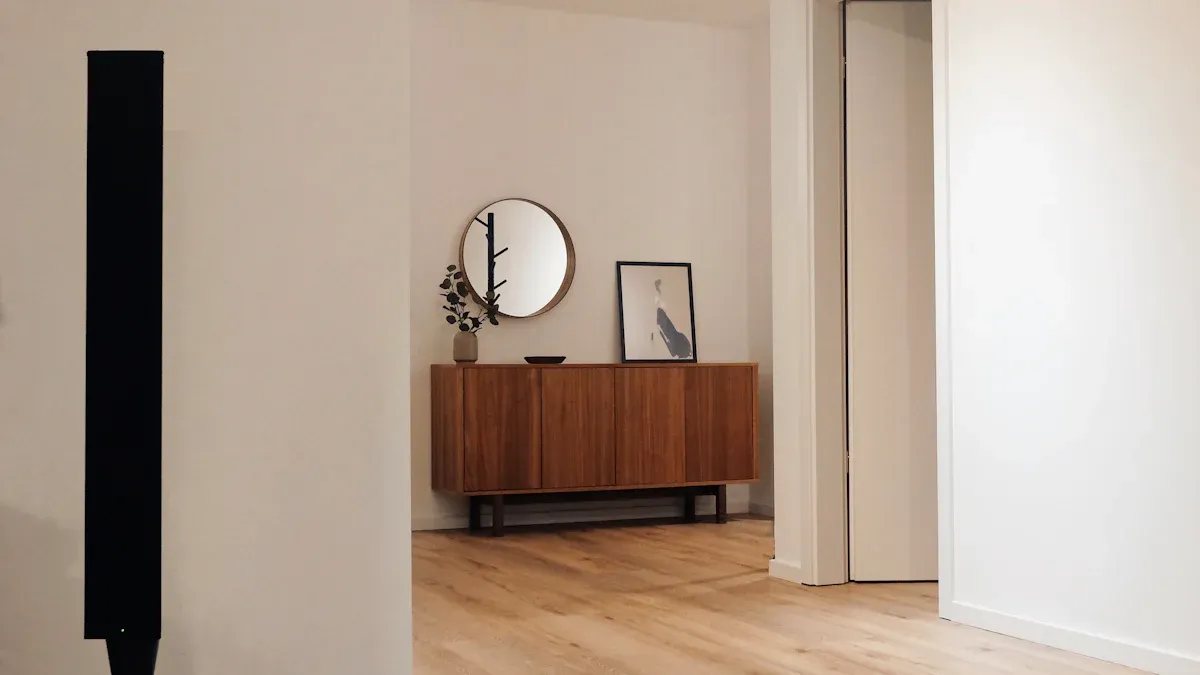
You spend a lot of time in your bedroom, but it does not see as much foot traffic as other rooms. In these low-traffic spaces, you can use thinner vinyl plank flooring. Planks that measure between 2mm and 4mm often work well. These thinner planks cost less and still give you a smooth, clean look. You do not need the extra strength that thicker planks provide because shoes, pets, and heavy furniture move less in these rooms.
Expert guidance from BestLaminate.com explains that you should match the thickness of your vinyl plank flooring to the room’s function and the subfloor. Bedrooms with even, stable subfloors can use thinner planks. If your subfloor creaks or feels uneven, you may want to choose a thicker plank for more support and comfort. Thicker planks also help if you want a softer feel underfoot. You can enjoy a quiet, cozy bedroom without spending extra on the thickest options.
Note: If you want more comfort or plan to use the same flooring in closets or guest rooms, consider planks in the 4mm to 6mm range for a little extra cushion.
Living Rooms and Moderate-Traffic Spaces
Living rooms see more activity than bedrooms. You relax, play, and entertain guests here. You need a balance between comfort and durability. For these moderate-traffic spaces, vinyl plank flooring thickness between 4mm and 6mm works best. This range gives you a sturdy floor that stands up to daily use but still feels comfortable.
The table below shows a real-world example of how thick is vinyl plank flooring for living rooms and similar spaces:
| Attribute | Details |
|---|---|
| Product Type | Luxury Vinyl Plank (Woodland Path LVP) |
| Thickness | 3.0 mm non-cushioned |
| Wear Layer Thickness | 20 mil |
| Warranty | 15-Year Commercial Warranty |
| Suitable For | Moderate to Heavy Traffic Areas |
| Surface Features | Embossed, UV-cured polyurethane coating |
| Cleaning & Maintenance | No wax, easy damp mopping |
| Sustainability | 100% recyclable, ADA compliant |
You can see that even a 3mm plank with a strong wear layer can handle moderate foot traffic. If you want more comfort or have kids and pets, you might prefer a thicker plank, such as 5mm or 6mm. This extra thickness helps your floor last longer and keeps it looking new.
Tip: Choose a plank with a thicker wear layer for added protection in busy living rooms.
Kitchens, Hallways, and High-Traffic Areas
Kitchens and hallways face the most foot traffic in your home. People walk through these spaces many times each day. You drop things, spill water, and move chairs often. For these high-traffic spaces, you need thicker vinyl plank flooring. Planks that measure 6mm to 8mm or more give you the best results.
- SPC flooring has a rigid, durable core made from limestone powder, PVC, and stabilizers. This core gives the floor superior strength and stability.
- SPC’s rigid core makes it highly resistant to dents, wear, and heavy foot traffic. It is ideal for kitchens, hallways, and other busy areas.
- Thicker wear layers and rigid cores help your floor last longer in high-traffic zones.
- Vinyl plank flooring is also highly resistant to moisture, which is important for kitchens and bathrooms.
- LVP flooring feels softer and is water-resistant, but it is less durable under heavy impact than SPC.
- Experts recommend SPC flooring for high-traffic spaces because it stands up better to daily use.
When you ask how thick is vinyl plank flooring for kitchens and hallways, always look for planks at least 6mm thick. Thicker planks give you more comfort, better sound control, and longer life. You also get extra protection from spills and dents.
Callout: The best vinyl flooring thickness for high-traffic areas combines a thick plank with a strong wear layer and a rigid core.
Bathrooms and Moisture-Prone Spaces
Bathrooms and laundry rooms face more water and moisture than any other space in your home. You need flooring that stands up to splashes, spills, and steam. Vinyl plank flooring works well in these areas because it resists water and does not swell or warp like wood. When you choose vinyl for bathrooms, you should focus on both the overall thickness and the wear layer.
A thicker plank, usually between 5mm and 8mm, gives you a sturdy feel underfoot. It also helps cover small bumps in the subfloor. However, the most important feature for bathrooms is the wear layer. The wear layer acts as a shield against water, stains, and scratches. For most homes, a 20 mil wear layer gives you strong protection in wet areas. If you have a busy household or want extra peace of mind, you can look for even thicker wear layers.
Tip: Always check the product label for water resistance. Some vinyl planks are labeled as waterproof vinyl, which means they offer the best defense against water damage.
The table below shows how thicker and thinner wear layers perform in wet spaces:
| Benefit | Thick Wear Layer | Thin Wear Layer |
|---|---|---|
| Durability | Excellent | Moderate |
| Scratch Resistance | High | Low |
| Stain Resistance | High | Moderate |
| Performance in Wet Areas | Excellent | Low |
| Longevity | Longer lifespan | Shorter lifespan |
You can see that a thick wear layer gives you better results in every category. It keeps your bathroom floor looking new, even with daily showers and splashes. Thicker wear layers also help prevent stains from soaps, shampoos, and other bathroom products.
Luxury vinyl flooring is naturally water-resistant. This makes it a smart choice for bathrooms, laundry rooms, and mudrooms. You do not have to worry about water soaking in or causing damage. Thicker planks and wear layers add comfort and durability, but the main reason to choose vinyl in these spaces is its ability to block water.
If you want your bathroom floor to last, choose a plank with at least 5mm thickness and a 20 mil wear layer. This combination gives you a comfortable, quiet, and long-lasting floor. You will enjoy easy cleaning and peace of mind, knowing your floor can handle daily moisture.
Choosing the Right Thickness for Your Subfloor
Concrete Subfloors
Concrete subfloors are strong but feel hard under your feet. You need to think about comfort and moisture when you install vinyl plank flooring on concrete. Thicker vinyl planks, usually 6mm or more, help soften the feel and reduce noise. Many people use underlayments with vapor barriers to block moisture from coming up through the concrete. Materials like cork or rubber add extra cushioning and sound insulation. If you want a quiet and comfortable room, thicker vinyl with a good underlayment works best.
Here is a quick guide for concrete subfloors:
| Thickness Range | Comfort | Durability | Best Use |
|---|---|---|---|
| 2-3 mm | Low | Good | Budget, low comfort |
| 4-5 mm | Medium | Better | Daily use, moderate |
| 6-8 mm | High | Best | High traffic, comfort |
Tip: Always check for moisture before you install vinyl on concrete. A vapor barrier keeps your floor safe and dry.
Plywood and Wood Subfloors
Plywood and wood subfloors are common in many homes. You can install most types of vinyl plank flooring over them. LVP and LVT work well because they are durable and water-resistant. WPC vinyl feels softer and warmer, which many people like in bedrooms or living rooms. SPC vinyl is tough and waterproof, but you need to make sure the subfloor is smooth.
- LVP and LVT are easy to install over plywood or wood.
- WPC vinyl gives you warmth and comfort.
- SPC vinyl is strong but needs a flat surface.
You should always prepare your subfloor. Clean it, fill any gaps, and make sure it is level. This step helps your new floor last longer and look better.
Uneven or Damaged Subfloors
If your subfloor is uneven or damaged, you face extra challenges. Thin vinyl planks may show bumps or dips. Thicker vinyl, such as 6mm to 8mm, hides imperfections better and gives you a smoother finish. For heavy traffic or commercial spaces, thicker planks offer more durability and soundproofing. You may need to repair or level the subfloor first for the best results.
When choosing the right thickness, always match the vinyl plank to your subfloor’s condition. Thicker planks help cover flaws and make your floor feel solid.
The Role of the Wear Layer in Vinyl Flooring Thickness
What Is the Wear Layer?
You might wonder what makes vinyl plank flooring last so long. The answer is the wear layer. This is a clear, tough layer made from PVC that sits on top of the printed design. The wear layer acts as a shield. It protects your floor from scratches, dents, and spills. Many wear layers also have a special coating, like urethane, with added materials such as aluminum oxide or ceramic beads. These extras help stop scratches and make cleaning easier. If you damage the wear layer, the floor underneath can get ruined. You often have to replace the whole plank if this happens. That is why the wear layer is so important for keeping your floors looking new.
Recommended Wear Layer Thickness for Homes
When you choose vinyl plank flooring, you need to look at the wear layer thickness. For most homes, a wear layer thickness between 8 and 12 mil works well. This range gives you good protection against daily wear and tear. If you have pets, kids, or lots of foot traffic, you might want a thicker wear layer. Some floors offer wear layer thickness up to 20 mil for extra strength. Commercial spaces often use even thicker wear layers, up to 40 mil, but you usually do not need that much at home. A thicker wear layer means your floor will last longer and resist damage better.
Tip: Always check the product label for wear layer thickness. Thicker wear layers cost more, but they save you money in the long run by lasting longer.
Wear Layer vs. Overall Flooring Thickness
You may see two numbers when you shop for vinyl flooring: overall vinyl flooring thickness and wear layer thickness. These numbers are not the same. The overall thickness includes all layers, from the backing to the top. The wear layer thickness only measures the clear protective top. Both numbers matter, but the wear layer thickness has the biggest effect on how well your floor stands up to daily life. The importance of wear layer thickness shows in high-traffic or wet areas. If you want the best results, choose a thicker wear layer and a sturdy overall plank. This combination gives you comfort, durability, and a floor that looks great for years.
| Feature | What It Means | Why It Matters |
|---|---|---|
| Wear Layer Thickness | Top clear protective layer (mil) | Guards against scratches, stains, and water |
| Overall Thickness | Total thickness of the plank (mm) | Affects comfort and sound |
Note: The thicker wear layer protects your investment and keeps your floors looking new, even in busy rooms.
Types of Vinyl Flooring and Flooring Thickness Comparison
Luxury Vinyl Plank (LVP) Thickness
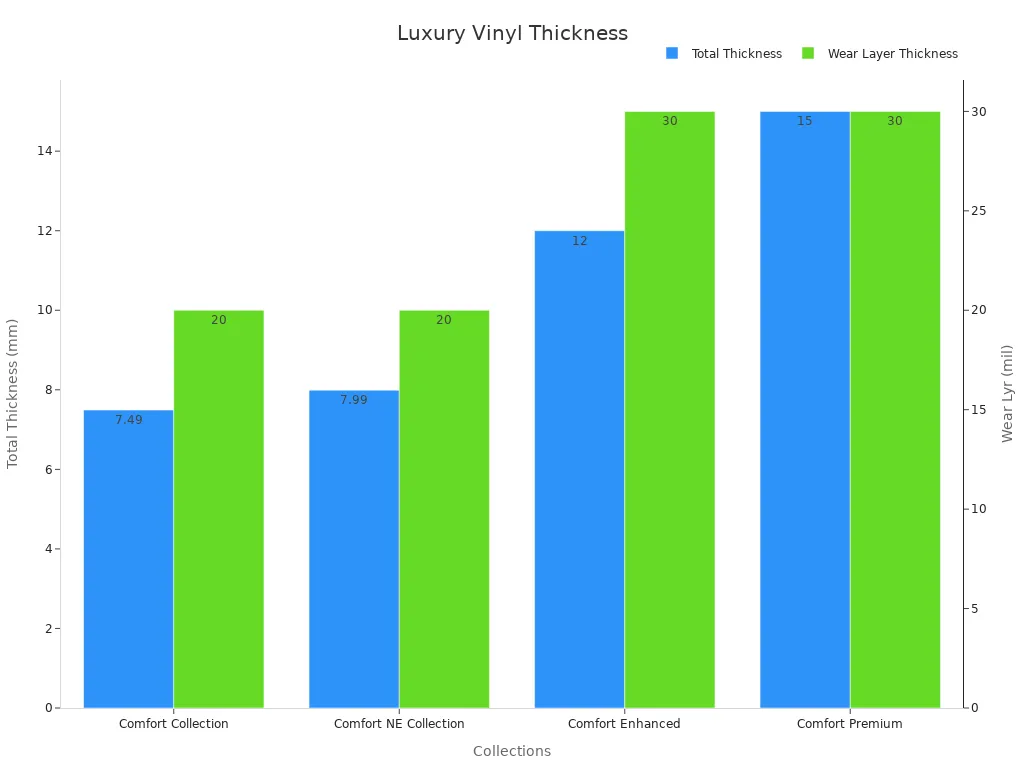
When you choose luxury vinyl plank flooring, you get a product that looks like real wood but offers more durability and easier care. Most luxury vinyl plank flooring comes in a range of thicknesses. Thinner planks, around 2-4 mm, work best in low-traffic areas. Thicker luxury vinyl flooring, from 6-8 mm, stands up to heavy use in busy spaces like kitchens or entryways. Some collections even go beyond, offering planks up to 15 mm thick for maximum comfort and sound reduction.
Here is a table showing popular LVP collections and their thickness:
| Collection Name | Total Thickness | Wear Layer Thickness | Key Features & Performance |
|---|---|---|---|
| Comfort Collection | ~7.49 mm | 20 mil | Good for homes, reduces noise, soft feel |
| Comfort NE Collection | ~7.99 mm | 20 mil | Realistic wood look, beveled edges |
| Comfort Enhanced | 12 mm | 30 mil | Extra durable, stable, great for busy areas |
| Comfort Premium | 15 mm | 30 mil | Best stability, most cushion, quietest |
You can see that thicker luxury vinyl flooring gives you more comfort and better sound control. It also lasts longer in high-traffic rooms.
Tip: Always match the thickness of your luxury vinyl plank flooring to the room’s needs for the best results.
Luxury Vinyl Tile (LVT) Thickness
Luxury vinyl tile flooring gives you the look of stone or ceramic tile with the easy care of vinyl. Most LVT products have a wear layer between 300–500 microns (about 12–20 mil). The backing layer is usually around 2.5 mm thick. This structure helps LVT resist scratches and dents, making it a smart choice for kitchens, bathrooms, and laundry rooms.
A study found that luxury vinyl tile flooring with a thicker wear layer lasts longer and resists abrasion better. LVT also uses safe, non-toxic materials, which makes it a good option for families. You get a floor that is both tough and safe for your home.
| Parameter | LVT (PLA Wear Layer) | Standard PVC Wear Layer |
|---|---|---|
| Wear Layer Thickness | 300–500 μm | Industry standard |
| Backing Layer Thickness | ~2.5 mm | Similar |
| Abrasion Resistance | >2000–4000 cycles | 1500–4000 cycles |
Note: Choose luxury vinyl tile flooring with a thicker wear layer if you want more protection in busy rooms.
Sheet Vinyl Flooring Thickness
Sheet vinyl flooring comes in large rolls and covers your floor with very few seams. Most sheet vinyl flooring has a total thickness between 1.5 mm and 4 mm. The wear layer for residential use is usually 6, 8, or 12 mil, while commercial spaces may need 20 mil or more. Thicker wear layers give you better durability, but even thinner sheet vinyl can work well in low-traffic rooms.
You need a smooth, clean subfloor for the best results with sheet vinyl. Professional installation helps avoid wrinkles and keeps the floor looking seamless. Sheet vinyl flooring stands up to water, so it works well in kitchens and bathrooms. You can clean it easily with sweeping and mopping.
Callout: Sheet vinyl flooring offers water resistance, easy maintenance, and a range of thickness options for every room.
Budget, Installation, and Choosing the Right Thickness
How Flooring Thickness Affects Cost
When you shop for luxury vinyl flooring, you will notice that flooring thickness plays a big role in price. Thicker planks cost more because they use more material and need extra steps during manufacturing. Market research shows that thicker vinyl flooring is more expensive, but it also offers better durability and comfort. Thinner planks are cheaper and work well if you want to save money in low-traffic rooms.
Here is a quick look at how thickness affects cost and use:
| Thickness Category | Where People Use It | Cost Impact |
|---|---|---|
| Thin | Bedrooms, guest rooms | Lowest price, less material, budget-friendly |
| Medium | Living rooms, offices | Moderate price, more durable, better comfort |
| Thick | Kitchens, hallways, busy areas | Highest price, best performance and insulation |
Tip: If you want the best value, match the flooring thickness to the room’s needs. You do not always need the thickest plank in every space.
Installation Methods and Thickness Considerations
You can install luxury vinyl flooring in several ways, such as click-lock, glue-down, or loose lay. Thicker planks are easier to handle during click-lock installation because they snap together firmly and hide small bumps in the subfloor. Thinner planks may show flaws in the floor below and can feel less sturdy underfoot. If you have an uneven subfloor, thicker planks help create a smooth surface. Glue-down methods work well for both thin and thick planks, but thicker boards often give you a more solid feel.
- Click-lock: Best with thicker planks for easy installation.
- Glue-down: Works with any thickness, but thicker planks add stability.
- Loose lay: Needs a flat subfloor; thicker planks stay in place better.
When to Choose Thicker or Thinner Vinyl Plank Flooring
You should think about your room’s traffic, subfloor, and budget when choosing the right thickness. Experts suggest using thicker luxury vinyl flooring (4mm to 8mm) in high-traffic areas, commercial spaces, or over imperfect subfloors. Thicker planks last longer, resist dents, and feel more comfortable. Thinner planks (around 2mm) work in bedrooms or places with little foot traffic. The wear layer also matters—a thicker wear layer protects against scratches and stains.
- Choose thicker planks for kitchens, hallways, and busy rooms.
- Pick thinner planks for guest rooms or areas with light use.
- Use thicker planks if your subfloor has small bumps or dips.
Note: Choosing the right thickness helps you balance cost, comfort, and durability for every room in your home.
Quick Reference: Vinyl Plank Flooring Thickness Recommendations
Ideal Thickness by Room and Traffic Level
You can use this table to quickly find the recommended thickness for each room in your home. It helps you match the right vinyl plank flooring to your needs.
| Room/Area | Foot Traffic Level | Recommended Thickness | Wear Layer (mil) | Notes |
|---|---|---|---|---|
| Bedroom | Low | 2–4 mm | 8–12 | Good for comfort and quiet |
| Living Room | Moderate | 4–6 mm | 12–20 | Balances comfort and durability |
| Kitchen | High | 6–8 mm | 20 | Handles spills and heavy use |
| Hallway/Entryway | High | 6–8 mm | 20 | Best for busy, high-traffic spots |
| Bathroom/Laundry | Moisture-Prone | 5–8 mm | 20 | Choose waterproof, interlocking planks |
| Basement | Moderate/High | 5–8 mm | 12–20 | Look for moisture resistance |
Tip: For high-traffic or moisture-prone areas, always choose planks with a thicker wear layer and interlocking edges to protect your subfloor.
Key Takeaways for Choosing the Right Thickness
- Thicker vinyl planks (5–8 mm or more) last longer and resist wear, making them a smart choice for busy rooms.
- The wear layer matters as much as the plank itself. Use at least 8 mil for moderate use and 20 mil for heavy traffic.
- 5 mm vinyl plank flooring works well in most homes. It is waterproof, scratch-resistant, and easy to clean.
- Thicker planks help reduce noise and hide small bumps in your subfloor.
- You can find many thickness options, so always match the plank to your room’s needs and your budget.
- Choose trusted brands and quality materials for the best results.
- If you want easy installation, look for planks with tongue and groove technology.
- The recommended thickness for entryways, kitchens, and hallways is at least 6 mm with a strong wear layer.
Remember: The right thickness gives you comfort, durability, and peace of mind for years to come. 🏡
You can choose the best vinyl flooring thickness by thinking about each room’s use, your subfloor, and your budget. Kitchens and hallways need thicker planks, while bedrooms can use thinner ones. Always check the wear layer for long-term results. The Ledger restaurant project showed that matching vinyl flooring to the space and budget creates a lasting, attractive floor. Experts like Lindsey Schmidt say you should use high-quality vinyl in busy or wet areas for better value and satisfaction.
FAQ
How do I measure vinyl plank flooring thickness?
You can check the product label or use a ruler to measure the side of a plank. Most brands list thickness in millimeters (mm). Thicker planks feel sturdier and last longer.
Does thicker vinyl plank flooring always mean better quality?
Not always. Thicker planks help with comfort and sound, but the wear layer matters most for durability. You should look for both a strong wear layer and a solid plank.
Can I install thin vinyl planks in a kitchen?
You should avoid thin planks in kitchens. Kitchens need thicker planks, at least 6mm, with a strong wear layer. Thicker planks handle spills and heavy use better.
What is the best thickness for homes with pets?
You need planks at least 6mm thick with a 20 mil wear layer. This combination resists scratches and dents from claws. Your floor will stay looking new longer.
Do I need underlayment with thick vinyl plank flooring?
Tip: Many thick planks have built-in underlayment. If your floor feels hard or cold, you can add extra underlayment for more comfort and sound control.




