
You want your flooring to last, so you need to pay attention to vinyl tile thickness. For high-traffic areas, choose vinyl that measures 6mm–8mm or more. These thicker tiles have a strong wear layer. The table below shows how lifespan changes with traffic level and wear layer thickness:
| Traffic Level | Lifespan (Years) | Recommended Wear Layer Thickness |
|---|---|---|
| High-Traffic Areas | 10 to 20 | 20 mil or more |
| Low-Traffic Areas | 15 to 25 | Up to 12 mil |
Thicker vinyl flooring costs more. You pay between $2 and $8 per square foot, and installation prices go up with thickness. Choosing the right thickness helps your vinyl flooring stay beautiful and strong in every room.
Why Vinyl Tile Thickness Matters
Durability and Longevity with Proper Vinyl Flooring Thickness
You want your floors to last as long as possible. The thickness of vinyl flooring plays a big role in how well it stands up to daily use. Thicker vinyl tiles have stronger wear layers, which protect against scratches, stains, and impact damage. This means your floors stay looking new, even in busy areas. Take a look at the table below to see how wear layer thickness affects performance:
| Wear Layer Thickness | Typical Use | Performance Notes |
|---|---|---|
| 6 mil (0.15 mm) | Light residential | Wears quickly, not for commercial use |
| 12 mil (0.3 mm) | Light commercial, homes | Good for lower-traffic spaces |
| 20 mil (0.5 mm) | Standard commercial | Durable for most commercial environments |
| 28–40 mil (0.7–1.0 mm) | Heavy commercial | Best for heavy traffic and maximum durability |
Thicker wear layers give you better protection. You should choose thicker vinyl flooring for kitchens, hallways, and entryways. These spaces see more foot traffic and need extra strength.
Comfort Underfoot and Vinyl Plank Flooring Thickness
You spend a lot of time walking and standing on your floors. Thicker vinyl plank flooring thickness gives you more comfort underfoot. Here are some benefits of thicker flooring:
- Thicker flooring (6mm+) cushions your steps and reduces noise.
- You get better insulation, which keeps rooms warmer and quieter.
- Thicker vinyl flooring options work best in busy areas, making your home more comfortable.
The overall thickness of vinyl flooring matters more for comfort than just the wear layer. You feel the difference every day, especially in rooms where you stand or walk often.
Impact on Appearance and Performance
You want your floors to look good for years. The thickness of vinyl flooring helps keep your floors looking fresh and new. Thicker wear layers protect against daily wear and tear, so your floors keep their shine and color. This is important in homes with pets or lots of activity. Thicker vinyl flooring also improves sound insulation, which makes your home quieter. You get better quality and longer-lasting performance when you choose the right vinyl tile thickness for each room.
Vinyl Flooring Thickness Guide for High-Traffic Areas
Recommended Vinyl Tile Thickness Range (6mm–8mm+)
You need strong flooring in busy spaces. High-traffic areas like offices, entryways, and kitchens demand lvt flooring with extra durability. The recommended thickness for these spaces starts at 6mm and goes up to 12mm for commercial settings. Thicker luxury vinyl flooring stands up to heavy foot traffic and lasts longer.
Here is a quick table showing the best vinyl tile thickness options for different high-traffic applications:
| Thickness | Application | Description |
|---|---|---|
| 6mm | Kitchens & Bathrooms | Good for floating/click-lock lvt flooring with a 12-mil wear layer |
| 8mm | Commercial | Suitable for heavy foot traffic in offices, retail stores, restaurants |
| 12mm | Commercial | Recommended thickness for high durability in high-traffic areas |
You should choose luxury vinyl tile flooring with a thickness of 6mm or more for entryways and hallways. This thickness provides better soundproofing and comfort. Lvt flooring with 6–10mm thickness also works well in living rooms, giving you a quiet and cozy space.
Importance of a Thick Wear Layer in High-Traffic Spaces
The wear layer protects your flooring from scratches, stains, and daily wear. In high-traffic areas, you need a thick wear layer to keep your floors looking new. Most luxury vinyl flooring for busy spaces uses a wear layer of 20 mil or higher. This layer gives you the best durability and helps your floors resist damage from shoes, pets, and spills.
Here is a list of common wear layer thicknesses for lvt flooring:
- 20 mil or higher: Best for high-traffic commercial spaces
- 12 mil: Good for residential spaces with moderate foot traffic
A thicker wear layer means longer warranties and better protection. Some brands offer wear layers up to 40 mil, which can last for decades in commercial settings. You get more value and less maintenance with thicker luxury vinyl plank flooring.
| Wear Layer Thickness | Suitable For |
|---|---|
| 6 mil | Low-traffic areas (bedrooms, guest rooms) |
| 12 mil | Most common for residential use (kitchens, living rooms, hallways) |
| 20 mil | High-traffic areas (entryways, homes with pets and children) |
| 30 mil and above | Commercial-grade flooring (offices, retail spaces, restaurants) |
Tip: Thicker wear layers usually come with longer warranties. You save money over time because your floors need fewer repairs and replacements.
Choosing the Right Thickness for Kitchens, Hallways, and Entryways
You face the most wear and tear in kitchens, hallways, and entryways. These spaces see constant foot traffic, dirt, and moisture. You need luxury vinyl flooring with a recommended thickness of at least 6mm and a wear layer of 20 mil or more. This combination gives you the best protection against scratches, stains, and water damage.
- Entryways and hallways endure heavy traffic from residents, guests, and pets.
- Shoes, mud, and winter slush can scratch and wear down your floors.
- Waterproof luxury vinyl tile flooring resists moisture and keeps your home looking clean.
- High-quality polyurethane wear layers last longer and keep your floors shiny.
Luxury vinyl plank flooring with a thick wear layer and sturdy core works best in these rooms. You get better durability, easier cleaning, and a longer-lasting finish. Lvt flooring with these features also improves sound insulation, making your home quieter.
| Thickness | Durability | Ideal Application |
|---|---|---|
| 6-8 mm | High | High-Traffic Commercial |
You should always check the vinyl flooring thickness guide before buying. Look for products with a strong wear layer and a thickness of 6mm or more. This ensures your luxury vinyl tile stays beautiful and strong, even in the busiest parts of your home.
Vinyl Flooring Thickness Guide for Low-Traffic Areas
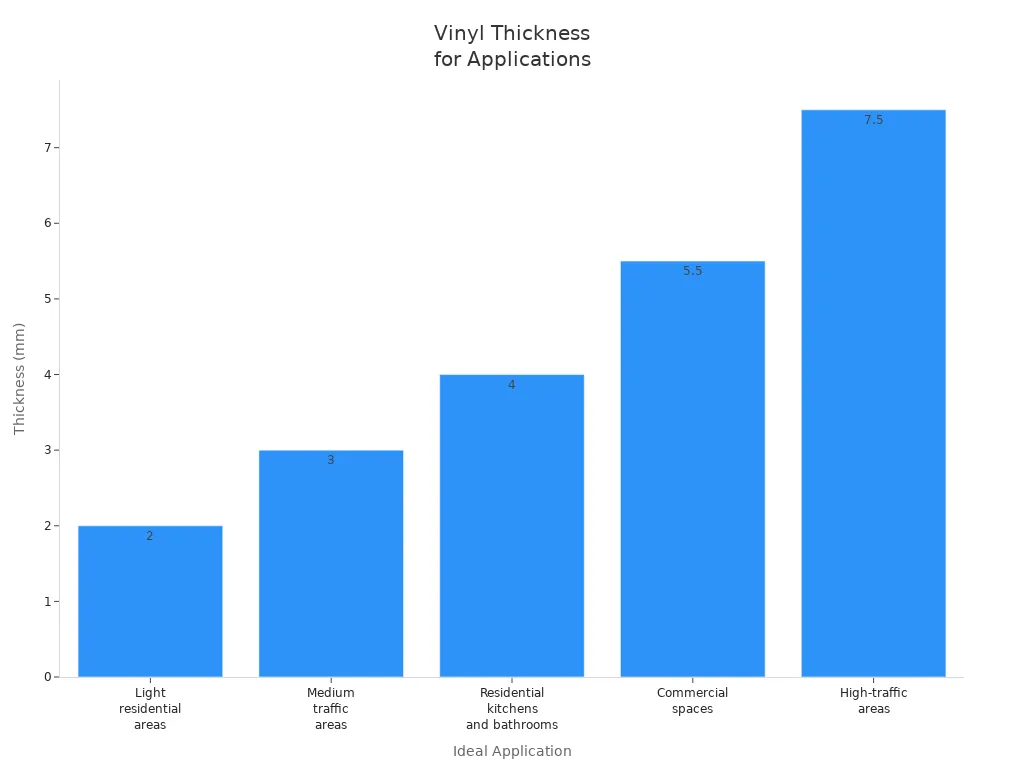
Suitable Vinyl Tile Thickness Range (2mm–4mm)
You do not need the thickest vinyl flooring for every room. In low-traffic areas, such as guest rooms, closets, and bedrooms, a vinyl tile thickness of 2mm to 4mm works well. These spaces see less foot traffic, so you can choose thinner lvt flooring without worrying about quick wear. Thinner luxury vinyl flooring is easy to install and often costs less than thicker options.
- 2mm–4mm: Best for light use or small rooms.
- 2mm–4mm: Ideal for guest rooms, closets, and temporary installs.
You get a smooth look and feel with these thicknesses. You also save money on both materials and installation. Thinner lvt flooring still provides a comfortable surface for walking and standing in quiet spaces.
Cost-Effectiveness and Comfort in Low-Traffic Rooms
You want to balance cost and comfort when you pick flooring for bedrooms or offices. Thinner lvt flooring is more affordable and easier to install. This makes it a smart choice for rooms that do not see much activity. You can enjoy a soft, warm surface underfoot without paying for extra durability you do not need.
| Flooring Type | Initial Cost | Durability | Maintenance Cost | Suitability |
|---|---|---|---|---|
| Thinner Vinyl | Lower | Less durable | Higher over time | Bedrooms |
| Thicker Vinyl | Higher | More durable | Lower over time | Offices |
- Thinner vinyl tiles are generally more affordable and easier to install, making them suitable for bedrooms.
- Thicker vinyl tiles, while more expensive initially, provide greater durability and lower long-term maintenance costs, making them ideal for offices.
You can choose thinner lvt flooring for bedrooms to save money. If you want lower maintenance in an office, you might pick a thicker luxury vinyl plank flooring. Both options give you comfort and style, but you should match the thickness to the room’s needs.
Tip: You can use thinner luxury vinyl tile flooring in rooms where you walk barefoot or wear socks most of the time. This adds comfort and keeps your budget in check.
Choosing the Right Thickness for Bedrooms, Living Rooms, and Offices
You need to think about the function of each room before choosing the right thickness. Bedrooms usually need less durable flooring, so a vinyl tile thickness of 2mm to 5mm is often enough. Living rooms and dining rooms see more activity, so a mid-range thickness of 4mm to 6mm works better. Offices may need thicker lvt flooring if you move chairs or furniture often.
| Space | Recommended Thickness |
|---|---|
| Bedrooms | 2mm to 5mm |
| Living Rooms | 4mm to 6mm |
- Bedrooms: Thinner lvt (2mm to 5mm) is often sufficient for bedrooms with light foot traffic.
- Living Rooms and Dining Rooms: Mid-range thickness (4mm to 6mm) offers a good balance of durability and comfort for these spaces.
These thicknesses work great in both homes and commercial spaces. You can use luxury vinyl flooring in apartments, condos, and offices. The right thickness helps reduce noise between floors, which is important in multi-story buildings. You get a quiet, comfortable, and stylish space when you choose the right lvt flooring for each room.
You should always match the vinyl flooring thickness to the room’s use. This ensures you get the best quality, comfort, and value from your luxury vinyl tile. You do not need thicker luxury vinyl flooring in every room. Instead, pick the right thickness for each space to get the most out of your investment.
Additional Considerations When Choosing the Right Thickness
Subfloor Type and Condition
You need to check your subfloor before choosing lvt flooring. The type and condition of your subfloor can affect which vinyl flooring thickness works best. Concrete and plywood are common subfloor types. Thicker luxury vinyl flooring can hide small bumps or imperfections in the subfloor. If you use thinner vinyl, you may see uneven spots, so you must prepare the subfloor carefully. A smooth and level surface is important for all lvt flooring installations. Thicker vinyl flooring also helps with comfort and sound insulation, especially over concrete.
| Subfloor Type | Vinyl Tile Thickness | Installation Challenges |
|---|---|---|
| Concrete | Thicker (6mm+) | Helps soften feel and reduce noise; requires smooth surface to avoid imperfections. |
| Wood | Thicker (click-lock) | Provides stability; must ensure level surface to prevent issues with installation. |
| Any | Thinner | Can lead to visible bumps if subfloor is not smooth; requires careful installation. |
Tip: Always check for bumps or dips in your subfloor before installing lvt. Thicker luxury vinyl flooring can help cover minor flaws.
Installation Method: Glue-Down vs. Click-Lock Vinyl Plank Flooring Thickness
You have two main installation methods for vinyl flooring: glue-down and click-lock. Glue-down lvt flooring is usually thinner and gives you strong stability. This method works well in high-traffic areas and commercial spaces. Click-lock luxury vinyl flooring is thicker, often between 4mm and 10mm. It adds comfort and reduces noise, making it a good choice for busy homes.
| Installation Method | Thickness Characteristics | Benefits |
|---|---|---|
| Glue-down | Typically thinner | Greater dimensional stability, suitable for high-traffic areas |
| Click-lock | Thicker (4–10mm) | Added comfort and sound insulation, good for busy spaces |
You should match the installation method to your room’s needs. Thicker click-lock lvt flooring is easier to install and feels softer underfoot. Glue-down lvt works best where you need extra strength and stability.
Wear Layer Explained and Its Role in Vinyl Flooring Thickness
The wear layer is the clear top surface of your lvt flooring. It protects the printed design and adds durability. The thickness of the wear layer is important for keeping your floors looking new. A strong wear layer acts as a shield against scratches, stains, and daily wear. This is the main reason why luxury vinyl flooring lasts so long in busy spaces.
- The wear layer protects against wear and tear, scratches, and stains.
- It keeps your flooring looking good and helps it last longer.
- The thickness and quality of the wear layer are key for durability.
When measuring thickness and quality, always check the wear layer thickness. The standard thickness of lvp for most homes is 12 mil or more. For high-traffic areas, choose a thicker wear layer for better results. The importance of wear layer thickness cannot be overstated. It is the main factor in how well your luxury vinyl flooring stands up to daily life.
Vinyl Flooring Thickness Guide: Quick Reference Table for Room Types and Traffic Levels
You want to choose the right lvt flooring for each room in your home. The best way to do this is by using a quick reference table. This table helps you match the correct vinyl thickness and wear layer thickness to the room’s traffic level. You can use it to make smart decisions for every space.
| Room Type/Traffic Level | Recommended Thickness | Wear Layer |
|---|---|---|
| Minimal Use (shed) | 2mm | 0.1mm |
| Residential Areas | 4mm or more | – |
| High Traffic Areas | 6mm to 8mm | 0.7mm |
You see that lvt flooring for high-traffic areas needs to be thicker. This keeps your floors strong and looking new. In rooms like sheds or closets, you can use thinner vinyl. For living rooms and bedrooms, a mid-range thickness works well.
Flooring professionals also look at the subfloor and installation method. The next table shows how these factors affect your choice:
| Subfloor Type | Recommended Thickness | Installation Method | Notes |
|---|---|---|---|
| Concrete | 6mm+ | Glue-down | Offers stability but less comfort. |
| Wood | Thicker (4-10mm) | Click-lock/Floating | Provides better natural cushion. |
| Kitchens/Bathrooms | At least 6mm | Floating/Click-lock | Durable with a 12-mil wear layer. |
| Laundry Rooms | 6mm or thicker | Glue-down | Strong wear layer is essential for durability. |
| Living Rooms | 6-10mm | Floating | Provides soundproofing and added comfort. |
Tip: Always check the subfloor before you start installation. Thicker lvt flooring can help cover small bumps and make your floors feel softer.
You can use these tables to guide your lvt flooring choices. Pick the right vinyl thickness for each room and match it to the subfloor and installation method. This ensures your flooring lasts longer and stays comfortable. Remember, the right wear layer thickness protects your lvt from scratches and stains.
When you select lvt flooring, match vinyl tile thickness to the room’s traffic level for the best results. Thicker vinyl, such as 6mm–8mm, works well in high-traffic areas and offers better comfort, sound insulation, and durability. Thinner lvt flooring (2mm–4mm) fits quieter spaces like bedrooms. Consider these factors when choosing the right thickness:
- Foot traffic and moisture levels
- Comfort, style, and budget
- Subfloor condition, installation method, and wear layer
Choosing the right thickness ensures your lvt flooring looks great and lasts for years.
FAQ
What is the best vinyl tile thickness for homes with pets?
You should choose vinyl tiles at least 6mm thick with a 20 mil wear layer. This thickness protects your floors from scratches and stains. Pets often cause more wear, so thicker tiles last longer and look better.
Can you install thin vinyl tiles in a bathroom?
You can use thin vinyl tiles in a bathroom, but thicker options (4mm or more) work better. Thicker tiles resist moisture and feel warmer underfoot. Always check for waterproof features before installing.
Does thicker vinyl flooring reduce noise?
Yes, thicker vinyl flooring helps reduce noise. You get better sound insulation with tiles 6mm or thicker. This makes your home quieter, especially in busy areas or multi-story buildings.
How do I know if my subfloor needs thicker vinyl?
Check your subfloor for bumps or dips. If you see uneven spots, thicker vinyl (6mm+) covers them better. Smooth subfloors can use thinner tiles, but thicker options add comfort and hide flaws.
Is thicker vinyl flooring harder to install?
You may find thicker vinyl flooring heavier and harder to cut. Click-lock systems make installation easier, even with thicker tiles. Always follow the manufacturer’s instructions for best results.




