
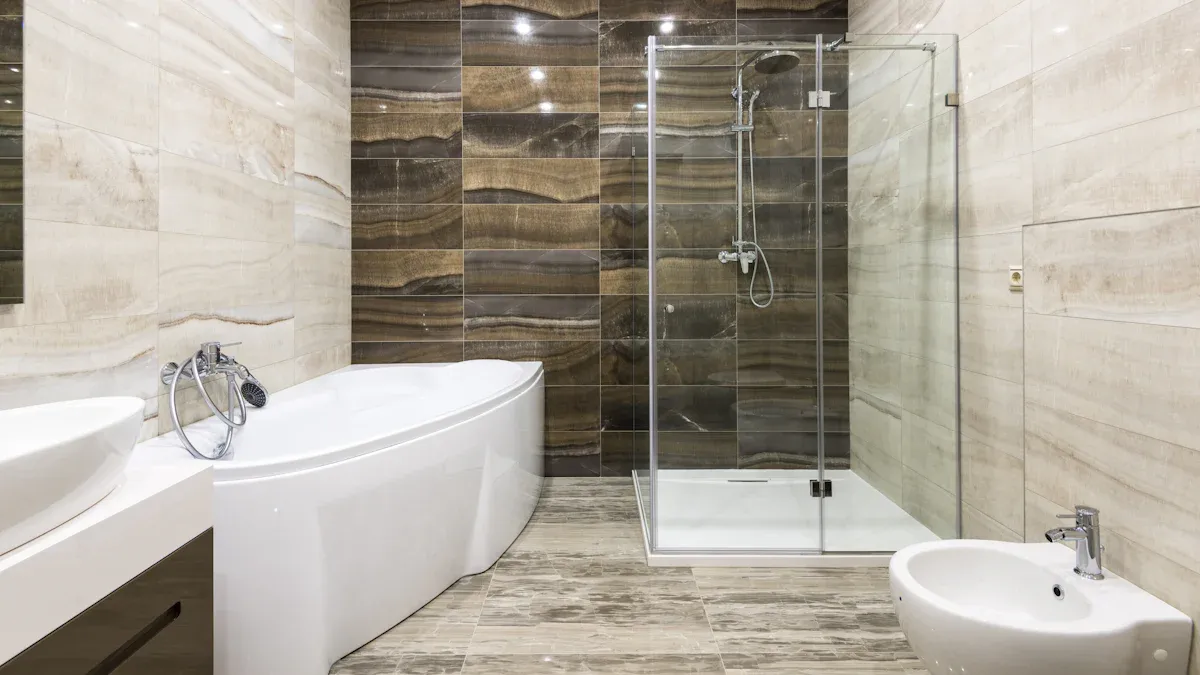
If you want the best bathroom flooring options for 2025, choose lvt flooring bathroom solutions designed for waterproofing. You see more people searching for waterproof bathroom flooring and buying water-resistant vinyl tiles because these tiles stop water from damaging your floor. Peel-and-stick tiles stand out for their easy installation, while luxury vinyl plank flooring gives you both style and waterproof protection. Bathroom-grade vinyl is a must for true waterproof bathroom flooring, as it keeps your space safe from moisture and mold.
Why LVT Flooring Bathroom Solutions Are Ideal
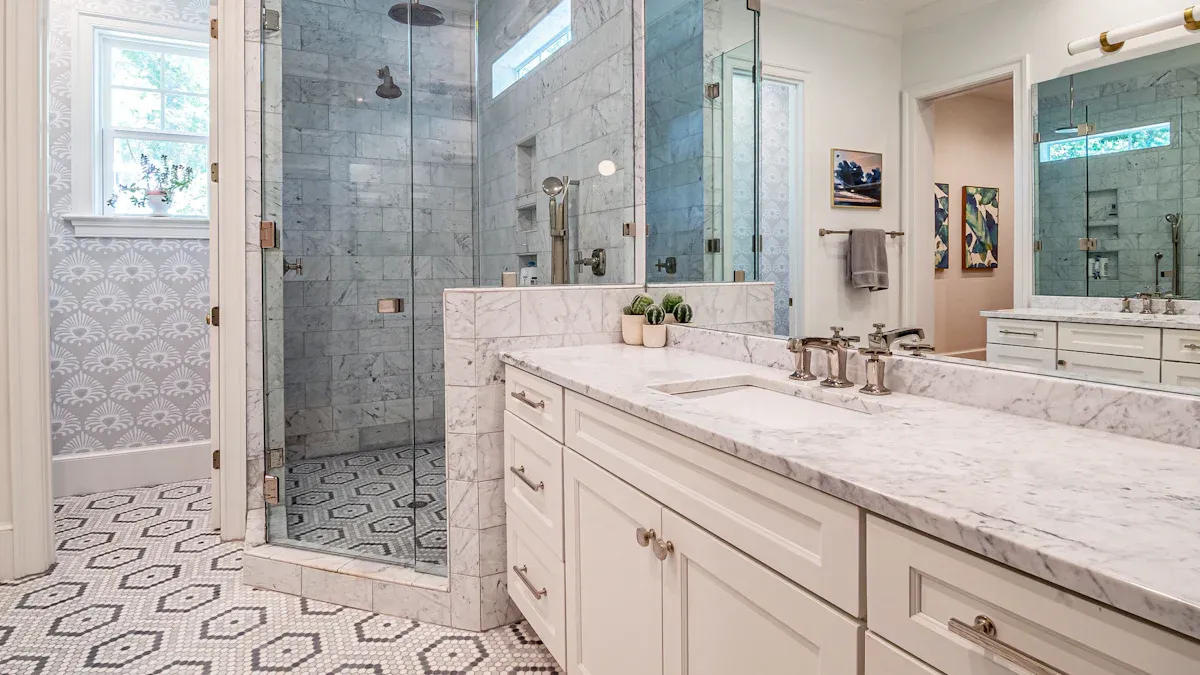
Waterproof and Water-Resistant Features
When you choose lvt flooring bathroom solutions, you get strong protection against water. These tiles have a waterproof core that stops water from seeping in. The tight seam locking system keeps water from slipping between the tiles. A special wear layer on top adds extra defense against water damage and stains. Waterproof bathroom flooring like this covers the whole surface, so you do not have to worry about spills or splashes. Even if you have a busy bathroom, these solutions keep your floor safe.
- LVT tiles use a locking system to create a nearly watertight seal.
- The waterproof core repels water and keeps the floor dry.
- The wear layer protects against stains and water spots.
Water-resistant vinyl tiles work well in bathrooms because they focus on stopping water from getting through the joints. Waterproof vinyl floors give you even more protection, making them a smart choice for any bathroom.
Tip: Always clean up standing water quickly. Even the best waterproof bathroom flooring can get damaged if water sits for too long.
Advantages Over Traditional Bathroom Flooring
You get many benefits when you pick lvt flooring bathroom solutions instead of old-fashioned options. Waterproof vinyl floors do not warp or swell like laminate. They stay strong and look good, even after years of use. Laminate floors can swell and buckle if they get wet, but LVT tiles keep their shape. Ceramic tiles are common in bathrooms, but LVT offers similar water-resistant power with a softer, warmer feel underfoot.
- Waterproof bathroom flooring is easy to install and maintain.
- These solutions resist scratches and stains, perfect for busy homes.
- LVT tiles come in many styles, so you can match any bathroom design.
Industry experts recommend these solutions because they last longer and need less care. You can trust water-resistant and waterproof vinyl floors to handle daily splashes, spills, and high humidity. That makes them a top choice for modern bathrooms.
Latest Water-Resistant Vinyl Tiles and Technologies
SPC (Stone Plastic Composite) Core Innovations
You can trust SPC core technology to give your bathroom tiles strong water-resistant protection. SPC cores use a mix of limestone and PVC, which makes the tiles very stable and stops them from swelling or warping. The advanced click-lock edges form a tight barrier, so water cannot seep between the tiles. This system keeps your floor safe, even if you have a lot of splashes or spills. The durable wear layer on top adds another barrier, repelling moisture and giving you extra protection. These features make SPC tiles a top choice for bathrooms where you need the best waterproof properties.
Note: SPC tiles work well in high-moisture areas because they keep their shape and strength, even after years of use.
WPC (Wood Plastic Composite) Core Advancements
WPC core advancements bring comfort and protection together in your bathroom. These water-resistant vinyl tiles use a blend of wood pulp and plastic to create a stable, waterproof base. WPC tiles feel softer and warmer underfoot, which makes standing in the bathroom more comfortable. The rigid core hides small bumps in the subfloor, so you do not need perfect prep work. WPC tiles also offer sound-dampening qualities, making your bathroom quieter. The easy click-together system lets you install these tiles quickly, and the surface resists scratches and stains. You get a strong moisture barrier system that keeps water out and protects your floor.
- WPC tiles are waterproof and easy to clean.
- The core technology balances comfort and water-resistant protection.
- Modern WPC tiles look like real wood or stone.
MOC (Magnesium Oxide Core) for Enhanced Protection
MOC technology gives you another level of protection in water-resistant vinyl tiles. Magnesium oxide cores create a tough, stable base that stands up to water and humidity. These tiles use advanced moisture barrier systems to block water from reaching the subfloor. MOC tiles resist mold and mildew, which helps keep your bathroom healthy. The strong core also adds fire resistance and keeps the tiles from bending or breaking. You can count on MOC tiles for long-lasting protection and a safe, dry bathroom floor.
Tip: Choose MOC tiles if you want extra protection against water and other bathroom hazards.
Advanced Sealants and Multi-Layer Barriers
When you choose LVT flooring for your bathroom, you want the best water-resistant protection. Advanced sealants and multi-layer barriers help you get that. These features work together to keep your bathroom floor safe from water damage.
Here’s how these systems give you strong protection:
- Multi-layer vinyl tiles have a waterproof core and a tough wear layer. This combination forms a moisture barrier system that stops water from reaching the subfloor.
- The core layer uses rigid polymers and waterproof materials. This shields your floor and keeps it stable, even in high-moisture areas.
- The wear layer on these tiles can be thick—sometimes up to 28 mils. Thicker layers give you better water-resistant protection, which is perfect for bathrooms.
- When you install these tiles, you use click-lock systems, special adhesives, and premium sealants. These steps create a watertight seal between each tile.
- Some tiles have joint systems with compression-fit gaskets and corner sealing compounds. These features block water from sneaking through the edges.
- You should reseal your tiles every 12 to 18 months. This keeps the waterproof properties strong and helps your floor last longer.
Tip: Regular maintenance and resealing help your water-resistant tiles stay strong against daily spills and humidity.
Multi-layer vinyl tiles use moisture-barrier technology to give you extra protection. The barrier in each tile keeps water out and stops mold from growing. You get a floor that looks great and stands up to water every day. With these advanced systems, your bathroom stays dry and safe.
Top Luxury Vinyl Plank Flooring and Bathroom-Grade Vinyl Brands for 2025
Product and Brand Comparison
When you look for the best bathroom-grade vinyl and luxury vinyl flooring in 2025, you find many strong brands. These brands offer waterproof vinyl floors that protect your bathroom from water damage. You want to choose a brand that gives you both style and long-term durability. Here is a table comparing the top brands and their features:
| Brand | Core Type | Wear Layer (mil) | Waterproofing Level | Recommended Collections / Features | Price Range (per sq. ft.) | Warranty / Notes |
|---|---|---|---|---|---|---|
| Proximity Mills | SPC (Stone-Plastic Composite) | 12-22 | Multiple collections fully waterproof; strong water resistance | Appalachian River (best-value waterproof for pets), Peace River (22 mil wear layer, 100% waterproof) | $4.87 – $9.09 | Zero VOC, FloorScore & GREENGUARD certified, recyclable, pet-friendly |
| Canopy Floors | WPC (Wood-Plastic Composite) | Thick wear layers | Completely waterproof | Engineered for durability, scratch resistance, lifetime residential warranty | N/A | Phthalate-free, environmentally responsible |
| Liberty Home | SPC | 12-22 | High waterproofing | Big City Pro (22 mil wear layer), Ultradefend (12 mil wear layer) | $4 – $10 | Built-in underlayment, easy DIY installation |
| Mannington | Not specified | 20 | Waterproof | Adura Max, Adura Rigid collections | Starting at $3.99 | Over 20 years warranty |
| Mohawk | Not specified | 20 | Waterproof | SolidTech, SmartSelect collections | Starting at $4.09 | 25 years residential warranty |
| Shaw | Not specified | 20 | Waterproof | Floorte, Pro Series collections | Starting at $3.75 | Wide style range |
| Armstrong | Not specified | N/A | Waterproof | Lutea line | $4 – $10 | Limited lifetime residential warranty |
| Karndean | Not specified | 20 | Waterproof | Korlok, Art Select ranges | N/A | Scratch-resistant, waterproof |
You see that Proximity Mills, Shaw, Mohawk, and Armstrong all offer waterproof vinyl tile flooring and waterproof vinyl plank flooring with strong warranties. Shaw’s COREtec Plus uses limestone-based core technology for extra moisture resistance. Mohawk’s SolidTech uses a UniClic locking system to keep seams watertight. Armstrong’s Vivero line has a diamond-hard core and advanced spill protection. These brands get high marks from homeowners for their water-resistant luxury vinyl flooring.
Tip: Always check the warranty details before you buy. Most brands require proper installation and sealing to keep your warranty valid.
Pros and Cons of Leading Water-Resistant Options
You want to know the strengths and weaknesses of each solution before you choose. Both luxury vinyl flooring and bathroom-grade vinyl give you waterproof protection, but each type has its own pros and cons. Here is a table to help you compare:
| Aspect | Luxury Vinyl Tile (LVT) | Luxury Vinyl Plank (LVP) |
|---|---|---|
| Durability | Water-resistant, scratch-resistant, dent-prone under heavy impact, may fade with sun exposure. Softer and comfortable underfoot. | Water-resistant, highly scratch-resistant, dent-prone under heavy impact, may fade with sun exposure. More stable core options (WPC or SPC). |
| Cost | Slightly more expensive than LVP but affordable compared to hardwood or stone. | Generally cheaper than LVT, affordable alternative to hardwood. |
| Ease of Installation | Easy to install, DIY-friendly with floating-click or glue-down methods. | Similar installation methods as LVT, also DIY-friendly with floating-click or glue-down options. |
| Design Options | Wider variety, especially mimics stone or ceramic tiles. | Realistic wood plank look but less design variety than LVT. |
| Maintenance | Low maintenance; regular sweeping and occasional damp mopping. | Low maintenance; regular sweeping and occasional damp mopping. |
You get strong waterproof vinyl floors with both LVT and LVP. These solutions resist stains, scuffs, and mold. You can install them yourself or hire a pro. They cost less than ceramic tile but more than sheet vinyl. You should use rugs and furniture pads to prevent dents. Both types may fade if exposed to a lot of sunlight.
Here is a chart that shows how the costs of water-resistant LVT compare to other bathroom flooring options in 2025:
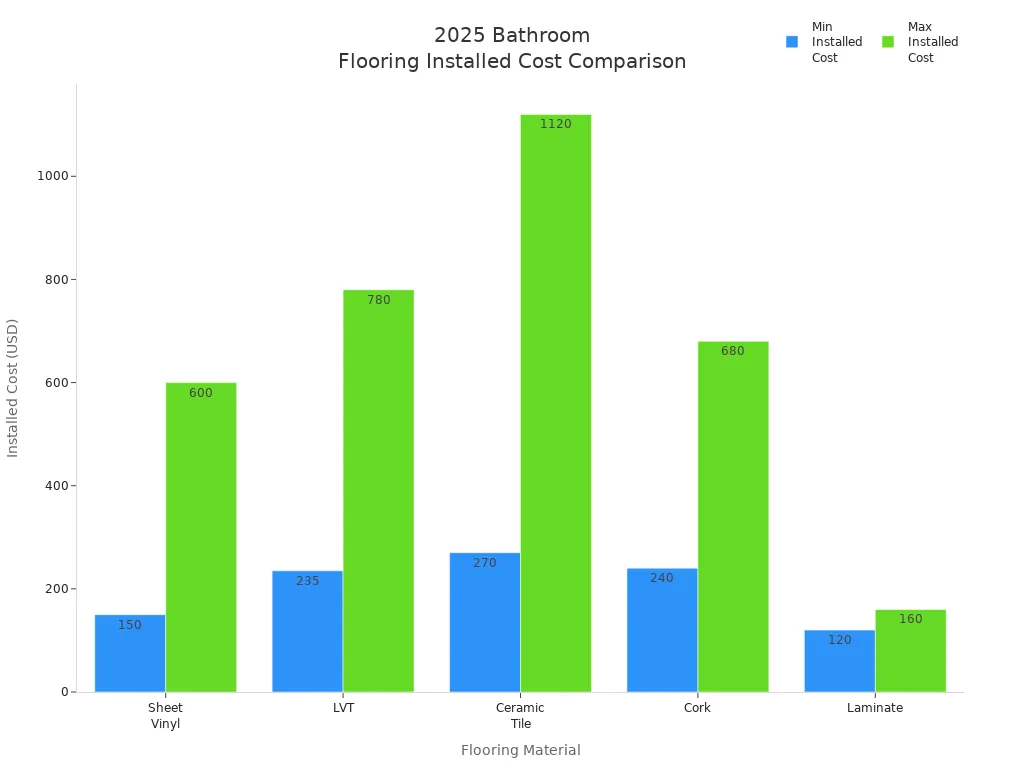
You see that luxury vinyl flooring is a mid-range choice. It balances cost, durability, and appearance better than cheaper sheet vinyl and more expensive ceramic tile.
Key Features to Look for in Waterproof LVT
When you shop for bathroom-grade vinyl, you need to focus on features that keep your floor safe and looking good for years. Here are the most important things to look for:
- Choose SPC (Stone Composite) LVT for high density and 100% waterproof protection. This type is very durable and resists dents and impacts.
- Pick WPC (Wood Composite) LVT if you want more comfort and warmth underfoot. WPC allows for more design options but is slightly less durable than SPC.
- Look for a thick wear layer, at least 20 mils, to protect against scratches, stains, and wear. This helps with long-term durability in busy bathrooms.
- Make sure the product has strong water resistance technology and slip resistance for safety.
- Check for third-party certifications like FloorScore, LEED, or Greenguard. These show the product is safe for your home and has low VOC emissions.
- Consider eco-friendly options that use recycled materials or have responsible sourcing.
- Make sure the LVT meets industry standards like ASTM to avoid mold and water damage.
- Look for easy installation features, such as click-lock systems or built-in underlayment.
- If your bathroom gets a lot of sunlight, choose LVT with UV-resistant coatings to prevent fading.
Note: Leading brands like Mohawk and Shaw offer warranties that cover surface moisture but require proper sealing and installation. Always follow the manufacturer’s instructions to keep your warranty active.
You get the best results when you match your needs with the right features. Bathroom-grade vinyl and luxury vinyl flooring give you waterproof vinyl floors that last. You enjoy peace of mind knowing your bathroom is protected from water and daily wear.
Design Possibilities with Water-Resistant LVT Flooring Bathroom Options
Tile and Stone Visuals
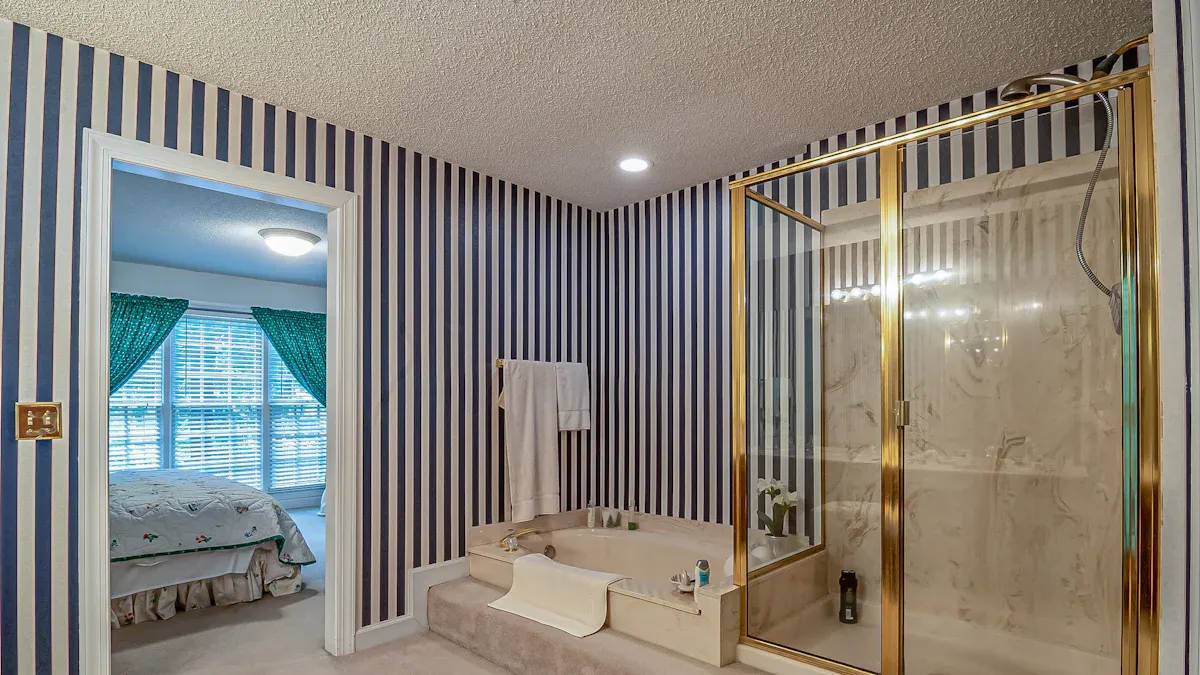
You can choose from many tile and stone visuals when you want a bathroom upgrade. LVT flooring uses high-resolution images and textured surfaces to look just like real stone or ceramic tiles. These tiles have a protective wear layer that keeps the design safe from water and stains. You get the beauty of stone without the worry of cracks or water damage. Sheet vinyl flooring also gives you a seamless look, which helps stop water from getting through the seams.
Here is a quick comparison:
| Feature | LVT / Vinyl Flooring | Real Tile (Ceramic) |
|---|---|---|
| Appearance | Realistic visuals and textures | Classic stone and ceramic look |
| Water Resistance | 100% waterproof surface, fewer seams | Grout can let water in if not sealed |
| Durability | Flexible, less likely to crack | Very strong but can crack under impact |
You can enjoy beautiful installations of luxury vinyl tile flooring that mimic marble, slate, or travertine. These tiles make your bathroom look elegant and stay safe from water.
Wood and Plank Styles
You have many wood and plank styles to choose from with water-resistant LVT tiles. These tiles show off realistic wood grain and come in many shades. Some popular choices for 2025 include:
- Honey and sandy tones with chestnut hints for a modern yet rustic feel.
- Soft amber colors with gentle graining for a light, coastal look.
- Walnut and toffee browns for a Scandinavian style.
- Cashew brown hues with delicate wood details for a relaxed vibe.
- Blonde tones with darker grains and knots for a spa-like space.
- Rustic patterns with earthy undertones for a natural look.
These tiles give you the warmth of wood with the strength of waterproof flooring. You do not have to worry about water damage or scratches. The plank styles fit many design options, from classic to modern.
Trending Colors and Patterns for 2025
You will see new trends in bathroom tiles for 2025. Many people want spa-inspired bathrooms with natural materials and neutral colors. Matte finishes are popular because they hide water spots and look soft. Textured tiles add grip, making your bathroom safer.
Here are some top trends:
- Eco-friendly tiles, like cork-infused LVT, combine water resistance with green benefits.
- Bold patterns and statement floors make your bathroom stand out.
- Seamless, slip-resistant surfaces help keep your bathroom safe.
- Smart bathroom technology pairs well with advanced LVT flooring.
Tip: Try mixing tile shapes and patterns for a unique look. You can create a space that feels both modern and relaxing.
You can find tiles that match any style, from calm and simple to bold and creative. These trends help you make your bathroom both beautiful and practical.
Installation Tips for Bathroom-Grade Vinyl and LVT
Subfloor Preparation for Water-Resistant Performance
You need to start with a solid foundation for your bathroom-grade vinyl or LVT flooring. Proper subfloor preparation helps keep your floor water-resistant and long-lasting. Here are the most important steps:
- Test the subfloor for moisture. Use a calcium chloride test for concrete or a pin moisture meter for wood.
- Install a moisture barrier. For concrete, use a 6-mil poly sheet. For wood, use rosin paper or a vapor retarder.
- Make sure the subfloor is dry, flat, and smooth. Remove any bumps or dips.
- Acclimate your LVT flooring in the bathroom for at least 48 hours before installation.
- Dry lay the tiles to plan your pattern and check the fit.
Tip: A well-prepared subfloor prevents water from seeping up and damaging your new floor.
Proper Sealing and Edge Protection
Sealing and edge protection are key to keeping your bathroom floor waterproof. You should pay close attention to every seam and edge during installation.
- Apply silicone-based sealant along all perimeter edges, especially near doors and thresholds.
- Use specialized sealants between vinyl plank joints for extra water resistance.
- Treat expansion gaps with flexible caulk. This allows the floor to move but keeps water out.
- Seal around toilets, tubs, and sinks with waterproof caulk.
- Use moisture-resistant transition strips between rooms to stop water from spreading.
If you skip these steps, water can sneak under the floor. This can cause mold, warping, or even adhesive failure. Careful sealing keeps your bathroom floor safe for years.
DIY vs. Professional Installation Considerations
You might wonder if you should install the floor yourself or hire a pro. Both options have benefits and drawbacks.
| Installation Type | Advantages | Disadvantages / Considerations |
|---|---|---|
| DIY Installation | Saves money, flexible timing, sense of pride | Needs handyman skills, risk of mistakes, may void warranty |
| Professional Installation | High quality, faster, warranty coverage | Higher cost |
If you choose DIY, you save money and can work at your own pace. Many LVT floors use an easy-install locking system, which helps beginners. However, you must follow instructions closely. Mistakes in sealing or fitting can lead to water damage and may void your warranty. For complex bathrooms or glue-down vinyl, a professional installer gives you peace of mind and protects your investment.
Note: Always protect your new floor from heavy traffic and furniture for at least 24 hours after installation.
Maintenance and Durability of Water-Resistant Vinyl Tiles in Bathrooms
Cleaning and Care for Long-Lasting Results
You want your bathroom floor to look great and last for years. Water-resistant vinyl tiles make easy maintenance bathrooms possible. To keep your tiles in top shape, follow these steps:
- Sweep or vacuum your floor often to remove dirt and debris that can scratch the surface.
- Use a damp microfiber mop with warm water and a pH-neutral cleaner made for vinyl flooring. Avoid harsh chemicals that can damage the finish.
- Clean up spills right away by blotting with a soft cloth. This prevents stains and stops water from getting under the tiles.
- Do not use steam mops. The heat and moisture can weaken adhesives and warp the tiles.
- Protect your floor from direct sunlight with curtains or UV-protective films to prevent fading and warping.
Tip: Always check for signs of water stains, musty smells, or curling edges. Early action helps you keep your floor in good condition.
Preventing Water Damage and Mold Growth
Water damage resistance is a key benefit of these tiles, but you still need to take steps to prevent mold and mildew. LVT flooring has a non-porous surface and waterproof backing, which blocks water from reaching the core. You should:
- Seal gaps around baseboards and edges with silicone caulk to stop moisture from getting in.
- Use a dehumidifier to keep indoor humidity between 30-50%. This helps prevent mold growth.
- Make sure your bathroom has good ventilation. Open windows or use an exhaust fan during and after showers.
- Fix leaks quickly and dry any wet spots right away.
Regular cleaning with a damp mop and mild cleaner keeps your tiles free from dirt that can trap moisture. Always pay attention to any signs of water damage or mold so you can act fast.
Repair and Replacement Guidance
If you notice a damaged tile, you can repair or replace it without redoing the whole floor. Here’s how you can do it:
- Use a hair dryer or heat gun to soften the adhesive under the damaged tile.
- Gently lift the tile with a putty knife.
- Clean away old adhesive and debris from the floor.
- Check the subfloor for damage. Sand down raised spots or fill in low areas if needed.
- Apply new adhesive and press the replacement tile firmly into place.
- Make sure the edges are sealed well to keep out moisture.
If you see water damage near wet areas, fix any leaks before replacing tiles. This helps protect the long-term durability of your bathroom floor.
When you choose lvt flooring bathroom options for 2025, you get top waterproofing and easy care. Look for thick wear layers, waterproof cores, and slip-resistant surfaces. Make sure you install with sealed seams and a moisture barrier. To keep your floor in great shape:
- Wipe up spills right away.
- Inspect for water damage often.
- Reseal edges every six months.
- Use pH-neutral cleaners and avoid harsh chemicals.
These steps help your bathroom floor stay beautiful and last for years.
FAQ
What makes LVT flooring waterproof for bathrooms?
You get waterproof protection from LVT flooring because it has a dense core and a sealed surface. The click-lock system and tight seams stop water from seeping through. This keeps your bathroom floor dry and safe.
Can you install LVT flooring over existing tile?
Yes, you can install LVT flooring over existing tile if the surface is clean, flat, and dry. Make sure you fill any grout lines and check for loose tiles before starting. This helps your new floor last longer.
How long does waterproof LVT flooring last in a bathroom?
Waterproof LVT flooring can last 15 to 25 years in a bathroom. You need to clean it regularly and reseal the edges as needed. Good care helps your floor stay strong and look new.
Do you need to seal LVT flooring in a bathroom?
You should seal the edges and seams of LVT flooring in a bathroom. This extra step blocks water from getting underneath. Use a silicone-based sealant for the best results.
What is the best way to clean water-resistant vinyl tiles?
Sweep or vacuum your floor often. Use a damp mop with a pH-neutral cleaner. Avoid steam mops and harsh chemicals. Quick cleaning keeps your tiles looking great and helps prevent water damage.
Tip: Always wipe up spills right away to protect your floor from stains and moisture.




