
Choosing the right SPC vinyl flooring thickness helps you get the best value for your budget. You should look at how much traffic a room gets and what level of durability you need. Thicker vinyl flooring, such as 6mm to 8mm, gives better sound insulation, durability and stability, and long-term value. For low-traffic or budget spaces, 4mm to 5mm vinyl works well and keeps cost low. The global SPC vinyl market now holds a 42% share in resilient flooring, showing strong performance and popularity. Use a vinyl thickness chart to make sure you find the right balance between cost and performance.
SPC vinyl flooring can last 10 to 25 years, with thicker options often lasting longer and offering more durability.
What Is SPC Flooring?
SPC flooring stands for Stone Plastic Composite flooring. You will find it as one of the most popular types of luxury vinyl flooring. This flooring uses advanced technology to create a surface that looks like wood or stone but performs much better in busy homes and businesses. You can install SPC flooring in almost any room, including kitchens, bathrooms, and basements.
SPC Core Technology
SPC flooring uses a special core made from a mix of natural limestone powder, polyvinyl chloride, and stabilizers. This core makes SPC much denser and more rigid than other types of luxury vinyl flooring. Here is what sets SPC apart:
- The core contains about 60% limestone, which gives SPC its strength and stability.
- The construction includes several layers: a wear layer for scratch resistance, a printed vinyl layer for design, the rigid SPC core, and a base layer for support.
- SPC flooring is thinner but denser than WPC (Wood Plastic Composite) flooring.
- The rigid core lets you install SPC over uneven subfloors with less preparation.
- You get a click-lock system, so you can install the planks easily without glue.
- SPC flooring is completely waterproof, making it a smart choice for moisture-prone areas.
Recent advancements in SPC core technology have made this flooring even better. You now get improved wear layers with UV coatings, which help resist scratches and stains. Some new types of SPC flooring include cushioned backing for extra comfort and noise reduction. Digital printing creates realistic wood and stone looks, so your floors can match any style.
Benefits of SPC Vinyl Flooring
You will notice many benefits when you choose SPC vinyl flooring for your home or business:
- SPC flooring is 100% waterproof, so you do not have to worry about spills or moisture.
- The dense core makes SPC highly durable and resistant to dents and scratches.
- Luxury vinyl flooring like SPC is easy to clean and needs very little maintenance.
- You can install SPC flooring quickly thanks to the click-lock system.
- The rigid core helps the flooring last longer, even in high-traffic areas.
- SPC flooring costs less than many other luxury vinyl flooring options.
- You can use SPC in kitchens, bathrooms, and basements because it handles water and heavy use.
Tip: Proper installation, such as sealing the edges, helps prevent moisture from getting under the vinyl flooring and keeps your floors looking great for years.
Luxury vinyl flooring, especially SPC, gives you a strong, stylish, and practical solution for any space. You get the look of real wood or stone with the performance you need for busy lives.
Why Vinyl Flooring Thickness Matters
Durability and Longevity
When you choose luxury vinyl flooring, you want it to last. The thickness of luxury vinyl flooring plays a big role in how well it stands up to daily wear. Thicker spc flooring has a stronger core and a tougher wear layer. This means your floors can handle heavy foot traffic, moving furniture, and even pets. The wear layer protects the surface from scratches and dents. You can see how different wear layer thicknesses affect durability in the table below:
| Wear Layer Thickness | Typical Use | Performance Impact on Durability and Wear Resistance |
|---|---|---|
| 6 mil (0.15 mm) | Light residential | Too thin for commercial use; wears quickly under high traffic |
| 12 mil (0.3 mm) | Light commercial, multifamily | Suitable for lower-traffic commercial areas; moderate durability |
| 20 mil (0.5 mm) | Standard commercial, healthcare, education | Industry standard for durability; good resistance in most commercial environments |
| 28–40 mil (0.7–1.0 mm) | Heavy commercial | Best performance; withstands heavy traffic and wear effectively |
High-quality spc flooring can reach abrasion resistance levels up to 300,000 revolutions. This is much higher than traditional laminate or standard spc. You get better durability and stability, especially in busy spaces.
Comfort and Underfoot Feel
The thickness aspect of spc flooring also affects how comfortable your floors feel. Thicker vinyl floors often include an attached underlayment. This extra layer, usually 1 to 2mm thick, adds cushioning and absorbs shock. You will notice a softer, warmer feel underfoot, especially if you stand for long periods. In homes, a thickness of 5.0 to 5.5mm is common for comfort. Commercial spaces use even thicker spc for extra support. Some floors use ABA construction, which adds more softness and elasticity. This makes luxury vinyl flooring more pleasant to walk on every day.
Sound Insulation and Noise Reduction
You want your home or business to stay quiet and peaceful. Thicker spc flooring helps reduce noise by absorbing sound and blocking it from traveling between floors. The multi-layer design, with a dense core and underlayment, improves sound insulation. You can see how thickness affects sound control in the chart below:
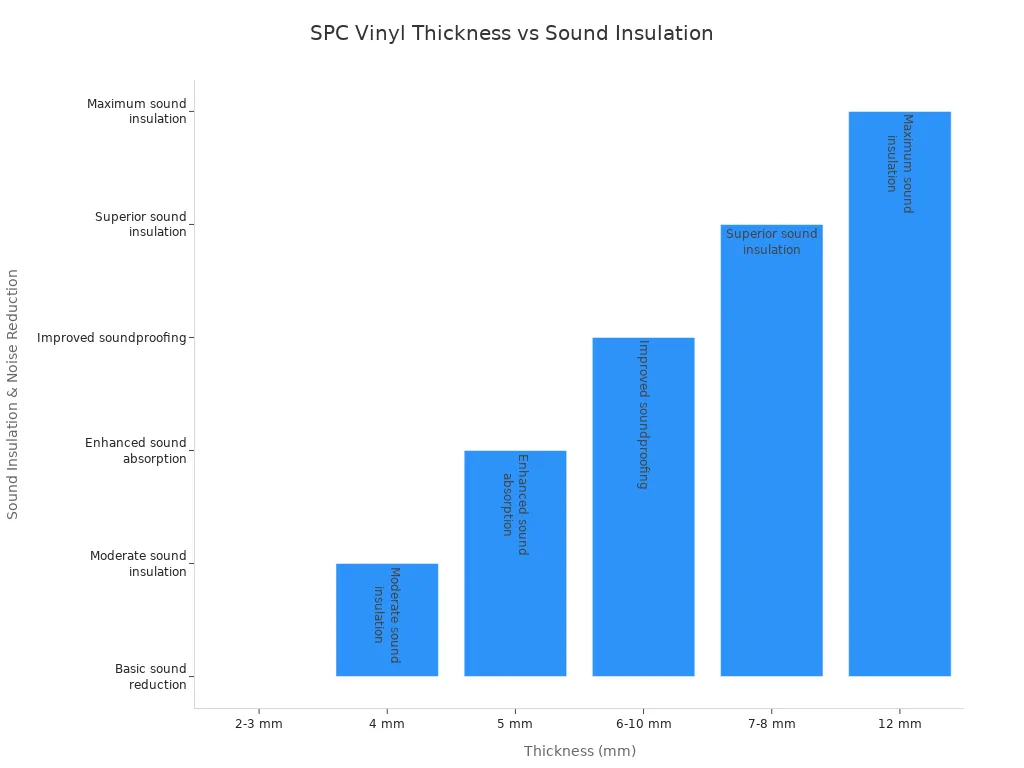
Floors with 6mm to 10mm thickness offer the best soundproofing. You will notice less echo and fewer footsteps, making luxury vinyl flooring a smart choice for apartments, offices, and busy homes.
Budget and Cost Implications
When you choose SPC vinyl flooring, you need to think about how thickness affects your budget. Thinner options, like 4mm, usually have the lowest cost. These work well if you want to save money or if you plan to install flooring in a low-traffic area. As you move to thicker flooring, the cost goes up. Thicker planks, such as 6mm or 8mm, offer more durability and comfort, but you pay a premium for these features.
Here is a simple table to help you compare the cost of different SPC vinyl flooring thicknesses:
| Thickness | Price per Sq Ft (USD) | Notes |
|---|---|---|
| 4mm | $1.79 | Most economical option |
| 5mm | $1.83 – $2.99 | Price varies by style |
You can see that even a small increase in thickness can raise the cost. For example, 5mm flooring often costs more than 4mm, depending on the style and brand. Thicker options, like 6mm and 8mm, usually cost even more, especially if you want extra features like attached underlayment or special finishes.
Thinner SPC vinyl flooring, such as 2mm to 4mm, is the most cost-effective. These options give you the look of luxury vinyl at a lower price. Thicker flooring, from 5mm to 8mm, costs more because it lasts longer and works better in busy spaces. The appearance does not change with thickness, so you pay for performance, not looks.
You should always think about the balance between cost and performance. If you have a tight budget, 4mm or 5mm flooring may be the best choice. If you want your floors to last longer in a busy area, it makes sense to spend more on thicker planks.
Tip: Always check if the price includes underlayment or extra features. Sometimes, a higher upfront cost saves you money on installation or future repairs.
Vinyl Thickness Chart: Comparing SPC Flooring Options
When you look at the vinyl thickness chart, you see many options for spc flooring. Each thickness level offers unique benefits for different spaces. You need to match the right option to your room’s needs. The thickness of luxury vinyl flooring affects comfort, durability, and sound insulation. Use this guide to compare the most popular options and make the best choice for your home or business.
4mm SPC Vinyl Flooring
4mm spc flooring is one of the most common options for budget-friendly projects. You often find this thickness in bedrooms or other low-traffic areas. The vinyl thickness chart shows that 4mm planks work well when you want to save money and do not need heavy-duty performance.
- You get a lightweight plank that is easy to handle and install.
- This option works best in rooms with even subfloors and little foot traffic.
- Bedrooms, guest rooms, and secondary homes are ideal places for 4mm spc.
- The thinner plank may show subfloor imperfections more easily.
- You should use an underlayment to improve comfort and reduce noise.
- The wear layer matters most for durability. A thicker wear layer can help 4mm vinyl last longer.
Note: 4mm spc flooring is not the best choice for hallways, kitchens, or entryways. These areas need more stability and comfort.
You can use 4mm spc in rental properties or spaces where you want a quick, affordable update. The waterproof nature of luxury vinyl flooring means you can install it in basements or bathrooms, but avoid direct shower areas unless you seal the edges well.
5mm SPC Vinyl Flooring
5mm spc flooring gives you a balance between cost and performance. This option appears often in the vinyl thickness chart as a mid-range choice. You get better durability and comfort than with thinner planks, but you do not pay as much as for the thickest options.
| Thickness Category | Durability | Comfort | Stability | Sound Insulation | Suitable Use Cases | Additional Factors |
|---|---|---|---|---|---|---|
| Thinner (<5mm) | Less durable | Less comfortable | Less stable | Lower | Low traffic areas | No underlayment, more affordable |
| 5mm SPC (mid-range) | Good stability | Moderate comfort | More stable | Moderate | General use, moderate traffic | Rigid core, underlayment adds comfort |
| Thicker (6.5mm+) | Longest lasting | Best comfort | Most stable | Best | High traffic, uneven subfloors | Often includes underlayment |
You can use 5mm spc in living rooms, kitchens, and offices. The rigid core gives you more stability, so the planks resist bending and shifting. You get moderate sound insulation, which you can improve with an underlayment. This option works well for most homes and light commercial spaces.
- 5mm spc flooring hides minor subfloor flaws better than thinner vinyl.
- You feel more support underfoot, making it comfortable for daily use.
- The wear layer still plays a big role in how long your floor lasts.
- You can install this option in areas with moderate foot traffic.
Tip: If you want a good mix of value and performance, 5mm spc flooring is a smart choice from the vinyl thickness chart.
6mm SPC Vinyl Flooring
6mm spc flooring stands out in the vinyl thickness chart for its premium features. You get a thick, sturdy plank that works well in both homes and commercial spaces. This option offers top performance for durability, comfort, and sound insulation.
- 6mm spc is 100% waterproof, so you can use it in kitchens, bathrooms, and basements.
- The thick core resists scratches, dents, and impacts, making it perfect for high-traffic areas.
- You get excellent sound insulation, especially if the plank has a pre-attached underlay.
- The plank stays stable even when temperatures or humidity change.
- You can choose from many designs, including wood, stone, and marble looks.
- The click-lock system makes installation easy, even for DIY projects.
You can expect a long lifespan from 6mm spc flooring. Many brands offer warranties of 15 to 20 years for residential use. You also get a safe, anti-slip surface, which is great for homes with kids or elderly family members.
Callout: 6mm spc flooring is a top choice for shopping malls, hotel lobbies, offices, and busy homes. You get peace of mind with its durability and easy maintenance.
When you compare options on the vinyl thickness chart, 6mm spc flooring gives you the best mix of comfort, stability, and long-term value. You can use it in any room where you want a quiet, comfortable, and stylish floor.
8mm SPC Vinyl Flooring
When you want the highest level of performance from your luxury vinyl flooring, 8mm SPC flooring stands out as one of the best options. This thickness gives you a strong, stable, and comfortable floor that works well in both homes and commercial spaces. You get a dense core made from a mix of PVC and limestone. This core makes the flooring very stable and helps it resist impacts, scratches, and dents. You can use 8mm SPC flooring in places with heavy foot traffic, such as malls, hospitals, schools, and busy offices.
You will notice that 8mm SPC flooring is FloorScore certified. This means it meets strict indoor air quality standards, so you can feel safe using it in your home or business. The flooring also comes with a 10-year warranty for commercial use. This long warranty shows that the manufacturer trusts the durability and performance of the product.
Many people choose 8mm SPC flooring because it offers top sound insulation. The sound ratings, with IIC = 54 and STC = 53, show that this option reduces noise very well. You will hear fewer footsteps and less echo, which is important in apartments, offices, and multi-level buildings. The attached underlayment adds even more comfort and helps block sound.
Here are some reasons why 8mm SPC flooring is a smart choice for high-traffic and commercial areas:
- The rigid core gives you ultra dimensional stability and prevents warping.
- You get high indentation resistance, so heavy furniture or equipment will not damage the floor.
- The flooring is waterproof, wear-resistant, anti-slip, and moisture-proof.
- You can install it in kitchens, bathrooms, basements, and other damp areas.
- The click-lock system makes installation quick and easy, saving you time and labor costs.
- The surface is fireproof and anti-bacterial, which helps keep your space safe and clean.
- You do not need much maintenance, so it is practical for busy places.
Tip: If you have an uneven subfloor, 8mm SPC flooring can hide imperfections better than thinner options. This makes your installation look smooth and professional.
You can see how 8mm SPC flooring compares to other options in the table below:
| Feature | 4mm SPC | 5mm SPC | 6mm SPC | 8mm SPC |
|---|---|---|---|---|
| Durability | Good | Better | Excellent | Superior |
| Comfort | Basic | Moderate | High | Maximum |
| Sound Insulation | Low | Moderate | High | Best |
| Suitable for Commercial | No | Light | Yes | Heavy |
| Moisture Resistance | Yes | Yes | Yes | Yes |
| Installation Ease | Easy | Easy | Easy | Easy |
You can trust 8mm SPC flooring to handle the toughest environments. The dense core and thick wear layer protect your investment for years. You get a floor that looks great, feels comfortable, and stands up to daily use.
If you want the best luxury vinyl flooring for your home or business, 8mm SPC flooring gives you the highest level of performance. You get peace of mind, knowing your floors will last and look good, even in the busiest spaces.
Pros and Cons of SPC Vinyl Flooring by Thickness
4mm Pros and Cons
You may choose 4mm SPC vinyl flooring if you want a budget-friendly option for your home. This thickness works well in low-traffic areas like bedrooms or guest rooms. You get a floor that looks just as good as thicker options, but you pay less.
| Pros | Cons | Best Use Cases |
|---|---|---|
| Affordable for most budgets | Less cushioning and comfort underfoot | Bedrooms, guest rooms, rentals |
| Easy to handle and install | Not ideal for high-traffic or commercial spaces | Low-traffic living rooms (with liner) |
| Visually similar to thicker planks | May feel harder and colder underfoot | |
| Can last 15+ years in low-traffic areas | Shows subfloor imperfections more easily |
Note: You can improve comfort by adding padding or an underlayment beneath the planks.
4mm SPC flooring gives you good durability for light use, but it may not feel as soft or warm as thicker floors.
5mm Pros and Cons
5mm SPC vinyl flooring offers a balance between cost and performance. You get more stability and a longer lifespan than with thinner planks. This thickness works well in living rooms, kitchens, and even some commercial spaces.
- You will notice better comfort and support underfoot.
- The planks hide minor subfloor flaws more easily.
- Installation is still simple, but the planks are heavier.
- You may need an underlayment for extra sound insulation.
- The cost is higher than 4mm, but you get more value for busy areas.
When you install 5mm SPC, you must prepare the subfloor carefully. Make sure it is clean, dry, and level. Acclimate the planks before installation to prevent movement later. Always leave expansion gaps at the edges.
Tip: 5mm SPC flooring is a smart choice for homes with kids or pets because it stands up to daily wear.
6mm Pros and Cons
6mm SPC vinyl flooring gives you premium features for both homes and businesses. You get a thick, sturdy plank that handles heavy traffic and moisture with ease. The reinforced core adds strength, while the backing materials provide extra comfort.
- Superior strength and durability make it ideal for high-traffic areas.
- The thicker wear layer protects against scratches, stains, and dents.
- Backing materials like foam or cork add insulation and cushioning.
- DIY-friendly click-lock systems save you money on installation.
- The price is higher, but many quality options cost less than $5 per square foot.
You will find that 6mm SPC flooring balances cost, comfort, and durability. Maintenance is easy, and you only need to sweep and mop with vinyl-safe cleaners.
Callout: If you want a floor that lasts and feels comfortable, 6mm SPC vinyl flooring is a top pick for busy homes and commercial spaces.
8mm Pros and Cons
When you choose 8mm SPC vinyl flooring, you get one of the thickest and most durable options available. This thickness gives you excellent stability and comfort. You will notice that 8mm planks work well in busy homes, offices, and commercial spaces. The dense core helps the floor resist dents, scratches, and heavy impacts. You also get top sound insulation, which makes your rooms quieter and more peaceful.
Pros of 8mm SPC Vinyl Flooring:
- Superior durability for high-traffic areas
- Excellent sound insulation for quiet spaces
- Waterproof and easy to clean
- Stable core resists warping and shifting
- Comfortable underfoot, especially with attached underlayment
- Simple click-lock installation system
- Suitable for uneven subfloors
You can use 8mm SPC flooring in kitchens, basements, and even commercial buildings. The thick planks hide minor subfloor flaws and last for many years.
However, you should also consider some drawbacks before you decide. 8mm SPC flooring can fade over time if exposed to direct sunlight, especially in rooms with large windows. Some products include UV inhibitors, but using curtains or blinds helps protect your floor. Heavy furniture or sharp objects may cause dents or scratches, so you should use furniture pads or area rugs.
Cons of 8mm SPC Vinyl Flooring:
- Environmental concerns due to slow decomposition of PVC and stone powder
- Sensitivity to temperature changes, which can cause expansion or contraction
- Hard underfoot feel compared to softer flooring types
- Susceptibility to cracks or dents from heavy impacts
- Limited design options versus natural wood or tile
- Strict installation requirements for a flat subfloor
- Higher cost, sometimes close to hardwood prices
- Cannot reuse planks after removal
Tip: Always leave proper gaps during installation to allow for expansion. Use window treatments and furniture pads to extend the life of your floor.
Here is a quick summary:
| Pros | Cons |
|---|---|
| Superior durability | Environmental impact |
| Top sound insulation | Sensitive to temperature changes |
| Waterproof | Harder underfoot |
| Easy installation | Can fade in sunlight |
| Stable and comfortable | Higher cost |
You should weigh these pros and cons to decide if 8mm SPC vinyl flooring fits your needs and lifestyle.
Best SPC Flooring Thickness for Every Budget and Room
Budget-Friendly Choices
If you want to save money on your flooring project, you should look for budget-friendly options in SPC vinyl. The best thickness for homeowners on a tight budget is between 4 mm and 6 mm. These planks give you good durability and comfort without raising the cost too much. You should also check the wear layer. A wear layer of at least 0.3 mm protects your floor from scratches and scuffs in daily life. Avoid very thin vinyl, such as 2 mm or 3 mm, because these do not hide subfloor flaws and do not reduce noise well.
- 4 mm to 6 mm SPC planks work well for most homes.
- Choose a wear layer of 12 mil (about 0.3 mm) for everyday protection.
- Thicker planks look better and last longer, but they may cost more.
SPC vinyl flooring gives you a strong core and a long lifespan, often up to 25 years. You get a floor that is easy to clean and maintain, which helps you save on future repairs.
Tip: Mid-range thickness (4-6 mm) offers the best balance of cost and performance for budget-conscious buyers.
Medium-Traffic Residential Areas
For rooms like living rooms and bedrooms, you need a floor that stands up to regular use. SPC vinyl flooring with a thickness of 4 mm to 5 mm is a smart choice for these spaces. This range gives you enough strength and comfort for medium foot traffic. You should look for a wear layer between 0.4 mm and 0.5 mm to keep your floors looking new.
- 4 mm to 5 mm thick vinyl works well in most family rooms.
- Bedrooms and living rooms benefit from this thickness.
- Thicker vinyl, such as 6 mm or 8 mm, is better for high traffic areas.
You get a good mix of durability, comfort, and cost control with this option. The floor feels soft underfoot and resists everyday wear.
High-Traffic and Commercial Spaces
In busy places like offices, stores, or hallways, you need a floor that can handle a lot of use. For high traffic areas, SPC vinyl flooring with a thicker wear layer is important. You should choose a wear layer of at least 20 mils to protect against scratches and dents. While the total thickness matters, the wear layer is the key to long-lasting performance in commercial settings.
SPC vinyl flooring stands out for its dent resistance and easy care. You can trust it to keep looking good, even when many people walk on it every day. The extra cost for a thicker wear layer pays off with fewer repairs and a longer lifespan.
Note: Always check the wear layer rating when you shop for commercial vinyl flooring. A thicker wear layer means better protection and lower long-term cost.
Comfort and Sound Priorities
When you want a floor that feels soft and keeps your space quiet, you should pay close attention to the thickness of your SPC vinyl flooring. Thicker vinyl flooring gives you a more cushioned feel underfoot. This extra padding helps reduce fatigue, especially if you stand or walk on the floor for long periods. You will notice that thicker planks also absorb impacts better, making each step feel softer and more comfortable.
Sound insulation matters in busy homes, apartments, or multi-level buildings. Thicker SPC flooring helps dampen noise, so you hear fewer footsteps and less echo. If you want a quiet environment, you should look for planks that are at least 5mm thick. These options offer better sound absorption and stability. For even more comfort and noise reduction, 7mm or 8mm SPC flooring works best. These thicker planks create a cozy and peaceful space, perfect for bedrooms, nurseries, or upstairs rooms.
Tip: If comfort and sound are your top priorities, consider thicker SPC flooring or even WPC flooring. WPC has a softer, thicker core that provides superior cushioning and sound dampening compared to SPC.
Here is a quick comparison to help you choose:
- SPC flooring has a rigid stone-plastic core, making it harder underfoot than WPC.
- WPC flooring features a thicker, softer core for the best comfort and sound insulation.
- Thicker SPC (7-8mm) improves comfort and noise reduction but still feels firmer than WPC.
- 5mm SPC offers good sound absorption for most homes.
- 7mm SPC provides superior comfort and quiet, ideal for bedrooms or upstairs spaces.
You should match your flooring thickness to your comfort and sound needs. Thicker options help create a softer, quieter home, while thinner planks work for areas where these features matter less.
Other Key Factors When Choosing SPC Vinyl Flooring
Wear Layer Thickness
You should always pay close attention to the wear layer when you choose SPC vinyl flooring. The wear layer acts as a shield that protects your floor from scratches, dents, and stains. This clear top layer keeps your floor looking new, even in busy spaces. Most SPC floors have a wear layer thickness between 8 and 15 mil. A 10 mil wear layer gives you a good balance of style and durability. If you have a low-traffic room, a thinner wear layer, like 6-8 mil, may work well. For high-traffic areas or homes with pets, you need a thicker wear layer, such as 20 mil or more. Some brands, like Floormonk, offer a 3mm wear layer on a 5mm core for extra strength. The wear layer also helps resist UV fading and stains, so your floor stays bright and clean. Thicker wear layers often come with longer warranties, showing their lasting power. Always match the wear layer to your lifestyle and room needs.
- The wear layer protects against scratches, dents, and stains.
- Thicker wear layers (12-20 mil) suit living rooms and hallways.
- 20 mil or higher works best for kitchens, pets, or commercial spaces.
- The wear layer also helps with stain and UV resistance.
Underlay and Padding Options
Underlay and padding play a big role in how your SPC vinyl flooring feels and sounds. The right underlayment adds comfort, warmth, and noise reduction. You can choose from several types:
| Underlayment Material | Benefits | Drawbacks | Best Use |
|---|---|---|---|
| Cork | Great sound and thermal insulation | Can hold moisture, needs barrier | Quiet, warm rooms |
| Rubber | Top sound and moisture protection | Higher cost | Busy, high-traffic areas |
| Foam | Budget-friendly, soft | Not moisture resistant | Bedrooms, dry areas |
| Felt | Good comfort and sound dampening | May lack moisture barrier | Living rooms |
| Plywood/OSB | Levels subfloor, strong | No comfort or warmth | Uneven subfloors |
You should avoid double underlayment, as too much padding can damage the floor’s locking system. Always check if your SPC vinyl has an attached pad. If so, do not add extra underlayment unless the manufacturer says it is safe. Over concrete, use a moisture barrier to stop mold and damage. The right underlay depends on your subfloor, room use, and the thickness of your SPC vinyl flooring.
Installation Considerations
You need to think about installation before you pick your SPC vinyl flooring thickness. The method you choose affects comfort, stability, and even cost. Click-lock or floating floors are thicker, usually between 4 and 10mm. These floors are easy to install and give you more comfort and sound insulation. Glue-down vinyl is thinner and works well in large, open spaces with heavy furniture. If you have a concrete subfloor, thicker SPC vinyl or added underlayment helps with softness and noise. Wood subfloors can handle both floating and glue-down options. Always follow the manufacturer’s instructions for underlayment and radiant heating. Room size, activity level, and subfloor condition all matter when you plan your installation. Proper installation keeps your floor strong and your warranty safe.
Tip: Always check the manufacturer’s guidelines for underlayment and installation. This helps you avoid problems and keeps your warranty valid.
SPC Vinyl Thickness Chart for Quick Reference
Choosing the right SPC vinyl flooring can feel confusing. You want to see all the important details in one place. A quick reference chart helps you compare your options fast. You can check thickness, wear layer, comfort, and best uses at a glance. This makes it easier to pick the best floor for your room and budget.
| Feature | 4mm SPC | 5mm SPC | 6mm SPC | 8mm SPC |
|---|---|---|---|---|
| Overall Thickness | 4mm | 5mm | 6mm | 8mm |
| Wear Layer | 8-12 mil | 12-20 mil | 20 mil+ | 20 mil+ |
| Durability | Light use | Moderate use | Heavy use | Heavy/commercial |
| Comfort & Sound | Basic | Moderate | High | Maximum |
| Installation Type | Floating/Glue-down | Floating/Glue-down | Floating | Floating |
| Best Rooms | Bedrooms, guest | Living, kitchen | Hallways, offices | Commercial, busy |
| Subfloor Needs | Even, smooth | Minor flaws okay | Hides flaws better | Hides flaws best |
| Cost | $ | $$ | $$$ | $$$$ |
Tip: Always check both the overall thickness and the wear layer. A thicker wear layer gives you better protection, even if the plank is thinner.
You can use this chart to match your needs with the right flooring. For example, if you want quiet and comfort in a busy space, look for 6mm or 8mm options. If you need to save money, 4mm or 5mm may work for bedrooms or guest rooms. The chart also shows which installation type fits your project and what subfloor prep you need.
A quick reference chart saves you time. You see the trade-offs between cost, comfort, and durability right away. This helps you make a smart choice for your home or business.
When you choose SPC vinyl flooring, focus on your budget, room traffic, and comfort needs.
- Thicker planks (6mm and above) give you better sound insulation and comfort, but the cost is higher.
- Wear layer thickness matters for durability, especially in busy or wet areas.
- Subfloor type and installation method also affect your choice and cost.
Experts recommend balancing cost, expected lifespan, and comfort. Use the vinyl thickness chart to compare options and make a confident decision for your space.
FAQ
What thickness of SPC vinyl flooring should you choose for a busy kitchen?
You should pick at least 6mm thick SPC vinyl flooring for a busy kitchen. This thickness gives you better durability, comfort, and sound insulation. Thicker planks also resist dents and scratches from dropped items or heavy foot traffic.
Can you install SPC vinyl flooring over uneven subfloors?
You can install thicker SPC vinyl flooring, like 6mm or 8mm, over slightly uneven subfloors. The rigid core helps hide minor flaws. For best results, always level the subfloor as much as possible before installation.
Does thicker SPC flooring feel softer underfoot?
Yes, thicker SPC flooring feels softer and warmer underfoot. You get more comfort, especially if the planks have attached underlayment. Thicker floors also help reduce noise, making your space quieter.
How does wear layer thickness affect SPC flooring performance?
The wear layer protects your floor from scratches, stains, and dents.
You should choose a thicker wear layer (at least 12 mil) for busy rooms. Thicker wear layers last longer and keep your floors looking new.
Is SPC vinyl flooring waterproof?
SPC vinyl flooring is 100% waterproof. You can use it in kitchens, bathrooms, and basements without worrying about water damage. Just make sure you seal the edges during installation for the best protection.




