
You might ask, is peel and stick flooring good for your project?
This type of flooring is a budget-friendly flooring option. It works well for temporary solutions or low-traffic areas. However, this vinyl flooring lacks long-term durability. For a better balance, SPC vinyl flooring is a superior flooring choice. The rigid SPC core makes this SPC vinyl a very tough flooring. This SPC flooring is a valuable SPC flooring investment.
Is Peel and Stick Flooring Good for Long-Term Durability?
When you choose a new floor, you want it to last. The durability of your flooring directly impacts its value and appearance over time. Let’s examine how these three popular flooring options hold up under daily life.
Peel-and-Stick Floor Tiles
So, is peel and stick flooring good for long-term use? The answer depends on your expectations. Peel-and-stick floor tiles offer a quick and affordable update. However, they are not designed for long-term performance, especially in busy households. This type of flooring typically lasts between 5 and 10 years. You will see its lifespan shorten significantly in high-traffic areas like kitchens or entryways. Constant foot traffic, spills, and frequent cleaning in these high-traffic areas wear down the adhesive and the surface of the vinyl tiles.
The longevity of peel-and-stick floor tiles also connects to their wear layer. This top surface protects the design from scratches and scuffs. You can find options with different thicknesses:
- 8 mil: Suitable for low-traffic spaces like closets or guest bedrooms.
- 20+ mil: Offers better protection for more active areas, but it is less common for this flooring type.
A Note on Warranties: Many brands offer a very limited warranty for peel-and-stick floor tiles. For example, some major manufacturers provide only a one-year limited warranty. This short period tells you that the product is not intended for decades of use. If you are asking, “is peel and stick flooring good for my forever home?” the answer is likely no. For temporary fixes or low-impact rooms, peel-and-stick floor tiles can be a great solution. But for high-traffic areas, you should consider a more robust flooring.
SPC Vinyl Flooring
SPC vinyl flooring provides a major upgrade in toughness. The secret is its rigid core. This core contains a dense mixture of natural limestone powder and stabilizers. This composition makes SPC flooring incredibly resistant to dents and impacts. Unlike flexible peel-and-stick vinyl, the rigid SPC core does not easily bend or break under pressure from heavy furniture or dropped objects.
This sturdy construction gives SPC flooring a significant advantage in high-traffic areas.
- The high-density SPC core resists impacts and maintains its form, even on slightly uneven subfloors.
- This structure gives the flooring superior resistance to scratches and dents.
- The robust SPC material is much sturdier than other vinyl flooring types.
Because of its strong SPC core, this flooring is an excellent choice for any room in your house. It easily handles the demands of kitchens, hallways, and living rooms. You can trust SPC to look great for years without worrying about dents from daily activities. This makes SPC a smart investment for busy homes.
Porcelain Tile
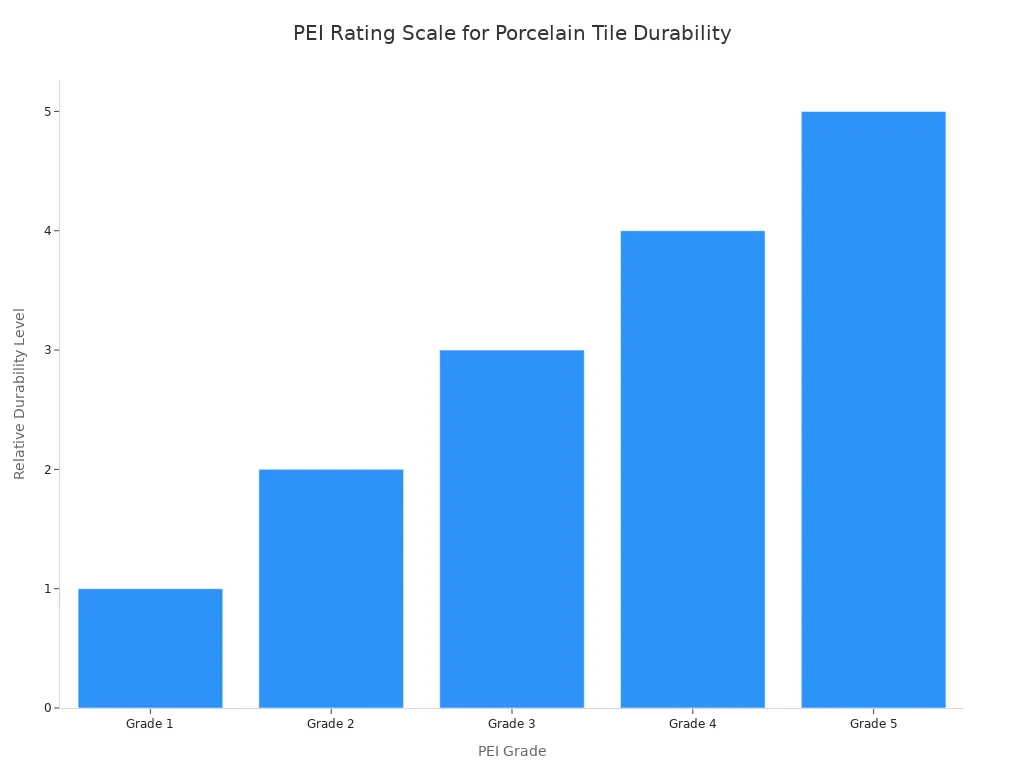
For the ultimate in durability, porcelain tile is unmatched. Its strength is measured using the PEI (Porcelain Enamel Institute) rating scale. This scale helps you choose the right tile for your specific needs. A higher PEI rating means the tile can withstand more foot traffic and abrasion.
You can use this chart to understand the PEI ratings for this flooring:
| PEI Grade | Durability | Recommended Use |
|---|---|---|
| Grade 1 | Least durable | Wall use only (e.g., kitchen backsplashes) |
| Grade 2 | Low durability | Low-traffic rooms (e.g., bathrooms, bedrooms) |
| Grade 3 | Moderate durability | Most residential floors, including kitchens and hallways |
| Grade 4 | High durability | All residential and most commercial high traffic areas |
| Grade 5 | Toughest | Extremely high-traffic areas (e.g., airports, grocery stores) |
Many porcelain tiles also feature a “through-body” construction. This means the color and pattern run through the entire thickness of the tile. If you accidentally chip a through-body tile, the damage is much less noticeable because the inside material matches the surface. This feature makes it an excellent choice for the highest traffic areas in your home.
Ultimately, is peel and stick flooring good? Yes, for temporary or light-use applications. Is peel and stick flooring good for busy family kitchens? Probably not. Is peel and stick flooring good compared to SPC? No, the SPC option is far more durable. The question “is peel and stick flooring good” truly depends on where and how you plan to use the peel-and-stick floor tiles.
How Do They Handle Water and Moisture?
Water can be a floor’s worst enemy. You need a flooring solution that can stand up to spills, humidity, and moisture, especially in kitchens, bathrooms, and basements. The way each flooring type manages water is a major factor in your decision.
Peel and Stick Flooring
Peel-and-stick vinyl flooring is the most vulnerable to water and humidity. The main weakness is its adhesive backing. Water can seep between the seams of the tiles. This moisture breaks down the glue over time, causing the edges to curl and lift. High humidity in a room also poses a significant threat to this flooring.
Moisture and Adhesives: A Bad Mix For the adhesive to work correctly, you need the right conditions. The recommended relative humidity should stay between 35%-65% before, during, and after you install the flooring. If the area is too damp, the adhesive may not dry properly, leading to a failed installation.
Even moisture-tolerant adhesives will not protect the flooring from damage. They do not create a moisture barrier. This means any water that gets underneath can still damage your subfloor. For these reasons, you should avoid using this vinyl flooring in high-moisture areas like full bathrooms or basements.
SPC Vinyl Flooring
SPC vinyl flooring gives you a completely waterproof solution. The power of SPC flooring comes from its core. This rigid core contains a mix of natural limestone and stabilizers. This blend creates a dense, non-porous material. The planks themselves will not swell, warp, or break down when exposed to water. This makes SPC an ideal waterproof vinyl flooring.
The protection does not stop at the core. The design of SPC planks also keeps water out.
- Each plank features a click-locking system.
- This system creates a very tight seal between the planks on all sides.
- The tight connection prevents surface spills from seeping through the cracks to your subfloor.
The rigid nature of the SPC core makes this locking mechanism more secure and effective than in other vinyl flooring types. You can confidently install this waterproof vinyl flooring in any room, including bathrooms, kitchens, and laundry rooms. The superior water resistance of SPC flooring provides peace of mind.
Porcelain Tile
When it comes to waterproof performance, porcelain tile is in a class of its own. The material itself is incredibly dense and non-porous. Industry standards measure a tile’s water resistance by its absorption rate. According to the American Society for Testing and Materials (ASTM), porcelain is classified as “impervious.”
- Impervious: Water absorption of 0.5% or less.
- Vitreous: Water absorption between 0.5% and 3%.
- Semi-Vitreous: Water absorption between 3% and 7%.
This means a porcelain tile absorbs almost no water, making it a perfect choice for the wettest environments like showers and mudrooms. However, you must consider the grout lines. Grout is porous and can absorb water. You need to apply a quality grout sealer and reapply it periodically to create a fully waterproof surface and protect your subfloor.
Which Flooring Is Easiest to Install?
The ease of installation can save you time and money. You should consider how much work you are willing to do. Each flooring type presents a different level of difficulty for a DIY project.
Peel and Stick Flooring
You might think peel-and-stick vinyl flooring is the easiest option. While the process is simple, proper preparation is key for a good result. A successful installation requires a perfectly smooth and clean subfloor. You must complete several steps before laying down the first tile.
- Remove all trim and baseboards.
- Vacuum and mop the floor to remove all debris.
- Use a leveling compound to fill any seams or create an even surface.
- Sand down any rough spots after the compound dries.
- Clean the flooring one last time right before installation.
This prep work ensures the vinyl tiles adhere correctly and last longer.
SPC Vinyl Flooring
SPC vinyl flooring offers a straightforward installation that is perfect for most DIYers. The planks use a click-locking system, so you can snap them together without glue. The rigid SPC core also means this flooring is more forgiving of minor subfloor imperfections than flexible vinyl. You can use simple tools for this job. A plank cutter allows for precise, dust-free cuts inside your home, saving you time. A utility knife is also helpful for various tasks during the SPC flooring installation. The simple installation makes SPC a great choice. This SPC flooring is a user-friendly flooring.
Porcelain Tile
Porcelain tile installation is the most complex and is best left to professionals. The tiles are heavy and their dense nature makes them very difficult to cut without special tools. A professional installation ensures you get perfect alignment and a clean finish. Professionals avoid common mistakes like uneven spacing or misaligned cuts. Hiring an expert for your porcelain flooring helps you avoid costly errors and ensures the durability of your new flooring. This difficult installation process is a major factor when choosing this flooring.
What Is the Cost Difference and Long-Term Value?
Your budget is a major factor when choosing a new floor. You should look at both the initial price and the long-term value. A cheap flooring might cost you more over time in repairs and replacements.
Peel and Stick Flooring
Peel-and-stick vinyl flooring offers the lowest upfront cost. This makes it an attractive option for a quick, budget-friendly update. The material cost is very low, and you can save money by installing it yourself.
Average Material Costs You can expect to pay between $1.50 and $2.50 per square foot for this vinyl flooring.
Item Price per Square Foot Peel and Stick Floor Tiles USD $1.68 Peel and Stick Floor Tiles USD $2.40
However, the low price reflects its shorter lifespan. This flooring may only last a few years in busy areas. You might need to replace it sooner than other options. This makes its long-term value quite low for most homes.
SPC Vinyl Flooring
SPC vinyl flooring represents a smart investment. The initial cost is higher than peel-and-stick vinyl. However, the excellent durability of SPC flooring provides superior long-term value. The strong SPC core resists dents, scratches, and water damage. This means your SPC flooring will look new for many years. You will not need to spend money on frequent replacements. The longevity of SPC makes it a cost-effective choice for almost any room. This flooring balances price and performance perfectly.
Porcelain Tile
Porcelain tile has the highest initial cost. The materials are more expensive, and you will likely need to hire a professional for installation. This adds to the overall price. Despite the high upfront expense, this flooring offers the best long-term value. A properly installed porcelain floor can last for 50 years or more. Its incredible durability means you may never need to replace your flooring again. This makes it a premium, lifelong investment for your home.
How Do They Feel Underfoot?
The comfort of your flooring is an important part of daily life. You should consider how each material feels when you walk on it. The temperature and hardness of your flooring can make a big difference.
Peel and Stick Flooring
Peel-and-stick vinyl flooring offers a very basic feel. This thin flooring feels hard and often cold underfoot. It has little to no cushioning. The temperature of this vinyl flooring will closely match the temperature of the subfloor beneath it. In a cold basement, the flooring will feel cold. It does not provide much insulation or comfort.
SPC Vinyl Flooring
SPC vinyl flooring gives you a much more comfortable experience. Many SPC planks come with an attached underlayment. This extra layer provides some cushion and makes the flooring softer to walk on. The underlayment on SPC flooring also adds thermal insulation. This feature helps the flooring stay warmer, which is great for colder months. The rigid SPC core provides a solid, stable feel. This makes SPC a comfortable and quiet flooring for any room. You will appreciate this quality in your SPC flooring.
Porcelain Tile
Porcelain tile is the hardest and coldest flooring option. Its extreme density makes it feel very solid, but it offers no flexibility. The natural hardness of this flooring can cause foot and leg fatigue if you stand for a long time, like when cooking in the kitchen. The hard surface sends more impact to your feet and joints.
Studies show that standing on hard flooring for several hours can lead to more discomfort in the lower legs and back. This can also cause more swelling in your lower body.
While this flooring is incredibly durable, it is not the most comfortable choice for long periods of standing.
What Are the Best Rooms for Each Flooring Type?
Choosing the right flooring for each room ensures it performs well and lasts long. You should match the material’s strengths to the room’s function. This simple step helps you get the most value from your new flooring.
Where to Use Peel and Stick
You should use peel-and-stick vinyl flooring in areas with low foot traffic and no moisture. This flooring is a great choice for a quick and inexpensive update. Consider using this vinyl flooring in these spaces:
- Closets
- Guest bedrooms that are not used often
- As a temporary flooring solution in a rental apartment
Avoid using this flooring in bathrooms, kitchens, or entryways. Water and heavy use will cause the tiles to peel and wear out quickly.
Where to Use SPC Vinyl
SPC vinyl flooring is an excellent choice for nearly any room in your home. The durability of SPC makes it perfect for high-traffic areas like hallways and living rooms. The waterproof nature of SPC flooring also makes it a superior option for wet environments. This is a very versatile flooring.
SPC vinyl flooring is a recommended choice for basements and bathrooms because it is 100% waterproof. This quality makes it ideal for areas prone to moisture such as bathrooms, basements, and laundry rooms.
The strong SPC core provides stability and comfort, making this a fantastic all-around flooring.
Where to Use Porcelain Tile
Porcelain tile is the best flooring for areas that need maximum durability and water resistance. You can install this flooring in any room, but it truly shines in demanding environments. Its premium look also makes it a popular choice for high-end spaces. You will often find this flooring in:
- Residential kitchens and bathrooms
- High-end boutiques and corporate offices
- Outdoor patios and walkways
If you want a flooring that can last a lifetime and handle anything, porcelain is the ultimate investment.
For quick updates, peel-and-stick vinyl flooring is a practical flooring choice. SPC vinyl flooring stands out as the best all-around flooring. The durability of this SPC flooring makes it a great investment. You will find this SPC flooring is a superior SPC flooring for nearly any room. If you want maximum longevity, porcelain flooring is the premium flooring investment. This flooring requires professional installation.
- Porcelain floors can last over 50 years.
- This makes it a great value despite a higher initial installation cost.
FAQ
Can you install SPC vinyl over peel and stick?
You should not install SPC directly over peel-and-stick tiles. The old adhesive can fail, and the soft surface creates an unstable base. You should remove the old flooring completely. This gives your new SPC planks a solid, clean foundation for a successful installation.
Which flooring is better for a rental property?
For a temporary and budget-friendly update in a rental, peel and stick is a good temporary flooring. If you plan to stay longer or want a more durable option that you might take with you, SPC offers better performance and value over time.
How do you clean these different types of flooring?
You can clean all three types with a broom or vacuum. For deeper cleaning, use a damp mop with a pH-neutral cleaner.
Cleaning Tip 💡 Avoid using harsh chemicals, wax, or steam mops on vinyl floors. These can damage the surface and adhesive. Always check the manufacturer’s guide to properly clean your new flooring.




