

You want your home to feel comfortable and look great. Vinyl tile thickness plays a big role in how your flooring lasts and feels.
- Kitchens and busy areas need thicker tiles to handle lots of footsteps and spills.
- Bedrooms and quiet spaces work well with thinner tiles, which feel softer under your feet.
Choosing the right thickness helps you install flooring easily and keep it looking new for years.
Why Vinyl Tile Thickness Matters
Durability and Longevity
You want your floors to last for years. The right vinyl tile thickness helps protect your flooring from dents, scratches, and daily wear. Thicker tiles stand up better to heavy furniture and lots of foot traffic. When you choose thicker tiles, you boost the durability and performance of your floors. This matters most in busy rooms like kitchens or hallways, where people walk often and spills can happen. Thinner tiles may work in quiet spaces, but they might not last as long in active areas.
Comfort Underfoot
Walking on your floors should feel good. Thicker vinyl tiles, especially those 6mm or more, give you extra cushioning. You notice the difference right away when you step on luxury vinyl flooring with more padding. These thicker options also help with soundproofing and keep your rooms warmer. Many floating floors in the 6–10mm range offer:
- More comfort underfoot
- Better sound insulation
- Improved warmth and coziness
If you want a soft, quiet floor, thicker vinyl tiles make a big difference.
Installation Ease
You want your installation to go smoothly. Thicker vinyl tiles are often easier to handle and lay flat, especially if your subfloor is not perfect. They can hide small bumps or flaws in the surface below. Thinner tiles may show these imperfections, making your flooring look uneven. When you pick the right thickness, you make the installation process faster and get better results.
Understanding Vinyl Tile Thickness and Wear Layer
Standard Vinyl Plank Flooring Thickness Ranges
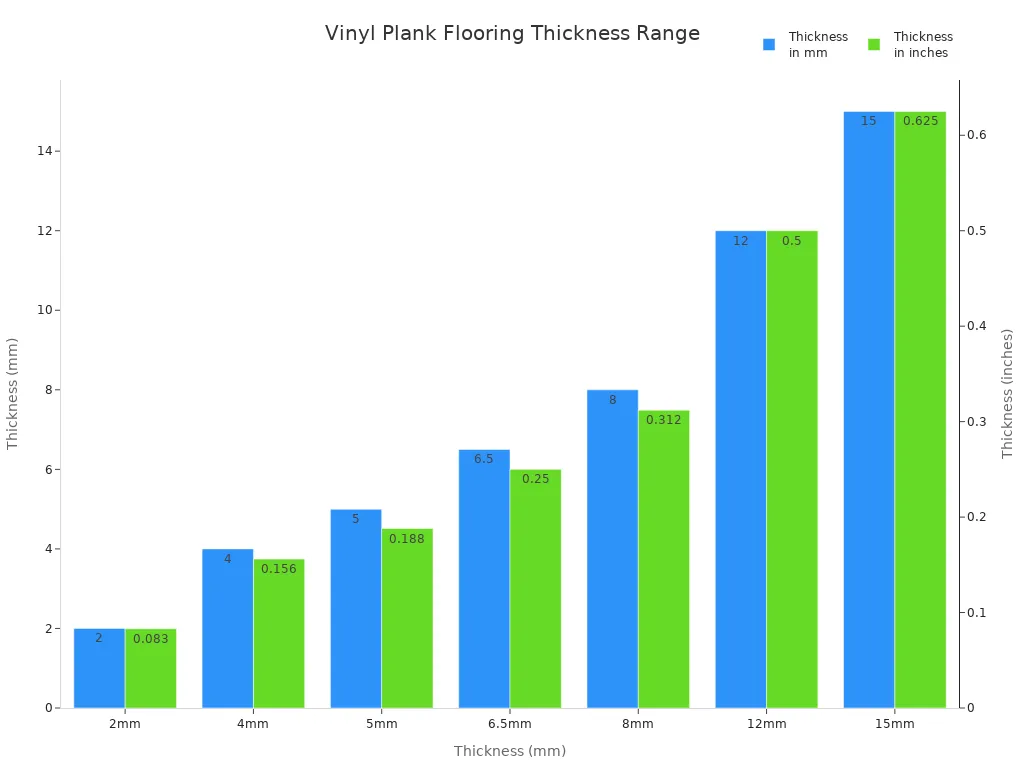
When you shop for vinyl flooring, you see many thickness options. Each thickness works best for different rooms and needs. You want to know which thickness fits your space. The most common thicknesses range from 2mm to 15mm. Thinner tiles suit light-use areas, while thicker tiles handle heavy traffic and last longer.
Here is a table showing the standard residential thickness and other common thicknesses for vinyl plank flooring:
| Thickness (mm) | Thickness (inches) | Description |
|---|---|---|
| 15mm | 5/8 inch | Thickest available option |
| 12mm | 1/2 inch | Premium commercial grade |
| 8mm | 5/16 inch | Commercial grade thickness |
| 6.5mm | 1/4 inch | Premium residential thickness |
| 5mm | 3/16 inch | Standard residential thickness |
| 4mm | 5/32 inch | Entry-level thickness |
| 2mm | 1/12 inch | Thinnest available option |
You can also see the thickness options in this chart:
Tip: If you want more comfort and better sound insulation, choose a thicker tile for your living room or bedroom.
Importance of Wear Layer Thickness
You want your flooring to resist scratches and stains. The wear layer thickness protects the surface of your vinyl tile. This clear top layer shields the design and keeps your floor looking new. A thicker wear layer means better durability and performance, especially in busy rooms.
Here is a table that shows the recommended wear layer thickness for different uses:
| Application Type | Recommended Wear Layer Thickness |
|---|---|
| Light Residential Use | 6 mil to 12 mil (approx. 0.15 mm to 0.3 mm) |
| General Residential Use | 12 mil to 20 mil (approx. 0.3 mm to 0.5 mm) |
| High-Traffic Residential Use | 20 mil to 22 mil (approx. 0.5 mm to 0.55 mm) |
| Light Commercial Use | 20 mil to 28 mil (approx. 0.5 mm to 0.7 mm) |
| General Commercial Use | 28 mil to 30 mil (approx. 0.7 mm to 0.76 mm) |
If you install flooring in a hallway or kitchen, you need a thicker wear layer. For bedrooms or guest rooms, a thinner wear layer works fine.
Note: Always check the wear layer thickness before you buy. This helps you match the flooring to your room’s needs.
How Thickness Impacts Performance
You want your vinyl tile to last and look good. The total thickness and wear layer thickness both affect how your floor performs. Thicker tiles feel softer and warmer. They also hide small bumps in the subfloor. A thicker wear layer protects the lvt design from scratches and fading.
If you choose a tile with premium residential thickness and a thicker wear layer, you get better lvt performance. Your flooring stands up to pets, kids, and heavy furniture. You also enjoy a quieter and more comfortable space.
- Thicker tiles = more comfort and longer life
- Thicker wear layer = better protection and easier cleaning
You make your home safer and more beautiful when you pick the right vinyl tile thickness for each room.
Kitchen Vinyl Tile Thickness Recommendations
Ideal Vinyl Plank Flooring Thickness for Kitchens
You want your kitchen floor to stand up to daily life. Kitchens see heavy foot traffic, spills, and dropped items. You need a strong surface that lasts. The best choice for kitchens is thicker vinyl flooring. This type of flooring resists dents and scratches. It also feels sturdy under your feet.
Kitchens with lots of activity need a higher vinyl plank flooring thickness. You should look for options designed for heavy residential or commercial use. These tiles handle weight from appliances and frequent movement. The table below shows the recommended thickness for lvp in busy kitchens:
| Thickness (mm) | Application |
|---|---|
| 8-12 | Designed for heavy residential or commercial use; can handle substantial weight and high foot traffic. |
You get better durability with thicker vinyl flooring. This thickness for lvp helps your kitchen floor stay smooth and attractive. You also enjoy easier cleaning and less worry about damage.
Tip: Choose vinyl plank flooring with a thickness of 8-12 mm for kitchens. This range gives you the best balance of strength and comfort.
LVT Installation Tips for Kitchen Areas
You want your lvt installation to go smoothly in the kitchen. Start by checking your subfloor. Make sure it is clean, dry, and level. Remove any bumps or debris before you begin. This step helps your flooring lay flat and look professional.
Use a moisture barrier if your kitchen has a concrete subfloor. This barrier protects your vinyl plank flooring from water damage. You should also leave a small gap around the edges for expansion. This gap prevents buckling when the temperature changes.
Follow these steps for a successful installation:
- Measure your kitchen space carefully.
- Cut tiles to fit around cabinets and appliances.
- Stagger the seams for a natural look.
- Press each tile firmly into place.
You get a strong and beautiful kitchen floor when you follow these tips. Thicker vinyl flooring makes installation easier and hides small flaws in the subfloor. You enjoy a kitchen that looks great and lasts for years.
Bathroom Vinyl Tile Thickness Recommendations
Moisture Resistance and Vinyl Tile Thickness
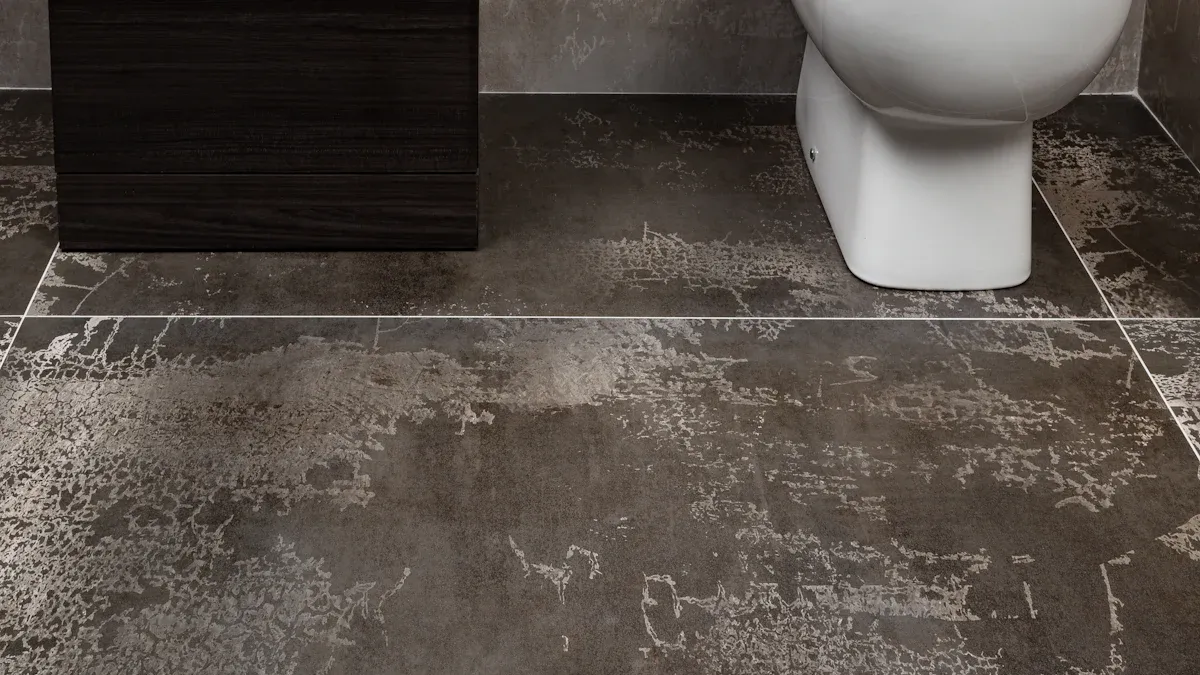
You want your bathroom floor to stay safe and look clean. Bathrooms have lots of water and steam. Water can damage some types of flooring. Luxury vinyl plank flooring gives you strong protection against moisture. The waterproof surface keeps spills from soaking in. You do not need to worry about mold or warping when you choose the right thickness.
Luxury vinyl flooring works well in bathrooms because it resists water. The wear layer adds extra defense. You get a floor that stands up to daily showers and splashes. If you install luxury vinyl planks, you protect your bathroom from leaks and humidity. You also make cleaning easier. Water wipes away quickly, and the floor stays smooth.
Tip: Always check the manufacturer’s instructions for waterproof ratings before you buy bathroom flooring.
Best LVP Thickness for Bathrooms
You want your bathroom floor to feel solid and last a long time. The best lvp thickness for bathrooms is usually between 5mm and 8mm. This range gives you a sturdy surface that handles foot traffic and moisture. Thicker luxury vinyl plank feels more comfortable under your feet. You also get better sound insulation.
Here is a quick table to help you choose the right thickness for your bathroom:
| Room Type | Recommended Thickness (mm) | Notes |
|---|---|---|
| Bathroom | 5–8 | Waterproof, easy to clean |
You should pick luxury vinyl plank with a thick wear layer. This layer protects the design and keeps your floor looking new. If you want extra comfort, choose luxury vinyl planks with attached underlayment. You get a softer feel and less noise.
- Measure your bathroom space before you buy flooring.
- Look for products labeled as waterproof.
- Choose a thickness that matches your needs.
You make your bathroom safer and more stylish when you select the right luxury vinyl plank thickness.
Living Room Vinyl Tile Thickness Guide
Recommended Vinyl Plank Flooring Thickness for Living Rooms
You want your living room to feel inviting and look stylish. The right vinyl plank flooring thickness helps you achieve both goals. Living rooms often see moderate foot traffic from family and guests. You need flooring that stands up to daily use but also feels comfortable.
Most experts recommend a vinyl plank flooring thickness between 6mm and 8mm for living rooms. This range gives you a sturdy surface that resists dents and scratches. You also get a floor that feels soft underfoot. If you have pets or kids, thicker planks offer extra protection.
Here is a quick table to help you compare options:
| Vinyl Plank Flooring Thickness | Best For | Comfort Level |
|---|---|---|
| 6mm | Standard living rooms | Good |
| 8mm | Busy family spaces | Excellent |
Tip: Choose a thickness that matches your lifestyle. If you host parties or have active children, select 8mm for added durability.
Balancing Comfort and Durability
You want your living room to be both cozy and long-lasting. The right lvp thickness helps you find this balance. Thicker planks provide more cushioning, which makes your space feel warmer and quieter. You notice less noise when people walk across the floor.
Durability matters too. Thicker vinyl plank flooring resists wear from furniture and foot traffic. You spend less time worrying about scratches or dents. If you want extra comfort, look for planks with attached underlayment. This feature adds softness and helps with sound insulation.
Consider these points when choosing flooring for your living room:
- Thicker planks offer better comfort and noise reduction.
- Durable flooring stands up to daily activities.
- Attached underlayment improves warmth and softness.
Note: Always check the manufacturer’s warranty. Longer warranties often mean better quality and durability.
You create a living room that feels great and lasts for years when you choose the right thickness.
Bedroom Vinyl Tile Thickness Suggestions
Suitable Vinyl Tile Thickness for Bedrooms
You want your bedroom to feel cozy and quiet. Bedrooms do not see as much foot traffic as kitchens or hallways. You can choose a thinner vinyl tile for this space. Most experts recommend a vinyl tile thickness between 4mm and 6mm for bedrooms. This range gives you a soft feel underfoot and keeps your room comfortable.
Here is a simple table to help you compare options for bedroom flooring:
| Vinyl Tile Thickness | Best For | Comfort Level |
|---|---|---|
| 4mm | Guest bedrooms | Good |
| 6mm | Master bedrooms | Excellent |
You can select a thinner tile if you want a budget-friendly option. Thicker tiles work well if you want extra comfort or have heavy furniture in your bedroom.
Tip: Measure your bedroom before you buy flooring. This helps you avoid waste and makes installation easier.
Prioritizing Comfort with LVP Thickness
You spend a lot of time in your bedroom. Comfort matters most in this space. When you choose the right lvp thickness, you get a floor that feels soft and warm. Thicker luxury vinyl planks help reduce noise and make your room quieter. You notice less sound when you walk or move furniture.
Consider these benefits when you pick flooring for your bedroom:
- Thicker planks add warmth and softness.
- You get better sound insulation.
- Your floor feels more comfortable every day.
If you want the best comfort, look for luxury vinyl planks with attached underlayment. This feature adds extra cushioning and helps keep your bedroom peaceful. You can enjoy a relaxing space with the right thickness and lvp thickness.
Note: Always check the product label for comfort features. Some flooring options include extra padding for bedrooms.
Basement and Utility Room Vinyl Tile Thickness
Thickness for Moisture-Prone Areas
Basements and utility rooms often have higher humidity. You need to choose vinyl tile with the right thickness for these spaces. Water can seep through concrete or collect on the surface. If you pick thin tiles, you risk damage from moisture. Thicker vinyl tiles help protect your flooring from water and mold. You get better durability and a longer-lasting floor.
Here is a simple table to guide your choice:
| Room Type | Recommended Thickness (mm) | Moisture Protection |
|---|---|---|
| Basement | 6–8 | High |
| Utility Room | 6–8 | High |
Tip: Always look for waterproof or water-resistant vinyl tiles for basements and utility rooms. These products keep your flooring safe from leaks and spills.
Subfloor Considerations for LVT Installation
You want your vinyl tile to stay flat and secure. Basements and utility rooms often have concrete subfloors. These surfaces can be uneven or damp. Before you install luxury vinyl tile, check the subfloor for cracks or moisture. Clean the area and let it dry completely. You may need to use a moisture barrier to protect your flooring.
Follow these steps for a smooth installation:
- Inspect the subfloor for damage.
- Clean and dry the surface.
- Apply a moisture barrier if needed.
- Lay the vinyl tile according to the manufacturer’s instructions.
Note: Proper preparation helps your flooring last longer and prevents problems like warping or lifting.
You create a safe and durable space when you choose the right thickness and prepare the subfloor carefully.
High-Traffic Area Vinyl Tile Thickness
Entryways and Hallways Vinyl Plank Flooring Thickness
You see a lot of movement in entryways and hallways. Shoes track in dirt. Bags and coats brush against the floor. These spaces need strong flooring that can handle daily wear. You want to choose vinyl plank flooring with enough thickness to resist dents and scratches. Most experts recommend a minimum thickness of 8mm for these busy spots. This thickness gives you a sturdy surface that stands up to heavy foot traffic.
Consider these steps when picking flooring for entryways and hallways:
- Check the manufacturer’s rating for durability.
- Look for products with a thick wear layer.
- Choose designs that hide scuffs and marks.
Tip: A thicker plank helps your floor last longer and keeps it looking fresh, even in high-traffic areas.
Commercial-Grade LVP Thickness Options
You need extra protection in places like schools, stores, or busy offices. Commercial lvt offers the best solution for these environments. You get a tough surface that resists scratches, stains, and heavy loads. Commercial lvt comes in different thickness levels, so you can match the product to your needs.
Here is a table showing typical commercial grade thickness and wear layer options for commercial lvt:
| Traffic Level | Wear Layer Thickness |
|---|---|
| Low Traffic | 12 mil |
| High Traffic | 40 mil |
You see that high-traffic areas require a wear layer of 40 mil. This level of protection keeps your commercial lvt looking new, even with constant use. You also find commercial lvt with reinforced cores and special coatings. These features help the flooring resist water and stains.
When you select commercial lvt, pay attention to lvp thickness and commercial grade thickness. You want a product that meets your space’s demands. Commercial lvt works well in entryways, hallways, and any area with lots of movement. You get peace of mind knowing your flooring will last.
Note: Always check the warranty and installation instructions for commercial lvt. Proper care helps your floor stay strong for years.
How to Measure and Select the Right Vinyl Tile Thickness
Assessing Subfloor Conditions
You need to start with a good foundation before you choose luxury vinyl planks for your home. The subfloor plays a big role in how your flooring feels and lasts. If you have a smooth and dry subfloor, you can use a wider range of thickness options. Uneven or damp subfloors require extra care.
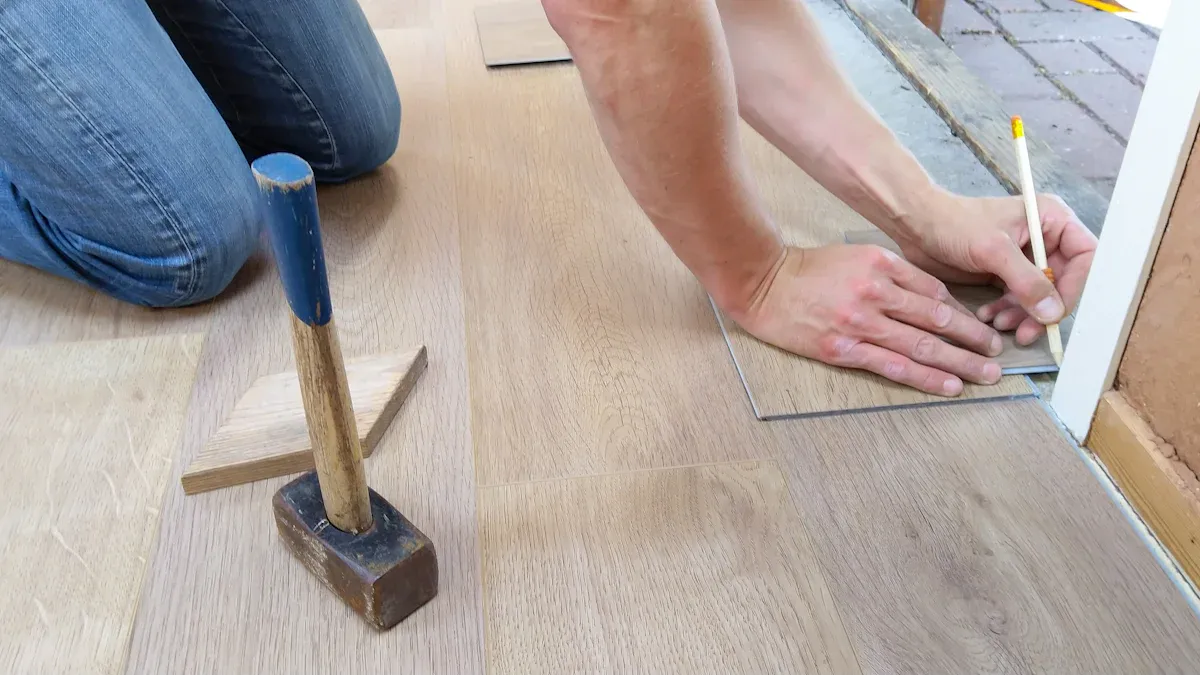
First, check the surface for bumps, cracks, or moisture. Use a level to spot any high or low areas. If you see damage, repair it before you begin lvt installation. Concrete subfloors often need a moisture barrier. Wood subfloors may need sanding or patching. You want your luxury vinyl plank to sit flat and stay secure.
Tip: Always clean the subfloor before you start vinyl flooring installation. Dirt and debris can affect the total thickness and cause problems later.
Here is a simple checklist for subfloor assessment:
- Inspect for cracks or holes
- Check for moisture with a meter
- Remove dust and debris
- Repair uneven spots
When you prepare the subfloor, you help your luxury vinyl flooring last longer. You also make installation easier and get better results.
Matching LVT Installation to Room Needs
You want your flooring to fit each room’s purpose. The right lvt installation depends on how you use the space. Bedrooms and guest rooms need comfort, so you can choose luxury vinyl planks with standard residential thickness. Kitchens and entryways need strength, so you should pick thicker luxury vinyl plank flooring.
Think about the amount of foot traffic and the type of furniture in each room. High-traffic areas need a higher total thickness and a strong wear layer thickness. Quiet spaces can use thinner luxury vinyl plank. If you have pets or kids, select luxury vinyl planks with extra durability.
Here is a table to help you match lvt installation to room needs:
| Room Type | Recommended Total Thickness | Best Luxury Vinyl Planks Features |
|---|---|---|
| Bedroom | 4–6 mm | Soft underfoot, quiet |
| Kitchen | 8–12 mm | Durable, easy to clean |
| Basement | 6–8 mm | Moisture-resistant |
| Entryway | 8 mm+ | High wear layer thickness |
Note: Always check the manufacturer’s guidelines for lvt installation. This helps you choose the right total thickness and get the best performance.
Practical Tips for Choosing Vinyl Tile Thickness
You want to make smart choices when you shop for luxury vinyl plank. Start by measuring your room. Accurate measurements help you buy the right amount of flooring and avoid waste. Use a tape measure to find the length and width of the space. Write down the numbers and add a little extra for mistakes or future repairs.
Next, compare thickness options. Thicker luxury vinyl planks offer more comfort and durability. Thinner planks work well in low-traffic rooms. Look for products with attached underlayment for extra softness. If you want better sound insulation, pick a higher total thickness.
Here are some practical tips for selecting vinyl tile thickness:
- Measure your room twice for accuracy.
- Choose luxury vinyl plank with a wear layer thickness that matches your lifestyle.
- Pick total thickness based on room use and subfloor condition.
- Read reviews and check warranties before you buy.
- Ask for samples to test comfort and appearance.
Callout: If you have heavy furniture or lots of activity, thicker luxury vinyl plank flooring gives you peace of mind.
You make your home safer and more comfortable when you follow these steps. The right vinyl tile thickness helps your flooring look great and last for years.
Quick-Reference Room-by-Room Vinyl Tile Thickness Chart
Summary Table of Recommendations
You want to make smart choices for every room in your home. This chart helps you compare the best thickness for each space. You can use it as a quick guide when you shop for luxury vinyl flooring. The table below shows the recommended thickness and features for common rooms.
| Room Type | Recommended Thickness (mm) | Wear Layer (mil) | Key Features |
|---|---|---|---|
| Kitchen | 8–12 | 20+ | Durable, easy to clean |
| Bathroom | 5–8 | 12+ | Waterproof, mold resistant |
| Living Room | 6–8 | 12+ | Comfortable, quiet |
| Bedroom | 4–6 | 6+ | Soft underfoot, warm |
| Basement | 6–8 | 12+ | Moisture-resistant |
| Utility Room | 6–8 | 12+ | Tough, water-resistant |
| Entryway/Hallway | 8+ | 20+ | High traffic, strong |
| Commercial Space | 12+ | 28+ | Heavy-duty, long-lasting |
Tip: You can use this chart to match luxury vinyl flooring to each room’s needs. If you want extra comfort, look for products with attached underlayment.
- Measure your space before you buy.
- Check the manufacturer’s label for waterproof ratings.
- Choose luxury vinyl flooring with a wear layer that fits your lifestyle.
You get the best results when you follow these recommendations. The right flooring keeps your home safe, comfortable, and stylish. You can enjoy easy cleaning and long-lasting beauty in every room.
📝 Use this chart as your go-to reference when you plan your next flooring project. You save time and avoid mistakes by picking the right thickness for each space.
- You now know the best vinyl tile thickness for every room in your home.
- You should match the thickness to each room’s needs and follow the right installation steps.
- You can use the quick-reference chart to make smart choices for your flooring project.
Remember: The right thickness helps your floors last longer and feel better underfoot. Check the chart before you buy to avoid mistakes.
FAQ
What is the best vinyl tile thickness for homes with pets?
You should choose vinyl tiles at least 8mm thick. Thicker tiles resist scratches from claws and paws. You get better durability and easier cleaning. Look for a strong wear layer to protect your floor from pet accidents.
Can I install thin vinyl tiles in a high-traffic area?
You should avoid thin tiles in busy spaces. Thin vinyl tiles wear out faster and show damage easily. For entryways or hallways, select tiles 8mm or thicker. This choice helps your floor last longer and look better.
Does a thicker vinyl tile feel warmer underfoot?
Yes, thicker vinyl tiles provide more warmth and comfort. You notice less cold from the subfloor. Many thicker options include attached underlayment, which adds extra insulation. Your rooms feel cozier and quieter.
How do I know if my subfloor needs a moisture barrier?
Check your subfloor for dampness using a moisture meter. Concrete subfloors often need a moisture barrier. If you see any signs of water or humidity, install a barrier before laying vinyl tiles. This step protects your flooring from damage.
Is it easy to cut and install thicker vinyl tiles?
You can cut and install thicker vinyl tiles with basic tools. Thicker tiles may require a sharp utility knife or a vinyl cutter. Follow the manufacturer’s instructions for best results. You get a smoother finish and fewer installation problems.




