
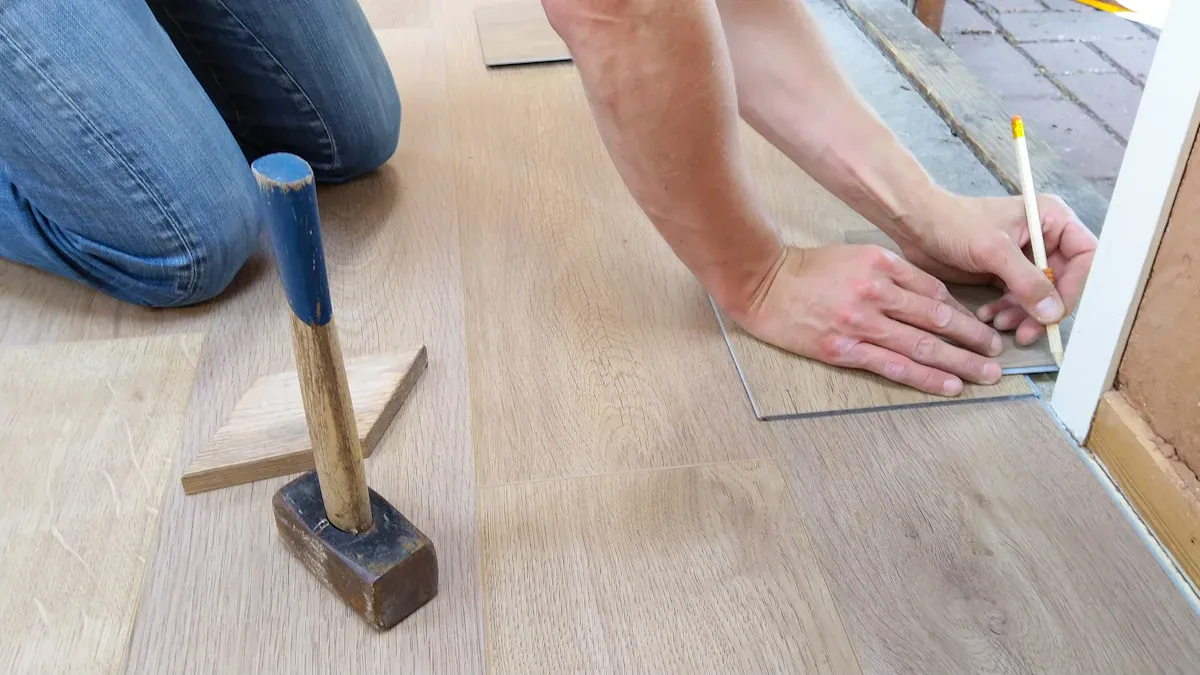
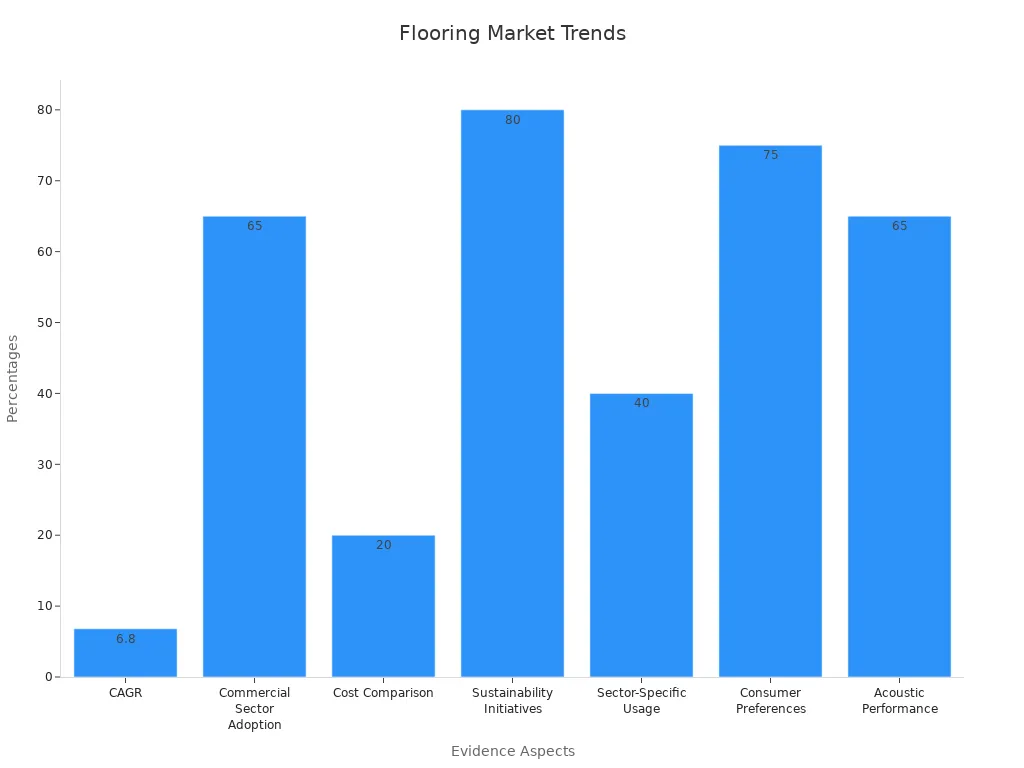
When you compare vinyl versus pvc flooring, you see each option brings unique strengths. Vinyl offers comfort and style, while PVC stands out for its flexibility and affordability. SPC flooring delivers top durability and water resistance. The global market for these flooring types keeps growing, with SPC alone set to reach $12 billion by 2030. This trend shows that people like you want the best flooring for every space.
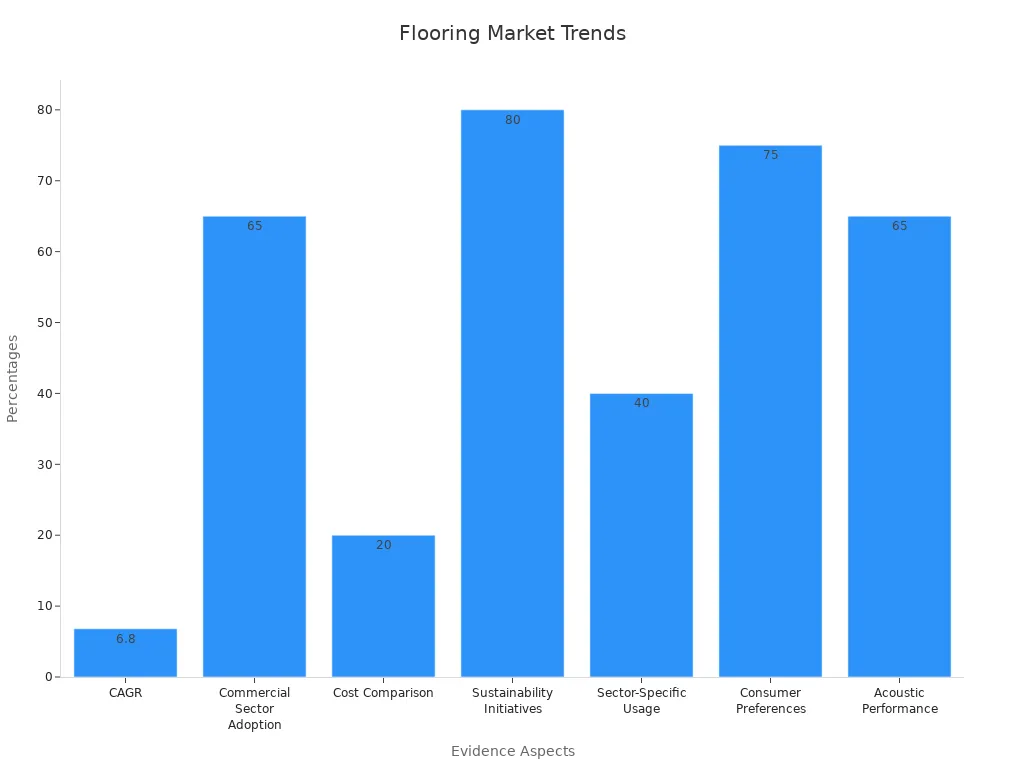
Choosing between vinyl versus pvc flooring helps you match your needs for comfort, cost, or toughness.
Vinyl Versus PVC vs. SPC: Quick Comparison Table
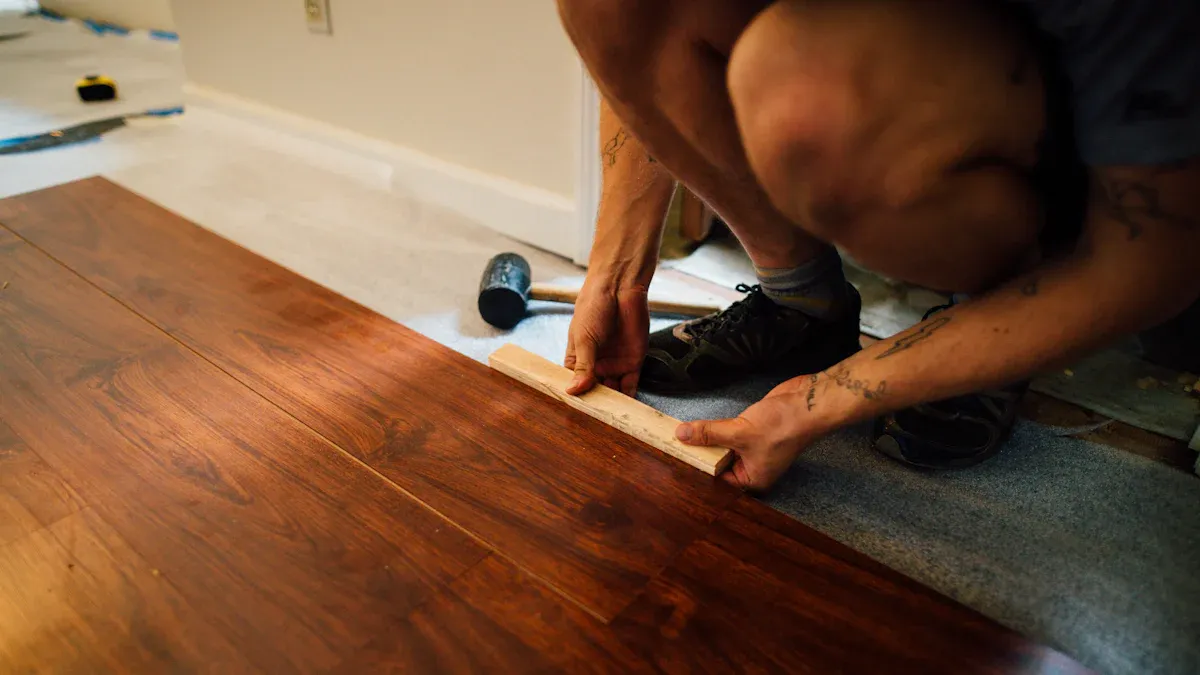
Vinyl, PVC, and SPC at a Glance
When you look at flooring options, you want to see the facts side by side. This quick comparison table helps you understand how vinyl, PVC, and SPC flooring stack up. You can use this guide to match the right flooring to your needs.
| Feature/Metric | Vinyl Flooring | PVC Flooring | SPC Flooring |
|---|---|---|---|
| Waterproof Rating | Water-resistant | Water-resistant | 100% waterproof |
| Humidity Resistance (%) | ~90% | ~90% | 95% |
| Swelling Rate (%) | 0.5% | 0.5% | 0.1% |
| Wear Resistance (cycles) | 3000 | 3000 | 5000 |
| Dent Resistance (lbs) | 1200 | 1200 | 2000 |
| Scratch Depth (mm) | 0.3 | 0.3 | 0.1 |
| Maintenance Cost ($/sqft/yr) | 0.15 | 0.15 | 0.05 |
| Lifespan in Wet Areas (years) | 10 | 10 | 25 |
| Initial Cost ($/sqft) | 2.50 | 2.00 | 4.00 |
| Total Cost (10 yrs, $/sqft) | 4.00 | 3.50 | 4.50 |
| ROI (% over 20 yrs) | 60% | 55% | 85% |
Tip: SPC flooring stands out for its high durability and water resistance. You may want to choose SPC for kitchens, bathrooms, or commercial spaces.
You can also compare the market trends and features for each type:
- Vinyl flooring offers a wide range of styles and colors. It is popular for its comfort and design flexibility.
- PVC flooring gives you an affordable and flexible option. Many people use it in areas with light to moderate foot traffic.
- SPC flooring uses a rigid core made from limestone and PVC. It resists dents, scratches, and water better than the others.
When you compare vinyl versus pvc, you see that both offer good water resistance and comfort. SPC, however, gives you the best performance in tough environments. If you want a balance of cost and style, vinyl versus pvc may be your best choice. For maximum durability, SPC flooring leads the way.
What Is Vinyl Flooring?
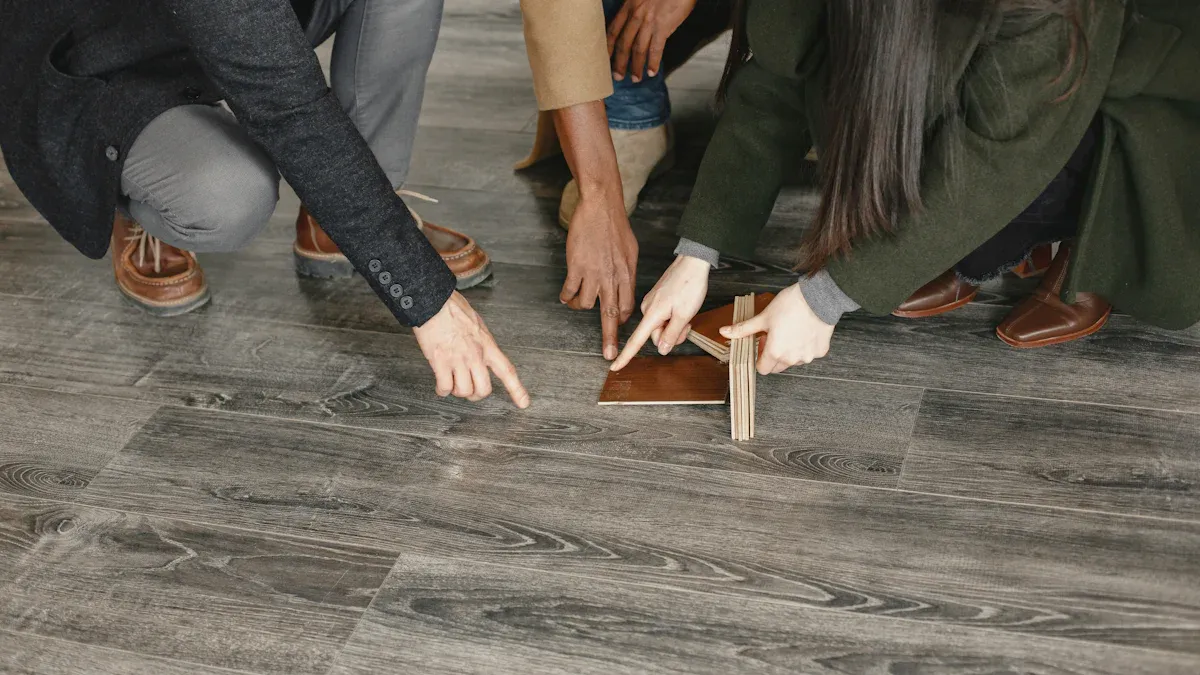
Vinyl Flooring Definition and Structure
You may know vinyl flooring as a popular synthetic flooring material for homes and businesses. This flooring uses several layers to create a strong and attractive surface. The top layer, called the wear layer, protects against scratches and stains. Underneath, you find a printed design layer that can look like wood, stone, or tile. The core layer gives the floor strength and stability. Some types, such as rigid core vinyl flooring, use a mix of limestone and PVC for extra durability. Many products also include a rubber backing for comfort underfoot and sound absorption. You can choose from glue-down, click-lock, loose lay, or self-adhesive installation methods.
| Aspect | Evidence Summary |
|---|---|
| Historical Data (2021-2024) | North America Luxury Vinyl Flooring market size was USD 12,205.68 million in 2024, with a CAGR of 8.8% forecasted to 2031. |
| Market Segmentation | Includes residential housing, commercial spaces, healthcare, etc., with residential housing specifically analyzed from 2021 to 2033. |
| Product Types | Segmented into rigid and flexible types; product types include glue-down, click, loose lay, self-adhesive. |
| Market Drivers | Durability, aesthetic appeal (wood-look, stone-look), ease of maintenance, and growing residential construction and renovations. |
| Regional Insights | US and Canada show strong demand and growth in both rigid and flexible vinyl flooring types. |
| Definitions and Segmentation | Detailed segmentation by type and design supports understanding of vinyl flooring’s suitability for residential use. |
Pros of Vinyl Flooring
You get many benefits when you choose vinyl flooring for your space:
- You can install it quickly and easily, even over concrete.
- The surface resists stains, scratches, and water, so you spend less time on cleaning.
- Vinyl flooring offers comfort underfoot, which makes it pleasant to walk on.
- You can pick from many styles, including luxury vinyl plank that looks like real wood.
- This flooring works well in high-traffic areas because it lasts a long time.
- New technology, such as 3D printing and antimicrobial coatings, improves both looks and performance.
- Vinyl flooring costs less than many other options, making it a smart choice for budget-minded homeowners.
Rapid urban growth and new construction have made vinyl flooring even more popular. You see it in homes, offices, and hospitals because it is durable and easy to maintain.
Cons of Vinyl Flooring
You should also know about some drawbacks:
Note: Moisture problems can cause vinyl flooring to fail. Water trapped under the floor may lead to mold, odors, or adhesive failure. Always test for moisture before installation.
- Vinyl flooring can release VOCs, which may affect indoor air quality.
- Some studies show higher bacteria counts in rooms with vinyl flooring compared to carpet.
- People sometimes report lower satisfaction with vinyl flooring in hospital rooms.
- Maintenance can be tricky if you have moisture issues in your subfloor.
You need to plan carefully and follow installation guidelines to avoid these problems.
What Is PVC Flooring?
PVC Flooring Definition and Structure
You may know pvc flooring as a type of vinyl flooring made from polyvinyl chloride. Manufacturers create pvc flooring by combining a pvc core with plasticizers and stabilizers. This process gives the floor its flexibility and strength. The pvc core forms the main layer, while a printed design layer adds color and pattern. A protective top layer shields the surface from scratches and stains. You can find pvc flooring in sheets, tiles, or planks. The structure of pvc flooring makes it resistant to water and chemicals. Many people choose pvc flooring for kitchens, bathrooms, and commercial spaces because it handles moisture and heavy use well. Scientific studies show that the choice of plasticizers in the pvc core affects both durability and safety. You should look for low-VOC and regulated products, especially if you plan to install pvc flooring in schools or healthcare settings.
| PVC Flooring Grade | Usage Description | Typical Applications | Performance Characteristics |
|---|---|---|---|
| Residential 21 | Light residential | Attics, guest rooms | Suitable for low traffic, stain and water resistant |
| Residential 22 | Normal residential | Bedrooms, hallways, baby rooms | Durable, easy maintenance |
| Residential 23 | Intensive residential | Kitchens, living rooms, hallways | High durability, comparable to light commercial |
| Commercial 32 | Normal commercial | Offices, retail stores, beauty salons | Balanced durability and design |
| Commercial 33 | Intensive commercial | Busy offices, restaurants, gyms | High durability, slip resistance |
| Industrial 41 | Light industrial | Packaging, storage | Resistant to wear, chemicals, impact |
| Industrial 43 | Heavy industrial | Warehousing, production | Heavy-duty, slip-resistant, easy to clean |
Pros of PVC Flooring
You will notice many advantages of pvc flooring when you install it in your space:
- The pvc core gives the floor flexibility and strength, making it last longer.
- You can clean pvc flooring easily because it resists stains and moisture.
- Technological advances have improved the design, so you can choose from many styles.
- The pvc core helps the floor handle heavy foot traffic and furniture.
- Installation is simple, saving you time and money.
- Eco-friendly options now use recyclable materials and low-emission formulas.
- The cost of pvc flooring stays low, making it a budget-friendly choice.
- Antimicrobial and fire-retardant features add extra safety.
- The market for pvc flooring keeps growing as more people see the advantages of pvc in homes and businesses.
Tip: If you want a floor that combines durability, style, and easy care, pvc flooring with a strong pvc core is a smart pick.
Cons of PVC Flooring
You should also consider some drawbacks before choosing pvc flooring:
- The pvc core can get damaged by sharp or heavy objects, causing scratches or dents.
- If pvc flooring stays wet for a long time, it may warp or lose strength.
- Some types of pvc flooring can fade if exposed to sunlight for many hours.
- Once the pvc core is damaged, you cannot repair it; you must replace the whole section.
- Some pvc flooring may release VOCs, which can affect indoor air quality.
- Recycling pvc flooring is difficult, and it does not break down naturally.
Note: Always check the product label for low-VOC and eco-friendly options to reduce health and environmental risks.
What Is SPC Flooring?
SPC Flooring Definition and Structure
You may hear people call SPC flooring “stone plastic composite” flooring. This type of flooring uses an SPC core made from a mix of natural limestone powder, PVC, and stabilizers. The SPC core gives the floor a rigid, dense, and stable base. This structure makes SPC flooring strong and helps it resist dents and warping. The wear layer on top, often made with polyurethane and ceramic beads, protects against scratches, stains, and fading. The non-porous SPC core and sealed edges make SPC flooring 100% waterproof and mildew resistant. Many SPC flooring products include a backing layer, such as IXPE or EVA foam, which adds sound insulation and comfort underfoot.
The rigid SPC core keeps the floor stable, even when temperatures or humidity change. You can use SPC flooring in high-traffic areas, kitchens, bathrooms, and basements without worry.
Here is a table showing the main certifications and what they mean for SPC flooring:
| Certification | Purpose | Key Benefit | Impact Area |
|---|---|---|---|
| CE | EU safety and quality | Safe, reliable | Regulatory |
| ISO 9001 | Quality management | Consistent production | Production |
| ISO 14001 | Environmental management | Sustainable practices | Environment |
| FloorScore | Low VOC emissions | Better indoor air quality | Health safety |
| GreenGuard Gold | Ultra-low emissions | Safe for sensitive groups | Health safety |
Pros of SPC Flooring
You get many benefits when you choose SPC flooring for your space:
- The SPC core makes the floor very strong and impact resistant.
- SPC flooring is 100% waterproof, so you can use it in bathrooms, kitchens, and laundry rooms.
- The dense SPC core prevents swelling, warping, and mold growth, even after long exposure to water.
- The wear layer protects against scratches, stains, and fading.
- SPC flooring passes strict tests, such as the ASTM F3261 waterproofing standard and over 6,000 Taber abrasion cycles, showing high durability.
- The click-lock system creates tight seams, blocking water and making installation easy.
- The backing layer absorbs sound and adds comfort, so you get a quiet and pleasant floor.
- SPC flooring meets health and safety standards, like FloorScore and GreenGuard Gold, which means low VOC emissions and safer indoor air.
- The SPC core keeps the floor stable, even in rooms with changing temperatures or humidity.
- You can clean SPC flooring easily, and it keeps its look even in busy homes or commercial spaces.
Tip: SPC flooring works well for families with pets or kids because it resists scratches and does not absorb spills or pet accidents.
Cons of SPC Flooring
You should also know the disadvantages of spc before you decide. The rigid SPC core can feel harder underfoot than other floors, which may not suit everyone. Some people notice that SPC flooring feels colder, especially in winter. The stone plastic composite structure makes the floor less flexible, so it may not hide uneven spots in the subfloor. If you drop heavy objects, the SPC core can chip or crack. The disadvantages of spc also include a higher price compared to basic vinyl or PVC flooring. You may find fewer design options with SPC flooring, since the rigid SPC core limits some patterns and textures.
Note: Always check if your subfloor is smooth and level before installing SPC flooring. This step helps prevent damage and keeps your floor looking its best.
Key Differences: Vinyl Versus PVC Versus SPC
Durability and Wear Resistance
When you choose flooring, durability matters most. You want a floor that stands up to daily life, heavy foot traffic, and the test of time. Each type—vinyl flooring, pvc, and spc—offers different levels of durability and wear resistance.
- spc flooring uses a rigid core made from limestone and pvc. This spc core gives the floor extra strength. It resists dents, impacts, and temperature changes better than other types.
- The wear layer on spc flooring is thicker, usually between 0.3mm and 0.5mm. This layer protects against scratches and keeps the floor looking new for years.
- Vinyl flooring feels softer and more flexible. It works well in homes but may not last as long in busy spaces.
- pvc flooring is durable for moderate use. It can show wear sooner in high-traffic areas and is less scratch resistant than spc.
You can see the differences in this table:
| Flooring Type | Wear Layer Thickness | Scratch Resistance | Longevity / Lifespan | Durability Notes |
|---|---|---|---|---|
| spc flooring | 0.3mm to 0.5mm | High | 15-20+ years (residential) | Rigid core resists heavy traffic, impacts, and aging |
| vinyl flooring | 0.2mm to 0.3mm | Moderate | 10-15 years | Softer, good for comfort but less tough than spc |
| pvc flooring | Starting around 0.2mm | Lower | 10-15 years | Durable in homes, less so in busy areas |
Tip: If you want the best durability for busy spaces, spc flooring is your top choice. It keeps its appearance longer and handles tough conditions.
Comfort and Underfoot Feel
You spend a lot of time walking and standing on your floors. Comfort underfoot makes a big difference in your daily life. Each flooring type offers a unique feel.
- Vinyl flooring gives you a soft, cushioned surface. You feel comfortable when you walk or stand for long periods. This makes it a favorite for bedrooms and living rooms.
- pvc flooring also feels flexible and soft. It bends slightly under your feet, which adds comfort in homes and offices.
- spc flooring feels firmer because of its rigid spc core. You get less give underfoot, which some people find less comfortable. The backing layer on spc flooring can add some softness, but it still feels harder than vinyl or pvc.
If you want maximum comfort underfoot, vinyl flooring or pvc flooring will suit you best. spc flooring works well in places where you need strength more than softness.
Note: You can add area rugs or foam underlayments to increase comfort on spc flooring if needed.
Water Resistance and Moisture Protection
Water and moisture can damage many types of flooring. You need to think about moisture resistance, especially in kitchens, bathrooms, and basements.
- spc flooring stands out as 100% waterproof. The dense spc core and sealed edges block water from getting in. You do not have to worry about swelling, warping, or mold.
- Vinyl flooring and pvc flooring both offer good moisture resistance. They handle spills and humidity well, but they are not fully waterproof like spc.
- In wet areas, spc flooring gives you the best protection. It keeps its shape and quality even after long exposure to water.
- Vinyl flooring and pvc flooring can resist moisture, but standing water or leaks may cause problems over time.
Callout: For rooms with high moisture or risk of spills, choose spc flooring for the best moisture resistance and peace of mind.
Installation Process
You want a smooth installation when you choose new flooring. Each type—vinyl, PVC, and SPC—offers a different process. You should know what to expect before you start.
Vinyl flooring gives you several installation options. You can use glue-down, click-lock, or loose lay methods. Glue-down works well for large spaces and gives a strong hold. Click-lock lets you snap planks together without glue. Loose lay means you place the flooring down, and the weight keeps it in place. You can install vinyl flooring over many surfaces, such as concrete or old tile. Most people find vinyl easy to cut and fit around corners.
PVC flooring also offers flexible installation. You can buy it in sheets, tiles, or planks. Many people use adhesive to secure PVC flooring. Some tiles have a peel-and-stick backing, which makes the job even easier. You can trim PVC flooring with a utility knife. This type works well for DIY projects because you do not need special tools.
SPC flooring uses a rigid core and a click-lock system. You lay the planks down and snap them together. This floating floor does not need glue or nails. The rigid core helps the planks stay flat and stable. You can install SPC flooring over most subfloors, but you should make sure the surface is clean and level. The click-lock system saves time and reduces mess. Many people finish a room in just a few hours.
Tip: Always check that your subfloor is dry and smooth before you start. This step helps your flooring last longer and look better.
Cost Comparison
You want to get the best value for your money. The price of flooring includes more than just the material. You should also think about installation, maintenance, and how long the floor will last. Let’s look at how vinyl, PVC, and SPC flooring compare.
Here is a table that shows the main cost factors:
| Cost Factor | SPC Flooring | Vinyl (LVT) Flooring | PVC Flooring (General) |
|---|---|---|---|
| Material Cost (per sq.ft.) | $2.50 – $5.00 | $2.00 – $4.50 | $1.50 – $3.00 |
| Installation Cost (per sq.ft.) | $1.50 – $3.00 | $2.00 – $3.50 | $1.00 – $2.50 |
| Total Initial Cost (per sq.ft.) | $5.00 – $10.00 | $4.50 – $8.50 | $2.50 – $5.50 |
| Annual Maintenance Cost | $0.10 – $0.25 | $0.30 – $0.50 | $0.15 – $0.40 |
| Replacement Cycle (years) | 15 – 25 | 10 – 15 | 8 – 12 |
| Expected Lifespan (years) | 15 – 25 | 10 – 15 | 8 – 12 |
SPC flooring costs more at first, but you save money over time. You spend less on cleaning and repairs. SPC flooring lasts longer, so you do not need to replace it as often. Vinyl flooring has a lower starting price, but you may pay more for upkeep and replacement. PVC flooring gives you the lowest price upfront. You may need to replace it sooner, which can add to your total cost.
SPC flooring needs less deep cleaning. You do not need to wax or refinish it. This lowers your yearly expenses. In busy places, SPC flooring can last up to 25 years. Vinyl and PVC flooring may need replacing after 10 to 15 years. If you want cost effectiveness, SPC flooring gives you the best long-term savings, even if the price is higher at the start.
Note: If you plan to use the flooring in a high-traffic area, SPC flooring offers better value over time. You spend less on repairs and replacements.
Design and Style Options
You want your space to look great. Flooring plays a big role in the style of your home or business. Each type—vinyl, PVC, and SPC—offers many design choices.
Vinyl flooring stands out for its wide range of colors, patterns, and textures. You can find vinyl that looks like wood, stone, or tile. New printing technology gives you sharp, realistic designs. You can choose from planks, tiles, or sheets. Many people pick vinyl flooring for its style and comfort.
PVC flooring also gives you many options. You can buy it in bright colors or classic patterns. Some PVC flooring comes in fun shapes, such as hexagons or wide planks. You can match the flooring to your room’s theme or brand. PVC flooring works well in schools, hospitals, and homes because it balances style with easy care.
SPC flooring offers fewer patterns than vinyl, but you still get many choices. You can pick wood-look or stone-look designs. The rigid core lets you use larger planks, which can make a room look bigger. SPC flooring often comes with embossed textures that feel like real wood or stone.
- Flooring choices depend on where you use them. Schools and hospitals need tough, easy-to-clean flooring. Retail stores and hotels want stylish floors that match their brand. Offices look for flooring that fits both function and design.
- New trends include bold colors, abstract patterns, and unique shapes. Many brands now use recycled materials and offer eco-friendly options.
- Certifications like FloorScore and GreenGuard help you find flooring with low emissions and better indoor air quality.
- You can test samples at home to see how the flooring looks in your space.
Callout: You can find flooring that matches your taste, fits your budget, and meets your needs for durability and comfort. Technology keeps improving, so you get more choices every year.
How to Choose: SPC, Vinyl, or PVC for Your Space
High-Traffic and Commercial Areas
When you select flooring for busy spaces, you need something that can handle constant movement and wear. High-traffic areas like schools, hospitals, and retail stores demand strong materials. You want a floor that resists scratches, dents, and stains. Let’s compare your main options:
| Flooring Type | Performance & Durability Features | Commercial Suitability & Notes |
|---|---|---|
| Luxury Vinyl Tiles (LVT) | Triple the scratch resistance of standard LVT; lifetime pet scratch warranty; ultra-low VOC emissions; up to 70% recycled content | Great for high-traffic commercial spaces; eco-friendly; used in retail, healthcare, education, hospitality |
| Vinyl Composition Tile (VCT) | Durable, handles heavy foot traffic; cost-effective; many colors and patterns | Common in schools, hospitals, retail; valued for long-term durability and easy maintenance |
| SPC (Stone Plastic Composite) Rigid Vinyl Tiles | Enhanced durability with magnesium oxide cores and improved locking systems; ultra-realistic designs; ultra-low VOC emissions | Perfect for high-traffic areas; used in commercial settings needing durability and design |
You see that spc flooring stands out for its rigid core and advanced locking system. This makes it very tough. You can use spc in places where people walk all day. It resists dents and scratches better than most other types. Vinyl flooring, especially luxury vinyl tiles, also works well in busy spaces. It offers good scratch resistance and comes in many styles. VCT is another strong choice for commercial use. It is affordable and easy to clean.
Tip: If you want a floor that lasts in a busy store or office, choose spc or high-quality vinyl. These options give you both strength and style.
Modern technology helps these floors look like wood or stone. Digital printing and new core materials make installation easier and improve durability. You get a floor that looks great and stands up to heavy use.
Homes with Pets or Kids
If you have pets or children, you need flooring that can handle spills, scratches, and lots of play. Safety and durability matter most in these spaces. You want a floor that is easy to clean and safe for your family.
- Vinyl and laminate floors offer good durability and slip resistance. Vinyl gives you a bit more slip protection.
- Vinyl flooring with FloorScore certification emits low VOCs. This helps protect your children’s breathing.
- Some vinyl floors may contain lead or phthalates. Always check for safety certifications before you buy.
- Bamboo and hardwood floors can resist scratches and dents, but they may not handle water as well as spc or pvc.
- Hybrid resilient flooring, like spc, is durable, water-resistant, and scratch-resistant. It is a smart choice for homes with pets.
- Carpet feels soft and warm, but it can stain and hold odors from pets.
You want to look for floors with safety ratings like FloorScore. These ratings show the product has low emissions and is safer for your family. If you choose spc flooring, you get a rigid surface that resists pet claws and spills. It does not absorb water, so you do not worry about stains or mold. Vinyl and pvc floors also work well in homes with kids. They are soft underfoot and easy to clean.
Note: Always check for low-VOC and phthalate-free labels when you shop for flooring. This keeps your home healthier for everyone.
Budget-Friendly Flooring Choices
You may want a new floor but need to watch your spending. You can find good options that fit your budget and still last for years. Let’s look at the costs for each type:
| Flooring Type | Material Cost per sq.ft | Installation Cost per sq.ft | Notes |
|---|---|---|---|
| Vinyl | $2 – $5 | $4.50 – $5.00 | Affordable upfront; may need more repairs over time |
| SPC | $3 – $7 | $4.50 – $5.00 | Higher durability and water resistance; less subfloor prep needed |
| PVC | $1.50 – $3.00 | $1.00 – $2.50 | Lowest initial cost; good for temporary or low-traffic areas |
You see that pvc flooring gives you the lowest price at the start. It works well in rooms that do not get much use. Vinyl flooring costs a bit more but offers better style and comfort. If you want a floor that lasts longer, spc may cost more at first but saves you money over time. You spend less on repairs and replacements because spc resists damage.
Here is a quick guide to help you choose:
- Pick pvc if you need a quick, low-cost solution for a guest room or rental.
- Choose vinyl for a balance of price, comfort, and design in living spaces.
- Select spc flooring if you want the best value over many years, especially in kitchens or entryways.
Callout: Budget options may save you money now, but mid-range or high-end floors like spc can save you more in the long run by lasting longer and needing fewer repairs.
You can find many choices at every price point. Always compare the total cost, including installation and maintenance, before you decide.
Style and Design Preferences
You want your space to look great and feel comfortable. The style of your flooring can change the whole mood of a room. Each type of flooring gives you different design choices. You can pick colors, patterns, and textures that match your taste.
If you like a classic look, you might choose wood-look planks. These planks can make your home feel warm and cozy. Stone-look tiles give a modern and clean style. Some people like bold colors or unique patterns. You can find these in many types of flooring.
Here are some things to think about when you choose a style:
- Color: Light colors make rooms look bigger. Dark colors add warmth and make spaces feel cozy.
- Pattern: Herringbone and chevron patterns look stylish. Straight planks or tiles look simple and neat.
- Texture: Smooth floors feel sleek. Embossed or hand-scraped textures add character.
- Finish: Matte finishes hide scratches. Glossy finishes shine and look fancy.
Tip: Bring home samples before you decide. Place them in your room and see how they look in different light.
You can also match your flooring to your furniture and wall colors. If you want a calm space, pick neutral tones. If you want energy, try bright or bold colors. Many brands now offer eco-friendly designs. You can choose recycled materials or low-emission products for a healthier home.
Room-by-Room Recommendations
Every room in your home has its own needs. You want to pick the right flooring for each space. Think about how you use the room and what you need most.
Here is a table to help you choose:
| Room | Best Flooring Type | Why It Works Well |
|---|---|---|
| Kitchen | SPC, PVC | Handles spills, easy to clean, resists dents |
| Bathroom | SPC | 100% waterproof, stops mold and swelling |
| Living Room | Vinyl, SPC | Comfortable, stylish, handles foot traffic |
| Bedroom | Vinyl, PVC | Soft underfoot, quiet, warm feel |
| Basement | SPC | Resists moisture, stays stable |
| Entryway | SPC, PVC | Tough, resists dirt and water |
| Kids’ Room | Vinyl, PVC | Soft, safe, easy to clean |
| Laundry Room | SPC | Waterproof, resists stains |
You can use this guide to match your needs:
- Pick SPC for rooms with water or heavy use.
- Choose vinyl or PVC for comfort in bedrooms and playrooms.
- Use tough flooring in entryways and kitchens.
Note: Always check the product label for water resistance and safety ratings before you buy.
You can mix and match flooring types in your home. This helps you get the best look and function in every room. Try to keep colors and styles similar for a smooth flow from room to room.
You have many choices when picking the best flooring for your space. SPC flooring gives you top durability and water resistance, which works well in busy or wet areas. Vinyl flooring feels soft and stylish, making it great for comfort. PVC flooring costs less and offers flexibility, but it may not last as long. Buyer satisfaction often depends on comfort, durability, and easy installation. Warranties and professional help can boost your confidence in your final choice.
FAQ
What is the main difference between vinyl, PVC, and SPC flooring?
Vinyl and PVC flooring both use plastic materials, but SPC flooring has a stone plastic composite core. You get more strength and water resistance with SPC. Vinyl and PVC offer more comfort and flexibility.
Can you install these floors over existing tile or concrete?
Yes, you can install vinyl, PVC, and SPC flooring over most flat surfaces like tile or concrete. Make sure the surface is clean, dry, and level for the best results.
Are these flooring types safe for people with allergies?
You get a safer environment with vinyl, PVC, or SPC flooring because they do not trap dust or allergens. Look for products with FloorScore or GreenGuard certifications for low emissions and better indoor air quality.
How do you clean and maintain these floors?
You can sweep or vacuum daily. Use a damp mop with mild cleaner for deeper cleaning. Avoid harsh chemicals or soaking the floor. Quick cleanup of spills helps prevent stains and damage.
Which flooring is best for bathrooms and kitchens?
Tip: Choose SPC flooring for bathrooms and kitchens. It is 100% waterproof and resists mold and swelling. Vinyl and PVC work well in these rooms, but SPC gives you the best protection against water damage.




