
You notice the difference when you step onto floors with the right vinyl thickness. Thicker vinyl plank flooring feels softer and warmer under your feet. You hear less noise from footsteps, which makes your home quieter. You also enjoy floors that last longer and resist damage better. This simple choice helps you create a more comfortable living space.
Vinyl Thickness Explained
Thickness of Vinyl Plank Flooring
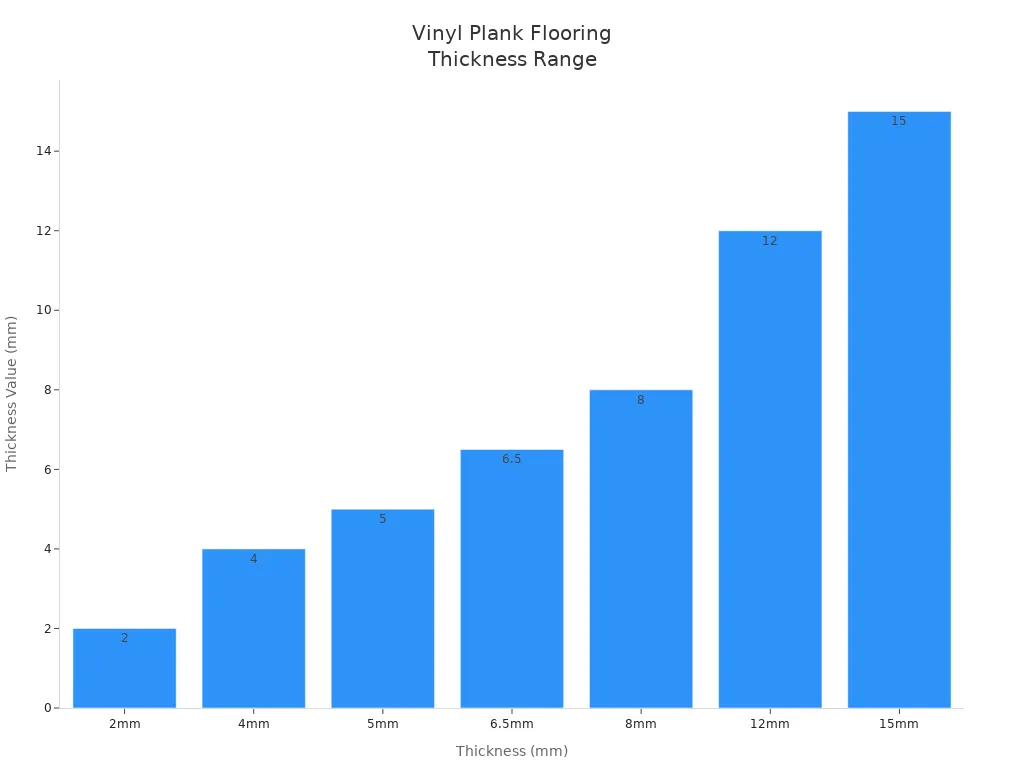
You can find many options when you look at the thickness of vinyl plank flooring. The thickness of lvt ranges from very thin to extra thick. Most products fall between 2mm and 15mm. Thinner planks, like 2mm, work best for low-traffic areas. Thicker planks, such as 8mm or more, handle busy spaces and last longer.
Here is a table showing common thicknesses:
| Thickness (mm) | Thickness (inches) | Description |
|---|---|---|
| 2mm | 1/12 inch | Thinnest available option |
| 4mm | 5/32 inch | Entry-level thickness |
| 5mm | 3/16 inch | Standard residential thickness |
| 6.5mm | 1/4 inch | Premium residential thickness |
| 8mm | 5/16 inch | Commercial grade thickness |
| 12mm | 1/2 inch | Premium commercial grade |
| 15mm | 5/8 inch | Thickest available option |
Most homes use a thickness of vinyl plank flooring between 6.5mm and 9.5mm. This range gives you a good balance of comfort and durability.
Luxury Vinyl Thickness and Core Layers
Luxury vinyl thickness depends on the materials inside each plank. The core layer makes a big difference in how the floor feels and performs. You will see two main types: WPC and SPC.
| Core Material | Composition | Thickness Impact | Benefits |
|---|---|---|---|
| WPC | Wood pulp, plasticizers, foaming agents | Thicker profile helps hide subfloor flaws | Comfortable, sound-absorbing, waterproof |
| SPC | Limestone powder, PVC, stabilizers | Thin but strong, great for renovations | Rigid, waterproof, stable |
WPC cores create a thicker, softer floor. SPC cores keep the thickness of lvt lower but add strength. You can choose the right luxury vinyl thickness based on your needs for comfort or toughness.
Wear Layer vs. Overall Vinyl Thickness
Manufacturers measure the thickness of lvt in two ways:
- Overall product thickness: This is the total measurement from bottom to top, in millimeters. It affects how soft and warm your floor feels.
- Wear layer thickness: This is the clear top layer, measured in mils. It protects against scratches and scuffs.
The table below shows how these two measurements compare:
| Aspect | Wear Layer Thickness | Overall Thickness |
|---|---|---|
| Function | Protective barrier | Includes wear layer and all layers |
| Measurement | Mils (thousandths of an inch) | Millimeters (mm) |
| Importance for Durability | Main factor for surface durability | Adds stability and comfort |
| Recommended Thickness | 12 to 20 mils for homes | Up to 8mm for high-end options |
You should look for a strong wear layer and a suitable overall vinyl thickness. This combination helps your floors last longer and stay beautiful.
Comfort Benefits of Thicker Vinyl Plank Flooring
Softness and Cushioning Underfoot
You feel the difference when you walk on thicker vinyl plank flooring. The extra material adds cushioning, which makes each step softer. Many people rate thicker planks as more comfortable underfoot than standard options. You notice less fatigue when standing for long periods. This increased comfort is especially important in rooms where you spend a lot of time, like kitchens or living rooms.
- Thicker vinyl plank flooring is recommended for high-traffic areas because it provides better stability and comfort underfoot.
- Thinner planks work best in low-traffic spaces, but they do not offer the same level of cushioning.
- You enjoy a more pleasant walking experience with thicker planks, which helps reduce joint stress.
Tip: If you want floors that feel gentle and supportive, choose thicker planks for your home.
Warmth and Thermal Insulation
Vinyl thickness plays a big role in how warm your floors feel. Thicker planks help keep your home cozy by providing better insulation. You notice that rooms with thicker vinyl stay warmer in winter and cooler in summer. The core material also affects temperature and moisture stability.
- The thickness of the vinyl plank, along with its core, improves temperature and moisture stability.
- Increased thickness enhances heat insulation, which helps maintain comfortable room temperatures.
- Better insulation can lead to lower energy costs because your heating and cooling systems work less.
You create a more energy-efficient home when you choose thicker vinyl plank flooring. The impact of thickness goes beyond comfort—it helps you save money over time.
Sound Insulation with LVT and Vinyl Plank Flooring
Thicker luxury vinyl tile and plank flooring also reduce noise. You hear fewer footsteps and less echo, which makes your home quieter. This benefit is important in multi-story homes and apartments.
- Thicker vinyl planks provide improved sound insulation, making them ideal for busy households.
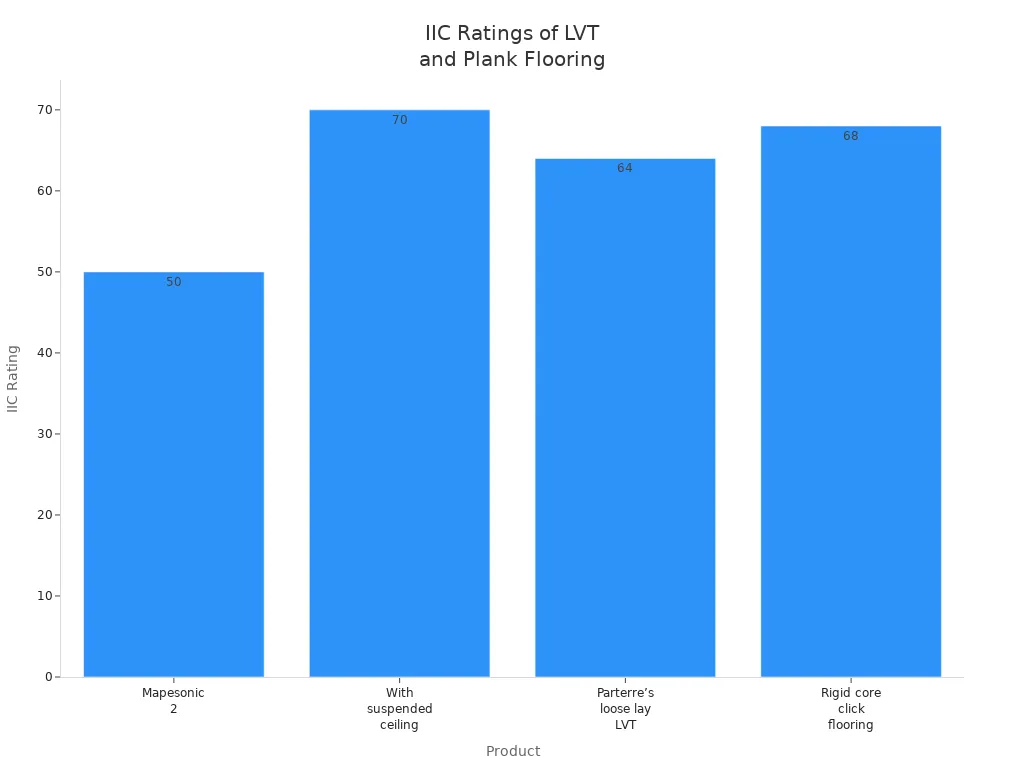
- Products like Mapesonic 2 and WhisperMat-LVT show high IIC (Impact Insulation Class) ratings, which means they block more sound.
- Parterre’s loose lay LVT and rigid core click flooring also score well for sound reduction.
Here is a table showing sound insulation ratings for popular products:
| Product | IIC Rating | STC Rating |
|---|---|---|
| Mapesonic 2 | 50 | 52 |
| With suspended ceiling | 70 | 67 |
| WhisperMat-LVT | 50 to 73 | N/A |
| Parterre’s loose lay LVT | 64 | N/A |
| Rigid core click flooring | 68 | N/A |
You enjoy a peaceful environment when you install thicker vinyl flooring. The insulation helps block noise from other rooms and floors, which improves your quality of life.
Longevity and Durability of Luxury Vinyl Thickness
Resistance to Dents, Scratches, and Wear
You want your floors to look great for years. The thickness of the wear layer on luxury vinyl plank flooring plays a big role in how well your floor stands up to dents and scratches. Thicker wear layers give you better protection. When you choose a thicker wear layer, you get a floor that resists damage from shoes, furniture, and pets.
Laboratory tests show that as the wear layer thickness increases, the floor loses less material when tested for wear. This means your floor stays looking new for longer. Take a look at the table below:
| Wear Layer Thickness | Mass Loss per 100 Revolutions | Evaluation Group |
|---|---|---|
| 0.3mm | Higher | Group P |
| 0.5mm | Moderate | Group T |
| 0.7mm | Lowest | Group T |
You can see that a 0.7mm wear layer offers the best durability. If you want a floor that stands up to daily life, pick a product with a thicker wear layer.
Tip: For homes with kids or pets, a thicker wear layer helps your floors resist scratches and dents.
Performance in High-Traffic and Commercial Areas
Floors in busy spaces need to handle a lot of foot traffic. The right vinyl thickness and wear layer make a big difference in these areas. Thicker luxury vinyl flooring gives you more durability and a longer lifespan, even in commercial settings.
The table below shows how wear layer thickness affects durability and where you should use each type:
| Wear Layer Thickness | Durability | Best Use |
|---|---|---|
| 0.3mm | Low | Light traffic areas |
| 0.5mm | Medium | Residential and commercial |
| 0.7mm+ | High | High-traffic areas |
You can expect luxury vinyl flooring to last from 10 to 25 years in commercial environments, depending on the thickness and quality. Many manufacturers offer warranties up to 25 years, which shows their confidence in the product’s longevity.
- Thicker vinyl plank flooring works best in entryways, kitchens, and hallways.
- In commercial spaces, thicker options handle heavy use and keep their appearance.
- You get more value over time when you invest in higher durability.
Impact on Moisture and Stain Resistance
You want floors that can handle spills and humidity. Thicker vinyl flooring, especially those with rigid cores like SPC or WPC, gives you better moisture resistance. These floors do not warp, buckle, or swell easily, even in damp conditions. This makes them a smart choice for bathrooms, kitchens, and basements.
Thicker luxury vinyl also improves water and stain resistance. You spend less time worrying about stains from food or drinks. The extra thickness acts as a barrier, keeping moisture from reaching the subfloor.
Note: If you live in a humid area or have rooms that get wet often, choose thicker vinyl flooring for better protection.
Choosing the Right Vinyl Thickness for Your Home
Best Thickness for Different Rooms and Traffic Levels
You need to match the thickness of your vinyl plank flooring to the room and how much traffic it gets. High-traffic areas like kitchens and bathrooms require sturdy floors. Experts recommend at least 6mm thickness for these rooms, with a 12-mil wear layer for extra protection. Living rooms can use planks between 6mm and 10mm. Bedrooms and other low-traffic spaces work well with thinner options.
| Room Type | Recommended Thickness | Wear Layer Thickness |
|---|---|---|
| Kitchens | At least 6mm | 12-mil |
| Bathrooms | At least 6mm | 12-mil |
| Living Rooms | 6–10mm | N/A |
Thicker planks, especially those between 6 and 8mm, handle heavy use and resist spills. You get better stability and durability in busy spaces. Bedrooms and closets can use thinner planks because they see less foot traffic.
Balancing Comfort, Durability, and Budget
You want your floors to feel comfortable, last long, and fit your budget. Many homeowners choose thicker vinyl with underlayment for comfort. If you need to save money, thinner floors with a strong wear layer offer good protection. Glue-down vinyl gives you extra stability. Thicker vinyl generally costs more, so you should think about your needs before picking the thickest option.
- For comfort, select thicker vinyl plank flooring (6mm or more).
- If you have a tight budget, look for thinner planks with a durable wear layer.
- Glue-down options add stability for high-traffic areas.
Tip: Consider how much time you spend in each room and how much wear the floor will get. This helps you find the right balance between comfort, durability, and cost.
Cost vs. Benefits of Thicker Vinyl Plank Flooring
You might wonder if thicker vinyl plank flooring is worth the extra cost. Standard thickness costs $4 to $6 per square foot. Premium thickness ranges from $7 to $10 per square foot.
| Type | Price per Square Foot |
|---|---|
| Standard Thickness | $4 – $6 |
| Premium Thickness | $7 – $10 |
Thicker luxury vinyl flooring thickness can increase your home’s long-term value. Buyers notice high-quality floors and may pay more for homes with them. Even budget-friendly options add value if they look good and work well for residential use. Choosing the right thickness level can help you sell your home faster and for a better price.
Installation and Maintenance of LVT and Vinyl Plank Flooring
Subfloor Preparation and Compatibility
You need to prepare your subfloor before installing luxury vinyl tile or plank flooring. The type of subfloor affects the thickness you should choose:
- If you install over concrete or tile, select a thickness between 5mm and 8mm. This range helps smooth out small bumps and adds comfort.
- If your subfloor is wood or laminate, a thinner option between 3mm and 4mm works well because these surfaces are already smooth.
A clean, dry, and level subfloor ensures your new floor lasts longer and feels stable underfoot.
Ease of Installation by Vinyl Thickness
The ease of installation depends on the thickness of your flooring. Thicker planks can hide minor subfloor flaws, which may make the process simpler. However, you might need to cut thicker planks more carefully. Sometimes, you must adjust door heights or use transition strips. Thicker planks often use click-lock systems, which improve the ease of installation. Thinner planks are lighter and easier to handle, but they may need glue, which takes more time.
Here is a table showing some challenges with thicker options:
| Challenge Type | Description |
|---|---|
| Subfloor Preparation | Thicker LVT needs more careful subfloor prep. |
| Professional Installation | Some thicker planks may require a professional installer. |
| Structural Load Concerns | Extra weight can affect the structure in some cases. |
You should always check the manufacturer’s instructions to get the best results and maximize the ease of installation.
Cleaning and Upkeep Tips
You can keep your floors looking new with simple care. Follow these tips for both standard and thick luxury vinyl plank flooring:
- Sweep or vacuum often to remove dirt that can scratch the surface.
- Use a damp mop and a cleaner made for vinyl floors. Avoid soaking the floor.
- Place doormats at entrances to catch dirt and moisture.
- Use furniture pads to prevent dents and scratches.
- Wipe up spills right away to stop stains and mold.
- Do not drag heavy items; lift them or use pads.
- Add area rugs in busy spots for extra protection.
- For textured surfaces, use a soft-bristle brush to clean trapped dirt.
- Choose a pH-neutral cleaner for the best results.
The table below compares cleaning needs:
| Aspect | Standard Vinyl | Thick Luxury Vinyl Plank (LVP) |
|---|---|---|
| Water Usage | Avoid too much water | Handles damp mopping better |
| Cleaning Edges/Seams | Fewer seams; avoid excess water | Edges may trap dirt; use microfiber |
| Surface Texture | Smooth surface | Textured; use soft brush sometimes |
Tip: Sweep high-traffic areas every day to keep your floors clean and extend their life.
Thicker vinyl plank flooring gives you more comfort, better insulation, and greater durability. Many homeowners choose it for its resistance to wear, scratches, and moisture. You get a floor that feels stable and quiet underfoot. The right thickness depends on your room’s needs and your budget.
| Feature | Thick Vinyl Plank Flooring | Thin Vinyl Plank Flooring |
|---|---|---|
| Comfort | Better comfort underfoot | Less comfort |
| Resistance to Damage | More resistant to dents and scratches | Less resistant |
| Sound Insulation | Improved sound insulation | Less sound insulation |
You also increase your home’s value and save money over time with less maintenance and fewer repairs.
FAQ
What is the difference between lvt and luxury vinyl tile flooring?
You see lvt as a general term for vinyl flooring with multiple layers. Luxury vinyl tile flooring describes high-quality lvt with realistic designs and extra durability. Both options give you water resistance and easy cleaning.
How does vinyl plank flooring thickness affect comfort in high-traffic areas?
You feel more comfort in high-traffic spaces when you choose thicker vinyl plank flooring. Thicker planks cushion your steps and reduce noise. You notice less fatigue when standing or walking for long periods.
Can lvt flooring handle moisture in bathrooms and kitchens?
You find lvt flooring resists moisture well. Luxury vinyl tile flooring works in bathrooms and kitchens because it does not swell or warp. You clean spills easily and keep your floors looking new.
Is luxury vinyl tile flooring suitable for commercial and high-traffic spaces?
You use luxury vinyl tile flooring in commercial and high-traffic areas. The thick wear layer protects against dents and scratches. You get long-lasting floors that look good even with heavy use.
How do you clean and maintain lvt flooring for best results?
You sweep lvt flooring daily to remove dirt. Use a damp mop and a cleaner made for luxury vinyl tile. Place mats at entrances and use furniture pads. You avoid soaking the floor to prevent damage.
Tip: Regular cleaning helps your lvt flooring last longer and keeps it looking fresh.




