
You want the right thickness of vinyl flooring for your space. The optimal thickness for most homes falls between 4mm and 6mm. Use this vinyl flooring thickness guide to make quick decisions. See the table below for common options:
| Core Type | Overall Plank Thickness | Wear Layer Thickness |
|---|---|---|
| Stone Polymer Core | 4-8mm | 6-20 mils |
| Wood Composite Core | 5-9mm | 6-20 mils |
Choose a good thickness for vinyl plank flooring based on your room:
- Bedrooms: 6-mil wear layer
- Living rooms: 12-mil wear layer
- Young families or offices: 20-mil wear layer
Select the recommended thickness for heavy traffic or commercial spaces. The right thickness of vinyl flooring gives you durability and comfort.
Vinyl Flooring Thickness Guide: Why Thickness Matters
Durability and Wear Layer Explained
You want your floors to last. The vinyl flooring thickness guide helps you choose the right product for your needs. Thicker vinyl plank flooring and luxury vinyl tile flooring offer better protection against daily wear and tear. The wear layer acts as a shield. It keeps your floors looking new.
- Laboratory tests show that thicker wear layers, such as 0.5mm and 0.7mm, lose less mass during abrasion tests than thinner layers like 0.3mm.
- Floors with a 0.5mm or 0.7mm wear layer belong to Group T, which means they have superior wear resistance.
- Increased substrate thickness improves impact resistance. Your floors can handle heavy objects without damage.
You can use the vinyl flooring thickness chart to compare common thickness options. Flooring experts recommend an 8-12 mil wear layer for light residential use. For moderate use, you should look for a 12-20 mil wear layer. Heavy residential areas need a wear layer of 20 mils or more. Thicker wear layers protect against scratches, scuffs, and stains. They also include UV-resistant compounds, which prevent fading from sunlight. You get better impact resistance and a longer lifespan. The vinyl flooring thickness guide shows that thicker vinyl planks and luxury vinyl tile flooring provide durability benefits and extend the life of your floors.
Comfort and Underfoot Feel
You want your floors to feel comfortable. The vinyl flooring thickness guide explains how thicker vinyl planks and luxury vinyl tile make a difference. Thicker vinyl plank flooring and luxury vinyl plank flooring offer a softer, cushioned feel underfoot. You notice less fatigue when standing for long periods. The optimal thickness gives you a balance between comfort and support.
Thicker vinyl planks absorb shock better. You feel less impact when walking or running. Luxury vinyl flooring with more thickness options provides a premium experience. You can use luxury vinyl tile flooring in bedrooms and living rooms for extra comfort. The thickness options comparison shows that thicker vinyl planks are ideal for spaces where you spend a lot of time on your feet.
Sound and Insulation Benefits
You want a quiet home. The vinyl flooring thickness guide highlights how thicker vinyl planks and luxury vinyl tile improve sound insulation. Thicker luxury vinyl plank flooring (7mm–8mm+) reduces noise from footsteps and dropped items. You get a more peaceful environment.
- Thicker LVP provides better sound insulation than thinner options (2mm–4mm).
- Thicker LVP feels stable and premium, which is perfect for high-end homes.
- Thinner LVP is less stable and does not perform well in sound insulation.
The impact sound insulation performance also depends on the underlayment material. Fibrous continuous layers work better than polymeric materials. You can use luxury vinyl tile and luxury vinyl plank in rooms where noise control matters. The vinyl flooring thickness guide helps you select the appropriate thickness for your needs. Thicker vinyl planks and luxury vinyl tile flooring offer better performance in sound insulation and comfort.
You can use the vinyl flooring thickness guide to compare common thickness options and find the appropriate thickness for your space. The right vinyl flooring thickness gives you durability, comfort, and sound insulation. You get the best results by choosing thicker vinyl planks and luxury vinyl tile for high-traffic or noise-sensitive areas. The thickness considerations in the vinyl flooring thickness guide help you make smart choices for your home.
Flooring Thickness Guide: Recommendations by Room
Living Rooms and Bedrooms
You spend a lot of time in living rooms and bedrooms. These spaces need flooring that feels comfortable and lasts for years. The flooring thickness guide shows that living rooms see more foot traffic than bedrooms. You should choose a thicker vinyl plank flooring for living rooms to get better durability. Bedrooms can use thinner options because they have less activity.
- Living rooms need a thickness of 4mm or 5mm for added durability.
- Bedrooms can use thinner vinyl flooring, around 2mm to 4mm.
- Residential vinyl flooring thickness usually ranges from 2mm to 8mm.
You want your floors to feel soft and quiet. Thicker vinyl flooring gives you better sound insulation and comfort underfoot. Thinner flooring works well in low-use spaces, but may not last as long in busy areas.
| Thickness | Comfort Impact | Durability Impact |
|---|---|---|
| Thicker | Better sound insulation, more comfort underfoot | Enhanced structural stability, ideal for high-traffic areas |
| Thinner | Less comfort, suitable for low-use spaces | May lack durability, not ideal for high-traffic areas |
Tip: If you have kids or pets, choose thicker lvp or lvt for your living room. You get more comfort and longer-lasting floors.
Kitchens and Bathrooms
Kitchens and bathrooms need floors that resist moisture and wear. You use these rooms every day, so you want vinyl flooring thickness that stands up to spills and heavy use. The optimal thickness for kitchens and bathrooms is between 6mm and 8mm. This range gives you stability and moisture resistance.
- Choose 6mm to 8mm vinyl flooring for kitchens and bathrooms.
- Thicker vinyl flooring works best in areas with high moisture and wear.
- High-traffic kitchens and bathrooms need 6mm to 8mm for durability and stability.
You want your floors to last. The wear layer also affects how long your floors stay looking new.
| Wear Layer (mil) | Expected Life (years) |
|---|---|
| 6 | 5–7 |
| 12 | 10–12 |
| 20 | 18–20 |
| 28 | 25+ |
Note: Thicker wear layers mean longer life for your kitchen and bathroom floors. You save money over time by choosing the right thickness.
Hallways and Entryways
Hallways and entryways see the most foot traffic in your home. You need vinyl flooring thickness that can handle shoes, boots, and dirt. The flooring thickness guide recommends at least 4mm for these busy areas. For extra durability and comfort, you should look for 5mm to 7mm thickness.
- Use at least 4mm vinyl flooring in hallways and entryways.
- For better durability, choose 5mm to 7mm thickness.
You want your floors to stay strong and look good, even with heavy use. Thicker lvp gives you more stability and comfort in these high-traffic spaces.
Tip: Entryways and hallways benefit from thicker vinyl plank flooring. You get floors that resist dents and scratches.
Basements and Below-Grade Spaces
Basements and below-grade spaces present unique challenges for flooring. You often deal with moisture, humidity, and the risk of flooding. Vinyl flooring stands out as a smart choice because it resists water and maintains its shape even in tough conditions.
When you select vinyl flooring for your basement, thickness matters. Thicker vinyl tiles and planks offer better protection against moisture and physical damage. Studies show that vinyl tiles absorb only 0.2% moisture, while traditional flooring absorbs much more. You get excellent performance with vinyl, especially in damp environments.
| Test Condition | Moisture Absorption | Performance |
|---|---|---|
| Vinyl Tiles | 0.2% | Excellent |
| Traditional Flooring | 1.7% | Poor |
Thicker vinyl tiles keep their structure after long exposure to water. You do not see warping, bubbling, or water damage. This durability helps your basement floor last longer, even during floods or high humidity.
- Thicker vinyl tiles maintain their shape after 72 hours underwater.
- You avoid warping and bubbling.
- Floors stay strong in humid and wet conditions.
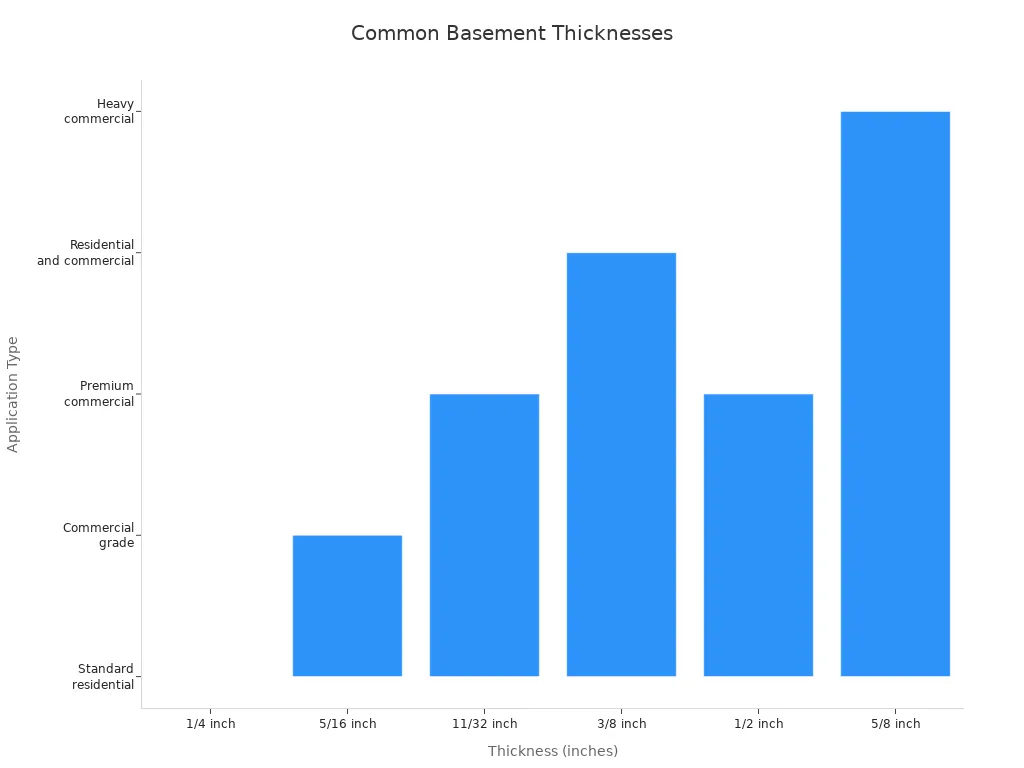
You find several thickness options for basement flooring. The most common thicknesses range from 6.5 mm to 15 mm. Thicker planks work best for heavy commercial traffic, while standard residential basements use 6.5 mm or 9.5 mm. You can see the range of applications in the table below.
| Thickness (inches) | Thickness (mm) | Application |
|---|---|---|
| 1/4 inch | 6.5 mm | Standard residential applications |
| 5/16 inch | 8 mm | Commercial grade |
| 11/32 inch | 8.5 mm | Premium commercial grade |
| 3/8 inch | 9.5 mm | Residential and commercial use |
| 1/2 inch | 12 mm | Premium commercial grade |
| 5/8 inch | 15 mm | Heavy commercial traffic |
You want your basement floor to feel comfortable and look great. Thicker vinyl planks provide a softer feel underfoot. You also get better sound insulation, which makes your basement quieter. If you use your basement as a living space, home gym, or playroom, thicker options give you more comfort and durability.
Tip: Choose luxury vinyl flooring with a thickness of at least 6.5 mm for basements. You get better moisture resistance and a longer-lasting floor.
Luxury vinyl flooring works well in below-grade spaces because it resists water and stays stable. You avoid problems like mold and mildew, which often affect other types of flooring. Thicker planks also help you cover uneven subfloors, making installation easier.
You should always check the manufacturer’s recommendations for basement installations. Some products include built-in underlayment for extra moisture protection. You get the best results when you combine proper thickness with good installation practices.
Vinyl Flooring Thickness for Different Traffic Levels
Low-Traffic Areas
You may have rooms that do not see much activity, such as guest bedrooms or vacation kitchens. In these spaces, you want floors that last but do not need the highest durability. User reviews show that thicker vinyl flooring tends to perform better even in low-traffic areas. Thicker options resist wear and keep your floors looking new for longer. You can choose luxury vinyl flooring with a moderate thickness to get both comfort and durability. If you want a soft feel underfoot, thicker vinyl plank flooring works well in these rooms. You also get better sound insulation, which makes quiet spaces more peaceful.
Tip: Even in low-traffic areas, thicker luxury vinyl plank or lvt can help your floors last longer and look better.
Moderate-Traffic Areas
You use living rooms and dining rooms every day. These spaces need floors that handle regular activity but do not face the same stress as high traffic areas. For moderate-traffic rooms, you should look for thickness options that balance comfort and durability. Experts recommend:
- A wear layer of 6, 8, or 12 mil for moderate-traffic spaces.
- A medium thickness of 4mm for living rooms and dining rooms.
Luxury vinyl flooring works well in these rooms because it resists scratches and stains. You get a floor that feels comfortable and stands up to daily use. Lvp and lvt offer many thickness options, so you can choose what fits your needs best.
High-Traffic and Commercial Spaces
You need strong floors for high traffic areas like entryways, schools, and retail stores. These spaces see constant movement, heavy loads, and frequent cleaning. The right vinyl flooring thickness makes a big difference in performance and durability. Look at the table below to see what thickness works best:
| Environment Type | Recommended Wear Layer Thickness |
|---|---|
| Moderate foot traffic (e.g., boutique retail) | 12-mil |
| High-traffic (e.g., schools, hospitals) | 20-mil |
| Heavy commercial (e.g., airports, malls) | 28-mil or higher |
When you choose luxury vinyl flooring for high traffic areas, you should consider several factors:
- Durability & Wear Layer Thickness: Use at least a 20-mil wear layer for high traffic.
- Slip Resistance & Safety Ratings: Pick surfaces that meet safety standards.
- Ease of Maintenance & Cleaning: Lvt is easier to clean than other types.
- Aesthetic Appeal & Design Options: Match the style to your space.
- Water & Stain Resistance: Waterproof options like SPC and lvt work best.
- Installation Methods: Select glue-down or floating methods for stability.
- Cost & Budget Considerations: Balance upfront cost with long-term durability.
Luxury vinyl flooring gives you many thickness options for high traffic areas. You get floors that resist damage, stay safe, and look great. Thickness considerations help you choose the best product for your space.
Key Factors in Choosing Optimal Thickness
Foot Traffic and Usage Patterns
You need to think about how much activity happens in each room. The volume of foot traffic affects which vinyl flooring thickness works best. If you have busy spaces, like hallways or kitchens, you want floors that last and feel comfortable. Flooring professionals suggest these options:
- For high foot traffic, choose wear layers over 20 mils. This gives you strong protection against scratches and dents.
- Thicker flooring, such as 6mm or more, improves comfort and sound insulation. You notice less noise and a softer feel underfoot.
- A 2.5mm floor with a 20-mil wear layer can be tougher than a 4mm floor with only an 8-mil wear layer.
Luxury vinyl flooring and lvp work well in busy areas. You get better performance and longer life when you match the thickness to your needs. Always check thickness considerations before making a choice.
Tip: For rooms with lots of movement, pick thicker vinyl plank flooring and a strong wear layer. Your floors stay looking new for years.
Subfloor Condition and Type
You should look at your subfloor before installing new floors. The type and condition of your subfloor help you decide which thickness works best. Use this table to guide your decision:
| Subfloor Type | Recommended Vinyl Thickness | Notes |
|---|---|---|
| Concrete Subfloors | 6mm+ | Thicker vinyl or vinyl with underlayment helps soften feel and reduce noise. |
| Wood Subfloors | Thicker click-lock/floating | Provides better natural cushion; glue down is also effective. |
Luxury vinyl flooring and lvt offer options for different subfloors. Thicker planks help cover uneven spots and add comfort. If you have concrete, thicker vinyl flooring thickness makes your space quieter and softer.
Comfort and Sound Absorption
You want your home to feel cozy and quiet. Thicker vinyl flooring gives you a softer feel underfoot. You notice less noise from footsteps and dropped items. Luxury vinyl flooring and lvp provide extra comfort, especially in bedrooms and living rooms. Lvt also helps reduce sound, making your home peaceful.
Thicker floors improve performance in sound absorption. You enjoy a better living experience with the right thickness. Always include thickness considerations when you want comfort and quiet in your space.
Note: Thicker vinyl plank flooring helps you create a calm and comfortable home. Choose the right thickness for the best results.
Budget and Cost Considerations
You want to get the best value when choosing vinyl flooring. Your budget often guides your decision on thickness. Thinner vinyl flooring usually costs less at first. Thicker options cost more but can save you money over time. Look at the table below to see how thickness affects both initial and long-term costs:
| Thickness | Initial Cost | Long-term Cost Considerations |
|---|---|---|
| Thinner | Lower | May require more underlayment |
| Thicker | Higher | Less underlayment needed |
If you pick thinner vinyl, you might need to buy extra underlayment. This adds to your total cost. Thicker vinyl often comes with built-in support, so you spend less on extra materials.
You also need to think about the quality level. The price changes based on how thick and durable the flooring is. Here is a table that shows the price range for different types of vinyl flooring:
| Quality Level | Price per Sq. Ft. (Wholesale) | Key Features | Best For |
|---|---|---|---|
| Budget | $1.00 – $2.50 | Thin wear layer, fewer colors, less durable core | Rentals, low-traffic areas |
| Standard | $2.50 – $4.00 | Decent thickness, waterproof, easy to install | Homes, moderate-use spaces |
| Premium | $4.00 – $6.50+ | Luxury vinyl, thick wear layer, high durability | High-end projects, heavy traffic areas |
You can choose budget vinyl for rooms that do not get much use. Standard options work well in most homes. Premium choices, like luxury vinyl flooring, give you the best durability and style for busy spaces.
Tip: Think about both the upfront price and how long the floor will last. Spending a little more now can help you avoid repairs or replacements later.
Luxury Vinyl Flooring: Installation and Maintenance Tips
How Thickness Affects Installation
When you install luxury vinyl flooring, the thickness of each plank or tile plays a big role. Thicker vinyl plank flooring gives you better protection against wear and tear. You get floors that last longer and feel more comfortable underfoot. Professional installers say you need to pay close attention to the subfloor before you start. The condition of the subfloor can change how well your flooring sits and stays in place.
- Thicker planks need a smooth and even subfloor. Uneven surfaces can cause gaps or bumps.
- You get better durability with thicker luxury vinyl plank, but you must prepare the substrate carefully.
- Subfloor preparation changes based on the thickness of your vinyl flooring.
Here are some common challenges you might face when installing thicker lvt or lvp:
| Challenge | Description |
|---|---|
| Substrate Preparation | Uneven surfaces can cause gaps and distortions, especially with thicker products like lvt. |
| Moisture Issues | Concrete subfloors often contain moisture, which can affect installation, especially in older slabs. |
| Adhesive Sensitivity | Luxury vinyl is sensitive to certain chemicals, which can lead to installation problems if not managed. |
You can avoid most problems by making sure your subfloor is clean, dry, and level. Take your time with preparation, and your luxury vinyl flooring will look great and last longer.
Maintenance and Longevity
You want your floors to stay beautiful for years. The thickness of your luxury vinyl flooring affects how much care you need and how long your floors will last. Thicker wear layers protect against scratches, stains, and everyday wear. You get more years out of your floors when you choose higher-quality products.
| Thickness Category | Description |
|---|---|
| Entry-Level Residential (Up to 12 mil) | Works best in low-traffic areas. You may need to replace it sooner in busy homes. |
| Standard Residential (12-20 mil) | Handles moderate to high traffic. You get excellent longevity and less frequent replacement. |
| Heavy Residential/Light Commercial (20-28 mil) | Built for busy homes and light commercial spaces. You get strong protection and long life. |
| Heavy Commercial (28+ mil) | Offers maximum durability. Perfect for commercial settings and the busiest homes. |
Manufacturers say premium lvp with thicker wear layers can last 20 to 25 years. Standard lvp usually lasts 15 to 20 years. You get better resistance to scratches and stains with a wear layer of 20 mil or more. Luxury vinyl flooring can last between 10 and 25 years, depending on the thickness and quality. Higher-quality luxury vinyl often features thicker layers, giving you a lifespan of 20 to 25 years. Lower-quality options may only last 10 to 15 years. For most homes, a wear layer of 12 mil or more works well. For high-traffic areas, you should look for 20 mil or higher.
Tip: Clean your floors regularly and follow the manufacturer’s care instructions. You help your luxury vinyl flooring last longer and keep its shine.
You want the best results for your home. Use the table below to match vinyl flooring thickness to each room:
| Room Type | Recommended Thickness | Key Considerations |
|---|---|---|
| Bathroom | 5mm+ | Water resistance, warmth |
| Living Room | 5mm–8mm | Comfort, sound, high traffic |
| Kitchen | 5mm–6mm | Durability, spills |
| Bedroom | 2mm–4mm (standard) | 5mm for extra comfort |
| Commercial Space | 7mm–8mm | Extreme durability |
Tip: Choose luxury vinyl flooring with a thicker wear layer for busy spaces. Avoid skipping professional installation or ignoring moisture issues. Lvt and lvp offer great options for comfort and durability. Always consider your lifestyle before making a decision.
FAQ
What is the best vinyl flooring thickness for homes?
You should choose vinyl flooring thickness between 4mm and 6mm for most homes. This range gives you good durability and comfort. You get a floor that lasts and feels soft underfoot.
Does luxury vinyl flooring work in bathrooms and kitchens?
You can use luxury vinyl flooring in bathrooms and kitchens. It resists water and stains. You get a strong surface that handles spills and heavy use. Many homeowners pick luxury vinyl flooring for these rooms.
How do I clean luxury vinyl flooring?
You can sweep or vacuum luxury vinyl flooring every day. Use a damp mop for deeper cleaning. Avoid harsh chemicals. You keep your floors looking new with simple care.
Is lvt or lvp better for high-traffic areas?
You get strong performance from both lvt and lvp in busy spaces. Choose luxury vinyl flooring with a thick wear layer for entryways or hallways. You see less damage and more comfort.




