
When you plan to update your kitchen or bathroom, knowing the cost to install vinyl plank flooring per square foot helps you set a clear budget. Recent industry data shows a wide range of prices:
| Project Area Size | Material Tier Choice | Total Average Cost |
|---|---|---|
| 40 SF Bathroom | Budget Sheet | $200 – $800 |
| 150 SF Kitchen | Mid-Range LVP | $600 – $3,200 |
You need an accurate estimate for several reasons:
- It helps you budget for your renovation.
- You avoid unexpected expenses.
- You make sure your project fits your financial plans.
Understanding the Cost to Install Vinyl Plank Flooring Per Square Foot
Average LVP Cost for Kitchens and Bathrooms
You need to know the cost to install vinyl plank flooring per square foot before you start your kitchen or bathroom project. This helps you set a realistic budget and avoid surprises. Most homeowners see vinyl flooring installation costs that range from $2 to $7 per square foot for materials. You can expect installation costs to add another $2 to $5 per square foot. When you combine both, the total cost to install vinyl plank flooring per square foot usually falls between $6 and $10 for mid-range options.
Here is a simple table to help you compare the price ranges for different types of vinyl plank flooring:
| Type of Vinyl Plank Flooring | Price Range per Square Foot |
|---|---|
| Budget vinyl plank flooring | $2 to $3 |
| Mid-range luxury vinyl plank | $3 to $5 |
| High-end vinyl flooring material | $5 to $7 |
Room size also affects your total project cost estimates. Smaller rooms like bathrooms often have a higher cost per square foot because of fixed labor and setup fees. Larger rooms, such as kitchens or combined dining areas, may have a lower cost per square foot because you can buy materials in bulk and labor becomes more efficient.
| Room Size | Estimated Total Cost | Cost per Square Foot Explanation |
|---|---|---|
| Small Room (100 sq. ft.) | $300 – $900 | Higher cost per square foot due to fixed labor and setup fees, despite less material used. |
| Medium Room (300 sq. ft.) | $1,000 – $2,800 | More flexibility with material quality, often cheaper per square foot than small rooms. |
| Whole Home (1,000–1,500 sq. ft.) | $3,500 – $12,000+ | Lower cost per square foot due to efficient labor and bulk material purchasing. |
For example, if you want to install luxury vinyl plank flooring in a 300-square-foot kitchen, you can expect to pay between $1,800 and $3,000 for the whole project. These estimates help you plan your budget and compare options.
Tip: Always ask for detailed estimates from your installer. This helps you understand what is included in the cost to install vinyl plank flooring per square foot.
Factors That Affect LVP Installation Cost
Many key factors that affect vinyl flooring costs will change your final price. You should look at these details before making a decision:
- The type of vinyl plank flooring you choose will impact the cost per square foot. Budget options cost less, while high-end materials cost more.
- Labor costs depend on the shape and size of your room. Simple shapes cost less per square foot. Complicated layouts in kitchens and bathrooms need more time and skill, which increases installation costs.
- The condition of your subfloor can change the total project cost estimates. If your subfloor needs repairs or extra preparation, you will pay more per square foot.
- Preparation requirements, such as removing old flooring or adding moisture barriers, can add to your installation costs.
- Room considerations, like working around cabinets, plumbing, or fixtures, can make the job harder and increase the cost to install vinyl plank flooring per square foot.
Here is a table that shows the main factors and their impact:
| Factor | Description |
|---|---|
| Material Costs | Luxury vinyl plank flooring varies in price based on quality, thickness, and design, averaging $2 to $7 per square foot. |
| Labor and Installation | Installation costs can vary based on the complexity of the layout in kitchens and bathrooms, requiring more precision. |
| Preparation Requirements | The need for subfloor preparation can add to the overall cost, especially in kitchens and bathrooms. |
| Room Considerations | Specific room layouts and features can influence the installation cost due to the need for more labor. |
You should always include these factors in your budget. This will help you get the most accurate cost to install vinyl plank flooring per square foot for your kitchen or bathroom. When you understand these details, you can make better choices and avoid unexpected expenses.
Measuring Your Space for Accurate LVP Installation Cost
Tools Needed for Measuring
You need the right tools to measure your kitchen or bathroom for vinyl plank flooring. Start with a sturdy tape measure. Choose one that extends at least 25 feet. A notepad or digital device helps you record your numbers. Use a calculator to add up your measurements. A straight edge or ruler works well for marking lines. For odd-shaped areas, graph paper can help you sketch the space. These tools make your job easier and your measurements more accurate.
How to Measure Square Footage
Accurate measurements help you avoid costly mistakes. Follow these steps to measure your space:
- Measure the length of the room in feet.
- Measure the width of the room in feet.
- Multiply the length by the width to get the total square footage. For example, if your kitchen is 12 feet by 15 feet, you have 180 square feet.
- Choose your LVP tier based on your budget. Budget LVP costs $2–$3 per square foot. Mid-range LVP costs $3–$5 per square foot. High-end LVP costs $5–$7 per square foot.
- If you plan to hire a professional, add $2–$5 per square foot for installation.
Tip: Double-check your numbers before buying materials. Accurate measurements save you money and time.
Handling Nooks and Odd-Shaped Areas
Kitchens and bathrooms often have nooks, closets, or odd corners. Measure each section separately. Add the square footage of each area to your total. For L-shaped or irregular rooms, break the space into smaller rectangles or squares. Measure each part, then add the numbers together.
Mistakes in measuring can cause problems:
- You might buy too much flooring and waste money.
- You might not buy enough, which means extra trips to the store and higher costs.
- Installers may need more time if measurements are off, which increases labor charges.
Careful measuring ensures you get the right amount of flooring and avoid extra expenses.
Choosing Luxury Vinyl Plank Flooring for Kitchens and Bathrooms
Types of Luxury Vinyl Plank Flooring
You can choose from several types of luxury vinyl flooring for kitchens and bathrooms. Each type offers unique benefits. Some options include rigid core, SPC (Stone Plastic Composite), WPC (Wood Plastic Composite), and traditional flexible planks. Rigid core and SPC luxury vinyl plank flooring provide extra strength and stability. WPC luxury vinyl flooring gives a softer feel underfoot. Flexible planks work well in spaces with less foot traffic. You should select the type that fits your needs and budget.
Water Resistance and Durability
Luxury vinyl flooring stands out in kitchens and bathrooms because it resists water and lasts for years. You get a floor that is 100% waterproof. The rigid core prevents dents and scratches. The soft surface feels comfortable when you walk. The click-lock system lets you install luxury vinyl plank flooring yourself, which can lower labor costs.
- Luxury vinyl flooring prevents warping and mold growth in moisture-prone areas.
- The wear layer protects against scratches and dents, making it ideal for busy rooms.
- The PVC vinyl composition gives flexibility and water resistance.
- Thicker wear layers offer better protection than laminate flooring.
You can trust luxury vinyl plank flooring to handle spills, humidity, and daily wear in kitchens and bathrooms.
Style, Thickness, and Brand Options
Luxury vinyl flooring comes in many styles, thicknesses, and brands. You can pick wood-look, stone-look, or tile-look designs. Thickness ranges from 4mm to 6mm, which affects comfort and durability. Thicker planks last longer and feel more solid. Brands offer different features and price points. The table below shows popular brands and their price ranges:
| Brand | Price Range (per sq. ft.) | Best For | Best Room(s) |
|---|---|---|---|
| COREtec Plus | $1.99 – $7.50 | Comfort and quiet | All rooms |
| Karastan | $3.99 – $4.99 | Elegant style, durability, waterproof | All rooms |
| Shaw Floorté Pro | $2.50 – $6.50 | Overall durability and style | High-traffic areas, kitchens |
| Mohawk SolidTech Plus | $3.00 – $6.00 | Pets and active households | Living rooms, pet zones |
| Karndean Korlok Select | $4.50 – $7.00 | Premium visuals and texture | Main living areas, upscale homes |
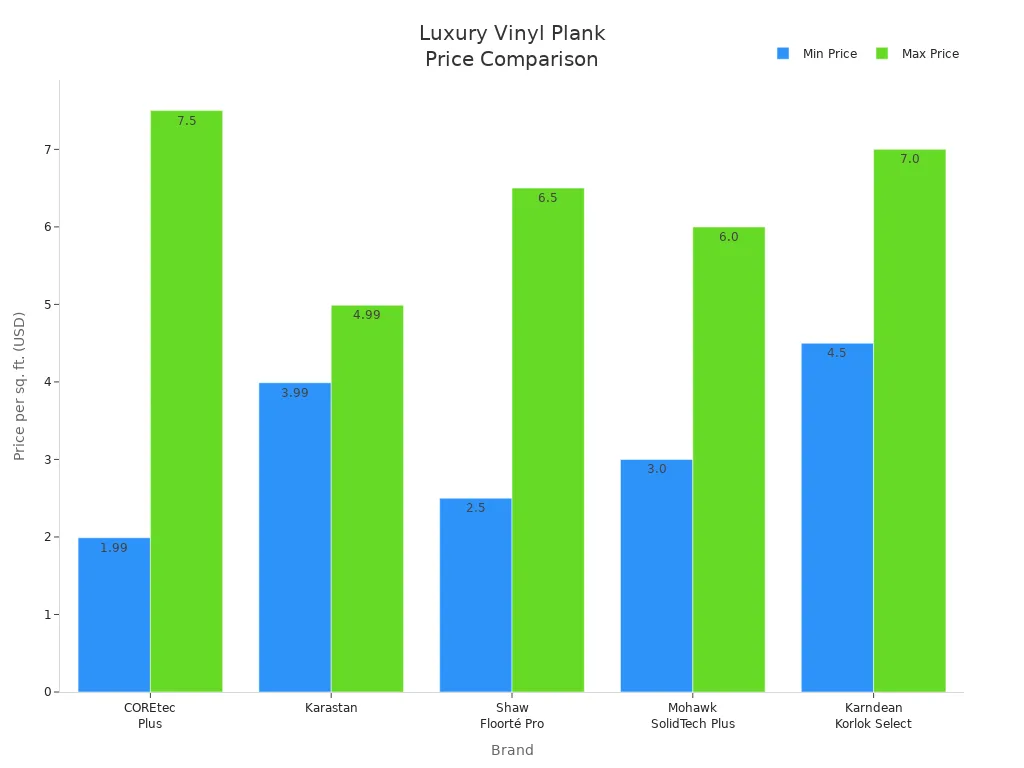
You can match luxury vinyl plank flooring to your style and budget. You get a wide range of choices for kitchens and bathrooms.
Calculating Material and Labor Costs with skspcflooring
Material Price Ranges per Square Foot
You need to know the cost of materials before you install vinyl plank flooring in your kitchen or bathroom. The luxury vinyl flooring cost breakdown helps you compare options and set your budget. The table below shows the typical cost per square foot for different types of vinyl flooring from skspcflooring:
| Type of Vinyl Flooring | Cost per Square Foot |
|---|---|
| Budget vinyl plank flooring | $2 to $3 |
| Mid-range luxury vinyl plank | $3 to $5 |
| High-end vinyl flooring material | $5 to $7 |
You can choose the material that fits your needs and budget. The cost to install luxury vinyl plank flooring depends on the quality and thickness you select.
How Much Extra Material to Buy
You should always buy extra material when you install vinyl plank flooring. Mistakes and waste happen during installation, especially in kitchens and bathrooms with tricky corners. Experts recommend purchasing 10-15% more than your measured square footage. This extra ensures you cover all areas and avoid delays if you need to replace damaged planks. For example, if your kitchen measures 150 square feet, you should buy enough to cover about 165 to 172 square feet. This step protects you from running short and keeps your total installed cost predictable.
Tip: Buying extra material saves you time and money if you need to replace planks later.
Labor Rates and What’s Included
Labor costs play a big role in your total installed cost. When you install vinyl plank flooring, you pay for skilled workers who handle the job. Average labor rates range from $2 to $5 per square foot. The cost covers several important tasks:
- Removing old flooring
- Preparing or repairing the subfloor
- Adding underlayment for comfort and moisture protection
- Moving furniture or appliances
You get a complete installation service that ensures your new floor looks great and lasts. Always ask your installer for a detailed breakdown of the cost so you know what is included. This helps you avoid surprises and keeps your project on track.
Additional Expenses in LVP Installation Cost
When you estimate the total cost for luxury vinyl plank flooring in kitchens and bathrooms, you need to consider several extra expenses. These costs can affect your budget and the final price of your project.
Subfloor Preparation and Repairs
You must check the condition of your subfloor before installing new flooring. If your subfloor has cracks, uneven spots, or moisture issues, you need repairs. Subfloor preparation ensures your vinyl plank flooring lasts longer and stays flat. The cost for subfloor preparation usually ranges from $1.00 to $3.00 per square foot. This step protects your investment and prevents future problems.
Removing Old Flooring
You often need to remove old flooring before you install new vinyl planks. This process can include lifting tiles, carpet, or old vinyl. Removing old flooring adds to your total cost. The price for removal ranges from $0.50 to $2.00 per square foot. You should ask your installer if removal is included in their quote. This helps you avoid surprise charges.
Tip: Always check if the removal of old flooring is part of your installation package. This can save you money and time.
Here is a table that shows common additional expenses:
| Expense Type | Cost Range (per square foot) |
|---|---|
| Removal of old flooring | $0.50 to $2.00 |
| Subfloor preparation | $1.00 to $3.00 |
| Molding and trim installation | $1.00 to $3.00 per linear foot |
Moisture Barriers and Underlayment
You need moisture barriers and underlayment for kitchens and bathrooms. These materials protect your vinyl plank flooring from water damage. Underlayment acts as a moisture barrier and improves sound insulation. It also adds comfort and helps control temperature. Moisture barriers keep water away from the subfloor, which is not waterproof. This step increases the cost but ensures your floor lasts longer.
- Underlayment protects your floor from water damage.
- It improves sound insulation and comfort.
- Moisture barriers help your floor stay strong in wet areas.
You should include these extra costs in your budget. Careful planning helps you avoid unexpected expenses and keeps your project on track.
Trim, Transitions, and Finishing Touches
When you finish installing vinyl plank flooring in your kitchen or bathroom, you need to add trim and transition pieces. These finishing touches help your floor look complete and protect the edges from damage. Trim covers the gaps between the floor and the wall. Transition strips connect your new floor to other surfaces, like tile or carpet in nearby rooms.
You can expect to pay extra for these accessories. Most trim and transition strips cost between $1 and $5 per linear foot. The price depends on the style and material you choose. You may need several types of trim, such as baseboards, quarter rounds, or T-molding, to match different areas in your room.
- Trim and transition strips usually cost $1–$5 per linear foot.
- These pieces create smooth connections between different floors.
- Trim protects the edges of your vinyl plank flooring from chips and moisture.
Tip: Always measure the length of each wall and doorway before you buy trim or transitions. This helps you avoid running short during installation.
You should not skip these finishing touches. They keep your floor looking neat and help prevent water from seeping under the planks. When you plan your budget, remember to include the cost of trim and transitions. This step ensures your kitchen or bathroom floor looks polished and lasts longer.
Room-Specific Challenges in Kitchens and Bathrooms
Working Around Cabinets and Fixtures
When you install luxury vinyl plank flooring in kitchens and bathrooms, you face unique challenges. Cabinets, sinks, and built-in fixtures often stay in place. You need to cut planks to fit around these obstacles. This process takes extra time and skill. Labor costs rise because installers must make precise cuts and work in tight spaces. Odd angles and built-in elements, like vanities or islands, also add to the complexity. High-moisture areas such as kitchens and bathrooms usually cost more to install because of these factors.
- Installers spend more time cutting and fitting planks around cabinets and sinks.
- Odd-shaped spaces and built-ins increase labor expenses.
- Moisture-prone rooms require careful planning and extra steps.
Tip: If you want to save on labor, clear as much space as possible before installation begins.
Dealing with Plumbing and Appliances
Plumbing and appliances present another set of challenges. You often need to move or disconnect items like toilets, dishwashers, or refrigerators. This step helps you achieve a seamless look and prevents water from seeping under the flooring. Follow these best practices for a smooth installation:
- Remove sink and toilet fixtures before starting.
- Turn off the water supply and flush toilets to empty them.
- Disconnect water lines and, if needed, remove the toilet tank.
- Unscrew bolts and carefully lift the toilet bowl.
- Seal the drain hole with a rag to block sewer gases.
These steps protect your new floor and make the installation process easier.
Ensuring Proper Sealing and Waterproofing
Kitchens and bathrooms see a lot of moisture. You need to make sure your luxury vinyl plank flooring stays protected. LVP is 100% waterproof, which makes it ideal for these rooms. However, proper sealing and waterproofing are still essential. Installers use waterproof caulk around fixtures and seal the edges of the flooring. This process prevents water damage, mold, and mildew. Professional installation ensures a strong moisture barrier that protects your subfloor. Regular care and maintenance help your floor last even longer.
- Proper sealing keeps water from getting under the planks.
- Waterproofing steps protect your investment and keep your home safe.
Note: Always choose professional installers for kitchens and bathrooms to ensure the best results.
How to Avoid Headaches and Unexpected Costs with skspcflooring
Common Mistakes to Avoid
You can prevent most surprises during your kitchen or bathroom flooring project by learning from common mistakes. Many homeowners try to save money but end up paying more. The table below shows mistakes that often lead to higher installation costs:
| Mistake | Cost Implication | Reason for Mistake | Better Choice |
|---|---|---|---|
| Skipping Subfloor Prep | $3 – $8 per sq ft | Trying to save money upfront | Fix subfloor issues before installation |
| Choosing Wrong Installation Method | Complete reinstallation | Not understanding room needs | Match method to room conditions |
| Buying Cheap LVP | Earlier replacement needed | Focusing only on upfront cost | Balance quality with budget |
| Poor Contractor Selection | $2,000 – $10,000+ | Choosing lowest bid only | Check references and experience |
You should always fix subfloor problems before installation. Choose the right installation method for your room. Pick quality materials that fit your budget. Hire skilled installers with good references.
Questions to Ask Your Installer
Asking the right questions helps you avoid hidden costs and confusion. Before installation, talk with your installer about these topics:
- Does the price include removal of old flooring?
- Is subfloor preparation or repair part of the base cost?
- Will underlayment be included in the quoted price?
- Will moving furniture or appliances add to the cost?
- Are there extra charges for tricky areas, like narrow spaces or uneven walls?
You get a clear picture of what your installation will cost. You also avoid last-minute surprises.
Tip: Write down your questions before meeting your installer. This helps you remember every detail.
Planning for the Unexpected
You should always plan for surprises during installation. Kitchens and bathrooms often need extra work. Here are smart steps to help you stay ready:
- Check your subfloor for damage or uneven spots.
- Add the cost of subfloor preparation to your budget.
- Include tools and supplies if you plan a DIY installation.
- Buy extra materials like baseboards or quarter-round molding.
- Set aside 10-15% of your total budget for unexpected costs.
You protect your project and your wallet when you plan ahead. Careful planning makes your installation smooth and stress-free.
You can estimate your vinyl plank flooring cost by measuring your space, choosing the right material, and adding labor and extra expenses. Use these steps to avoid surprises:
- Measure each area carefully.
- Ask your installer clear questions.
- Buy extra material for waste.
Tip: Choose skspcflooring for quality products and expert support. You get peace of mind and a beautiful floor that lasts.
FAQ
How do you calculate the total cost for vinyl plank flooring in a kitchen or bathroom?
You measure the room’s length and width. Multiply these numbers to get square footage. Add 10–15% for waste. Multiply by the price per square foot. Include labor and extra materials for a complete estimate.
Can you install vinyl plank flooring over existing tile?
Yes, you can install vinyl plank flooring over tile if the surface is clean, dry, and level. You must fix any loose or uneven tiles first. This helps your new floor last longer.
What makes SPC flooring a good choice for kitchens and bathrooms?
SPC flooring resists water and scratches. It stays strong in wet areas. You get a durable, easy-to-clean surface. This makes it ideal for kitchens and bathrooms where spills and moisture are common.
How long does it take to install vinyl plank flooring in a small bathroom?
Most small bathrooms take one to two days for installation. The time depends on room shape and preparation needs. Removing old flooring or fixing the subfloor may add extra time.
Do you need underlayment with luxury vinyl plank flooring?
Many luxury vinyl planks have built-in underlayment. If not, you should add underlayment for comfort, sound reduction, and moisture protection. Always check the manufacturer’s recommendations before you start.




