

You may wonder what is the labor cost to install vinyl plank flooring. Here are the latest national averages:
| Type of Vinyl Plank Flooring | Labor Cost per Square Foot |
|---|---|
| Click-Lock Vinyl Plank | $1.50 – $3.00 |
| Loose Lay Vinyl Plank | $1.50 – $3.00 |
| Glue-Down Vinyl Plank | $2.50 – $4.00 |
| Luxury Vinyl Plank (LVP) | $2.00 – $5.00 |
| Sheet Vinyl | $1.00 – $2.50 |
Knowing these costs helps you plan your project and avoid surprises. Vinyl plank flooring usually costs less to install than hardwood or tile, so you get both value and style for your space.
What Is the Labor Cost to Install Vinyl Plank Flooring?
Average Labor Costs per Square Foot
You may ask, what is the labor cost to install vinyl plank flooring in your home? The answer depends on several factors, but you can start by looking at the average labor costs. Most installers charge by the square foot. You will see prices change based on the type of vinyl plank and the complexity of the job. Here are the typical ranges you might find:
- The average labor costs for vinyl plank flooring installation range from $1.50 to $4.00 per square foot.
- Click-lock and loose lay vinyl planks often cost less to install than glue-down or luxury vinyl planks.
- Urban areas usually have higher labor rates than rural locations.
You should always ask, what is the labor cost to install vinyl plank flooring, before you begin your project. This helps you plan your budget and avoid unexpected expenses.
Total Installation Costs for Different Room Sizes
You can estimate your total installation costs by multiplying the labor cost per square foot by the size of your room. For example, if your installer charges $2.50 per square foot and your room is 200 square feet, your labor cost will be $500. Here are some common room sizes and their estimated labor costs:
- Small bedroom (100 sq. ft.): $150 – $400
- Medium living room (250 sq. ft.): $375 – $1,000
- Large basement (500 sq. ft.): $750 – $2,000
You should ask, what is the labor cost to install vinyl plank flooring for your specific room size. This gives you a clear idea of your installation costs and helps you compare quotes from different installers.
Tip: Measure your room carefully and include closets or hallways if you plan to cover them. This ensures you get an accurate estimate for installation costs.
Regional Variations in Installation Costs
Labor rates change depending on where you live. You may notice higher prices in big cities and lower prices in rural areas. Here is a table showing how location affects what is the labor cost to install vinyl plank flooring:
| Region | Cost per Square Foot (Labor Included) |
|---|---|
| Northeast U.S. | $2.50 – $15 |
| Southeast U.S. | $2.40 – $13.50 |
| Midwest U.S. | $2.60 – $14 |
| Northwest U.S. | $2.50 – $13.90 |
| Southwest U.S. | $2.50 – $13.80 |
You can also see differences between urban and rural locations:
| Location Type | Labor Cost per Square Foot |
|---|---|
| Urban | $3 – $6 |
| Rural | $2 – $4 |
You should check local rates and ask, what is the labor cost to install vinyl plank flooring in your area. This helps you understand average labor costs and plan your installation costs more accurately.
Key Factors Affecting Vinyl Plank Flooring Installation Costs
Room Size and Layout
You need to consider the size and shape of your room when planning vinyl plank flooring installation. Larger rooms require more time and effort. If your space has an irregular shape, the job becomes more complex. Corners and obstacles demand extra planning and cutting. These factors can increase labor costs.
- Bigger rooms mean more planks and longer installation time.
- Odd-shaped areas make the process harder.
- Extra cuts around corners and obstacles raise the price.
Rooms with complex layouts also affect your budget. If you have built-in furniture or many doorways, installers spend more time measuring and cutting. Accurate measurements help you avoid unexpected costs. Labor rates can rise from $2.00 for simple layouts to $3.00 per square foot for complex patterns and subfloor preparation.
Tip: Measure your room carefully and note any obstacles. This helps you get a more accurate quote for vinyl plank flooring installation.
Type and Quality of Vinyl Plank Flooring
The type and quality of flooring you choose play a big role in labor expenses. Luxury vinyl plank flooring installation usually costs more than standard vinyl plank flooring installation. Thicker planks or special finishes require extra care and skill.
- Luxury vinyl plank installation ranges from $1.50 to $6 per square foot.
- Standard vinyl plank installation costs between $1.50 and $5.00 per square foot.
- Thicker or thinner planks can make the job harder and increase labor costs.
If you select high-end materials, you may pay more for professional installation. Always ask about the labor costs for your chosen product before starting your project.
Installation Complexity and Method
The method you pick for vinyl plank flooring installation affects the total labor expense. Some methods are faster and easier, while others need more skill and time.
- Click-lock installation is quick and simple. Installers finish the job faster, so you pay less for labor.
- Glue-down installation takes longer. It needs a perfect subfloor and careful placement. Labor costs are higher, ranging from $2.50 to $12.50 per square foot, including materials.
- Removing old flooring adds to the cost. This step can cost between $0.50 and $2.00 per square foot, depending on the type of flooring being removed.
Here is a table showing how installation methods impact labor expenses:
| Installation Method | Labor Expense Impact |
|---|---|
| Glue-down | Higher due to complexity and need for professional expertise |
| Click-lock | Lower due to faster and easier installation process |
You should choose the installation method that fits your needs and budget. If you want a quick project, click-lock is a good option. If you need maximum stability, glue-down works best but costs more.
Note: The complexity of the installation method and the condition of your subfloor can change the price of vinyl plank flooring installation. Always ask your installer for details.
Subfloor Preparation and Repairs
You need to check the condition of your subfloor before starting vinyl plank flooring installation. A smooth and level subfloor helps you get the best results. If your subfloor is not level, installers must spend extra time preparing it. This extra work increases labor costs. You can see how subfloor condition affects labor costs in the table below:
| Subfloor Condition | Impact on Labor Cost |
|---|---|
| Not Level | Requires additional prep work, increasing costs |
You should inspect your subfloor for cracks, bumps, or moisture. If you find problems, you may need repairs before vinyl plank flooring installation. Installers might use leveling compounds or patch holes. These steps add to the total labor expense. You save money when your subfloor is in good shape.
Tip: Ask your installer to check your subfloor before you begin. Fixing issues early helps you avoid delays and extra charges.
A clean and dry subfloor also makes vinyl plank flooring installation easier. You can sweep away dust and debris. You can check for leaks or water damage. These simple steps help you prepare your space and reduce labor costs.
Removal of Existing Flooring
You must remove old flooring before vinyl plank flooring installation. The type of flooring you have affects how much you pay for removal. Some materials come up quickly, while others take more effort. Here are the typical costs for removing different types of flooring:
- The cost of removing carpet, tile, or hardwood ranges from $0.50 to $2.00 per square foot.
You can save money if you remove old flooring yourself. You need to use proper tools and follow safety steps. If you hire a professional, you pay more for labor. Removing tile or hardwood takes longer than removing carpet. You should ask your installer about removal costs before starting vinyl plank flooring installation.
Note: Removing old flooring can reveal hidden problems with your subfloor. You may need extra repairs before vinyl plank flooring installation.
You can plan ahead by checking what type of flooring you have. You can ask for a quote that includes removal and subfloor preparation. This helps you understand the total cost of vinyl plank flooring installation and avoid surprises.
How to Save on Vinyl Plank Flooring Labor Expenses
Compare Multiple Installer Quotes
You can save money by comparing quotes from different installers. Each contractor may offer a different price for vinyl plank flooring. You should ask for written quotes that cover all parts of the job. This includes removal, leveling, and haul-away services. If you shop around, you find competitive rates and avoid hidden fees.
- Make sure every quote lists all services needed for your project.
- Ask for a written contract that outlines all terms.
- Get quotes from at least three contractors to see the price range.
Tip: Comparing quotes helps you spot extra charges and choose the best value for vinyl plank flooring.
Prepare the Space Before Installation
You can lower labor costs by preparing your space before the installers arrive. Move furniture out of the room. Clean the floor and remove any debris. If you remove old flooring yourself, you save even more. A clean and empty room lets installers start work quickly.
- Move furniture and personal items out of the way.
- Sweep and clean the floor to make the area ready.
- Remove old flooring if you feel comfortable doing it safely.
Alert: Preparing your space helps installers finish vinyl plank flooring faster and reduces labor expenses.
Choose Simple Installation Methods
You can choose simple methods to cut labor costs for vinyl plank flooring. Some methods let installers work faster and charge less. Click-lock and loose lay options are easy to install. Luxury vinyl tile can go over existing floors, which saves time and money.
Here is a table showing cost-effective installation methods:
| Installation Method | Benefits |
|---|---|
| Luxury Vinyl Tile (LVT) | Fast installation, can be installed over existing floors, reducing demo time and labor costs. |
| Phased Installation | Keeps critical spaces operational during installation, minimizing disruption. |
| Off-Hours Scheduling | Allows installation during non-peak hours, reducing impact on daily operations. |
| Rapid-Cure Adhesives | Speeds up the installation process, further reducing labor time. |
You can ask your installer about these methods. Choosing a simple method makes vinyl plank flooring installation more affordable.
Avoid Unnecessary Add-Ons
You can save money on vinyl plank flooring installation by avoiding unnecessary add-ons. Installers often offer extra services that may not be essential for your project. These can include premium underlayment, moisture barriers, or custom trim. You should review each add-on and decide if it fits your needs. Many homes already have suitable underlayment or moisture protection. You can ask your installer if your space requires these extras.
- Ask for a detailed quote that lists every add-on.
- Remove items that do not improve the performance of your vinyl plank flooring.
- Focus on essentials like proper installation and subfloor preparation.
Tip: You can keep your project affordable by choosing only the services that help your vinyl plank flooring last longer.
Consider DIY or Partial DIY Installation
You can reduce labor expenses by installing vinyl plank flooring yourself or handling part of the process. Many homeowners choose to remove old flooring or prepare the subfloor before hiring a professional. You can save money by doing these tasks. If you feel confident, you can install vinyl plank flooring without hiring an installer.
Here is a table showing how different approaches affect costs:
| Aspect | Cost Impact |
|---|---|
| Professional Labor | Adds $3 to $10 per square foot |
| DIY Installation Savings | Eliminates labor costs |
| Potential Mistakes | Can lead to costly repairs later |
You can eliminate labor costs by installing vinyl plank flooring yourself. You need to follow instructions and use the right tools. If you make mistakes, you may need repairs later. You can start with simple tasks like moving furniture or cleaning the floor. Many people find that partial DIY helps them save money and learn new skills.
Note: You should consider your skill level and the complexity of your vinyl plank flooring project before choosing DIY. You can ask for advice from professionals if you have questions.
Choosing the Right Installer for Vinyl Plank Flooring
What to Look for in a Professional Installer
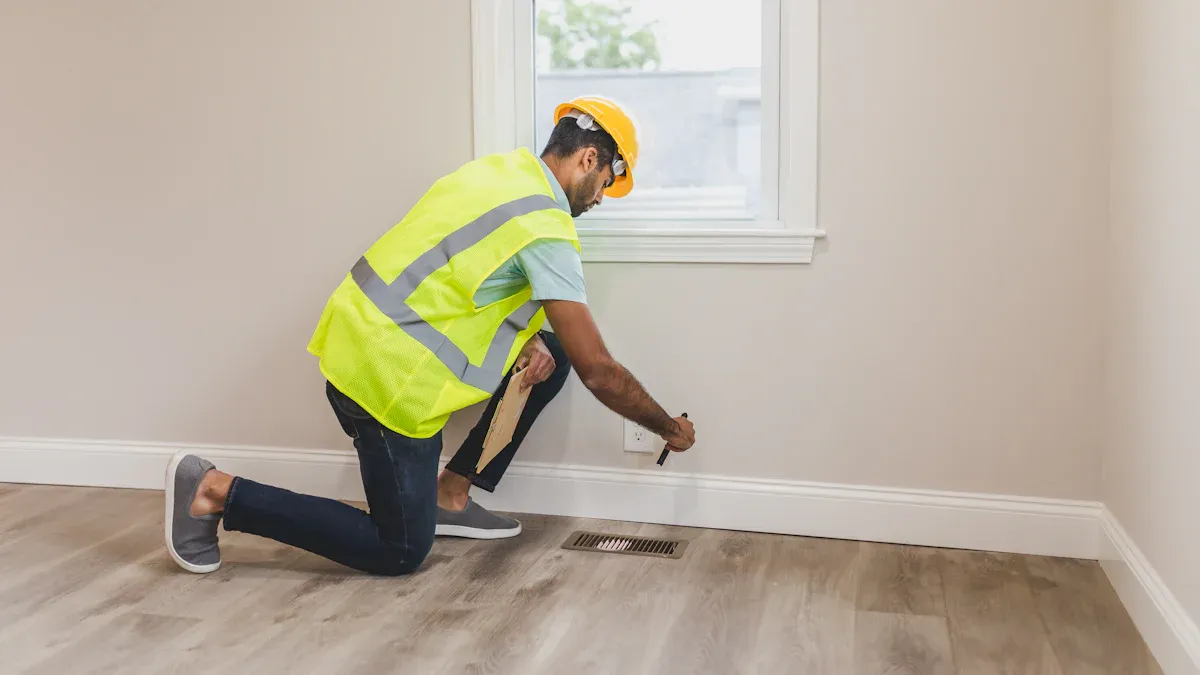
You want your vinyl plank flooring to look great and last a long time. Choosing the right installer makes a big difference. Look for professionals who have the right qualifications and certifications. These show that the installer knows how to do the job safely and correctly. You can check the table below to see what you should look for:
| Qualification/Certification | Description |
|---|---|
| Valid Licensing and Insurance | Protects against accidents and ensures compliance with regulations. |
| Certifications from Reputable Organizations | Shows training and skills for high-quality work. |
| Relevant Experience | Proves knowledge of vinyl flooring and installation methods. |
| Strong Portfolio | Lets you see examples of past projects and quality. |
| Awareness of Red Flags | Helps you spot missing certifications or reluctance to discuss skills. |
You should ask for proof of these qualifications. A good installer will share this information with you.
Questions to Ask Before Hiring
You can avoid unexpected costs by asking the right questions before hiring an installer. These questions help you understand what to expect and protect your budget. Here are some important questions:
- Can you provide a detailed quote that breaks down costs, including labor and materials?
- What happens if there are unexpected issues, and how will this affect costs or timelines?
- What are your payment terms, including any required deposits or billing schedules?
- Do you have liability insurance to cover potential damages or accidents?
Asking these questions gives you clear answers and helps you plan your project.
Checking References and Reviews
You should check references and online reviews before choosing an installer. Many people trust online reviews as much as personal recommendations. This means you can learn a lot from what other customers say. High customer satisfaction often comes from installers who have licenses and insurance. These professionals usually provide better service and fair pricing. Reading reviews and talking to past clients helps you find reliable installers. You can feel confident that your vinyl plank flooring will be installed correctly and at a reasonable cost.
Common Mistakes and Red Flags in Vinyl Plank Flooring Installation
Overpaying for Basic Installation
You want to avoid paying more than necessary for your vinyl plank flooring installation. Many homeowners make simple mistakes that lead to higher labor costs. You can prevent these by staying aware of common pitfalls:
- Not properly preparing the subfloor
- Not acclimating flooring materials before installation
- Failing to measure and plan the installation layout
- Not using proper tools and techniques
If you skip subfloor preparation, installers may need extra time to fix issues, which increases your bill. When you do not let your flooring adjust to the room’s temperature and humidity, you risk future problems that require repairs. Poor planning and measurement can lead to wasted materials and extra labor. Using the wrong tools slows down the job and may cause mistakes. You can also overpay if you do not get multiple quotes or hire an installer without checking their credentials.
Tip: Always get at least three quotes and check that your installer is licensed and insured.
Ignoring Written Estimates
You should never start a flooring project without a written estimate. Verbal agreements can lead to confusion and unexpected charges. A detailed written estimate protects you from surprise expenses. Here is how written estimates help you:
- Obtain detailed estimates to avoid unexpected expenses.
- Clarify what services are included to prevent additional costs.
- Ask about potential hidden costs to ensure all factors are accounted for.
When you have everything in writing, you know exactly what you are paying for. This makes it easier to compare offers and spot any red flags.
Not Clarifying the Scope of Work
You need to make sure you and your installer agree on every part of the job. If you do not clarify the scope of work, you may face extra charges for tasks you thought were included. Ask your installer to list all services, such as subfloor preparation, removal of old flooring, and cleanup. Review the contract together and ask questions about anything that is not clear. This step helps you avoid misunderstandings and keeps your project on budget.
Note: Clear communication with your installer leads to a smoother project and fewer surprises.
Hiring Without Proper Credentials
You want your vinyl plank flooring project to succeed. Hiring installers without proper credentials can lead to costly mistakes and poor results. Credentials show that an installer has the training, experience, and legal authority to do the job. When you skip checking credentials, you risk hiring someone who may not follow industry standards or local regulations.
You should always ask for proof of licensing and insurance. Licensed installers know the rules for safe and correct installation. Insurance protects you if accidents happen during the project. If an installer cannot show these documents, you should look for someone else.
Here is a simple table to help you check credentials:
| Credential | Why It Matters |
|---|---|
| License | Shows legal authority and training |
| Insurance | Protects you from liability |
| Certifications | Proves skill and knowledge |
You can also ask about certifications from flooring organizations. These certificates show that the installer has learned special skills for vinyl plank flooring. You should check online reviews and ask for references. Past customers can tell you if the installer did a good job.
Tip: Always ask for credentials before you sign a contract. You protect your home and your budget by hiring qualified professionals.
You avoid problems when you hire installers with proper credentials. You get better workmanship and fewer delays. You also reduce the risk of paying for repairs later. If you want your vinyl plank flooring to last, choose an installer who meets all requirements.
Planning Your Vinyl Plank Flooring Project with skspcflooring
Timing Your Installation for Savings
You can lower your installation cost by choosing the right time for your project. Many installers offer discounts during slower seasons. You may find that winter or late summer brings better deals. Installers often have more availability, which means you can negotiate the cost to install vinyl plank flooring. You should ask about seasonal promotions before scheduling your installation. Planning ahead helps you avoid peak times when installation cost rises. You can also secure your preferred dates and ensure your project runs smoothly.
Tip: Schedule your installation during off-peak months to maximize savings and reduce the overall installation cost.
Buying Materials in Bulk from skspcflooring
You can save money on installation cost when you buy materials in bulk from skspcflooring. Bulk purchases often come with discounts, which lowers the cost to install vinyl plank flooring. You get high-quality SPC flooring that meets international standards. You can choose from a wide range of products, including Chevron SPC Flooring and Rigid Core SPC Flooring. Buying in bulk ensures you have enough material for your installation and reduces the risk of delays. You also benefit from consistent color and pattern throughout your space.
- Bulk buying lowers installation cost.
- You get reliable quality from skspcflooring.
- You avoid shortages during installation.
Note: Buying all your materials at once helps you plan your installation and keeps your project on budget.
Scheduling Efficiently for Lower Labor Costs
You can reduce labor expenses by scheduling your installation efficiently. When you coordinate with skspcflooring, you streamline the process and minimize downtime. Efficient scheduling means installers spend less time waiting and more time working. Companies like Amhil saw a 40% increase in capacity after using customized scheduling techniques. This shows that optimized workforce management can lower installation cost and speed up the installation. You can use these strategies to keep your project moving and avoid extra charges.
- Efficient scheduling reduces labor expenses.
- Installers work faster, lowering installation cost.
- You finish your installation sooner.
Alert: Smart scheduling with skspcflooring helps you control the cost to install vinyl plank flooring and ensures a smooth installation process.
You can save on the cost of labor by comparing quotes, preparing your space, and choosing simple installation methods. Always check the average cost in your area before starting. Plan your project to avoid paying more than the average cost. Ask questions about the cost of labor and avoid unnecessary add-ons.
Tip: Start your vinyl plank flooring installation with skspcflooring to get quality products and control the cost of labor.
You make smart choices when you know the average cost and understand the cost of labor.
FAQ
How do you estimate the total cost for vinyl plank flooring installation?
You calculate the total cost by multiplying the labor rate per square foot by your room size. Add the cost of materials and any extra services. Always ask for a detailed quote before starting your flooring project.
Can you reduce labor expenses by preparing your space?
You save on labor costs when you move furniture and clean the area before installation. Removing old flooring yourself lowers the cost. A ready space helps installers finish faster and keeps your flooring project on budget.
What affects the cost of vinyl plank flooring in different regions?
Location changes the cost of flooring installation. Urban areas usually have higher labor rates. Rural regions often offer lower cost. You should check local prices and compare quotes to find the best value for your flooring project.
Is DIY flooring installation a good way to lower cost?
You can cut labor expenses by installing flooring yourself. DIY saves money on labor. You need to follow instructions and use proper tools. Mistakes may increase the cost later, so consider your skill level before starting.
Why should you choose skspcflooring for your flooring project?
You get high-quality flooring from skspcflooring. Bulk buying lowers the cost. Efficient scheduling reduces labor expenses. You receive reliable products that meet international standards. Your flooring project stays on budget and finishes on time.




