
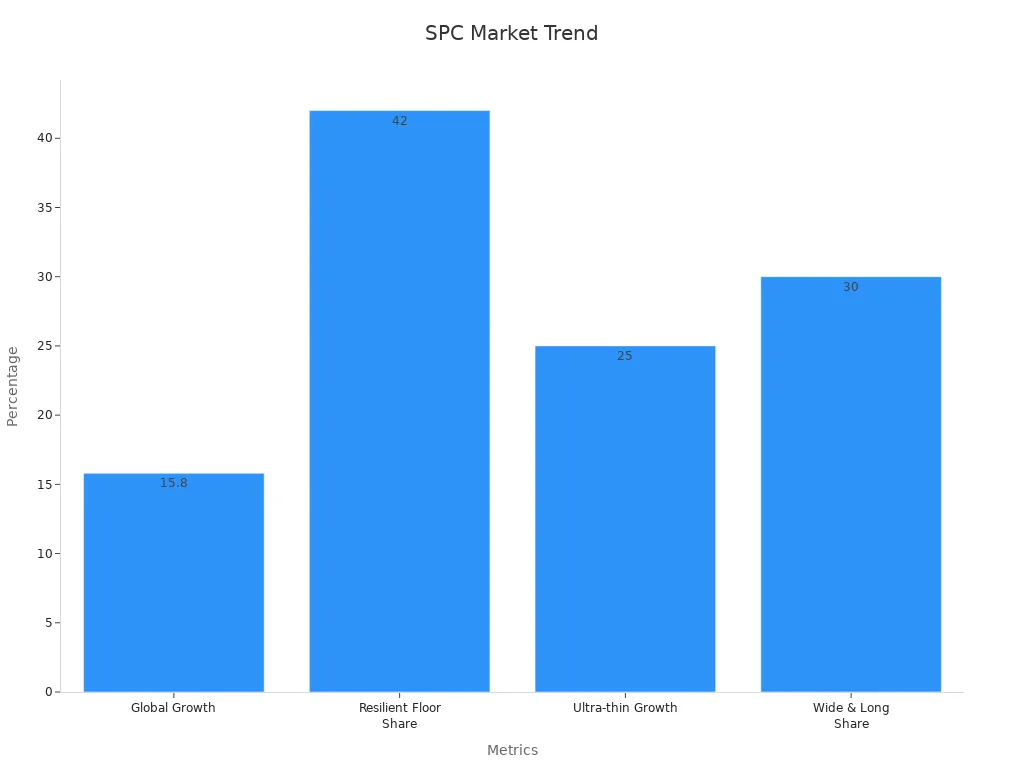
When you explore the world of luxury vinyl flooring, you find three main types of LVP flooring: WPC, SPC, and traditional luxury vinyl plank. Each type of LVP brings something special to your space. The market shows strong growth for these planks, especially SPC, which now holds 42% of the resilient flooring segment in 2024.
| Flooring Type | Market Share (2024) | Growth Rate |
|---|---|---|
| SPC | 42% | 15.8% |
| WPC (U.S.) | 82% | 7.6% |
| LVT (all types) | 64.7% | 5.9% |
You will notice luxury vinyl planks offer durability, comfort, and style. Many homeowners and business owners choose LVP floors for their waterproof features and easy installation. As you consider the types of LVP flooring, you can pick the best planks for your needs by looking at market trends and your space’s demands.
What Is Luxury Vinyl Plank Flooring?
Definition of LVP Flooring
You may have heard about luxury vinyl plank flooring, often called LVP flooring. This type of flooring looks like real wood or stone, but it uses advanced materials and technology. LVP flooring comes in planks that snap together, making installation quick and simple. Each plank has several layers. The top layer protects against scratches and stains. The design layer gives the planks their realistic look, showing wood grains or stone patterns. Underneath, a strong core adds stability and helps the planks resist water and dents. Some planks include a padded backing for extra comfort and sound reduction.
Industry standards, such as ASTM F3261, describe LVP flooring as a resilient product with a rigid polymeric core. You can find both rigid and flexible types. Rigid LVT works well in busy commercial spaces, while flexible LVT is popular in homes. The market for luxury vinyl flooring keeps growing because it meets the needs of both homeowners and businesses.
Note: Many luxury vinyl planks use click-lock systems, so you do not need glue or nails. This floating floor method makes repairs and replacements easier.
Key Benefits of Vinyl Plank Flooring
Vinyl plank flooring offers many advantages for your home or business. You get a floor that is easy to maintain and stands up to daily wear. The thick wear layer protects against scratches, stains, and fading, so your floors look new longer. The strong core, made from materials like wood plastic composite (WPC) or stone plastic composite (SPC), keeps the planks stable and prevents warping.
You will notice that luxury vinyl planks feel comfortable underfoot. Many products include acoustic layers that reduce noise, which is helpful in apartments or multi-story buildings. The padded backing also makes walking easier on your joints.
Here are some key benefits of vinyl plank flooring:
- Durability for high-traffic areas
- Waterproof and moisture-resistant
- Realistic wood or stone designs
- Quick and easy installation
- Comfortable and quiet underfoot
- Easy to maintain with regular cleaning
A table below shows some important features:
| Feature | Benefit |
|---|---|
| Wear Layer | Scratch and stain resistance |
| Core Construction | Stability and water resistance |
| Acoustic Layer | Reduces noise and adds comfort |
| Design Layer | Realistic wood or stone appearance |
Luxury vinyl flooring gives you style, strength, and comfort in one package. You can use it in kitchens, bathrooms, living rooms, or even busy offices. With so many choices, you can find the right LVP flooring for any space.
Types of LVP Flooring: Traditional, WPC, and SPC
Traditional LVP Construction and Features
When you choose traditional LVP, you get a flexible flooring option made from several layers. The core uses a rigid PVC composite that gives stability and helps keep water out. On top, a photographic print layer creates a realistic wood look or stone design. The wear layer, often between 20 and 28 mils thick, protects against scratches and stains. Some brands add aluminum oxide and UV-cured urethane coatings for extra durability. You will notice that the embossing process adds texture, making the planks feel like real wood.
- You can install traditional LVP using click-lock, glue-down, or peel-and-stick methods.
- The planks resist water, scratches, and dents, making them pet-friendly and easy to clean.
- Most products offer warranties that last 10 to 25 years for residential use.
- You can expect your floor to last 15 to 25 years with proper care.
Traditional LVT works well if you want affordable flooring with many styles and a wide range of looks. You can use it in both homes and businesses.
WPC LVP Flooring Construction and Features
WPC, or wood plastic composite LVP, gives you a thicker, softer floor. The core combines recycled wood, PVC, and foaming agents. This makes the planks more comfortable underfoot and better at absorbing sound. WPC flooring is 100% waterproof, so you can use it in kitchens, bathrooms, or basements. The click-lock system makes installation easy for DIY projects.
| Feature | WPC Flooring |
|---|---|
| Core Material | Wood-plastic composite |
| Comfort | Softer, more comfortable |
| Waterproof | 100% waterproof |
| Durability | Durable, but softer core can dent |
| Installation | Click-lock, DIY-friendly |
| Styles | Wide range, mimics wood and stone |
You will find WPC LVP in many styles, but the composite core sometimes looks less like authentic hardwood. WPC costs a bit more, but you get comfort and sound absorption, which is great for homes.
SPC LVP Flooring Construction and Features
SPC, or stone plastic composite, uses a limestone-based core. This makes the planks heavier, denser, and more stable than other types of LVP flooring. The rigid core resists dents, scratches, and temperature changes. You get a solid feel underfoot, and you can add foam underlayment for extra softness. SPC flooring works well in high-traffic areas and commercial spaces.
| Aspect | SPC Flooring |
|---|---|
| Core Material | Limestone-based composite |
| Thickness | 3.2 – 7 mm |
| Durability | High resistance to dents and impacts |
| Stability | Excellent dimensional stability |
| Sound Insulation | Less natural, can add underlayment |
| Styles | Many, with realistic wood and stone |
SPC offers a wide range of styles and gives you a look that matches many types of vinyl planks. You can use SPC if you want a floor that stands up to heavy use and keeps its authentic hardwood look.
Comparing Types of Vinyl Flooring: Pros, Cons, and Best Uses
Durability and Wear Resistance
When you choose flooring, you want it to last. Durability and wear resistance matter, especially in busy homes or commercial spaces. Among the types of vinyl flooring, SPC stands out for its tough core. The stone plastic composite core makes SPC lvp floors very dense and rigid. This means your floor resists dents, scratches, and heavy impacts. You can use SPC in high-traffic areas, and it will keep its good look for years.
WPC flooring also offers strong durability. The wood plastic composite core gives you a softer feel, but it is less rigid than SPC. WPC resists scratches and stains, making it pet and kid-friendly. However, it can dent more easily if you drop heavy objects.
Traditional LVP provides good wear resistance. The wear layer protects against scratches and stains, but it is not as tough as SPC or WPC. You can use traditional LVP in homes with moderate foot traffic.
Tip: Look for vinyl flooring with a thick wear layer. A thicker wear layer means better scratch resistant and stain resistant performance.
Manufacturers often use the abrasion class (AC) rating to show how much wear a floor can handle. Higher AC ratings mean better durability. While you may not always see exact numbers for SPC or WPC, you can trust that rigid core floors like SPC offer the best protection in busy spaces.
| Flooring Type | Durability | Scratch Resistant | Stain Resistant | Best Use Case |
|---|---|---|---|---|
| SPC | Excellent | Yes | Yes | Commercial, high-traffic |
| WPC | Very Good | Yes | Yes | Homes, family spaces |
| Traditional | Good | Yes | Yes | Bedrooms, living rooms |
Waterproofing and Moisture Performance
Waterproofing is a key reason many people pick lvp floors. You want a floor that can handle spills, splashes, and even standing water. SPC and WPC both offer 100% waterproof performance. The rigid core in SPC makes it completely impervious to water. You can install waterproof vinyl planks in kitchens, bathrooms, or basements without worry. WPC also gives you a 100% waterproof surface, thanks to its special core made from wood fibers and plastic.
Traditional LVP is water-resistant, but not always 100% waterproof. It can handle small spills, but standing water may cause damage over time. If you need the best moisture protection, choose SPC or WPC.
| Vinyl Flooring Type | Waterproofing & Moisture Resistance Features | Additional Benefits & Suitability |
|---|---|---|
| Rigid Core SPC Vinyl Planks | Stone-polymer composite core is completely impervious to water; resists warping, swelling, and deterioration | Click-lock installation, dimensional stability, sound absorption, mimics wood/tile/stone |
| WPC Composite Waterproof Vinyl Tiles | Waterproof core made from wood fibers and thermoplastic; resists constant moisture without warping or buckling | Comfortable underfoot, warm to touch, click-lock system |
| Traditional LVP | Water-resistant, but not always 100% waterproof; may be vulnerable to standing water | Affordable, easy to install, many styles |
Waterproof vinyl planks use tight locking systems to keep water out. You get a unified waterproof surface that protects your subfloor. This makes SPC and WPC perfect for moisture-prone areas. You can even use them in laundry rooms or entryways where wet shoes are common.
Note: Waterproof vinyl planks are also stain resistant and easy to clean. This makes them pet and kid-friendly and a smart choice for busy families.
Comfort and Underfoot Feel
Comfort matters when you walk on your floor every day. WPC flooring gives you a softer, warmer feel underfoot. The core has air pockets that add cushioning. You will notice less noise and more comfort, especially if you stand for long periods.
SPC flooring feels firmer because of its dense stone core. Some people like the solid feel, but it can be harder on your feet. You can add an underlayment for extra softness and sound absorption. SPC still works well in homes, but you may prefer WPC if comfort is your top priority.
Traditional LVP sits between SPC and WPC. It offers some flexibility and comfort, but not as much as WPC. You can use it in bedrooms or living rooms where you want a balance of comfort and durability.
- WPC: Softest and warmest underfoot, best for comfort.
- SPC: Firm and stable, best for durability.
- Traditional LVP: Moderate comfort, good for most rooms.
If you want a floor that is pet and kid-friendly, WPC and traditional LVP both provide a gentle surface. SPC gives you a strong, stable base that lasts, but it may feel harder underfoot.
If you want the best of both worlds, look for waterproof vinyl planks with built-in padding. These floors combine 100% waterproof protection with extra comfort.
Cost and Value
When you compare LVP flooring types, cost often plays a big role in your decision. You want a floor that fits your budget but also gives you long-term value. Luxury vinyl plank (LVP) flooring usually costs between $1 and $6 per square foot. This price is much lower than hardwood flooring, which ranges from $3.50 to $7 per square foot. Hardwood also needs more care and refinishing over time, which adds to your expenses.
LVP gives you a stylish look and easy maintenance. You do not need to worry about stains or water damage. Most LVP floors last 10 to 20 years. Hardwood can last longer, up to 30 years, but it requires more work to keep it looking good. If you want a floor that is easy to clean and does not need much upkeep, LVP is a smart choice.
You can see the cost and value differences in the table below:
| Flooring Type | Initial Cost (per sq ft) | Maintenance Cost | Durability | Comfort | Installation Notes |
|---|---|---|---|---|---|
| LVP | $1 – $6 | Low; easy cleaning, stain & moisture resistant | Good; resists scratches and stains but less dent resistant than SPC | Softer, more comfortable underfoot | Flexible, better for uneven subfloors; requires level subfloor |
| SPC | $3.50 – $7 | Low; very durable, less frequent deep cleaning | Very high; rigid core resists dents and damage | Firmer, less comfortable for long standing | Rigid core allows installation over minor subfloor irregularities |
LVP offers a lower upfront cost and feels softer underfoot. SPC costs more but gives you extra durability and stability. Both types have low maintenance costs, so you save money over time. If you want a budget-friendly floor that looks great and lasts, LVP and SPC both deliver strong value.
Tip: If you want to save money on installation, choose click-lock LVP. You can install it yourself and avoid extra labor costs.
Suitability for Residential and Commercial Spaces
You need to pick the right LVP flooring for your space. Homes and businesses have different needs. In your home, you may want comfort and style. In a business, you need a floor that can handle heavy use.
Commercial LVT flooring uses a thicker wear layer and a strong SPC core. This makes it tough enough for busy stores, offices, or restaurants. You often see commercial LVT with a thickness of 6mm to 8mm and a wear layer of 0.5mm to 0.7mm. These floors resist dents, scratches, and heavy foot traffic. Many commercial spaces use glue-down installation for extra stability. You may need professional cleaning to keep the floor looking its best.
Residential LVT focuses on comfort and easy care. These floors are usually 4mm to 5mm thick with a wear layer around 0.3mm. The core is often flexible and cushioned, so it feels softer when you walk or stand. Most homeowners use click-lock systems, which make installation simple. You can clean residential LVT with regular household tools.
Here is a quick comparison:
| Feature | Commercial LVT | Residential LVT |
|---|---|---|
| Overall Thickness | 6mm to 8mm | 4mm to 5mm |
| Wear Layer Thickness | 0.5mm to 0.7mm | Approximately 0.3mm |
| Core Type | SPC (Stone Plastic Composite) for stability | Flexible, often cushioned core for comfort |
| Installation Method | Glue-down preferred; some click systems | Predominantly click systems |
| Maintenance | Rigorous routine; may require professional cleaning | Easier daily maintenance with standard equipment |
| Performance Under Stress | Designed for heavy traffic; thicker wear layer and SPC core | Durable for daily home use; comfort-oriented |
| Regulatory & Warranty | Stricter standards; more limited warranties | Less rigorous requirements; more generous warranties |
Commercial LVT is built for strength and long life. You can trust it in places with lots of people and movement. Residential LVT gives you comfort and style for your living spaces. You get a floor that is easy to care for and feels good underfoot.
Note: If you want a floor for a busy business, choose SPC or commercial-grade LVT. For your home, WPC or traditional LVP may give you the comfort and look you want. Always match the floor to your space’s needs for the best results.
Installation Methods for LVP Flooring
When you choose luxury vinyl plank flooring, you have several installation options. Each method offers unique benefits for different spaces and skill levels. You can select the best fit for your project by understanding how each technique works.
Click-Lock Installation
Click-lock lvp uses a floating floor system. The planks snap together with a special edge design, so you do not need glue or nails. You can install click-lock lvp over most subfloors, even if they are not perfect. Many homeowners like this method because it is fast and easy to repair. If a plank separates at the end, you can often fix it without much trouble. Technical manuals, such as those from Parterre Flooring, explain that click-lock lvp usually comes in 5-6mm thickness and sometimes includes acoustic backing for comfort. You should always follow the manufacturer’s instructions to keep your warranty valid.
Tip: Click-lock lvp is a top choice for DIY projects. You can finish a room in a day with basic tools.
Glue-Down Installation
Glue-down lvp gives you a strong, stable floor. You apply adhesive to the subfloor, then press each plank into place. This method works well in commercial spaces or areas with heavy foot traffic. Studies show that adhesives like Epilox R50-70 and Epasol EP 2 keep their bond for months, even under stress. Shear and tensile tests confirm that glue-down lvp stays secure and resists movement. You get a floor that feels solid and lasts for years.
- Glue-down lvp is best for large, open areas.
- You may need professional help for perfect results.
- This method works well with rolling loads, such as office chairs.
Loose Lay Installation
Loose lay lvp offers the quickest installation option. You simply lay the planks on the subfloor, and the backing grips the surface to hold them in place. Shaw vinyl plank flooring supports this method, making it popular for both homes and businesses. You can install loose lay lvp in just a few hours, with no mess or adhesives. This method is ideal for temporary spaces or rooms where you may want to change the floor later. Industry data shows that loose lay lvp is gaining popularity because it is waterproof, scratch-resistant, and easy to remove or replace.
Note: Loose lay lvp works best in small to medium rooms with low to moderate traffic.
Best Installation Methods for Each Type of LVP Flooring
Choosing the right installation method for your LVP flooring helps you get the best performance and durability. Each type of LVP—traditional, WPC, and SPC—works best with certain installation techniques. You should match the method to your space and how much traffic the floor will see.
Traditional LVP gives you flexibility. You can use click-lock, glue-down, or even loose lay installation. For bedrooms or living rooms with moderate foot traffic, click-lock works well. You snap the planks together, and the floor floats over the subfloor. This method is easy for DIY projects. If you want extra stability, especially in kitchens or entryways, glue-down installation keeps the planks firmly in place.
WPC LVP feels soft and quiet underfoot. You often find click-lock installation with WPC planks. This floating method lets you install the floor quickly and handle minor subfloor imperfections. WPC works best in homes, bedrooms, or family rooms where comfort matters most. You do not need glue or nails, so you can finish the job with basic tools.
SPC LVP has a dense, tough core. You often see glue-down installation in high-traffic areas like offices, stores, or busy kitchens. The adhesive holds the planks tight, which helps the floor resist movement and wear. For commercial spaces, experts recommend a wear layer of 20 mil or more. This thickness, combined with glue-down installation, gives you a floor that stands up to heavy use. In homes, you can use click-lock SPC for easy installation, but glue-down offers the most stability.
| LVP Type | Best Installation Method | Where to Use It | Why It Works Best |
|---|---|---|---|
| Traditional | Click-lock or glue-down | Bedrooms, living rooms, kitchens | Easy DIY or extra stability |
| WPC | Click-lock | Homes, family rooms | Comfort, quick installation |
| SPC | Glue-down (commercial), Click-lock (residential) | Offices, kitchens, high-traffic areas | Maximum durability and stability |
Tip: For high-traffic or commercial spaces, choose glue-down SPC with a thick wear layer. For comfort and easy installation at home, click-lock WPC or traditional LVP works best.
You have many options when choosing LVP flooring. Each type—traditional LVP, SPC, and WPC—offers unique strengths and weaknesses. Use the table below to compare them:
| Type | Comfort | Durability | Waterproof | Best For | Drawbacks |
|---|---|---|---|---|---|
| LVP | Moderate | Durable | Yes | Versatile, easy repair | Odor, fading, removal issues |
| SPC | Less soft | Very high | Yes | High-traffic, stability | Feels hard, heavier planks |
| WPC | Softest | Durable | Yes | Comfort, insulation | Thicker, less rigid |
Think about your space, budget, and comfort needs. This guide helps you pick the right vinyl plank flooring for your project with confidence.
FAQ
What is the main difference between WPC and SPC flooring?
WPC flooring feels softer and warmer under your feet. SPC flooring feels firmer and resists dents better. Both types are 100% waterproof. You can choose WPC for comfort or SPC for strength.
Can you install LVP flooring in bathrooms or kitchens?
Yes, you can install LVP flooring in bathrooms or kitchens. LVP resists water and stains. SPC and WPC types work best in wet areas. Always follow the manufacturer’s instructions for the best results.
How do you clean and maintain LVP flooring?
You can sweep or vacuum your LVP floor regularly. Use a damp mop for deeper cleaning. Avoid harsh chemicals and steam mops. Most spills wipe up easily. LVP flooring needs little maintenance.
Does LVP flooring scratch or fade easily?
LVP flooring has a tough wear layer that protects against scratches and fading. You can place felt pads under furniture to prevent marks. Keep your floor looking new by cleaning it often and avoiding dragging heavy items.




