
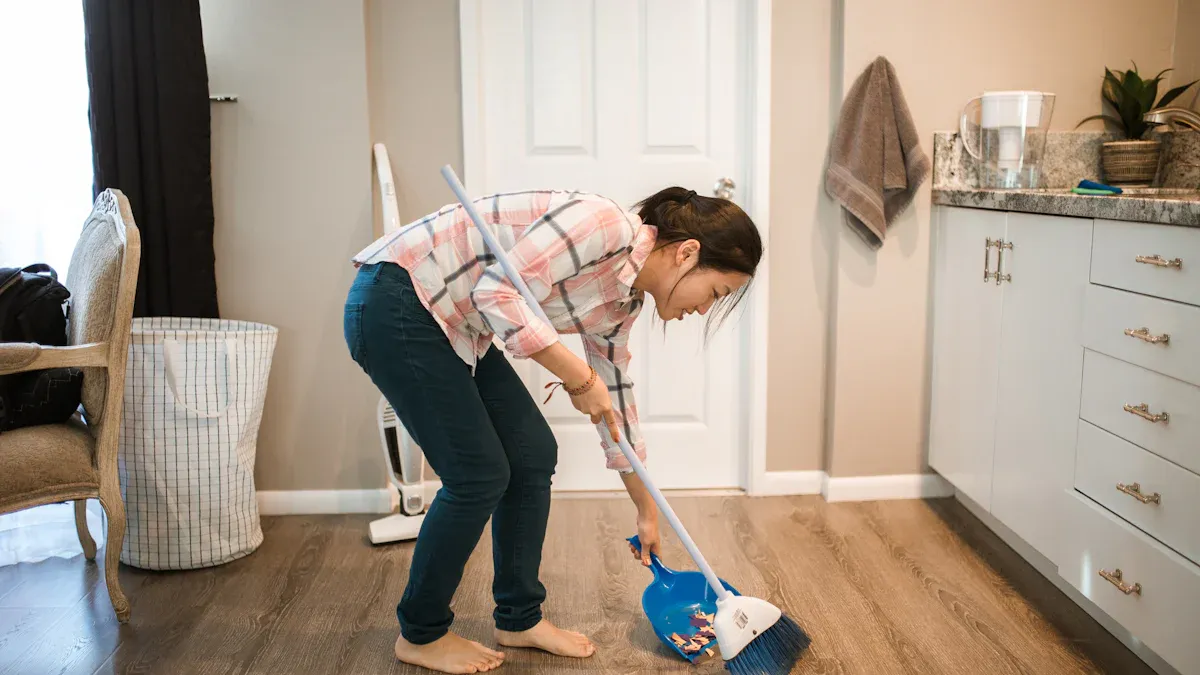
You might wonder how much does it cost to install vinyl plank flooring in your home. The average price can range from $625 to $4,000 per room, with a typical cost of about $2,300 per room. Temperature swings in winter and summer can impact your installation. If you do not plan for these changes, you may face unexpected repairs or extra expenses. Careful preparation helps you avoid surprises and keeps your flooring investment safe.
How Much Does It Cost to Install Vinyl Plank Flooring?
When you start planning a new floor, you may ask, how much does it cost to install vinyl plank flooring? The answer depends on several factors, including the type of material, labor, and the preparation needed before installation. Understanding these details helps you make smart choices and avoid surprises.
Average Material Costs for Vinyl Planks
You will find that material prices can vary based on the style and quality you choose. Here are some typical price ranges for 2024:
- The average price for vinyl plank flooring ranges from $2 to $7 per square foot.
- If you want a budget-friendly option, click-lock systems cost between $2 to $5 per square foot.
- Glue-down systems are a bit more expensive, costing around $3 to $8 per square foot.
You can also compare luxury vinyl planks to standard vinyl sheet flooring. The table below shows the difference:
| Type of Flooring | Cost per Square Foot |
|---|---|
| Luxury Vinyl Planks (LVP) | $1.75 to $7 |
| Standard Vinyl Sheet | $0.75 to $5.75 |
When you ask, how much does it cost to install vinyl plank flooring, remember that the material you select will affect your total cost. Luxury options look great and last longer, but they may cost more upfront.
Labor Cost Breakdown
Labor is another big part of the answer to how much does it cost to install vinyl plank flooring. The price you pay for installation depends on where you live and how complex the job is.
- In urban areas, labor costs for installation usually range from $4 to $12 per square foot. These areas have higher demand and living costs.
- In rural areas, you might pay between $2 and $7 per square foot for installation. Fewer installers and lower demand can keep prices down, but shipping materials may cost more.
- If your floor needs extra work, like leveling or repairs, labor costs can increase.
Tip: Always ask for a detailed quote before you start. This helps you understand the full cost of installation and avoid hidden fees.
Underlayment and Subfloor Preparation
Before you install your new floor, you need to prepare the surface. Underlayment is a layer that goes between your subfloor and the vinyl planks. It can make a big difference in comfort and performance.
- Underlayment helps reduce noise, adds cushioning, and protects against moisture.
- It can make your floor feel warmer and last longer.
- You can choose from different types, such as cork, foam, felt, or rubber. Each type offers different benefits for sound and warmth.
Proper subfloor preparation is key to a smooth installation. If your subfloor is uneven or damaged, you may need repairs before you can install the planks. This step can add to your total cost, so include it when you ask, how much does it cost to install vinyl plank flooring.
When you look at all these factors—materials, labor, and preparation—you get a clear picture of how much does it cost to install vinyl plank flooring. Careful planning helps you manage your budget and get the best value from your new floor.
Removal of Old Flooring
Before you install new vinyl plank flooring, you often need to remove the old flooring. This step helps you create a smooth, clean surface for your new planks. If you skip this step, you might face problems like uneven floors or trapped moisture.
You may wonder how much it costs to remove old flooring. The price depends on the type of material you have now and the size of your room. Most homeowners pay between $1 and $3 per square foot for this service. Here is a simple table to help you understand the cost:
| Service | Cost per sq. ft. |
|---|---|
| Old flooring removal | $1 – $3 |
If you have a large room or thick materials like tile or hardwood, the cost can go up. Carpet and laminate are usually easier and cheaper to remove. Some installers include removal in their quote, but others charge extra. Always ask your installer for a clear breakdown.
Tip: Removing old flooring yourself can save money, but it takes time and effort. You need the right tools and safety gear. If you find mold, asbestos, or water damage, call a professional right away.
Here are the main steps you can expect during old flooring removal:
- Move all furniture out of the room.
- Remove baseboards and trim carefully.
- Pull up the old flooring material.
- Check the subfloor for damage or moisture.
- Clean and prepare the subfloor for new installation.
You should plan for this step in your budget. Removing old flooring adds to your total cost, but it helps your new vinyl planks last longer and look better. Careful removal also protects your subfloor and prevents future repairs.
Temperature Fluctuations and Vinyl Plank Flooring Cost
Expansion and Contraction of Vinyl Planks
You may notice that your vinyl planks change shape when the weather changes. This happens because extreme temperatures cause materials to expand or contract. When the air gets hot, the planks can swell. When it gets cold, they shrink. Even though vinyl is not porous, it still reacts to temperature swings.
Here is a table that shows what can happen to your floor:
| Cause of Expansion/Contraction | Effect on Vinyl Planks |
|---|---|
| Extreme temperature fluctuations | Contraction and gaps |
| Improper acclimation | Separation and cupping |
| Insufficient expansion gaps | Buckling and dirt accumulation |
You should know that high temperatures make materials expand. Low temperatures make them shrink. Humidity also plays a role. If you do not leave enough space for movement, you may see buckling or gaps. These problems can lead to extra repairs and higher cost.
- Vinyl planks can expand up to 1/4 inch per 100 feet with a 20°F increase.
- High heat can soften adhesives and cause the planks to shift.
- Cold weather can create gaps that collect dirt and debris.
Tip: Always check for signs of movement after a season with extreme temperatures. Early action can prevent bigger problems.
Acclimation Requirements for Different Seasons
You need to let your vinyl planks adjust to the room before you install them. This process is called acclimation. It helps the planks match the temperature and moisture in your home. You should let the planks sit in the room for at least 48 hours. This rule applies in both winter and summer.
Here is a table to help you understand acclimation for each season:
| Season | Acclimation Time | Key Considerations |
|---|---|---|
| Winter | 48 hours | Make sure the planks reach room temperature to avoid gaps and shrinkage. |
| Summer | 48 hours | Let the planks adjust to the warm air to prevent gapping and movement. |
- Acclimation is important in all seasons.
- If you skip this step, you may see gaps, buckling, or even warping.
- In winter, acclimation keeps the planks from shrinking.
- In summer, it prevents the planks from expanding too much.
Note: Always store the planks in the room where you plan to install them. Do not leave them in a garage or outside.
Risk of Damage and Additional Repair Costs
If you do not manage extreme temperatures, you may face damage and extra cost. Vinyl planks can suffer from warping, buckling, or adhesive failure. These problems often lead to repairs.
Here is a table that shows how different temperatures affect your floor:
| Temperature (°F) | Effect on Vinyl Flooring |
|---|---|
| 85 and above | Initial expansion begins |
| 95-100 | Noticeable dimensional changes and adhesive softening |
| 110+ | Significant risk of permanent damage and surface issues |
| Sustained over 120 | Guaranteed damage to most vinyl systems |
You should remember that:
- Extreme temperatures can cause the planks to move or lift.
- Adhesives may lose grip if the floor gets too hot.
- Repairs for buckling or gaps can add to your total cost.
- Neglecting acclimation can shorten the life of your floor.
Callout: If you see warping, gaps, or lifting, contact a flooring professional right away. Quick repairs can save you money in the long run.
Seasonal Price Variations
You might notice that the price of vinyl plank flooring changes during the year. These changes happen because of supply and demand. When many people want new floors, prices go up. When fewer people buy, prices drop. Understanding these patterns helps you plan your project and save money.
Spring and summer are the busiest times for flooring projects. Many homeowners start renovations when the weather warms up. Retailers know this and keep prices high. Installers also get busy, so you may have to wait longer for an appointment. Labor costs rise because contractors have full schedules.
Late fall and winter bring a different story. Fewer people start home projects during cold months. Retailers want to clear out old inventory before new styles arrive. You can find discounts and clearance sales. Installers have more open time and may lower their prices to get more work.
Here is a simple table to show how the season affects your flooring project:
| Factor | Peak Season (Spring/Summer) | Off-Season (Late Fall/Winter) |
|---|---|---|
| Pricing | Generally at its highest due to strong consumer demand. Discounts are rare and modest. | Significant markdowns and clearance events are common as retailers clear out old inventory. |
| Installer Availability | Contractors are in high demand and booked far in advance. Labor costs are at their peak. | Installers have more open schedules and may offer more competitive pricing to secure work. |
If you want to keep your project affordable, consider shopping for materials and booking installers during the off-season. You can take advantage of lower prices and better availability. Planning ahead lets you avoid the rush and helps you control the total cost of your vinyl plank flooring installation.
Tip: Ask your installer if they offer off-season discounts or special deals. Many companies want to fill their schedules during slower months.
You can use these seasonal trends to your advantage. By choosing the right time, you get the best value and avoid paying extra when demand is high.
Managing Cost and Value with skspcflooring During Seasonal Changes
Best Timing for Installation
You can save money and get the best value by choosing the right time for your installation. Many people pick spring or summer for home projects, but you may find better deals in late fall or winter. Installers have more open schedules during these months, and retailers often offer discounts. Planning your installation during the off-season helps you manage cost and value. You also avoid the rush, so your project moves faster.
Tip: Book your installation early to secure your spot and lock in lower prices.
Proper Acclimation Procedures for Vinyl Planks
You need to acclimate your vinyl planks before installation. This step helps the flooring adjust to your room’s temperature and humidity. If you skip acclimation, you may see gaps, warping, or buckling, which can lead to costly repairs. Follow these steps for proper acclimation:
- Keep the installation area climate-controlled between 65°F and 85°F.
- Maintain humidity levels between 30% and 65%.
- Unbox and spread out the planks in the installation area.
- Stack planks with gaps for airflow.
- Allow at least 48 hours for acclimation.
Proper acclimation protects your investment and adds value to your home. You reduce the risk of repairs and make sure your installation lasts for years.
Choosing Temperature-Resistant Materials from skspcflooring
You want your flooring to handle seasonal changes. Temperature-resistant vinyl planks from skspcflooring give you peace of mind. These planks use stable PVC cores that resist expansion and contraction. They keep their shape even when humidity or heat rises. You get strong seams and a smooth surface all year.
- Temperature-resistant vinyl planks work well in places with big temperature swings.
- They help you avoid problems like gaps or buckling.
- You protect your cost and value by choosing materials that last.
skspcflooring offers a range of products designed for durability and value. You can trust their flooring to perform well, even in tough conditions. This choice gives you long-term value and a beautiful floor.
Working with Experienced Installers
You want your vinyl plank flooring to last for years. Choosing experienced installers makes a big difference, especially when temperatures change from season to season. Skilled professionals know how to handle the challenges that come with winter and summer weather. They help you avoid costly mistakes and protect your investment.
Experienced installers pay close attention to your indoor climate. They keep the temperature and humidity stable during installation. This step is important because vinyl planks can expand or contract if the climate changes too quickly. When you work with experts, you lower the risk of gaps, warping, or buckling in your floor.
Here are some key benefits you get when you hire experienced installers:
- They maintain a stable indoor climate, which helps your flooring stay in good shape during seasonal changes.
- They understand how humidity affects vinyl planks and prevent problems like gaps or warping.
- They install the flooring correctly, which reduces the chance of moisture getting trapped underneath.
- They know that winter’s lower humidity can help prevent moisture absorption during installation.
- They manage moisture levels well, which helps stop mold and mildew from growing.
Professional installers also use the right tools and follow best practices. They check your subfloor for damage or moisture before starting. They make sure your planks have enough space to expand and contract. This careful approach keeps your floor looking great and saves you money on repairs.
Tip: Always ask your installer about their experience with vinyl plank flooring. A skilled team can spot potential problems early and give you advice on caring for your new floor.
Working with experienced installers gives you peace of mind. You know your floor will handle seasonal changes and stay beautiful for years.
Cost-Saving Strategies for Vinyl Plank Flooring
Preventing Future Repairs
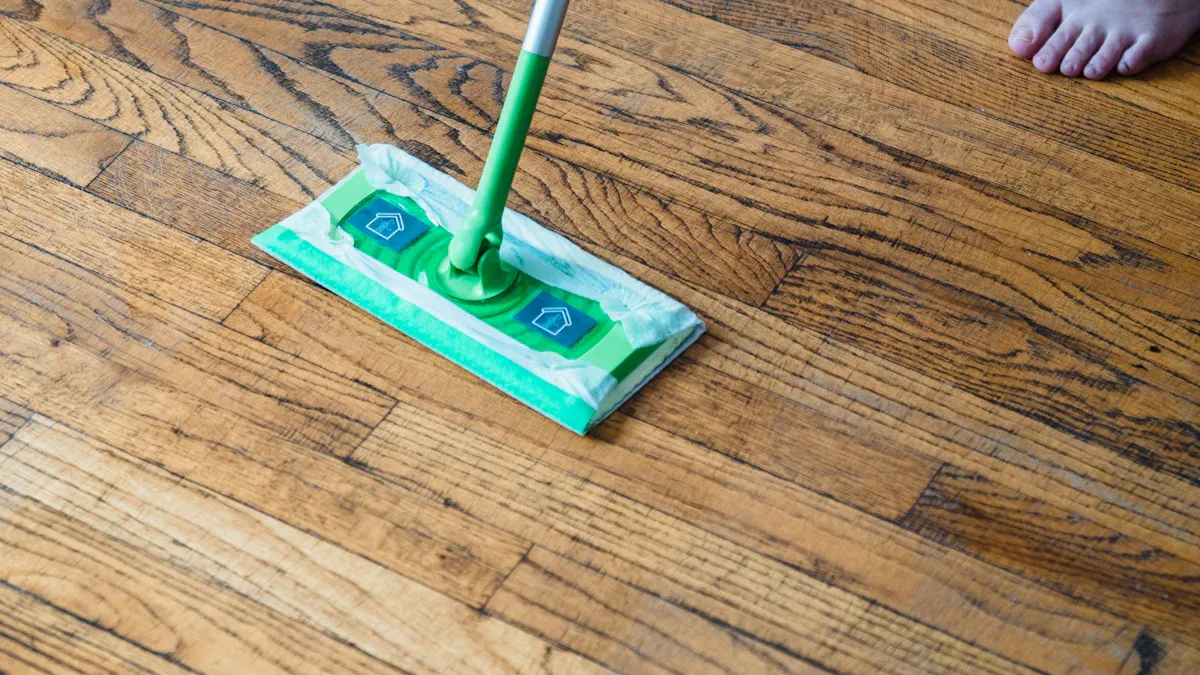
You can avoid expensive repairs by taking a few simple steps. Start by keeping your floors clean and dry. Wipe up spills right away to stop moisture from seeping under the planks. Place mats at entryways to catch dirt and grit before it scratches the surface. Use felt pads under furniture legs to prevent dents and marks. Move heavy items carefully instead of dragging them across the floor. These habits protect your vinyl planks and help them last longer.
Tip: Check your floors often for signs of damage, such as lifting edges or gaps. Early action can prevent bigger problems.
Maintenance Tips for All Seasons
Regular care keeps your floors looking new and saves you money over time. Follow these tips throughout the year:
- Use a barely damp mop and clean up spills right away to avoid excess moisture.
- Do not use wax or polish, as these can cause buildup and damage.
- Place felt under furniture to prevent scratches and avoid dragging heavy items.
- Clean with products made for vinyl or laminate, not abrasive cleaners.
You should also adjust your routine for each season:
- In winter, remove salt residue with a cleaner approved by the manufacturer.
- In spring, check for water under floating floors after snow melts.
- In summer, sweep and mop often, and keep indoor temperatures steady.
- In fall, inspect seams and edges to make sure they stay watertight.
These steps help you prevent costly repairs and extend the life of your vinyl planks.
Warranty and Insurance Considerations
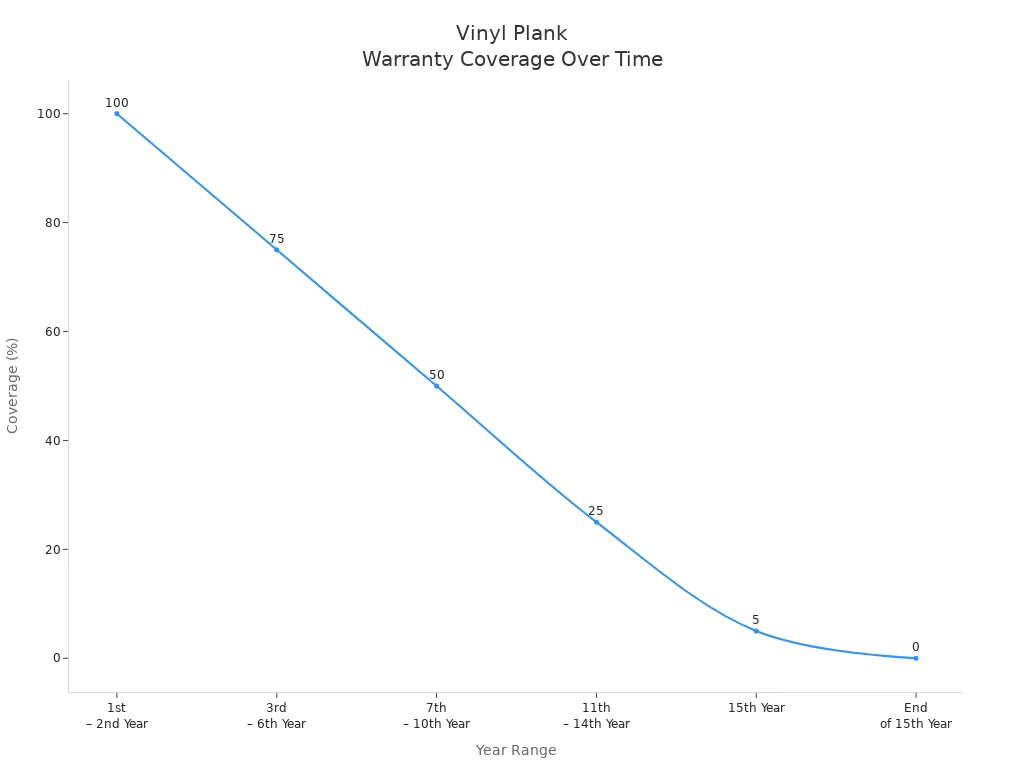
A good warranty gives you peace of mind and protects your investment. Many brands offer a limited wear warranty for both homes and businesses. This warranty covers normal wear if you install and maintain your flooring correctly, including following temperature and humidity guidelines. However, damage from sunlight or heat sources is usually not covered.
| Year | Coverage |
|---|---|
| 1st – 2nd Year | 100% |
| 3rd – 6th Year | 75% |
| 7th – 10th Year | 50% |
| 11th – 14th Year | 25% |
| 15th Year | 5% |
| End of 15th Year | 0% |
You must follow the acclimation process and keep your home at the right temperature and humidity. If you skip these steps, the warranty may not apply. Review your insurance policy to see if it covers accidental damage or water issues. This extra protection can save you money if something unexpected happens.
You have learned the main factors that affect the cost of vinyl plank flooring, such as materials, labor, and preparation. To keep your project affordable, plan your installation during the off-season, follow proper acclimation steps, and choose temperature-resistant products. You can avoid repairs by working with skilled installers and caring for your floor year-round. For expert advice, reach out to professionals at skspcflooring.
FAQ
How do temperature changes affect vinyl plank flooring?
Temperature changes cause vinyl planks to expand or contract. You may see gaps or buckling if you do not acclimate the planks before installation. Always keep your room climate stable for best results.
Can I install vinyl plank flooring myself?
You can install vinyl plank flooring yourself if you follow the instructions. Use proper tools and prepare the subfloor. If you feel unsure, hire a professional installer for a smooth finish.
What is acclimation, and why is it important?
Acclimation means letting vinyl planks adjust to your room’s temperature and humidity. You protect your floor from gaps and warping by acclimating planks for at least 48 hours before installation.
How do I clean vinyl plank flooring?
Use a soft broom or a damp mop to clean vinyl plank flooring. Avoid harsh chemicals and abrasive tools. Clean spills quickly to prevent stains and damage.




