
You may wonder if vinyl plank flooring outside suits your outdoor needs in 2025. Many people like lvp for decks and patios because it resists water, stains, and scratches. You find lvp offers many designs and feels soft underfoot. Still, vinyl plank flooring outside has some drawbacks. When installed outdoors, lvp can fade in sunlight, get hot, or even warp with temperature changes. Here are some key points to consider:
- Lvp resists moisture and is easy to clean.
- Vinyl flooring outdoors can mimic wood or stone.
- Outdoor heat may cause vinyl plank flooring outside to become uncomfortable.
- Lvp may not last as long as natural materials.
Vinyl plank flooring outside works best if you want style and easy care in covered outdoor spaces.
Vinyl Plank Flooring Outside: Key Benefits
Water and Moisture Resistance
You want your outdoor flooring to stand up to rain, spills, and changing weather. Vinyl plank flooring gives you strong waterproof protection. Many lvp products pass strict lab tests for water-resistance. These tests show that lvp can handle water on the surface for up to 24 hours without damage. This makes vinyl outdoor flooring a smart choice for covered patios or screened porches where moisture and humidity are common. Unlike wood, lvp will not swell or rot when wet. However, you should know that vinyl for outdoor use works best when you prepare the surface well and use a moisture barrier. Tile offers even better waterproof performance for fully exposed areas, but lvp still gives you reliable protection in most covered outdoor spaces.
Tip: Always check that your lvp is labeled as waterproof before installing it outside.
Easy Cleaning and Low Maintenance
You save time and effort with lvp because it needs very little care. Most of the time, you only need to sweep or mop your vinyl outdoor flooring to keep it looking fresh. You do not have to worry about refinishing or sealing, which hardwood and tile often require. The waterproof surface of lvp helps prevent stains and makes cleaning up spills easy. Compared to other outdoor flooring, lvp stands out for its low maintenance needs and cost. Take a look at this chart to see how vinyl compares:
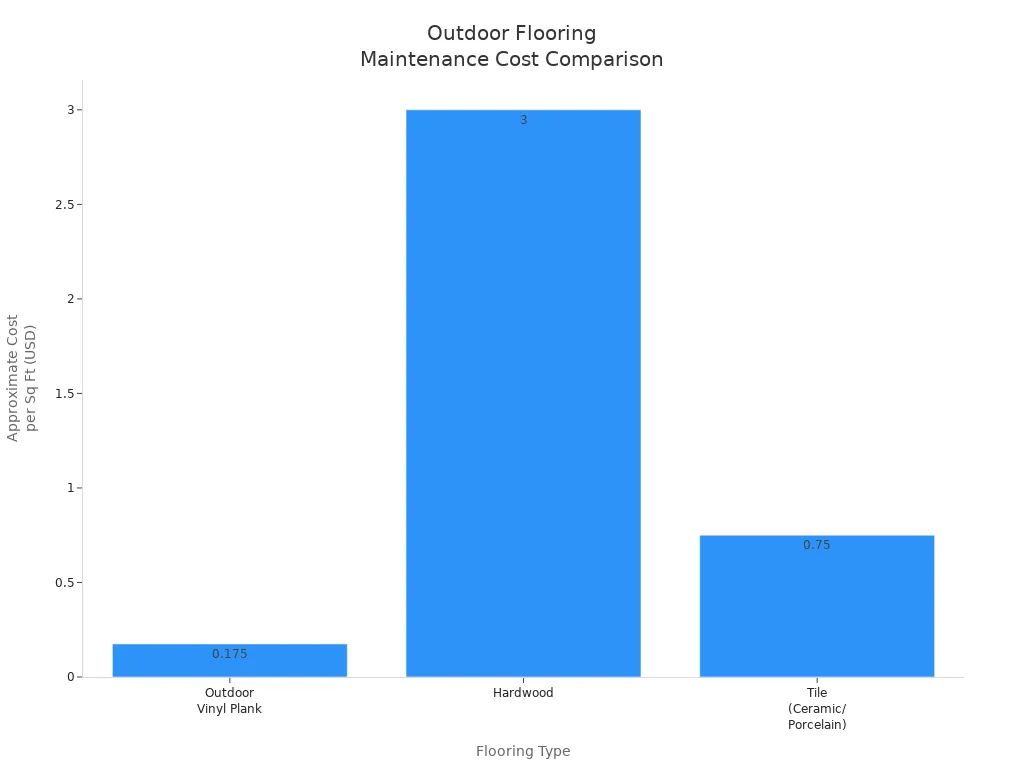
You can see that lvp costs less to maintain than hardwood or tile. This makes it a budget-friendly option for busy families.
Affordability Compared to Other Outdoor Options
You want your outdoor space to look great without spending too much. Lvp gives you the look of wood or stone at a lower price. While composite decking and porcelain tile can cost much more per square foot, lvp offers style and waterproof performance for less. You also save money over time because you do not need to pay for special cleaners or repairs. Vinyl for outdoor use lets you enjoy a stylish, easy-care patio or porch without breaking your budget.
Note: Lvp comes in many designs, so you can match your outdoor style easily.
Design Variety and Style Choices
You want your outdoor space to look unique and stylish. Vinyl plank flooring gives you many design options. You can choose from a wide range of colors, patterns, and textures. Some planks look like real wood, while others copy the look of stone or tile. You can find light shades for a modern feel or dark tones for a cozy look. Many brands offer planks with realistic wood grain or stone textures. These details help your patio or porch feel more like an indoor room.
Tip: Try mixing different plank styles to create a custom pattern. You can lay planks in a herringbone or chevron design for extra flair.
Vinyl plank flooring also lets you match your outdoor furniture and decor. You can pick a style that fits your taste, whether you like rustic, classic, or modern looks. Some brands even offer planks with embossed finishes. These finishes add depth and make the floor feel more natural under your feet.
Here are some popular design choices you might consider:
- Wood-look planks: Oak, maple, walnut, and more
- Stone-look planks: Slate, travertine, marble
- Unique patterns: Herringbone, chevron, diagonal layouts
- Textured surfaces: Embossed, hand-scraped, or smooth
| Style Option | Best For | Example Look |
|---|---|---|
| Wood-look | Warm, classic spaces | Rustic oak porch |
| Stone-look | Modern, sleek patios | Gray slate terrace |
| Patterned layout | Creative, bold design | Chevron walkway |
You can use these choices to make your outdoor area stand out. Vinyl plank flooring gives you the freedom to design a space that feels just right for you and your family.
Challenges of Using LVP Outdoors
Limited UV and Sunlight Resistance
When you install lvp in an outdoor space, you face the challenge of sunlight exposure. Prolonged exposure to UV rays can cause fading and color changes in vinyl plank flooring. Scientific studies show that polymer-based materials, like those used in lvp, begin to fade and break down after only a few hundred hours of sunlight. The surface may develop cracks, and the color can lose its vibrancy. Some brands add pigments to help reduce this damage, but most lvp will still show signs of wear if left in direct sunlight. You should consider using lvp only in covered areas or spaces with limited sun exposure to help maintain its appearance and strength.
Temperature Fluctuation and Expansion Issues
Outdoor environments often experience wide exposure to temperature fluctuations. Lvp expands when it gets hot and contracts when it cools down. If you do not leave enough space around the edges during installation, the planks can buckle or separate. Experts recommend leaving an expansion gap of about 5/16 inch around the perimeter. Floating installations are especially sensitive to these changes. You can use trim or caulking to hide these gaps and help the floor move as needed. Without proper planning, you may see seams come apart or planks cup due to moisture and temperature swings.
Warranty Limitations for Outdoor Installations
Most major manufacturers do not cover outdoor installations under their warranty. You take on the risk when you install lvp outside. Warranties usually exclude damage from flooding, standing water, and exposure to uncontrolled climates. Mold and mildew claims are also not covered if caused by outdoor moisture. Many brands, such as Lifeproof and Proximity Mills, state that their warranties apply only to indoor, climate-controlled spaces. Even if you use lvp in a covered outdoor area, you may lose warranty protection. Always check the warranty details before choosing lvp for your outdoor project.
Common challenges of using lvp outdoors include seams coming apart, cupping of planks, and issues with subfloor flatness. Skipping proper preparation or choosing the wrong installation method can make these problems worse.
Not Ideal for Fully Exposed Areas
You may think about using vinyl plank flooring on an open deck or patio. This choice can lead to problems. Vinyl plank flooring does not handle direct sunlight, heavy rain, or snow very well. The sun’s UV rays can fade the color and weaken the material. Water can seep into the seams and cause the planks to lift or warp. In winter, freezing temperatures may make the vinyl brittle and more likely to crack.
Tip: Always install in covered areas to help your vinyl plank flooring last longer outdoors.
Here are some reasons why fully exposed spaces do not work well for vinyl plank flooring:
- Direct sunlight can cause fading and discoloration.
- Heavy rain or standing water may damage the seams.
- Snow and ice can make the planks crack or buckle.
- Wind can lift loose planks or blow debris under the edges.
You want your outdoor floor to last for years. Vinyl plank flooring works best when you protect it from harsh weather. Covered patios, screened porches, and sunrooms give you the right environment. These spaces shield the floor from most weather problems. If you use vinyl plank flooring in a fully exposed area, you may need to replace it sooner than you expect.
| Problem | Effect on Vinyl Plank Flooring |
|---|---|
| Sunlight | Fading, warping |
| Rain | Swelling, seam damage |
| Snow/Ice | Cracking, brittleness |
| Wind | Lifting, debris under planks |
You can enjoy the look and feel of vinyl plank flooring outside, but you should avoid using it where it faces the full force of nature.
How to Use LVP in Outdoor Spaces Effectively
Choosing the Right Type of Vinyl Plank for Outdoors
When you plan to use lvp in outdoor spaces, you need to choose outdoor-rated lvp. Not all vinyl planks work well when installed outdoors. Look for products labeled as suitable for patios, porches, or other outdoor areas. These planks have extra UV protection and stronger cores. They resist fading and warping better than standard indoor planks. You should also check if the product has a slip-resistant surface. This feature keeps your outdoor space safer, especially when it gets wet.
Tip: Always read the manufacturer’s guidelines to make sure your lvp is designed for outdoor use.
Preparing the Outdoor Surface Properly
Proper preparation of the surface helps increase the durability of your flooring. Start by cleaning the area and making sure it is flat and dry. Remove any debris, dirt, or old flooring. If you see cracks or holes, fill them in before you begin installation. Use a moisture-resistant underlayment to block water from coming up from below. Overlap the seams and seal them with waterproof tape. This step helps prevent water damage and keeps your lvp stable in outdoor spaces.
Installation Techniques for Maximum Durability
You want your lvp to last as long as possible when installed outdoors. Follow these proven installation steps:
- Apply a high-quality vinyl floor sealant in thin, even coats. Let each layer dry fully to create a strong moisture barrier.
- Install moisture-resistant underlayment with seams overlapped and sealed using waterproof tape.
- Seal all joints, gaps, and edges with waterproof silicone caulk to block water entry.
- Extend the moisture barrier up the wall by at least four inches. Use moisture-resistant baseboards for extra protection.
- Use temperature-resistant adhesives and only install outdoor-rated lvp in covered outdoor spaces.
- Maintain regular cleaning and place absorbent mats in high-traffic areas.
These steps ensure proper installation and help your floor resist water, warping, and adhesive failure. By following these tips, you learn how to use lvp in outdoor spaces effectively and enjoy a beautiful, long-lasting floor.
Sealing and Protecting Edges
You want your vinyl plank flooring to last in outdoor spaces. Sealing and protecting the edges is one of the most important steps. Water can sneak under the planks if you leave the edges open. This can cause damage and shorten the life of your floor. You can use several methods to keep water out and protect your investment.
- Use vinyl baseboards and seal them with silicone caulk. This creates a watertight edge along the walls.
- Apply specialty edge trim pieces that curve upward. These trims help block water from getting behind the planks.
- Place waterproof foam tape under threshold strips at doorways. This tape stops moisture from seeping in.
- Leave small expansion gaps around the edges. Fill these gaps with flexible sealant. This keeps water out but lets the floor move when temperatures change.
- Use moisture-resistant adhesives under the planks. Spread the adhesive evenly to prevent water from sneaking underneath.
- Seal any exposed edges with waterproof vinyl sealant. This is extra important in high-traffic areas where water might splash or spill.
- Inspect and maintain all sealants every six months. Regular checks help you catch problems early and keep your floor safe.
You can also ask a professional to apply industrial-grade waterproofing treatments. These treatments add another layer of protection for outdoor spaces that see a lot of rain or humidity. Good subfloor preparation and moisture barriers give you a strong foundation. Floating installation methods work well in outdoor spaces because they let the floor expand and contract without breaking the seal.
Tip: Always check the edges after storms or heavy cleaning. Quick repairs stop small leaks from becoming big problems.
Taking time to seal and protect the edges helps your vinyl plank flooring stay beautiful and strong in all kinds of outdoor spaces.
Maintenance Tips for Vinyl Flooring Outdoors
Regular Cleaning and Upkeep
You keep your lvp looking great by following a simple cleaning routine. Dirt and debris can scratch the surface, so sweep daily. Mop once a week with a microfiber mop and a mild, vinyl-safe cleaner. Avoid using too much water, as standing water can damage even waterproof flooring. Clean up spills right away to prevent stains. Stay away from harsh cleaners like ammonia, bleach, or abrasive products. These can discolor or harm your outdoor vinyl plank flooring. Place doormats at entrances to trap dirt and moisture before it reaches your floor. Use furniture pads and rugs to protect against scratches from furniture and pets. Trim pet nails often to reduce physical wear and tear. After installation, wait before moving heavy furniture to let the floor set properly.
Best Practices for Cleaning:
- Sweep daily to remove dirt and dust.
- Mop weekly with a mild cleaner.
- Wipe spills immediately.
- Avoid harsh chemicals.
- Use protective pads and rugs.
- Place doormats at all entrances.
Preventing Mold, Mildew, and Stains
Outdoor spaces can get damp, so you need to maintain regularly to stop mold and mildew. Clean your lvp weekly with mild soap and water. For stubborn stains, try a baking soda paste or a mix of white vinegar and warm water. Apply a vinyl protectant every three months to create a barrier against moisture. Make sure your outdoor area has good ventilation. If you notice high humidity, use a dehumidifier to keep the air dry. Always wear gloves and keep the area well-ventilated when using cleaning products. Clean up spills fast to stop stains from setting. Choose waterproof flooring to help resist moisture and reduce mold risk.
Managing Fading and Discoloration
Sunlight and heat can cause fading in vinyl plank flooring installed outdoors. You can protect your floor by using shade, such as awnings or outdoor rugs. Close curtains or blinds if your outdoor space connects to indoor areas. Avoid placing heat sources near your lvp. Seal seams and edges to block moisture, which can lead to discoloration. Regular cleaning helps prevent dullness from physical wear and tear. Use the table below to see common causes and solutions:
| Cause | Solution |
|---|---|
| Direct sunlight | Use shade or install in covered areas |
| Excessive heat | Avoid heat sources, maintain temperature |
| Moisture | Seal seams, clean spills quickly |
| Physical wear | Clean regularly, repair damage |
Tip: Protect your lvp from direct sun and water to keep it looking new in outdoor spaces.
Repairing or Replacing Damaged Planks
Outdoor vinyl plank flooring can face scratches, dents, or even broken planks over time. You can fix many of these problems yourself with the right tools and a little patience. Start by cleaning the damaged area well. Dirt or debris can make repairs harder and stop adhesives from working.
For small scratches, you can use a furniture repair marker or pen that matches your plank’s color. If you see a gouge or dent, fill it with color-matched putty. Press the putty into the damaged spot, then smooth it with a putty knife. For planks that pop up, remove the plank, clean the subfloor, apply adhesive, and press the plank down with a heavy object until it dries.
When you need to replace a damaged plank, you have two main options:
-
Remove the entire floor up to the damaged plank
- Use a utility knife, hammer, and pry bar to carefully take off the baseboards.
- Pry up the rows of planks until you reach the damaged one.
- Swap in a new plank from your extra supply.
- Reinstall the planks and baseboards in reverse order.
- This method works best for high-quality floors and small areas.
-
Remove and replace only the damaged plank
- Draw an ‘X’ on the damaged plank.
- Cut along the lines with a circular or oscillating saw, being careful not to harm nearby planks.
- Pry out the pieces.
- Trim the replacement plank’s edges with a chisel and utility knife.
- Clean the area, apply a small amount of adhesive to the edges, and fit the new plank in place.
- Tap it gently with a rubber mallet and wipe away extra glue.
- Let the adhesive dry for 24 hours before walking on it.
Tip: Always keep extra planks from your original installation. They make repairs much easier.
You can prevent future damage by using felt pads under furniture and keeping your floor out of direct sunlight. Regular checks help you catch small problems before they grow. With these steps, you keep your outdoor vinyl plank flooring looking great year after year.
Vinyl Plank Flooring Outside vs. Other Outdoor Flooring Options
Vinyl Plank vs. Composite Decking
When you look at outdoor spaces, you want a floor that lasts and is easy to care for. Comparing lvp to other outdoor flooring options, you see clear differences between vinyl plank and composite decking. Vinyl plank flooring gives you excellent resistance to moisture, rot, mold, and mildew. It stays waterproof and keeps its color for many years. Composite decking can bow, sag, or crack over time. Moisture trapped under composite boards may cause wood joists to rot.
Here is a quick comparison:
| Aspect | Vinyl Plank Flooring (PVC) | Composite Decking |
|---|---|---|
| Durability | Lasts over 50 years; fully waterproof; resists rot and mold | Lasts 25-30 years; can sag or crack; wood joists may rot |
| Maintenance | Minimal; no sealing or staining; fast installation | More cleaning; may need repairs; complex installation |
| Cost | Lower; lightweight; less labor | Higher; more labor; expensive materials |
You save money with lvp because it costs less and installs faster. You also spend less time on upkeep. Composite decking needs more cleaning and can cost almost twice as much.
Vinyl Plank vs. Porcelain Tile
You may wonder if porcelain tile works better than lvp for outdoor areas. Porcelain tile stands up to extreme weather, frost, and heavy rain. It has a very low water absorption rate. This makes it a top choice for patios and walkways. Lvp is easier to install and works well in covered outdoor spaces, but it does not handle direct sunlight or big temperature swings as well as tile.
Porcelain tile installation takes more skill and time. You need special tools, adhesives, and grout. Lvp uses a click-lock system and can be a DIY project. Porcelain tile lasts for decades and resists scratches and dents. Lvp lasts 15-25 years outdoors and can get scratched more easily.
Note: Porcelain tile is best for fully exposed outdoor areas. Lvp works well in covered spaces where weather is less harsh.
Vinyl Plank vs. Natural Wood
Natural wood gives your outdoor space a classic look, but it needs a lot of care. You must repaint or restain wood decks every year to stop rot, mold, and splinters. Wood can warp or crack when it gets wet. Lvp offers high durability and water resistance. You do not need to paint or stain it. It does not rot or grow mold. Vinyl plank flooring often comes with a long warranty, showing its lasting power.
- Wood decks need yearly maintenance.
- Wood is more likely to get damaged by weather.
- Lvp resists water, mold, and fading.
- Lvp needs little upkeep and lasts longer outdoors.
When you want outdoor flooring that is easy to care for and lasts, lvp stands out over natural wood.
Vinyl Plank vs. Concrete and Pavers
You may wonder how vinyl plank flooring compares to concrete and pavers for your outdoor space. Each option has unique strengths and weaknesses. You should look at durability, comfort, style, and maintenance before you decide.
Concrete gives you a tough surface that lasts for decades. You can pour it in almost any shape or size. Pavers come in many colors and patterns. You can create walkways, patios, or even driveways with them. Both concrete and pavers resist heavy foot traffic and harsh weather. They do not fade much in the sun. You will not worry about water damage or warping.
Vinyl plank flooring feels softer under your feet than concrete or pavers. You get more comfort when you walk or sit outside. Vinyl planks also give you many design choices. You can pick wood-look or stone-look planks to match your style. Cleaning vinyl plank flooring is easy. You only need to sweep and mop. Concrete and pavers may need power washing or sealing to stay clean.
Note: Concrete and pavers can crack or shift over time. You may need to repair or replace sections if the ground moves.
Here is a quick comparison to help you choose:
| Feature | Vinyl Plank Flooring | Concrete & Pavers |
|---|---|---|
| Comfort | Softer, warmer | Hard, can be cold |
| Style Options | Many designs | Limited, classic look |
| Maintenance | Easy, low effort | May need sealing/cleaning |
| Durability | Good in covered areas | Excellent, very long-lasting |
| Installation | DIY-friendly | Needs pro installation |
You should use vinyl plank flooring in covered patios or sunrooms. Concrete and pavers work best for fully exposed outdoor flooring where you need extra strength.
Is LVP the Right Choice for Your Outdoor Space?
Factors to Consider Before Deciding
You want your outdoor area to look great and last for years. Before you choose lvp for your outdoor living space, you should think about several important factors. Each one helps you decide if this flooring will meet your needs.
-
Climate and Weather:
Lvp works well in humid or wet climates because it resists moisture. If you live in a place with lots of rain or high humidity, vinyl plank flooring will not warp or swell like wood. However, you should check if your area gets extreme heat, cold, or direct sunlight. UV rays can fade some vinyl planks, so look for products with UV protection. -
Sun Exposure:
Outdoor spaces with lots of sunlight can cause fading and damage. Choose lvp with high UV resistance if your outdoor patio gets direct sun. Covered or shaded areas help your floor last longer. -
Intended Use and Foot Traffic:
Think about how you plan to use your outdoor space. Will you have lots of guests, kids, or pets? High-traffic areas need vinyl with a thick wear layer. This layer protects against scratches, stains, and dents. -
Subfloor and Installation:
You need a flat, dry, and solid surface for the best results. Concrete or pressure-treated plywood works well. Make sure you use the right adhesives and follow the manufacturer’s instructions. Full adhesion helps prevent wrinkling or damage from heavy furniture and temperature changes. -
Safety and Comfort:
If your outdoor area gets wet, look for slip-resistant vinyl. This keeps your family and guests safe. Lvp also feels softer and warmer underfoot than concrete or tile. -
Style and Design:
You can match your outdoor decor with many colors and patterns. Pick a style that fits your taste and the look you want for your outdoor space. -
Budget and Warranty:
Review your budget and check the warranty. Many brands do not cover outdoor installations, especially in fully exposed areas. Make sure you understand what is included before you buy.
Tip: Always acclimate your lvp to the outdoor environment before installation. This helps prevent warping and buckling.
Best Use Cases for Outdoor Vinyl Plank Flooring
You want to get the most out of your investment. Lvp shines in certain outdoor settings. Here are the best places to use it:
-
Covered Patios and Porches:
These areas protect your floor from direct sun, rain, and snow. Lvp stays beautiful and lasts longer when shielded from harsh weather. -
Sunrooms and Enclosed Decks:
Sunrooms give you the feel of being outdoors with extra protection. Lvp adds comfort and style to these spaces. -
Balconies with Shade:
If your balcony has an awning or roof, lvp works well. It resists water and is easy to clean, making it perfect for relaxing or entertaining. -
Outdoor Kitchens and Dining Areas:
You can use lvp in outdoor kitchens that have a roof or partial cover. It stands up to spills, stains, and foot traffic. -
Marine Environments and Boat Decks:
Some commercial-grade vinyl products work well on boat decks or docks. They resist mold, mildew, and insects. -
Family-Friendly Spaces:
Lvp is a good choice for families. It is soft underfoot, slip-resistant, and easy to maintain. You can use it in play areas or outdoor retreats where comfort matters.
| Outdoor Area | Suitability for LVP | Notes |
|---|---|---|
| Covered patio/porch | Excellent | Protects from sun and rain |
| Sunroom/enclosed deck | Excellent | Indoor comfort with outdoor views |
| Shaded balcony | Good | Needs some protection from direct sunlight |
| Outdoor kitchen (covered) | Good | Handles spills and stains |
| Open deck (fully exposed) | Not recommended | Sun, rain, and snow can damage flooring |
Note: Avoid using lvp in fully exposed outdoor areas or places with extreme temperature swings. Most manufacturers do not offer warranties for these conditions.
You can see that lvp fits best in outdoor spaces with some shelter. If you want a stylish, easy-care floor for your outdoor patio or covered deck, vinyl plank flooring gives you many benefits. Ask yourself, is lvp the right choice for your outdoor space? If your area matches these best use cases, you will likely enjoy years of comfort and style.
You see many benefits with vinyl plank flooring outside, such as waterproof protection, easy care, and stylish looks. The table below shows how SPC and LVT compare for outdoor use:
| Feature | SPC Flooring (Stone Plastic Composite) | LVT Flooring (Luxury Vinyl Tile) |
|---|---|---|
| Durability | Highly durable, impact resistant | Less durable, prone to dents |
| Water Resistance | 100% waterproof | Water resistant |
| Comfort | Hard underfoot | Softer, cushioned |
| Outdoor Suitability | UV and slip resistant | Less suitable outdoors |
You should pick vinyl plank flooring outside for covered patios or sunrooms. Avoid vinyl flooring outdoors if you want eco-friendly options or have VOC sensitivities. Choose alternatives like Amorim WISE for a greener choice. For fully exposed decks, vinyl plank flooring outside is not recommended. Always follow installation and maintenance tips for best results.
FAQ
Can you install vinyl plank flooring on an uncovered deck?
You should not install vinyl plank flooring on an uncovered deck. Sun, rain, and snow can damage the planks. The floor may fade, warp, or crack. Use vinyl plank flooring only in covered or protected outdoor spaces for best results.
How long does outdoor vinyl plank flooring last?
You can expect outdoor vinyl plank flooring to last 10 to 20 years in covered areas. Direct sunlight, heavy rain, or snow can shorten its lifespan. Proper installation and regular maintenance help your floor last longer.
Does vinyl plank flooring get slippery when wet?
Vinyl plank flooring can get slippery when wet. Many outdoor-rated planks have a slip-resistant surface. Always check product details before buying. Place mats or rugs in high-traffic areas to help prevent slips.
Can you install vinyl plank flooring over concrete outside?
You can install vinyl plank flooring over concrete outside if the area stays dry and covered. Clean and level the concrete first. Use a moisture barrier and follow the manufacturer’s instructions for outdoor installation.
What is the best way to clean outdoor vinyl plank flooring?
You should sweep your floor daily and mop weekly with a mild, vinyl-safe cleaner. Wipe up spills right away. Avoid harsh chemicals and abrasive tools. Use doormats to keep dirt off your floor.




