
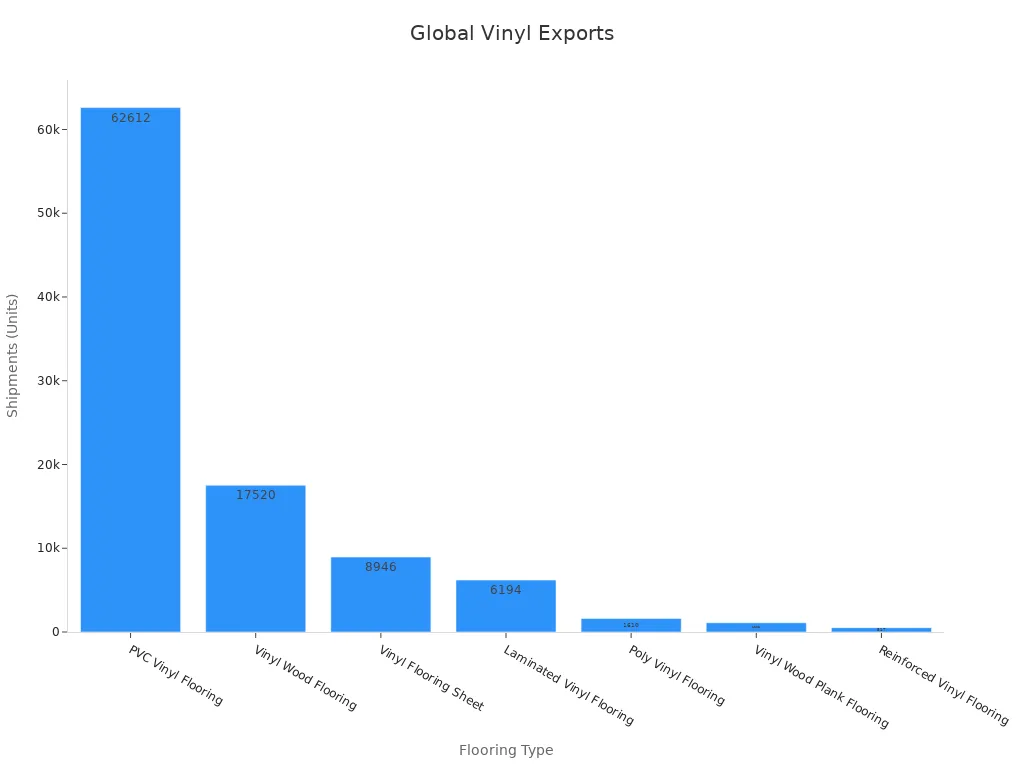
You might wonder if PVC and vinyl flooring are different. In reality, they are essentially the same—vinyl flooring is made from PVC. Many people believe the pvc vs vinyl debate means choosing between two separate products, but that is a myth. Industry reports show that the global vinyl flooring market, valued at $25.37 billion in 2024, includes all PVC-based floor types. The chart below highlights how PVC vinyl flooring leads in export shipments, showing their close connection in the market.
You will learn the true facts behind pvc vs vinyl and how to choose the best option for your space.
What Is Vinyl Flooring?
Defining Vinyl Flooring
You may see vinyl flooring in many homes and businesses today. Vinyl flooring is a type of flooring made mostly from polyvinyl chloride, or PVC. Manufacturers add other materials to make it stable and flexible. Vinyl flooring has several layers. These layers include a strong backing, a core, a printed design, and a clear wear layer. This structure helps vinyl flooring resist scratches, dents, and water. You can find vinyl flooring in many colors and patterns. It often looks like wood or stone, but it costs less and is easier to care for.
Did you know? The global vinyl flooring market reached over $29 billion in 2023 and keeps growing fast. More people choose vinyl flooring for its durability and style.
Types of Vinyl Flooring (LVT, SPC, WPC)
You have many choices when it comes to vinyl flooring. The main types are LVT, SPC, and WPC. LVT stands for luxury vinyl tile. LVT comes in tiles or planks and looks like real wood or stone. LVP, or luxury vinyl plank, is a type of LVT shaped like planks. LVP is popular for its realistic wood look.
SPC means stone plastic composite. SPC flooring has a rigid core made from limestone and PVC. This makes SPC very strong and waterproof. SPC works well in busy areas and places with lots of moisture.
WPC stands for wood plastic composite. WPC flooring has a core made from wood fibers and plastic. WPC feels softer under your feet than SPC. WPC is also waterproof and works well in homes and offices.
Here is a quick table to help you compare these types:
| Type | Core Material | Best For | Key Feature |
|---|---|---|---|
| LVT/LVP | Flexible PVC | Living rooms, bedrooms | Realistic look, easy install |
| SPC | Limestone + PVC | Kitchens, bathrooms, busy areas | Rigid, waterproof, tough |
| WPC | Wood fiber + plastic | Bedrooms, offices | Softer, quiet, waterproof |
Common Uses in Flooring
You can use vinyl flooring almost anywhere. Many people pick vinyl flooring for kitchens, bathrooms, and laundry rooms because it resists water. LVP, SPC, and WPC are great for high-traffic areas like hallways and entryways. Businesses use vinyl flooring in offices, schools, stores, and hotels. SPC and WPC work well in places where you need tough, waterproof flooring. LVP is a favorite for living rooms and bedrooms because it looks like real wood. You can install vinyl flooring with glue, by clicking planks together, or by laying it loose. Vinyl flooring gives you many choices for style, comfort, and strength.
What Is PVC Flooring?
Defining PVC Flooring
You see pvc flooring in many places because it is strong and affordable. PVC stands for polyvinyl chloride. This material is a type of plastic resin. You find it in both rigid and flexible forms. PVC flooring can look clear or opaque. It resists UV rays, chemicals, and corrosion. Many builders use pvc flooring because it lasts a long time and costs less than other options. In the United States, factories produced about 7.5 million tons of PVC in 2012. Over 70% of this went into building and housing, including flooring.
PVC flooring comes in many styles. You can pick lvp, spc, or wpc types. Lvp looks like wood planks. Spc has a stone plastic core, making it tough and waterproof. Wpc uses wood fibers and plastic, so it feels softer under your feet. You can use pvc flooring in kitchens, bathrooms, and busy hallways. It works well in homes, schools, and offices.
How PVC Relates to Vinyl Flooring
You might wonder about the pvc vs vinyl debate. The truth is, vinyl flooring is made from PVC resin. People often use the terms pvc flooring and vinyl flooring to mean the same thing. Lvp, spc, and wpc are all types of vinyl flooring, and each uses PVC as the main ingredient. This close link causes confusion. Many think pvc flooring and vinyl flooring are different, but they share the same base material.
Here is a table to show how PVC connects to vinyl flooring:
| Aspect | Insight |
|---|---|
| Main Material | PVC resin forms the base for all vinyl flooring types |
| Product Types | Lvp, spc, and wpc all use PVC |
| Common Use | Builders use pvc flooring and vinyl flooring in homes and businesses |
Common Misconceptions About PVC vs Vinyl
Many people believe myths about pvc flooring and vinyl flooring. Some think pvc flooring is safer because it comes from common salt. Others believe vinyl flooring is always better. Both ideas are not true. You should know about health and safety concerns linked to PVC.
- Phthalates in pvc flooring may affect health, especially in children and workers.
- BPA, found in some plastics, links to health problems like heart disease and diabetes.
- Hospitals and green building programs sometimes ban pvc flooring because of these risks.
Note: Chronic exposure to chemicals from pvc flooring can cause health effects, but research continues to study the full impact.
You should always check for low-VOC options when picking lvp, spc, or wpc flooring. This helps keep your home safe and healthy.
Key Similarities in PVC vs Vinyl Flooring
Material Composition
You will notice that both types of flooring share a similar base. Vinyl flooring and pvc flooring are made from synthetic materials, mainly polyvinyl chloride. This gives both products strength and flexibility. Manufacturers use advanced technology to create layers that improve durability and comfort. These layers often include a wear-resistant surface and a printed design. You can find many options that look like wood or stone because of high-definition printing. Both types of flooring meet safety and environmental standards, so you can feel confident about your choice.
- Both use polyvinyl chloride as the main ingredient.
- Wear layers protect against scratches and stains.
- Modern printing creates realistic textures and patterns.
Water Resistance and Moisture Protection
You can trust both flooring types to handle spills and damp conditions. The similarities between pvc and vinyl floors include excellent moisture resistance. This makes them perfect for kitchens, bathrooms, and laundry rooms. The waterproof core and sealed surface keep water from soaking in. You do not have to worry about warping or swelling like you would with wood floors. Many people choose these floors for busy homes and commercial spaces because they stand up to water and daily use.
Tip: If you want flooring that lasts in wet areas, choose vinyl or pvc flooring for peace of mind.
Maintenance and Cleaning
You will find that both flooring options are easy to care for. You only need to sweep or vacuum regularly to remove dust and dirt. For deeper cleaning, a damp mop works well. You do not need special cleaners or wax. The tough surface resists stains and scratches, so your floors look good for years. Many families and businesses pick these floors because they save time and effort.
- Simple cleaning methods like sweeping and damp mopping.
- No need for harsh chemicals or heavy scrubbing.
- Scratch-resistant surfaces work well in high-traffic areas.
You can enjoy beautiful, practical floors with little work. Both options offer a wide range of designs, colors, and sizes to match your style.
Appearance and Design Variety
You want your space to look great, and flooring plays a big role in that. Both PVC and vinyl flooring give you many choices for style and design. You can pick from a huge range of colors, patterns, and textures. Some flooring looks like real wood, stone, or ceramic tile. Other options show bold colors or modern designs. You can match your flooring to any room style, from classic to trendy.
Manufacturers use advanced printing technology to create realistic images on the surface of the flooring. This means you can get the look of expensive materials without the high cost. For example, luxury vinyl flooring can mimic hardwood so well that guests may not notice the difference. You can also find flooring with embossed textures. These textures feel like real wood grain or stone under your feet.
Here are some design features you can choose from:
- Wood-look planks in many shades and finishes
- Stone-look tiles with natural patterns
- Bright colors for playrooms or creative spaces
- Geometric or abstract patterns for a modern touch
Tip: Try ordering samples before you decide. You can see how the flooring looks in your space and feel the texture.
You can also mix and match different types of flooring in your home. For example, use wood-look planks in the living room and stone-look tiles in the kitchen. This helps you create a unique look that fits your taste.
A quick comparison of design options:
| Feature | PVC Flooring | Vinyl Flooring |
|---|---|---|
| Wood-look designs | ✅ | ✅ |
| Stone-look designs | ✅ | ✅ |
| Custom patterns | ✅ | ✅ |
| Embossed textures | ✅ | ✅ |
You have the freedom to choose flooring that matches your style and needs. With so many options, you can make any room look just the way you want.
Difference Between PVC and Vinyl Flooring
Product Types and Construction
You may wonder about the difference between pvc and vinyl flooring when you look at product types and how they are made. Both use polyvinyl chloride as the main material. You will find that vinyl flooring comes in several forms, such as lvp, spc, and wpc. Each type has a unique construction.
- Lvp stands for luxury vinyl plank. It uses flexible pvc layers and a printed design that looks like wood.
- Spc, or stone plastic composite, has a rigid core made from limestone and pvc. This makes spc strong and stable.
- Wpc, or wood plastic composite, uses wood fibers mixed with pvc. Wpc feels softer and absorbs sound better.
PVC flooring often appears in rolls or tiles. The structure feels softer and more rubber-like than other plastics. You can bend and shape pvc flooring to fit many spaces. Vinyl flooring, especially spc and wpc, uses advanced layers for extra strength and comfort.
Here is a table to help you see the difference between pvc and vinyl flooring and other types:
| Aspect | PVC/Vinyl Flooring | Polypropylene Flooring (for contrast) |
|---|---|---|
| Material | Polyvinyl chloride (PVC), same material in rolls or tiles | Different thermoplastic, more brittle |
| Construction | Softer, more flexible, rubber-like structure | Harder, brittle, grid structure on tiles |
| Comfort | Softer, quieter, better sound absorption; suitable for shops, gyms, residential areas | Harder, noisier, not suitable for children’s playrooms |
You can see that spc and wpc offer more comfort and flexibility than other plastics. The difference between vinyl and pvc flooring often comes down to the layers and the way each type is built.
Installation Methods
You have many choices for installing pvc and vinyl flooring. The method you pick depends on the type of flooring and your space. Lvp, spc, and wpc often use a simple click system. You snap the planks or tiles together, which makes flooring installation quick and easy. This system works well even if your subfloor is not perfect.
- Lvp and spc planks use a tongue-and-groove or click-lock system.
- Wpc flooring also uses click-lock, but it feels softer underfoot.
- PVC tiles may fit together like puzzle pieces, which helps them adapt to uneven floors.
You do not need glue or nails for most spc, wpc, or lvp products. This makes the process cleaner and faster. Some vinyl flooring, such as sheet vinyl, may need adhesive. You can cut pvc rolls or tiles to fit around corners and edges. This flexibility helps you cover any room shape.
Tip: Always check the manufacturer’s guide before you start. Some spc or wpc floors need a special underlayment for best results.
You will find that pvc and vinyl flooring save time and effort during installation. The difference pvc and vinyl floors show in this area is small, but spc and wpc often provide the easiest experience.
Durability and Lifespan
You want your flooring to last. Both pvc and vinyl flooring offer strong durability. Spc stands out for its rigid core, which resists dents and heavy impacts. Wpc gives you a softer feel but still handles daily wear. Lvp works well in homes and light commercial spaces.
- Spc flooring withstands high foot traffic and heavy loads.
- Wpc resists water and scratches, making it good for busy rooms.
- Lvp offers a balance of comfort and strength.
PVC and vinyl flooring both resist chemicals, oils, and water. You can use them in kitchens, bathrooms, and entryways. Spc and wpc floors do not swell or warp when wet. This makes them a smart choice for families and businesses.
You may notice that pvc and vinyl flooring cost more at first, especially for luxury vinyl tiles. However, you save money over time because you do not need to replace them often. The difference between pvc and vinyl in terms of durability is small, but spc usually lasts the longest. Wpc and lvp also give you many years of use.
Note: Spc and wpc floors often come with warranties of 10 to 20 years. This shows their long-lasting value.
You can trust that your flooring will handle daily life, spills, and heavy use. The difference between pvc and vinyl flooring in durability helps you pick the best option for your needs.
Comfort and Feel Underfoot
You want your home to feel comfortable. The way flooring feels under your feet matters a lot. When you walk on spc flooring, you notice a firm and stable surface. The rigid core in spc gives strong support. This type of flooring works well in busy areas where you need extra strength. If you stand for long periods, spc may feel a bit hard. You can add area rugs or foam underlayment to make it softer.
WPC flooring feels softer and warmer. The wood plastic core in wpc adds a cushion-like effect. You might enjoy this comfort in bedrooms or living rooms. LVP flooring also feels softer than spc. It bends a little when you step on it, which can help reduce foot fatigue.
PVC flooring in sheet or tile form often feels flexible and springy. This makes it a good choice for playrooms or gyms. You get a gentle bounce that protects your joints. Many people like this feeling in spaces where children play or where you exercise.
Tip: If you want the softest feel, choose wpc or cushioned pvc flooring. For a firmer step, pick spc flooring.
Here is a quick table to help you compare comfort levels:
| Flooring Type | Feel Underfoot | Best Use |
|---|---|---|
| SPC | Firm, stable | Kitchens, hallways, commercial spaces |
| WPC | Soft, cushioned | Bedrooms, living rooms, quiet areas |
| LVP | Flexible, moderate comfort | Family rooms, offices |
| PVC Sheet/Tile | Springy, gentle | Playrooms, gyms, multipurpose rooms |
You can see that the difference between pvc and vinyl flooring often comes down to how each type feels when you walk on it. Think about where you want to install your flooring and how much comfort you need.
Cost and Affordability
You probably want to know how much you will spend on new flooring. The price can change based on the type you pick. SPC flooring usually costs less than hardwood or stone. You get high durability and water resistance for a lower price. WPC flooring costs a bit more than spc, but you pay for extra comfort and sound absorption.
LVP flooring gives you a budget-friendly option. You can find many styles that look like wood or stone without spending a lot. PVC sheet or tile flooring often has the lowest price. This makes it a smart choice for large spaces or rental properties.
Here are some factors that affect the cost:
- Material quality: Higher quality spc or wpc flooring costs more but lasts longer.
- Thickness: Thicker planks or tiles give better durability and comfort.
- Installation: Click-lock systems save money on labor. Glue-down or loose-lay options may cost more to install.
- Brand and design: Popular brands or custom designs can raise the price.
Note: Always check for hidden costs like underlayment, trim, or delivery fees.
You can use this table to compare average prices:
| Flooring Type | Average Cost per Sq. Ft. | Durability | Installation Cost |
|---|---|---|---|
| SPC | $2.50 – $4.00 | High | Low (DIY-friendly) |
| WPC | $3.00 – $5.00 | High | Low to Medium |
| LVP | $2.00 – $4.00 | Medium to High | Low |
| PVC Sheet/Tile | $1.00 – $3.00 | Medium | Low |
You can save money by choosing spc or lvp flooring for high-traffic areas. WPC or cushioned pvc flooring works well if you want more comfort and do not mind spending a little extra. Always balance your budget with your needs for durability and style.
Myths and Facts About PVC vs Vinyl
Myth: PVC and Vinyl Are Completely Different
Many people think PVC and vinyl are two separate materials. In reality, you will find that vinyl flooring is made from PVC. The pvc vs vinyl debate often confuses shoppers, but both terms describe products with the same base material. You see this in the way manufacturers use PVC resin to create all types of vinyl flooring, from planks to tiles. When you shop for flooring, you can trust that both PVC and vinyl options offer similar strength and flexibility. Market data shows that PVC dominates new water pipe installations because of its durability and cost-effectiveness. This success in other industries highlights the reliability of PVC in flooring as well.
Myth: One Is Always Better Than the Other
You might hear that one type of flooring always outperforms the other. This is not true. Both PVC and vinyl flooring have strengths and weaknesses. Some types, like SPC, offer extra durability for busy spaces. Others, like WPC, feel softer underfoot. Your choice depends on your needs, not on which material is “better.” Research from Utah State University shows that PVC products, such as pipes, last over 100 years and have the lowest break rate among materials. This long lifespan proves that PVC is not inferior. When you compare pvc vs vinyl, you should focus on the features that matter most for your home.
Tip: Make a list of your priorities—comfort, water resistance, or price—before you choose your flooring.
Myth: Both Are Unsafe for Homes
Some people worry about the safety of PVC and vinyl flooring. You may have heard concerns about chemicals like phthalates. However, phthalates are only used in flexible vinyl products, not in rigid PVC items. U.S. vinyl flooring makers stopped using phthalates over five years ago. Studies from government agencies show that most phthalates pose a low risk at current exposure levels. Dr. Joe Schwarcz, a science communicator, explains that research does not prove a direct link between phthalates and health problems. He also notes that many factors, such as diet and lifestyle, can affect health outcomes. You can feel confident choosing modern vinyl flooring for your home, especially when you look for low-VOC options.
Fact: Both Have Pros and Cons
When you look at PVC and vinyl flooring, you will see that each type offers benefits and drawbacks. No flooring is perfect for every situation. You need to weigh the pros and cons before you decide.
Pros of PVC and Vinyl Flooring:
- You get strong water resistance. This makes both types great for kitchens, bathrooms, and laundry rooms.
- You can choose from many designs. You will find wood, stone, and even bold patterns.
- You will enjoy easy cleaning. A broom and a damp mop keep your floors looking fresh.
- You save money. Most vinyl and PVC floors cost less than hardwood or tile.
- You can install many types yourself. Click-lock systems make the job simple.
Cons to Consider:
- You may notice that some floors feel hard or cold underfoot, especially SPC types.
- You might see scratches or dents if you drag heavy furniture.
- You could face concerns about chemicals. Some older products used phthalates or high-VOC materials.
- You may not get the same resale value as with real wood or stone.
Tip: Always check for low-VOC or phthalate-free labels when you shop. This helps you keep your home safe and healthy.
Here is a quick comparison table to help you see the main points:
| Feature | PVC/Vinyl Flooring: Pros | PVC/Vinyl Flooring: Cons |
|---|---|---|
| Water Resistance | ✅ Excellent | ❌ None |
| Design Variety | ✅ Wide range | ❌ None |
| Comfort | ✅ Soft (WPC, LVP) | ❌ Hard (SPC, some sheet) |
| Maintenance | ✅ Easy | ❌ Can scratch/dent |
| Health/Safety | ✅ Low-VOC options | ❌ Older products may emit VOCs |
| Cost | ✅ Affordable | ❌ Lower resale value |
You can see that both PVC and vinyl flooring give you many benefits, but you should also think about the possible downsides. Your best choice depends on your needs, your space, and your budget.
Which Flooring Is Better for Your Needs?
Best for High-Traffic Areas
You want your floors to last when many people walk on them every day. High-traffic spaces like hallways, entryways, and commercial areas need strong flooring. spc stands out as the top choice for these places. The rigid stone plastic composite core in spc gives you the highest durability for heavier use. This type of flooring resists dents, scratches, and heavy impacts. You can trust spc to stay looking new even after years of busy foot traffic.
spc flooring is also 100% waterproof. You do not have to worry about spills or mud from shoes. The click-lock system makes installation easy, so you can finish your project quickly. Maintenance stays simple with spc. Just sweep and mop to keep it clean.
Tip: If you run a business or have a busy family, choose spc for areas where people walk the most. You get peace of mind and long-lasting floors.
Here is a quick look at how spc compares to other types for high-traffic areas:
| Flooring Type | Durability & Moisture Resistance | Comfort & Sound Insulation | Installation & Maintenance | Ideal Use Cases |
|---|---|---|---|---|
| SPC | Highest durability; 100% waterproof | Harder underfoot; less sound absorption | Click-lock; easy DIY; low maintenance | Commercial high-traffic, kitchens, bathrooms |
| WPC | Good durability; moisture resistant | Softer, quieter | Click-lock; easy install | Bedrooms, living rooms |
| LVT | Moderate durability; water-resistant | Softer feel | Adhesive; moderate maintenance | Budget projects, versatile use |
spc gives you the best mix of strength and water protection for busy spaces.
Best for Wet Areas (Bathrooms, Kitchens)
Wet areas need special care. Water can damage many types of flooring, but you have good options. spc flooring works best in bathrooms and kitchens. The stone plastic composite core keeps water out. You do not have to worry about spills, leaks, or steam. spc will not swell or warp, even if it gets wet often.
You can also use wpc in wet areas. It resists moisture well, but it is a little more sensitive to temperature changes. If you want extra comfort underfoot, wpc is a good pick for home kitchens or laundry rooms. Still, spc gives you the most reliable waterproof protection.
Note: Always check the manufacturer’s guide for wet area installation. Some floors need special sealing at the edges.
spc flooring is easy to clean in wet spaces. You can mop up spills without damage. The click-lock system helps you install it fast, even in tricky spots.
Best for Budget-Friendly Projects
You may want new floors without spending too much. LVT, or luxury vinyl tile, gives you the most budget-friendly option. LVT costs less than spc or wpc. You can find many styles and colors, so you do not have to give up on design. LVT works well in bedrooms, offices, and light-use areas.
spc also offers good value for your money. The upfront cost is higher than LVT, but you save in the long run because of its strength and low maintenance. If you want comfort and quiet, wpc is a good choice, but it costs a bit more.
Here is a table to help you compare costs and uses:
| Flooring Type | Cost & Budget Suitability | Ideal Use Cases |
|---|---|---|
| SPC | Mid to high upfront; best long-term value | High-traffic, wet areas |
| WPC | Similar to SPC; slightly higher than LVT | Bedrooms, living rooms |
| LVT | Most budget-friendly; lowest upfront | Budget projects, versatile use |
Tip: For rental properties or quick updates, LVT gives you style at a low price. For lasting value, spc is worth the investment.
You can match your flooring choice to your needs and your budget. Think about where you will install the floor and how much use it will get. spc, wpc, and LVT each offer unique benefits for different spaces.
Quick Comparison Table
You want to make the best choice for your home or business. A quick comparison helps you see the main features of each flooring type side by side. This table shows you how LVT, WPC, spc, and PVC sheet/tile flooring compare in important areas. You can use this guide to match your needs with the right product.
| Feature | LVT (Luxury Vinyl Tile) | WPC (Wood Plastic Composite) | spc (Stone Plastic Composite) | PVC Sheet/Tile |
|---|---|---|---|---|
| Core Material | Flexible PVC | Wood fiber + plastic | Limestone + PVC | Flexible PVC |
| Durability | Good | Very Good | Excellent | Good |
| Water Resistance | High | 100% Waterproof | 100% Waterproof | High |
| Comfort Underfoot | Moderate | Soft, cushioned | Firm, less cushioned | Soft, springy |
| Sound Insulation | Moderate | Excellent | Moderate | Good |
| Installation | Glue-down or click | Click-lock | Click-lock | Glue-down or loose-lay |
| Best Use | Bedrooms, offices | Living rooms, bedrooms | Kitchens, bathrooms, high-traffic | Playrooms, gyms |
| Cost | $2–$4/sq. ft. | $3–$5/sq. ft. | $2.5–$4/sq. ft. | $1–$3/sq. ft. |
| Design Variety | Wide | Wide | Wide | Wide |
| Lifespan | 10–15 years | 15–20 years | 15–25 years | 10–15 years |
Tip: If you want the toughest floor for busy spaces, spc gives you the best mix of strength and water resistance. You can use spc in kitchens, bathrooms, and entryways where spills happen often.
You may notice that spc stands out for its rigid core. This makes spc the top pick for high-traffic and wet areas. You get a floor that does not bend or warp, even if you drop heavy items or spill water. spc also resists dents better than LVT or WPC. If you have pets or kids, spc can handle the extra wear and tear.
WPC gives you more comfort underfoot. You might like WPC in bedrooms or living rooms where you want a softer feel. LVT works well if you want a budget-friendly option with many design choices. PVC sheet or tile flooring offers the lowest price and feels soft and springy, which is great for playrooms or gyms.
Here are some quick points to help you decide:
- Choose spc if you need the strongest, most waterproof floor.
- Pick WPC for comfort and quiet in bedrooms or family spaces.
- Use LVT for style on a budget in light-use areas.
- Try PVC sheet or tile for large spaces or rooms where you want a soft, flexible floor.
You can see that spc appears in many categories as the best choice for tough, wet, or busy spaces. You get peace of mind with spc because it lasts longer and needs less care. If you want a floor that stands up to anything, spc is your best bet.
Remember: Always check the warranty and installation guide for your chosen flooring. spc often comes with long warranties, showing its lasting value.
Environmental and Health Considerations in Vinyl Flooring
Safety and Indoor Air Quality
You want your home to feel safe and healthy. Vinyl flooring, including spc, can affect indoor air quality. Some floors release chemicals called VOCs (volatile organic compounds). These can cause headaches or breathing problems for sensitive people. Many spc floors now meet strict safety standards. Manufacturers test spc for harmful emissions before selling it. You can look for certifications like FloorScore or GREENGUARD. These labels show that the spc flooring meets low-emission standards. Always open windows and let fresh air in after installing new spc floors.
Tip: Choose spc flooring with a low-VOC label to help keep your indoor air clean.
Eco-Friendliness and Recycling
You may care about the environment when picking new floors. spc flooring uses a mix of PVC and stone powder. This makes spc strong and long-lasting. Because spc lasts many years, you do not need to replace it often. This helps reduce waste. Some companies now recycle old spc flooring into new products. You can ask your local recycling center if they accept spc. When you choose spc, you help cut down on the need for wood or stone, which saves natural resources.
Here is a quick look at eco-friendly features of spc flooring:
| Feature | Benefit |
|---|---|
| Long lifespan | Less waste in landfills |
| Recyclable | Can be reused |
| No trees needed | Saves forests |
Choosing Low-VOC Flooring Options
You can protect your family by choosing low-VOC spc flooring. Low-VOC means the floor gives off fewer harmful gases. Many brands now offer spc with low or no VOCs. Always check the product label or ask the seller. You can also read the safety data sheet for more details. Low-VOC spc flooring works well in bedrooms, kitchens, and living rooms. You get a safe, strong floor that looks great and helps keep your air fresh.
Note: Low-VOC spc flooring is a smart choice for homes with children, pets, or anyone with allergies.
You now know that vinyl flooring is made from PVC, so the terms are closely related. However, product types and features can differ.
- SPC flooring is thicker and more rigid than traditional vinyl, offering better dent and impact resistance.
- Both SPC and LVP are waterproof, scratch-resistant, and easy to maintain.
- SPC uses a click-lock system for simple DIY installation and works well on uneven subfloors.
The global vinyl flooring market keeps growing, showing strong demand in homes, hospitals, and stores. Environmental groups highlight the need for safe recycling and transparency. Choose flooring based on your needs, space, and budget. Ask a flooring professional or request samples before you decide.
FAQ
What is the main difference between PVC and vinyl flooring?
You will see that both use the same base material—polyvinyl chloride. The main difference comes from how manufacturers build the flooring. Vinyl flooring often has more layers and design options. PVC flooring may come in rolls or tiles with a simpler structure.
Can you install vinyl or PVC flooring yourself?
You can install many types yourself. Click-lock vinyl planks and tiles make the job easy. You only need basic tools. Always read the instructions before you start. Some sheet vinyl or PVC tiles may need glue or special preparation.
Is vinyl flooring safe for homes with kids and pets?
You can choose low-VOC and phthalate-free vinyl flooring for a safer home. Modern products meet strict safety standards. Look for certifications like FloorScore or GREENGUARD. These show the flooring releases fewer harmful chemicals.
How long does vinyl or PVC flooring last?
You can expect most vinyl and PVC floors to last 10 to 25 years. The lifespan depends on the type, thickness, and how well you care for it. SPC and WPC floors often last the longest.
Can you recycle old vinyl or PVC flooring?
You can recycle some types of vinyl and PVC flooring. Check with your local recycling center first. Some brands offer recycling programs. Recycling helps reduce waste and supports a cleaner environment.
Tip: Always ask your flooring supplier about recycling options before you buy.




