

Is vinyl and pvc the same? Many people ask this question when choosing flooring. You might see the terms vinyl and pvc used together, but is vinyl and pvc the same material? In flooring, vinyl and pvc often get confused, yet they have important differences. Is vinyl and pvc the same in how they look, last, or feel? Not always. You should know that is vinyl and pvc the same is a key question because your choice affects how your floor performs and looks. The table below shows how widely vinyl and pvc flooring are used around the world:
| Metric / Segment | Value (2023) | Notes / Regional Breakdown |
|---|---|---|
| Total PVC flooring production | 6.2 billion sq. meters | Asia-Pacific accounts for over 60% of this volume |
| Luxury Vinyl Tiles (LVT) | 2.5 billion sq. meters | Represents >40% of all vinyl flooring globally |
| Heterogeneous PVC flooring | 900 million sq. meters | Europe leads with 40% of installations |
| Homogeneous PVC flooring | 800 million sq. meters | Asia-Pacific leads with 55% of demand |
| Vinyl Tiles (VT) installations | 1.1 billion sq. meters | North America and Latin America are top users |
| North America installations | 1.8 billion sq. meters | US accounts for 78% of regional consumption |
| Europe installations | 1.2 billion sq. meters | Germany, France, UK are leading contributors |
| Asia-Pacific installations | 3.5 billion sq. meters | China contributes 2.3 billion sq. meters |
| Commercial application share | >65% of total PVC flooring | Dominates global installations |
| Market size (2024) | USD 19,545.54 million | Expected to grow to USD 33,596.84 million by 2033 at 6.2% CAGR |
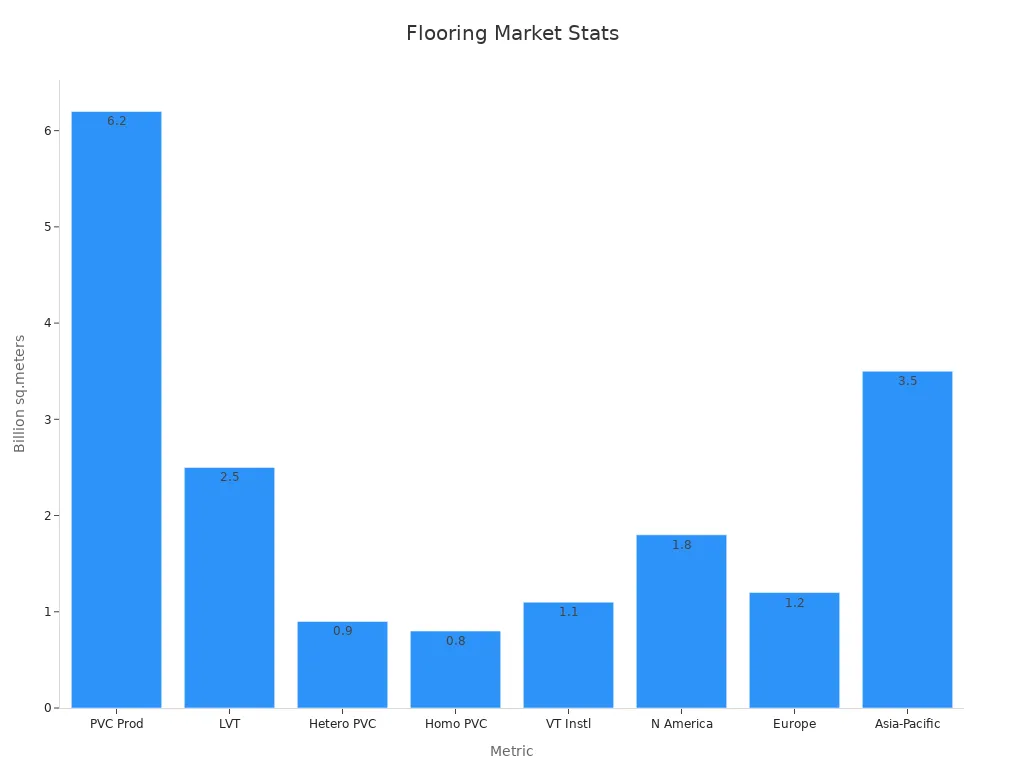
You can see that is vinyl and pvc the same is not just a simple question. The answer helps you pick the right floor for your needs. Is vinyl and pvc the same in performance or cost? Knowing the difference makes your choice smarter and helps you match your style, budget, and use.
Is Vinyl and PVC the Same? Understanding the Basics
What Is Vinyl?
You often hear the word vinyl when you shop for flooring. Vinyl is a synthetic plastic material. Manufacturers make vinyl by combining ethylene, which comes from crude oil, and chlorine, which comes from salt. These two ingredients form a substance called polyvinyl chloride, or pvc. Vinyl stands out because it resists moisture, lasts a long time, and comes in many colors and patterns. You see vinyl in many places, such as flooring, siding, pipes, medical products, and even clothing. Vinyl flooring became popular after World War II because it is easy to clean, strong, and can look like wood or stone. You can find vinyl flooring in homes, schools, and hospitals. It feels comfortable under your feet and helps reduce noise. Vinyl also offers slip-resistant surfaces, making it a safe choice for busy areas.
Note: Vinyl’s flexibility and durability come from special additives called plasticizers. These make vinyl softer and easier to use in flooring.
What Is PVC?
PVC stands for polyvinyl chloride. It is a type of vinyl, but with a special chemical structure. In pvc, every other carbon atom bonds to a chlorine atom and a hydrogen atom. This chlorine makes pvc different from other vinyl materials. The chlorine gives pvc flame resistance and chemical strength, but it also makes pvc less stable at high temperatures. To solve this, manufacturers add plasticizers to pvc, making it flexible for flooring and other uses. You see pvc in many types of flooring, such as luxury vinyl tile (LVT), sheet vinyl, and vinyl composition tile (VCT). Each type uses pvc in a different way to create strong, attractive, and easy-to-maintain floors.
- PVC is used in:
- Luxury Vinyl Tile (LVT): Multiple layers of pvc pressed into tiles. These tiles look like wood, stone, or marble.
- Sheet Vinyl: Large sheets of vinyl, often used in hospitals for their waterproof and durable qualities.
- Vinyl Composition Tile (VCT): A mix of vinyl and limestone, more porous and less flexible than LVT.
PVC flooring offers design flexibility and durability, but you should know that its chlorine content raises environmental and health concerns. Organizations like the Vinyl Institute work to make pvc flooring safer and more sustainable.
How Vinyl and PVC Are Related
You might wonder about the difference between vinyl and pvc. The answer lies in their relationship. Vinyl is the broad name for a group of plastic materials. PVC is a specific type of vinyl made by polymerizing vinyl chloride. When you add plasticizers to pure vinyl, you get pvc, which is softer and more flexible. This process is key for making flooring that can handle daily wear and tear. In the flooring industry, people often use the terms vinyl and pvc together because pvc is the main type of vinyl used in flooring products. The history of vinyl and pvc in flooring shows that manufacturers use pvc to create floors that are tough, easy to clean, and available in many styles.
Understanding the differences between vinyl and pvc helps you make better choices for your flooring needs. When you know how vinyl and pvc connect, you can see why some floors last longer, feel softer, or look more realistic.
Vinyl and pvc both play big roles in modern flooring. You see them in homes, schools, hospitals, and offices. When you shop for new floors, knowing the difference between vinyl and pvc helps you pick the right product for your space, style, and budget.
Key Differences Between PVC and Vinyl Flooring
Composition and Structure
When you look at the composition of vinyl and pvc flooring, you see clear differences. Vinyl is a broad term for synthetic materials, but pvc is a specific type of vinyl made from vinyl chloride monomer. Manufacturers add plasticizers, stabilizers, and fillers to pvc to change its properties. Pure pvc is stiff and brittle, so these additives make it flexible and tough. In vinyl flooring, you find different structures. For example, SPC flooring uses a rigid core made from limestone and pvc. This gives you high durability and stability, even in busy areas. LVT flooring has several layers, including a wear layer, a decorative layer, and a flexible vinyl core. This structure lets LVT mimic wood or stone and feel softer underfoot. The difference between pvc and vinyl flooring often comes down to these layers and additives.
Properties and Performance
You want your flooring to last and look good. Vinyl and pvc flooring both offer flexibility and durability, but their performance can vary. SPC flooring stands out for high durability and weather resistance. Its dense core resists dents and scratches, making it great for commercial spaces. LVT and WPC flooring provide comfort and sound absorption. WPC uses wood flour and foaming agents, so it feels softer but is less dense than SPC. The difference between pvc and vinyl flooring also shows in how they handle temperature changes. SPC stays stable, while WPC expands more. Both types of vinyl and pvc flooring are easy to clean, which helps with durability and maintenance. You will notice similarities between pvc and vinyl floors, but the difference pvc and vinyl floors becomes clear when you compare their strength and comfort.
Environmental and Health Considerations
You should know about the health and environmental impacts of vinyl and pvc flooring. Some studies link pvc flooring to asthma and respiratory issues, especially in children. Phthalates, used as plasticizers in flexible vinyl, can release into indoor air and dust. This raises health concerns. Safer, phthalate-free plasticizers now exist, and some manufacturers use bio-based options. The EPA reviews vinyl chloride, a main ingredient in pvc, because it is a known carcinogen. Many companies now offer non-pvc flooring, like linoleum or natural rubber, for better safety. When you choose flooring, consider these factors along with high durability and maintenance needs. The key differences between pvc and vinyl flooring include not just how they look and feel, but also their impact on your health and the environment.
Difference Between PVC and Vinyl Flooring in Practice
Types of Vinyl and PVC Flooring
You will find many types of vinyl and pvc flooring on the market. Vinyl is a broad category that includes several specific type of vinyl products. These include luxury vinyl tiles, luxury vinyl planks, sheet vinyl, and vinyl composition tiles. PVC is a specific type of vinyl used in most modern flooring. You can see the difference between pvc and vinyl flooring in how they are made and used. For example, SPC (Stone Plastic Composite) flooring uses about 60% limestone powder and 40% pvc and stabilizers. This creates a rigid, dense core. In contrast, traditional pvc flooring uses only vinyl layers, making it more flexible. The table below shows common classifications:
| Classification Aspect | Examples |
|---|---|
| Material | Vinyl, pvc, composite, cork, stone |
| Format | Tiles, planks, rolls, panels |
| Finish | Smooth, textured, matte, embossed |
| Appearance | Wood look, stone look, colored |
You can choose from many finishes and looks, such as wood, stone, or concrete. Each specific type of vinyl offers unique benefits for your space.
Where Vinyl and PVC Are Used in Flooring
You see vinyl and pvc in many flooring settings. In homes, vinyl flooring is popular in kitchens and bathrooms because it resists water and stains. Luxury vinyl planks and tiles give you the look of wood or stone with easy cleaning. In commercial spaces, pvc flooring stands up to heavy foot traffic. Case studies show that pvc works well in retail stores for its cost-effectiveness and stain resistance. SPC flooring, a specific type of vinyl, is perfect for kitchens due to its waterproof core and easy installation. In offices, luxury vinyl tiles improve comfort and style. You will also find pvc and vinyl in hospitals, schools, and care facilities because they are easy to clean and maintain.
- Vinyl and pvc flooring options:
- Homogeneous and heterogeneous pvc flooring for hospitals
- Luxury vinyl planks for living rooms and bedrooms
- Vinyl composition tiles for schools and offices
Choosing the Right Flooring Material
You should think about the difference between pvc and vinyl when picking flooring. SPC flooring costs more at first but lasts longer and needs less upkeep. PVC flooring gives you comfort and design flexibility at a lower price, but you may need to replace it sooner. Vinyl flooring is easy to install, supports steam cleaning, and offers many design choices. You can find vinyl and pvc products with low VOC emissions, which helps indoor air quality. If you want a specific type of vinyl for a busy area, choose SPC or luxury vinyl planks. For a softer, more flexible floor, pick traditional pvc flooring. The right choice depends on your needs, budget, and style.
Tip: Always check the wear layer thickness and installation method before you buy. This helps you get the best value and performance from your vinyl and pvc flooring.
Common Misconceptions About Vinyl and PVC
Misunderstandings About the Terms
You may hear people use vinyl and PVC as if they mean the same thing. This creates confusion. Many people think all vinyl products are the same or that PVC is unsafe. You might see news stories or online posts that claim PVC pipes are fragile or dangerous. These ideas often come from misunderstandings, not facts.
- Surveys of city utilities show that PVC is the most used pipe material. It has the lowest failure rate compared to other pipes.
- Scientific studies, like one from Utah State University, show that PVC is strong and has a low impact on the environment.
- Some groups say PVC is unsafe, but research does not support these claims.
- Many people believe vinyl chloride, a chemical used to make PVC, can leak out of finished products. In reality, once vinyl chloride becomes PVC, it is stable and safe.
Note: The Vinyl Verified blog and Water Finance & Management magazine both explain that PVC has been used safely for almost 100 years. They show that many misconceptions about PVC safety and chemical risks are not true.
Marketing and Labeling Confusion
You may notice that stores and brands use the words vinyl and PVC in different ways. Sometimes, labels say “vinyl flooring” when they mean “PVC flooring.” This can make shopping harder. You might think you are buying one thing, but you get another.
- Some products use “vinyl” as a catch-all term, even if they contain other materials.
- Labels may not list all the chemicals or layers in the flooring.
- Marketing often highlights the benefits but skips over the differences between types of vinyl and PVC.
If you want to avoid common misconceptions, always read product details and ask questions. Look for clear information about what is in the flooring and how it was made. This helps you choose the right product for your needs.
You now know that vinyl and PVC are related but not the same. Vinyl flooring includes many types, such as luxury vinyl plank and SPC, each with unique strengths. If you want comfort and style at a lower cost, vinyl flooring works well in bedrooms and living rooms. SPC flooring gives you more durability and water protection, which is perfect for kitchens and bathrooms. Always match your choice to your room’s needs and your budget. This approach helps you get the best value and performance from your new floor.
FAQ
What is the main difference between vinyl and PVC flooring?
Vinyl is a broad term for synthetic plastics. PVC stands for polyvinyl chloride, which is a specific type of vinyl. Most vinyl flooring uses PVC as its main ingredient.
Can you use vinyl and PVC flooring in bathrooms?
Yes, you can use both in bathrooms. These floors resist water and stains. You get easy cleaning and long-lasting surfaces in wet areas.
Is PVC flooring safe for homes with children or pets?
Modern PVC flooring is safe for homes. Many brands use low-VOC and phthalate-free materials. Always check product labels for safety certifications.
How do you clean vinyl or PVC flooring?
You can sweep or vacuum daily. Use a damp mop with mild soap for deeper cleaning. Avoid harsh chemicals or abrasive scrubbers to keep your floor looking new.
Does vinyl or PVC flooring look like real wood or stone?
Yes! Many vinyl and PVC floors have realistic wood or stone designs. You can choose from many colors and patterns to match your style.




