
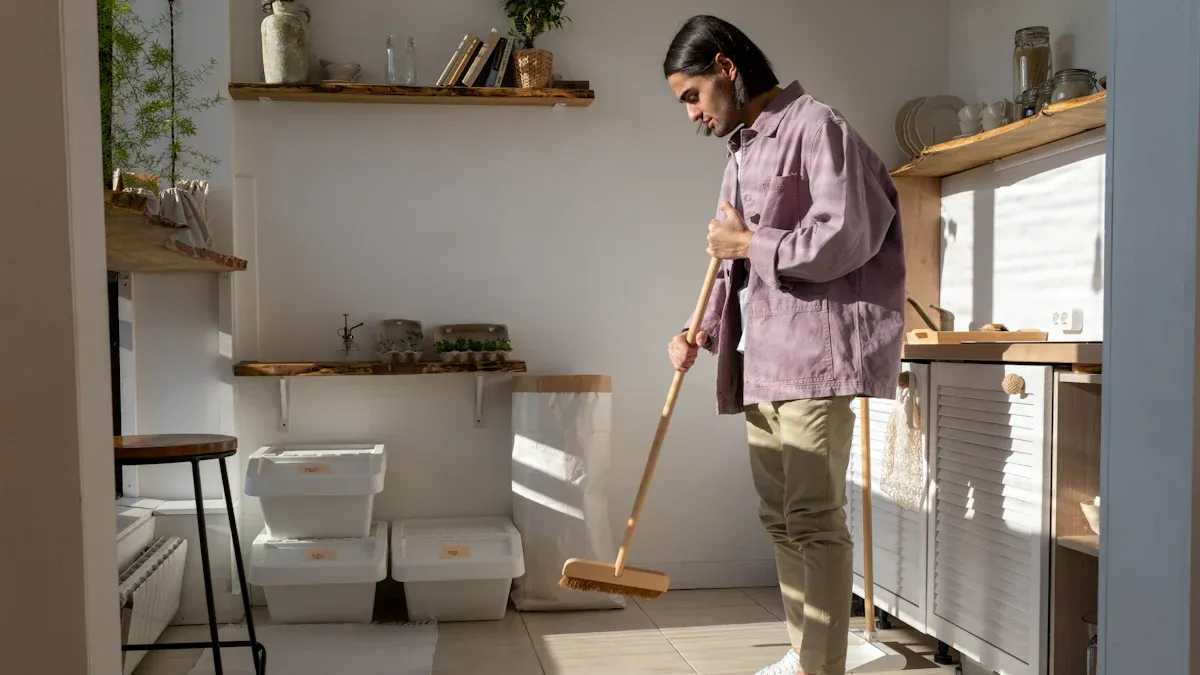
You want your vinyl plank flooring to look its best. Cleaning with gentle, non-toxic solutions protects both your floors and your health. You can clean using diluted vinegar, mild dish soap, or pH-neutral vinyl floor cleaners. Cleaning regularly keeps dirt from building up. You should know what to use to clean vinyl plank flooring for safe results. Cleaning with simple tools makes the job easy and effective.
Tip: Always clean spills right away to prevent stains and make cleaning easier.
Why Avoid Harsh Chemicals on Vinyl Plank Flooring?
Risks to Vinyl Plank Flooring
You want your floors to last for years. Harsh chemicals can break down the protective layer on your vinyl planks. This damage makes your floor look dull and worn. Over time, strong cleaners can cause cracks or peeling. You may also notice fading or discoloration. Using gentle cleaning methods helps keep your floors looking new.
Health Concerns for Your Home
Cleaning products with strong chemicals can harm your health. When you use them, you may breathe in fumes that irritate your nose and throat. Some chemicals can even cause headaches or make asthma worse.
Luxury vinyl plank (LVP) is made from polyvinyl chloride, a known carcinogen, and the production of PVC is linked to headaches, asthma, cancer, kidney and liver damage. Additionally, exposure to environmental toxins and off-gassing during installation poses significant health risks.
The production of PVC involves harmful chemicals like mercury and lead, which can leach into drinking water and accumulate in the atmosphere, posing risks not only to factory workers but also to the environment.
Choosing safer cleaning options protects your family and pets from these risks.
Common Harmful Ingredients (Ammonia, Bleach, Abrasives)
Many commercial cleaners contain ingredients that can harm both your floors and your health. Watch out for these common harmful substances:
- Ammonia: Dulls surfaces and can cause breathing problems.
- Bleach: Strips color and causes discoloration.
- Vinegar: Destroys finishes and damages the floor over time.
- Soap and Water: Leaves a slippery residue and can cause water damage.
- Glass Cleaners: Contain abrasives that strip finishes.
You should always check labels before using any product on vinyl plank flooring. Safe cleaning keeps your home healthy and your floors beautiful.
What to Use to Clean Vinyl Plank Flooring Safely
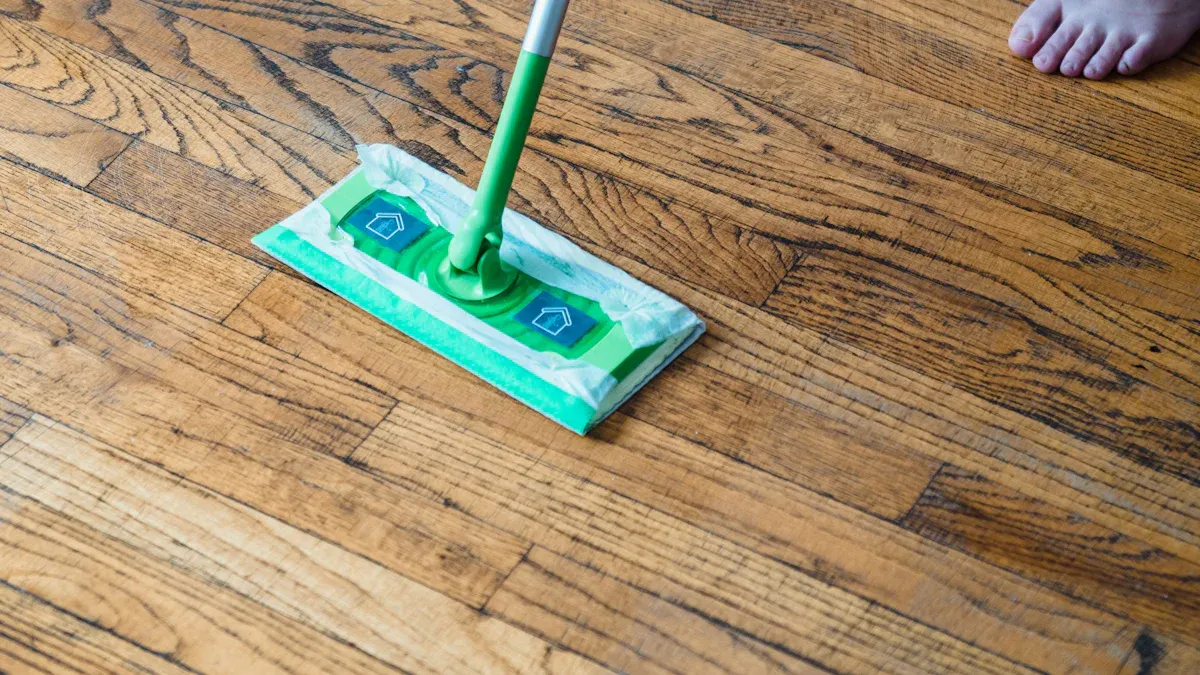
You want to know what to use to clean vinyl plank flooring without causing damage. Choosing the right cleaners helps you keep your floors looking new and safe for your family. You can find several safe options for cleaning. Each method has its own benefits and best uses.
Diluted Vinegar Mixture (1 cup vinegar to 1 gallon warm water)
Many people ask what to use to clean vinyl plank flooring and often reach for vinegar. You may think a diluted vinegar mixture works well for cleaning. Vinegar can remove some dirt and stains. However, you should know that vinegar is acidic. Even when you mix it with water, it can slowly wear away the protective layer on your floors. Over time, this can make your floors look dull or hazy. Vinegar is less effective and can be harmful compared to cleaners made for vinyl plank flooring. If you want your floors to last, you should avoid using vinegar as your main cleaning solution.
Note: Vinegar may seem like a gentle cleaner, but it can damage the finish of your vinyl plank flooring. Choose safer options for regular cleaning.
Mild Dish Soap and Water Solution
You may wonder what to use to clean vinyl plank flooring for everyday messes. A mild dish soap and water solution is a safe and simple choice. You only need a few drops of gentle dish soap in a bucket of warm water. This mixture helps you clean up dirt and grime without leaving harmful residues. Mild dish soap does not scratch or dull your floors. It keeps the finish smooth and shiny. You can use a soft mop or cloth to clean the surface. Make sure you wring out the mop well to avoid too much water.
- Non-corrosive nature helps maintain the floor’s finish.
- Effectively removes dirt and grime without harmful residues.
- Minimizes the risk of scratching the surface compared to harsher agents.
You can trust this method for regular cleaning. It is gentle and safe for your home.
pH-Neutral Vinyl Floor Cleaners (Bona, Rejuvenate)
If you want to know what to use to clean vinyl plank flooring for the best results, you should look for pH-neutral cleaners. These cleaners are made for vinyl plank flooring. They do not harm the protective layer. They clean well and keep your floors looking bright. Many experts recommend pH-neutral cleaners because they are safe and effective.
Here are some top choices for pH-neutral cleaners:
| Product Name | Features |
|---|---|
| Basic Coatings Squeaky Cleaner 32 oz. | pH-neutral, non-abrasive, low-VOC, no-rinse, effective on various surfaces |
| COREtec Encore 12x Clean Spray 32 oz. | pH-neutral, low-VOC, no residue, rapid dry time, versatile for multiple hard surfaces |
| Bona Pro Stone, Tile & Laminate Cleaner | pH-neutral, low-VOC, quick-drying, effective on many hard surfaces |
| MORE® Luxury Vinyl Floor Cleaner | pH-neutral, daily cleaner, no residue, specifically formulated for LVT & LVP flooring |
You can use these cleaners for deep cleaning or regular care. They help you protect your investment and keep your floors beautiful. Always follow the instructions on the label for the best results.
Tip: When you choose what to use to clean vinyl plank flooring, always pick products that say “pH-neutral” or “safe for vinyl” on the label.
DIY Natural Cleaning Recipes
You can make your own natural cleaning solutions at home. These recipes use safe ingredients and help you keep your vinyl plank flooring clean and shiny. Homemade cleaners work well with most mopping tools. You save money and protect your floors from harsh chemicals.
-
Warm Water and Mild Dish Soap
You only need a few drops of mild dish soap in a bucket of warm water. This mixture cleans dirt and grime without harming your floor. Use a soft mop or cloth. Wring out the mop so it is damp, not wet. This recipe helps maintain the shine of your vinyl floors.Tip: Always use a gentle dish soap. Avoid soaps with strong scents or added antibacterial agents.
-
Water and Vinegar Solution
Mix one cup of white vinegar with one gallon of warm water. This classic recipe removes stains and leaves your floor fresh. Vinegar acts as a natural disinfectant. You should use this solution sparingly. Too much vinegar can dull the finish over time.Note: Test the vinegar solution on a small area first. If your floor has a special finish, use a pH-neutral cleaner instead.
-
DIY Floor Cleaner Recipe Table
| Recipe Name | Ingredients | How to Use | Benefits |
|---|---|---|---|
| Mild Dish Soap Solution | Warm water, mild dish soap | Mop with damp cloth | Maintains shine |
| Vinegar Solution | Warm water, white vinegar | Mop with soft mop | Removes stains, disinfects |
| Baking Soda Paste* | Baking soda, water | Spot clean with soft cloth | Lifts tough stains |
*Avoid using baking soda paste for regular cleaning. Baking soda is abrasive and can scratch vinyl plank flooring. Use it only for stubborn spots and rinse well.
You can use these recipes for regular cleaning. You keep your home safe and your floors looking new. Homemade cleaners are easy to make and work well for most vinyl plank floors.
Reminder: Always check your flooring manufacturer’s guidelines before using any homemade solution. Some finishes need special care.
Step-by-Step Guide to Deep Clean Vinyl Plank Flooring
Daily Cleaning Routine (Broom, Dust Mop, Vacuum without Beater Bars)
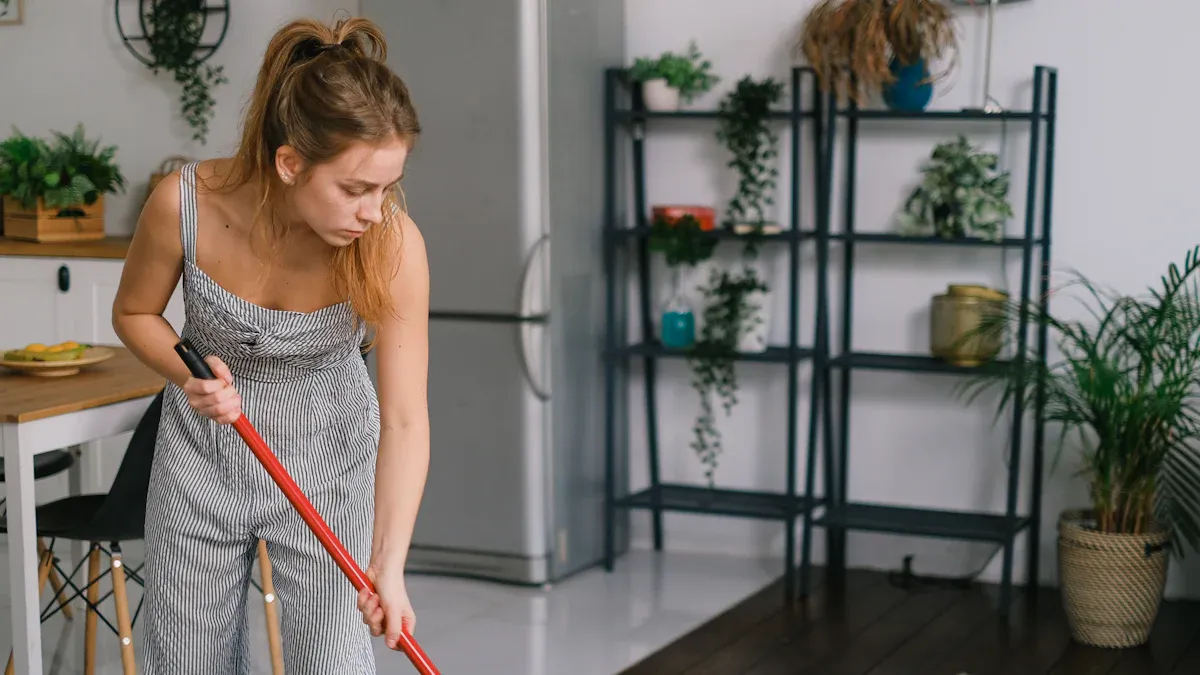
You want your floors to stay bright and beautiful every day. Start your daily routine with quick and easy steps for deep cleaning. Sweep with a soft broom or use a dust mop to pick up loose dirt. You can also use a vacuum without beater bars to avoid scratches. Focus on high-traffic areas, especially during busy times. Clean these spots twice daily if needed.
- Clean daily to keep your vinyl plank flooring looking new.
- Dry mop or vacuum to remove grit and prevent scratches.
- Wipe up spills right away to stop stains from forming.
Tip: Use a microfiber flat mop for the best results. It traps dust and keeps your floor safe.
You protect your floor’s finish and extend its life when you clean regularly. These actual solutions for deep cleaning help you avoid damage and keep your home healthy.
Weekly Deep Cleaning (Microfiber Mop, Vinegar & Dish Soap Solution)
You need to deep clean vinyl plank flooring once a week. This step removes dirt that daily cleaning might miss. Use a microfiber mop because it prevents scratches and cleans gently. Mix a few drops of mild dish soap in warm water. For extra cleaning power, add a small amount of diluted vinegar. This actual solution for deep cleaning lifts grime and keeps your floor shiny.
Regular deep cleaning with microfiber mops and vinegar solutions removes dirt and prevents scratches. This routine maintains the finish and extends the lifespan of your vinyl plank flooring.
Follow these quick and easy steps for deep cleaning:
- Fill a bucket with warm water and a few drops of mild dish soap.
- Add one cup of vinegar if you need to tackle tough spots.
- Dip the microfiber mop and wring it out so it is damp, not wet.
- Mop the floor, working in small sections.
- Let the floor air dry.
Note: Avoid soaking the floor. Too much water can cause damage.
Weekly deep cleaning keeps your floors looking fresh and protects them from wear.
Removing Stains Safely (Spot Cleaning with Soft Cloth)
Sometimes you see stains or scuff marks that daily cleaning cannot remove. You need stubborn spot cleaning to fix these problems. Use safe methods to avoid harming your vinyl plank flooring.
- For scuff marks, gently rub the area with a melamine sponge.
- For sticky spots or dried spills, mix baking soda and warm water into a paste. Apply the paste, let it sit, then wipe with a damp cloth.
- For tough stains, use diluted rubbing alcohol on a soft cloth. Always test on a hidden area first.
Alert: Never use abrasive brushes or harsh chemicals. They can scratch or dull your floor.
Stubborn spot cleaning helps you keep your floor spotless without causing damage. You maintain the beauty of your vinyl plank flooring and avoid costly repairs.
You can deep clean vinyl plank flooring with these safe and effective steps. Cleaning every day, deep cleaning weekly, and using gentle spot cleaning methods will keep your floors looking their best.
Recommended Tools and Supplies for Vinyl Plank Flooring
You want to keep your vinyl plank flooring clean and looking new. The right tools and supplies make this job simple and safe. You do not need fancy equipment or harsh chemicals. You only need a few basic items to get great results.
Here are the items you’ll need for the solution:
-
Soft-Bristle Broom
Use a broom with soft bristles to sweep away dust and dirt. Hard bristles can scratch the surface. Sweep daily to prevent grit from building up. -
Microfiber Dust Mop
A microfiber dust mop traps fine particles. It works better than a regular mop for picking up hair and dust. You can use it every day. -
Vacuum Cleaner (without Beater Bar)
Choose a vacuum that does not have a rotating brush or beater bar. This prevents scratches. Use the hard floor setting if your vacuum has one. -
Microfiber Mop
A microfiber mop cleans gently and does not leave streaks. It works well with water or a mild cleaning solution. Wring out the mop so it is damp, not wet. -
Buckets
You need two buckets. One holds your cleaning solution. The other holds clean water for rinsing your mop. This keeps dirt from spreading. -
Soft Cloths or Sponges
Use soft, lint-free cloths or non-abrasive sponges for spot cleaning. These help you remove stains without scratching the floor. -
pH-Neutral Floor Cleaner
Pick a cleaner made for vinyl plank flooring. pH-neutral cleaners do not damage the finish. They keep your floor shiny and safe. -
Mild Dish Soap
A few drops of mild dish soap in warm water can clean up most messes. Avoid soaps with strong scents or added chemicals. -
Spray Bottle
Fill a spray bottle with your cleaning solution for quick spot cleaning. This helps you target small spills or stains.
Tip: Always check your cleaning tools for rough edges or dirt before you use them. Clean tools protect your floor from scratches.
Handy Reference Table
| Tool/Supply | Purpose | How Often to Use |
|---|---|---|
| Soft-Bristle Broom | Sweep away dirt and debris | Daily |
| Microfiber Dust Mop | Trap dust and hair | Daily |
| Vacuum (no beater bar) | Remove fine dirt | 2-3 times per week |
| Microfiber Mop | Wet or damp mopping | Weekly or as needed |
| Buckets | Hold cleaning/rinsing water | Every cleaning |
| Soft Cloths/Sponges | Spot cleaning | As needed |
| pH-Neutral Floor Cleaner | Safe deep cleaning | Weekly or as needed |
| Mild Dish Soap | Gentle cleaning solution | As needed |
| Spray Bottle | Quick spot cleaning | As needed |
You can find most of these supplies at any home store. You do not need expensive brands. The most important thing is to use gentle tools and safe cleaners. This protects your vinyl plank flooring and keeps it looking its best.
Note: Never use steel wool, abrasive pads, or harsh brushes. These can scratch and dull your floor.
When you use the right tools and supplies, you make cleaning easy and safe. You also help your floors last longer and look better every day.
What Not to Use on Vinyl Plank Flooring
Ammonia and Bleach
You should never use ammonia or bleach on your vinyl plank flooring. These chemicals are very strong. They can strip away the protective layer on your floor. When you use ammonia, you risk making your floor look dull and faded. Bleach can cause discoloration and even weaken the material. Both chemicals can also create strong fumes that are not safe to breathe. You want to keep your home safe and your floors looking new. Always choose gentle cleaners instead.
Tip: Check the label of any cleaner before you use it. If you see ammonia or bleach listed, pick a different product.
Abrasive Scrubs and Brushes
You may think a tough scrub will clean better, but abrasive tools can ruin your vinyl plank flooring. Using steel wool, rough pads, or stiff brushes can scratch the surface. These scratches make your floor look old and worn. Dirt can get stuck in the scratches, making cleaning harder in the future.
- Highly textured pads and scrub brushes can damage the wear layer, leading to scratches and faster aging.
- Abrasive materials leave marks that collect dirt, causing your floor to look dull over time.
You should always use soft cloths or microfiber mops. These tools clean well without harming your floor.
Steam Mops
Steam mops might seem like a quick way to clean, but they can cause serious problems for vinyl plank flooring. The heat and moisture from steam can damage the floor in several ways. Steam can push water into the seams, causing the planks to lift or curl. High temperatures can dull the protective layer and weaken the glue that holds the planks in place.
Repeated heat and pressure from steam mops can soften vinyl layers and break down adhesives, leading to edge curl or buckling. Many brand warranties do not cover damage from steam cleaning.
| Risk Type | Description |
|---|---|
| Heat Damage | Steam can dull and fade the protective layer. |
| Moisture Seeping Into Seams | Steam can cause swelling, buckling, or even mold growth. |
| Weakening Adhesives | Heat and moisture can loosen the planks, creating gaps and instability. |
| Warranty Voids | Many manufacturers will not cover repairs if you use a steam mop. |
You protect your investment when you avoid steam mops. Stick to gentle cleaning methods for the best results.
Certain Natural Ingredients (Baking Soda, Undiluted Vinegar)
You may think natural ingredients like baking soda and undiluted vinegar are safe for cleaning. These products often work well on other surfaces, but they can harm vinyl plank flooring. Baking soda has a gritty texture. When you scrub with it, you risk scratching the protective layer. Scratches make your floor look dull and allow dirt to settle in.
Undiluted vinegar is acidic. If you use it on vinyl plank flooring, it can damage the wear layer. Over time, you may notice discoloration and a loss of shine. Vinegar can also break down the finish, making your floor more vulnerable to stains and wear. You should never add vinegar to a steam mop. The acid can damage the internal parts of the mop and cause it to malfunction. Steam cleaning with vinegar can lead to warping and buckling because the heat and acid together weaken the flooring.
Note: Always use gentle, pH-neutral cleaners for vinyl plank flooring. Avoid harsh or abrasive natural ingredients.
Excess Water
Water is essential for cleaning, but too much can cause serious problems for vinyl plank flooring. You need to keep your mop damp, not wet. Excess water can seep into the seams and under the planks. This moisture leads to several issues:
- Buckling or warping: Planks lift or curve, making the floor uneven and unsafe.
- Gapping floor planks: Water shifts the subfloor or weakens adhesives, creating gaps that collect dirt.
- Discoloration: Moisture causes fading or stains, ruining the appearance.
- Mold growth: Dampness encourages mold, which affects air quality and health.
- Bubbles or blisters: Water creates air pockets, making the floor feel spongy and indicating damage.
You protect your floor by using minimal water and drying it quickly. Always wring out your mop and clean up spills right away. This simple habit keeps your vinyl plank flooring in top condition.
Common Mistakes to Avoid with Vinyl Plank Flooring
You want your vinyl plank flooring to last for many years. Many homeowners make simple mistakes that can shorten the life of their floors. Knowing what to avoid helps you keep your floors looking new and safe for your family.
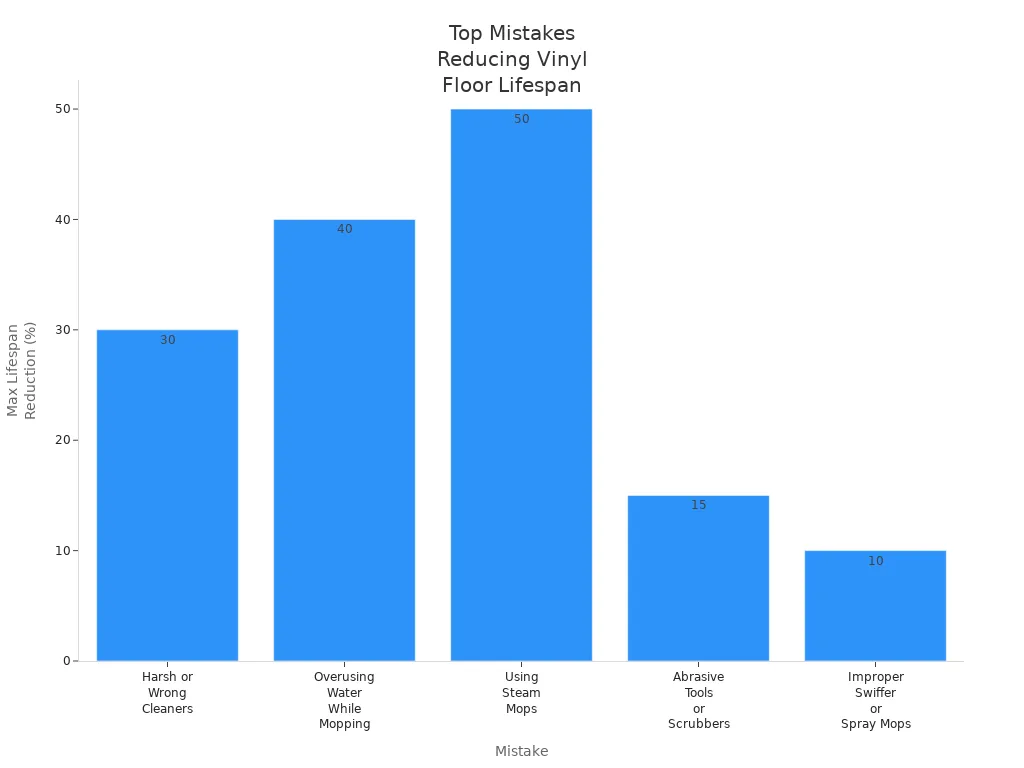
Here is a quick look at the most common mistakes:
| Mistake | Explanation |
|---|---|
| Using Harsh or Wrong Cleaners | Damages the protective layer and reduces lifespan by 20-30%. |
| Overusing Water While Mopping | Causes water to seep into seams, reducing lifespan by 25-40%. |
| Using Steam Mops | Pushes moisture into seams, reducing floor life by 30-50%. |
| Using Abrasive Tools or Scrubbers | Scratches the surface, reducing floor life by 10-15%. |
| Improper Use of Swiffer or Spray Mops | Leaves sticky residue, causing streaks and dull spots. |
| Ignoring High Traffic Areas | Leads to visible wear and reduced lifespan. |
| Delaying Pet Accident Cleanup | Causes stains and odors that can ruin the flooring. |
Over-wetting the Floor
You may think using more water will clean better, but too much water can harm your vinyl plank flooring. Water can get trapped under the planks. This causes the core to expand, leading to warping and buckling. If you do not act quickly, mold can grow under the floor. Always use a damp mop, not a wet one. Make sure your subfloor stays dry and level to prevent water from getting trapped.
Tip: Wipe up spills right away to avoid water damage.
Using Wrong Cleaning Products
You might reach for any cleaner, but not all products are safe for vinyl plank flooring. Bleach, ammonia, and oil-based cleaners can cause surface damage and discoloration. Some products leave a sticky residue that makes your floor slippery and dull. Using the wrong cleaner can break down the protective coating, leading to permanent damage. Always choose pH-neutral cleaners made for vinyl floors.
- Surface damage
- Discoloration
- Slippery, dull finish
- Permanent breakdown of the protective layer
Skipping Regular Maintenance
You need to clean your floors often to keep them looking their best. Skipping regular maintenance lets dirt and grit build up. This can scratch the surface and make your floor look old. Not cleaning up spills quickly can lead to water damage or stains. High traffic areas need extra care to prevent fading and wear. Managing humidity and blocking sunlight also help protect your floor from fading and damage.
Note: Regular cleaning and care keep your vinyl plank flooring beautiful and strong for years.
Quick Tips for Maintaining Vinyl Plank Flooring
Prevent Scratches and Scuffs
You can keep your vinyl plank flooring looking new by taking a few simple steps. Place felt pads or sliders under furniture legs. This prevents scratches when you move chairs or tables. Rotate heavy furniture and rugs from time to time. This helps avoid permanent dents. Use area rugs in high-traffic spots like hallways and entryways. Add entry mats at doors to catch dirt and grit before it reaches your floor. Keep pet nails trimmed to reduce the risk of scratches. Try a no-shoes policy indoors to cut down on debris. Sweep or vacuum often to remove dirt that can cause scuffs.
Protect from Spills and Moisture
Spills can damage your floor if you do not act quickly. Wipe up any liquid right away to prevent stains and moisture problems. Place waterproof trays under indoor plants to catch leaks. Use curtains or blinds to block direct sunlight, which can fade your flooring. Clean the floor regularly by sweeping or vacuuming to remove dirt and grit. For deeper cleaning, use a damp mop with a pH-neutral cleaner. Avoid steam mops unless your flooring manufacturer says they are safe.
The design and precision of the locking system is one of the most critical components in how a floor handles spills. Modern click-lock systems are engineered to create a tight fit, minimizing gaps that could allow water to penetrate.
Routine Care for Longevity
You want your vinyl plank flooring to last for many years. Sweep daily to keep dust and dirt away. Mop once a week with a mild, pH-neutral cleaner. Avoid harsh or wax-based products during cleaning. Use minimal water when mopping to prevent moisture from seeping into the seams. Place area rugs in busy areas and use felt pads under furniture. Conduct routine inspections to spot early signs of damage. Buff the floor gently to maintain its shine. Entry mats at doors help reduce the amount of dirt and grit brought inside.
| Care Step | Frequency | Purpose |
|---|---|---|
| Sweep or vacuum | Daily | Remove dirt and grit |
| Damp mop | Weekly | Deep cleaning |
| Inspect for damage | Monthly | Early problem detection |
| Add felt pads/rugs | As needed | Prevent scratches and scuffs |
| Clean up spills | Immediately | Prevent stains and moisture |
Following these quick tips makes cleaning easy and helps your vinyl plank flooring stay beautiful and strong.
skspcflooring’s Recommended Products and Care Tips
Eco-Friendly SPC Flooring Solutions
You want flooring that supports a healthy home and protects the environment. SK-Floor offers SPC flooring solutions that meet strict international standards. These floors use safe materials and modern manufacturing methods. You get products certified by ISO9001 and ISO14001, which means your floors are durable and eco-friendly. SK-Floor’s SPC flooring resists water and wear, making it ideal for busy homes and commercial spaces. You can choose from Chevron SPC Flooring, Rigid Core SPC Flooring, SPC Tile Flooring, and EIR SPC Flooring. Each option gives you a stylish look and long-lasting performance. You help the planet when you select flooring made with sustainable practices.
SK-Floor’s mission is to deliver quality flooring that meets global standards and supports environmental responsibility.
Certified Safe Cleaning Products for Vinyl Plank Flooring
You need cleaning products that keep your vinyl plank flooring safe and beautiful. Industry organizations recommend several certified cleaners. These products protect your indoor air quality and leave no harmful residue. You can use them for regular maintenance and deep cleaning.
- Bona Pro Stone, Tile & Laminate Cleaner Spray: Greenguard certified, low chemical emissions, quick-drying, and has a pleasant scent.
- Basic Coatings Squeaky Cleaner: Low VOC formula, easy to use, streak-free, and leaves no residue.
- Coretec Encore Floor Cleaner: pH-neutral, alcohol-based, quick-drying, and safe for various hard surfaces.
- Quick Shine Multi-Surface Floor Finish: U.S EPA Safer Choice certified, safe for indoor air quality, and effective for polishing various floor types.
You protect your floors and your health when you use certified safe cleaning products.
Contact skspcflooring for Expert Advice
You may have questions about maintaining your vinyl plank flooring. SK-Floor’s experts can help you choose the right cleaning methods and products. You should use non-abrasive dust mops or a backpack vacuum for daily cleaning. For deep cleaning, scrub with an automatic scrubber and follow dilution instructions for cleaners like Hillyard Heavy Duty Floor Cleaner. Avoid harsh chemicals, abrasive pads, and steam cleaners to protect your flooring’s finish. You can use Hil-Sheen LV to minimize scratches and add shine.
Reach out to SK-Floor for personalized advice and professional support.
Contact: Mr Max
Email: sales@skspcflooring.com
Phone: +8615306112610
Website: skspcflooring.com
You get expert guidance and eco-friendly solutions when you contact SK-Floor.
You can keep your vinyl plank flooring looking great with safe, gentle cleaning products. Avoiding harsh chemicals helps protect your floors and improves indoor air quality. Regular care supports a healthier home and prevents damage. Choose pH-neutral cleaners made for vinyl floors.
- Routine cleaning enhances air quality in your home.
- Using gentle products preserves the floor’s appearance.
- SPC flooring resists water and damage, thanks to its strong core and protective layer.
- Expert advice from skspcflooring helps you maintain lasting beauty and durability.
You get eco-friendly, durable flooring and professional support when you trust skspcflooring.
FAQ
Can I use vinegar to clean vinyl plank flooring?
You can use diluted vinegar for occasional cleaning. Avoid using undiluted vinegar. Vinegar can damage the protective layer if used too often. Choose pH-neutral cleaners for regular care.
What is the safest way to remove stains from vinyl plank flooring?
You can remove stains with a soft cloth and mild dish soap. For tough spots, use diluted rubbing alcohol. Avoid abrasive pads. Always test cleaners on a small area first.
How often should I deep clean my vinyl plank flooring?
You should deep clean your vinyl plank flooring once a week. Daily sweeping or vacuuming keeps dirt away. Weekly mopping with a pH-neutral cleaner maintains shine and prevents buildup.
Are steam mops safe for vinyl plank flooring?
Steam mops are not safe for vinyl plank flooring. The heat and moisture can cause warping and damage. Use a damp microfiber mop instead.
What tools should I use for daily cleaning?
You should use a soft-bristle broom, microfiber dust mop, or vacuum without a beater bar. These tools protect your floor from scratches and keep it clean.




