
You are choosing chevron flooring for its stunning look. The core of your engineered hardwood flooring is critical for this type of flooring. For a precise chevron pattern, hdf flooring offers superior stability for your flooring.
Core Choice Matters: Its dense core helps your engineered hardwood floors resist environmental changes. This keeps every chevron point perfectly aligned.
Plywood engineered hardwood flooring performs better in high-humidity spaces. Your choice of engineered core for this hardwood flooring impacts the long-term beauty of your chevron floors, making it a key decision for your chevron flooring project.
Understanding the Core: Why It Matters for Chevron Flooring
The core is the hidden foundation of your engineered hardwood flooring. It provides the stability your beautiful floors need. For a pattern like chevron, the core’s job is even more important. The wrong choice can affect the look of your flooring over time.
The Challenge of Chevron Geometry
You choose a chevron pattern for its clean lines and sharp points. This design creates a stunning visual effect. Unlike a simple plank or herringbone layout, the chevron pattern requires boards cut at a precise angle. These angled ends meet to form a perfect “V” shape. Any small shift or change in a board’s size can create gaps at these points. This disrupts the entire pattern of your floors. Both chevron and herringbone patterns demand stability, but the mitered joints of a chevron are less forgiving. Maintaining this geometry is the biggest challenge for chevron flooring.
Defining HDF Core in Engineered Hardwood Flooring
High-Density Fiberboard (HDF) is an engineered wood product. Manufacturers create it by pressing recycled wood fibers with resin under intense heat and pressure. This process creates an incredibly dense and uniform board.
Did You Know? HDF used for flooring cores has a density between 800 and 1,200 kg/m³. This high density gives your engineered hardwood flooring superior resistance to dents and impacts.
This uniform structure means hdf flooring does not expand or contract much with changes in temperature or humidity. This stability is perfect for keeping the tight joints of a chevron or herringbone pattern intact. The precision of HDF allows for flawless milling, ensuring your chevron floors fit together perfectly.
Defining Traditional Plywood Core
A traditional plywood core uses multiple thin layers of hardwood or softwood. Manufacturers stack these layers, with the grain of each layer running perpendicular to the one below it. A strong adhesive binds these layers together. Modern flooring often uses eco-friendly, soy-based glues for this process. This cross-grain construction gives the engineered flooring its strength and versatility. While this structure offers good moisture resistance, it is not as dense or uniform as HDF. This lack of uniformity can pose a risk for the precise angles needed in a chevron or herringbone design. The versatility of this engineered hardwood makes it a popular choice for many floors, but it may not be the best for a demanding chevron pattern.
The Case for HDF Flooring in Chevron Patterns
You choose a chevron pattern for its sophisticated and uniform appearance. HDF core flooring provides the structural integrity needed to protect that investment. Its unique properties make it the ideal foundation for the demanding geometry of a chevron or herringbone layout, ensuring lasting beauty and durability.
Superior Dimensional Stability
Your home’s environment changes daily. Temperature and humidity levels rise and fall. These shifts cause wood to expand and contract. For a chevron pattern, even a tiny change in a plank’s size can create unsightly gaps at the mitered joints, ruining the overall appearance. HDF flooring excels in this area. Its dense, uniform composition resists these environmental changes far better than other materials.
This stability means your chevron or herringbone floors maintain their tight fit year-round. You get peace of mind knowing the clean lines and perfect points of your flooring design will remain intact, preserving the intended aesthetic. This contributes significantly to the long-term durability of your floors.
Unmatched Dent and Impact Resistance
Your floors face daily challenges from dropped items, furniture legs, and heavy foot traffic. The durability of your flooring is crucial. HDF’s incredible density gives it superior strength against dents and impacts. This high strength-to-weight ratio makes your engineered hardwood flooring exceptionally tough.
To measure this toughness, manufacturers use standardized tests. These tests show how well a material holds up to force. Some common impact resistance tests include:
- ASTM D1037 Falling Ball Impact
- ASTM D2394 Falling Ball Indentation Test
- Large Ball Impact
The density of the core material is a primary factor in its durability. HDF is significantly denser than traditional plywood, which gives it a clear advantage in impact resistance.
| Material | Density Range (kg/m³) |
|---|---|
| HDF | 600-1000 |
| Plywood | 400-700 |
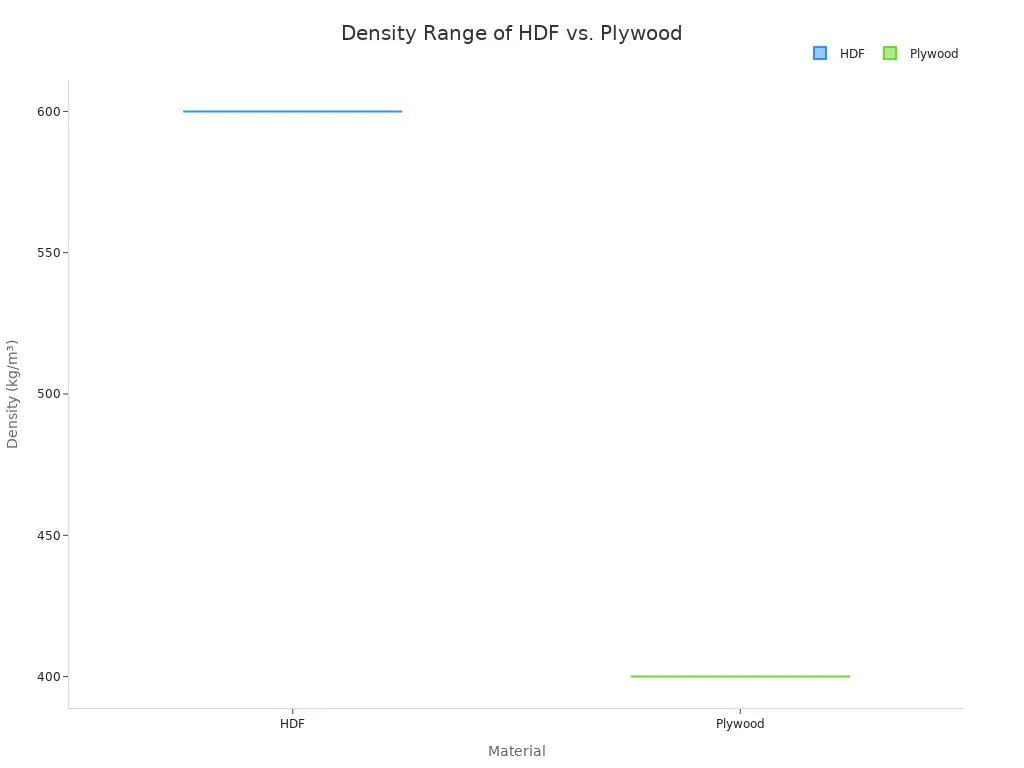
This higher density means your HDF core flooring is better equipped to handle the accidents of everyday life, protecting the beautiful appearance of your chevron or herringbone floors.
Precision Milling for Flawless Joints
The success of a chevron or herringbone pattern depends on how perfectly the boards fit together. There is no room for error. HDF’s uniform structure allows for incredibly precise manufacturing. Factories mill HDF core flooring planks to absolute, micron-precise tolerances.
This level of precision is essential for creating the complex locking systems and edge profiles on modern engineered hardwood flooring. This exactness ensures every single plank fits snugly and consistently with its neighbor. For your chevron design, this means the angled ends meet perfectly, forming a flawless “V” without any gaps. This precision milling guarantees a professional, high-end aesthetic and enhances the structural durability of the entire flooring system. The versatility of this engineered core allows for intricate patterns like chevron and herringbone, which demand perfection. This precision is something only an HDF core can reliably provide for your hardwood floors, ensuring a stunning final appearance and lasting versatility.
Assessing Plywood Core for Engineered Hardwood Flooring
You might consider a plywood core for your engineered hardwood flooring, especially in certain environments. Plywood offers unique benefits, but you must also understand its potential drawbacks. This knowledge helps you make an informed choice for your new floors and ensures their long-term durability. The right flooring choice depends on your specific needs.
Plywood’s Moisture Resistance Advantage
Plywood’s main strength is its performance in humid conditions. Its cross-layered construction makes it more forgiving than some other materials when exposed to moisture. This is why you often find plywood core flooring recommended for basements or homes in humid climates. The type of glue used in the plywood is critical for its moisture resistance and overall durability.
For example, marine-grade plywood sets a high standard. It uses a fully waterproof adhesive, making it suitable for boat building and other areas with constant water exposure. This shows how adhesive choice directly impacts the durability of the flooring.
| Adhesive Type | Resin Type | Moisture Resistance Level | Common Application |
|---|---|---|---|
| FK Glue | Urea-formaldehyde | Moisture Resistant (MR) | Interior furniture and packing |
| FSF Glue | Phenol-formaldehyde | Water Boiling Proof (WBP) | Building, construction, shipbuilding |
An engineered hardwood flooring with an FSF glue core offers superior protection. This enhances the durability of your floors in moisture-prone areas. This versatility makes plywood a viable option for challenging installations.
The Inherent Risk of Delamination
The layered structure of plywood also presents a risk: delamination. Delamination happens when the layers of wood separate. This can ruin the appearance and structural integrity of your flooring. Moisture is a primary cause of this problem.
- Moisture Ingress: Water can seep into the plywood layers, especially through unsealed edges. This causes the wood to swell. The swelling weakens the glue. Repeated cycles of swelling and shrinking from humidity changes can break down the adhesive, causing the layers to peel apart.
- Steam Blisters: Sometimes, delamination issues start during manufacturing. If the wood veneers have too much moisture, the hot pressing process can create hidden steam blisters. These voids can cause the flooring layers to separate later on.
Even in a climate-controlled home, your floors face risks. Seasonal humidity changes cause subtle shifts in the wood. Unvented areas like attics can trap hot, humid air. This prolonged exposure can cause plywood components in your home to delaminate. This same process can affect your engineered hardwood flooring, compromising its durability.
Potential for Voids and Instability
The quality of plywood can vary. Lower-quality plywood may contain hidden voids or overlaps within its inner layers. These inconsistencies create weak spots in the core of your flooring. A void means there is a gap where there should be solid wood. An overlap creates a thick spot.
These imperfections compromise the stability of the engineered plank. For a precise pattern like chevron, this instability is a major problem. A single weak spot can cause a board to flex or warp over time. This movement creates gaps at the mitered joints, disrupting the clean lines of your beautiful hardwood floors. The lack of uniform density makes plywood a less reliable choice for maintaining the perfect geometry your chevron flooring demands. This can impact the long-term durability and appearance of your hardwood floors.
Pattern Integrity: Herringbone vs. Chevron Stability

You love the dynamic look of patterned flooring. Understanding the difference between herringbone vs. chevron is key. Both herringbone and chevron create beautiful floors, but their construction affects their stability. Your choice of flooring core directly impacts the long-term appearance of your chosen pattern. The herringbone vs. chevron debate often comes down to your desired aesthetic and installation needs.
Why Chevron Joints Demand More Stability
You might think herringbone vs. chevron are similar. However, a chevron flooring design has a unique structural challenge. Chevron planks are cut at a 45 or 60-degree angle. These mitered ends meet to form a perfect point. This creates a clean, continuous “V” shape across your flooring. This specific joint is the weak point of a chevron pattern. Any tiny shift in the flooring plank creates a visible gap right at the point, ruining the seamless appearance.
The herringbone pattern uses rectangular planks. One plank’s end butts against the side of another. This 90-degree joint is more forgiving of small movements. The chevron joint, by contrast, demands absolute stability from the flooring.
The visual appeal of a chevron depends on these perfect points. Maintaining this sharp aesthetic requires a flooring core that resists all movement. This makes the core choice for chevron flooring critical for its appearance. The difference between herringbone vs. chevron stability is significant.
How Core Choice Affects Both Patterns
Both herringbone and chevron patterns need stable flooring. The core material you choose is the foundation for the final appearance. An HDF core provides the best stability for both herringbone and chevron flooring. Its high density prevents the planks from expanding or contracting. This keeps every joint in your herringbone or chevron flooring tight.
For a chevron, this stability is non-negotiable. An HDF core ensures the mitered joints stay perfectly aligned, preserving the sharp aesthetic of your flooring. A less stable core, like plywood, can allow for micro-movements. These movements will quickly create gaps in a chevron installation. The herringbone pattern is more forgiving than the chevron. While HDF is still the best choice for a herringbone, the pattern can better hide minor imperfections. The herringbone vs. chevron discussion always highlights the chevron’s need for precision. Your flooring’s core choice protects the beauty and integrity of your herringbone or chevron design.
Installation and Longevity Considerations
You must consider the installation process and long-term care for your new flooring. Proper installation and maintenance are key to the durability and lifespan of your floors. These factors ensure your herringbone or chevron flooring looks great for years.
Subfloor Preparation for Each Core
A flat subfloor is the foundation of a successful flooring installation. HDF core flooring is rigid and demands a very level surface to ensure its stability and durability. Any high or low spots can cause planks to flex, leading to noise and joint failure. For this engineered hardwood flooring, you must meet strict flatness requirements.
- The subfloor must be flat to 3/16” in 10 feet.
- Alternatively, the subfloor must be flat to 1/8” in 6 feet.
Plywood core flooring offers a little more versatility and can be more forgiving of minor subfloor imperfections. However, you should still aim for a flat surface to maximize the lifespan and performance of your hardwood floors. Proper preparation prevents future issues with your flooring. Good maintenance starts before the flooring is even installed.
Acclimation and Environmental Factors
You must acclimate your engineered hardwood flooring before installation. This means letting the planks sit in the room where you will install them for several days. This allows the flooring to adjust to your home’s temperature and humidity. Acclimation is crucial for the stability of both herringbone and chevron patterns.
Skipping this step can ruin your beautiful floors. Unacclimated flooring may expand or shrink after installation, creating gaps in your herringbone design. This affects the durability and lifespan of the flooring. Proper maintenance includes controlling your home’s climate to extend the lifespan of your hardwood.
Long-Term Performance and Durability
The long-term durability of your floors depends on the core and proper maintenance. HDF’s density provides superior impact resistance, which contributes to a longer lifespan. The potential for refinishing your engineered flooring depends on the thickness of the top hardwood layer, not the core. A thicker wear layer allows for more refinishing opportunities, extending the lifespan of the flooring. Regular maintenance, like cleaning spills quickly, protects the finish and enhances the flooring’s durability. This maintenance routine is vital for the lifespan of any herringbone or chevron installation. The versatility of a quality engineered product means a long lifespan with the right care and maintenance. Your refinishing options are key to the flooring’s lifespan. Good maintenance and refinishing will keep your herringbone floors beautiful.
You should choose hdf flooring for your chevron pattern. Its stability ensures a flawless appearance and long-term durability for your flooring. Your choice between flooring cores affects the durability and appearance of your chevron or herringbone flooring. Proper maintenance is key for the durability of any flooring.
Consider these differences in durability for your chevron or herringbone flooring. This choice impacts the final appearance and maintenance needs of your flooring. The aesthetic of your chevron or herringbone flooring depends on this.
| Feature | HDF Flooring | Plywood Flooring |
|---|---|---|
| Longevity | 15-25 years | 20-40 years |
| Moisture | Vulnerable | More Resistant |
Always assess your home’s environment. Consult a professional to protect the appearance and aesthetic of your chevron or herringbone flooring. This ensures the best durability and appearance for your flooring.
FAQ
Which core is better for my chevron flooring?
You should choose an HDF core for chevron patterns. Its high density and stability prevent gaps from forming at the mitered joints. This ensures your flooring maintains its perfect “V” shape. Plywood is better only for areas with very high moisture.
Why not use tile flooring for a chevron pattern?
You might consider tile flooring. A wood-look tile can mimic the pattern. However, this tile flooring requires grout lines, which break the seamless look. A porcelain tile feels cold. This tile is hard underfoot. That tile flooring lacks the warmth of wood. The tile flooring installation is complex. A single tile can be heavy. This tile flooring is permanent. You cannot refinish a tile. This tile is not like wood.
Can I install chevron flooring myself?
You should hire a professional for chevron installation. The pattern requires precise cuts and a perfectly flat subfloor. Mistakes are very visible and costly to fix. An expert ensures the stability and final appearance of your beautiful new floors.
How do I clean my HDF core chevron floors?
You can easily maintain your floors. Use a microfiber mop or a vacuum with a soft brush attachment. Clean spills immediately with a damp cloth. Avoid using steam mops or excessive water, as this can damage the core and finish.




