
You want the best way to cut vinyl floor for a smooth, lasting finish. Start by looking at core design, not just thickness. Core materials, coatings, and quality control shape how your lvp flooring performs and how easy it is to cut. See how these factors affect your results:
| Evidence Type | Description |
|---|---|
| Core Materials | The thickness and quality of core materials like PVC and limestone fillers affect durability and flexibility. |
| Protective Coatings | Application of coatings protects against scratches and wear, enhancing finish quality. |
| Quality Control | Rigorous inspection ensures adherence to standards, impacting overall durability and aesthetic appeal. |
When you focus on core design, you get cleaner cuts and better durability from your vinyl floor.
Why Core Design Matters Most for the Best Way to Cut Vinyl Floor
Impact of Core Design on Cutting Technique
You need to understand core design before you start any cutting process. The core design of lvp flooring controls how the material reacts when you cut it. If you work with a rigid core, like SPC or WPC, you will notice that the plank feels solid and resists bending. This means you must use more force and a sharper tool to get a clean cut. Flexible core lvp flooring bends easily, so you can use a simple score-and-snap method. The best way to cut vinyl floor always depends on how the core handles pressure and movement.
Wear layer thickness also plays a big role. A thicker wear layer protects the design and adds strength. When you cut through a thick wear layer, you need to make sure your tool can handle the extra resistance. If you use the wrong technique, you might chip the wear layer or leave a rough edge. For high-traffic areas, a strong core and thick wear layer help your floor last longer and look better.
How Core Design Influences Tool Selection
You must pick the right tool for your lvp flooring based on its core design. Rigid core lvp, like luxury vinyl plank with SPC or WPC, needs power tools for the best results. These tools give you clean, chip-free cuts and help you handle the tough core. For flexible lvp, you can use hand tools because the planks bend and snap easily.
Here are some tools you can use for different core designs:
- Utility knife: Great for straight cuts on thinner lvp and flexible core planks. You can score the wear layer and snap the plank.
- Vinyl plank cutter: Works well for full-room installations. It gives you fast, clean cuts and handles most wear layer thickness levels.
- Jigsaw: Helps you cut curves or shapes around vents and corners. Use a fine-tooth blade to protect the wear layer.
- Circular saw or miter saw: Best for rigid core lvp and thick wear layers. These tools give you precise, smooth edges.
- Guillotine-style cutter: Good for large projects. It makes straight cuts without dust and keeps the wear layer intact.
Always wear safety gear when you cut lvp flooring. This protects you from sharp edges and flying debris, especially when you use power tools.
Core Design and Edge Quality
Edge quality matters for both looks and durability. The core design of your lvp flooring decides how smooth and strong the edge will be after you cut it. If you have a rigid core with a thick wear layer, you need a sharp blade and steady hand. This keeps the wear layer from chipping and helps the plank fit tightly against walls or other planks.
Flexible core lvp with a thinner wear layer lets you make quick, clean cuts. You can use a utility knife to score the wear layer and snap the plank. This method works well for low-traffic areas where you do not need extra strength.
Wear layer thickness affects edge quality in every cut. A thick wear layer stands up to heavy traffic and resists damage. If you cut through a thick wear layer the right way, you get a smooth edge that lasts longer. For high-traffic spaces, always check the wear layer and core design before you start. This helps you choose the best way to cut vinyl floor and keeps your luxury vinyl plank looking new.
Tip: Always check the wear layer thickness before you cut. This helps you pick the right tool and technique for your lvp flooring.
Core Thickness vs. Core Design in LVP Flooring
How Core Thickness Affects Cutting
You see the term core thickness often when you shop for lvp flooring. Core thickness tells you how thick the plank is from top to bottom. Thicker lvp feels heavier and stronger. You notice that thicker lvp needs more force to cut. You must use sharper blades and sometimes power tools. If you use a dull blade, you get rough edges and uneven cuts.
Thicker lvp gives you more stability. You find that thicker lvp resists bending and breaking. When you cut thicker lvp, you must press harder. You may need a circular saw or a guillotine cutter. Thicker lvp works well in busy rooms. You get better sound insulation and comfort underfoot.
Here is a quick guide for cutting lvp by core thickness:
| Core Thickness | Cutting Tool | Cutting Difficulty | Best Use Area |
|---|---|---|---|
| 4mm | Utility knife | Easy | Bedrooms, offices |
| 5mm | Vinyl plank cutter | Moderate | Living rooms |
| 6mm | Circular saw | Hard | Hallways, kitchens |
Tip: Always check the thickness before you start. Thicker lvp needs stronger tools and careful handling.
How Core Design Affects Cutting
Core design shapes how you cut lvp flooring. You look at the materials inside the plank. Some lvp uses stone plastic composite (SPC). Other lvp uses wood plastic composite (WPC). Each core design changes how the plank reacts to cutting.
SPC core feels rigid. You need a strong blade and steady hand. WPC core bends more. You can score and snap it with a utility knife. Thicker lvp with SPC core needs a power saw. Thicker lvp with WPC core lets you use a plank cutter.
You also see coatings and layers in the core design. Some lvp has a thick wear layer. You must cut through this layer without chipping. Thicker lvp with a tough wear layer needs a fine-tooth blade. You get smooth edges and a clean finish.
You notice that core design affects the edge quality. Thicker lvp with a strong core gives you tight seams. You avoid gaps and chips. You get better longevity from your floor.
Real-World Examples: Core Design’s Greater Influence
You can see how core design matters more than core thickness in real projects. Imagine you install thicker lvp in a busy hallway. You choose lvp flooring with a rigid SPC core. You use a circular saw for clean cuts. The core design keeps the edges strong and smooth.
Now, you work with thicker lvp in a quiet bedroom. You pick lvp flooring with a flexible WPC core. You use a utility knife. The plank bends and snaps easily. You get a neat edge without much effort.
You notice that two planks with the same thickness can act very differently. The core design decides how easy it is to cut. You get better results when you match your tools to the core design. Thicker lvp with a strong core lasts longer. You see fewer chips and cracks. You enjoy better longevity and a professional look.
Note: Always check both core thickness and core design. You get the best results when you understand how each affects cutting.
Choosing the Right Tools for Cutting LVP Flooring by Core Design
Tools for Rigid Core Vinyl Flooring
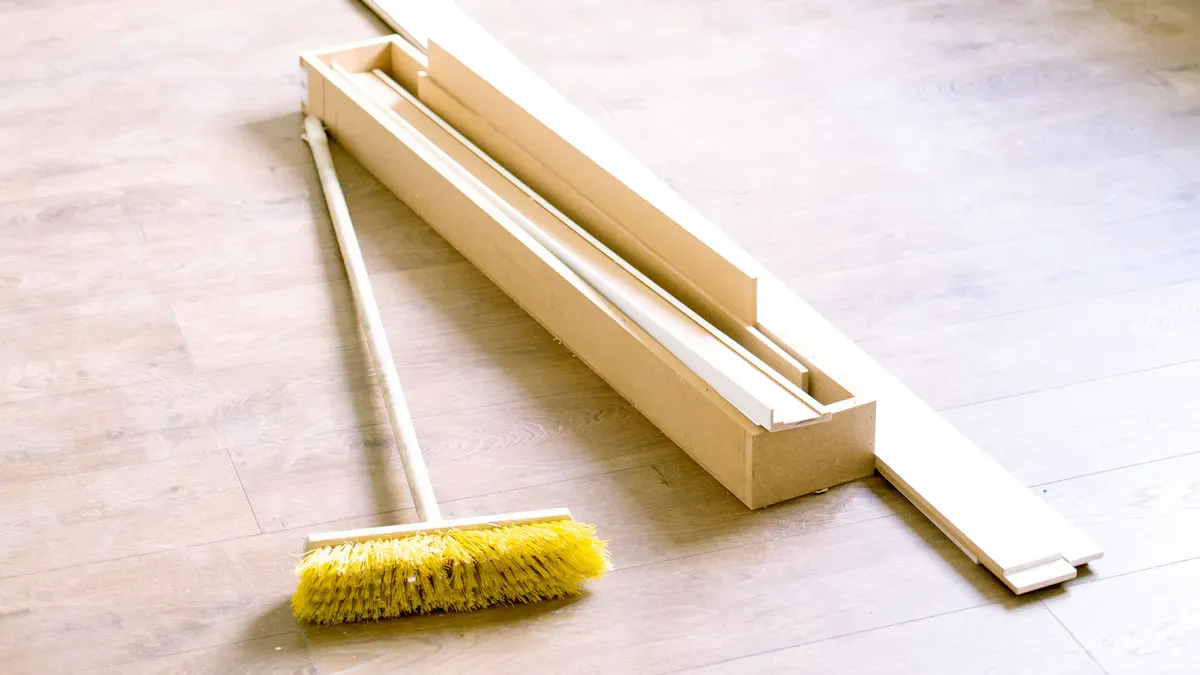
You need the right tools for cutting rigid core lvp. Rigid core planks have a strong structure. They work well in high-traffic zones and offer water-resistant qualities. You want tools that give you clean, straight cuts and help with ease of installation. Here is a table of the most effective tools for rigid core vinyl:
| Tool | Description |
|---|---|
| Utility Knife | Essential for cutting vinyl sheets and tiles. |
| Vinyl Cutter | Specialized tool for cutting vinyl planks. |
| Straight Edge | Ensures straight cuts. |
| Tape Measure | For accurate measurements. |
| Pencil | To mark cutting lines. |
| Cutting Mat | Protects surfaces from damage. |
| Heat Gun | Optional, makes the vinyl more pliable. |
| Safety Gear | Gloves and safety glasses for protection. |
You use these tools to get precise cuts and protect the wear layer. Rigid core lvp needs sharp blades and steady hands for the best results.
Tools for Flexible Core Vinyl Flooring
Flexible core lvp is softer and bends more easily. You can use simple hand tools for installation. A utility knife works well for most cuts. You can score the plank and snap it along the line. Flexible lvp often has anti-slip properties. These features help reduce slips and falls during installation. You should always wear gloves and keep your workspace clean. This keeps you safe and helps you finish the job faster.
Tips for Clean, Professional Cuts
You want your lvp flooring to look professional after installation. Follow these steps for the best results:
- Measure the space with a tape measure.
- Mark the plank with a pencil, using a straight edge for a clear line.
- Score the plank along the marked line with a sharp utility knife.
- Snap the plank along the score line for a clean break.
- Trim any rough edges with the utility knife for a perfect finish.
You can use a handsaw or jigsaw for complex cuts around corners or vents. These tips help you achieve smooth edges and a tight fit. Good preparation and the right tools make lvp installation easier and faster.
Step-by-Step Guide: Best Way to Cut Vinyl Floor by Core Design with skspcflooring
Preparation and Safety Measures
You need to prepare your workspace before you cut lvp flooring. Check each plank for defects. If you find any, do not use them. Make sure the floor underneath is flat and clean. Sand or flatten rough spots. Acclimate lvp for at least 48 hours in the room where you will install it. Keep the temperature between 55 and 85°F. Use safety gear like gloves and dust masks. Do not cover the flooring with plastic or tar paper. Let the vinyl breathe.
| Preparation/Safety Measure | Description |
|---|---|
| Material Inspection | Inspect products for defects before installation. If defects are found, do not proceed with installation. |
| Substrate Preparation | Ensure substrates are flat, clean, and structurally sound. Sand or flatten as necessary. |
| Safety Equipment | Use safety equipment and dust masks when sanding surfaces to avoid health hazards. |
| Acclimation | Acclimate flooring for at least 48 hours in the installation environment to prevent expansion issues. |
| Temperature Control | Maintain floor temperature between 55 to 85°F during installation. |
| Avoid Covering | Do not cover flooring with plastic or tar paper before, during, or after installation to allow it to breathe. |
Tip: Always work in a well-lit area and keep your workspace stable.
Cutting Process for Rigid Core LVP Flooring
You want clean, professional cuts for rigid core lvp. Follow these steps:
- Gather tools: vinyl plank cutter, circular saw, miter saw, utility knife, jigsaw, and safety glasses.
- Measure and mark each plank. Double-check your measurements.
- Score the surface several times with a sharp utility knife, especially for WPC and LVT types.
- Cut with the decorative side facing up to prevent chipping.
- Use fine-tooth blades and cut slowly with saws to avoid cracks.
- Protect nearby planks with masking tape when cutting installed flooring.
- Use a multi-tool or oscillating saw for tricky cuts around corners.
- Change blades often for smooth edges.
- Guide your cuts with a straight edge or T-square.
- Do not force planks to snap. Score more if needed.
- Wear gloves and safety glasses.
- Test cut scrap pieces first.
- Keep your workspace stable and well-lit.
- Plan your layout to minimize waste.
Note: Always leave a 1/4″ expansion gap against walls.
Cutting Process for Flexible Core LVP Flooring
You can cut flexible core lvp easily. Use a utility knife and a straight edge. Score the plank along your mark and snap it. Make sure your cuts are straight. If you use the wrong tool, you may get uneven edges. Always check your fit before installing. Avoid rushing. Take your time to get a clean edge. This helps your lvp flooring look neat and professional.
Alert: Use the right tools and techniques to prevent poor fitting and uneven edges.
Common Mistakes and How to Avoid Them
Cutting LVP flooring can seem simple, but you might run into common mistakes if you do not pay attention to details. You can avoid these problems by following a few key steps that professionals recommend.
-
Skipping Measurements
You may feel tempted to cut quickly, but this often leads to wasted material. Always measure twice and cut once. Double-check your measurements before you make any cuts. This habit helps you avoid short planks and gaps. -
Using Dull Tools
A dull utility knife or saw can tear the wear layer and leave rough edges. You should use a sharp utility knife and a straight edge for clean, straight cuts. Replace blades often to keep your cuts smooth. -
Ignoring Acclimation
If you skip acclimating your planks, you risk buckling or gaps after installation. Store unopened boxes flat in the room for at least 24 to 72 hours. This step lets the flooring adjust to the room’s temperature and humidity. -
Forcing Joints
You might want to snap planks together quickly, but forcing the joints can damage the locking profile. Follow the correct locking sequence and handle each plank gently. This keeps the edges strong and the floor stable. -
Wrong Tool for Complex Cuts
When you need to cut around pipes or corners, a utility knife may not work well. Use a jigsaw with a fine-tooth blade for these shapes. This tool gives you better control and prevents chipped edges. -
Wasting Offcuts
If you cut a plank to fit at the end of a row, do not throw away the offcut. Use it to start the next row if it is at least 6 inches long. This practice reduces waste and keeps your floor pattern strong.
Tip: Always keep your workspace clean and well-lit. This helps you see your lines clearly and work safely.
By following these steps, you can avoid the most common mistakes and achieve a professional finish with your LVP flooring.
Why Choose skspcflooring for Quality LVP Flooring and Core Design
You want a floor that looks great and lasts a long time. When you choose skspcflooring, you get more than just stylish options. You get advanced core design that makes your project easier and your results better.
skspcflooring uses SPC (Stone Plastic Composite) cores in many of its products. These cores give you strong, stable planks. You will notice that SPC cores resist chipping and cracking when you cut them. This means you can make clean cuts without worrying about damage. You can use fine-tooth blades and score the surface for best results. These methods help you get smooth edges and a perfect fit.
Here are some reasons why skspcflooring stands out:
- You get planks that are easy to cut and install.
- The core design gives you less waste and fewer mistakes.
- You enjoy floors that stay strong even in busy rooms.
- The products meet high standards for safety and quality.
You can see the difference in every step. When you cut skspcflooring’s lvp flooring, you feel how stable the plank is. You do not have to fight with the material. You just measure, score, and snap or saw. The plank supports itself, so you get a neat edge every time.
| Feature | Benefit for You |
|---|---|
| SPC Core Stability | Fewer chips and cracks |
| Easy Cutting | Faster, cleaner installation |
| Quality Control | Reliable, safe flooring |
| Modern Design Choices | Stylish look for any space |
You want floors that last. skspcflooring’s focus on core design gives you durability. You get floors that handle daily life and keep looking good. This means you enjoy both durability and longevity in your home or business.
Tip: Choose skspcflooring for a smooth installation and a floor you can trust for years.
You achieve the best way to cut vinyl floor when you focus on core design. You start by identifying your floor’s core design. You select the right tools for your project. You follow a cutting process that matches your flooring type.
- Choose core design over core thickness for the best way to cut vinyl floor.
- Trust skspcflooring for quality, durable, and easy-to-cut flooring.
Remember: A strong core design gives you cleaner cuts and longer-lasting floors.
FAQ
What is the best tool for cutting rigid core vinyl flooring?
You should use a fine-tooth saw or a vinyl plank cutter. These tools give you clean, straight edges. Always wear safety glasses and gloves.
Can I cut vinyl flooring with a utility knife?
Yes, you can cut flexible vinyl flooring with a sharp utility knife. Score the plank along your mark, then snap it. This method works best for thinner planks.
Why does core design matter when cutting LVP flooring?
Core design affects how the plank reacts to cutting. A rigid core needs stronger tools. A flexible core allows easier scoring and snapping. You get better results when you match your tools to the core design.
How do I avoid chipping the edges when cutting?
You should use a sharp blade and cut slowly. Always cut with the decorative side facing up. Test on a scrap piece first to check your technique.
Do I need to acclimate vinyl flooring before cutting?
Yes, you should let the flooring sit in the room for at least 48 hours. This step helps prevent gaps or buckling after installation.




