
You need to match vinyl plank flooring wood look thickness to your room’s use and foot traffic. Thicker planks offer better durability and noise absorbency, especially in busy spaces. Material costs range from $2 to $7 per square foot, with most homes using 4mm to 6mm for balance.
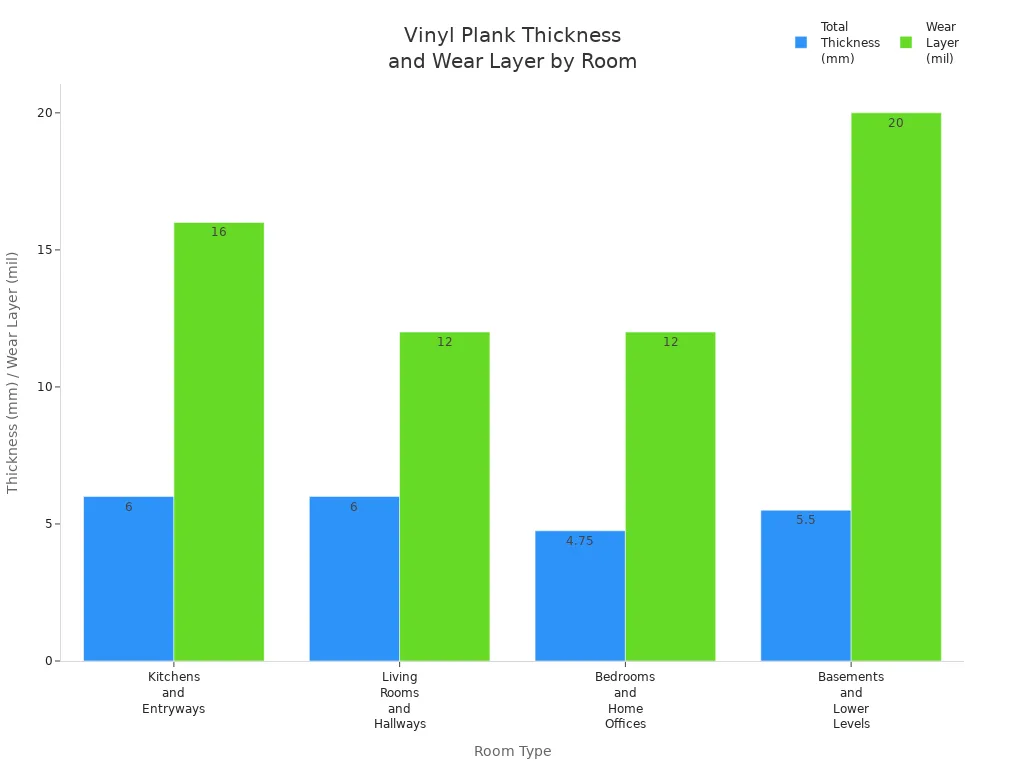
- Bedrooms and offices often use 4.5–5mm.
- Kitchens and entryways benefit from 5–7mm.
Avoid extremes. Choose thickness for lasting comfort without paying for unnecessary features.
Why Thickness Matters for Vinyl Plank Flooring Wood Look
Durability and Wear Resistance
You want your vinyl plank flooring wood look to last for years, especially in busy rooms. Thickness plays a big role in how well your floor stands up to daily wear. Thicker planks often have a stronger core and a tougher wear layer. However, thickness alone does not always mean better durability. Tests from Consumer Reports show that two floors with the same 20-mil wear layer can perform very differently. You should check reviews and ratings to see how a product handles foot traffic, not just rely on thickness.
Here is a quick guide to help you match thickness to your needs:
| Thickness | Application |
|---|---|
| 6-mil | Good choice for light residential use (e.g., bedrooms) |
| 12-mil | Ideal for a balanced residential use (e.g., living rooms) |
| 20-mil | Perfect for young families or light commercial uses (e.g., offices) |
| Above 20-mil | Recommended for heavy commercial applications (e.g., retail stores) |
Industry standards also suggest these wear layer thicknesses for different traffic levels:
| Traffic Level | Recommended Wear Layer Thickness |
|---|---|
| Light Traffic | 6 to 12 mil |
| Medium Traffic | 12 to 20 mil |
| Heavy Traffic | 20+ mil |
Comfort and Sound Insulation
You will notice a difference in comfort when you walk on thicker vinyl plank flooring wood look. Thicker planks, especially those 5mm or more, feel solid and quiet under your feet. This extra density helps reduce noise, making your home more peaceful. If you stand or walk a lot in a room, thicker flooring gives you more cushioning and insulation. Floors with 6mm thickness or more offer even better soundproofing and comfort, which is great for busy spaces.
Tip: Choose thicker planks for rooms where you want less noise and more comfort, like bedrooms or living rooms.
Impact on Cost
You may see higher prices for thicker vinyl plank flooring wood look. Thicker planks use more material and often come with advanced features. While you pay more upfront, you get better durability and comfort. For rooms with low traffic, you can save money by choosing a thinner option without losing quality. Always balance your budget with your needs to get the best value.
Quality Considerations for Vinyl Plank Flooring Wood Look
Best Thickness for High Traffic Areas
You want your floors to last in busy spaces like kitchens, hallways, and living rooms. Flooring experts recommend a wear layer thickness of 20 Mil for these areas. This thickness gives strong protection against scratches, dents, and heavy foot traffic. If you have children or pets, you should look for planks with a 6-8mm core. These thicker planks handle daily wear and tear better and often come with longer warranties.
| Thickness (mm) | Application Area |
|---|---|
| 6-8 | Busy commercial spaces |
- Focus on wear layer thickness for durability in high traffic areas.
- Recommended thickness for busy homes is 20 Mil for heavy-duty protection.
Tip: Thicker planks in high-traffic areas can help your floor look new for years.
Ideal Thickness for Low Traffic Rooms
In quieter rooms, such as guest bedrooms or home offices, you do not need the thickest planks. A thickness between 6mm and 8mm works well. A 6 to 8 mil wear layer is usually enough for these spaces. Many users say that thicker planks feel warmer and help reduce noise, making your room more peaceful.
- The recommended thickness for low traffic rooms is between 6mm to 8mm.
- A standard 6 to 8 mil wear layer is often adequate for guest bedrooms or low-use spaces.
- Thicker planks, such as those 5mm or more, provide better comfort and sound insulation.
Subfloor Compatibility and Preparation
You need to check your subfloor before installing vinyl plank flooring wood look. Thicker planks may require more careful handling and adjustments during installation. This can make the process take longer. Make sure your subfloor is clean, dry, and level. If your subfloor has bumps or dips, thicker planks can help hide small flaws, but you still need to prepare the surface well for the best results.
Note: Proper subfloor preparation helps your new floor last longer and look its best.
Residential vs. Commercial Applications
You need to choose the right thickness for your space. Residential and commercial areas have different requirements. In homes, you can use a wear layer between 6 mil and 12 mil. This range works well for bedrooms, living rooms, and other low to medium traffic spaces. For commercial spaces, you need more protection. Offices, shops, and busy public areas require a wear layer between 12 mil and 20 mil or more. This extra thickness helps your floor resist heavy foot traffic and frequent cleaning.
Here is a quick comparison to help you decide:
| Application Type | Thickness Requirement | Wear Layer Depth |
|---|---|---|
| Light Residential | 6-mil | 6 mil to 12 mil |
| Balanced Residential | 12-mil | 6 mil to 12 mil |
| Light Commercial | 20-mil | 12 mil to 20 mil |
| Heavy Commercial | Above 20-mil | 12 mil to 20 mil |
Tip: For most homes, a thickness of 6mm to 8mm gives you a good balance of comfort and durability. For commercial spaces, always choose a thicker wear layer to protect your investment.
Choosing for Kitchens, Basements, and Moisture-Prone Areas
You face extra challenges in kitchens, basements, and other moisture-prone rooms. These spaces need floors that can handle spills, humidity, and heavy use. For basements or high-traffic areas, select vinyl planks with a thickness of 5–8 mm and a wear layer of 20 mil or more. This helps your floor resist dents and water damage.
For kitchens, you want the best protection against scratches and stains. A wear layer of 20-22 mil is ideal, especially if you have children or pets. Waterproof flooring with this thickness keeps your kitchen looking new and makes cleaning easier.
- For basements or high-traffic areas, use 5–8 mm thickness and 20 mil+ wear layer.
- For kitchens, choose a 20-22 mil wear layer for top durability.
- Waterproof options work best in moisture-prone rooms.
You can trust these guidelines to help you pick the right vinyl plank flooring wood look for every room in your home or business.
Price Factors When Choosing Vinyl Plank Flooring Wood Look

How Thickness Influences Price
You will notice that the thickness of vinyl plank flooring wood look has a big impact on price. Thicker planks use more material and often include advanced features. You can see the price differences in the table below:
| Tier | Description | Typical $/sq ft |
|---|---|---|
| Builder-grade | 4 mm thick, 8 mil wear layer, basic visuals | $2.00 – $2.50 |
| Mid-range | 5-6 mm, 12-mil wear layer, embossed textures | $2.75 – $4.25 |
| Premium / LVP | 6-8 mm, 20-mil+ wear layer, SPC/WPC core, rich look | $4.50 – $7.00 |
You pay more for premium options, but you get better durability and a more realistic wood look. Thicker planks also offer better sound absorption and comfort.
Where to Save Without Sacrificing Quality
You can save money on your flooring project without giving up quality. Here are some smart strategies:
- Choose DIY installation to avoid labor costs.
- Pick cost-effective materials that still look like real wood.
- Think about long-term savings. Vinyl plank flooring wood look needs less maintenance, which saves you money over time.
Tip: You do not need the thickest planks in every room. Use thinner options in bedrooms or offices to lower costs.
Comparing Brands and Product Lines
You will find many brands and product lines with different prices and thicknesses. The table below shows how some popular options compare:
| Brand/Product Line | Thickness | Price per sq. ft. | Wear Layer |
|---|---|---|---|
| LifeProof | N/A | $2.99 – $3.49 | N/A |
| Commercial Product | 3/8″ | $5.50 | 30+ mil |
| Box Store Products | N/A | N/A | 6 mil |
Thicker planks, usually 8mm to 12mm, give you more stability and durability. Many customers feel happier with these options because they feel solid and quiet underfoot. You will also find that thicker planks have better locking systems, which makes installation easier and reduces damage.
How to Decide on the Right Thickness with skspcflooring
Step-by-Step Guide to Matching Your Needs
You can find the right thickness for your floor by following a simple process. First, look at the room where you want to install the flooring. Busy rooms like kitchens or hallways need thicker planks. Quiet rooms such as bedrooms or offices can use thinner planks.
Next, think about your lifestyle. If you have pets or children, you need a floor that can handle scratches and spills. Choose a thicker plank with a strong wear layer for these spaces. If you live alone or use the room less often, you can select a thinner option.
Finally, set your budget. Thicker planks cost more, but they last longer and feel more comfortable. You can balance quality and price by matching the thickness to your needs. SK-Floor offers a range of options from 4mm to 6mm, so you can find a product that fits your room and your wallet.
Tip: Always check the product certifications. SK-Floor products meet international standards for safety and durability.
Checklist for Room Type, Lifestyle, and Budget
You can use this checklist to help you choose the best thickness for your space. The table below shows how different thicknesses affect comfort, sound, and cost.
| Plank Thickness | Feel Underfoot | Sound Insulation | Subfloor Imperfection Tolerance | Typical Cost |
|---|---|---|---|---|
| 6mm – 7mm | Basic, may feel flexible | Minimal | Low; needs flat subfloor | $ |
| 8mm – 10mm | Solid, more rigid feel | Good | Moderate; hides minor flaws | $$ |
| 12mm+ | Very solid, like hardwood | Excellent | High; forgives subfloor issues | $$$ |
You should also consider the AC rating for durability. Higher ratings mean better protection against wear. Thicker planks give you more comfort and sound insulation. They also help cover small bumps in the subfloor.
- Choose 6mm–7mm for quiet rooms and tight budgets.
- Pick 8mm–10mm for busy spaces and moderate budgets.
- Select 12mm+ for high-traffic areas or commercial use.
Note: Thicker planks work well in rooms with moisture or uneven floors.
Real-Life Examples and Scenarios
You can see how these choices work in real homes and businesses. For example, a family with young children and pets chose 8mm planks for their living room. The floor feels solid and quiet. It stands up to spills and scratches.
A small office used 6mm planks in private rooms. The floor looks good and fits their budget. They did not need extra thickness because the rooms have low foot traffic.
A restaurant owner picked 12mm planks for the dining area. The floor handles heavy use and hides small bumps in the subfloor. Customers notice the quiet and comfortable feel.
SK-Floor helps you match the right thickness to your needs. You can visit their website or contact their team for advice. You will find options that balance quality and price for every room.
Callout: You can trust SK-Floor to deliver durable, certified, and stylish vinyl plank flooring wood look for your project.
Common Mistakes to Avoid When Selecting Vinyl Plank Flooring Wood Look Thickness
Choosing Too Thin to Save Money
You might want to save money by picking the thinnest planks. This choice can lead to problems over time. Thin vinyl planks do not give much support. They need a perfectly flat subfloor. If your floor has bumps or dips, thin planks will show these flaws. You may see lumps or uneven spots on the surface. The locking systems in very thin planks can break easily. This can waste materials and make installation harder. Thin planks often wear out faster, so you may end up spending more to replace them.
- Thin planks need a flat subfloor.
- Surface flaws become visible.
- Locking systems can break.
- Floors may fail sooner, costing more in the long run.
Tip: Choose a thickness that matches your room’s needs, not just your budget.
Overpaying for Unnecessary Thickness
You may think that thicker always means better. Sometimes, you pay more for thickness you do not need. For many homes, a medium thickness works well. The table below shows how cost and durability change with thickness:
| Tile Thickness | Cost Implication | Durability Benefits |
|---|---|---|
| Thicker (10–20 mm) | Higher upfront cost | Long-lasting, reduced repair needs |
| Thinner (3–6 mm) | More affordable | Good for looks, enough for many rooms |
If you use a thick plank in a low-traffic room, you might spend more without getting extra value. Always match the thickness to the room’s use.
Ignoring Subfloor and Room Conditions
You should always check your subfloor and room before choosing vinyl plank flooring wood look. If you skip this step, you risk problems like poor installation or damage over time. A rough or uneven subfloor can make your floor less durable. Moisture in basements or bathrooms can also cause trouble if you do not pick the right thickness.
- Poor installation happens when you ignore subfloor needs.
- Durability drops if you do not match the plank to the room.
- Moisture or sound issues can appear later.
Note: Thicker planks (8mm or 12mm) work better in rooms with heavy use or uneven floors. Thinner planks may dent or scratch in busy areas.
By avoiding these mistakes, you make sure your floor lasts longer and looks great.
You can balance quality and price by matching vinyl plank flooring wood look thickness to your room’s needs.
- Choose thicker planks with strong wear layers for busy areas like kitchens and entryways.
- Use standard wear layers and softer cores in quieter spaces for comfort and sound reduction.
For best results, follow the checklist and guidance from skspcflooring. You will make a confident choice that fits your budget and lifestyle.
FAQ
What thickness of vinyl plank flooring wood look is best for homes with pets?
You should choose planks with at least 6mm thickness and a 20-mil wear layer. This gives you better scratch resistance and durability. Thicker planks also help reduce noise from pet nails.
Can I install vinyl plank flooring wood look over uneven subfloors?
You can install thicker planks, like 6mm or more, over slightly uneven subfloors. Thicker planks hide small bumps better. Always make sure your subfloor is clean and dry before installation.
Does thicker vinyl plank flooring wood look cost more?
Yes, thicker planks usually cost more because they use more material and offer extra features. You get better comfort and durability. Use this table for a quick price guide:
| Thickness | Typical Price per sq. ft. |
|---|---|
| 4mm | $2.00 – $2.50 |
| 6mm | $2.75 – $4.25 |
Why choose SK-Floor for vinyl plank flooring wood look?
You get certified quality, eco-friendly materials, and a wide range of thickness options. SK-Floor meets international standards and offers expert support. You can find the right product for your needs and budget.




