
Waterproof rigid vinyl plank flooring is a versatile and popular choice. This type of luxury vinyl flooring, however, is not a universal solution for every space. The best waterproof flooring for you depends on specific room conditions. You must consider sunlight, subfloor quality, and daily traffic.
Tip: Choosing the right vinyl plank flooring from the start ensures long-term performance. This simple step helps you avoid costly issues down the line and guarantees satisfaction with your investment.
Matching Your Floor to the Environment
Choosing the right floor means looking at your room’s unique challenges. A floor that works perfectly in a bedroom might fail in a sun-drenched living room. You need to consider sunlight, subfloor condition, and the weight your floor will support. Understanding the pros and cons of each material helps you make a smart investment.
For Areas with Extreme Heat and Sunlight
Direct sunlight and high heat can cause some flooring materials to fade, expand, or warp. If your room has large, south-facing windows or is a sunroom, you need a floor that can handle the heat.
- Ceramic or Porcelain Tile: Tile is an excellent choice for sunny areas. It stays cool to the touch and is completely unaffected by heat or UV rays. Its durability means it will outlast most other options in a high-sun environment.
- Specialized Vinyl Flooring: Certain types of luxury vinyl flooring are designed for these conditions. Look for options with a limestone-based or rigid mineral core. These floors offer greater stability and resistance to heat, preventing damage from sun exposure. They are also moisture resistant, which protects against leaks from windows.
Note: Always check the manufacturer’s recommendations for installation in areas with intense, direct sunlight. Some products may have specific temperature limits or require special adhesives.
For Spaces with Uneven Subfloors
Your subfloor is the foundation for your new flooring. If it isn’t flat, it can cause major problems. Thin or flexible planks can bend into low spots, causing the locking systems to fail and creating an uneven walking surface.
Industry standards require a very flat subfloor for most floating floors. Generally, the surface should not have variations of more than 3/16 of an inch over a 10-foot span.
While some rigid core vinyl plank flooring is designed to hide minor subfloor imperfections, it cannot fix significant issues. Floors with a thicker, more rigid profile and an attached underlayment perform better than flexible planks. However, for truly uneven surfaces, you may need to consider other options or prepare the subfloor first.
For Rooms with Heavy Furniture or Rolling Traffic
Heavy items like pool tables, large bookcases, or gym equipment can put immense pressure on your floor. This is called static load. Most residential resilient flooring is tested to a static load limit of around 250 PSI (pounds per square inch). Exceeding this can cause permanent indentations.
Rolling loads, like office chairs or equipment carts, add another layer of stress. The constant movement can wear down the floor’s surface and damage its core.
For these demanding situations, consider floors built for commercial use:
- Commercial-Grade LVT: Luxury Vinyl Tile (LVT) designed for commercial spaces is built to withstand heavy foot traffic and rolling equipment. Its multi-layer construction provides superior durability and stability.
- Rubber Flooring: This material is extremely durable and resistant to wear from heavy loads. It also provides cushioning and reduces noise, making it great for home gyms or workshops.
- Polished Concrete: For ultimate durability, polished concrete can handle extreme weight and constant traffic without showing wear.
For Prioritizing Resale Value and Natural Feel
You may want a floor that not only looks great but also adds tangible value to your home. The feel of a material underfoot and its classic appearance can significantly influence a potential buyer’s perception. While many modern floors offer convenience, certain materials provide a timeless appeal that translates directly into higher resale value.
Real estate experts agree that flooring is a crucial element of a home’s appeal. Stephan Burke, a director of luxury real estate, notes that flooring heavily influences a buyer’s first impression. When buyers walk into a home, the floor is one of the first things they see and feel.
If boosting your home’s market value is a top priority, consider these materials:
- Solid Hardwood: This is the gold standard for resale value. Hardwood floors offer an authentic, natural beauty that many homebuyers actively seek. Surveys show that hardwood is a powerful selling point.
- A National Association of Realtors (NAR) survey found that 54% of homebuyers are willing to pay more for a home with hardwood floors.
- Homes with hardwood can sell for up to 2.5% more than homes with other flooring types.
- The return on investment (ROI) for installing new hardwood floors is excellent, often ranging from 70% to 80%. Some reports even show a return of over 100%.
Expert Tip: Veteran real estate agent Leighann Russell states that flooring is a low-cost expense with a high return. Upgrading your floors can be one of the smartest investments you make before selling.
-
Ceramic or Porcelain Tile: Tile offers incredible durability and a premium feel. It is especially valuable in kitchens and bathrooms. Home remodeling expert Alex Biyevetskiy points out that replacing old sheet vinyl with new ceramic tile can yield an ROI as high as 200%. The vast range of designs allows you to create a custom, high-end look that buyers appreciate.
-
High-Quality Laminate: Modern laminate flooring provides a budget-friendly way to achieve the look of hardwood. It appeals to homebuyers because it is durable and easy to clean. This makes it a great choice if you want to improve your property for a quick sale with minimal investment.
Choosing one of these materials sends a clear message of quality and permanence. You give buyers a durable, beautiful foundation that they can build their lives on, making your home stand out in a competitive market.
Top Alternatives to Waterproof Rigid Vinyl Plank Flooring
When waterproof rigid vinyl plank flooring doesn’t fit your specific needs, several excellent alternatives offer unique benefits. You can find materials that provide superior durability, authentic natural beauty, or unmatched scratch resistance. Exploring these options ensures you select the perfect foundation for your space.
Porcelain and Ceramic Tile: The Ultimate Durability
You can’t beat tile for sheer toughness and longevity. Porcelain and ceramic tiles are completely waterproof and immune to damage from heat or sunlight. This makes them a perfect choice for bathrooms, kitchens, and sun-drenched rooms. With proper care, a porcelain tile floor can last for 50 years or more, far outlasting many types of luxury vinyl flooring. This makes tile a fantastic low maintenance investment for your home.
To choose the right tile, you should understand the Porcelain Enamel Institute (PEI) rating. This scale measures a tile’s resistance to wear and abrasion. A higher rating means the tile is more durable.
PEI Wear Ratings at a Glance | Group | Description | |—|—| | Group 1 | Suitable only for walls. Not recommended for foot traffic. | | Group 2 | Suitable for light residential traffic, like in bathrooms. | | Group 3 | Suitable for all residential areas, including kitchens and foyers. | | Group 4 | Suitable for residential, medium commercial, and light institutional use. | | Group 5+ | Suitable for heavy traffic in both residential and heavy commercial areas. |
For most high-traffic areas in your home, like entryways and kitchens, you should select a tile with a PEI rating of Group 3 or 4. This ensures your floor can handle daily life without showing wear.
Engineered Hardwood: Forgiving and Authentic
If you love the timeless look of real wood but worry about humidity, engineered hardwood is an ideal solution. It gives you an authentic wood surface with enhanced stability. Unlike solid wood, which is one piece, engineered planks have a layered construction. A real hardwood veneer sits on top of multiple plywood layers.
The magic is in how these layers are arranged. Each layer’s grain runs perpendicular to the one above and below it. This cross-grain structure counteracts the wood’s natural tendency to expand or contract with changes in humidity. As a result, engineered hardwood is much less likely to gap, cup, or buckle, making it a great choice for basements or regions with fluctuating moisture levels.
However, you should know about its refinishing limitations. The top wood layer, or veneer, determines if you can sand and refinish the floor.
- Thicker veneers may allow for one or two refinishes over the floor’s lifetime.
- Floors with very thin veneers cannot be refinished at all.
This is a key difference from solid hardwood, which you can refinish many times. Still, for many homeowners, the trade-off is worth it for the stability and authentic feel that vinyl plank flooring cannot replicate.
High-Quality Laminate: Scratch-Resistant Champion
Modern laminate is a far cry from the products of the past. Today’s high-quality laminate flooring is a budget friendly champion of scratch resistance, making it perfect for homes with pets, kids, or heavy foot traffic. Its incredible durability comes from a tough, transparent wear layer infused with aluminum oxide, one of the hardest minerals available.
To gauge its toughness, you can check the Abrasion Class (AC) rating. A higher AC rating means better resistance to scratches, stains, and fading.
- AC1: Best for low-traffic areas like bedrooms.
- AC2: Good for moderate-traffic spaces like living rooms.
- AC3: An all-around choice for any high-traffic residential area.
- AC4: Designed for light commercial use but great for very busy homes.
- AC5: Built for heavy commercial traffic, offering maximum durability.
For most homes, an AC3 or AC4 rating provides excellent protection. While laminate was once vulnerable to water, recent advancements have changed the game. Many modern laminate products now offer impressive water resistance, rivaling some luxury vinyl flooring. Manufacturers achieve this through new technologies like wax-sealed locking systems and moisture-repellent cores. These features block water from seeping into the joints, giving you time to clean up spills without worry. This makes high-quality laminate a strong contender against waterproof rigid vinyl plank flooring when your primary concern is a tough surface within a reasonable budget.
Solid Hardwood: The Gold Standard for Value
Solid hardwood flooring remains the ultimate choice for adding lasting value to your home. Each plank is milled from a single piece of solid wood, giving it an unmatched authenticity and warmth. This classic appeal is something many homebuyers actively look for. Installing hardwood is a smart financial move. You can expect a significant return on your investment when you sell your home.
Homeowners generally see a 75% return on investment for new hardwood floors. Some reports from the National Association of Realtors even suggest you could recover more than your initial cost. This makes solid hardwood a powerful upgrade that pays for itself. Unlike some luxury vinyl flooring, its beauty is timeless and can be restored. You can sand and refinish solid hardwood multiple times, allowing it to last for generations.
Natural Stone: Unmatched Premium Appeal
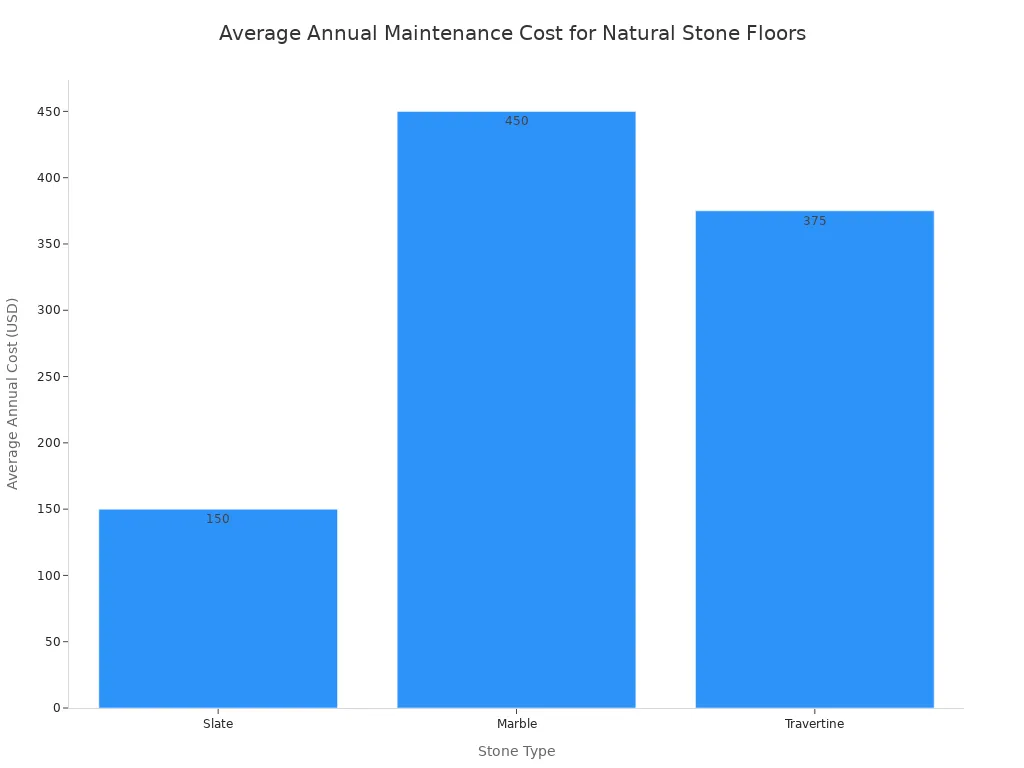
You can achieve a truly high-end look with natural stone flooring. Materials like marble, slate, and travertine bring unique patterns and textures into your home. Each stone tile is one-of-a-kind, creating a floor that is a work of art. Stone is incredibly durable and can last a lifetime with proper care. However, its maintenance needs vary significantly by type.
Note: Porous stones like marble and travertine require regular sealing to prevent stains and damage. You must use pH-neutral cleaners to avoid etching the surface.
Here is a look at the maintenance needs for popular stone types:
| Stone Type | Sealing Frequency | Daily Care | Maintenance Level |
|---|---|---|---|
| Slate | Every 3-5 years | Low-Moderate | Low-Moderate |
| Marble | Every 1-2 years | High | High |
| Travertine | Every 1-2 years | High | High |
The long-term costs also differ. Over 30 years, marble and travertine can cost thousands in maintenance, while slate remains a more affordable option.
If you want stone in a kitchen or bathroom, you should choose a type that resists stains and acids well.
- Granite and Quartzite: These stones are extremely hard and durable. They resist scratches, heat, and stains, making them excellent for busy kitchens.
- Soapstone: This stone is naturally non-porous and never needs sealing. It is resistant to stains and heat, though it is softer and can scratch.
- Slate: This is a durable, low-maintenance option. It resists stains and heat well, making it a practical choice for many areas.
Carpet: For Comfort and Subfloor Concealment
Carpet offers benefits that hard surfaces cannot match. It provides unparalleled softness and warmth underfoot, making rooms feel cozy and inviting. Carpet is also an excellent choice if your subfloor has minor imperfections. Its padding and texture can hide unevenness that would be a problem for a rigid material like vinyl plank flooring.
One of carpet’s biggest advantages is sound absorption. It quiets a room by absorbing sound waves instead of reflecting them. This reduces echo and minimizes noise transfer between floors. A floor’s ability to absorb sound is measured by its Noise Reduction Coefficient (NRC). A higher NRC means better sound absorption. While waterproof rigid vinyl plank flooring offers many benefits, it cannot compete with carpet’s acoustic properties.
| Material | NRC Range |
|---|---|
| Carpet | 0.20 – 0.50 |
| Drywall | 0.05 – 0.15 |
| Hard Floors | 0.10 – 0.35 |
For durability, you should pay attention to the carpet’s material.
- Nylon: This is an extremely durable synthetic fiber. It stands up to heavy foot traffic and resists wear, abrasion, and fading. Most nylon carpets are treated to be highly stain-resistant, making them perfect for homes with kids or pets.
- Wool: This natural fiber is very durable and hides soil well. It is naturally resilient and stain-resistant, offering a luxurious and long-lasting option.
Why Quality Matters: A Look at skspcflooring Standards
When you choose a new floor, not all products are created equal. The quality of the materials directly impacts your floor’s durability, appearance, and even your home’s air quality. High-quality manufacturers like skspcflooring focus on superior components to deliver a product you can trust. Understanding these standards helps you make a smarter investment.
The Importance of a Stable Core
The core is the backbone of your flooring plank. It provides stability and strength. A high-quality SPC (Stone Plastic Composite) floor uses a dense core made from a mixture of natural limestone powder and PVC. This composition gives the floor incredible rigidity. It also has a very low thermal expansion rate. This means your floor will not easily warp, shrink, or expand when temperatures change. This stability is crucial in rooms with direct sunlight or fluctuating humidity.
A quality SPC core typically includes:
- Limestone powder (calcium carbonate)
- Polyvinyl chloride (PVC)
- Stabilizers to ensure consistency
Advanced Wear Layers for Durability
The wear layer is your floor’s first line of defense against daily life. It protects the decorative layer from scratches, scuffs, and stains. While thickness matters, the material used is even more important. Advanced wear layers are infused with hardening agents like aluminum oxide or ceramic beads. These minerals dramatically increase scratch resistance. A thinner wear layer with these additives can easily outperform a thicker layer of standard urethane.
| Wear Layer Material | Performance Against Scratches |
|---|---|
| Ceramic Bead | Excellent resistance |
| Aluminum Oxide | Excellent resistance |
| Standard Urethane | Minimal resistance |
For a floor that stays beautiful in a busy home, you should look for a finish that includes these powerful hardening agents.
Meeting International Quality Certifications
Your flooring choice can affect the air you breathe. Some materials release Volatile Organic Compounds (VOCs), which are chemicals that can harm your health.
People spend about 90% of their time indoors. Choosing materials with low VOC emissions is essential for creating a healthy living space and reducing the risk of headaches, allergies, or respiratory issues.
Certifications like FloorScore® help you identify safer products. A FloorScore® label means the flooring has been independently tested and meets strict limits for VOC emissions. This ensures the product contributes to cleaner, healthier indoor air for you and your family.
Quick-Reference Flooring Decision Guide
Choosing the right floor can feel overwhelming with so many options available. This guide simplifies the process for you. It breaks down the key features of popular flooring materials. You can use this information to quickly compare each option and decide which one best fits your home, budget, and lifestyle.
Flooring Comparison: Key Factors at a Glance
Understanding the pros and cons of each material is crucial. The table below offers a side-by-side look at rigid vinyl, tile, engineered hardwood, and laminate. You can see how they stack up in terms of durability, water resistance, cost, and how easy they are to install yourself.
| Flooring Type | Durability | Water Resistance | Cost (Material) | DIY-Friendliness |
|---|---|---|---|---|
| Rigid Vinyl | Excellent | Excellent (Waterproof) | Mid-Range ($3-$8+ / sq ft) | Very Easy |
| Tile | Excellent (Porcelain) | Excellent (Waterproof) | Mid-Range ($3-$15 / sq ft) | Difficult |
| Engineered Hardwood | Good to Excellent | Fair to Good | Mid-Range ($3-$12+ / sq ft) | Professional install recommended |
| Laminate | Good | Fair to Good | Budget-Friendly ($1-$5 / sq ft) | Easy |
Tip: Cost is a major factor for any project. The price of flooring can vary widely depending on the material and quality. This chart shows the typical installed cost range for each option, helping you budget more effectively.
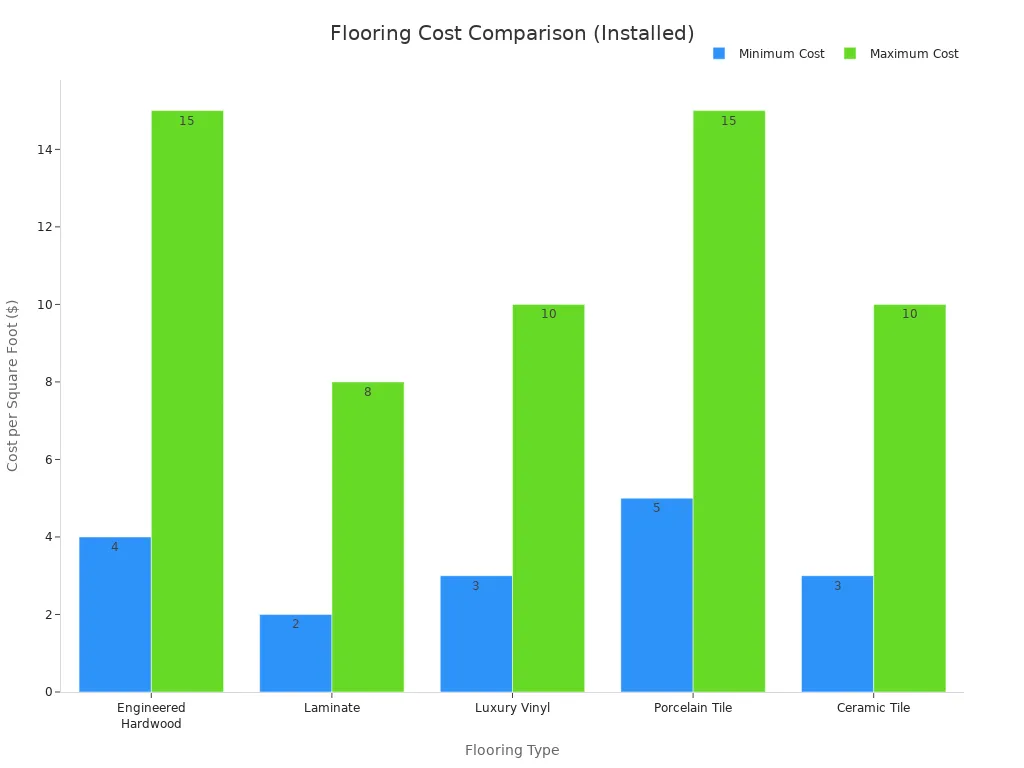
This quick comparison helps you see the trade-offs. For example, tile offers incredible durability and water resistance but is difficult to install. Laminate is budget-friendly and easy for a DIY project but offers less water resistance. By reviewing these key points, you can narrow down your choices and find the perfect floor for your needs.
You must match your flooring material to your environment’s specific demands. The popular waterproof rigid vinyl plank flooring is an excellent option for many applications. However, alternatives like tile or engineered hardwood may perform better under certain conditions. This luxury vinyl flooring is not always the perfect fit.
Before you make a final decision on your vinyl plank flooring, carefully assess your room. Consider its sunlight exposure, subfloor condition, and expected traffic. This ensures you invest in a vinyl plank flooring that will last for years.
FAQ
What is the most important factor when choosing a floor?
You should match your floor to your room’s specific needs. Consider the amount of sunlight, the condition of your subfloor, and daily foot traffic. This simple step ensures your new floor will perform well and last for years.
Is rigid vinyl a bad choice for a very sunny room?
Some vinyl floors can struggle with extreme heat. You should select a product with a stable, rigid core for better heat resistance. Always check the manufacturer’s guidelines for installation in areas with intense, direct sunlight.
How do I know if a floor is durable enough for my home?
You can check the product’s specifications for key features. A strong wear layer with ceramic beads or aluminum oxide provides excellent scratch resistance. A dense core offers stability and prevents dents, ensuring your floor handles daily life.
Which flooring adds the most resale value to a home?
Solid hardwood is the top choice for increasing home value. Homebuyers often seek its timeless, natural beauty. High-quality tile in kitchens and bathrooms also offers an excellent return on your investment and boosts your home’s appeal.




