

You may wonder, what is floating flooring? A floating floor is a clever installation method, not a specific material. You connect individual planks or tiles directly to each other. This process creates a single, unified surface. This surface creates a floating floor that rests over your subfloor without any glue or nails. The weight of the entire floating flooring system holds it securely in place.
Note: The key is that the floor is not attached to the subfloor. It “floats” as one large, interconnected piece.
What Is Floating Flooring and How Does It Work?
You now understand the basic idea behind a floating floor. So, what is floating flooring in practice, and how does it function without glue or nails? The magic lies in a combination of clever engineering and simple physics. The system works through a precise interlocking mechanism, and its own weight holds it firmly in place.
The Interlocking Mechanism
The heart of a floating floor is its interlocking system. Each plank or tile has specially designed edges that connect to its neighbors. Think of it like putting together a large, flat puzzle on your floor. This design creates a single, unified surface. Modern technology has made these connections incredibly strong and easy to work with.
Most systems fall into two main categories:
- Tongue & Groove (T&G): One side of a plank has a thin ridge (the “tongue”). The opposite side has a matching slot (the “groove”). You fit the tongue of one plank into the groove of another for a snug fit.
- Click-Lock: This is an advanced version of T&G. The edges have a unique profile that audibly “clicks” and locks together. This system requires no extra adhesive and makes installation fast. Innovations like the 5G Fold-Down system use a flexible tongue on the short end that locks when you press the plank down.
These locking systems are a key feature of today’s most popular floating flooring materials. You will find them on:
- Laminate Flooring: This durable option uses a high-resolution image to mimic wood or stone. Its click-lock system makes it a DIY favorite.
- Luxury Vinyl Plank (LVP): LVP is highly water-resistant and realistically imitates natural materials. The planks snap together easily, and some even have a pre-attached underlayment.
- Engineered Wood: This material gives you the authentic beauty of real wood with more stability. Many brands now use click-lock profiles for a simple floating floor installation.
How It Stays in Place
You might wonder how a floor that isn’t attached to anything can be stable. The answer is surprisingly simple: weight and friction. Once you connect all the planks, they form one large, heavy sheet of flooring. This collective weight is substantial. It presses the entire floating floor down firmly against the underlayment and subfloor.
The sheer mass of the floating flooring prevents it from sliding or shifting during everyday use. Friction between the floor’s backing, the underlayment, and the subfloor also helps keep everything stationary. Finally, baseboards or quarter-round molding are installed around the room’s perimeter. This trim covers the expansion gap and pins the edges of the floating floor down, securing it completely.
Why does it need to float? The design of a floating floor allows the entire surface to expand and contract as a single unit. Temperature and humidity changes in your home cause flooring materials to swell or shrink slightly. Because the floor is not nailed down, it can move without buckling or creating gaps. This is a crucial part of what is floating flooring and why it is so successful.
The Key Benefits of a Floating Floor

The popularity of the floating floor method comes from its many practical advantages. You will find that these benefits make it an attractive option for nearly any renovation project. It saves you time, reduces costs, and opens up a world of design possibilities. Let’s explore the key benefits you can expect.
Cost-Effective and DIY-Friendly
One of the biggest draws of a floating floor is its affordability. You save money in two major ways: materials and labor. The installation process is designed for simplicity. This means you can confidently tackle the project yourself, eliminating the need to hire a professional installer. This DIY-friendliness translates directly into significant cost savings.
Even if you choose to hire a professional, the installation cost for a floating floor is typically lower than for other methods. The process is faster and requires less prep work and fewer specialized materials. You can see the average cost difference in the table below.
| Installation Method | Average Cost Per Square Foot (including materials and labor) |
|---|---|
| Floating | $5 to $10 |
| Glue-Down | $6 to $20 |
| Nail-Down | $8 to $15 |
As you can see, the floating method is the most budget-friendly choice. Glue-down installations are often the most expensive and labor-intensive, making a floating floor an excellent value.
Quick and Simple Installation
Your time is valuable. A floating floor installation respects that. Traditional methods like nailing or gluing can take days. You have to handle messy adhesives, wait for them to dry, or use loud power tools. A floating floor changes the game entirely.
The click-lock systems allow you to connect planks quickly and easily. You simply snap the pieces together like a puzzle. There is no glue to spread and no nails to drive. Because of this, you can often walk on your new floor immediately after you lay the last plank. A project that might take a weekend with other methods could be finished in just one afternoon.
Versatility in Materials and Styles
You are not limited in your design choices with this installation method. In fact, floating flooring opens up a huge range of options. Most modern flooring materials are now designed to be floated. This includes popular choices like laminate, luxury vinyl plank (LVP), and even engineered hardwood flooring.
You can also find unique and sustainable materials designed for floating installation. Bamboo, for example, is a fantastic option that comes in several forms:
- Solid Strand Bamboo Click-Lock: This type offers incredible hardness (up to three times harder than oak) and is a solid material throughout. You can refinish it multiple times, extending its life.
- Engineered Strand Bamboo: This version combines a tough bamboo wear layer with a more stable core. It is a great choice for basements or areas with some humidity changes. Many types of engineered hardwood flooring use a similar construction.
- Rigid Core Bamboo (SPC): This is a 100% waterproof option. It features a high-density limestone core for maximum stability and often comes with a pre-attached underlayment for even faster installation.
Tip: The realism of modern floating floors is truly amazing. Manufacturers use advanced technology to create styles that look and feel just like natural materials.
To achieve this realism, companies use several techniques. A high-definition digital printing process creates a decor layer with photorealistic images of wood or stone. This technology captures every knot, grain, and color variation. Many premium products also feature Embossed-in-Register (EIR) texture. This technique aligns the surface texture with the printed image, so you can actually feel the wood grain exactly where you see it. Finally, details like beveled plank edges add depth and definition, making it difficult to tell the difference between a floating floor and real hardwood or stone.
Adapts to Subfloor Imperfections
You can often install a floating floor directly over your existing subfloor. This is a huge advantage. Many homes have subfloors that are not perfectly flat. Traditional flooring methods require an almost perfect surface. A floating floor is more forgiving. It can “bridge” over minor low spots and ride over small bumps without a problem. This flexibility saves you a significant amount of time and money on subfloor preparation.
This does not mean you can ignore the condition of your subfloor completely. The floor needs a reasonably flat base to perform correctly. Most manufacturers provide specific guidelines for subfloor flatness. If your subfloor has major issues, the locking systems can come under stress, leading to squeaks or gaps.
Here are the typical tolerances you should know:
- Most experts agree that the subfloor should not have any dips or bumps greater than 3/16 of an inch over a 10-foot span.
- Another common standard is a flatness tolerance of 1/8 of an inch over a 6-foot span.
Important Note on Your Warranty 📝 You must always check the installation guide for your specific product. For a valid floating floor warranty, many manufacturers require a stricter subfloor flatness. A common requirement is a tolerance of 1/8 of an inch within a 10-foot radius. Failing to meet this standard could void your warranty, so taking the time to check and level your subfloor is a crucial step.
Understanding the Floating Floor Installation Process
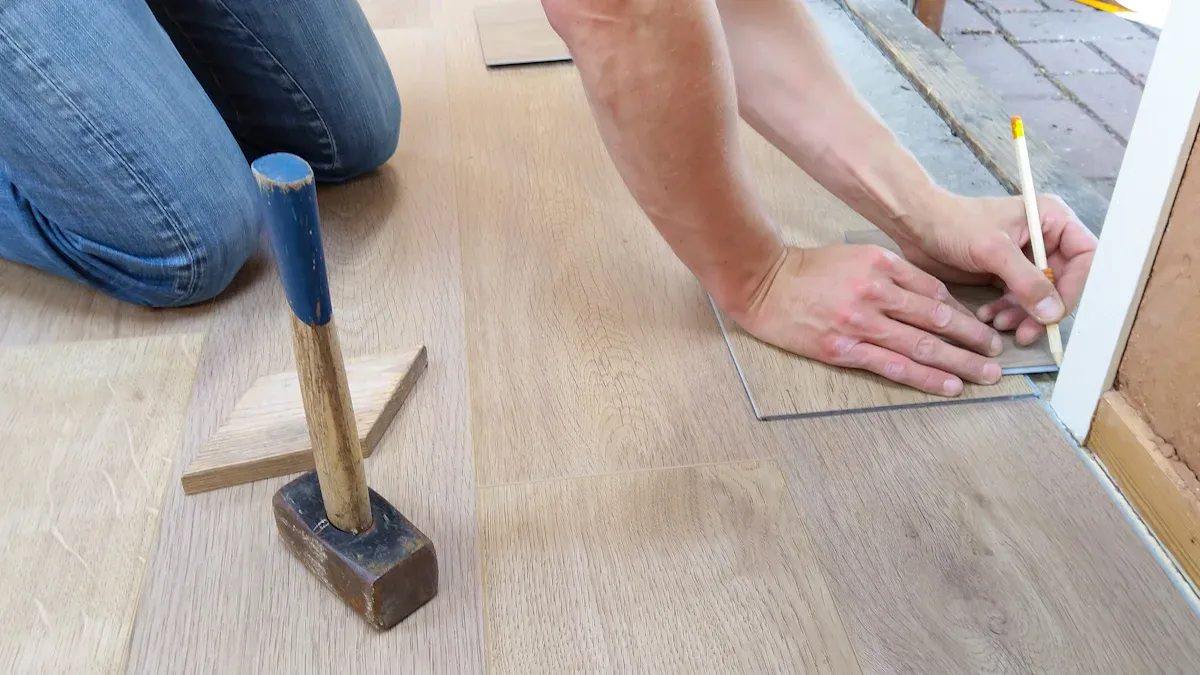
The floating floor installation process is straightforward, but success depends on careful preparation. You need to prepare the subfloor, choose the right underlayment, and lay the planks correctly. Following these steps ensures your new floor looks great and lasts for years.
Preparing the Subfloor
You must start with a solid foundation. First, ensure your subfloor is clean. A basic scrape and sweep is usually enough. You just need to remove any debris, dirt, or loose materials. Next, check if the subfloor is flat. A floating floor can handle minor imperfections, but significant dips or bumps will cause problems.
If your wood subfloor needs leveling, you can use a self-leveling compound. This part of the installation process requires a few key steps:
- Apply a quality primer to the wood. This helps the leveler stick and prevents air bubbles.
- Secure a metal lath (a mesh grid) over the primed wood with screws. This reinforces the leveling compound.
- Mix and pour the self-leveling concrete. You can use a gauge rake to spread it evenly.
- Let the compound cure completely before you begin the floating floor installation.
The Role of Underlayment
Underlayment is a thin layer of material you place between the subfloor and your new floating floor. You should not skip this step. Underlayment provides stability and cushioning. It also dampens sound, which reduces the hollow noise you might hear when walking on the floor. Some types even offer thermal insulation, helping your room feel warmer.
You have several types of underlayment to choose from:
- Foam: This is a popular and affordable choice. Many foam products come with a built-in vapor barrier, which is great for concrete subfloors.
- Felt: Made from recycled fibers, felt is a breathable option that offers good sound dampening. You will need a separate vapor barrier if you use it in moist areas.
- Cork: This is a premium, eco-friendly option. Cork provides excellent sound absorption and natural antimicrobial properties.
Laying the Planks
Now you can start laying the planks. The most important technique is to stagger the seams. You should never align the short ends of planks in adjacent rows. This creates weak “H-joints” and looks unprofessional.
A simple rule helps you create a strong, random pattern. You should make sure the end joints of planks in neighboring rows are at least six inches apart. For wider planks, you can increase this distance to 10 inches. This simple step ensures the structural integrity of your floating floor and gives it a professional, natural appearance.
Potential Downsides to Consider
A floating floor offers many benefits, but you should also be aware of a few potential drawbacks. Understanding these issues helps you make the best choice for your home and ensure a successful installation.
Sound and Feel Underfoot
You might notice that a floating floor can sometimes produce a hollow or clicking sound when you walk on it. This happens because there is a small, empty space between the flooring and the subfloor. The sound is more noticeable with thinner, less dense materials. However, you can easily solve this problem. Using a high-quality underlayment provides cushioning that absorbs sound and makes the floor feel more solid underfoot.
The Importance of Expansion Gaps
You must leave a small space around the perimeter of the room during installation. This is called an expansion gap. Flooring materials naturally expand and contract with changes in temperature and humidity. This gap gives the floor room to move.
What happens if you skip the gap? ⚠️ Without space to expand, the planks will push against each other and the walls. This pressure can cause serious problems:
Most manufacturers recommend an expansion gap between 1/4 inch and 1/2 inch. You will hide this gap with baseboards or quarter-round trim after the installation is complete.
Susceptibility to Moisture in Certain Areas
While many materials offer excellent moisture resistance, the installation method itself does not create a waterproof seal. Moisture from a concrete subfloor or a damp basement can still seep up from below. This trapped moisture can cause warping, buckling, or even mold growth under your new floor.
To protect your investment, you must use a vapor barrier when installing over concrete or in any moisture-prone area. This thin sheet of plastic blocks moisture from reaching the flooring. Many underlayments include a built-in vapor barrier for convenience. Using one is often required to keep your product warranty valid, so you should never skip this step. Good moisture resistance is key, but protecting the floor from below is just as important.
So, what is floating flooring? It is a fast, affordable, and versatile installation method perfect for modern homes. You can achieve a high-end look on a budget, much like renovators who transform entire floors for around $1,500. With future innovations like smart technology and sustainable materials, floating flooring is set to become even more popular. A floating floor is an excellent choice for your next DIY project. This floating floor provides a practical and stylish solution you can install in a weekend.
FAQ
Can you install a floating floor in a bathroom?
You should use caution in full bathrooms. Water can seep through the seams and get trapped underneath, which can cause mold. For these wet areas, you must choose a 100% waterproof material like rigid core vinyl or bamboo to protect your subfloor.
Can you place heavy furniture on a floating floor?
Yes, you can place heavy items on your floating floor. The floor distributes the weight across many planks. You should use felt pads under furniture legs. This simple step prevents scratches and allows the floor to expand and contract naturally.
Do you always need underlayment for a floating floor?
Yes, you almost always need underlayment. It absorbs sound and adds comfort underfoot. Some flooring products already have an underlayment attached to each plank.
Tip: You should always check the manufacturer’s installation guide. Following the guide is necessary to keep your product warranty valid.




