

Choosing the right vinyl plank flooring thickness is crucial for your home. The thickness directly impacts the flooring’s performance and durability. A thicker vinyl plank often provides better resistance to wear and tear. For instance, a 20 mil wear layer can offer up to 30% better scratch resistance compared to thinner options.
When selecting the thickness, consider your lifestyle and budget. High-traffic areas may require thicker vinyl flooring for long-lasting beauty and functionality. Balancing these factors will help you make the best decision for your space.
Understanding Vinyl Plank Flooring Thickness

When you consider vinyl plank flooring thickness, you encounter a range of options that can significantly affect your flooring experience. Vinyl plank flooring thickness typically ranges from 2mm to 12mm. Each thickness level serves different purposes and environments.
Standard Thickness Measurements
Here’s a breakdown of the standard thickness measurements available in the market:
| Thickness (mm) | Typical Use & Benefits | Example Products & Features |
|---|---|---|
| 2–3 mm | Budget-friendly, glue-down option; suitable for residential or light commercial use. | Happy Feet Dubai (2mm, 12 mil wear layer), Shaw Modeled Oak (2mm, 6 mil wear layer) |
| 4 mm | Entry-level thickness for homeowners; durable for high-traffic residential areas. | Happy Feet Foxwood (4.5mm, 20 mil wear layer), Happy Feet Rodeo Drive (4.5mm, SPC core, 20 mil wear layer) |
| 5 mm | Enhanced durability and premium feel; better sound absorption and stability. | Happy Feet European Oak (5.7mm, SPC core, 20 mil wear layer, acoustical cushion), Happy Feet Beachwood (5mm) |
| 7 mm | High durability and luxury; superior sound insulation and comfort. | TRUcor Blonde Oak (7mm, SPC core, 20 mil wear layer), COREtec Blended Cocoon (7.5mm, floating or glue) |
| 8 mm | Commercial-grade performance; withstands heavy foot traffic in commercial spaces. | Happy Feet Oxford (8mm, ceramic bead finish), COREtec Mari Travertine Tile (commercial durability) |
| 12 mm | Top-tier luxury and durability; maximum stability and comfort. | COREtec Virtue Oak (12mm, WPC core, 30 mil wear layer), Shaw Vintage Leather (commercial grade durability) |
Thicker vinyl planks generally provide better comfort and stability. They resist dents and scratches more effectively, especially in busy households. For instance, luxury vinyl plank flooring usually ranges from 5 to 8 millimeters thick, enhancing durability and sound insulation. A thicker wear layer, ideally 20 mils or more, significantly improves scratch resistance, making thicker planks the best choice for high-traffic areas.
Sound Insulation Properties
The thickness of vinyl flooring also plays a crucial role in sound insulation. Thicker planks, such as those around 8 mm, offer better noise reduction. While the wear layer primarily affects durability, the overall thickness contributes to sound insulation properties. Thicker vinyl planks absorb vibrations better, reducing both impact and airborne noise.
Installation Considerations
Installation methods vary based on thickness. Thinner vinyl planks are often used for glue-down applications, while thicker options (4-10mm) are common for floating or click-lock installations. If you have a concrete subfloor, consider thicker vinyl or vinyl with attached underlayment to improve comfort and noise reduction.
Common Misconceptions
Many consumers believe that thicker always means better. However, thickness alone does not guarantee quality. A strong wear layer is essential for durability. Some thinner planks with solid wear layers perform well in low-traffic areas. Understanding the relationship between thickness, wear layer, and overall plank construction is vital for making an informed decision.
Manufacturers determine optimal thickness by considering factors like wear layer thickness, installation type, and use environment. For example, they recommend thicker wear layers for high-traffic commercial spaces to ensure durability.
Importance of the Wear Layer in Vinyl Flooring
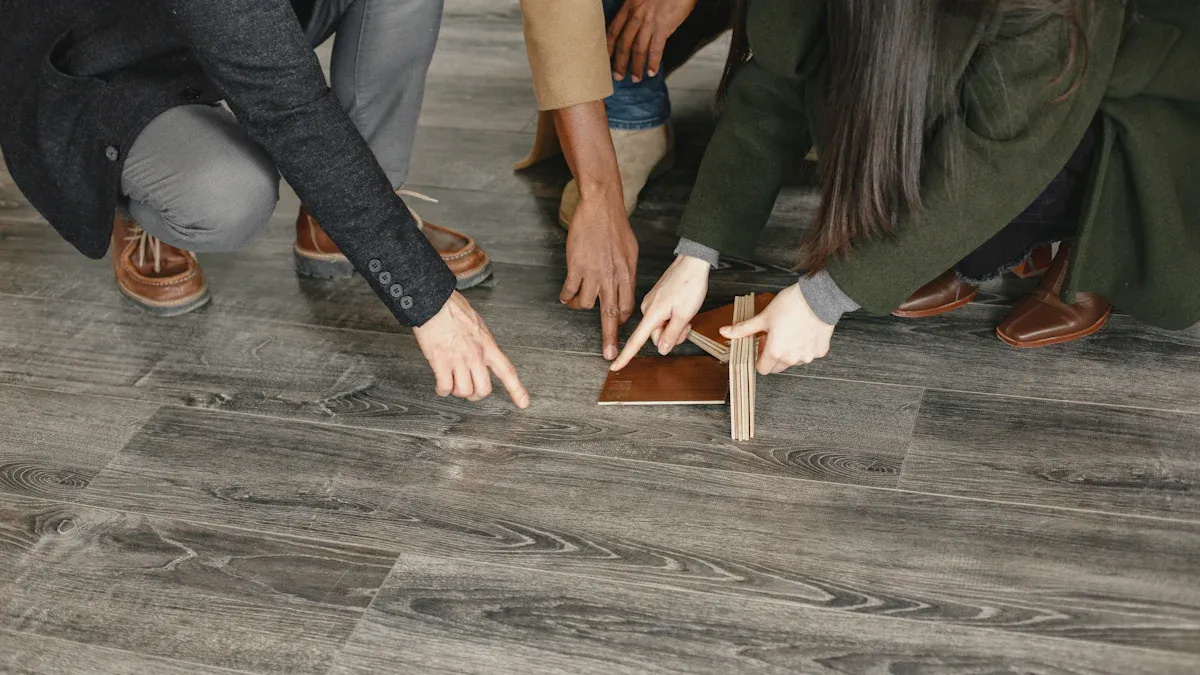
The wear layer is a crucial component of vinyl flooring. It acts as the protective shield against scratches, stains, and general wear. When you choose vinyl flooring, pay close attention to the thickness of this layer. A thicker wear layer often means better durability and longer-lasting beauty.
For high-traffic areas, such as commercial spaces, the wear layer thickness should be at least 20 mil. This thickness meets the ASTM specification for heavy commercial traffic flooring. In fact, for the most demanding environments, wear layers can reach up to 40 mil. Here’s a quick overview of wear layer thickness recommendations based on commercial use:
| Commercial Use Level | Wear Layer Thickness (mil) | Approximate Thickness (mm) | Description |
|---|---|---|---|
| Light Commercial Use | 20 – 28 | 0.5 – 0.7 | Suitable for moderate foot traffic; 20 mil is the entry point for commercial applications. |
| General Commercial Use | 28 – 30 | 0.7 – 0.76 | For consistent heavy foot traffic; provides resilience under constant use and rolling loads. |
| Heavy Commercial Use | 30 and above (up to 40) | 0.76 – 1.0 | For the most demanding environments; engineered for extreme abrasion and heavy loads. |
You’ll also notice that manufacturers often extend warranty periods as the wear layer thickness increases. For example, a wear layer of 20 mil typically comes with an 8-year commercial warranty. In contrast, a thicker layer of 40 mil can offer warranties up to 20 years. This correlation shows that a thicker wear layer not only enhances durability but also reflects the manufacturer’s confidence in their product.
Factors Influencing Vinyl Floor Thickness Choice
When selecting vinyl floor thickness, several factors come into play. Understanding these factors helps you make an informed decision that suits your needs. Here are the key considerations:
-
Foot Traffic Volume: The amount of foot traffic in an area significantly impacts your choice of vinyl flooring thickness. For high-traffic areas, such as commercial spaces or busy households, you should opt for a thicker wear layer of 20 mil or more. This thickness ensures durability and protection against wear and tear. In contrast, moderate foot traffic areas typically require a 12 mil wear layer, which suffices for most residential settings.
-
Subfloor Condition: The state of your subfloor is crucial in determining the appropriate vinyl plank thickness. If your subfloor is sturdy and even, you may not need very thick vinyl planks. However, if your subfloor has imperfections, thicker planks can mask these flaws and provide better stability. A smooth and level subfloor allows for thinner vinyl flooring, while an uneven subfloor necessitates thicker options to ensure a flawless surface.
-
Environmental Factors: Environmental conditions, such as temperature fluctuations and humidity levels, also influence your choice. For instance, SPC (Stone Plastic Composite) cores with high limestone content offer durability and stability, making them suitable for areas with temperature changes. In humid climates, thicker luxury vinyl flooring performs better, as it resists warping and swelling. Proper acclimation of the flooring to the local climate is essential. Leaving the flooring in the installation environment for at least 48 hours allows it to adjust to temperature and humidity levels.
-
Installation Method: The installation method you choose can affect the thickness of the vinyl flooring. Glue-down installations require a dry, level, and debris-free subfloor to ensure adhesive performance. This method is sensitive to environmental conditions, which can influence your choice of plank thickness. Floating or click-lock systems, on the other hand, accommodate subfloor irregularities better than glue-down methods.
-
Moisture Levels: Moisture testing is critical, especially in basements or on concrete slabs. High moisture levels can lead to mold or adhesive failure. Therefore, selecting thicker vinyl flooring with enhanced water resistance is advisable in such areas.
By considering these factors, you can select the right vinyl floor thickness that meets your specific needs and ensures long-lasting performance.
Recommended Vinyl Plank Thickness for Different Applications
Selecting the right thickness for vinyl plank flooring depends on the specific application. Different rooms and environments have unique requirements. Here’s a guide to help you choose the best thickness for various spaces:
| Room Type | Recommended Vinyl Plank Thickness | Key Considerations |
|---|---|---|
| Bedrooms | 4 to 6 mm | Moderate foot traffic; balance of comfort and durability |
| Kitchens | 6 to 8 mm | High moisture and traffic; requires better stability and moisture resistance |
| Basement | 5 mm or thicker | Waterproof core to handle moisture and uneven subfloors |
| Living Room | 5 mm to 6 mm | Focus on durability, comfort, and sound absorption |
In bedrooms, you can opt for 4 to 6 mm thick planks. This thickness provides a comfortable feel while handling moderate foot traffic. For kitchens, where moisture and traffic levels are higher, choose planks that are 6 to 8 mm thick. This ensures better stability and moisture resistance.
Basements require special attention due to potential moisture issues. You should select vinyl planks that are at least 5 mm thick with a waterproof core. This choice helps manage moisture and uneven surfaces effectively. In living rooms, a thickness of 5 to 6 mm is ideal. This thickness balances durability and comfort, making it suitable for high-traffic areas.
For rental properties, durability is key. You should consider vinyl planks with a thickness of 6.5 mm to 12 mm. A wear layer of at least 12 mil is recommended to withstand tenant wear and tear. Thicker wear layers, such as 20 to 30 mil, provide enhanced durability, especially in busy settings.
By understanding these recommendations, you can make informed decisions that suit your specific needs. Whether you choose luxury vinyl flooring or standard options, the right thickness will ensure long-lasting performance and satisfaction.
Budget Considerations for Vinyl Flooring Thickness
When selecting vinyl flooring, your budget plays a significant role in determining the thickness you choose. Thicker vinyl planks generally cost more due to their enhanced durability and features. Understanding the cost differences can help you make an informed decision.
Here’s a breakdown of how costs vary with different thicknesses:
| Vinyl Plank Type | Thickness/Quality Characteristic | Cost per Square Foot Range |
|---|---|---|
| Standard Vinyl Plank | Thinner, moderate durability | $2 to $7 |
| Luxury Vinyl Plank | Thicker top layer, higher durability and moisture resistance | $3 to $10 |
As you can see, thicker luxury vinyl planks often cost more. This increase is due to their better durability and easier installation. You might find that the cost rises with both plank thickness and quality.
If you consider mid-tier vinyl plank flooring, expect to pay between $3.50 and $4.50 per square foot. These options usually feature a thickness of around 5 mm and a 12 mil wear layer. They often include waterproof cores and attached pads. On the other hand, premium options start at $6 and can exceed $7 per square foot. These premium products offer thicker wear layers, micro-beveled edges, and sound-deadening pads.
Long-term maintenance costs also differ between thin and thick vinyl flooring. Thinner options may lead to higher long-term costs due to damage and repair complexity. In contrast, thicker vinyl planks tend to have lower long-term costs because they are more durable and easier to repair.
When to Consult Experts on Vinyl Plank Flooring
Choosing the right vinyl plank flooring thickness can be challenging. You may want to consult an expert in several scenarios to ensure you make the best decision. Here are some common situations where expert advice is beneficial:
-
High-Traffic Areas: If you plan to install flooring in a busy space, such as a hallway or living room, a thicker wear layer is essential. Experts can recommend options that provide durability and resistance to scratches and wear.
-
Moisture-Prone Rooms: Kitchens, bathrooms, and basements often face moisture issues. Consulting a professional helps you select the appropriate installation method, such as glue-down, which offers better water resistance.
-
Complex Installation Needs: If your subfloor has issues or requires special preparation, experts can assist with ensuring a level and flawless installation. This step is crucial for the longevity and appearance of your flooring.
Flooring experts assess the suitability of vinyl plank thickness by focusing on several key factors:
-
Traffic Levels: They recommend different wear layer thicknesses based on the expected foot traffic. For example:
- 6-12 mil: Suitable for low to moderate residential traffic, like bedrooms.
- 12-20 mil: Recommended for high-traffic residential and light commercial areas, such as kitchens and hallways.
- 20+ mil: Best for heavy commercial environments, including retail stores and schools.
-
Installation Method: Experts consider how you plan to install the flooring. Glue-down vinyl tends to be thinner and stable, while click-lock or floating floors are thicker and provide added comfort.
-
Subfloor Type: The type of subfloor also influences thickness choice. Concrete subfloors benefit from thicker vinyl (6mm+) for comfort and noise reduction.
Consulting with flooring professionals ensures you select the right vinyl flooring installation for your specific needs. Their expertise can save you time and money in the long run.
Selecting the right vinyl plank flooring thickness involves several key factors. Consider the following:
- Total plank thickness affects comfort, sound insulation, and the ability to hide subfloor imperfections.
- Wear layer thickness is critical for durability. Aim for at least 8 mil for residential use and 20 mil for commercial spaces.
- Balance your budget with durability. Thicker planks offer better comfort and longevity but come at a higher cost.
Consulting with flooring experts can provide personalized advice tailored to your specific needs. They can help you navigate choices based on your environment, usage, and budget, ensuring you make the best decision for your home. 🏡
FAQ
What is the ideal thickness for residential vinyl plank flooring?
For residential use, a thickness of 4 to 6 mm is ideal. This range provides a good balance of comfort and durability for moderate foot traffic areas.
How does the wear layer affect vinyl plank flooring?
The wear layer protects against scratches and stains. A thicker wear layer, typically 20 mil or more, enhances durability, making it suitable for high-traffic areas.
Can I install vinyl plank flooring over existing floors?
Yes, you can install vinyl plank flooring over existing floors, provided they are clean, dry, and level. Thicker planks often work better for this type of installation.
How do I maintain vinyl plank flooring?
To maintain vinyl plank flooring, regularly sweep or vacuum to remove dirt. Use a damp mop with a gentle cleaner for deeper cleaning. Avoid harsh chemicals that can damage the surface.
Is thicker vinyl plank flooring always better?
Not necessarily. While thicker planks offer better durability and comfort, the right choice depends on your specific needs, such as foot traffic and subfloor conditions. Always consider wear layer thickness as well.




