
You want your home to look great and last for years. The wear layer in luxury vinyl flooring is the secret to a strong and beautiful floor. This clear top layer protects vinyl flooring from scratches, scuffs, and daily wear. If you choose the right wear layer thickness, you will enjoy durable vinyl flooring and save on maintenance cost. Check the table below to see how wear layer thickness affects your home:
| Traffic Zone | Recommended Wear Layer Thickness | Durability Focus |
|---|---|---|
| High-Traffic Zones | Minimum 20 mil luxury vinyl plank | Maximum durability against constant activity |
| Moderate-Traffic Zones | 12 mil luxury vinyl plank | Balance of cost and durability |
| Low-Traffic Zones | 6-8 mil luxury vinyl tile | Budget-friendly option for minimal daily abuse |
Choosing the best wear layer for your home means less stress and more value. You can match luxury vinyl tile or luxury vinyl plank to your needs. Vinyl plank flooring thickness matters, but wear layer is what keeps your home safe from wear and tear. If you select luxury vinyl flooring with the right wear layer, you will keep your home looking new and reduce replacement cost.
Wear Layer Numbers and Vinyl Plank Flooring Thickness Explained
What Is the Wear Layer and Why Does It Matter?
You see the wear layer as the clear, protective coating on top of vinyl plank flooring. This layer acts as your floor’s first defense against scratches, scuffs, and stains. Industry standards define the wear layer as the transparent shield applied to luxury vinyl plank and tile. You measure its thickness in mils, which tells you how much protection your floor gets and how long it will last. When you choose a thicker wear layer, you increase the durability and lifespan of your vinyl flooring. You also help preserve the look of your floors for years.
Tip: Always check the wear layer number before buying vinyl plank flooring. It shows how well your floor will handle daily wear.
Wear Layer vs. Overall Vinyl Plank Flooring Thickness
You might wonder how the wear layer compares to the overall vinyl plank flooring thickness. The wear layer focuses on protection, while the total thickness includes the core and backing. You measure vinyl plank flooring thickness in millimeters. Most residential products range from 2 mm for basic options to 8 mm or more for premium choices. The wear layer thickness is measured in mils, with common options like 8 mil, 12 mil, 20 mil, and even 40 mil for heavy-duty needs.
| Feature | Wear Layer | Overall Thickness |
|---|---|---|
| Measurement | Measured in mils | Measured in millimeters |
| Function | Determines scratch and stain resistance | Total product measurement including core and backing |
| Example | 6-mil wear layer vs. 20-mil wear layer | 6mm overall thickness vs. 5mm overall thickness |
| Importance | Prioritize for durability | Less critical for performance |
You should prioritize the wear layer for durability. The overall thickness affects comfort and sound, but the wear layer gives you the best protection against damage.
How the Wear Layer Protects Your Flooring
The wear layer shields the print design of vinyl plank flooring from daily wear and serious damage. It acts as a barrier against spills and scratches that could harm the print film underneath. You find that different types of wear layers, such as urethane or enhanced coatings, offer varying levels of protection. A thicker wear layer means greater durability and longevity. You also help the environment by choosing luxury vinyl plank flooring made with recycled materials. This reduces waste and supports sustainable practices. When you select a product with a strong wear layer, you protect your investment and keep your home looking beautiful.
How Wear Layer Thickness Affects Durability and Performance
Scratch Resistance and Everyday Wear
You want your floors to look new for years. The wear layer on vinyl plank flooring acts as a shield against scratches, dents, and scuffs. When you walk across your floor with shoes, move furniture, or drop objects, the wear layer takes the impact. Thicker wear layers give you better surface durability and help your floors resist damage from daily activities.
Manufacturers use several tests to measure how well vinyl floors handle scratches and wear. These include:
- Simulated foot traffic tests
- Impact resistance measurements
- Scratch resistance evaluations using standardized tools
Laboratories also use the EN 16094 A & B Micro-Scratch Resistance test and the ASTM F410-02 standard to check the strength of the wear layer. These tests show that thicker wear layers protect your floors better in busy homes.
You can see how different brands perform in the table below. Products with a thicker wear layer, like Flooret’s Modin and NuCore, get higher ratings for scratch resistance and everyday wear.
| Product Name | Wear Layer Thickness | Performance Rating |
|---|---|---|
| Flooret’s Modin | 20 mil to 40 mil | Better durability with thicker options |
| CoreLuxe | 6 mil to 28 mil | Best wear layer at 20 mil |
| SMARTCORE | 12 mil | Less durable compared to CoreLuxe |
| LifeProof | 6 mil to 30 mil | Good performance despite thinner layer |
| NuCore | 22+ mil | Superior scratch and dent resistance |
| Home Decorators Collection | 6 mil to 12 mil | Varies in performance based on thickness |
| TrafficMaster | 6 mil | Lower performance due to thinner layer |
Tip: For maximum durability, choose a vinyl plank with a thicker wear layer if you have pets, kids, or heavy foot traffic.
Lifespan and Long-Term Value of Your Flooring
The thickness of the wear layer affects how long your vinyl floors last. A thicker wear layer offers better protection against scratches and dents. This is especially important in high-traffic areas like kitchens, hallways, and entryways. When you select the right wear layer thickness, you extend the lifespan of your floors and get more value for your money.
The table below shows how wear layer thickness relates to expected lifespan:
| Wear Layer Thickness | Expected Lifespan |
|---|---|
| 20+ mil | Up to 20 years |
| 10 mil or less | 5-10 years |
Thicker wear layers provide enhanced protection against wear and tear. They are ideal for busy homes and commercial spaces. Choosing the right thickness is crucial based on how much foot traffic you expect. You want your investment to last, so match the wear layer to your needs.
Common Wear Layer Thicknesses: Mils vs. Millimeters
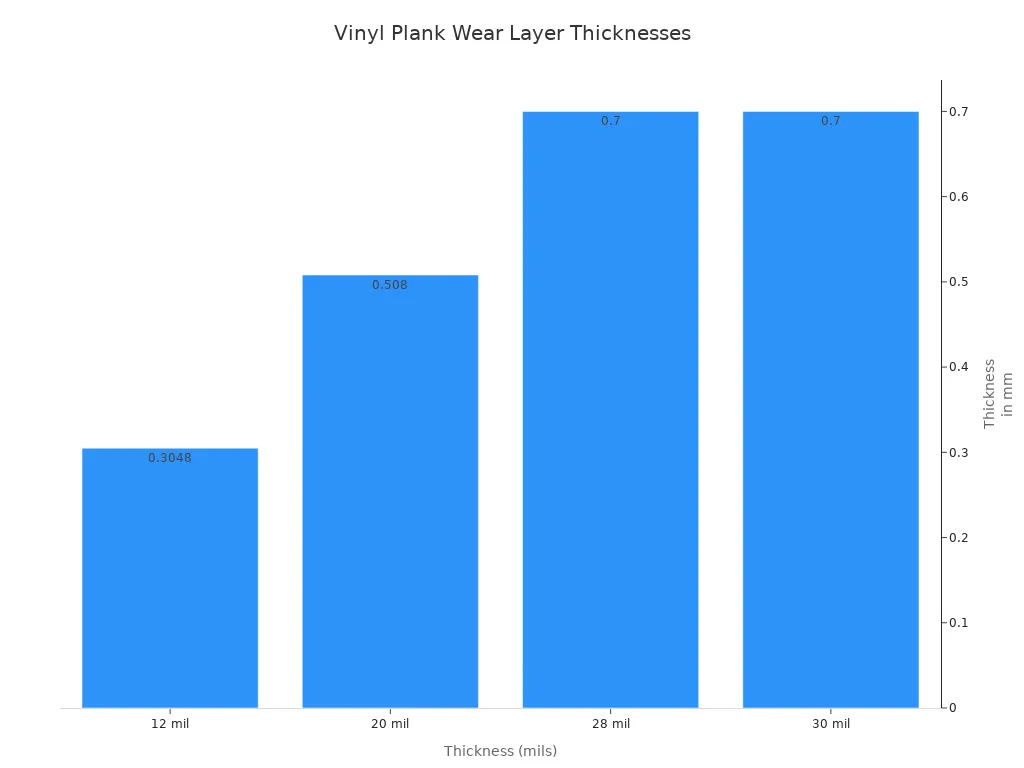
You will see wear layer thickness listed in mils or millimeters. One mil equals 0.0254 millimeters. Most residential vinyl plank flooring comes with wear layers between 12 mil and 30 mil. The table below shows the most common options:
| Thickness (mils) | Thickness (mm) |
|---|---|
| 12 mil | 0.3048 mm |
| 20 mil | 0.508 mm |
| 28 mil | >0.7 mm |
| 30 mil | >0.7 mm |
You should always check the product label for the wear layer number. This helps you compare options and choose the best one for your home. Remember, a thicker wear layer means better protection and longer-lasting floors.
Note: Wear layer thickness is the key factor for surface durability, not just the total thickness of the plank.
Choosing the Right Wear Layer Thickness for Your Home

Matching Wear Layer to Low, Moderate, and High-Traffic Areas
You want your residential flooring to last. The right wear layer protects your vinyl from daily wear and keeps your home looking fresh. Manufacturers suggest matching the wear layer thickness to the amount of foot traffic in each space. Use this table to guide your choice:
| Traffic Level | Recommended Wear Layer Thickness |
|---|---|
| Moderate Traffic | 6, 8, or 12 mil |
| High Traffic | 20 mil or thicker |
High-traffic areas like kitchens and entryways need thicker wear layers. Low-use spaces, such as guest bedrooms, can use thinner options. This approach helps you get the most value from your flooring investment.
Best Wear Layer for Homes with Kids, Pets, and Busy Lifestyles
Busy homes need extra protection. If you have children, pets, or frequent visitors, you should choose a wear layer thickness of 20 mil or higher. Thicker wear layers guard against scratches, spills, and dents. You protect your investment and keep your high-quality flooring looking new. This choice also reduces the need for repairs and replacement.
Tip: Thicker wear layers are a smart choice for families who want their vinyl to handle everyday challenges.
Room-by-Room Recommendations for Flooring Thickness
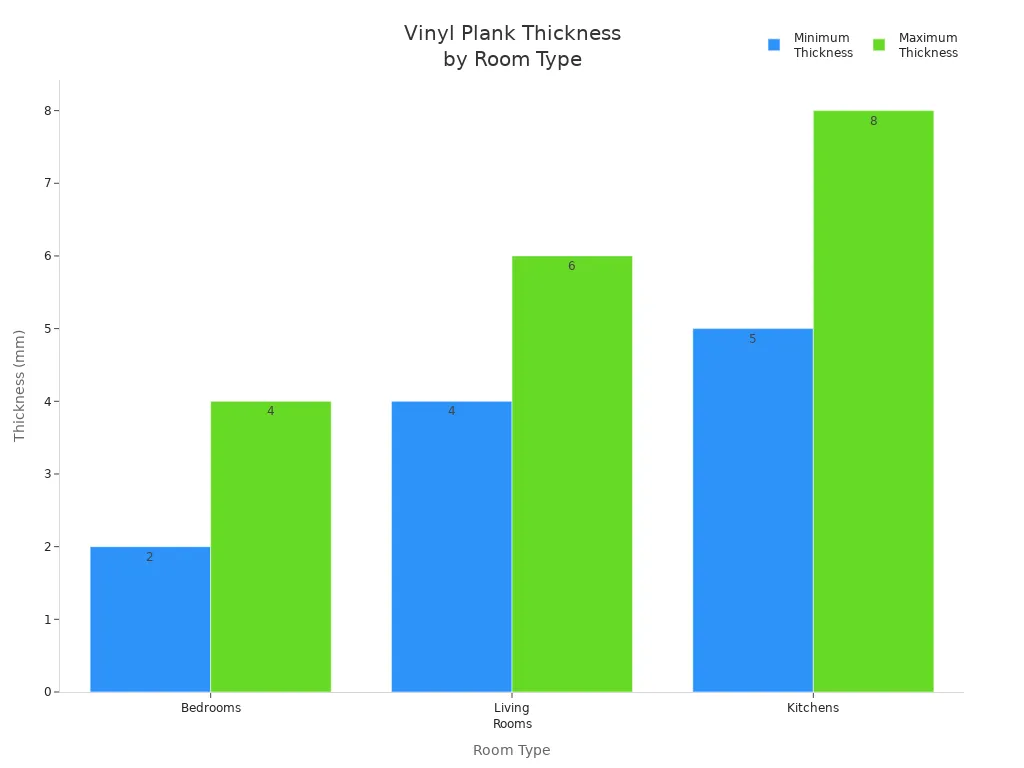
Each room in your home has different needs. Bedrooms see less activity, while kitchens and living rooms face more wear. Use this table to select the best vinyl thickness for each space:
| Room Type | Recommended Thickness | Notes |
|---|---|---|
| Bedrooms | 2-4mm | Suitable for low-traffic areas. |
| Living Rooms | 4-6mm | Added durability for family spaces. |
| Kitchens | 5-8mm | Needed for moisture resistance and cleaning. |
You make a smart flooring investment when you match the right wear layer and thickness to each room. High-quality flooring in busy spaces means your residential flooring will last longer and look better.
Avoiding Common Misconceptions About Wear Layer and Flooring Thickness
Wear Layer vs. Total Plank Thickness: What Really Matters
You may hear that thicker vinyl planks always mean better floors. This is not always true. The wear layer protects your vinyl from scratches and damage. The total plank thickness affects how the floor feels and how easy it is to install. Many people confuse these two features. You should focus on the wear layer when you want long-lasting vinyl. A thicker wear layer gives you better protection and more years of use. The overall plank thickness helps with comfort and stability, but it does not protect against daily wear.
Common misconceptions include:
- Thinking that a thicker plank always means a stronger floor.
- Believing that the wear layer and total thickness do the same job.
- Overlooking the importance of the wear layer for durability.
Understanding Product Labels and Marketing Claims
You will see many labels and claims when shopping for vinyl. Some brands highlight the wear surface, while others focus on the wear layer. These are not the same. The wear layer is a clear, measurable part of the vinyl. The wear surface is a thin coating that adds extra resistance. You should check the label for the actual wear layer thickness, measured in mils. This number tells you how much protection your vinyl will have.
| Aspect | Wear Layer | Wear Surface |
|---|---|---|
| Definition | A measurable, physical layer of flooring | The functional topmost coating of the floor |
| Material | Typically a clear vinyl coating | Engineered finish, often bio-based polyurethane |
| Thickness Measurement | Measured in mils (thousandths of an inch) | Extremely thin, akin to a few hairs |
| Performance | Provides additional protection | Enhances scratch resistance, stain resistance |
| Durability | Thicker layers (e.g., 20 mil) offer superior durability | Performance influenced by chemical makeup |
| Misconception | Thickness alone does not determine performance | Not directly comparable to vinyl wear layer thickness |
Tip: Always look for the wear layer thickness in mils on the product label. This helps you compare vinyl options with confidence.
How skspcflooring Ensures Accurate Wear Layer Information
You want clear and honest information when choosing vinyl. skspcflooring provides accurate details about the wear layer on every product. You can trust that the listed wear layer matches the real protection you get. The company follows strict quality standards and uses advanced testing. This means you receive vinyl with a wear layer that stands up to daily life. You make a smart choice for your home when you rely on trusted brands that value transparency.
Making the Best Flooring Choice for 2026 with skspcflooring
Balancing Durability, Style, and Budget
You want your home to look great and last for years. When you choose vinyl plank flooring, you need to balance durability, style, and budget. Start with the wear layer. A thicker wear layer, like 20 mil, gives you better protection in busy spaces. You also want to think about finish options. The finish affects how your floor looks and how easy it is to clean. Plank structure and style matter too. Wide planks can make a room feel bigger. Textured surfaces add realism and beauty. Performance features help your floor stand up to daily wear and keep your home comfortable.
- Wear layer thickness: Choose 20 mil for high-traffic areas.
- Finish options: Pick a finish that matches your style and cleaning needs.
- Plank structure and style: Select the size and shape that fits your space.
- Texture and realism: Look for surfaces that feel and look like real wood.
- Performance features: Make sure your floor can handle everyday use.
Innovations in vinyl wear layer technology now offer enhanced durability, realistic textures, and eco-friendly materials. Digital embossing aligns printed grain with texture, making your floor look and feel like natural hardwood.
What to Know About Warranties and Wear Layer Coverage
You need to understand warranty terms before you buy vinyl plank flooring. Most warranties cover wear, fading, and defects. They usually last 15 to 25 years. Some warranties exclude damage from improper installation or misuse.
| Warranty Duration | Coverage | Exclusions |
|---|---|---|
| 15-25 years | Wear, fading, defects | Improper installation, damage |
New wear layer innovations extend the lifespan of your floor, so you get more value from your investment.
Quick Tips for Selecting the Right Wear Layer Thickness
You can make smart choices when you select vinyl plank flooring for your home. Use these tips:
- Choose a wear layer of 20 mil or higher for high-traffic areas.
- Pick a 12 mil wear layer for moderate traffic spaces to balance cost and durability.
- Always check the product label for wear layer thickness.
- Match the wear layer to the room’s activity level.
Industry standards show that 6-12 mil works for low-traffic areas, 12-20 mil fits high-traffic homes, and 20+ mil suits heavy commercial spaces. You protect your home and save money when you choose the right wear layer.
You want your vinyl plank flooring to last and look great. The wear layer is the key to protecting your floors from daily wear. Always match the wear layer thickness to your family’s lifestyle and the traffic in each room. For most homes, a wear layer between 12 and 20 mils gives the best balance of durability and value.
- Thicker wear layers help keep your floors looking new in busy areas.
- A 12 mil wear layer works well for most family spaces.
- A 20 mil wear layer is best for homes with pets or lots of activity.
Do not let marketing distract you. Focus on the wear layer, not just the total plank thickness.
FAQ
What is the best wear layer thickness for most homes?
You should choose a wear layer between 12 and 20 mils for most homes. This range gives you strong protection and good value. High-traffic areas may need 20 mils or more.
Does a thicker overall plank mean better durability?
No. You should focus on the wear layer thickness for durability. The overall plank thickness affects comfort and sound, not surface protection.
How do I find the wear layer number on flooring products?
You can check the product label or technical sheet. Look for a number followed by “mil.” This tells you the wear layer thickness.
Is a thicker wear layer worth the extra cost?
Yes. You get longer-lasting floors and less damage. Thicker wear layers help your floor resist scratches, dents, and stains, especially in busy homes.




