

When you choose SPC flooring for your space, you notice a real difference in acoustic comfort. Everyday sounds like footsteps, furniture movement, and echoes from hard surfaces often disturb both homes and businesses.
- Footsteps
- Furniture movement
- Echoes from hard surfaces
SPC flooring uses a dense core and advanced spc sound technology to provide effective sound reduction. This flooring helps control noise and creates a quieter environment. The special construction of spc flooring, along with proper installation, gives you reliable noise reduction and a more peaceful atmosphere.
Acoustic Properties and Comfort in Flooring
What Is Acoustic Comfort?
You experience acoustic comfort when your space feels peaceful and free from unwanted noise. Acoustic comfort means you do not hear loud footsteps, echoes, or distracting sounds from other rooms. Good acoustics help you relax, focus, and enjoy conversations without raising your voice. When you choose flooring with strong acoustic properties, you create a quieter environment for yourself and others.
Acoustic comfort depends on how well your flooring absorbs and blocks sound. Some materials, like carpet and cork, absorb noise and reduce sound transmission. Others, such as tile and stone, reflect sound and make rooms feel louder. You can see how different flooring types perform in the table below:
| Flooring Material | Acoustic Benefits | Considerations |
|---|---|---|
| Carpet | Excellent for sound absorption; reduces impact and airborne noise. | Not ideal for moisture-prone areas; harder to maintain in high traffic zones. |
| Cork Flooring | Natural sound absorber; dampens both impact and airborne noise. | Requires maintenance to prevent moisture damage; eco-friendly. |
| Vinyl and SPC Flooring | Decent sound insulation, especially with underlayment. | Less effective than carpet or cork; high-quality underlayments improve performance. |
| Hardwood and Laminate | Aesthetically pleasing but amplifies impact noise; underlayment can help. | Not suitable for sound control unless paired with acoustic underlayment or rugs. |
| Tile and Stone | Durable but poor sound absorption; reflects sound leading to echoes. | Consider adding rugs or acoustic elements to mitigate noise issues. |
Why Acoustic Properties Matter in Flooring
You want your home or business to feel comfortable and quiet. Acoustic properties in flooring play a big role in controlling noise. When you select flooring, you should think about how it absorbs and transmits sound. Materials with high sound absorption ratings, such as carpet and cork, help reduce impact and airborne noise. These ratings include Impact Insulation Class (IIC) and Noise Reduction Coefficient (NRC). Higher IIC means better sound reduction from footsteps and dropped objects. Higher NRC means less background noise and clearer sound.
Sound absorption varies by material and frequency. The chart below shows how different flooring types absorb sound at various frequencies:
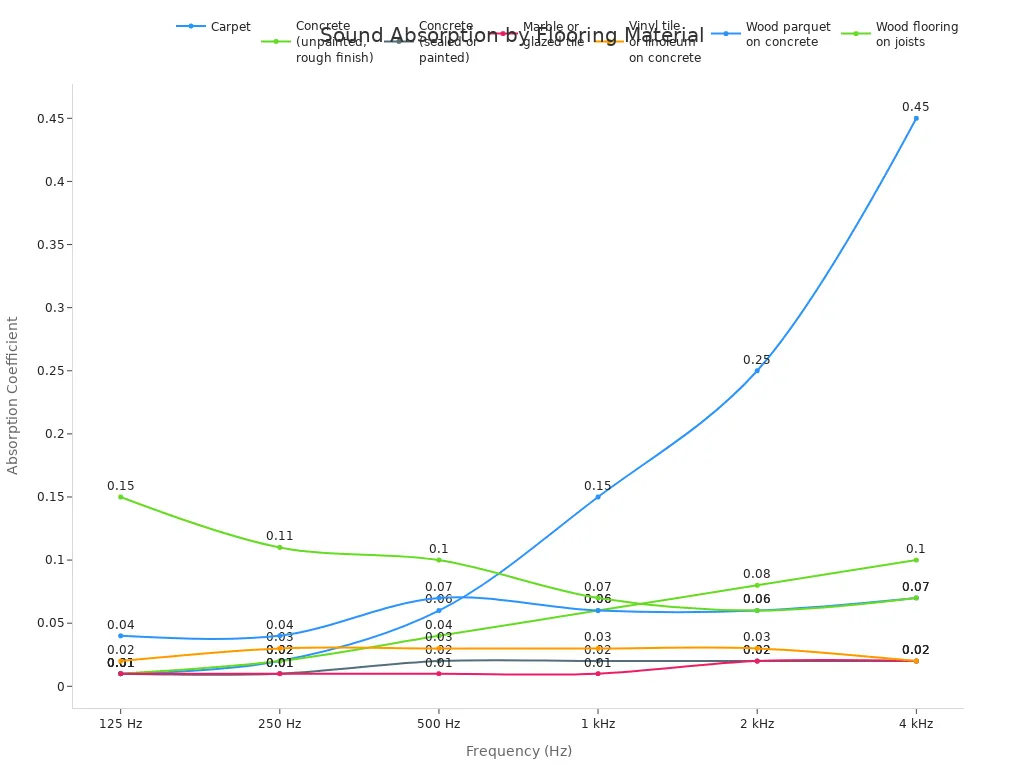
You can see that carpet absorbs more sound, especially at higher frequencies. Vinyl and SPC flooring provide decent sound insulation, especially when paired with quality underlayment. Hardwood, laminate, tile, and stone reflect more sound, which can lead to echoes and a noisy environment.
Tip: If you want to improve acoustic comfort, look for flooring with strong acoustic properties and consider adding underlayment or rugs for extra sound control.
SPC Sound Reduction vs. Traditional Flooring Options
SPC Flooring and Noise Reduction
You want a quiet space, and SPC flooring helps you achieve that goal. The dense core in SPC flooring blocks sound and reduces noise from footsteps and dropped objects. When you walk across SPC flooring, you notice less echo and fewer disturbances. In laboratory tests, SPC flooring achieves Impact Insulation Class (IIC) ratings of 65 or higher. This means you get about a 50% reduction in noise transmission compared to traditional flooring like tile or concrete. In hospital environments, SPC flooring lowers ambient noise levels by 12 to 15 decibels. You can enjoy a peaceful atmosphere at home or work.
SPC sound technology works well because of its multi-layer construction. The rigid core and attached underlayment absorb impact and airborne noise. You hear less clatter from shoes and less sound traveling between rooms. If you want even better acoustics, you can choose specialized underlayments for your SPC flooring. These upgrades help you create a space where conversations are clear and distractions are minimal.
Tip: If you install SPC flooring with a quality underlayment, you maximize noise reduction and improve overall comfort.
Laminate Flooring Acoustic Properties
Laminate flooring looks attractive and costs less than hardwood, but it does not perform as well in sound reduction. The hard surface of laminate reflects sound, which can make rooms feel louder. You may hear footsteps, voices, and furniture movement more clearly. Laminate flooring can amplify impact noise, especially in busy areas.
You can improve the acoustic properties of laminate flooring by adding underlayment. Some underlayments, like Quiet Walk, have been tested for sound deadening. They offer Sound Transmission Class (STC) ratings of 54 and Impact Insulation Class (IIC) of 58. These numbers show that underlayment helps reduce noise, but laminate flooring still does not match the performance of SPC flooring. If you want better sound control, SPC flooring provides a stronger solution.
Hardwood Flooring Sound Performance
Hardwood flooring gives your space a classic look, but it does not absorb sound well. The solid surface of hardwood reflects noise, which can lead to echoes and a noisy environment. You may notice that footsteps and dropped items sound louder on hardwood than on SPC flooring. The sound performance of hardwood flooring depends on installation and underlayment.
You can make hardwood quieter by using special underlayments. For example, Quiet Walk underlayment has an STC rating of 54 and an IIC of 58. These ratings show that underlayment improves sound insulation, but hardwood flooring still varies in performance. SPC flooring, with its dense core and advanced spc sound features, consistently delivers better noise reduction. You get a quieter space with SPC flooring, while hardwood requires extra steps to reach similar results.
Note: If you want strong sound performance and easy installation, SPC flooring is a reliable choice over traditional flooring options like hardwood.
Tile Flooring and Noise Issues
You may like the look of tile in kitchens, bathrooms, or entryways. Tile gives you a clean and modern style. However, tile creates noise problems that you cannot ignore. The hard surface of tile reflects sound. You hear footsteps, dropped items, and voices echoing across the room. In busy homes or offices, tile makes spaces feel louder and less comfortable.
Tile does not absorb sound. You notice this when you walk with shoes or move chairs. The noise travels easily from one room to another. If you have tile in a hallway, you hear every step. In apartments or multi-story buildings, tile increases noise between floors. You may disturb neighbors or family members.
You can try to reduce noise by adding rugs or mats. These soft materials help absorb some sound. You may also use acoustic panels on walls. However, these solutions only help a little. Tile remains one of the least effective choices for acoustic comfort. If you want a quieter space, you should consider other options.
Tip: If you want to improve sound control, avoid using tile as your main flooring in living rooms or bedrooms. Choose materials that absorb sound for better acoustic comfort.
LVT Flooring vs. SPC Vinyl Flooring
You may see both lvt and spc flooring in stores. They look similar, but they perform differently when it comes to noise reduction. Lvt stands for luxury vinyl tile. It uses a flexible vinyl core. Spc flooring uses a stone plastic composite core. This core makes spc much denser and stronger than lvt.
Let’s compare lvt and spc in terms of acoustic comfort:
| Feature | LVT Flooring | SPC Flooring |
|---|---|---|
| Core Material | Flexible vinyl | Stone plastic composite |
| Sound Absorption | Moderate | High |
| Impact Noise | Noticeable | Reduced |
| Underlayment Options | Needed for best results | Often included |
| Durability | Good | Excellent |
| Noise Transmission | Higher | Lower |
You notice that lvt flooring helps with some noise, but it does not block sound as well as spc. The flexible core in lvt allows more sound to pass through. You hear footsteps and voices more clearly. If you want better acoustic comfort, spc flooring gives you a quieter environment. The dense core in spc absorbs impact and airborne noise. You enjoy less echo and fewer distractions.
You may add underlayment to lvt flooring to improve sound control. However, spc often comes with an attached underlayment. This feature makes installation easier and boosts noise reduction. You save time and get better results.
Note: If you want the best acoustic comfort, choose spc flooring over lvt. You get stronger sound reduction and a more peaceful space.
Technology Behind SPC Vinyl Flooring’s Acoustic Properties
Core Composition and Density
You get impressive acoustic insulation when you choose spc vinyl flooring. The secret lies in the core layer. This layer uses stone plastic composite, which gives spc flooring its strength and density. The high density of the core absorbs vibrations and blocks sound from traveling through the floor. You notice fewer disturbances from footsteps and dropped objects. The dense core also improves wear resistance, so your flooring lasts longer even in busy spaces. You benefit from moisture resistance, which keeps your floors safe from spills and humidity. The combination of density, wear resistance, and moisture resistance makes spc vinyl flooring a smart choice for both homes and businesses.
Tip: If you want a quiet room, look for spc flooring with a thick, dense core. This feature helps you control noise and enjoy a peaceful environment.
Integrated Underlayment for SPC Sound
You can boost spc sound reduction by selecting the right underlayment. Many spc vinyl flooring products come with integrated underlayment. This layer adds extra insulation and improves sound insulation. You have several options for underlayment materials. Each type offers different benefits for acoustic comfort and moisture resistance.
| Underlayment Type | Sound Insulation Effectiveness | Additional Notes |
|---|---|---|
| Cork | Good for sound insulation | Not a moisture barrier, can retain moisture |
| Foam | Average sound dampening | Cost-effective, thicker foam improves results |
| Felt | Better sound control than foam | Can include vapor barrier, better insulation |
| Rubber | Excellent sound absorption | Adds warmth, protects against water damage |
| Plywood | Limited sound insulation | Provides a level base, no cushioning |
| OSB | Limited sound insulation | More durable than plywood, no cushioning |
You see that rubber and felt underlayments offer the best sound insulation. Rubber also protects against water damage, which increases moisture resistance. Cork provides good acoustic insulation but does not block moisture. Foam is affordable and works well if you choose a thicker option. You should match the underlayment to your needs for sound control, moisture resistance, and wear resistance.
Impact Sound vs. Airborne Noise Reduction
You hear two main types of noise in your space. Impact sound comes from footsteps, dropped items, or moving furniture. This noise travels through the building structure and can disturb people in other rooms. Airborne noise includes voices, music, and sounds that move through the air. These sounds pass between rooms and floors if you do not have proper insulation. SPC vinyl flooring helps you reduce both types of noise. The dense core absorbs impact sound, while the integrated underlayment blocks airborne noise. You enjoy a quieter environment and better privacy. You can focus, relax, and feel comfortable in your space.
Note: If you want strong acoustic insulation, choose spc vinyl flooring with a dense core and quality underlayment. This combination gives you the best results for both impact and airborne noise.
Real-Life Benefits of SPC Flooring’s Noise Reduction
Noise Reduction in Residential Spaces
You want your home to feel peaceful. SPC vinyl flooring helps you achieve this goal. Many residents in Atlanta highrises faced constant noise from neighbors above. After installing SPC flooring with a semi-decoupled design, including OSB/Plywood, Serena Underlay, and Green Glue dampening compound, they noticed a big drop in both impact noise and sound transmission.
- You hear less noise from footsteps and moving furniture.
- The thick, stable bottom layers of SPC vinyl flooring create a quieter sound when you walk.
- The density of SPC flooring avoids the hollow sound you often get with standard vinyl.
You may find SPC flooring harder underfoot, which can affect foot comfort during long periods of standing. WPC flooring feels softer and absorbs more sound, making it a good choice for noise-sensitive rooms. Still, SPC vinyl flooring offers strong noise reduction and adds value to your living space.
Acoustic Comfort in Commercial Environments
You need a quiet workspace to focus and serve customers. SPC vinyl flooring improves acoustic comfort in offices, stores, and other commercial flooring settings.
CFL’s new patented, multi-layer technology greatly improves acoustic properties on SPC. This technology blocks specific sound frequencies and reduces sound transmission. You experience less reflection and transmission of footfall noise, which solves noise issues better than older solutions.
You get more value from SPC vinyl flooring in busy commercial flooring areas. The advanced design helps you create a comfortable environment for employees and visitors.
Enhanced Privacy and Productivity
You want privacy and productivity in your office. SPC vinyl flooring provides a strong foundation that withstands everyday commotion.
- Its sound absorption reduces noise transmission, making your workspace quieter.
- You benefit from a comfortable office environment, especially in multi-story buildings.
- SPC vinyl flooring supports privacy, so you can focus on work without distractions.
You add value to your business by choosing SPC vinyl flooring. You enjoy comfort underfoot and a peaceful atmosphere that helps everyone work better.
Choosing SPC Flooring for Optimal Acoustic Properties
Thickness and Underlayment Selection
You want the best acoustic comfort in your space. The thickness of spc vinyl flooring plays a big role in sound reduction. Thicker flooring absorbs and dampens sound more effectively. You notice less impact noise when you walk or move furniture. Thicker spc vinyl flooring also feels more comfortable underfoot and stays stable over time.
When you choose spc vinyl flooring, look for options with built-in underlayment or padding. This feature improves sound insulation, especially in apartments or multi-story buildings. You can select from several underlayment materials to boost acoustic performance:
- Cork underlayment absorbs sound, keeps floors warm, and works well in bedrooms and living rooms.
- Rubber underlayment resists moisture and reduces noise in busy areas like basements.
- Foam underlayment controls moisture and reduces noise, making it a good choice for kitchens and basements.
You should consider the thickness, material, and density of the underlayment. Cork, rubber, and foam each offer unique benefits for sound control and comfort.
Installation Tips for Maximum Noise Reduction
You can maximize the noise reduction of spc vinyl flooring by using the right installation techniques. Installing underlayment creates a quieter space and reduces walking noise. Premium products like floorMuffler® ultraSeal and floorMuffler® Encore provide excellent acoustic dampening and help hide subfloor imperfections.
Here is a table showing proven installation techniques:
| Technique/Feature | Description |
|---|---|
| Use of Underlayment | Installing underlayment reduces walking noise and creates a quieter space. |
| floorMuffler® ultraSeal | Premium underlayment prevents impact noise and hides subfloor imperfections. |
| floorMuffler® Encore | Designed for acoustic performance, offers excellent dampening for SPC floors. |
You should follow manufacturer instructions for installing spc vinyl flooring and underlayment. Proper installation ensures you get the best sound reduction and enjoy a peaceful environment.
Tip: Choose thicker spc vinyl flooring with quality underlayment and use proven installation methods for the quietest results.
You gain lasting acoustic comfort when you choose spc flooring for your home or business. The advanced design of spc vinyl flooring absorbs sound from footsteps and furniture, creating a peaceful atmosphere. Many varieties include attached underlayment, which cushions your feet and reduces noise. You see improved quietness, especially in multi-level spaces.
- SPC vinyl flooring uses soundproof materials to minimize sound pollution.
- The thickness and composition of vinyl help absorb noise, increasing privacy.
- Selecting the right underlayments and moisture barriers boosts performance and durability.
| Standard | Description |
|---|---|
| ISO 717-2 | Assesses impact sound insulation performance. |
| ASTM E492 | Tests the acoustic performance of floor slabs. |
You enjoy a quieter, more comfortable space with spc vinyl flooring. Future trends in spc technology will combine cork or rubber for even better sound absorption.
FAQ
What makes SPC flooring quieter than laminate or hardwood?
SPC flooring uses a dense core and built-in underlayment. These features absorb sound and block noise. You hear fewer footsteps and less echo compared to laminate or hardwood.
Can you install SPC flooring in apartments to reduce noise between floors?
Yes, you can install SPC flooring in apartments. The thick core and underlayment help reduce noise transfer between floors. You enjoy more privacy and a quieter living space.
Does the thickness of SPC flooring affect sound reduction?
Thicker SPC flooring absorbs more sound. You get better noise reduction with thicker planks. Choose flooring with extra thickness and quality underlayment for the best results.
Is SPC flooring suitable for offices or commercial spaces?
SPC flooring works well in offices and commercial spaces. You get strong sound absorption and durability. Employees and customers experience a quieter and more comfortable environment.
Do you need extra underlayment with SPC flooring?
Many SPC floors include attached underlayment. You may add extra underlayment for even better sound control. Always check manufacturer recommendations before installing additional layers.




