
You see more spaces using SPC flooring every year. SPC flooring now accounts for 43% of total resilient sales and 40.5% of total resilient volume worldwide. This growth comes from strong spc construction and advanced features that fight common problems. Look at this table to see how SPC helps prevent issues you might face in busy areas:
| Problem | Causes |
|---|---|
| Scratches and Scuffs | Heavy furniture, pets, dragging, abrasive cleaning |
| Moisture Damage and Swelling | Water spills, leaks, high humidity, mold |
| Loose or Gapping Planks | Bad installation, temperature swings, uneven subfloors |
SPC combines technology and design to give you durability where you need it most.
SPC Construction and Core Composition
Stone Plastic Composite Core
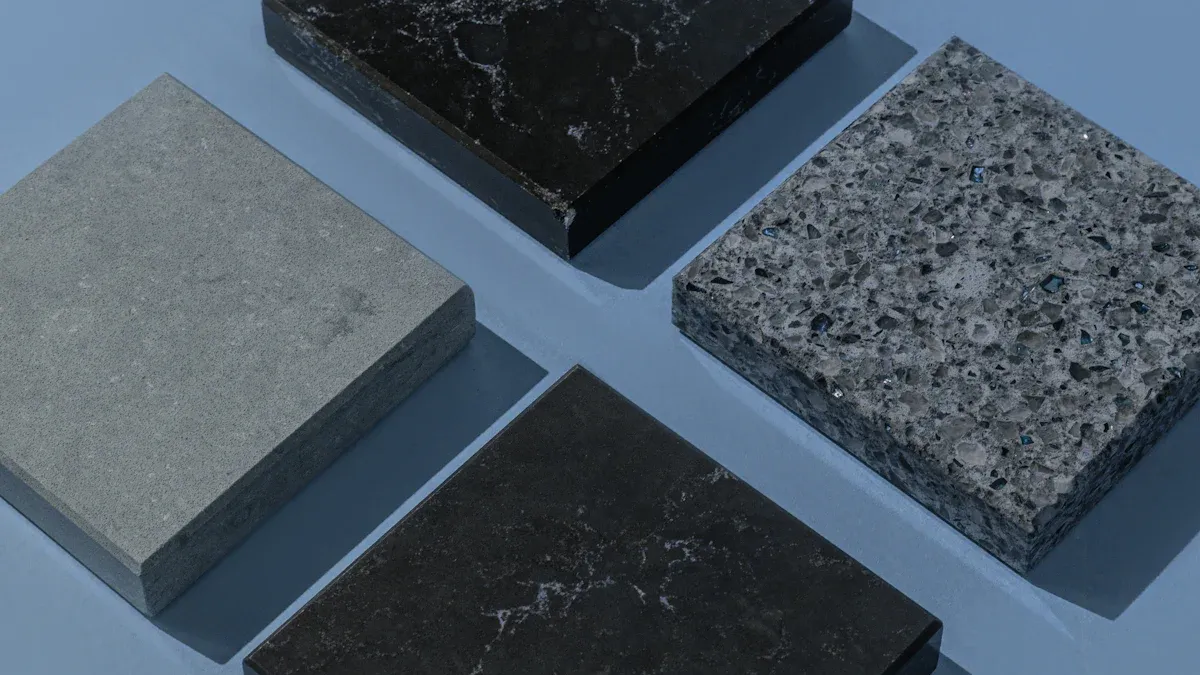
You get the strength of stone and the flexibility of plastic in SPC flooring. The core uses a mix of limestone powder and polyvinyl chloride (PVC). This blend creates a rigid structure that stands up to dents, scratches, and heavy impacts. The stone plastic composite core gives you a floor that works well in busy spaces like kitchens, hallways, and offices. Limestone powder adds stability and keeps the planks from bending or warping. PVC brings flexibility, so your floor can handle drops and bumps without cracking. You can trust this core to deliver long-lasting performance.
Note: The right balance of stone and plastic in the core helps your floor resist water and stay strong for years.
High-Density Core Materials
SPC construction uses high-density materials to boost durability. The dense core makes each plank feel solid under your feet. You notice fewer dents from dropped objects or heavy furniture. Manufacturers add stabilizers, such as calcium-zinc compounds, to improve long-term durability. These stabilizers help your floor resist wear and tear, even in high-traffic areas. The core’s density also helps keep the planks stable when temperatures change. You do not have to worry about gaps or buckling.
A typical SPC plank has four layers:
- A tough wear layer that protects against scratches and stains
- A printed vinyl layer for color and design
- The rigid core for strength and stability
- A backing layer for extra support
This layered design makes the durability of SPC stand out compared to other types of flooring.
Impact Resistance Features
You want a floor that can handle daily life. SPC flooring passes strict tests for impact resistance. These tests, such as ASTM F1265 and ASTM D2632, check if the floor can absorb sharp hits without cracking or denting. Results show that SPC can take on the challenges of both homes and businesses. You can move furniture, drop objects, or walk with heavy shoes without worrying about damage. The rigid core and high-density materials work together to protect your floor from sudden impacts.
Tip: If you have kids or pets, SPC flooring gives you peace of mind because it resists dents and keeps looking new.
Wear Layer Technology and Durability of SPC
Thickness and Material Quality
You want your floor to last for years. The wear layer is the shield that protects your SPC flooring from daily damage. Most SPC flooring uses a wear layer between 0.3 mm and 0.7 mm thick. Thicker wear layers give you better protection against scratches, dents, and stains. You notice that floors with a thicker wear layer keep their color and design longer. The material quality matters too. Manufacturers use a transparent, tough coating, often urethane-based, to guard against scuff marks and stains. This layer keeps your floor looking fresh even in busy places.
- Thicker wear layers increase resistance to wear and tear.
- Urethane-based coatings protect against scuffs, stains, and scratches.
- Floors with thicker wear layers last longer and stay attractive.
You see the difference in high-traffic areas. The durability of SPC flooring depends on this layer. If you choose a floor with a strong wear layer, you get better value and longer life.
Scratch and Stain Resistance
You want a floor that stands up to pets, kids, and heavy shoes. SPC flooring uses advanced technology to resist scratches and stains. The wear layer acts as a barrier, keeping your floor safe from scuffs and spills. SPC construction gives you an edge over laminate and traditional vinyl. Laminate may resist scratches, but it shows wear faster. Vinyl does not offer the same level of protection.
SPC flooring passes tough laboratory tests for scratch and stain resistance. These tests use machines like the Martindale and gloss meters to check how well the surface holds up. You can see the results in the table below:
| Test Procedure | Description | Classification Rating |
|---|---|---|
| Procedure A | Checks resistance to gloss change after abrasion. | MSR-A1 (≤10% gloss change) to MSR-A5 (>70% gloss change) |
| Procedure B | Looks for visible scratches after abrasion. | MSR-B1 (no visible scratches) to MSR-B5 (many scratches) |
SPC flooring often reaches high ratings, making it a smart choice for homes and businesses. You do not have to worry about stains from food or drinks. The stone plastic composite core and tough wear layer work together to keep your floor looking new.
Tip: If you have pets or children, SPC flooring gives you peace of mind. The scratch-resistant surface helps your floor stay beautiful.
UV Protection
You want your floor to keep its color and shine. SPC flooring uses UV protection to stop fading and discoloration. Sunlight and indoor lights can cause some floors to lose their color. SPC construction includes a special UV coating that blocks harmful rays. This coating keeps your floor looking bright and fresh.
- Prevents fading from sunlight and artificial light.
- Increases the lifespan of your floor.
- Reduces the need for cleaning and replacement.
You spend less time worrying about your floor. The UV-resistant surface means you do not have to replace planks or do extra maintenance. SPC flooring stays strong and colorful, even in rooms with lots of windows.
Note: UV protection is a key feature that helps SPC flooring last longer and look better.
Rigid Core Construction for SPC Flooring
Multi-Layer Engineering
You get strong performance from SPC flooring because of its multi-layer engineering. Each layer has a special job that helps your floor last longer and look better. The layers work together to boost durability and comfort. Here is a table that shows what each layer does:
| Layer | Function |
|---|---|
| UV Layer | Protects the surface from stains, resists UV rays, and prevents fading from sunlight exposure. |
| Wear Layer | Indicates durability; thicker layers correlate with longer warranties and better longevity. |
| Finish Layer | Provides a realistic appearance with high-definition printing, enhancing aesthetic appeal. |
| Core Layer | The main structural component, waterproof, affects weight, noise reduction, and overall quality. |
| Backing Layer | Offers sound reduction, heat retention, and comfort; thicker layers improve impact absorption. |
You can see how each part of the spc construction adds to the overall strength and feel of the floor. The core layer stands out because it is both rigid and waterproof, making it perfect for busy homes and businesses.
Stability Under Pressure
SPC flooring keeps its shape and strength even when you put heavy furniture or equipment on it. The rigid core uses a mix of limestone and compressed layers. This design spreads weight across the floor, so you do not see dents or marks. Take a look at these features that help with stability:
| Feature | Description |
|---|---|
| Durable limestone core | Provides rigidity and prevents easy compression under weight. |
| Multiple compressed layers | Distributes weight effectively across the flooring. |
| High indentation resistance | Resists permanent dents and maintains appearance. |
| Stability under loads | Performs well under both point and distributed loads. |
You can move chairs, tables, or even appliances without worrying about damage. This stability means your spc flooring keeps looking good for years, even in high-traffic areas.
Tip: If you want a floor that stands up to daily use and heavy loads, SPC gives you peace of mind.
Dimensional Stability
You want a floor that does not change shape when the weather changes. SPC flooring has a core with a very low thermal expansion rate. This means it stays the same size, even if the temperature or humidity goes up or down. You do not have to worry about warping, shrinking, or expanding.
- The SPC core has a very low thermal expansion coefficient.
- This property ensures dimensional stability in extreme environments.
- SPC flooring does not warp, shrink, or expand under drastic temperature and humidity changes.
SPC flooring goes through tough tests to make sure it keeps its shape. You can use it in kitchens, bathrooms, or basements, and it will stay flat and secure. The waterproof core also helps prevent problems from spills or moisture. This level of dimensional stability adds to the durability and long life of your floor.
Waterproof Flooring and Water Resistance
Waterproof Core Design
You want a floor that stands up to spills and moisture. SPC flooring uses a waterproof design that keeps water out. The core is non-porous, so it does not absorb any liquid. You get extra protection from sealed edges and a click-lock system. These features stop water from getting between the planks.
SPC flooring is completely waterproof due to its non-porous core, which prevents water absorption. Additionally, the sealed edges and click-lock installation system ensure that water cannot penetrate the seams.
This waterproof core design makes SPC a top choice for kitchens, bathrooms, and basements. You do not have to worry about water damage or swelling. The rigid core keeps your floor strong and flat, even in wet conditions.
Moisture Barrier Layers
You need a floor that blocks moisture from reaching the subfloor. SPC flooring uses moisture barrier layers to create a shield. These layers protect your home from leaks and spills. You see the difference when you compare SPC to other types of luxury vinyl flooring.
| Performance Factor | SPC Flooring | LVT Flooring |
|---|---|---|
| Water Resistance | 100% Waterproof | Water-resistant (not fully waterproof) |
| Subfloor Protection | Complete barrier against moisture | Potential for moisture penetration at seams |
| Installation in Wet Areas | Suitable for bathrooms, kitchens, basements | Caution needed in areas with standing water |
SPC gives you complete protection. You can install waterproof flooring in places where water is a problem. The moisture barrier keeps your subfloor dry and safe.
Mold and Mildew Prevention
You want a healthy home. SPC flooring helps prevent mold and mildew. The surface has special antibacterial and anti-fouling treatments. These treatments kill most bacteria and stop them from growing. You get extra safety because the waterproof core does not let moisture in.
- SPC flooring does not mold due to high humidity. The surface has been treated with special antibacterial and anti-fouling treatment, which effectively kills most bacteria and inhibits their multiplication.
- SPC waterproof flooring is impermeable, preventing moisture from penetrating through its core and top layer.
- SPC flooring does not allow water in, which reduces the chance of mold growth, making it ideal for moisture-prone areas.
You can trust SPC in bathrooms, kitchens, and laundry rooms. The waterproof design and protective layers keep your space clean and safe. Luxury vinyl flooring with these features gives you peace of mind in every room.
Additional Protective Features for Durability
Anti-Bacterial Coatings
You want your floor to help keep your home clean. Anti-bacterial coatings on SPC flooring use advanced science to fight germs and bacteria. These coatings work in several ways:
- Silver and copper-based additives break down bacteria and fungi.
- Photocatalytic coatings with titanium dioxide use light to destroy germs.
- Clean manufacturing ensures even coverage of anti-microbial agents.
- Virgin vinyl materials make the coatings more effective and reduce places for bacteria to hide.
- Smooth surfaces and tight joints stop dirt and moisture from building up.
- Non-toxic and biodegradable additives keep your space safe.
- Stronger additives protect busy areas, while gentle options suit homes with kids and pets.
You get a floor that helps reduce the spread of germs. This feature makes luxury vinyl flooring a smart choice for kitchens, bathrooms, and playrooms.
Tip: Anti-bacterial coatings help you create a healthier environment for your family.
Sound Insulation Layers
You want peace and quiet at home or work. SPC uses sound insulation layers to reduce noise. These layers absorb footsteps and block sounds between rooms. You notice the difference when you compare SPC to other flooring types.
| Flooring Type | Impact Insulation Class (IIC) | Sound Transmission Class (STC) |
|---|---|---|
| SPC Flooring | 58 dB | 59 |
| Carpet | 60 dB | 58 |
| Laminate | 54 dB | 55 |
| Hardwood | 40 dB | 42 |
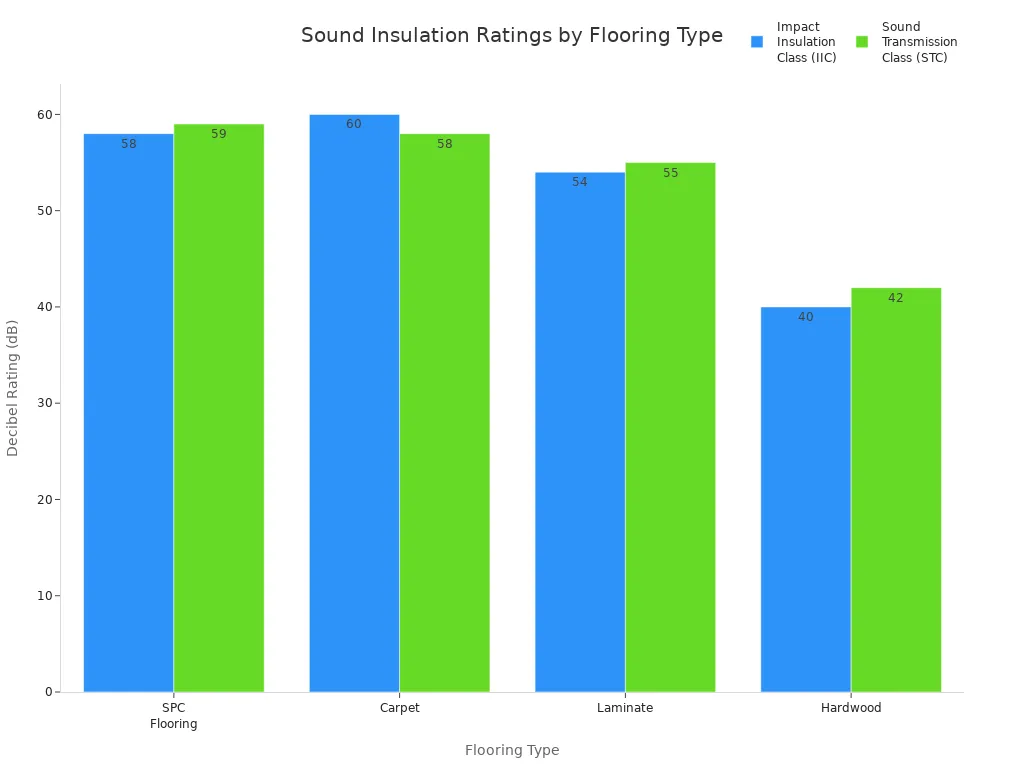
You see that luxury vinyl flooring with sound insulation layers performs almost as well as carpet and much better than laminate or hardwood. You enjoy a quieter space, whether you live in an apartment or work in a busy office.
Enhanced Edge Sealing
You want your floor to last longer. Enhanced edge sealing protects the edges of each plank. This feature keeps water, dirt, and bacteria from getting between the planks. You get a tighter fit and fewer gaps. Edge sealing also helps prevent lifting and curling, which can happen over time. You spend less time on repairs and cleaning. SPC flooring with strong edge sealing stays beautiful and strong, even in high-traffic areas.
Note: Edge sealing is a key part of SPC durability. It helps your floor resist damage and stay looking new.
Durability Comparison to Other Flooring Options
SPC vs. WPC
You may wonder how SPC compares to WPC flooring. Both types look similar, but their cores make a big difference. SPC flooring uses a stone plastic composite core, while WPC uses wood plastic composite. This difference affects how each floor performs in busy spaces.
- SPC flooring resists wear and tear better than WPC. You can use it in high-traffic areas without worrying about scratches or dents.
- SPC is 100% waterproof. You can install it in kitchens, bathrooms, or basements. WPC is not fully waterproof and may swell if exposed to water for a long time.
- SPC flooring lasts longer. You can expect it to last 20-30 years in commercial settings. WPC usually lasts 10-15 years.
- SPC stands up to heavy impacts. WPC shows dents and scratches more easily.
Here is a table that shows the main differences:
| Feature | SPC Flooring | WPC Flooring |
|---|---|---|
| Core Composition | Dense mixture of limestone powder and PVC | Combination of wood fibers and PVC |
| Durability | Exceptional resistance to dents and scratches | Good durability but less impact resistance |
| Water Resistance | Nearly impenetrable barrier against water | Excellent but slightly more porous |
| Comfort Underfoot | Rigid and less forgiving surface | More flexible and comfortable surface |
| Sound Insulation | Less effective at sound absorption | Naturally absorbs sound due to wood fiber content |
Tip: Choose SPC flooring for areas with lots of foot traffic and moisture.
SPC vs. Laminate
You might think laminate flooring is tough, but SPC offers better protection. SPC acts like a shield against scratches and dents. Laminate flooring is more likely to show marks from shoes, pets, or furniture.
- SPC flooring resists scratches much better than laminate. You can keep your floors looking new in busy rooms.
- SPC lasts longer because it does not dent or wear down easily. Laminate flooring can lose its shine and show damage over time.
- SPC is ideal for high-traffic spaces. Laminate works best in rooms with less activity.
Note: SPC gives you a longer-lasting, more durable surface than laminate flooring.
SPC vs. Traditional Vinyl
You may see traditional vinyl flooring in many homes. SPC flooring offers stronger water resistance and better durability. If you have a flood or spill, SPC flooring stays flat and does not warp. Traditional vinyl handles small spills but can get damaged by standing water.
| Flooring Type | Water Resistance | Description |
|---|---|---|
| SPC Flooring | Waterproof | Ideal for wet areas; does not warp or get damaged by water. |
| Traditional Vinyl | Water-Resistant | Handles spills but can be damaged by standing water over time. |
SPC flooring also makes installation easier. You can use click-lock systems and hide minor bumps in the subfloor. Traditional vinyl needs a smooth surface and careful prep. Both types need regular sweeping and damp mopping, but SPC resists stains and scuffs better.
| Feature | SPC Flooring | Traditional Vinyl Flooring |
|---|---|---|
| Installation Methods | Click-lock systems, glue-down, loose-lay | Click-lock, glue-down, may require careful prep |
| Subfloor Preparation | Can hide minor irregularities | Requires a smooth, even subfloor |
| Maintenance | Regular sweeping, damp mopping, no waxing | Regular sweeping, damp mopping, no waxing |
| Stain Resistance | More resistant to scuffs and light marks | Handles mild stains with gentle scrubbing |
Tip: SPC flooring gives you better protection against water and wear than traditional vinyl.
You get outstanding durability when you choose SPC flooring. The advanced spc construction, rigid core, and thick wear layer make spc a leader in high-traffic spaces. Experts report that spc can last up to 25 years with proper care. You benefit from waterproof flooring that resists dents, scratches, and stains. Many families, hotels, and schools praise luxury vinyl flooring for its easy maintenance and long-lasting beauty. To keep your spc looking new, prepare the subfloor well and follow professional installation tips.
SPC stands out as a waterproof and reliable choice for both homes and businesses.
FAQ
What makes SPC flooring more durable than other types?
SPC flooring uses a strong stone plastic composite core. You get better resistance to dents, scratches, and water. The rigid core and thick wear layer help your floor last longer in busy spaces.
Can you install SPC flooring in bathrooms and kitchens?
You can install SPC flooring in wet areas. The waterproof core and sealed edges keep water out. You do not have to worry about swelling or mold.
Tip: Always follow manufacturer instructions for best results.
How do you clean and maintain SPC flooring?
You can sweep or vacuum SPC flooring daily. Use a damp mop for deeper cleaning. Avoid harsh chemicals. You keep your floor looking new with simple care.
Does SPC flooring help reduce noise in your home?
SPC flooring includes sound insulation layers. These layers absorb footsteps and block noise between rooms. You enjoy a quieter space.
| Flooring Type | Sound Insulation Rating |
|---|---|
| SPC Flooring | High |
| Laminate | Medium |
| Hardwood | Low |
Is SPC flooring safe for homes with pets and children?
You get a safe surface with SPC flooring. Anti-bacterial coatings fight germs. The scratch-resistant layer protects against pet claws and toys. You create a healthy and durable space for your family.




