
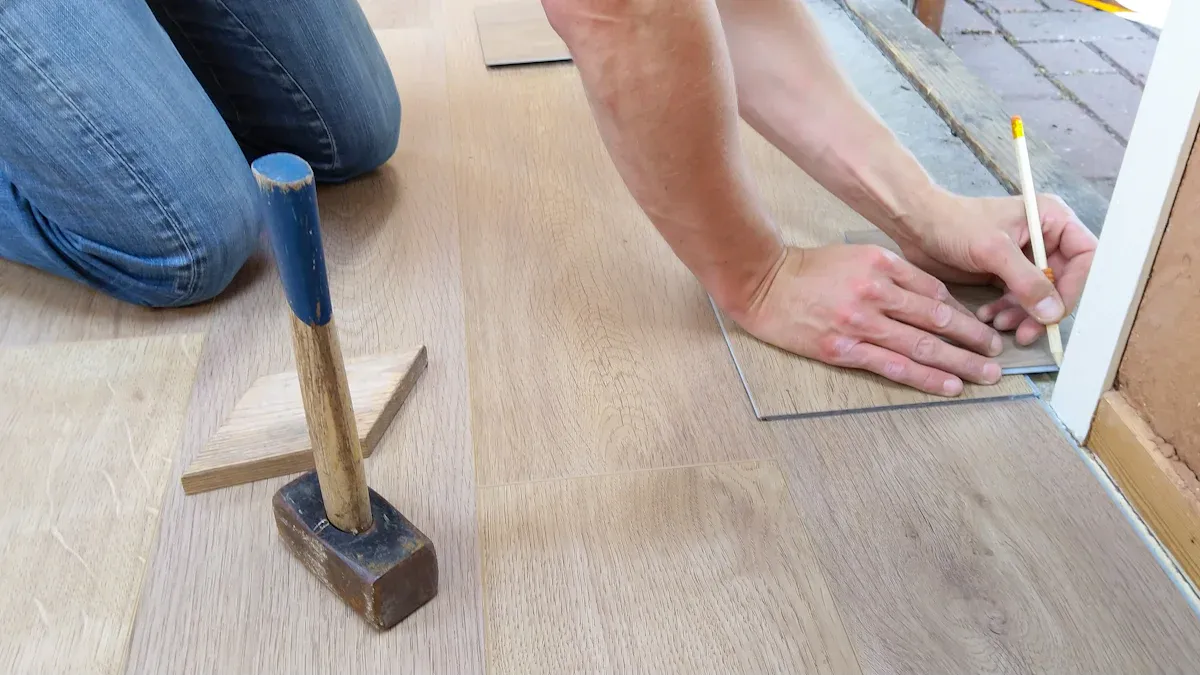
For your kitchens and bathrooms, waterproof laminate tile flooring is often the best flooring solution.
This waterproof flooring provides a cost-effective alternative to traditional tile, blending style with durability. The waterproof laminate flooring delivers excellent moisture resistance for high-moisture areas. You get reliable moisture protection for your kitchens and bathrooms. Your final decision on this laminate flooring depends on balancing its significant benefits against a few specific limitations.
What Makes Waterproof Laminate Tile Flooring a Smart Choice?
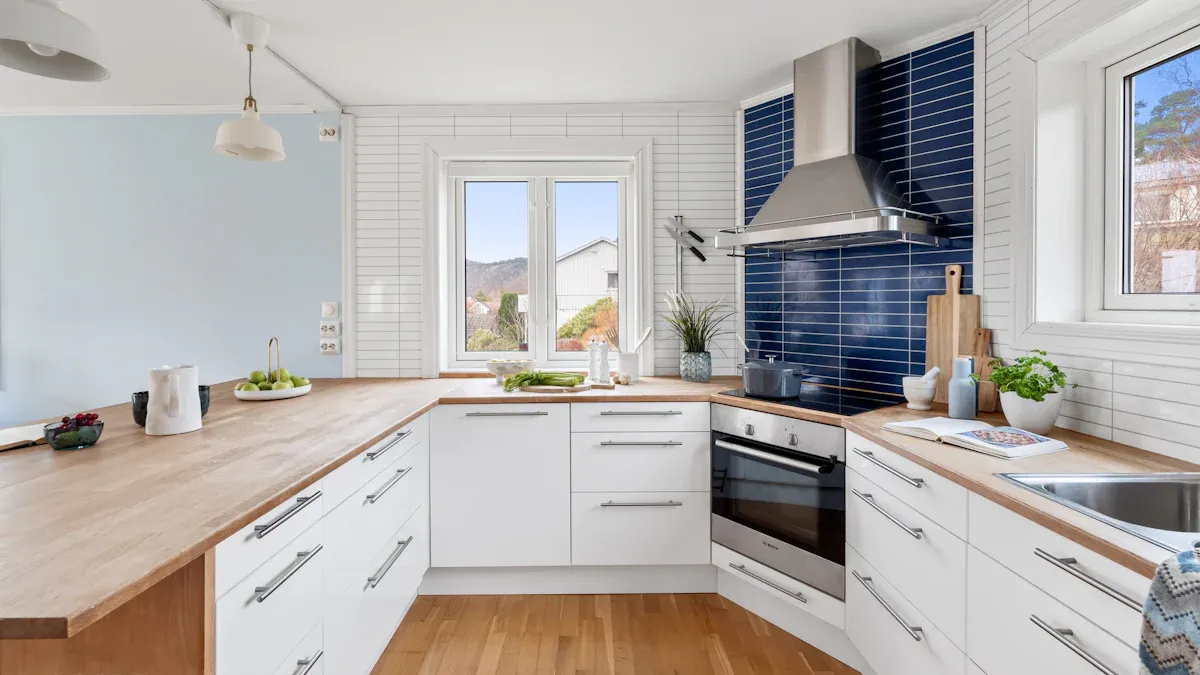
This modern flooring solution offers a powerful combination of benefits. You get advanced technology, beautiful aesthetics, and robust performance. These features make it an excellent investment for many areas of your home, especially kitchens and bathrooms.
Unbeatable Moisture Protection for Kitchens and Bathrooms
You need excellent moisture resistance in your kitchens and bathrooms. These high-moisture areas face daily spills, splashes, and humidity. Waterproof laminate flooring provides top-down protection against these everyday challenges. This means water can pool on the surface for a period without seeping between the planks and damaging the subfloor.
Manufacturers achieve this impressive waterproof performance through multi-layered construction and advanced technologies.
💡 How It Works: A dense, water-repellent core is the foundation. Then, a watertight locking system and special edge sealants prevent liquid from penetrating the joints.
Many leading brands have developed their own unique systems to ensure your flooring stays safe from moisture. These technologies include:
- Specialized Cores: Many products use a high-density or polymer-fortified core that naturally repels water.
- Proprietary Sealants: Brands use technologies like
SpillShield Plus,WetProtect, andHydroSealthat create a waterproof finish and seal the edges of each plank. - Watertight Locking Systems: An innovative locking mechanism, like the
Megaloc Aqua Protectsystem, creates an incredibly tight seal between planks. This is your first line of defense in kitchens.
This level of protection gives you peace of mind when installing this waterproof flooring in your bathrooms.
The High-End Look of Tile Without the High Price
You can achieve a sophisticated style without the expense and difficult installation of traditional tile. Modern waterproof laminate tile flooring uses high-definition printing to create incredibly realistic visuals. You can find designs that mimic everything from classic marble to rustic slate. This allows you to get the exact look you want for your kitchens and bathrooms.
The cost savings are a major advantage. This laminate is not only more affordable per square foot, but it also saves you money on installation.
| Feature | Waterproof Laminate | Traditional Ceramic Tile |
|---|---|---|
| Material Cost | Lower | Higher |
| Installation | DIY-friendly click-lock | Professional labor required |
| Grout | None | Required; can stain |
| Subfloor Prep | Minimal | Often extensive |
Choosing this flooring lets you upgrade your home’s look significantly while staying on budget.
Durability for Homes with Pets, Kids, and High Traffic
Your floors need to withstand the demands of a busy household. This waterproof laminate flooring delivers exceptional durability. Its top layer is a tough, transparent coating that resists scratches, scuffs, and stains from daily activities. This makes the laminate a reliable choice for high-traffic areas like kitchens. The strong core also helps the flooring resist dents from dropped objects.
A Note on Pets and Scratches: 🐾 While this flooring offers great durability, it is important to have realistic expectations. Most warranties do not cover deep scratches or gouges from pets. To protect your investment, you should keep your pets’ nails trimmed. Warranties also may not cover pet stains from urine or vomit unless you clean them up immediately.
The overall toughness of this waterproof flooring ensures it will look great for years, even with kids, pets, and constant foot traffic. Its resilience makes it a practical and long-lasting choice for your home.
A DIY-Friendly Click-Lock Installation System
You can save a lot of money on professional labor with this flooring. The click-lock installation system is a primary reason many homeowners choose waterproof laminate flooring. The planks are designed to interlock with a simple tongue-and-groove mechanism. This creates a “floating floor” that sits on top of your subfloor without needing glue or nails. This system is a key feature of modern waterproof laminate flooring.
The installation process is straightforward for a confident DIYer. To get started, you will need a few specific tools. Most of these are common household items or can be rented easily.
- Tape measure and T-square
- Utility knife or a laminate flooring cutter
- Jigsaw for cutting around obstacles
- Pull bar, tapping block, and a rubber mallet
- Spacers to maintain an expansion gap
- Safety gear like gloves and goggles
A Note on Time Commitment ⏰ You should set realistic expectations for your project timeline. For a beginner, a standard 12×12 foot room might take a full day. You should plan for the entire waterproof flooring project to take 2-3 days. This includes subfloor preparation, installation, and finishing touches.
The installation itself follows a few basic steps.
- Prepare the Subfloor. You must ensure your subfloor is clean, dry, and level before you begin.
- Acclimate the Laminate. You need to let the laminate planks sit in the room for at least 48 hours. This allows the material to adjust to the temperature and humidity.
- Install the Planks. You will start in a corner and click the planks together row by row. The click-lock system makes it easy to get tight, secure seams for a waterproof seal.
- Finish the Job. You will install transition strips and baseboards to cover the expansion gaps around the room’s perimeter.
This user-friendly installation makes waterproof laminate tile flooring an accessible and budget-smart choice for upgrading your home. The secure locking system also contributes to the overall waterproof performance of the flooring.
Understanding the “Waterproof” in Waterproof Laminate Flooring
The term “waterproof” is a key selling point, but you should understand what it truly means. The performance of this waterproof flooring comes from its advanced, multi-layered design and proper installation. This knowledge helps you set the right expectations for your new floors.
How Its Layered Construction Works
The secret to waterproof laminate flooring lies in its core. Manufacturers construct this central layer from materials that prevent water absorption. Some products use a Wood Plastic Composite (WPC) or PVC core, which are inherently waterproof. Others feature a specially treated, high-density fiberboard (HDF) or renewable fiber core to achieve excellent moisture resistance. On top, a special wear layer is treated with water-repellent coatings. This treatment forces spills to bead up on the surface instead of seeping into the laminate.
The Difference Between Waterproof and Water-Resistant
You will see the terms “waterproof” and “water-resistant” used, but they are not the same. A water-resistant laminate can only handle spills for a few hours before water might penetrate and cause damage. A truly waterproof product offers much more robust protection.
Each manufacturer conducts its own tests. There’s no universal standard, so the level of water resistance can vary widely from one brand to another.
To be sure, you can look for products with a NALFA certification, which requires independent testing. This helps you confirm the quality of the flooring you choose.
Installation Tips to Maximize Water Protection
Proper installation is essential for complete waterproofing in high-moisture areas. Even the best waterproof laminate flooring needs help to protect its most vulnerable points. When you cut planks to fit against walls, you expose the inner core. To create a perfect seal, you must apply a 100% silicone sealant in the expansion gap around the entire room’s perimeter.
- The sealant prevents water from getting under the flooring at the edges.
- It protects the cut, unsealed cores of the laminate planks.
- This step is often required to maintain the product’s waterproof warranty.
Following this tip ensures your new flooring delivers the long-term moisture protection you expect.
When Is This Waterproof Flooring NOT the Right Fit?
While this flooring is an excellent choice for many situations, you should recognize its limitations. Certain expectations and preferences make other materials a better fit for your home. Understanding these scenarios helps you avoid disappointment and choose the right product for your needs.
If You Expect 100% Imperviousness to Flooding
You must understand the difference between “waterproof” and “flood-proof.” The waterproof label on this flooring refers to protection from topical moisture. It handles everyday spills and splashes on the surface. It is not designed to withstand major water events like a flood or a burst pipe.
⚠️ Important Warranty Information: Your manufacturer’s warranty almost never covers damage from significant water events.
Most warranties specifically exclude damage from these situations:
- Floods, ground moisture, or other natural disasters
- Leaking pipes, dishwashers, or other plumbing accidents
- Water coming from beneath the subfloor (hydrostatic pressure)
- Moisture originating from outside the room
If your home experiences a flood, water can get around the edges of the waterproof flooring and saturate the subfloor. This requires you to remove the planks to dry everything out. Trapped moisture can lead to serious problems like mold growth, which may require professional removal. In these cases, the waterproof flooring itself might survive, but the situation creates a major repair project.
If You Prefer the Authentic Feel of Stone or Ceramic
Modern laminate uses amazing technology to look like real stone or ceramic tile. Manufacturers use high-definition printing to capture the detailed patterns of marble, slate, and travertine. They also use texturing techniques like embossing to create a surface that mimics the feel of natural materials.
However, a visual match is not a perfect physical match. If you love the distinct, cold, and solid feel of real stone under your feet, laminate may not satisfy you.
- Temperature: Real tile feels cool to the touch because it absorbs heat from your body. Laminate flooring feels warmer and closer to room temperature.
- Hardness: Ceramic and stone are incredibly hard and rigid. Laminate has a slight give to it, which can feel softer and more comfortable to stand on but is noticeably different.
- Sound: The sound of walking on laminate is also different from the solid click of walking on tile.
If the authentic sensory experience of real stone is a top priority for you, you may want to invest in traditional tile.
If You Want the Option to Refinish Your Floors
You cannot sand and refinish waterproof laminate flooring. This type of flooring is a “replace, not refinish” product. If a plank gets severely damaged, you must replace that specific plank or, in some cases, the entire floor.
The reason lies in its construction. Laminate is made of several layers fused together.
- A protective top wear layer
- A printed image layer (this gives the tile its look)
- A dense core
- A backing layer
Sanding the surface would permanently destroy the protective wear layer and scrape away the printed design underneath. Unlike solid hardwood, there is no solid material to sand down to. Attempting to apply a new varnish or finish is also not an option, as it will not stick to the non-porous wear layer and will likely peel or bubble. Doing so would also void your product warranty. If your goal is to have a floor that you can refinish multiple times over several decades, you should consider other materials like solid hardwood.
How Does It Compare to Other Popular Flooring Options?
You have many choices when selecting a new floor. Understanding how waterproof laminate compares to other popular materials helps you make an informed decision. This comparison will guide you through the key differences.
Waterproof Laminate Tile Flooring vs. Luxury Vinyl Tile (LVT)
You will often compare waterproof laminate tile flooring with LVT. Both are excellent choices, but they have different core constructions. This difference affects their performance.
| Feature | Waterproof Laminate | Luxury Vinyl Tile (LVT) |
|---|---|---|
| Core Material | Wood-based (HDF) | Plastic-based (PVC) |
| Water Resistance | Enhanced core and coatings | Inherently waterproof |
LVT is fully waterproof because its core is plastic. This makes it a better choice for areas with flood risk. However, laminate often has superior scratch resistance. Both flooring types are durable, but the hard top layer of laminate makes it one of the most scratch-resistant materials available.
Waterproof Laminate Flooring vs. Traditional Ceramic Tile
You might love the look of ceramic tile but want more comfort. Waterproof laminate flooring offers a softer and warmer feel underfoot. Traditional tile is very hard and can feel cold.
| Feature | Traditional Ceramic Tile | Waterproof Laminate |
|---|---|---|
| Comfort | Cold and hard | Warmer and softer |
| Impact Resistance | Less forgiving | More forgiving |
The laminate is more forgiving if you drop something. A glass might bounce on laminate but would surely shatter on tile. The rigid nature of tile makes it extremely durable, but this hardness can be uncomfortable for some.
Waterproof Laminate Flooring vs. Engineered Hardwood
You should choose a waterproof flooring for rooms with moisture. Engineered hardwood has better moisture tolerance than solid wood, but its real wood top layer is still vulnerable to water damage. Spills can cause stains or warping.
In contrast, modern waterproof laminate is superior for wet areas.
- Its sealed edges and waterproof core prevent water from seeping in.
- This construction protects the flooring from everyday spills and humidity.
While engineered hardwood offers the authentic beauty of wood, it is not ideal for bathrooms or basements. The laminate provides better protection in these moisture-prone spaces.
Waterproof laminate tile flooring is your right choice if you prioritize a balance of style, everyday durability, and moisture resistance. This waterproof flooring is an ideal solution for active homes, especially for upgrading kitchens, bathrooms, and other high-moisture areas. For total waterproof protection, consider LVT. For ultimate durability, traditional tile remains a top contender over this laminate. You can now decide if this waterproof laminate flooring meets the demands of your kitchens and bathrooms. This laminate flooring is a smart flooring choice for your kitchens and bathrooms.
FAQ
Can you use a steam mop on this flooring?
You should avoid using a steam mop. The high heat and moisture can damage the plank seams and core over time. This is especially important for floors in kitchens and bathrooms. A damp mop and a manufacturer-approved cleaner are your safest options for cleaning.
Is this laminate flooring suitable for all bathrooms?
This flooring is great for most bathrooms. However, you should not install it in bathrooms with a floor drain, like in a wet room. For those specific bathrooms, a material like tile is better. For standard bathrooms and kitchens, it performs very well.
Do you need an underlayment for this flooring?
Yes, you almost always need an underlayment. It provides sound absorption and a moisture barrier. Some laminate products come with a pre-attached pad. For kitchens and bathrooms, you should always use an underlayment with a vapor barrier to protect the subfloor and the laminate.
How do you repair a damaged plank?
You can replace a single damaged plank without redoing the entire floor. This process requires careful work with a few tools to remove the old plank and click a new one into place. This helps you maintain the floor’s original style in your kitchens and bathrooms.




