
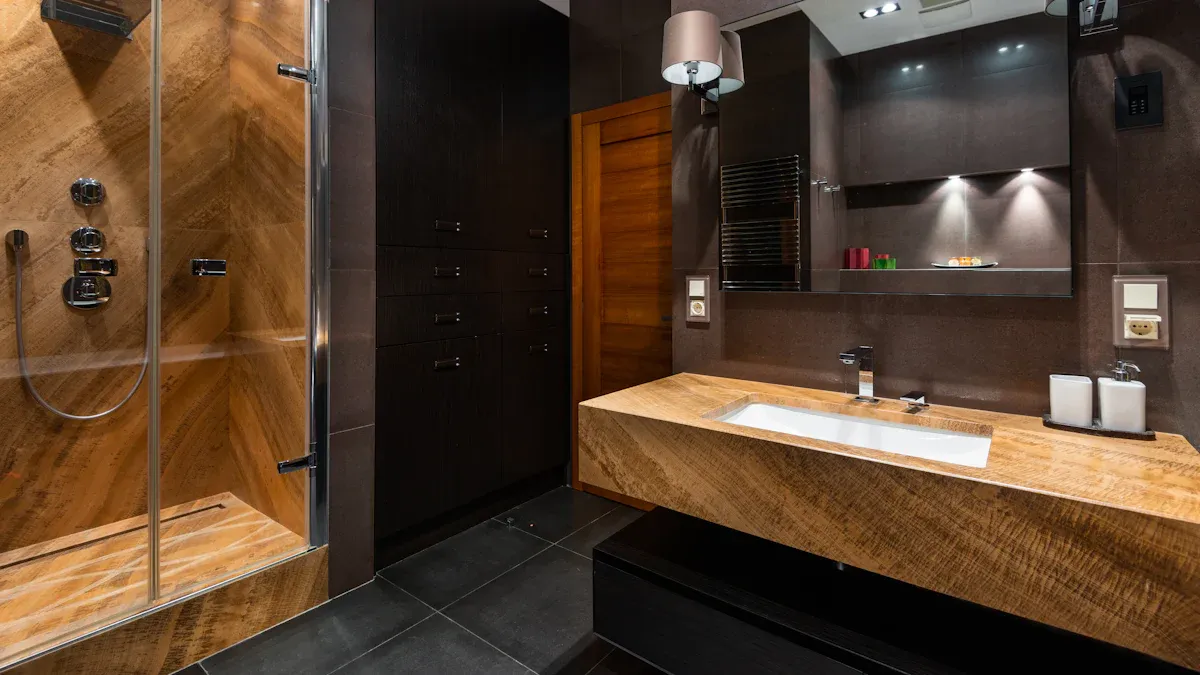
The best bathroom flooring for your bathroom is SPC vinyl plank flooring. This durable flooring is 100% waterproof. It is the ideal waterproof bathroom flooring for bathrooms. The realistic look of this SPC vinyl mimics beautiful wood floors for bathrooms without the risk.
While solid hardwood is unsuitable for a bathroom, some engineered hardwood can work. You must protect this flooring from moisture. This makes it a cautious choice for a bathroom, unlike the durable, 100% waterproof SPC vinyl. Your bathroom needs a durable solution to handle daily moisture.
The Top Choice: 100% Waterproof Bathroom Flooring
When you need a floor that can handle daily splashes, steam, and humidity, one option stands above the rest. This is your best bathroom flooring solution for complete peace of mind.
1. SPC (Stone Plastic Composite) Vinyl
SPC vinyl is the top choice for any bathroom renovation. This flooring is not just water-resistant; it is 100% waterproof from top to bottom. This quality makes SPC the most reliable waterproof bathroom flooring available. Its strength comes from its unique composition. The core of SPC flooring combines natural limestone powder and PVC plastic, creating an incredibly dense and rigid plank that will not swell, warp, or buckle when exposed to water.
The structure of SPC vinyl is engineered for performance in a bathroom. Each plank consists of multiple layers working together:
- UV Layer: This top coat protects the floor from fading caused by sunlight.
- Wear Layer: A clear, durable shield that guards against scratches and scuffs.
- Decorative Layer: A high-resolution printed image that gives the vinyl its realistic wood look.
- SPC Core: The rigid, 100% waterproof core that provides stability and strength.
- Backing Layer: An attached underlayment that adds cushioning and absorbs sound.
When it comes to durability, you cannot use the AC ratings of laminate to judge SPC. Instead, you measure the durability of SPC vinyl by its wear layer thickness, expressed in mils. A thicker wear layer means the flooring is more durable and better suited for a busy bathroom. For most homes, a 12-20 mil wear layer offers excellent protection. This makes SPC a very durable bathroom flooring choice.
| Feature | Wear Layer (SPC Flooring) | AC Rating (Laminate) |
|---|---|---|
| What it Measures | Thickness of the protective top layer | Resistance to abrasion, impact, and stains |
| Measurement | Mils (e.g., 12 mil, 20 mil) | AC1 to AC5 (higher is better) |
| Water Resistance | 100% waterproof | Water-resistant, but not waterproof |
| Best For | Kitchens, basements, and any bathroom | High-traffic areas, but risky for a full bathroom |
Modern SPC offers incredible realism. High-definition printing creates the convincing look of wood, but the texture is what truly elevates it. Many SPC products feature Embossed in Register (EIR) technology. This process aligns the surface texture with the printed wood grain underneath. You can see and feel the grain, knots, and patterns just like real wood. This technology gives SPC vinyl its stunning beauty and authentic feel. These engineered vinyl planks provide a low-maintenance and easy to clean surface for your bathroom.
Proper installation is essential to guarantee the waterproof performance of your new flooring. A poorly installed floor can allow water to seep through seams and reach the subfloor. For a truly waterproof system in your bathroom, professionals often install a waterproof floor membrane under the flooring as an extra barrier.
Achieving a fully waterproof seal requires precision. You must ensure all edges and seams are perfectly sealed. This prevents water from getting around the planks. For these reasons, professional installation of your waterproof vinyl flooring is highly recommended for a bathroom. It ensures your investment is protected and your floor remains 100% waterproof. With its tough waterproof core vinyl, SPC offers the ultimate combination of style and function for any bathroom. The result is beautiful waterproof vinyl floors that are built to last. You get the look of wood with the worry-free performance of a truly waterproof material, making SPC the ideal waterproof vinyl plank flooring.
Real Wood Floors for Bathrooms: A Cautious Approach
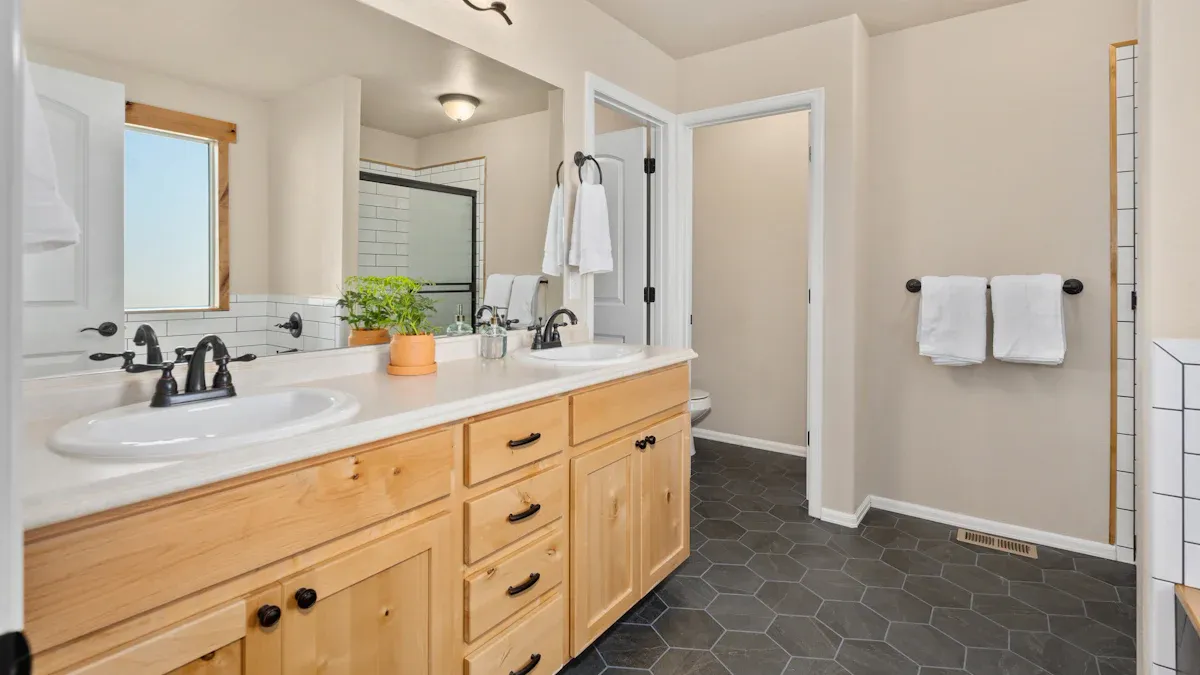
If you love the authentic look and feel of real hardwood, you have options beyond vinyl. Engineered hardwood flooring offers a path to getting genuine wood in your bathroom. However, you must approach this choice with caution. These floors require more care than their waterproof vinyl counterparts. You are trading the worry-free nature of SPC for the unmatched beauty of real wood.
2. Engineered Wood with a Waterproof Core
A new generation of engineered hardwood flooring offers a compelling solution for your bathroom. These products combine a real hardwood veneer with a 100% waterproof core. This hybrid design gives you the real wood beauty you want with enhanced protection against moisture. Unlike standard engineered hardwood, the core of this flooring will not swell or warp when exposed to water. This makes it a much safer bet for moisture-prone spaces.
Leading brands offer innovative waterproof hardwood products. For example, Hartco’s HydroBlok™ technology provides a waterproof guarantee for up to 36 hours. Other brands like Genix Flooring use special interlocking systems to create a tight seal across the floor, preventing water from seeping between planks. This technology is a significant step forward for using hardwood in a bathroom.
Even with a waterproof core, remember that the top layer is still real hardwood. While the core is protected, the surface veneer can still absorb moisture. This makes it different from waterproof core vinyl, which is completely synthetic and impervious to water. The hygroscopic nature of wood means it can still react to high humidity. You get the authentic hardwood experience, but you must still be diligent about wiping up spills.
This type of engineered flooring bridges the gap between traditional hardwood and waterproof core vinyl. It is an excellent choice if you prioritize the feel of real hardwood but need protection for your bathroom.
3. High-Quality Plywood-Core Engineered Wood
You can also consider a traditional engineered hardwood for your bathroom if you choose a high-quality product. The key to success lies in the construction of the core. High-quality engineered hardwood uses a multi-layered, cross-grained plywood core. This structure provides superior dimensional stability. The crisscrossing layers resist the natural tendency of wood to expand and contract with changes in humidity. This makes the flooring less likely to warp or buckle in a damp bathroom environment.
What makes a plywood core high-quality?
- More Layers: Premium engineered planks often have nine to eleven layers of plywood, compared to the standard three to five. This creates a stronger, more stable board.
- Better Materials: Manufacturers use cabinet-grade plywood with solid, void-free layers. This prevents weak spots where moisture could collect.
- Safer Adhesives: Top-tier engineered hardwood uses formaldehyde-free adhesives, which improves your home’s air quality.
This enhanced stability makes this type of engineered hardwood flooring suitable for a bathroom. However, it is not waterproof. You must be extremely careful to protect the flooring from moisture. Proper maintenance is not just recommended; it is essential.
Your daily and weekly care routine will be critical.
- Wipe Spills Immediately: Never let water sit on the surface. Pay close attention to seams and edges where water can seep in.
- Use Proper Ventilation: Run your exhaust fan during and after every shower to control humidity.
- Clean Gently: Sweep regularly and use only a damp mop with a cleaner made for engineered hardwood.
- Place Rugs Strategically: Use bath mats in front of the shower, tub, and sink to catch splashes.
You must also watch for signs of water damage. Catching problems early can save your engineered hardwood flooring. Look for issues like cupping, where the board edges are higher than the center, or crowning, where the center is raised. Other warning signs include:
- Discoloration: Dark stains or white, chalky streaks can appear on the hardwood surface.
- Warping or Blistering: The wood veneer may start to peel, bubble, or distort.
- Mold or Mildew: A musty smell or visible splotches indicate a serious moisture problem.
Choosing this type of engineered hardwood for your bathroom means accepting the risks and committing to diligent maintenance. In return, you get the authentic warmth and beauty that only real hardwood can provide. These wood floors for bathrooms offer a classic look, but they demand your attention to keep them looking their best.
Exploring Other Durable Wood-Look Alternatives
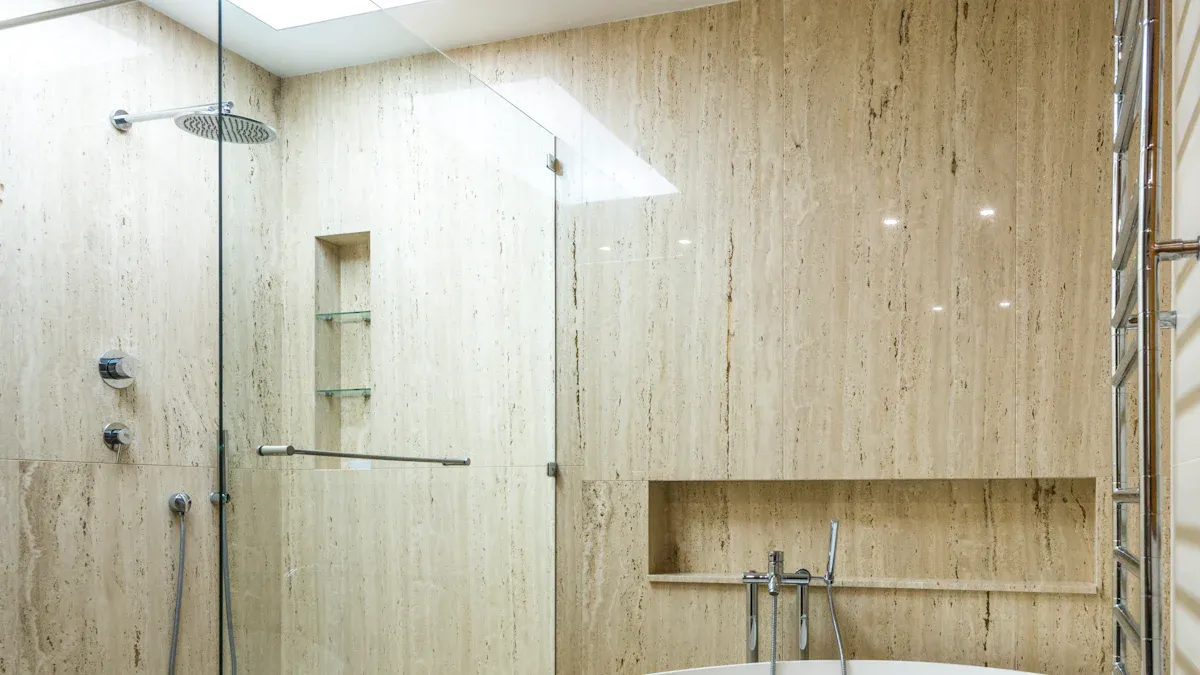
Beyond SPC and engineered hardwood, you have other excellent choices for your bathroom. These alternatives offer the wood look you want with the performance a bathroom demands. You can find a durable flooring solution that fits your style and needs.
4. WPC (Wood Plastic Composite) Vinyl
WPC vinyl is another type of waterproof vinyl flooring. It is the predecessor to SPC vinyl. The core of WPC contains wood pulp and plasticizers, which makes it softer and quieter underfoot than SPC. This can make your bathroom feel warmer and more comfortable. These engineered vinyl planks are 100% waterproof, so you do not have to worry about spills or humidity damaging the flooring.
However, the softer core of WPC vinyl has a downside. It is less dense than SPC. This means it can dent more easily under the weight of heavy objects.
- WPC Vinyl: Softer and quieter but can dent more easily.
- SPC Vinyl: Denser and more durable, offering better resistance to scratches and dents.
For a kid’s bathroom or a guest bathroom with less traffic, WPC vinyl is a great choice. It provides a comfortable, waterproof surface. For a primary bathroom, you may want the superior durability of SPC vinyl.
5. Wood-Look Porcelain or Ceramic Tile
For ultimate durability, you should consider wood-look tile. This flooring is made from porcelain or ceramic, making it completely waterproof and incredibly tough. Modern printing technology creates tiles that mimic the beauty of real wood with stunning realism. You get a low-maintenance and easy to clean surface perfect for any bathroom.
When you shop for tile, look for its PEI rating. This rating measures the tile’s hardness and durability. For a busy bathroom, you should choose a tile with a PEI rating of III or IV. This ensures your flooring can handle heavy foot traffic for years. This is a truly durable option for your bathroom.
While tile offers unmatched performance, you should know its installation is more complex and costly. The installation cost for wood-look tile is often double that of luxury vinyl tile options like SPC or WPC. This is because installing tile requires more time, skill, and materials.
If your budget allows, tile provides a beautiful, worry-free flooring solution for your bathroom. You get the classic look of wood with the unbeatable performance of porcelain, a great alternative to waterproof vinyl floors or waterproof vinyl tile flooring.
Is Laminate a Good Waterproof Option?
You might wonder if laminate flooring is a good choice for your bathroom. In the past, the answer was a clear no. Today, technology has made laminate more water-resistant, but you should still be very careful. It is not a truly waterproof flooring, making it a risky option for a high-moisture bathroom.
6. Water-Resistant Laminate Flooring
Modern laminate flooring has seen major improvements. These changes help it stand up to moisture better than older versions. Manufacturers have focused on protecting the wood-based core, which is laminate’s biggest weakness in a bathroom.
Key advancements include:
- Improved Core Materials: Some brands use highly compacted wood fiber cores with special binders. This makes the core denser and more resistant to swelling from water.
- Advanced Locking Systems: New locking designs, like TripleLock or 5G Dry, create tighter seams between planks. This technology helps stop water from seeping through to the subfloor.
- Protective Surface Treatments: Special coatings like WetProtect and Aqua Protect are applied to the planks. These treatments actively repel water from the joints, giving you more time to clean up spills.
It is very important to understand the difference between “water-resistant” and “waterproof.” Water-resistant flooring can handle spills for a set amount of time. A truly waterproof flooring can handle water indefinitely. This difference is critical for a bathroom.
This table breaks down what these terms mean for your flooring choice.
| Feature | Water-Resistant Laminate | Waterproof Laminate |
|---|---|---|
| Water Exposure | Can handle spills for a limited time (e.g., 24-72 hours) | Can handle water indefinitely without damage |
| Subfloor Moisture | Does not protect against moisture from below | Offers better protection from subfloor moisture |
| Warranty Reality | Damage is not covered if water sits too long | Warranties often do not cover floods or major leaks |
Even with a “waterproof” label, most laminate warranties will not cover damage from a flood, a burst pipe, or an overflowing tub. The warranty protects the flooring under normal use, not major water events. For this reason, laminate remains a gamble for a full bathroom. While the surface is durable and easy to clean, a single accident could ruin your flooring. If you decide on laminate for a half-bathroom with low moisture, you must be diligent about wiping up every drop of water. For a main bathroom, a truly waterproof option like SPC vinyl is a much safer investment.
The Flooring to Avoid in a Full Bathroom
While many flooring options try to look like wood, one type of flooring is the real thing. You might be tempted to install it in your bathroom for its classic beauty. However, you must avoid this choice for any full bathroom.
7. Solid Hardwood Flooring
Solid hardwood flooring is a beautiful and timeless choice for many rooms in your home, but it is the worst possible option for a bathroom. Unlike engineered hardwood, each plank of solid hardwood is a single piece of wood. This makes it extremely vulnerable to the high humidity and temperature swings found in a bathroom. Solid hardwood is a natural material that expands and contracts with changes in its environment. The constant moisture in a bathroom creates an unstable setting for this type of flooring.
Wood is a porous material. It naturally absorbs moisture from the air. In a steamy bathroom, solid hardwood will soak up excess water vapor. This absorption causes the wood fibers to swell. When one side of a hardwood plank absorbs more moisture than the other, problems begin. This process leads to cupping and warping.
- The side of the hardwood plank closest to the moisture expands.
- This uneven expansion causes the edges of the board to rise.
- The center of the board stays lower, creating a cupped or concave shape.
This reaction happens because the hardwood is always trying to match its internal moisture content with the air in your bathroom. The constant high humidity means the hardwood is always expanding. This makes solid hardwood flooring a disastrous choice for a bathroom. Even with a high-quality finish, water will eventually find its way into the seams and wood grain. No amount of sealant can fully protect solid hardwood from the daily conditions of a bathroom. For these reasons, you should never install solid hardwood flooring in a full bathroom. It is a beautiful flooring, but it belongs in a drier part of your home.
For worry-free wood floors for bathrooms, SPC is the best bathroom flooring. This durable SPC flooring is 100% waterproof, making it the ideal waterproof bathroom flooring for your bathroom. If you prefer real hardwood, engineered hardwood flooring is an option for your bathroom, but this hardwood requires maintenance.
SPC vinyl offers superior durability. This waterproof core vinyl is a low-maintenance, 100% waterproof flooring. Your final choice for your bathroom balances beauty and performance. For most bathrooms, the durable, 100% waterproof SPC vinyl is the best bathroom flooring. This engineered hardwood flooring is a good choice for a bathroom with less moisture. The waterproof vinyl flooring from SPC is a great choice for any bathroom. This engineered hardwood flooring is a great hardwood choice. This hardwood is a great choice for your bathroom. SPC is a great choice for your bathroom. SPC is a great choice for your bathroom. SPC is a great choice for your bathroom. SPC is a great choice for your bathroom. SPC is a great choice for your bathroom. SPC is a great choice for your bathroom. This engineered hardwood flooring is a great hardwood choice. This engineered flooring is a great hardwood choice. This hardwood is a great choice for your bathroom. This durable flooring provides waterproof vinyl floors. This durable flooring is a great choice for your bathroom.
FAQ
What is the most waterproof flooring for a bathroom?
SPC vinyl is the most waterproof flooring for a bathroom. Its stone-plastic composite core is 100% waterproof. This material offers the best protection for any bathroom, preventing water damage to your subfloor. This is the ideal bathroom flooring.
Can I put any engineered wood in my bathroom?
You should be very selective. Choose engineered flooring with a waterproof core for your bathroom. Standard plywood-core options are risky. The right choice gives your bathroom better moisture defense.
How do I protect my bathroom floor from water damage?
You can protect your bathroom flooring easily. Wipe up all spills immediately. Use bath mats in wet areas. Proper ventilation in your bathroom is also very important to control humidity and protect the flooring.
Is professional installation necessary for bathroom flooring?
Professional installation is highly recommended for a bathroom. An expert creates a perfect, watertight seal. This prevents moisture from reaching the subfloor. It is the best way to protect your new bathroom flooring.




