
You might wonder, what is spc flooring and why do so many people choose it? When you look for strong floors that handle water and heavy foot traffic, you often hear about what is spc flooring. This type of flooring stands for Stone Plastic Composite. What is spc flooring? It combines limestone and stabilizers to give you a rigid, tough surface. Many homeowners ask, what is spc flooring, especially when they see its popularity in both homes and businesses. The global market size for what is spc flooring is set to reach $8,324.74 million USD in 2025. You will notice what is spc flooring in places like schools, stores, and hospitals because it resists water and damage. The U.S. housing market alone saw over $1.1 billion in spc flooring sales in 2026, showing how common it has become.
Key Features of SPC Flooring
SPC Flooring Composition and Structure
You will find that spc flooring stands out because of its unique layers. The main material is stone polymer composite, which combines stone powder and polymer thermoplastics. This mix gives you a strong and flexible base. The structure of spc flooring includes several important layers. Here is a table that shows each layer and its purpose:
| Layer | Description |
|---|---|
| Basic Material Layer | A composite material combining stone powder and polymer thermoplastic materials for strength and flexibility. |
| Decor Film Layer | A PVC film layer with customizable patterns for aesthetic appeal. |
| Wear Layer | A protective layer that reduces damage from impacts during use. |
| UV Coating | A transparent layer that enhances color saturation and prevents fading from UV exposure. |
You also get a vinyl top layer that looks like wood or stone. The rigid core gives stability and makes the flooring waterproof. The backing layer adds comfort and helps with sound insulation. When you choose spc flooring, you get a product that combines the best features of vinyl flooring with extra strength and style.
Tip: The wear layer protects your floor from scratches and dents, making it a durable flooring choice for busy homes.
Durability and Water Resistance
You want floors that last and handle spills. SPC flooring offers impressive durability. The rigid core makes it tough enough for high-traffic areas. You can use it in places like kitchens, bathrooms, and basements because it is fully waterproof. This means you do not have to worry about water damage or warping.
Here is how laboratory tests show the water resistance of spc flooring:
| Test Type | Description | Expected Outcome |
|---|---|---|
| Water Absorption Test | Flooring is exposed to water for a set duration to measure weight changes. | Minimal weight gain indicates low absorption. |
| Moisture Resistance Test | Evaluates the flooring’s ability to maintain integrity in humid conditions. | No significant dimensional changes. |
You will notice that spc flooring resists scratches and stains. This makes it a good choice for homes with pets or children. Many manufacturers offer warranties of 20-30 years, showing confidence in the product’s durability. You get a floor that stays beautiful and strong for many years.
- SPC flooring is designed to withstand heavy foot traffic and impacts.
- It offers unique advantages over other types of vinyl flooring, making it a top pick for water resistant and durable flooring.
Installation Methods
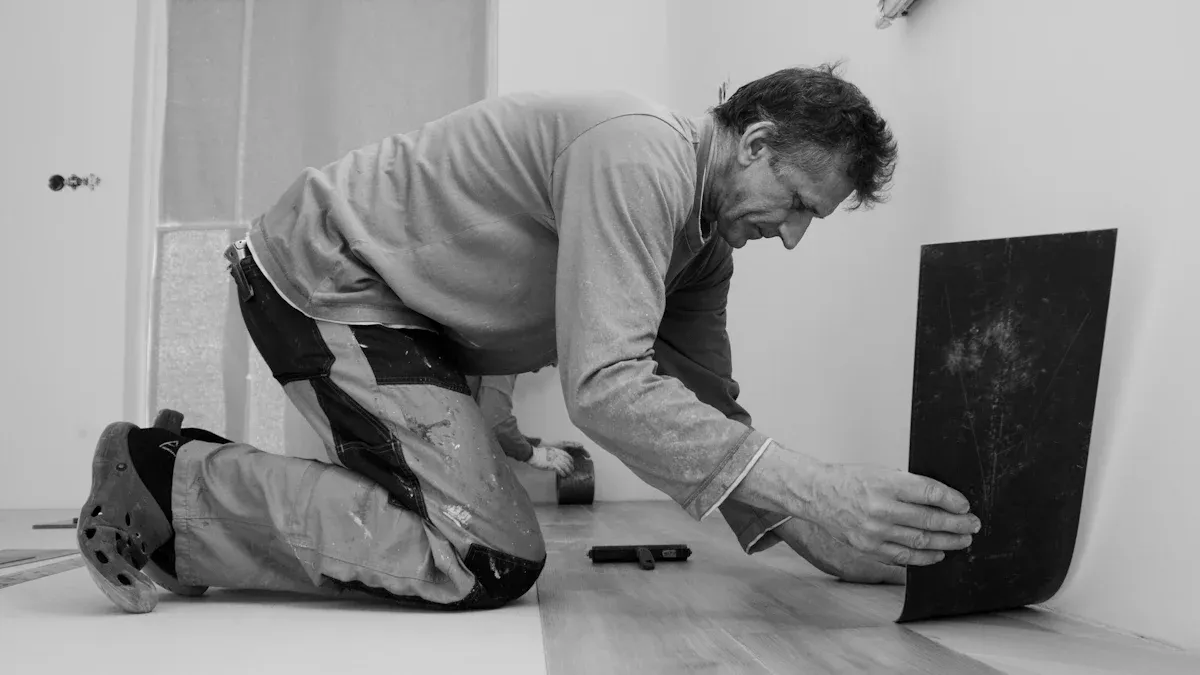
You can install spc flooring using different methods. The most popular way is the click-lock design. This method lets you snap the planks together without glue. You can do it yourself, and it saves time. Another method is glue down flooring, which uses adhesive to stick the planks to the subfloor.
| Installation Method | Description | Average Installation Time |
|---|---|---|
| Glue Down Flooring | Requires adhesive to bond the planks to the subfloor. | N/A |
| Click Lock Flooring | Features a simple click installation process, allowing for easy DIY. | N/A |
When you install spc flooring, you need some basic tools:
- Utility knife
- Spacers
- Pencil
- Tape measure
- Ruler
- Safety goggles
You can cut the planks to fit your space. The click-lock design makes the process simple and clean. You do not need special skills to lay vinyl flooring with this system. You get a smooth finish and a water resistant surface that works well in any room.
Design and Style Options
You can choose from a wide range of design options when you select spc flooring for your space. Major manufacturers offer many choices to match your taste and needs. You see colors, textures, and finishes that fit almost any room or style.
- You find embossed wood grain and stone-pattern finishes that look and feel real.
- Customizable textures come in matte, gloss, or mixed styles. These choices help you create a unique look and add a special touch to your floors.
- Many designs cater to different preferences, so you can pick what suits your home or business best.
Current trends in spc flooring show that warm beiges remain popular in homes and offices. Terracottas add a cozy feel, while deep emeralds and rich navies bring bold color to commercial spaces. Cool grays offer a modern look for those who want something sleek.
- Ultra-realistic wood grain embossing gives you the appearance of natural wood.
- 3D geometric patterns work well in commercial areas and make the floor stand out.
- Stone-look finishes add elegance and a natural vibe to any room.
Tip: You can mix and match colors and textures to create a floor that reflects your personality. This flexibility makes spc flooring a smart choice for anyone who wants both style and durability.
With so many design options, you can easily find a style that matches your vision. You get the freedom to personalize your space and enjoy a floor that looks great and lasts for years.
SPC Flooring vs. Other Flooring Types
SPC Flooring vs. WPC Flooring
You may wonder how SPC flooring compares to WPC flooring. Both types belong to the family of rigid core vinyl plank flooring, but they have important differences. The main difference comes from the core material. SPC flooring uses a dense mix of limestone powder and PVC, while WPC flooring uses wood fibers and PVC. This makes SPC flooring harder and more resistant to dents and scratches. WPC flooring feels softer under your feet and absorbs sound better.
Here is a table to help you see the differences:
| Feature | SPC Flooring | WPC Flooring |
|---|---|---|
| Material Composition | Limestone powder and PVC | Wood fibers and PVC |
| Durability | Very high, resists dents and scratches | Good, but less impact resistance |
| Water Resistance | Excellent, nearly waterproof | Excellent, but slightly more porous |
| Comfort Underfoot | Feels solid, can be cold | Softer and warmer feel |
| Sound Insulation | Less effective | Better sound absorption |
SPC flooring usually costs a bit more, but it lasts longer and needs fewer replacements. You can expect it to last over 20 years with proper care.
SPC Flooring vs. Laminate Flooring
You might also compare SPC flooring to laminate flooring. Both look like wood or stone, but their performance is different. SPC flooring is waterproof, so you can use it in kitchens and bathrooms. Laminate flooring is not waterproof and can swell if it gets wet. SPC flooring is also more durable and resists scratches and dents better.
- Laminate flooring costs less, usually between $1 and $4 per square foot.
- SPC flooring costs a bit more, from $2 to $6 per square foot.
- Both types need extra money for professional installation.
Tip: If you want a floor for busy or wet areas, SPC flooring is a safer choice than laminate.
SPC Flooring vs. Traditional Vinyl Flooring
You may have seen traditional vinyl plank flooring in many homes. It feels softer and offers many design choices. However, SPC flooring has a rigid core made from limestone and PVC, which makes it stronger and more stable. Traditional vinyl plank flooring uses only PVC, so it is more flexible but less resistant to dents.
- SPC flooring lasts longer, so you replace it less often.
- The strong core of SPC flooring helps it handle heavy use in busy spaces.
- Choosing SPC flooring can also help the environment because you throw away less flooring over time.
Note: Both types of vinyl plank flooring have pros and cons, but SPC flooring gives you more strength and durability for high-traffic areas.
Advantages and Disadvantages of SPC Flooring
Main Advantages of SPC Flooring
When you choose spc flooring, you get several important benefits. Industry experts highlight three main advantages:
- Durability: The mix of limestone and PVC makes this flooring tough. You can use it in busy areas without worrying about damage.
- Waterproof Properties: You do not have to worry about spills or moisture. This flooring works well in kitchens, bathrooms, and basements.
- Low Maintenance: You can keep your floors clean with simple sweeping and mopping. You do not need special cleaners or treatments.
You also help improve indoor air quality when you install this flooring. Take a look at how it compares to other types:
| Feature | SPC Flooring | Other Flooring Types |
|---|---|---|
| VOC Emissions | Low VOC, safer for indoor air | Higher VOC levels, can release harmful chemicals |
| Formaldehyde | Free from formaldehyde | Often contains formaldehyde |
| Phthalates | Free from phthalates | Commonly found in other vinyl products |
| Dust and Allergen Buildup | Prevents buildup | May contribute to dust and allergens |
Tip: If you want a healthy home, this flooring helps reduce harmful chemicals and allergens.
Potential Drawbacks of SPC Flooring
You should also know about some drawbacks before you decide. Many people report that this flooring feels hard underfoot. You may notice discomfort if you stand for a long time. The surface does not feel as warm as wood or carpet.
- SPC flooring may lack warmth compared to other materials.
- It may not be comfortable underfoot, especially for prolonged standing.
- Heavy objects can damage the flooring if dropped.
- The texture may not look or feel exactly like natural wood or stone.
Here is a table that shows the most common concerns:
| Drawback | Description |
|---|---|
| Discomfort underfoot | SPC flooring can feel hard, leading to discomfort when standing for long periods. |
| Potential damage from heavy objects | While scratch-resistant, heavy items can still cause damage if dropped. |
| Lack of realistic texture | SPC may not fully replicate the feel of natural materials like hardwood. |
Note: You can add area rugs or mats to make your space more comfortable.
Durability, Maintenance, and Suitability of SPC Flooring
Longevity and Scratch Resistance
When you choose SPC flooring, you get a product known for its impressive durability. The stone polymer composite structure gives this flooring a strong core. You can expect SPC flooring to last between 10 to 25 years on average. In busy commercial spaces, the lifespan usually ranges from 10 to 15 years. This long life comes from the way the layers work together to resist wear.
- The multi-layer design includes a tough wear layer that protects against scratches.
- SPC flooring stands up well to daily abrasion and heavy foot traffic.
- You will notice fewer dents and scratches compared to wood or laminate floors.
SPC flooring acts like a shield for your floors. It keeps its appearance even in high-traffic areas. This level of durability makes it a smart choice for homes with kids or pets.
Tip: If you want a floor that keeps looking new, SPC flooring offers the durability you need.
Cleaning and Maintenance
You can keep your SPC flooring looking great with simple care. Start by sweeping or vacuuming every day to remove dust and dirt. For weekly cleaning, use a damp mop with a pH-neutral cleaner. Always follow the manufacturer’s instructions for best results. If you spill something, wipe it up right away with a soft cloth and rinse with water. For tough stains, you can use isopropyl alcohol or mineral spirits, but avoid harsh chemicals or abrasive tools.
| Cleaning Frequency | Description |
|---|---|
| Daily | Sweep or vacuum to remove dust and debris. |
| Weekly | Mop with a suitable cleaner to keep the floor fresh. |
| Periodic | Deep clean every few months to maintain appearance. |
A regular cleaning routine helps protect the durability of your flooring. You do not need special products, just gentle cleaners and a soft mop.
Best Environments for SPC Flooring
SPC flooring works well in many settings because of its durability and stability. You can install it in cold climates, such as the Northern USA and Canada. It handles humidity and temperature changes without warping or cracking. The stone-based core resists heat and moisture, making it ideal for kitchens, bathrooms, and basements.
- SPC flooring performs best in climate-controlled environments.
- The recommended temperature range is 55° to 85°F, with an average of 70°F.
- It stays stable in both warm and cold conditions.
You can trust SPC flooring to keep its durability in places where other floors might fail. Its moisture resistance and strong core make it a top choice for both homes and businesses.
SPC flooring gives you a durable, waterproof, and easy-to-install option for busy spaces. You benefit from its strong core, stylish designs, and low maintenance. Many businesses, such as hotels, retail stores, and healthcare facilities, choose SPC flooring for its ability to handle heavy traffic and resist damage.
| Feature | SPC Flooring Benefits |
|---|---|
| Durability | Exceptional resistance to damage and indentations |
| Water Resistance | Highly resistant to moisture, suitable for various areas |
| Ease of Installation | Simple to install, saving time and labor costs |
| Aesthetic Flexibility | Wide range of styles and designs available |
You should consider SPC flooring if you want a long-lasting, attractive floor that stands up to daily wear.
FAQ
What makes SPC flooring different from regular vinyl flooring?
SPC flooring uses a stone polymer composite core. You get a stronger, more stable floor. Regular vinyl flooring uses only PVC, which feels softer but does not resist dents as well.
Can you install SPC flooring over existing tiles?
You can install SPC flooring over most existing tiles. Make sure the surface is clean, dry, and level. The click-lock system helps you finish the job quickly.
Is SPC flooring safe for homes with pets?
SPC flooring works well in homes with pets. The wear layer resists scratches and stains. You clean up messes easily, and your pets will not damage the surface.
How do you clean SPC flooring?
Sweep or vacuum daily to remove dust. Mop with a damp cloth and a pH-neutral cleaner weekly. Avoid harsh chemicals. You keep your floor looking new with simple care.
Does SPC flooring feel cold underfoot?
SPC flooring can feel cooler than wood or carpet. You add area rugs or mats for extra warmth and comfort. Many people use rugs in bedrooms and living rooms.




