
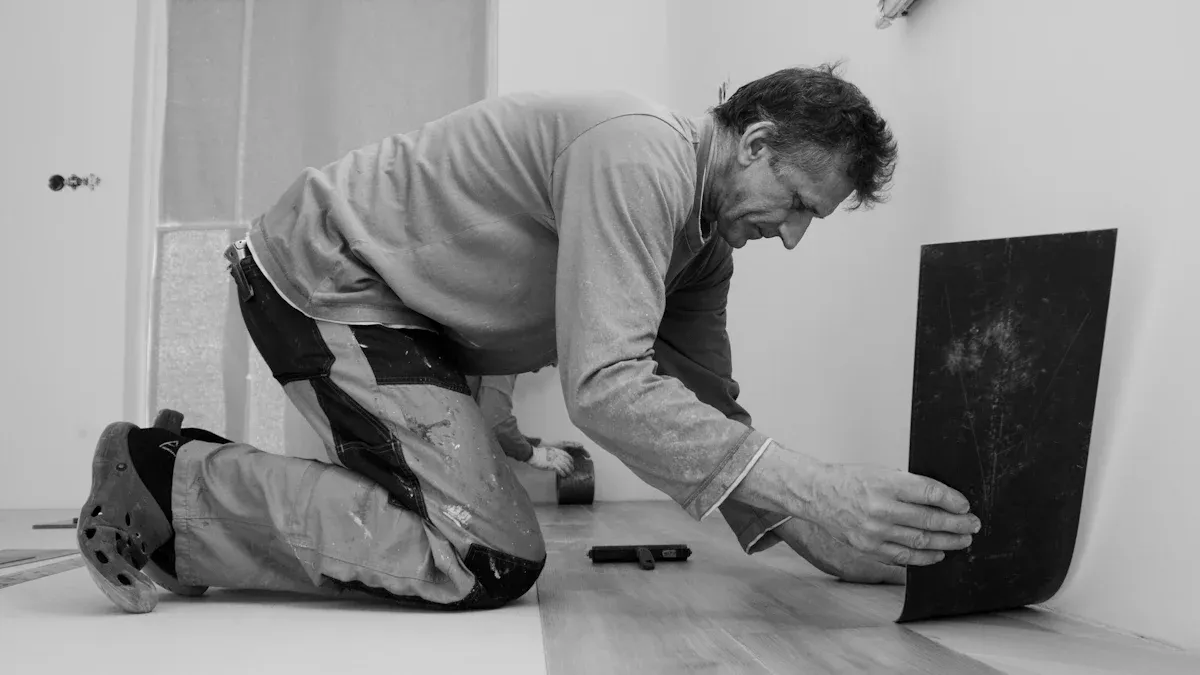
You want a flooring solution that stands up to daily wear, feels comfortable underfoot, and looks great in your space. Mineral core flooring offers strong durability and water resistance, making it a top choice for busy homes. SPC flooring remains popular worldwide, with North America and Europe holding over half of the market share.
- SPC flooring made up 63.7% of the LVT segment in 2021.
- SPC generated $3.699 billion in sales out of $5.807 billion for LVT that year.
| SPC Flooring Strengths | SPC Flooring Weaknesses |
|---|---|
| 100% Waterproof | Not super scratch resistant |
| Low installation cost | Thinner material lacks cushioning |
| Easy installation | Needs a flat floor for installation |
| Aesthetic variety | Cannot be installed outdoors |
| Environmentally-friendly | Can fade in sunlight |
| Better air quality | Lower resale value than hardwood |
You should choose mineral core flooring for high-traffic or wet areas. SPC works well for quick installation and budget-friendly projects.
Flooring Types Overview
What Is Mineral Core Flooring
You may want a floor that stands up to heavy use and moisture. Mineral core flooring uses a blend of natural minerals and polymers to create a dense, rigid core. This type of flooring resists dents and scratches better than many other options. You can install mineral core flooring in kitchens, bathrooms, or entryways where water and foot traffic are common. The core structure gives you stability and helps prevent warping. Mineral core flooring often features a realistic wood or stone look, so you get style and performance in one product.
What Is Traditional SPC Flooring
SPC flooring stands for Stone Plastic Composite. You get a tough, waterproof surface with SPC vinyl flooring. The core contains limestone powder, polyvinyl chloride, and stabilizers. This mix creates a rigid core that resists impacts and moisture. You can use SPC vinyl flooring in basements, laundry rooms, or commercial spaces. SPC vinyl flooring installs easily with a click-lock system. You do not need glue or nails. SPC vinyl flooring feels firm underfoot, but it does not offer much cushioning. You may notice that SPC vinyl flooring works best on flat subfloors. Many homeowners choose SPC vinyl flooring for its quick installation and wide range of styles.
Overview of Other Flooring Types
You have many choices when you shop for flooring. Each type offers unique benefits and challenges.
Here is a quick look at popular flooring types:
| Flooring Type | Characteristics | Typical Applications |
|---|---|---|
| Wood | Beautiful grain, needs care, can suffer from moisture. | Homes, matches many décor styles. |
| Vinyl | Durable, waterproof, easy to clean, many styles. | Kitchens, living rooms, high-traffic areas. |
| Laminate | Durable, water-resistant, looks like wood. | Homes with pets or kids, easy maintenance. |
| Stone or Cement | Sophisticated, expensive, hard to maintain. | High-end residential spaces. |
| Carpet | Soft, needs regular cleaning, quiet. | Offices, bedrooms, quiet areas. |
- Laminated timber flooring gives you the look of wood with easier cleaning.
- WPC flooring uses wood and plastic for a softer feel and better sound absorption.
- Rigid core vinyl flooring combines strength and water resistance for busy spaces.
- You may find that wpc flooring and rigid core vinyl flooring work well in homes with pets or children.
- Laminated timber flooring resists scratches and stains, so you spend less time on upkeep.
- Wpc flooring offers comfort and warmth, making it a good choice for bedrooms.
- Laminated timber flooring can boost your home’s style without the high cost of hardwood.
Tip: When you compare flooring, think about your home’s needs. Wpc flooring and rigid core vinyl flooring suit busy families. Laminated timber flooring works well if you want easy care and a wood look.
Mineral Core Flooring Core Composition
Mineral Core vs SPC
You want to know how mineral core flooring compares to SPC flooring. Both use minerals in their core, but the mix and performance differ. Mineral core flooring uses calcium carbonate mixed with polymer resins. This blend creates a strong and stable base. You get a floor that resists dents and moisture. SPC flooring also uses calcium carbonate, but it mixes with PVC and plasticizers. This makes SPC extremely rigid and stable.
Here is a table that shows the differences:
| Flooring Type | Core Composition | Performance Characteristics |
|---|---|---|
| Mineral Core Flooring | Calcium carbonate and polymer resins | Robust, stable, moisture-resistant |
| SPC | Dense mixture of limestone powder and PVC | Extremely rigid and stable |
You notice that both types offer durability. Mineral core flooring gives you extra moisture resistance and stability. SPC flooring stands out for its hardness and dent resistance. You can use either in busy areas, but mineral core flooring works better if you want more comfort and moisture protection.
Tip: Choose mineral core flooring for kitchens or bathrooms. Pick SPC flooring for commercial spaces where you need a tough, rigid surface.
Mineral Core vs WPC
You may wonder how mineral core flooring stacks up against WPC. WPC stands for Wood Polymer Composite. It uses wood fibers, PVC, plasticizers, and a foaming agent. This mix creates a softer and more comfortable floor. Mineral core flooring, on the other hand, uses minerals and polymers for a denser, more stable core.
Here is a table to help you compare:
| Flooring Type | Core Composition | Density | Durability |
|---|---|---|---|
| Mineral Core Flooring | Calcium carbonate and polymer resins | Very dense | High, resists dents and moisture |
| WPC | PVC, plasticizers, foaming agent, wood pulp/fibers | Less dense, more resilient | Good, but can dent under heavy loads |
You get more comfort with wpc, but mineral core flooring offers better resistance to dents and water. Wpc works well in bedrooms or living rooms where you want a softer feel. Mineral core flooring suits entryways, kitchens, and bathrooms.
- Wpc flooring uses wood fibers, so it feels warmer and softer.
- Mineral core flooring uses minerals, so it feels firmer and lasts longer.
- Wpc flooring absorbs sound better, making rooms quieter.
- Mineral core flooring resists heavy foot traffic and moisture.
Note: If you want a floor that feels soft and quiet, wpc flooring is a good choice. If you need durability and water resistance, mineral core flooring is better.
Mineral Core vs Laminate
You might compare mineral core flooring to laminate flooring. Laminate uses a fiberboard core with a printed layer on top. This core does not handle moisture well. Mineral core flooring uses minerals and polymers, so it resists water and dents.
Here is a quick list to show the differences:
- Laminate flooring has a wood-based core. Water can damage it.
- Mineral core flooring uses calcium carbonate and polymers. Water does not harm it.
- Laminate flooring scratches easily. Mineral core flooring resists scratches.
- Laminate flooring works best in dry areas. Mineral core flooring works in kitchens, bathrooms, and entryways.
You see that mineral core flooring gives you more options for wet or busy spaces. Laminate flooring looks nice but needs more care.
Tip: Use mineral core flooring in places with lots of moisture. Use laminate flooring in bedrooms or offices where spills are rare.
Mineral Core vs Hardwood
You might love the look of hardwood floors. Hardwood gives your home a warm and classic style. You can sand and refinish hardwood many times. This helps you keep your floor looking new for years. Hardwood feels solid under your feet. It adds value to your home. Many people choose hardwood for living rooms and bedrooms.
Mineral core flooring gives you a different set of benefits. You get a floor that resists water and dents. You do not need to worry about scratches from pets or moving furniture. You can install mineral core flooring in kitchens, bathrooms, and basements. Hardwood does not handle water well. If you spill water on hardwood, it can warp or stain. Mineral core flooring stands up to spills and moisture.
Here is a table to help you compare:
| Feature | Mineral Core Flooring | Hardwood Flooring |
|---|---|---|
| Water Resistance | Excellent | Poor |
| Scratch Resistance | High | Moderate |
| Maintenance | Easy | Needs regular care |
| Lifespan | 15-25 years | 30+ years (with care) |
| Refinishing | Not possible | Can be refinished |
| Comfort | Firm, stable | Warm, natural feel |
| Installation Areas | Any room, even wet areas | Dry areas only |
Tip: Choose mineral core flooring if you want a worry-free floor for busy or wet spaces. Pick hardwood if you want a classic look and do not mind extra care.
You can clean mineral core flooring with a damp mop. Hardwood needs special cleaners and quick attention to spills. If you have pets or kids, mineral core flooring can save you time and stress. Hardwood works best in rooms where you want beauty and do not expect much water.
Mineral Core vs Tile
You may wonder how mineral core flooring compares to traditional tiles. Many people use traditional tiles in kitchens, bathrooms, and entryways. Traditional tiles resist water and stains. You can find them in many colors and patterns. They feel cool underfoot and last a long time. If you drop something heavy, traditional tiles can crack or chip. You may need to replace broken tiles, which can be hard to match.
Mineral core flooring gives you a different experience. You get a floor that looks like stone or wood. It feels warmer and softer than traditional tiles. You can walk barefoot on mineral core flooring without feeling cold. You do not need grout, so cleaning is easy. Traditional tiles need grout, which can stain or grow mold if you do not clean it often.
Here are some key differences:
- Mineral core flooring installs faster than traditional tiles.
- You can cut mineral core flooring with simple tools. Traditional tiles need special saws.
- Mineral core flooring resists dents and scratches. Traditional tiles resist water but can chip.
- You can install mineral core flooring over many subfloors. Traditional tiles need a very flat and strong base.
| Feature | Mineral Core Flooring | Traditional Tiles |
|---|---|---|
| Water Resistance | Excellent | Excellent |
| Comfort | Warmer, softer | Cool, hard |
| Installation | Quick, easy | Slow, needs skill |
| Maintenance | Simple, no grout | Needs grout care |
| Durability | Resists dents, not chips | Can chip or crack |
| Design Options | Wood and stone looks | Many colors and patterns |
Note: If you want a floor that feels comfortable and installs quickly, mineral core flooring is a smart choice. If you prefer a classic, cool surface, traditional tiles work well.
You can use mineral core flooring in places where you would use traditional tiles. You get the same water resistance but more comfort. Traditional tiles last a long time if you care for them. Mineral core flooring gives you a modern look and easy care. You do not need to worry about cold feet or cracked tiles. Many homeowners now choose mineral core flooring instead of traditional tiles for bathrooms and kitchens. You can enjoy the look of stone or wood without the hard feel of traditional tiles. If you want to update your space, mineral core flooring offers a fresh alternative to traditional tiles.
Durability and Performance Comparison
Scratch and Dent Resistance
You want a floor that stands up to daily life. Mineral core flooring gives you a tough surface that resists scratches from shoes, pets, and moving furniture. The dense core helps prevent dents, even in high-traffic areas. SPC flooring also offers strong protection against dents because of its rigid structure. However, you may notice that SPC can show scratches more easily than mineral core flooring, especially if you drag heavy objects across it.
Vinyl flooring provides good scratch resistance, but it may not match the strength of mineral core or SPC. Laminate flooring can scratch if you move sharp objects or heavy furniture. Hardwood floors look beautiful, but they can dent and scratch over time. Tile resists scratches well, but it can chip if you drop something heavy.
Here is a quick comparison:
| Flooring Type | Scratch Resistance | Dent Resistance |
|---|---|---|
| Mineral Core Flooring | High | High |
| SPC | Moderate-High | High |
| Vinyl Flooring | Moderate | Moderate |
| Laminate | Moderate | Moderate |
| Hardwood | Moderate | Low-Moderate |
| Tile | High | Moderate |
Tip: If you have pets or kids, choose a floor with high scratch and dent resistance for a long-lasting flooring solution.
Stability in Temperature and Humidity
You may worry about how your floor will react to changes in temperature or humidity. Mineral core flooring uses mineral powder in its core. This design increases stability and helps prevent warping, even in extreme conditions. You can install it in rooms that get hot in summer or cold in winter without worrying about movement.
SPC flooring also performs well in temperature tests. It shows 80% less seasonal movement than hardwood when temperatures swing from 70°F to -20°F. You can trust SPC to keep its shape in sub-zero environments. It outperforms hardwood and laminate in these situations. Vinyl flooring handles humidity well, but it may expand or contract more than mineral core or SPC. Laminate and hardwood can warp or swell if exposed to moisture or big temperature changes.
- Mineral core flooring resists warping in extreme heat or cold.
- SPC flooring keeps its structure in freezing temperatures.
- Laminate and hardwood may not handle humidity or temperature swings as well.
Note: For rooms with big temperature changes or high humidity, mineral core flooring and SPC give you the best stability.
Lifespan and Warranty
You want your new floor to last for years. Mineral core flooring offers a long lifespan because of its dense core and strong surface. You can expect it to look good and perform well for many years with proper care. SPC flooring usually lasts between 10 to 25 years. High-quality SPC comes with warranties that range from 5 to 25 years for residential use. The actual lifespan depends on the quality of the product and how much foot traffic it gets.
Vinyl flooring gives you a durable option, but it may not last as long as mineral core or SPC. Laminate flooring can last up to 15 years if you care for it. Hardwood floors can last for decades, but they need regular maintenance and refinishing. Tile floors also last a long time, but you may need to replace cracked tiles.
Here is a table to help you compare:
| Flooring Type | Typical Lifespan | Warranty Range (Residential) |
|---|---|---|
| Mineral Core Flooring | 15-25 years | 10-25 years |
| SPC | 10-25 years | 5-25 years |
| Vinyl Flooring | 10-20 years | 5-15 years |
| Laminate | 10-15 years | 5-15 years |
| Hardwood | 30+ years | 10-30 years |
| Tile | 20-50 years | 10-30 years |
Tip: Always check the warranty before you buy. A longer warranty often means better durability and peace of mind.
Water Resistance Differences
Mineral Core vs SPC
You want a floor that stands up to spills, splashes, and even floods. Both mineral core flooring and spc flooring give you 100% waterproof protection. You can install either in kitchens, bathrooms, or laundry rooms without worry. Mineral core flooring offers strong dimensional stability and rigidity. This means your floor will not swell or warp when exposed to water. Spc flooring uses a blend of stone particles and plastic polymers. Its core creates a tough barrier against moisture. An extra waterproof coating adds more defense, so you get excellent performance in flood or spill scenarios.
Tip: If you live in an area with high humidity or risk of flooding, both mineral core and spc flooring keep your home safe from water damage.
Here is a quick comparison:
| Feature | Mineral Core Flooring | SPC Flooring |
|---|---|---|
| Waterproof | Yes | Yes |
| Dimensional Stability | High | High |
| Flood Protection | Excellent | Excellent |
| Installation Areas | Wet & dry spaces | Wet & dry spaces |
You can trust both options to protect your floors from water. Mineral core flooring gives you extra rigidity, while spc flooring delivers strength and durability.
Mineral Core vs Other Flooring Types
You may wonder how mineral core flooring compares to other choices. Many traditional floors do not offer the same waterproof benefits. Hardwood and laminate can suffer damage from water. These materials swell, warp, or stain if exposed to moisture. Carpet absorbs spills and can grow mold. Tile resists water but needs grout, which can stain or crack over time.
Mineral core flooring stands out as a moisture resistant solution. You get a surface that blocks water and keeps its shape. Vinyl flooring is also waterproof, but it may not match the stability of mineral core. WPC flooring gives you some water protection, but it is not as rigid or durable.
- Mineral core flooring: 100% waterproof, moisture resistant, stable in wet areas.
- Hardwood: Not waterproof, can warp or stain.
- Laminate: Not waterproof, can swell.
- Carpet: Absorbs water, risk of mold.
- Tile: Waterproof, but grout needs care.
- Vinyl: Waterproof, less rigid than mineral core.
Note: For bathrooms, kitchens, or basements, mineral core flooring gives you peace of mind. You do not need to worry about spills or humidity.
Installation Process
DIY Friendliness
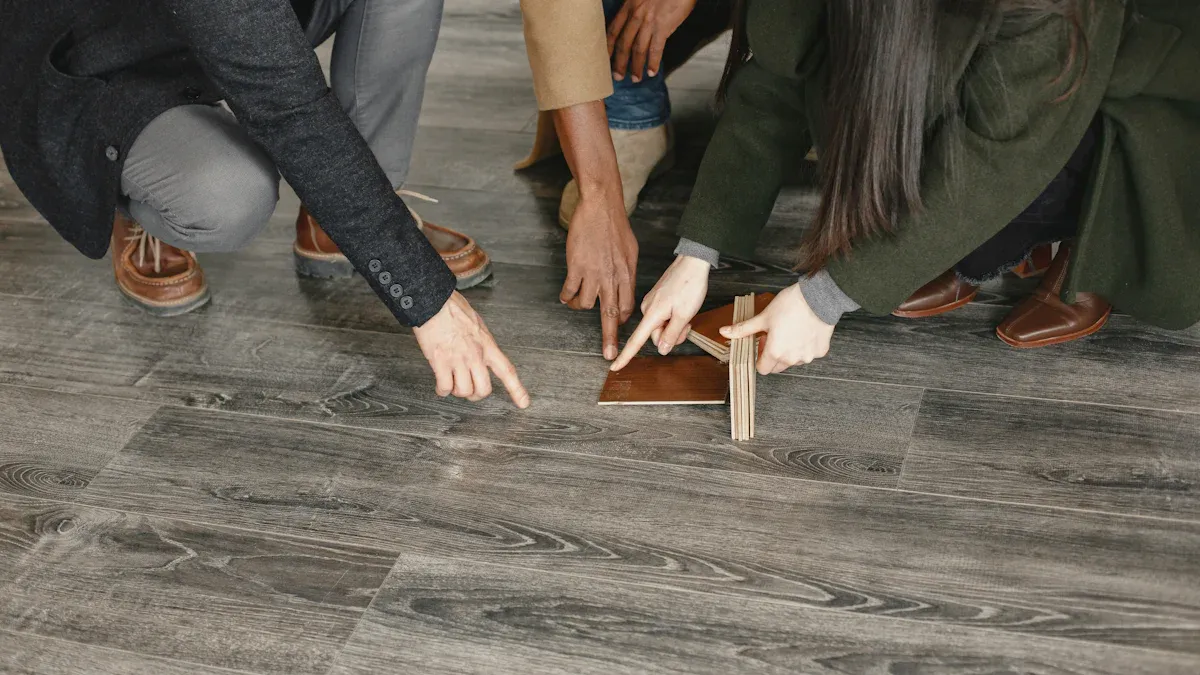
You may want to install mineral core flooring yourself. Many homeowners choose DIY installation for mineral core and SPC flooring. You need basic tools like a tape measure, utility knife, and rubber mallet. Some mineral core and SPC products include a built-in underlay, which makes the process easier and adds comfort. You can lay the planks from one corner of the room to the opposite side. Mixing planks from different boxes helps you create a balanced look. If you have experience with home projects, you can complete the installation without professional help. Some people prefer to hire a professional, especially for large rooms or complex layouts.
Tip: Always read the manufacturer’s instructions before you start. This helps you avoid mistakes and ensures a smooth finish.
Subfloor Requirements
You must prepare the subfloor before installing mineral core flooring. The subfloor should be clean, dry, and level. Dust or moisture can cause problems later. You need to check for bumps or dips. If you find uneven spots, use a leveling compound to fix them. A flat subfloor helps the planks lock together tightly. SPC and other rigid core floors also need a smooth surface. Some products work over existing tile or vinyl, but you should always follow the guidelines. Good preparation leads to a longer-lasting floor.
- Clean the subfloor with a vacuum.
- Check for moisture with a moisture meter.
- Fill any holes or cracks.
- Use a straightedge to spot uneven areas.
Installation Time and Cost
You want to know how much time and money you will spend. Mineral core flooring and SPC flooring install quickly compared to hardwood or tile. Most rooms take one or two days for DIY installation. If you hire a professional, the job may finish even faster. The cost for SPC flooring usually ranges from $2.50 to $5.00 per square foot. Luxury vinyl tile (LVT) costs between $2.00 and $4.50 per square foot. If you hire a professional, expect to pay an extra $1 to $3 per square foot for labor. The total cost for SPC flooring, including materials, falls between $2 and $7 per square foot.
| Flooring Type | Material Cost (per sq. ft.) | Installation Cost (per sq. ft.) |
|---|---|---|
| Mineral Core/SPC | $2.50 – $5.00 | $1 – $3 (professional) |
| LVT | $2.00 – $4.50 | $1 – $3 (professional) |
Note: DIY installation saves you money. Hiring a professional gives you peace of mind and a perfect finish.
Comfort and Sound Insulation
Underfoot Feel
You want a floor that feels good when you walk on it. The way a floor feels under your feet can change your experience at home. Mineral core flooring gives you a hard surface. You notice less cushioning compared to laminate or carpet. Many users say mineral core flooring feels firm and stable. If you stand for long periods, you may want extra comfort. You can add area rugs or underlayment to soften the feel.
Laminate flooring feels softer. You get more comfort when you walk or stand. Some people prefer laminate in bedrooms or living rooms because it feels warmer. Hardwood flooring gives you a natural feel. It feels solid and warm, but it can be hard underfoot. SPC flooring feels similar to mineral core flooring. Both types offer high durability and water resistance, but less comfort.
Here is a table that shows how users rate the underfoot feel and comfort level:
| Flooring Type | Underfoot Feel | Comfort Level | Durability | Water Resistance |
|---|---|---|---|---|
| Mineral Core (SPC) | Harder | Less Comfortable | High | High |
| Laminate | Softer | More Comfortable | Moderate | Low |
Tip: If you want a softer feel, choose laminate or use rugs with mineral core flooring.
Noise Reduction
You want a quiet home, especially in busy areas. The type of flooring you choose affects how much sound travels through your space. Mineral core flooring blocks some noise, but it does not absorb sound as well as carpet or WPC flooring. You may hear footsteps or dropped objects more clearly. Laminate flooring absorbs more sound, so rooms feel quieter. Hardwood floors can echo, especially in empty rooms.
You can improve sound insulation with underlayment. Many mineral core and SPC floors come with attached pads. These pads help reduce noise. If you live in an apartment or have children, sound insulation matters. You can add rugs or curtains to help absorb sound.
- Mineral core flooring: Good for blocking noise, less for absorbing.
- Laminate flooring: Better for absorbing sound.
- Carpet: Best for quiet rooms.
- SPC flooring: Similar to mineral core, needs underlayment for best results.
Note: For quiet spaces, use underlayment or rugs with mineral core flooring. This helps create a peaceful home.
Aesthetics and Design Options
Visual Realism
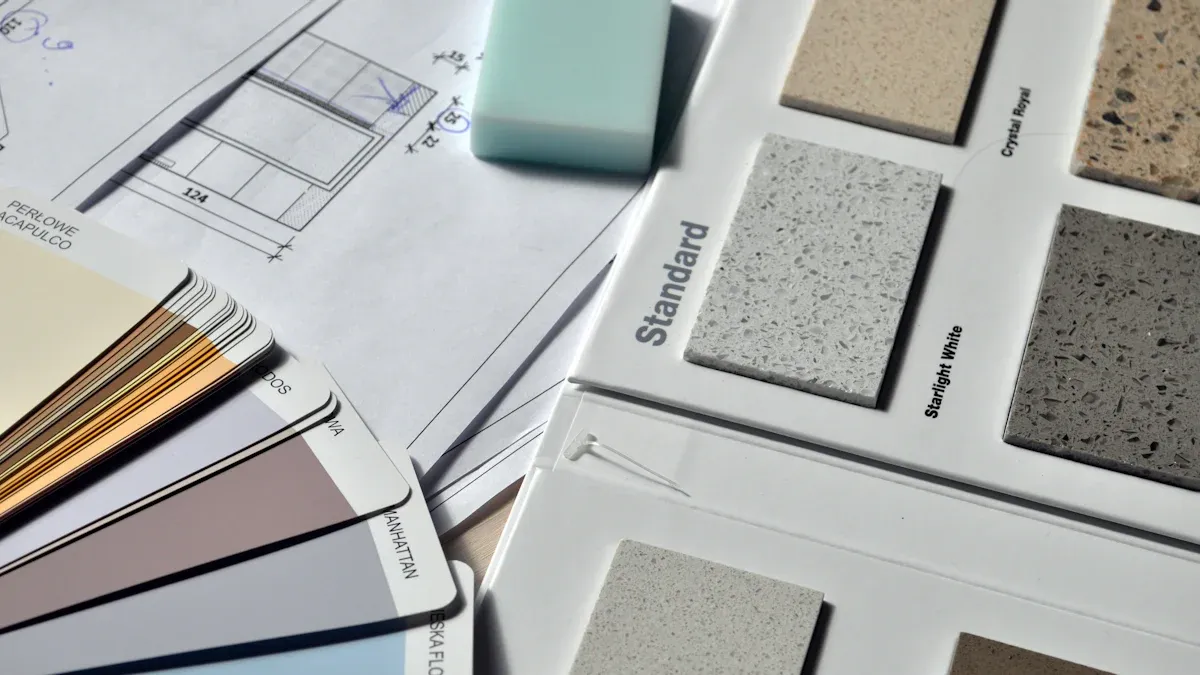
You want your floor to look like real wood or stone. Mineral core flooring uses advanced printing technology. You see deep textures and realistic grain patterns. The surface often has embossed finishes. These finishes help you feel the grooves and knots, just like natural materials. SPC flooring also offers realistic visuals. You notice that some SPC products use high-definition printing. The patterns look sharp, but sometimes the texture feels flat.
Laminate flooring gives you a good wood look. The top layer uses a photo of real wood. You may see repeating patterns if you look closely. Hardwood and tile provide the most authentic appearance. You get real wood grain or stone texture. Vinyl flooring tries to mimic wood and stone, but the details may not look as sharp.
Tip: If you want a floor that fools the eye, choose mineral core flooring with embossed surfaces. You get style and durability in one product.
| Flooring Type | Visual Realism | Texture Depth |
|---|---|---|
| Mineral Core Flooring | Excellent | Deep |
| SPC | Very Good | Moderate |
| Laminate | Good | Moderate |
| Hardwood | Authentic | Deep |
| Tile | Authentic | Deep |
| Vinyl | Fair | Light |
Color and Style Variety
You have many choices when you shop for flooring colors and styles. Mineral core flooring comes in a wide range of shades. You find light oak, rich walnut, and even gray tones. Some brands offer stone looks, marble patterns, or rustic finishes. SPC flooring also gives you many options. You see wood, stone, and tile designs. The color selection covers classic browns, trendy grays, and bold patterns.
Laminate flooring offers many colors, but the choices may feel limited compared to mineral core or SPC. Hardwood floors come in natural wood tones. You can stain them, but the color range depends on the wood species. Tile flooring gives you endless possibilities. You pick from solid colors, mosaics, and custom patterns. Vinyl flooring provides basic colors and some wood or stone looks.
- Mineral core flooring: Wide color range, realistic styles, modern and classic looks.
- SPC flooring: Many colors, wood and stone designs, trendy options.
- Laminate: Good variety, mostly wood looks.
- Hardwood: Natural tones, limited by wood type.
- Tile: Unlimited colors and patterns.
- Vinyl: Basic colors, some patterns.
Note: You can match mineral core flooring to almost any décor. You create a space that feels fresh and stylish.
Cost Comparison
Material Costs
You want to know how much you will spend on flooring materials. The price depends on the type you choose. Mineral core flooring usually costs between $3 and $7 per square foot. You see spc vinyl flooring in a similar price range, often from $2.50 to $5 per square foot. Laminate flooring gives you a budget-friendly option, with prices from $1 to $5 per square foot. Hardwood flooring can be expensive. Traditional hardwood costs $2 to $17 per square foot, while exotic hardwood can reach $19.50 per square foot. Tile flooring varies a lot. Ceramic tiles cost $2 to $9 per square foot, and porcelain tiles range from $1 to $5 per square foot.
Here is a table to help you compare:
| Material | Material Cost (per sq. ft.) |
|---|---|
| Mineral Core | $3 – $7 |
| SPC Vinyl Flooring | $2.50 – $5 |
| Laminate | $1 – $5 |
| Hardwood | $2 – $17 (Traditional) |
| Hardwood (Exotic) | $7 – $19.50 |
| Ceramic Tile | $2 – $9 |
| Porcelain Tile | $1 – $5 |
Tip: You can save money by choosing laminate or spc vinyl flooring for large spaces.
Installation Costs
You need to think about installation costs when planning your budget. Mineral core flooring and spc vinyl flooring are easy to install. You can do it yourself or hire a professional. DIY installation saves you money. Professional installation for spc vinyl flooring usually costs $1 to $3 per square foot. Laminate flooring has similar installation costs. Hardwood and tile require skilled labor. You pay more for these options. Hardwood installation can cost $4 to $8 per square foot. Tile installation ranges from $5 to $15 per square foot.
- Mineral core flooring: $1 to $3 per square foot (professional)
- SPC vinyl flooring: $1 to $3 per square foot (professional)
- Laminate: $1 to $3 per square foot (professional)
- Hardwood: $4 to $8 per square foot (professional)
- Tile: $5 to $15 per square foot (professional)
Note: You can lower your costs by installing spc vinyl flooring or mineral core flooring yourself.
Long-Term Value
You want your floor to last and stay beautiful. Mineral core flooring and spc vinyl flooring offer strong long-term value. You spend less on maintenance because these floors resist scratches and water. You clean them with simple tools. You do not need to refinish or polish them. Spc vinyl flooring stands out for its durability and low care needs. You save up to 80% on lifetime care costs compared to hardwood. Hardwood floors need regular refinishing and careful cleaning. Tile floors last a long time but may need grout repairs. Laminate flooring can wear out faster and may need replacement sooner.
Tip: Choose spc vinyl flooring or mineral core flooring for high-traffic areas. You get a floor that looks good and saves you money over time.
Pros and Cons of Mineral Core Flooring and Alternatives
Mineral Core Flooring
You want a floor that stands up to daily life. Mineral core flooring gives you strong durability and excellent water resistance. You can install it in kitchens, bathrooms, or entryways. The surface resists scratches and dents, so you do not worry about heavy foot traffic. You find many styles and colors, which helps you match your home décor. Cleaning is easy, and you do not need special products.
However, mineral core flooring feels firm underfoot. You may want to add rugs for extra comfort. The cost is higher than laminate or basic vinyl flooring. You cannot refinish it if it gets damaged. Repairs often mean replacing planks.
Pros:
- High durability
- Excellent water resistance
- Easy maintenance
- Many design options
Cons:
- Less comfort underfoot
- Higher cost than laminate
- Cannot be refinished
Tip: Mineral core flooring works best in busy or wet areas where you need strength and style.
Traditional SPC Flooring
You see spc flooring in many homes and businesses. It offers durability and water resistance. You clean it easily, and it blocks sound well. You find many colors and patterns.
SPC feels hard underfoot, which may not suit bedrooms or living rooms. It can react to temperature changes, so you need a stable environment. Installation requires a flat subfloor. Repairs are limited, and costs can add up.
| Pros | Cons |
|---|---|
| Durability | Comfort issues |
| Water resistance | Temperature sensitivity |
| Ease of maintenance | Installation requirements |
| Aesthetic versatility | Cost considerations |
| Sound insulation | Limited repair options |
Note: SPC works well for high-traffic spaces and areas with moisture, but you may want more comfort in quiet rooms.
Other Flooring Types
You have many choices besides mineral core and spc. Hardwood gives you a luxurious feel and lasts for decades. You can refinish it, but it costs more and does not handle water well. Laminate offers low prices and easy care. You get many designs, but it cannot be refinished and may look less natural. Tile is durable and water-resistant. You find many styles, but it feels cold and needs skilled installation.
Wpc flooring stands out for comfort. You get a softer feel and better sound absorption. Wpc works well in bedrooms and living rooms. It resists dents, but heavy loads can damage it. Wpc absorbs sound, making rooms quieter. You find wpc in homes with pets or children. Wpc flooring offers warmth and comfort, but it does not match the durability of mineral core or spc.
| Flooring Type | Pros | Cons |
|---|---|---|
| Hardwood | Luxurious feel, Durable, Can be refinished | Expensive, Susceptible to water damage, Noisy |
| Laminate | Cost-effective, Versatile designs, Low maintenance | Cannot be refinished, Susceptible to water damage, Less attractive than natural materials |
| Tile | Durable, Water-resistant, Variety of styles | Cold, Requires skill to install, Slippery when wet |
| WPC | Soft underfoot, Good sound absorption, Warm feel | Can dent under heavy loads, Less durable than mineral core or spc, Not ideal for wet areas |
Tip: Wpc flooring suits bedrooms and living rooms. Choose mineral core or spc for kitchens, bathrooms, and entryways.
Best Use Cases for Mineral Core Flooring
High-Traffic Areas
You want a floor that stands up to busy spaces. Mineral core flooring works well in high-traffic areas such as hallways, kitchens, and entryways. The dense core resists scratches and dents from shoes, pets, and moving furniture. You notice that the surface keeps its appearance even when many people walk across it every day. If you have children or pets, you see fewer marks and less wear. Many schools, offices, and stores use mineral core flooring because it handles constant movement.
Tip: Place mineral core flooring in high-traffic areas to keep your space looking fresh and clean.
Wet Areas
You need a floor that handles spills and moisture. Mineral core flooring offers strong water resistance, so you can install it in bathrooms, kitchens, and laundry rooms. The rigid core does not swell or warp when exposed to water. Unlike hardwood or laminate, you do not worry about damage from humidity or splashes. SPC flooring also performs well in wet areas because it does not absorb moisture. The mix of stone powder and PVC resin keeps the floor stable. You get peace of mind knowing your floor stays safe in moisture-prone spaces.
- Bathrooms
- Kitchens
- Laundry rooms
Note: Mineral core flooring and SPC flooring both give you reliable protection in wet areas.
Residential vs Commercial
You want a floor that fits your home or business. Mineral core flooring suits both residential and commercial spaces. In homes, you enjoy easy cleaning and a safe surface for your family. In businesses, you benefit from quick installation and minimal downtime. The table below shows how mineral core flooring meets different needs:
| Feature | Residential Suitability | Commercial Suitability |
|---|---|---|
| Waterproof and moisture-proof | Ideal for homes with high humidity or spills | Essential for commercial spaces with high foot traffic and potential spills |
| Environmentally friendly | Safe for family environments, no harmful chemicals | Important for health-conscious commercial settings |
| Wear-resistant and scratch-resistant | Suitable for families with children and pets | Necessary for high-traffic areas to maintain appearance |
| Easy installation | Quick setup for home renovations | Fast installation minimizes downtime in businesses |
| Easy to maintain | Low maintenance for busy households | Requires minimal upkeep in commercial settings |
Tip: Choose mineral core flooring for homes with kids or pets and for businesses with lots of visitors.
You want the right floor for your space. Mineral core flooring gives you strong durability and water resistance. You see easy cleaning and many design choices. For high-traffic areas, luxury vinyl plank stands out. Porcelain and ceramic tiles work best in wet rooms. Engineered waterproof hardwood brings natural beauty and prevents water damage. Click-and-lock vinyl plank makes installation simple.
- Mineral core flooring suits busy homes and wet areas.
- Tiles fit bathrooms and kitchens.
- Hardwood adds warmth to living spaces.
Choose the floor that matches your needs and style.
FAQ
What makes mineral core flooring different from SPC flooring?
Mineral core flooring uses minerals and polymers for a dense, stable core. SPC flooring mixes limestone powder and PVC for a rigid surface. You get better moisture resistance and comfort with mineral core flooring. SPC flooring gives you strong dent resistance.
Can you install mineral core flooring over existing floors?
You can install mineral core flooring over most flat surfaces, including tile and vinyl. Make sure the subfloor is clean, dry, and level. You do not need glue or nails for most products. Always check the manufacturer’s instructions.
How do you clean and maintain mineral core flooring?
You clean mineral core flooring with a damp mop and mild cleaner. Avoid harsh chemicals or abrasive pads. Sweep or vacuum regularly to remove dirt. You do not need to wax or polish the surface.
Is mineral core flooring safe for homes with pets and kids?
Mineral core flooring resists scratches and dents from pets and toys. You get a waterproof surface that stands up to spills. The floor does not trap allergens, so you keep your home healthy.
Where should you use mineral core flooring in your home?
You can use mineral core flooring in kitchens, bathrooms, entryways, and basements. The waterproof core protects against spills and humidity. You also get durability for high-traffic areas.




