
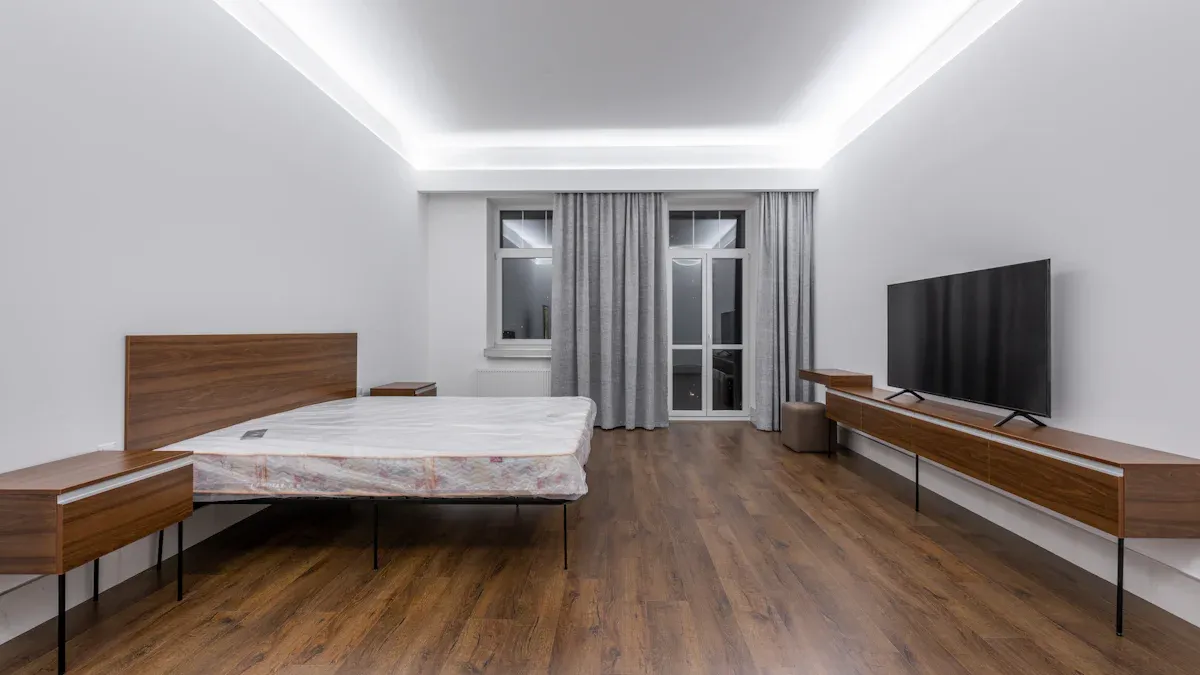
Choosing between luxury vinyl flooring vs laminate flooring depends on your needs. Many homeowners prefer luxury vinyl for its waterproof qualities and durability, especially in kitchens and bathrooms. In 2023, vinyl flooring held 57.5% of the residential market, showing strong popularity. You might enjoy laminate for its budget-friendly price. Here’s a quick comparison:
| Feature | Luxury Vinyl Flooring | Laminate Flooring |
|---|---|---|
| Water Resistance | Excellent, handles moisture well | Not waterproof |
| Durability | Very stable and long-lasting | More prone to damage |
| Comfort | Flexible design, softer feel | Less flexible, harder underfoot |
| Cost | Greater value | Lower upfront cost |
What Is Luxury Vinyl Flooring?
Luxury Vinyl Plank (LVP) Overview
You might see luxury vinyl plank in homes, schools, and stores. This type of flooring looks like real wood, but it uses advanced technology to create a strong and stylish surface. You can choose from several types, each with special features:
- Luxury Vinyl Plank (LVP): Gives you the look of wood with extra durability. You can use it in high-moisture areas and places with lots of foot traffic.
- WPC (Wood Plastic Composite): Combines wood fibers and plastic. You get a cushioned feel underfoot. This type is waterproof and works well in homes and businesses.
- SPC (Stone Plastic Composite): Has a dense core that makes it extremely tough. It is waterproof and perfect for busy spaces like stores or offices.
If you want high quality lvp, you will notice the difference in comfort and strength. You can install luxury vinyl plank in kitchens, bathrooms, and living rooms. It handles spills and heavy use better than many other flooring options.
Key Features of Luxury Vinyl Flooring
Luxury vinyl flooring stands out because of its smart design. Manufacturers build it with several layers, each with a special job:
| Layer | Description |
|---|---|
| Wear Layer | A thin clear layer with a liquid urethane coating, providing protection against stains and scratches. |
| Print Film | Provides the visual appearance of the flooring, commonly using opaque print technology. |
| Backing Layers | Ensures dimensional stability and contributes to the overall thickness of the flooring. |
| Construction | Manufactured using continuous lamination or static pressing methods. |
You get many benefits when you choose luxury vinyl plank:
- Waterproof nature makes it great for kitchens and bathrooms.
- Easy cleaning and simple maintenance save you time.
- Durability helps your flooring last for years.
- Versatile design fits bedrooms, hallways, and high-traffic areas.
- Wide range of colors and patterns lets you match your style.
Luxury vinyl flooring gives you a practical and attractive choice for almost any room. You can enjoy a surface that looks good and stands up to daily life.
What Is Laminate Flooring?
Laminate Flooring Overview
You may notice laminate flooring in many homes and offices. This type of flooring gives you the look of real wood or stone without the high cost. Manufacturers use high-density fiberboard (HDF) as the core, which comes from wood waste and residue. This makes laminate flooring a sustainable choice for your home.
Laminate flooring comes in several types. You can choose glueless-click, glued, or pre-glued options. Glueless-click planks snap together easily, making installation simple. Glued laminate needs adhesive for the joints, which takes more time but creates a strong bond. Pre-glued planks have glue already applied, and you just need moisture to activate it.
You also get many choices in texture and thickness. Some laminate flooring has a smooth finish, while others have embossed or hand-scraped surfaces that look like real wood. Thickness ranges from 6mm to 12mm. Thicker planks feel sturdier and absorb more sound, which works well in busy areas.
Tip: Thicker laminate flooring often lasts longer and feels more comfortable underfoot.
Key Features of Laminate Flooring
Laminate flooring stands out for its smart construction and practical benefits. Here is a quick look at its layers:
| Layer | Material Composition | Function |
|---|---|---|
| Base Layer | Melamine resin or durable plastic | Prevents moisture and provides stability. |
| Core Layer | High-density fiberboard (HDF) or medium-density fiberboard (MDF) | Provides strength and stability, suitable for heavy foot traffic. |
| Design Layer | High-resolution printed image of wood, stone, or patterns | Adds aesthetic appeal with realistic designs. |
| Wear Layer | Clear protective coating | Protects against scratches, spills, and fading. |
You will find that laminate flooring is very durable. The wear layer protects against scratches and fading, making it a good choice for homes with pets or kids. Some laminate flooring options are even waterproof, so you can use them in kitchens or bathrooms. Laminate is also easy to clean and does not trap dust or allergens, which helps keep your indoor air quality high.
Laminate flooring offers a wide range of colors and styles. You can match almost any decor. It gives you the look of hardwood at a lower price and requires less maintenance. Many homeowners choose laminate because it is affordable, strong, and easy to care for.
Appearance: LVP vs Laminate
Realism and Style Options
When you choose new flooring, you want it to look as close to real wood or stone as possible. Both luxury vinyl plank (LVP) and laminate flooring offer a realistic hardwood look, but they use different methods to achieve this. LVP uses a multi-layered design that closely mimics wood and stone. Laminate flooring relies on high-definition printing to create natural material imitation. You can see the differences in the table below:
| Feature | Luxury Vinyl Plank (LVP) | Laminate Flooring |
|---|---|---|
| Design Options | Multi-layered design closely mimics wood and stone | High-definition printing for natural material imitation |
| Water Resistance | 100% waterproof | Less resistant to moisture |
| Versatility | Offers rustic charm and modern aesthetics | Wide range of styles including exotic woods |
| Durability | Durable and water-resistant | Durable but less moisture resistant |
You will find many popular color choices for both types of flooring. Beige works well with many interiors and design schemes. Brown gives you a trendy and neutral look, with options in wood, stone, and tile. Grey offers a stylish and sophisticated feel that fits modern spaces.
| Color | Description |
|---|---|
| Beige | A neutral choice that works well with many types of interiors and design schemes. Available in wood and stone looks. |
| Brown | A trendy and neutral choice, available in wood, stone, and tile looks. Darker shades create a dramatic flair, while lighter shades are more understated. |
| Grey | A stylish and sophisticated option that complements various interiors. Available in wood, tile, and stone looks. |
Tip: If you want a realistic hardwood look, both LVP and laminate flooring give you many style options, but LVP often provides deeper embossing and more lifelike visuals.
Texture and Finish
Texture and finish play a big role in how your flooring feels and looks. LVP uses a PVC core with vinyl layers, which allows for highly realistic designs and deeper embossing. This means you get a surface that not only looks like wood but also feels like it. Laminate flooring has a composite wood core with a photo layer. It gives you warm wood visuals, but the depth of the texture is usually less than LVP.
| Feature | Luxury Vinyl Plank | Laminate Flooring |
|---|---|---|
| Material Composition | PVC core with vinyl layers | Composite wood core with photo layer |
| Appearance | Highly realistic designs; deeper embossing available | Warm wood visuals; slightly less depth |
| Water Resistance | ⭐⭐⭐⭐⭐ Waterproof | ⭐⭐ Water resistant only |
| Durability | Tough wear layer resists dents and scratches | Good for traffic but prone to water damage |
| Comfort Underfoot | Softer with pad; cooler surface | Warmer feel; more rigid |
You will notice that LVP often feels softer underfoot, especially if it has a built-in pad. Laminate flooring feels warmer and more rigid. If you want a realistic hardwood look with a textured finish, LVP usually gives you the best result.
Durability: Luxury Vinyl Flooring vs Laminate Flooring
Wear and Tear Resistance
When you look at flooring for your home, you want it to last. Both luxury vinyl flooring and laminate flooring offer strong surfaces, but they handle daily wear in different ways. LVP stands out for its worry-free practicality of lvp. You can walk, run, or even let your pets play on it without much concern. LVP uses a tough wear layer that protects against scuffs and marks. Most residential LVP has a wear layer between 12 and 20 mil, while commercial LVP goes above 20 mil. This means you get better overall durability in busy spaces.
Laminate flooring also resists wear, but it relies on a high-density fiberboard core and a protective top layer. Manufacturers test laminate using standards like DIN EN 15468: 2013 and ISO 24338. These tests check how well the surface stands up to abrasion. Laminate flooring often has a wear layer of 20 mil or more, which helps it last in homes with kids or pets.
You can see how both types perform in durability tests:
| Feature | Luxury Vinyl Flooring (LVP) | Laminate Flooring |
|---|---|---|
| Scratch Resistance | More resistant | Less resistant |
| Dent Resistance | More durable | Less durable |
| Performance with Pets | Excellent | Moderate |
| Installation Durability | Less prone to damage | More prone to damage |
| UV Light Protection | Generally treated | May fade without treatment |
| Overall Durability | Superior | Inferior |
Note: LVP often outlasts laminate in high-traffic areas, making it a smart choice for busy families.
Water Resistance Comparison
Water resistance is a key factor when you choose between lvp vs laminate. LVP offers 100% waterproof protection. You can install it in kitchens, bathrooms, and basements without worry. Spills, splashes, or even standing water will not harm the surface. This makes luxury vinyl plank a top pick for rooms where moisture is common.
Laminate flooring does not handle water as well. If water sits on the surface, the planks can swell or warp. Some newer laminate products claim improved water resistance, but most still rate as fair. You should avoid using laminate in places where spills happen often.
Here is a quick look at water resistance ratings:
| Flooring Type | Water Resistance Rating |
|---|---|
| Luxury Vinyl Plank (LVP) | 100% waterproof |
| Laminate | Fair (swells when wet) |
Tip: If you want flooring for a bathroom or laundry room, LVP gives you peace of mind.
Scratch and Dent Resistance
You want your floors to look good for years. LVP and laminate both protect against scratches, but they do so in different ways. LVP uses a clear wear layer that fends off scratches, dents, and even fading from sunlight. You can move furniture or let pets run across the floor without leaving marks. LVP also resists dents better than laminate, thanks to its flexible core.
Laminate flooring has a sealed top layer that makes it very tough. It stands up well to scratches from shoes or toys. However, once the top layer wears through, you cannot sand or refinish it. If you drop something heavy, laminate may dent or chip more easily than LVP.
Consumer reports show these differences:
- Laminate flooring has a tough wear layer, but you cannot repair it if it gets damaged.
- LVP resists wear, dents, scratches, and sunlight, making it ideal for high-traffic areas.
If you have pets or kids, LVP gives you a surface that stays looking new longer.
Installation: LVP vs Laminate
DIY Friendliness
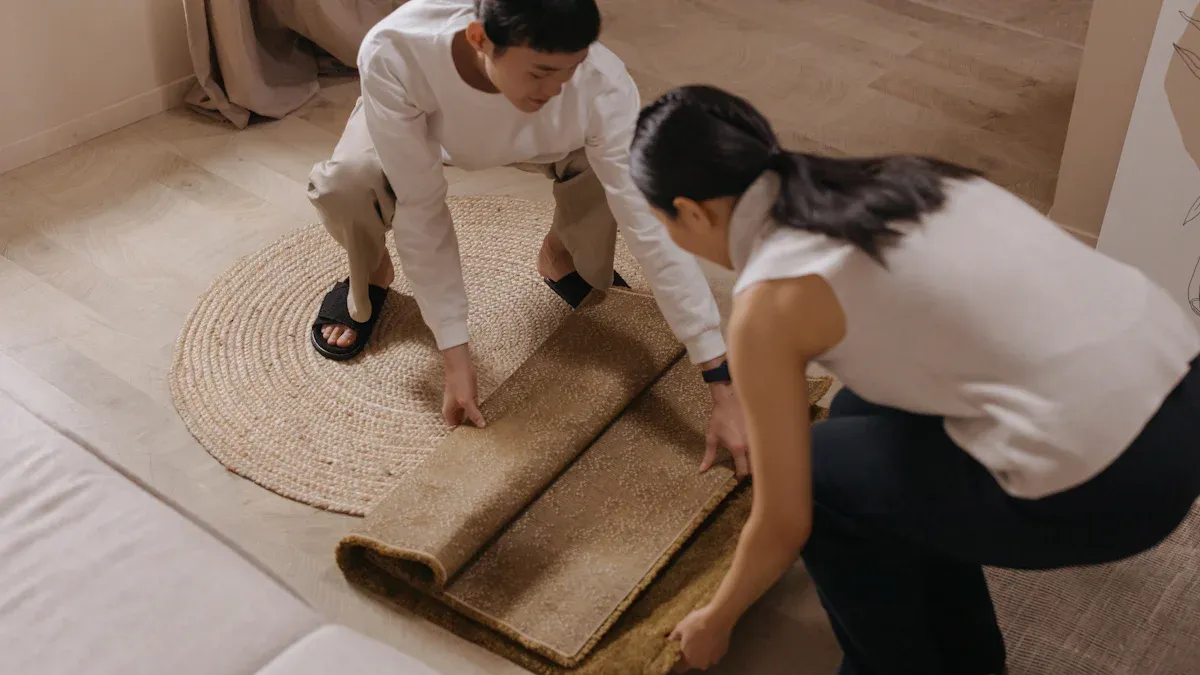
You can install both luxury vinyl plank and laminate flooring on your own. Many homeowners choose these options because they do not need professional help. LVP often uses a click-lock system. You snap the planks together, and you do not need glue or nails. Laminate flooring also uses a similar click system. You can cut the planks with a simple saw. If you like DIY projects, you will find both types easy to handle. Some people say that lvp feels a bit easier to work with because the planks are more flexible. You can trim them with a utility knife, which makes the process faster.
Tip: Always read the instructions before you start. Each brand may have small differences in how you should install the planks.
Subfloor and Preparation Needs
You must prepare the subfloor before you install lvp or laminate. The subfloor should be flat, clean, and in good condition. If you skip this step, you might see bumps or gaps in your new floor later. Sometimes, you need an underlayment. This extra layer helps with sound and comfort. You should talk to your flooring retailer about the best underlayment for your project. Good preparation helps your lvp or laminate floor last longer and look better.
Installation Time and Tools
You can finish most laminate flooring projects in 1 to 2 days for an average-sized room. LVP installation usually takes a few days, depending on the size and shape of your space. You need only basic tools for both types. For laminate, you use a saw, a tapping block, and spacers. For lvp, you often need a utility knife and a straight edge. You do not need glue or nails for most modern products.
- Laminate flooring installation: 1 to 2 days for most rooms.
- LVP installation: Often finished in a few days, depending on the project.
If you want a quick and simple update, both lvp and laminate give you great results with little hassle.
Comfort and Sound: Luxury Vinyl Plank vs Laminate
Underfoot Feel and Warmth
When you walk on new flooring, you want it to feel comfortable. Many homeowners notice a difference between luxury vinyl plank and laminate. Lvp gives you a softer and bouncier feel underfoot. This makes it a good choice if you spend a lot of time standing, such as in the kitchen. Laminate flooring feels firmer and more like real hardwood. Some people like this solid feeling, but it can be less comfortable for long periods.
You may also care about how warm your floor feels. Lvp tends to feel warmer than laminate. This can make a big difference in colder months or if you walk barefoot at home. Laminate often feels colder, especially if you do not use an underlayment.
Here is a quick comparison:
| Flooring Type | Underfoot Comfort | Warmth Underfoot | Additional Notes |
|---|---|---|---|
| Luxury Vinyl Plank | Softer and bouncy | Warmer | Great for prolonged standing, especially in kitchens. |
| Laminate Flooring | Firmer | Colder | Feels more like hardwood, can be louder without proper underlayment. |
Tip: If you want a floor that feels soft and warm, lvp is a strong choice for bedrooms and kitchens.
Noise Levels
Sound can matter a lot in busy homes. Lvp usually absorbs more sound because of its flexible layers. You will notice less echo and fewer footsteps, which helps keep rooms quieter. This makes lvp a good option for apartments or homes with children and pets.
Laminate flooring can be noisier. When you walk on laminate, it may sound hollow or clicky, especially if you do not use an underlayment. You can add a special pad under laminate to help reduce noise, but it may not match the quietness of lvp.
If you want a peaceful home, lvp helps reduce noise and creates a calm space. Laminate works well if you add extra padding, but it may still sound louder than lvp.
Maintenance: LVP vs Laminate
Cleaning and Upkeep
You want your floors to look great for years. Both lvp and laminate flooring make cleaning easy, but you need to follow a few simple steps. Manufacturers recommend that you sweep or dry mop every day. This helps prevent scratches from dirt and grit. You should use a microfiber mop with a cleaner approved by the manufacturer. Clean up spills right away to avoid stains. Never drag furniture across the floor. Use pads or sliders to protect the surface.
You should also spot clean any spills with a clean, absorbent cloth. Place felt protectors under heavy furniture to avoid dents. Clean your floors weekly to stop dirt from building up. Walk-off mats at entrances help keep soil off your floors. For both lvp and laminate, avoid vacuums with beater bars and never use abrasive cleaners.
Here is a quick checklist for daily and weekly care:
- Sweep or vacuum regularly to remove dirt.
- Use a non-abrasive, no-rinse cleaner for washing.
- Lift heavy furniture instead of dragging it.
- Protect your floors from direct sunlight to prevent fading.
Tip: Regular cleaning keeps your lvp or laminate floor looking new and helps it last longer.
Stain and Spill Management
You may worry about stains and spills, especially in busy homes. Lvp stands out for its excellent stain resistance. In lab tests, lvp flooring endured 24 hours of pooled water without letting moisture seep through. Water penetration stayed below 0.1%. This means you can relax if you spill a drink or drop food. Just wipe it up quickly.
Laminate flooring also resists stains, but it does not handle water as well as lvp. You should always clean spills right away. If water sits too long, laminate can swell or warp. Some stubborn stains may stick to the embossed surface of lvp, so you might need to scrub gently with a soft cloth.
| Flooring Type | Stain Resistance | Water Resistance | Spill Management |
|---|---|---|---|
| LVP | Excellent | 100% waterproof | Wipe spills quickly; some sticky stains may need extra care |
| Laminate | Good | Fair | Clean spills immediately to avoid damage |
Note: Quick action is the best way to protect both lvp and laminate from stains and spills.
Cost: Luxury Vinyl Flooring vs Laminate Flooring
Material and Installation Costs
When you plan your next project, you want to know how much you will spend. Both luxury vinyl plank and laminate flooring give you choices for different budgets. You can find affordable flooring options that look great and last for years.
Here is a quick look at the average costs in the United States:
- Luxury vinyl plank (LVP) costs between $2 to $7 per square foot for materials.
- The total cost, including installation, usually ranges from $7 to $12 per square foot.
- Installation prices can change based on the job:
- Budget installations: $4.00 – $6.00 per square foot.
- Mid-range installations: $6.00 – $8.00 per square foot.
- High-end installations: $8.00 – $11.00 or more per square foot.
Laminate flooring often costs less than LVP. You may pay less for both materials and installation. This makes laminate a good choice if you want to save money and still get a stylish floor.
Tip: Always ask for a detailed quote before you start. This helps you avoid surprises and stick to your budget.
Long-Term Value
You want your new floor to add value to your home. Real estate professionals say that both hardwood and luxury vinyl can improve your space, but they offer different returns. LVP gives you a moderate boost in resale value, while hardwood brings the highest return. Laminate flooring appeals to buyers who want affordable flooring options.
Here is a table that shows how these choices compare:
| Investment Factor | Hardwood | Luxury Vinyl |
|---|---|---|
| Average ROI | 70-80% | 50-60% |
| Market Appeal | Premium buyers | Budget-conscious families |
| Renovation Impact | Significant increase | Moderate improvement |
You can see that LVP offers a good balance of cost and value. Laminate flooring helps you save money now, but LVP may give you better results if you plan to sell your home in the future.
Environmental Impact: LVP vs Laminate
Materials and Sustainability
You might wonder how your flooring choice affects the environment. Luxury vinyl plank (LVP) flooring uses PVC, a material that requires a lot of energy to produce. The manufacturing process for LVP can release harmful chemicals if not managed well. PVC is not biodegradable, so old LVP flooring can create disposal problems. The extraction and processing of PVC also add to carbon emissions.
Laminate flooring uses high-density fiberboard made from recycled wood fibers. This makes laminate a more sustainable option in many cases. The production of laminate flooring usually creates fewer carbon emissions than LVP. However, laminate does not last as long as LVP, so you may need to replace it more often.
Here is a quick comparison of their sustainability features:
| Feature | Luxury Vinyl Plank (LVP) | Laminate Flooring |
|---|---|---|
| Carbon Footprint | Higher initial emissions, longevity offsets | Generally lower manufacturing emissions |
| Material Sourcing | Varies, recyclability depends on product | Often incorporates recycled wood fibers |
| Lifecycle Durability | Typically lasts longer, reducing replacements | Shorter lifespan, may require more frequent replacements |
Tip: If you want a floor with a lower carbon footprint, laminate often uses more recycled content and creates less pollution during production.
Indoor Air Quality
Indoor air quality matters for your health. Both LVP and laminate can release volatile organic compounds (VOCs), which affect the air you breathe. You should look for products with low VOC emissions to keep your home safe.
- Luxury vinyl flooring can impact indoor air quality because of VOC emissions.
- Choosing low-VOC flooring helps reduce health risks.
- Many brands now offer low-VOC LVP and laminate options.
- Certifications like FloorScore or GREENGUARD show that a product meets strict air quality standards.
You can improve your home’s air by picking certified low-VOC flooring. Always check for these labels before you buy. 🌱
Best Uses: Luxury Vinyl Plank vs Laminate Flooring
High-Moisture Areas
You want a floor that stands up to water in places like bathrooms, basements, and laundry rooms. Not all flooring types can handle moisture. Some will swell or warp if they get wet. When you compare luxury vinyl flooring vs laminate flooring, you see big differences in how they perform in wet spaces.
Luxury vinyl plank gives you strong water resistance. You can install it in bathrooms, kitchens, and basements without worry. The surface and core do not absorb water, so spills and splashes will not cause damage. Many experts and building codes recommend luxury vinyl plank for high-moisture areas because it combines style with protection.
Laminate flooring has improved over the years. Some new waterproof laminate products can work in kitchens and bathrooms. These special types have a sealed surface and a water-resistant core. Standard laminate, though, does not do well with water. If you want to use laminate in a wet area, look for products labeled as waterproof.
Other flooring options for wet spaces include ceramic tile, porcelain tile, waterproof engineered hardwood, and rubber flooring. Each has its own strengths, but luxury vinyl plank stands out for its easy installation and realistic look.
Tip: Always check the product label for water resistance before you install flooring in a bathroom or basement.
Popular choices for high-moisture areas:
- Luxury vinyl plank: Water resistant and stylish, ideal for bathrooms and basements.
- Waterproof laminate flooring: Good for kitchens and bathrooms if labeled as waterproof.
- Ceramic and porcelain tile: Naturally waterproof and easy to clean.
- Waterproof engineered hardwood: Looks like wood, resists moisture.
- Rubber flooring: Waterproof and slip-resistant, great for basements.
Heavy Traffic Spaces
You need a tough floor in busy places like entryways, hallways, kitchens, and commercial spaces. These areas see a lot of foot traffic, dropped items, and moving furniture. The right flooring will keep looking good even after years of use.
Luxury vinyl plank works well in high-traffic spaces. The thick wear layer protects against scratches, dents, and stains. SPC (Stone Plastic Composite) luxury vinyl plank has a rigid core that adds impact resistance. You can move heavy furniture or drop objects without leaving marks. Many businesses use luxury vinyl plank in lobbies and retail stores because it holds up so well.
Laminate flooring also offers good durability. The top layer resists scratches from shoes and pet claws. Laminate works best in homes with moderate traffic. In very busy areas or commercial settings, laminate may show wear sooner than luxury vinyl plank.
Here is a table to help you compare:
| Flooring Type | Durability Features | Lifespan | Best Use Cases |
|---|---|---|---|
| Luxury Vinyl Plank (LVP) | Resists moisture, dents, and scratches; thick wear layer | 15 to 25 years or more | High-traffic areas, commercial spaces, kitchens |
| Laminate | Durable surface, less moisture resistance | Less than LVP | Homes with moderate traffic, bedrooms, offices |
You can see that luxury vinyl plank is less likely to dent or scratch. It is a smart choice for busy families and commercial spaces.
Note: If you want a floor that lasts in heavy traffic, luxury vinyl plank gives you the best mix of strength and style.
Budget-Friendly Projects
You may want a new floor that looks great but does not cost too much. Both luxury vinyl flooring vs laminate flooring offer affordable options. You can find products that fit your budget and still give you a stylish home.
Laminate is often the top pick for budget-friendly projects. It costs less than most other flooring types. You get a wide range of colors and patterns, so you can match any room. Laminate is easy to install, which saves you money on labor. Many homeowners choose laminate for bedrooms, living rooms, and rental properties.
Luxury vinyl plank costs a bit more than laminate, but it gives you extra benefits. You get better water resistance and longer lifespan. If you want a floor that handles spills and heavy use, luxury vinyl plank is worth the extra cost.
Here are some tips for saving money:
- Choose laminate for large areas where you want to keep costs low.
- Pick luxury vinyl plank for rooms where you need water resistance and durability.
- Install the flooring yourself to save on labor costs.
- Look for sales or clearance items at local stores.
Tip: Always compare prices and features before you buy. Sometimes, spending a little more now saves you money in the long run.
Luxury vinyl flooring gives you excellent water resistance, durability, and comfort. Laminate flooring offers a lower price and many style choices.
- Choose luxury vinyl for bathrooms, kitchens, or busy spaces.
- Pick laminate if you want to save money in dry areas.
For most homes, luxury vinyl plank works best in wet or high-traffic rooms. Laminate fits well in bedrooms or living rooms where you want style on a budget.
FAQ
Can you install luxury vinyl plank over existing floors?
Yes, you can install luxury vinyl plank over many existing floors. Make sure the surface is clean, dry, and flat. Avoid installing over carpet. Always follow the manufacturer’s instructions for best results.
Does laminate flooring scratch easily?
Laminate flooring resists scratches from daily use. The top layer protects against most marks. Heavy furniture or sharp objects can still cause damage. Use felt pads and rugs to help prevent scratches.
Which flooring is better for pets?
Luxury vinyl plank works better for homes with pets. It resists scratches, stains, and water. You can clean up accidents easily. Laminate also works, but it does not handle water as well as vinyl.
How long do luxury vinyl and laminate floors last?
Luxury vinyl plank can last 15 to 25 years with proper care. Laminate flooring usually lasts 10 to 20 years. High-traffic areas may shorten the lifespan. Regular cleaning helps both types last longer.
Can you repair damaged planks?
You can replace single planks in both luxury vinyl and laminate floors. Remove the damaged piece and install a new one. Keep extra planks after installation for future repairs.




