
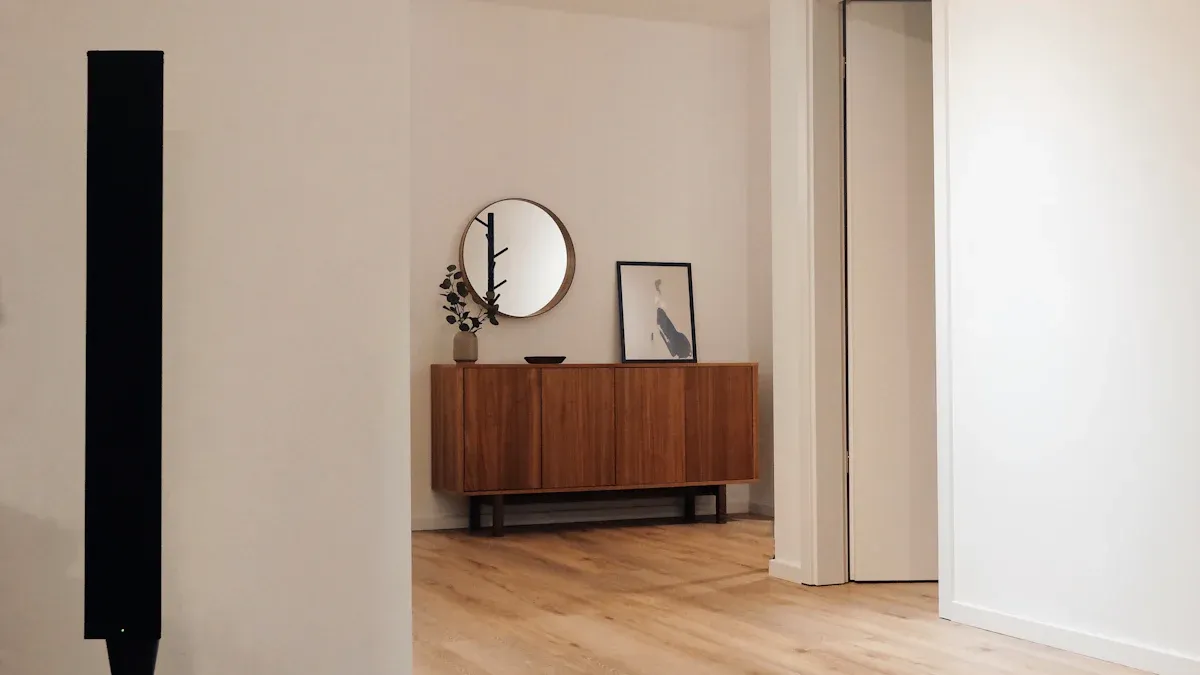
You see PVC flooring in homes, schools, and businesses because it offers many advantages. Polyvinyl chloride makes floors tough and waterproof. You can clean these floors easily, and they stay strong even with heavy foot traffic. People choose PVC flooring materials for their affordable price and wide range of colors.
The global market for PVC flooring grows quickly due to urbanization and higher living standards.
| Sustainability Feature | Details |
|---|---|
| Material Health | Manufacturers use safer stabilizers and plasticizers. |
| VOC Emissions | Flooring meets strict green building standards. |
| Recycling Capability | Luxury vinyl tiles can be recycled and reused. |
Types of Vinyl Flooring: Exploring PVC Flooring Materials
Homogeneous PVC Flooring
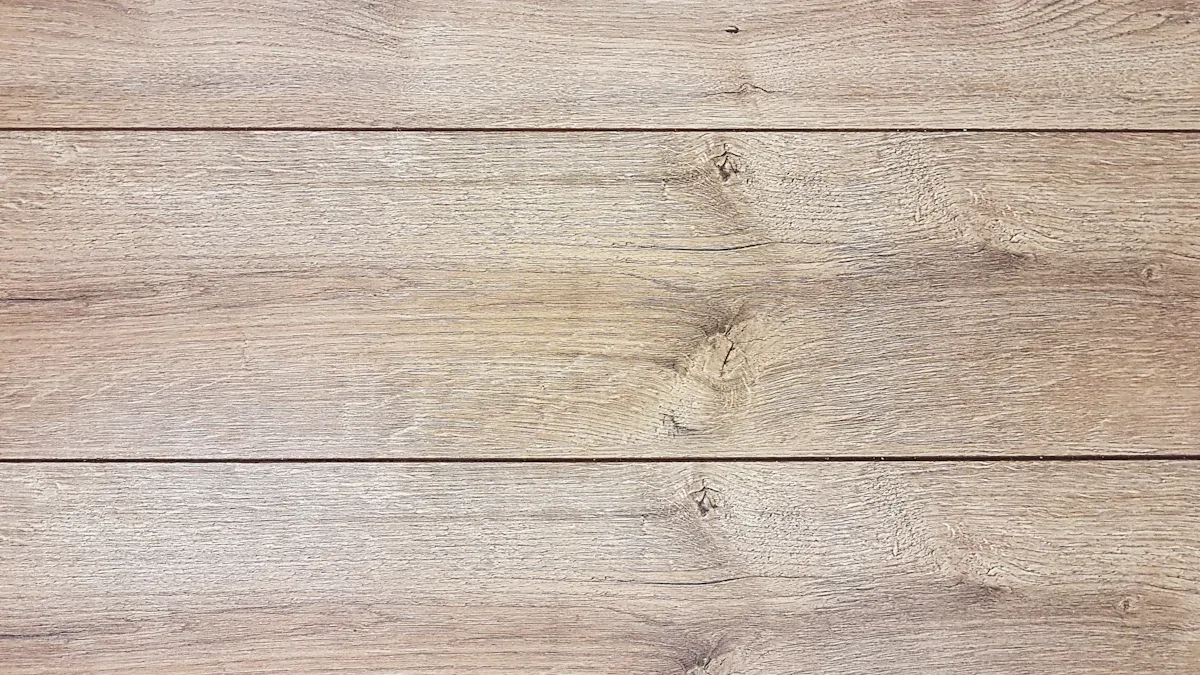
When you look for flooring that lasts in busy places, homogeneous PVC flooring stands out. This type of vinyl flooring uses a single-layer construction. The same material and color run through the entire thickness. You get a floor that looks the same even after years of use. The uniform composition gives you superior durability and performance. You can polish and repair scratches easily, so your floor stays fresh.
- Uniform composition
- Superior durability
- Enhanced performance
You often see homogeneous PVC flooring in places where people walk all day. Here are some common applications:
- Healthcare facilities such as hospitals and clinics need floors that meet hygiene standards and clean up quickly.
- Schools and gymnasiums use this flooring because it is tough and easy to maintain.
- Retail stores and hotels choose it for its style and ability to reflect their brand.
- Factories and warehouses rely on its strength to handle heavy machines and spills.
If you want a floor that handles heavy traffic and keeps its color, homogeneous PVC flooring is a smart choice.
Heterogeneous PVC Flooring
Heterogeneous PVC flooring gives you more design options. This type of flooring uses several layers. Each layer adds something special, like color, pattern, or sound absorption. The top layer often features printed designs, so you can pick wood, stone, or bright colors. The foam layer helps absorb sound, making rooms quieter.
Here’s a table that shows how heterogeneous PVC flooring compares to homogeneous PVC flooring:
| Feature | Homogeneous PVC Flooring | Heterogeneous PVC Flooring |
|---|---|---|
| Structure | Single material, uniform throughout | Multi-layered with various components |
| Sound Absorption | Less effective | Better due to foam layer |
| Fire Resistance | Higher due to stone powder content | Lower performance |
| Indentation Resistance | Superior due to higher stone powder | Weaker performance |
| Scratch Repair | Can be polished and repaired | Cannot be repaired effectively |
| Applications | Ideal for high traffic areas like hospitals | Suitable for smaller spaces like homes and offices |
You can find heterogeneous PVC flooring in homes, offices, and shops. The multi-layered design lets you enjoy a broad color palette and patterns that mimic wood or stone. Some sheets use light-reflective colors to save energy. You get scratch and stain resistance, which helps your floor look new longer.
| Design Option | Features |
|---|---|
| Heterogeneous Sheet | Superior design, scratch and stain resistance, energy-saving colors |
| Heterogeneous Vinyl | Multi-layered, printed top-layer, available in tile and sheet formats |
| Concepts of Landscape | Wide color choices, wood and stone looks, improved sound absorption |
If you want versatility and style, heterogeneous PVC flooring gives you many choices for your space.
Luxury Vinyl Plank (LVP)
Luxury vinyl plank brings the look of hardwood to your home without the worry. You get a floor that is 100% waterproof, so you can use it in kitchens, bathrooms, and basements. LVP resists scratches, dents, and stains. If you have pets or kids, this flooring stands up to daily life. You can clean it easily and do not need to polish or refinish it often.
Here’s a table that compares luxury vinyl plank to traditional hardwood:
| Advantage | Luxury Vinyl Plank (LVP) | Traditional Hardwood |
|---|---|---|
| Waterproof Capabilities | 100% waterproof, great for moisture-prone areas | Can warp, stain, or swell with moisture |
| Design Versatility | Many styles and colors, mimics hardwood | Limited to natural wood finishes |
| Ease of Maintenance | Simple cleaning, low maintenance | Needs regular polishing and refinishing |
| Cost-Effectiveness | Lower upfront cost, long-term savings | Higher initial cost and maintenance |
| Comfort and Sound Insulation | Softer underfoot, better sound insulation | Harder surface, less sound insulation |
- LVP is highly resistant to scratches, dents, and stains, making it ideal for homes with pets and children.
- It is designed for high durability, suitable for high-traffic areas.
- LVP’s waterproof nature makes it perfect for kitchens, bathrooms, and basements.
When you install luxury vinyl plank, you need to prepare the room and subfloor. Inspect the planks for defects and leave space around the edges for expansion. Remove doors and moldings before you start. Choose a starter wall and follow the steps for acclimation and underlayment if needed.
Tip: Luxury vinyl plank offers the look of wood with the strength of polyvinyl chloride. You get comfort, style, and easy care in one package.
Luxury vinyl plank shows the versatility of pvc flooring materials. You can use it in many applications, from living rooms to busy hallways. If you want the beauty of wood and the benefits of polyvinyl, LVP is a top choice.
Luxury Vinyl Tile (LVT)
You see luxury vinyl tile in many homes and businesses. This type of pvc flooring gives you the look of stone or ceramic tile without the high cost. You can install it easily and enjoy a floor that stands up to daily wear. LVT uses advanced printing technology to create realistic patterns and textures. You get a stylish floor that fits your budget.
- LVT is a more economical option compared to ceramic tile, which can be as expensive as hardwood or high-quality carpet.
- The installation cost of LVT is about 40% less than that of ceramic tile.
- Luxury vinyl tile is significantly more budget-friendly than ceramic tile.
- Installation costs for LVT are approximately 40% lower than those for ceramic tile.
You want a floor that lasts. Both LVT and ceramic tile are durable, but ceramic is more susceptible to chipping and cracking over time. LVT offers greater resilience, making it preferable for families with children or pets. You do not need to worry about heavy impacts or dropped objects. LVT keeps its shape and appearance.
- While both flooring options are durable, ceramic tiles are prone to damage from heavy impacts.
- LVT is more resilient, making it a better choice for homes with children or pets.
You can choose from many design patterns. In commercial environments, you can incorporate multiple patterns creatively in larger areas. You may use various laying patterns such as Cross Band or Wicket for a sophisticated look. Signature Layouts give you unique shapes and distinct appearances. You can select different sizes of LVT planks or tiles to affect the visual impact of the space.
| Design Pattern | Description |
|---|---|
| Cross Band | Creates a modern, geometric look |
| Wicket | Adds elegance and structure |
| Signature Layouts | Offers unique shapes and custom appearances |
| Mixed Sizes | Changes the feel and scale of the room |
Tip: You can use LVT in kitchens, bathrooms, offices, and retail spaces. The versatility of pvc flooring materials lets you match any style or need.
Luxury vinyl tile gives you the benefits of polyvinyl chloride. You get a floor that is easy to clean, resists water, and looks great for years. You can use LVT in many applications, from homes to busy commercial spaces. If you want a durable, stylish, and affordable floor, LVT is a smart choice among the types of vinyl flooring.
Vinyl Composition Tile (VCT)
Vinyl composition tiles are a popular choice for high-traffic areas. You see VCT in schools, hospitals, and retail stores. This type of pvc flooring uses a blend of limestone, thermoplastic binder, fillers, and pigments. The colored vinyl chips in VCT make the floor attractive and functional. The composition of these materials enhances durability, so you get a floor that lasts even with constant use.
You need to maintain VCT floors to keep them looking good. Regular stripping, waxing, and burnishing are important, especially in busy spaces. You may need to perform maintenance as often as twice a month to protect the floor and keep it visually appealing.
- VCT floors require regular stripping, waxing, and burnishing, especially in high-traffic areas.
- Maintenance may need to occur as often as twice a month to keep the floors visually appealing and protected.
Entryways and other high-traffic areas need scrubbing and recoating more often than low-traffic spaces. Some areas may only need this twice a year, but busy spots need more frequent care.
- High-traffic areas, such as entryways, will need scrubbing and recoating more frequently than low-traffic areas, which may only require this twice a year.
Scrubbing and recoating help restore shine and remove embedded soils. The frequency depends on daily cleaning and how much traffic the floor gets.
- Scrubbing and recoating are essential for restoring shine and removing embedded soils.
- The frequency of scrubbing and recoating depends on daily cleaning and traffic levels.
| Maintenance Task | Frequency in High-Traffic Areas | Purpose |
|---|---|---|
| Stripping | Twice a month | Removes old finish |
| Waxing | Twice a month | Adds protection and shine |
| Burnishing | Twice a month | Polishes for smooth surface |
| Scrubbing/Recoating | As needed | Restores appearance |
Note: You can use VCT in places where durability and easy maintenance matter most. The versatility of pvc flooring makes it suitable for many applications.
Vinyl composition tiles offer a cost-effective solution for large spaces. You get a floor that stands up to heavy use and still looks good. If you want a practical and long-lasting option, VCT is a reliable choice among the types of vinyl flooring. The use of polyvinyl in VCT ensures you get strength and style in one package.
Key Properties of Polyvinyl Chloride Flooring
Durability and Lifespan
You want a floor that stands up to daily life. PVC flooring gives you impressive durability. The tough surface resists scratches, dents, and stains. You can walk, run, or move furniture without worrying about damage. The properties of polyvinyl chloride make these floors strong enough for busy homes and commercial spaces.
When you choose luxury vinyl tile for your office or store, you get a floor that lasts. In commercial settings, LVT flooring can last between 10 to 25 years. If you use LVT with a thicker wear layer in high-traffic areas, it can last up to 20 years. Retail spaces may see a lifespan of around 15 years if you do not keep up with maintenance. Healthcare facilities often keep LVT floors for over 20 years because they clean and care for them regularly.
- In commercial settings, luxury vinyl tile (LVT) flooring can last between 10 to 25 years depending on wear layer thickness and foot traffic.
- In high-traffic office areas, LVT with a thicker wear layer can last up to 20 years.
- Retail environments may see a reduced lifespan of around 15 years without proper maintenance.
- In healthcare facilities, where maintenance is prioritized, LVT flooring can last over 20 years.
The durability of pvc flooring materials means you spend less time and money replacing floors. You get a long-lasting solution that keeps its color and shape. The properties of pvc make it a smart choice for anyone who wants a reliable floor.
Water and Moisture Resistance
You need a floor that handles spills and humidity. PVC flooring stands out for its water and moisture resistance. The properties of polyvinyl chloride prevent water from soaking into the floor. You can use pvc flooring in kitchens, bathrooms, and basements without worry.
Scientific studies show that installing pvc flooring leads to moisture redistribution in concrete slabs. This affects the relative humidity levels under the floor. If you install pvc flooring correctly, you protect it from excess moisture. Poor installation can let water build up and damage the floor. Always make sure the subfloor is dry before you lay down pvc flooring materials.
PVC flooring performs well in flood-prone and high-humidity environments. You can see how it compares to other flooring types in the table below:
| Feature | VSPC Flooring | Laminate Flooring | Solid Hardwood |
|---|---|---|---|
| Waterproof | Yes | No | No |
| Stability in Humid Conditions | Excellent | Poor | Poor |
| Lifespan | 20+ Years | 10–15 Years | Varies (Maintenance-Heavy) |
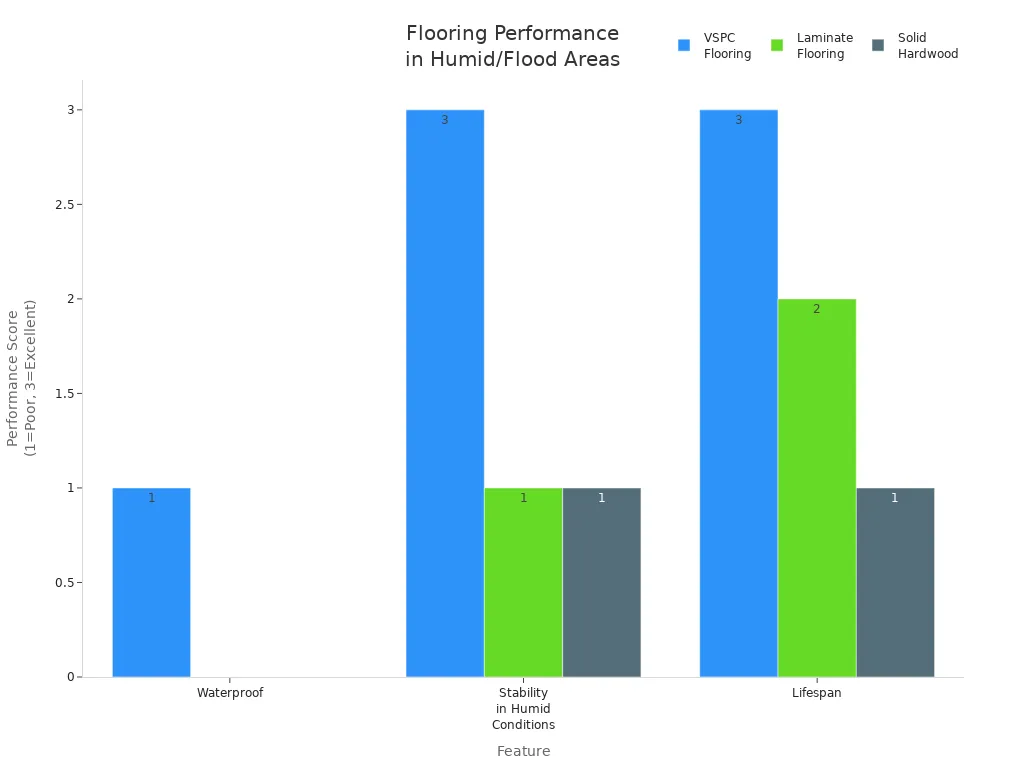
You get excellent stability in humid conditions with pvc flooring. The properties of pvc make it a top choice for areas with moisture. You do not have to worry about warping or swelling. The versatility of pvc flooring materials lets you use them in many places, even where water is a problem.
Maintenance and Cleaning
You want a floor that is easy to clean. PVC flooring makes your life simpler. You can sweep or mop the floor with little effort. The properties of pvc help resist stains and dirt. You do not need special tools or harsh chemicals.
Here are some recommended cleaning methods for pvc flooring:
- Use a damp mop with warm water and a pH-neutral cleaner designed for luxury vinyl. Avoid overly wet mops.
- Blot spills immediately with a soft cloth and use a gentle cleaner for stains.
- Use pH-neutral cleaners, specialty vinyl cleaners, or homemade solutions like vinegar and water.
- Avoid steam cleaning because steam can warp the flooring.
- Do not use abrasive tools. These can scratch the surface.
- Skip wax and polish. These can leave a film and attract dirt.
- Place doormats and rugs to reduce dirt and moisture.
- Put pads under furniture to prevent dents.
- Keep indoor temperatures stable.
Vinyl flooring is low-maintenance. You only need regular sweeping and occasional mopping. The water-resistant nature of pvc flooring makes it ideal for moisture-prone areas. You get a scratch resistant surface that stays clean and bright. The properties of polyvinyl chloride help you save time and money on cleaning.
Tip: Use doormats at entrances to keep dirt and moisture off your pvc flooring. This simple step helps maintain the floor’s appearance and extends its lifespan.
You can enjoy the benefits of pvc flooring materials in any room. The easy to clean surface and strong properties make it a favorite for busy families and businesses. The durability and versatility of polyvinyl flooring give you peace of mind.
Safety Features and Fire Resistance
You want your floor to keep you safe. PVC flooring offers important safety features that protect you and your family. The properties of polyvinyl chloride help prevent slips and reduce the risk of injury. Many types of pvc flooring include slip-resistant surfaces. This makes them a good choice for kitchens, bathrooms, and public spaces.
Fire resistance is another key property of pvc flooring materials. Manufacturers test these floors to meet strict fire safety standards. You can check the fire classification to know how well a floor resists flames. According to EN 13501-1:2018, many pvc floors reach a Bfl-s1 rating. This means the floor is hard to ignite and produces little smoke.
- Bfl-s1 rating under EN 13501-1:2018
- Class 1 under ASTM E648 for gyms and schools
- Flame-retardant options available
You can compare fire resistance levels in the table below:
| Fire Resistance Level | Description |
|---|---|
| A level | Highest fire resistance |
| B1 level | Flame-retardant, difficult to ignite, combustion stops when ignition source is removed |
| B2 level | Moderate fire resistance |
| B3 level | Lowest fire resistance |
Public buildings need extra safety. You may see certifications like GREENGUARD Gold, which confirms low chemical emissions. CE marking proves the floor meets fire safety and mechanical strength standards. EN 14904 certifies indoor sports flooring for shock absorption and slip resistance. These certifications show that pvc flooring meets high safety requirements.
| Certification | Description |
|---|---|
| GREENGUARD Gold | Confirms low chemical emissions, safe for use in schools, hospitals, and government buildings. |
| CE marking | Proves compliance with fire safety, mechanical strength, and emission standards. |
| EN 14904 | Certifies indoor sports flooring for shock absorption, ball bounce, slip resistance, and vertical deformation. |
| Fire safety standards | PVC flooring should meet Bfl-s1 under EN 13501-1 or Class 1 under ASTM E648 for use in gyms, schools, and indoor stadiums. |
Tip: Always check for safety certifications when you choose pvc flooring for public spaces. This ensures you get the right protection for your needs.
The properties of pvc make it a safe and reliable choice. You get peace of mind knowing your floor helps prevent accidents and resists fire.
Design and Style Options
You want your floor to look great and match your style. PVC flooring gives you many design and style options. The properties of pvc allow for advanced printing and texturing. You can choose from wood-look planks, stone-effect tiles, and bold patterns. Manufacturers use special processes to copy the look and feel of real wood and stone. They create detailed textures and colors that make your floor look natural.
| Style Type | Description | Applications |
|---|---|---|
| Wood-look Planks | Replicates the beauty of hardwood with advanced printing technologies. | Kitchens, bathrooms, basements |
| Stone-effect Tiles | Mimics luxurious materials like marble and slate at a lower cost. | Living rooms, entryways |
| Patterned Flooring | Features intricate designs like herringbone and chevron for elegance. | Entryways, living rooms, kitchens |
| Bold Colors | Includes deep navy, forest green, and terracotta for vibrant spaces. | Accent spaces, dining areas |
| Textured Finishes | Offers hand-scraped wood and brushed stone for a realistic feel. | Rustic, vintage, and industrial styles |
| Sustainable Options | Made from recycled materials and low-VOC for eco-friendliness. | All areas, focusing on sustainability |
You can pick a floor that fits any room. Wood-look planks work well in kitchens and basements. Stone-effect tiles add luxury to living rooms. Patterned flooring brings elegance to entryways. Bold colors make dining areas stand out. Textured finishes give a rustic or vintage feel. Sustainable options help you care for the environment.
Manufacturers use advanced technology to make pvc flooring look real. They copy the fine details of wood grain and stone texture. This gives you a floor that looks beautiful and feels natural underfoot.
PVC flooring materials offer more than just good looks. The properties of pvc make these floors scratch resistant and easy to clean. You can enjoy a stylish floor that stands up to daily life. The versatility of pvc lets you match any design trend or personal taste.
Note: You can find a style that fits your home or business. PVC flooring gives you endless choices and lasting beauty.
PVC Applications: Where to Use Different Types of Vinyl Flooring
Residential Spaces
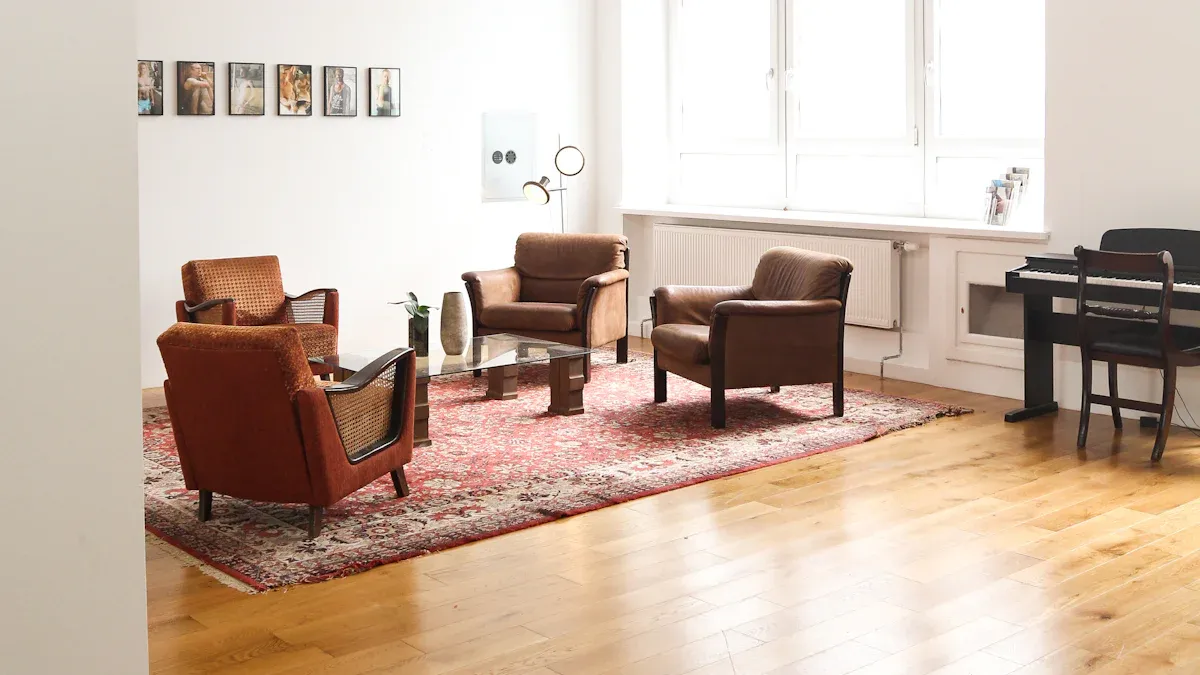
You want your home to feel comfortable and look beautiful. PVC flooring gives you many choices for every room. In kitchens and bathrooms, you need waterproof floors. Luxury vinyl plank and sheet vinyl work well in these moisture-prone areas. You can clean them easily, and they resist stains from spills. Families with children and pets often choose luxury vinyl plank because it stands up to scratches and is simple to maintain.
Here is a table that shows the best types of vinyl flooring for kitchens and bathrooms:
| Type of Vinyl Flooring | Advantages | Cost Range (per sq ft) | Best For |
|---|---|---|---|
| Luxury Vinyl Flooring (LVF) | Waterproof, durable, stylish | $1.50 – $12 | Kitchens, bathrooms |
| Sheet Vinyl | Seamless, waterproof surface | Generally lower | Bathrooms |
| Vinyl Composition Tile | Budget-friendly, DIY-friendly | $1.50 – $5 | Budget renovations |
You also want comfort in living areas. PVC flooring offers soft underfoot feel and reduces noise. You can pick styles that look like wood, stone, or tile. The versatility of pvc lets you match any design. You get a floor that is easy to clean and lasts for years.
- Waterproof nature protects against spills.
- Many styles fit your taste.
- Built-in cushion adds comfort.
- Dense wear layer resists scratches.
- Simple cleaning saves time.
- Affordable options fit your budget.
Commercial Environments
You need strong floors for busy places. PVC flooring meets the demands of commercial buildings. Luxury vinyl plank and luxury vinyl tile provide durability and style. You see these floors in offices, shops, and healthcare settings. Vinyl composition tiles are popular for schools and hospitals because they handle heavy loads and frequent cleaning.
- Luxury vinyl plank is tough and waterproof.
- Vinyl composition tiles offer affordability and strength.
- Luxury vinyl tile is easy to maintain and lasts long.
- Vinyl plank flooring gives a wood-like look with durability.
- Resilient vinyl sheet flooring works well in healthcare due to its seamless, water-resistant surface.
Commercial property managers look for cost-effective solutions. SPC flooring delivers up to 40% better ROI than traditional floors over ten years. Quick installation and low maintenance reduce costs. You get a floor that does not need frequent replacement, saving money in building and construction projects.
Industrial Settings
You want floors that protect your workspace. PVC flooring provides safety and hygiene in industrial environments. You can install it quickly and keep it clean with minimal effort. It acts as a protective layer over cement and old floors. PVC reduces noise and resists chemicals, making it ideal for factories and warehouses.
| Advantages of PVC Flooring in Industrial Settings | Disadvantages of PVC Flooring in Industrial Settings |
|---|---|
| Minimal maintenance required | May not suit heavy, sharp-edged items |
| Protects fragile products | Can fade in direct sunlight without UV protection |
| Quick installation | |
| Hygienic and safe | |
| Anti-static and anti-skidding | |
| Waterproof and chemically resistant | |
| Can be recycled |
You get floors that prevent microbial infection and reduce renovation costs. PVC applications in industry help you create safe, efficient spaces.
Tip: Choose the right type of vinyl flooring for your space. Consider traffic, moisture, and style needs to get the best results.
Tips for Selecting the Right PVC Flooring
Choosing the right flooring for your space can feel overwhelming. You want a floor that fits your needs and lasts for years. Start by thinking about where you will install the floor. High-traffic areas like hallways or kitchens need strong and durable options. Bedrooms and living rooms may need more comfort underfoot.
Here are some important tips to help you decide:
-
Check Durability
Look at how much foot traffic your space gets. For busy areas, pick a thicker wear layer for longer life. -
Think About Comfort
If you spend a lot of time standing, choose flooring with extra cushioning. This makes your space more comfortable. -
Match Your Style
Pick a design that matches your decor. You can find options that look like wood, stone, or bold patterns. -
Consider Health and Safety
If you have allergies, choose hypoallergenic flooring. Look for products that are easy to clean and resist dust. -
Focus on Air Quality
Select flooring with low VOC emissions. Certifications like FloorScore or GREENGUARD show the product is safe for indoor air. -
Plan Your Budget
Add up the total cost, including installation and future maintenance. Some options may cost more at first but save money over time. -
Think Green
If you care about the environment, look for flooring made from recycled materials. Eco-friendly certifications can guide your choice. -
Ask an Expert
Flooring professionals can help you pick the best option and make sure your installation goes smoothly.
Tip: Always check for certifications and ask questions before you buy. This helps you get the best value and performance.
You can use the table below to compare expert recommendations:
| Consideration | Recommendation |
|---|---|
| Sustainability | Look for vinyl and SPC flooring made from recycled materials and certified by eco-friendly organizations. |
| Allergen-Friendly Choices | Vinyl and SPC flooring are hypoallergenic and easy to clean, suitable for allergy sufferers. |
| Indoor Air Quality | Choose flooring with low VOC emissions and look for certifications like FloorScore or GREENGUARD. |
| Durability | Consider how much foot traffic and wear the flooring will endure. |
| Design | Choose flooring that complements your decor and aesthetic preferences. |
| Comfort | Consider the level of comfort you want underfoot, especially for areas where you spend a lot of time. |
| Budget Considerations | Understand total costs, including installation and maintenance, when choosing flooring. |
| Professional Consultation | Seeking advice from flooring experts can help you make an informed decision and ensure successful installation. |
When you follow these tips, you can find the right pvc flooring for any room in your home or business.
You have many PVC flooring options. Homogeneous and heterogeneous types work well in busy spaces. Luxury vinyl plank and tile bring style to homes and offices. Vinyl composition tile fits high-traffic areas. You should match each type to your needs for the best results. Always consider durability, design, and affordability. Choose the right polyvinyl chloride flooring to create a safe and attractive space.
FAQ
What rooms work best for PVC flooring?
You can use PVC flooring in kitchens, bathrooms, basements, and living rooms. This material resists water and stains. You get a durable floor that fits many spaces in your home.
How do you clean PVC flooring?
Sweep or vacuum the floor daily. Use a damp mop with a pH-neutral cleaner. Avoid steam cleaners and harsh chemicals. You keep your floor looking new with simple cleaning steps.
Is PVC flooring safe for families with allergies?
PVC flooring does not trap dust or allergens. You can clean it easily. Many products have low VOC emissions. You create a healthier space for your family.
Can you install PVC flooring yourself?
You can install many types of PVC flooring without professional help. Follow the instructions from the manufacturer. Use basic tools and prepare the subfloor. You save money with DIY installation.
Tip: Always check the product guide before starting your project. This helps you avoid mistakes and get the best results.




