
When you choose vinyl plank flooring, vinyl plank flooring thickness plays a vital role in your decision. It directly influences durability and performance. Thicker vinyl plank flooring provides better resistance to wear and tear, making it ideal for high-traffic areas. For example, planks that measure 6mm or more offer improved noise insulation and comfort underfoot. Additionally, vinyl plank flooring thickness affects installation and overall cost. Thinner options may save money upfront but could lead to higher maintenance costs over time.
Importance of Vinyl Plank Flooring Thickness
When selecting vinyl plank flooring, thickness plays a crucial role in your overall satisfaction with the product. The thickness of the planks affects several key factors, including durability, comfort, sound insulation, and moisture resistance. Understanding these aspects can help you make an informed decision.
Durability and Wear Resistance
Thicker vinyl planks generally offer better durability. For instance, a wear layer thickness of 20 mil or more is ideal for high-traffic areas. This thickness provides excellent protection against scratches and abrasions. In contrast, thinner planks may not withstand heavy use as effectively. Laboratory tests show that thicker wear layers lose less mass under abrasion compared to thinner options. Therefore, if you expect significant foot traffic, consider choosing thicker planks.
Comfort and Sound Insulation
Thicker vinyl plank flooring also enhances comfort underfoot. It absorbs impact noise, making your home quieter. This is especially important in multi-story buildings where sound can travel easily. While thicker planks improve sound insulation, they work best when combined with acoustic underlayment. This combination significantly reduces noise transmission, creating a more peaceful environment.
Moisture Resistance
In areas prone to moisture, such as bathrooms or basements, thickness contributes to moisture resistance. Thicker planks, typically between 4mm and 8mm, provide better stability and help hide subfloor imperfections. This stability is crucial in preventing moisture intrusion. The core materials, like WPC and SPC, enhance water resistance, making thicker options a smart choice for moisture-prone areas.
Thickness Options
Vinyl plank flooring thickness ranges from 2 mm to 5 mm in the market. Here’s a quick overview of common thickness options:
| Thickness Range | Thickness Examples (mm/inch) | Typical Use & Characteristics |
|---|---|---|
| Thin (Budget) | 2-3 mm (approx. 1/16 inch) | Budget options; not recommended for long-term use; show subfloor imperfections; poor noise reduction and comfort |
| Mid-Range (Most Common) | 6.5 mm (1/4 inch), 8 mm (5/16 inch), 8.5 mm (11/32 inch), 9.5 mm (3/8 inch) | Widest selection; suitable for residential and commercial use; good noise reduction and comfort; good value and performance |
| Premium/Commercial | 12 mm (1/2 inch), 15 mm (5/8 inch) | Thickest options; handle heavy traffic; better sound and heat insulation; ideal for commercial spaces and active households |
Choosing the right thickness depends on your specific needs. For high-traffic areas, opt for thicker planks to ensure durability and comfort. For low-traffic spaces, thinner options may suffice.
Vinyl Plank Thickness Options
When selecting vinyl flooring, you will find various thickness options available. Each thickness serves different purposes and suits specific needs. Understanding these options helps you make the best choice for your space.
Common Thickness Ranges
-
Thin Options (2-3 mm): These budget-friendly planks are suitable for low-traffic areas. However, they may not provide the durability you need for long-term use. You might notice subfloor imperfections more easily with these thinner options.
-
Mid-Range Options (6-9.5 mm): This thickness range is the most popular for residential and commercial use. Planks in this category offer a good balance of durability, comfort, and sound insulation. They can handle moderate foot traffic and provide better performance than thinner options.
-
Premium Options (12-15 mm): These thicker luxury vinyl planks are ideal for high-traffic areas. They offer superior durability and sound insulation. If you have a busy household or a commercial space, these planks can withstand heavy use without showing wear.
Tip: If your subfloor has imperfections, consider thicker planks. They provide better stability and help hide unevenness. This choice prevents issues like telegraphing bumps through the flooring. For example, a minimum thickness of 4 mm is often recommended for click-and-lock installation methods to ensure proper locking and stability.
Installation Considerations
Thicker vinyl planks simplify installation, especially over existing tile floors. They can accommodate minor subfloor imperfections without extensive preparation. For instance, if you choose 8 mm planks, you can install them directly over uneven tiles, reducing the need for removal or filling. This ease of installation saves you time and effort.
Installation Considerations for Thickness
When you consider vinyl flooring installation, thickness plays a significant role. Thicker planks often simplify the installation process. They can cover minor imperfections in the subfloor, which saves you time and effort. For example, if you choose 8 mm planks, you can install them directly over uneven tiles without extensive preparation. This feature makes thicker options appealing for DIY projects.
Ease of Installation
Thicker vinyl flooring typically requires less underlayment. You can install these planks over existing floors, which reduces the need for removal. This approach not only saves time but also cuts down on labor costs. If you opt for thinner planks, you may need to prepare the subfloor more carefully. This preparation can include leveling or repairing the surface to ensure a smooth installation.
Cost Considerations
The cost of vinyl flooring installation varies based on thickness. Standard vinyl plank flooring materials usually range from $2 to $7 per square foot. In contrast, thicker luxury vinyl planks can cost between $3 and $10 per square foot. Here’s a quick overview of the cost differences based on wear layer thickness:
| Vinyl Plank Type / Wear Layer Thickness | Approximate Cost per Square Foot |
|---|---|
| Standard Thickness LVP | $4 – $6 |
| Thickest Premium LVP | $7 – $10 |
| 12 mil wear layer (Hudson River plank) | $4.87 |
| 22 mil wear layer (Peace River plank) | $7.50 |
| 30 mil wear layer (Heirloom Oak plank) | $9.99 |
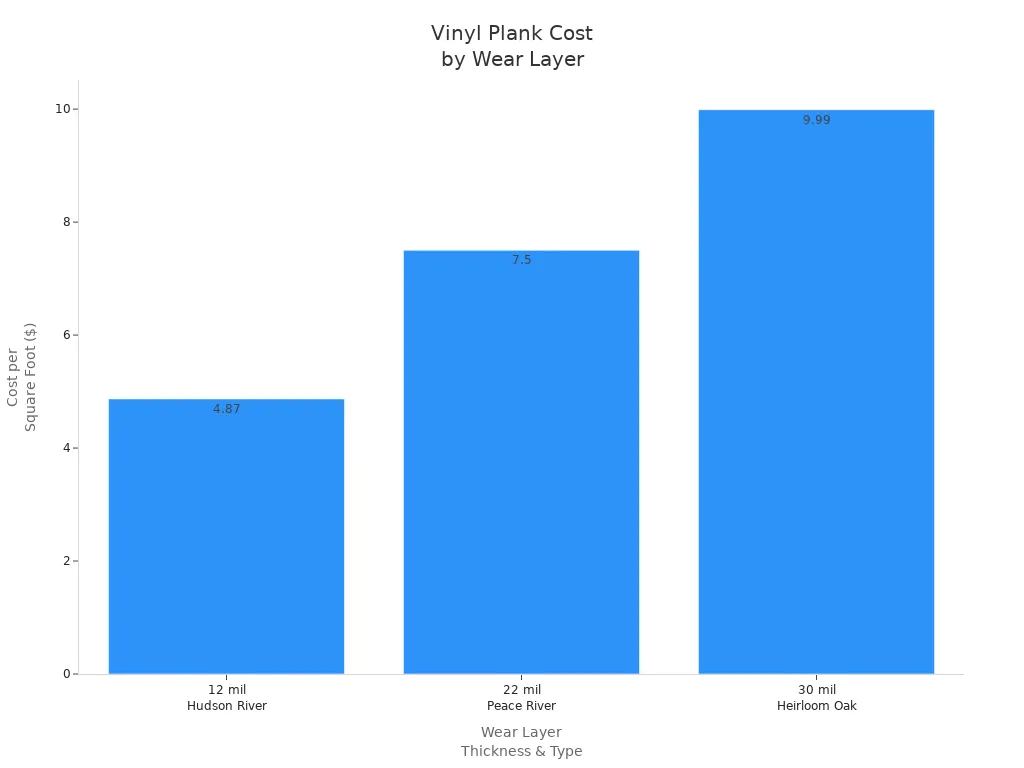
Choosing the right thickness can impact your overall budget. While thicker options may have a higher upfront cost, they often provide better durability and performance. This investment can save you money in the long run by reducing maintenance and replacement needs.
Cost Implications of Thickness
When you consider the cost of vinyl flooring, thickness plays a significant role. Thicker planks often come with a higher price tag, but they can offer better long-term value. Here are some key factors to keep in mind regarding cost implications:
-
Initial Investment: Thicker vinyl flooring typically costs more upfront. For example, standard vinyl planks may range from $2 to $7 per square foot, while thicker options can go from $3 to $10 per square foot. This initial investment can pay off in durability and performance.
-
Durability and Longevity: Thicker planks often feature a more robust wear layer. A wear layer of 12 mil is suitable for moderate use, while 20 mil or more is ideal for homes with pets or children. Investing in a thicker wear layer can save you money on repairs and replacements over time.
-
Lifestyle Considerations: If you frequently entertain guests or have heavy furniture, thicker vinyl flooring is essential. It provides better resistance to scratches and dents. For busy households, a thickness of 6.5 mm or more with a wear layer of 20 mil ensures durability against daily wear and tear.
-
Climate Factors: In humid regions, thicker vinyl flooring helps prevent warping and swelling. A thicker wear layer (20-30 mil) is recommended for areas exposed to moisture. This choice not only protects your investment but also enhances the flooring’s longevity.
-
Installation Costs: Thicker planks can simplify installation. You may not need extensive subfloor preparation, which can reduce labor costs. If you choose thinner options, you might face additional expenses for leveling or repairing the subfloor.
Tip: Always balance your budget with your lifestyle needs. While thicker vinyl flooring may require a higher initial investment, it often leads to lower maintenance costs and a longer lifespan.
By understanding these cost implications, you can make a more informed decision about the thickness of your vinyl flooring.
Choosing the Right Vinyl Flooring Thickness
Selecting the right thickness for your vinyl flooring is essential for achieving the best results in your space. Here are some key factors to consider when making your choice:
-
Traffic Levels: Assess the amount of foot traffic in the area. For high-traffic zones, such as hallways or living rooms, opt for thicker planks. Thicker vinyl flooring often features a more durable urethane wear layer. This layer enhances overall durability and provides increased resistance to stains, punctures, and scratches. Customers frequently report that thicker planks perform better in busy households.
-
Room Functionality: Consider the purpose of the room. For moisture-prone areas like kitchens and bathrooms, thicker planks offer better protection against water damage. Their robust construction makes them suitable for environments where spills are common. If you plan to install flooring in a basement, thicker options can help prevent moisture issues.
-
Comfort and Insulation: Thicker vinyl flooring generally provides better comfort underfoot. It also improves sound insulation, making your home quieter. If you value comfort, especially in living spaces, choose planks that are at least 6 mm thick. This thickness helps mask subfloor imperfections and enhances the overall feel of the flooring.
-
Core Type: The core material of the vinyl plank also plays a significant role in performance. SPC (stone plastic composite) cores offer superior dent resistance and stability, making them ideal for high-traffic areas. On the other hand, WPC (wood plastic composite) cores provide better cushioning and sound absorption, which is perfect for living spaces. Understanding the differences between these core types can help you make a more informed decision.
-
Installation Considerations: Thicker planks often simplify the installation process. They can cover minor imperfections in the subfloor, reducing the need for extensive preparation. If you choose thinner options, you may need to invest more time and effort into preparing the subfloor. Proper subfloor preparation is essential regardless of plank thickness to avoid installation issues.
-
Long-Term Value: While thicker vinyl flooring may come with a higher upfront cost, it often results in better lifecycle value. Investing in thicker, higher-quality planks can save you money in the long run by reducing maintenance and replacement needs. Many consumers find that the durability and performance of thicker options justify the price premium.
Tip: Always balance your budget with your lifestyle needs. While thickness affects comfort and installation suitability, it is not the only factor influencing consumer satisfaction. Consider wear layer thickness, product construction, and installation type when making your choice.
By evaluating these factors, you can choose the right vinyl flooring thickness that meets your specific needs and preferences. Remember, the goal is to find a balance between comfort, durability, and cost-effectiveness.
In summary, thickness plays a vital role in your vinyl plank flooring choices. Here are some key points to consider:
- Durability: Thicker planks withstand heavy foot traffic, dents, and scratches better than thinner options.
- Comfort: A thicker core enhances stability and provides a softer feel underfoot.
- Moisture Resistance: Thicker planks resist warping in humid areas, making them ideal for kitchens and bathrooms.
- Installation Ease: Thicker options often simplify the installation process, reducing errors.
When choosing the right thickness, balance your personal needs and preferences. Consider factors like foot traffic, comfort, and budget. This approach ensures you select flooring that meets your lifestyle while providing long-lasting value.
FAQ
What is the ideal thickness for residential vinyl plank flooring?
For residential use, a thickness of 6 mm to 8 mm is ideal. This range offers a good balance of durability, comfort, and sound insulation, making it suitable for most living spaces.
Can I install thicker vinyl planks over existing flooring?
Yes, you can install thicker vinyl planks over existing flooring. Thicker options can cover minor imperfections, reducing the need for extensive subfloor preparation. This feature simplifies the installation process.
How does thickness affect the cost of vinyl flooring?
Thicker vinyl flooring typically costs more upfront. However, investing in thicker options often leads to better durability and performance, which can save you money on maintenance and replacements in the long run.
Are thinner vinyl planks suitable for high-traffic areas?
Thinner vinyl planks are not recommended for high-traffic areas. They may wear down quickly and show scratches or dents. For busy spaces, opt for thicker planks to ensure better durability.
How do I choose the right thickness for my needs?
Consider factors like foot traffic, room functionality, and comfort. For high-traffic areas or moisture-prone spaces, choose thicker planks. For low-traffic rooms, thinner options may suffice. Always balance your budget with your lifestyle needs.




