
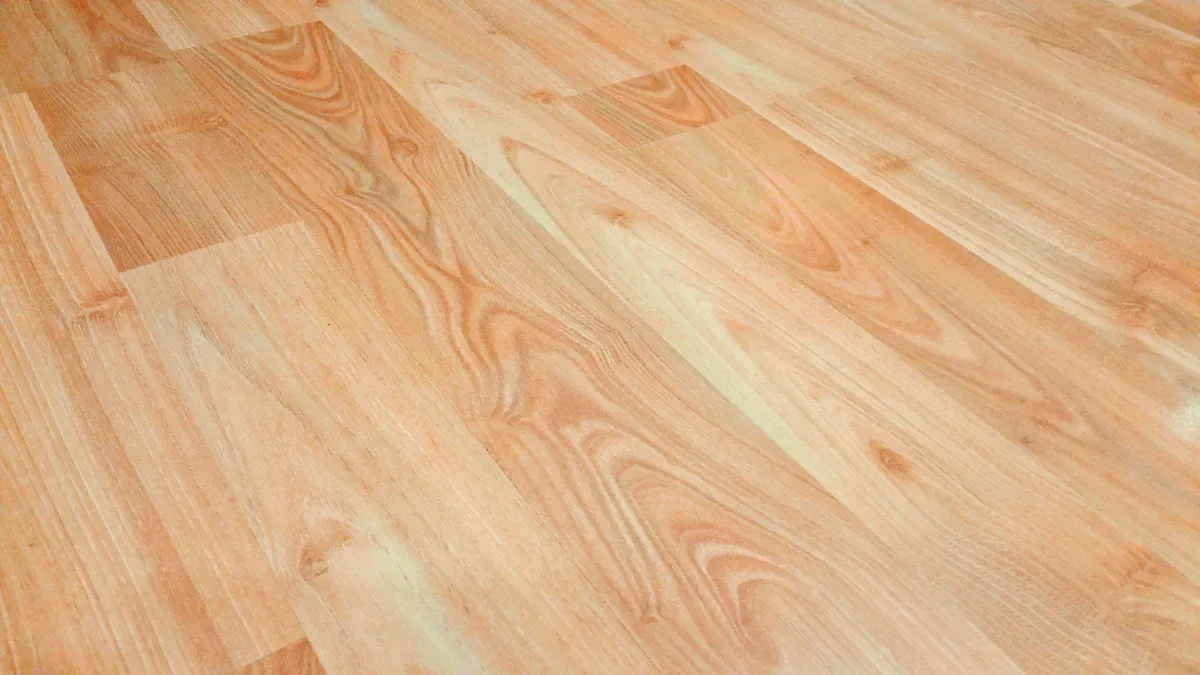
Loose lay vinyl flooring offers a smart solution for many homes and businesses. If you want floors that handle water, resist scratches, and feel soft underfoot, this option stands out. Many people choose loose lay vinyl flooring for its quick installation and easy care. You can install it in bathrooms, kitchens, or busy rooms where comfort and quiet matter.
You may wonder what is loose lay vinyl flooring and why it fits so many needs. Homeowners who want less hassle and commercial owners who need durability both benefit from this flooring type.
What Is Loose Lay Vinyl Flooring?
How Loose Lay Vinyl Flooring Works
You may ask, what is loose lay vinyl flooring and how does it stay in place? This flooring uses a special design that sets it apart from other types. Loose lay vinyl flooring comes in planks or tiles that are usually 4-6 mm thick. The planks have a heavy weight and a textured backing. This backing grips the subfloor using friction, so you do not need glue across the whole floor. You only use adhesive around the edges or in certain spots if needed.
When you install loose lay planks, you simply lay them flat on the subfloor. The weight and friction keep them from moving. You do not need nails, staples, or a click-lock system. Most people only need a razor blade to cut the planks to size. You can finish a room quickly, even if you have never installed flooring before. This makes loose lay vinyl flooring a favorite for DIY projects.
Tip: Loose lay vinyl flooring saves you time and effort. You do not need special tools or messy glue. You can even lift and replace a plank if you make a mistake.
Unique Features of Loose Lay Vinyl Flooring
What is loose lay vinyl flooring known for? The answer lies in its unique construction and properties. Manufacturers use polyvinyl chloride (PVC) resins, calcium carbonate, plasticizers, stabilizers, and pigments to make the planks. They mix these materials, then press them into sheets. A printed film gives each plank a wood or stone look. A clear wear layer protects the surface from scratches and stains. The backing, often made from recycled PVC or cork, adds stability and sound absorption.
Loose lay planks stand out because of their floating installation. You do not need to lock them together or glue them down. The planks adapt to small bumps or dips in the subfloor. If one plank gets damaged, you can lift it out and put in a new one. This makes repairs easy and stress-free.
Here is a quick comparison to help you see what makes loose lay vinyl flooring different:
| Property | Loose Lay Vinyl Flooring | Other Vinyl Flooring Types |
|---|---|---|
| Installation | Lays flat, held by weight and friction | Uses glue, click-lock, or adhesive |
| Tools Needed | Razor blade, minimal tools | More tools for glue or click systems |
| Subfloor Prep | Adapts to minor flaws | Needs smoother surface |
| Repair | Easy plank replacement | Harder for glue-down or sheet vinyl |
| Maintenance | Simple cleaning, less shifting | Similar, but seams may be weaker |
What is loose lay vinyl flooring best at? It gives you a fast, easy way to update your space. You get the look of wood or stone without the hassle. Loose lay vinyl flooring also works well in rooms where you want comfort and quiet. The sound-absorbing backing helps reduce noise, making it a good choice for bedrooms or offices.
Loose lay planks offer a smart solution if you want a floor that is easy to install, simple to repair, and comfortable underfoot. Many people choose this type over traditional vinyl plank flooring because of its unique benefits.
Benefits of Loose Lay Vinyl Flooring
Easy and Fast Installation
You can enjoy the ease of installation when you choose loose lay vinyl flooring. This flooring type does not require glue, nails, or a click-lock system. You simply lay each plank or tile on the subfloor. The weight and special backing keep the flooring in place. Most people find it easy to install, even if they have never done a flooring project before. You only need basic tools, such as a utility knife and a measuring tape. Many homeowners finish a room in just a few hours.
Tip: If you make a mistake, you can lift a plank and reposition it without damaging the floor. This makes loose lay vinyl flooring a great choice for DIY projects and quick renovations.
Comfort and Sound Reduction
Loose lay vinyl flooring feels soft and warm under your feet. The layered construction and padded backing add comfort and support. You will notice less noise when you walk across the floor. The sound-absorbing qualities help reduce echoes and footsteps, making your space quieter.
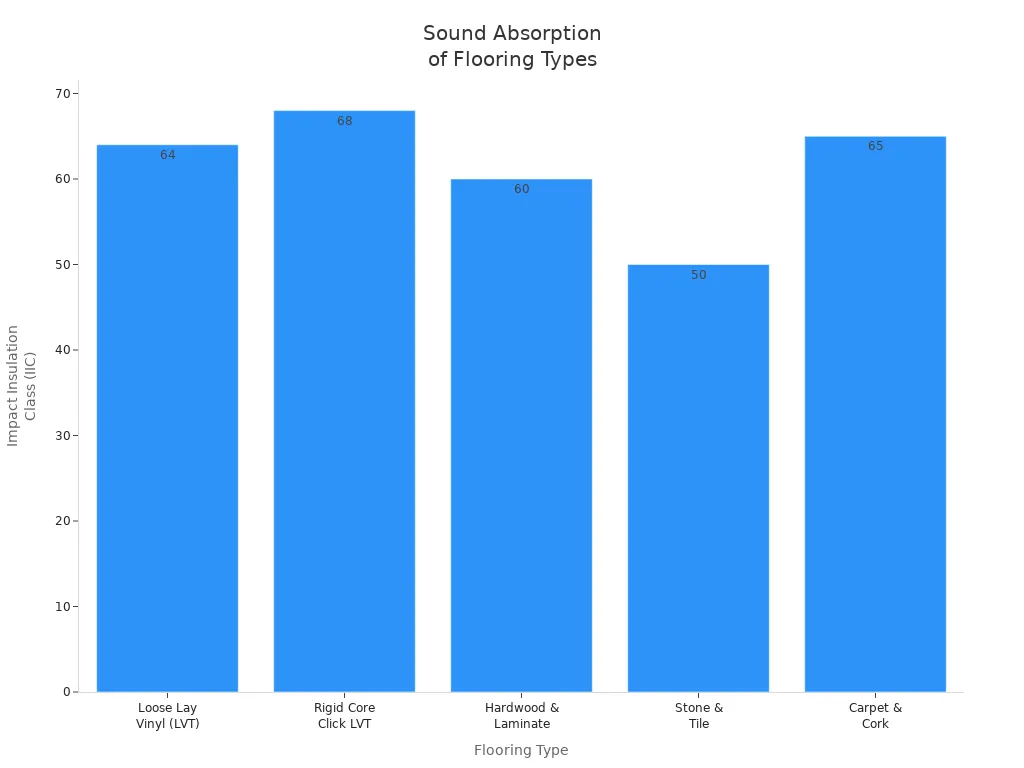
Here is how loose lay vinyl flooring compares to other flooring types for sound absorption:
| Flooring Type | Typical Thickness | Impact Insulation Class (IIC) | Sound Absorption Notes |
|---|---|---|---|
| Loose Lay Vinyl (LVT) | ~5mm | 64 | Naturally more sound absorbing due to thickness and optional non-skid backing adding padding. |
| Rigid Core Click LVT | N/A | 68 | Slightly higher IIC than loose lay, with specialized acoustic backing. |
| Hardwood & Laminate | N/A | 60 | Moderate sound absorption, improved with underlayment. |
| Stone & Tile | N/A | 50 | Lower sound absorption, typical of hard surfaces. |
| Carpet & Cork | N/A | 65 | Highest sound absorption ratings, with Noise Reduction Coefficient (NRC) of 0.40-0.50. |
You will also benefit from the warmth and softness that loose lay vinyl flooring provides. Many users say it feels more comfortable than wood or tile floors.
- The thick, padded layers add softness and support.
- The floor stays warm, even in cooler rooms.
- The design helps reduce noise and echoes.
- The surface feels gentle underfoot, making it ideal for bedrooms and living areas.
Waterproof and Durable
Loose lay vinyl flooring stands out for its waterproof qualities. The materials used in the planks resist water and spills. You can install this flooring in kitchens, bathrooms, and basements without worry. Flood and spill tests show that top products keep their shape and look even after 24 to 72 hours of water exposure. The sealed edges and waterproof core protect your subfloor from damage.
This flooring also lasts a long time. In homes, you can expect loose lay vinyl flooring to last 15 to 20 years with regular care. In busy commercial spaces, it usually lasts 10 to 15 years. The table below shows the average lifespan:
| Usage Type | Average Lifespan (Years) | Notes |
|---|---|---|
| Residential Use | 15 to 20 | Moderate foot traffic, longer lifespan |
| Commercial Use | 10 to 15 | Higher foot traffic, shorter lifespan |
Note: Proper installation and regular cleaning help your floor last longer and keep its waterproof protection strong.
Design Variety
You have many choices when you pick loose lay vinyl flooring for your space. Major brands offer around 10 different design pattern collections. These collections include wood-look, stone-look, and even bold urban-inspired styles. You can find at least 14 color options, from classic beige and brown to modern metallic and vibrant blue.
| Design Pattern Collections (Loose Lay Vinyl Flooring) | Color Options Available |
|---|---|
| Unfazed (Luxury flooring) | Beige |
| Avara (Wall and floor use) | Black |
| Instinct (Wood-look designs) | Black & White |
| Connectivity (Textures and wood-looks) | Blue |
| Vertu (Wood-look designs) | Brown |
| InGrained (Woodgrain designs) | Gold |
| Ascendant (Chevron and Herringbone patterns) | Gray |
| Fused (Urban-inspired designs) | Green |
| HardCore (Classic and resilient) | Metallic |
| 5MM Loose Lay (Plank designs in loose lay format) | Orange |
| Red | |
| Violet | |
| White | |
| Yellow |
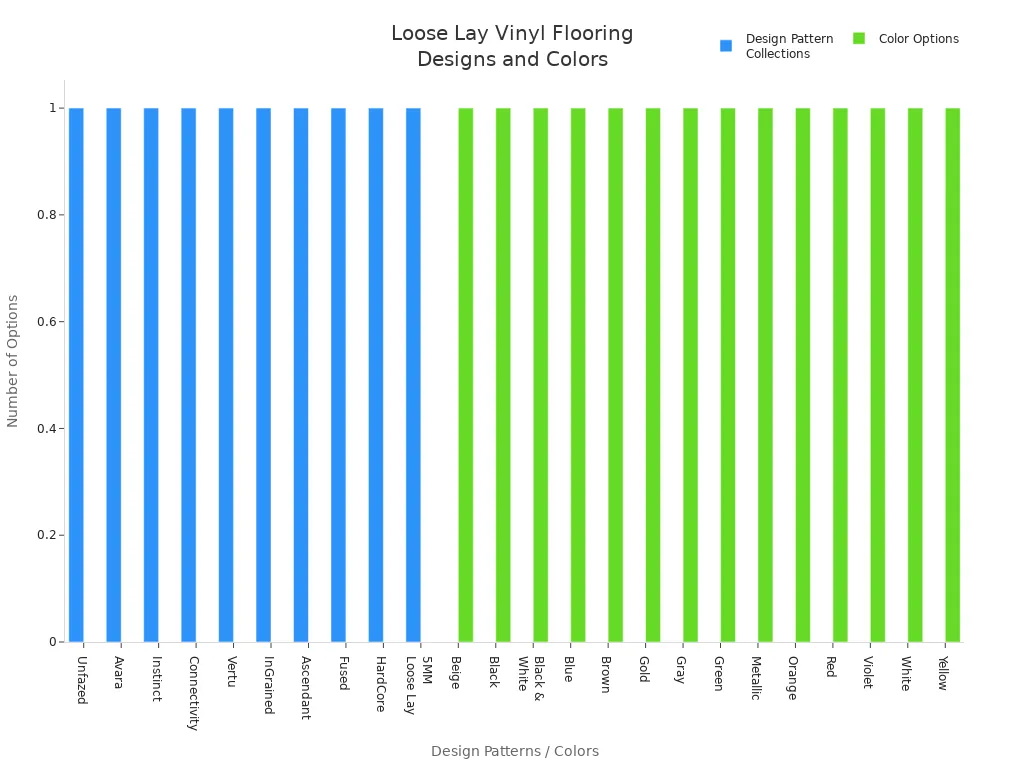
You can follow the latest trends with loose lay vinyl flooring. Many people choose seamless designs for open floor plans. These floors make rooms look bigger and help with cleaning. You can also pick bold patterns or realistic textures that look like marble, slate, or wood. Popular colors include soft sage green, navy blue, and driftwood gray. Some collections use two-tone finishes or creative palettes for a custom look.
Loose lay vinyl flooring fits many styles. You can match it with modern, farmhouse, or classic rooms. The variety lets you create a space that feels just right for you.
Simple Maintenance
Loose lay vinyl flooring is easy to maintain. You do not need special cleaners or tools. Most manufacturers recommend a few simple steps to keep your floor looking new:
- Sweep or vacuum every day to remove dirt and grit.
- Use a microfiber mop with a neutral pH cleaner. Do not soak the floor or use steam mops.
- Wipe up spills right away to prevent stains.
- Never drag furniture. Use pads or sliders to protect the floor.
- Place mats at entrances to trap dirt and moisture.
- Avoid abrasive cleaners or vacuums with beater bars.
- Protect your floor from strong sunlight to prevent fading.
Tip: Wait at least 24 hours after installation before heavy use or wet cleaning. This helps the floor settle and prevents damage.
You can keep your loose lay vinyl flooring looking great with these easy steps. The floor resists stains, scratches, and water, so you spend less time cleaning and more time enjoying your space.
Drawbacks of Loose Lay Vinyl Flooring
Risk of Shifting or Movement
Loose lay vinyl flooring can shift or move if you do not install it correctly. You might notice gaps between planks or tiles. Sometimes, the edges or seams lift or curl. These problems often happen when the subfloor is not flat, clean, or dry. Temperature and humidity changes in your room can also cause the flooring to expand or contract. If you skip the step of letting the planks adjust to your room before installation, you may see movement later.
Common issues include:
- Gaps between planks or tiles from poor installation or temperature changes
- Lifting or curling edges caused by moisture or bad subfloor preparation
- Movement from dragging heavy furniture across the floor
- Expansion or contraction if you do not leave enough space around the edges
Tip: You can prevent most shifting problems by preparing your subfloor well, letting the flooring acclimate, and using furniture pads.
When Edge Gluing Is Needed
You may need to glue the edges of loose lay vinyl flooring in some situations. If you plan to install the flooring in a large room or a high-traffic area, edge gluing helps keep the planks in place. Rooms with lots of sunlight or moisture can also cause the flooring to move. Edge gluing adds extra grip and stability. This step is important near doorways, entryways, or long runs of flooring. Always follow the manufacturer’s instructions for the best results.
Suitability for High-Traffic or Commercial Spaces
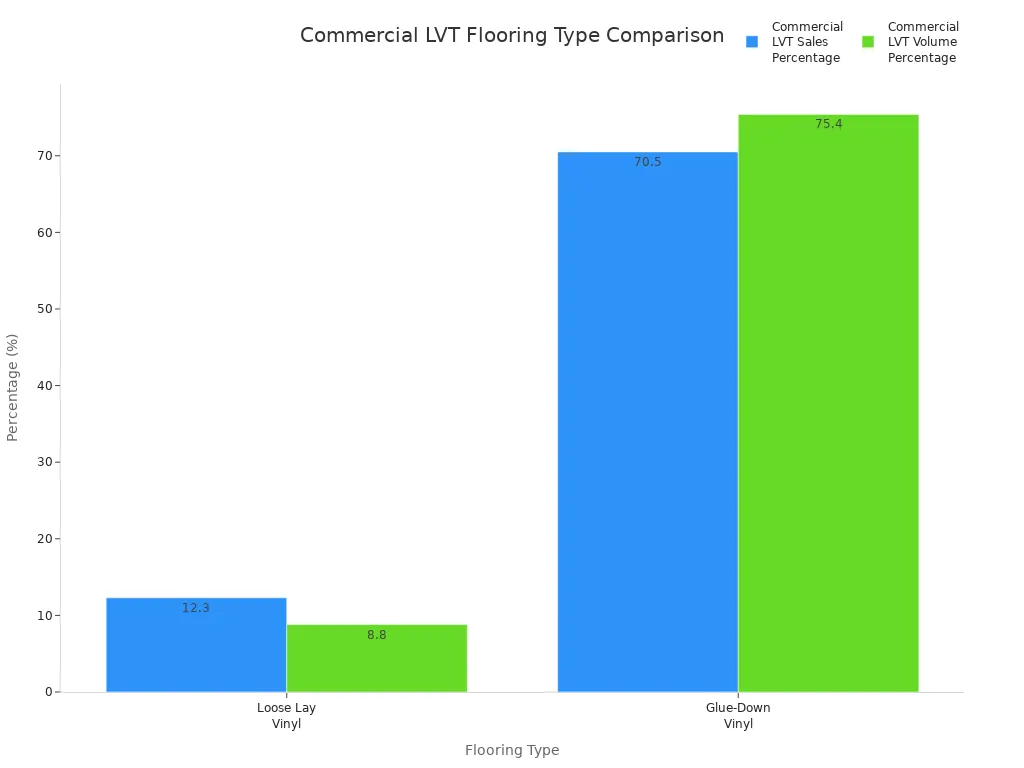
Loose lay vinyl flooring works best in homes or light-use areas. In busy commercial spaces, it may not last as long as other vinyl types. The flooring can shift or wear down faster when many people walk on it each day. Other options, like glue-down luxury vinyl tile (LVT) or rigid core vinyl, offer better durability for stores, offices, or airports.
Here is a quick comparison:
| Vinyl Flooring Type | Installation Method | Best For | Durability in High-Traffic Areas |
|---|---|---|---|
| Loose Lay Vinyl Flooring | Heavy backing, no adhesive | Homes, temporary spaces | Less suited for heavy commercial use |
| Luxury Vinyl Tile (LVT) | Glue-down | Retail, offices | High durability, strong wear resistance |
| Rigid Core Vinyl (SPC/WPC) | Click-lock or glue-down | Malls, airports, busy hallways | Extreme durability, dent resistance |
| Vinyl Composition Tile (VCT) | Glue-down | Schools, hospitals | Durable, but needs more maintenance |
For high-traffic or commercial spaces, you should consider glue-down or rigid core vinyl for better long-term performance.
Loose Lay Vinyl Flooring vs. Other Vinyl Types
Click Lock Vinyl Flooring
You might wonder how loose lay vinyl flooring compares to click lock vinyl flooring. Both types belong to the family of vinyl plank flooring and offer easy installation. Loose lay vinyl flooring uses its weight and a textured backing to stay in place. Click lock vinyl flooring uses an interlocking system that snaps planks together. This system creates a tight fit and helps prevent movement.
| Aspect | Loose Lay Vinyl Flooring | Click Lock Vinyl Flooring |
|---|---|---|
| Installation | Quick and easy; no glue or locking mechanism needed; relies on weight and textured backing | Takes longer due to interlocking process; DIY-friendly but more involved installation |
| Durability | May shift over time, especially in high-traffic or uneven areas; less ideal for large spaces without adhesive | More durable and stable; interlocking system prevents movement; better for heavy furniture and frequent use |
| Cost | Generally lower upfront cost; may require occasional adjustments | Typically higher cost but offers a more permanent and stable installation |
| Additional | Waterproof and easy to maintain but prone to movement | Often padded underside for cushioning and noise reduction; less prone to damage over time |
Click lock vinyl flooring gives you more stability, especially in busy rooms. You can also replace individual planks if needed. Loose lay vinyl flooring costs less at first, but you may need to adjust planks over time.
Tip: Floating vinyl plank flooring, like click lock and loose lay, saves money on installation. Click lock floors work better if you want a secure fit for heavy furniture or frequent use.
Glue Down Vinyl Flooring
Glue down vinyl flooring stands out for its strong hold and long-lasting results. You glue each plank or tile directly to the subfloor. This method works well in high-traffic areas, commercial spaces, and places with lots of moisture. Glue down vinyl flooring does not shift or lift, even when many people walk on it every day.
You will find that glue down vinyl flooring takes more time and skill to install than loose lay vinyl flooring. You need to prepare the subfloor carefully and use the right adhesive. Once installed, glue down vinyl flooring feels solid and stable underfoot. It is a top choice for luxury vinyl tile and luxury vinyl flooring in stores, offices, and schools.
Here are some key points:
- Glue down vinyl flooring offers the best stability for large or busy spaces.
- You can use it with both vinyl plank flooring and luxury vinyl tile.
- It resists movement, even with rolling chairs or carts.
- Repairs take more effort because you must remove the glued plank or tile.
Loose lay vinyl flooring works better for quick updates or temporary spaces. Glue down vinyl flooring is best when you want a permanent, durable floor.
Peel and Stick Vinyl Flooring
Peel and stick vinyl flooring gives you another easy option for DIY projects. Each plank or tile has a pre-applied adhesive. You peel off the backing and press the piece onto the subfloor. This method saves time and does not need extra glue or tools.
| Flooring Type | Advantages | Disadvantages |
|---|---|---|
| Peel-and-Stick Vinyl | – Easy installation with pre-applied adhesive | – Requires clean, smooth, dry subfloor |
| – Time-efficient and cost-effective | – Adhesive may fail in moist areas | |
| – DIY-friendly, minimal tools required | – Limited design variety | |
| Loose Lay Vinyl | – Easy installation, little to no glue needed | – Less stability, can lift in high-traffic areas |
| – Adaptable to various subfloors | ||
| – Easy to repair by replacing planks |
Peel and stick vinyl flooring works best in small, dry rooms with a smooth subfloor. The adhesive may not hold up in bathrooms or basements. Loose lay vinyl flooring gives you more design choices and adapts to different subfloors. You can also swap out planks easily if one gets damaged.
Note: Both peel and stick and loose lay vinyl flooring make repairs simple. You can replace a single plank without redoing the whole floor.
Where Loose Lay Vinyl Flooring Works Best
Best Room Types and Uses
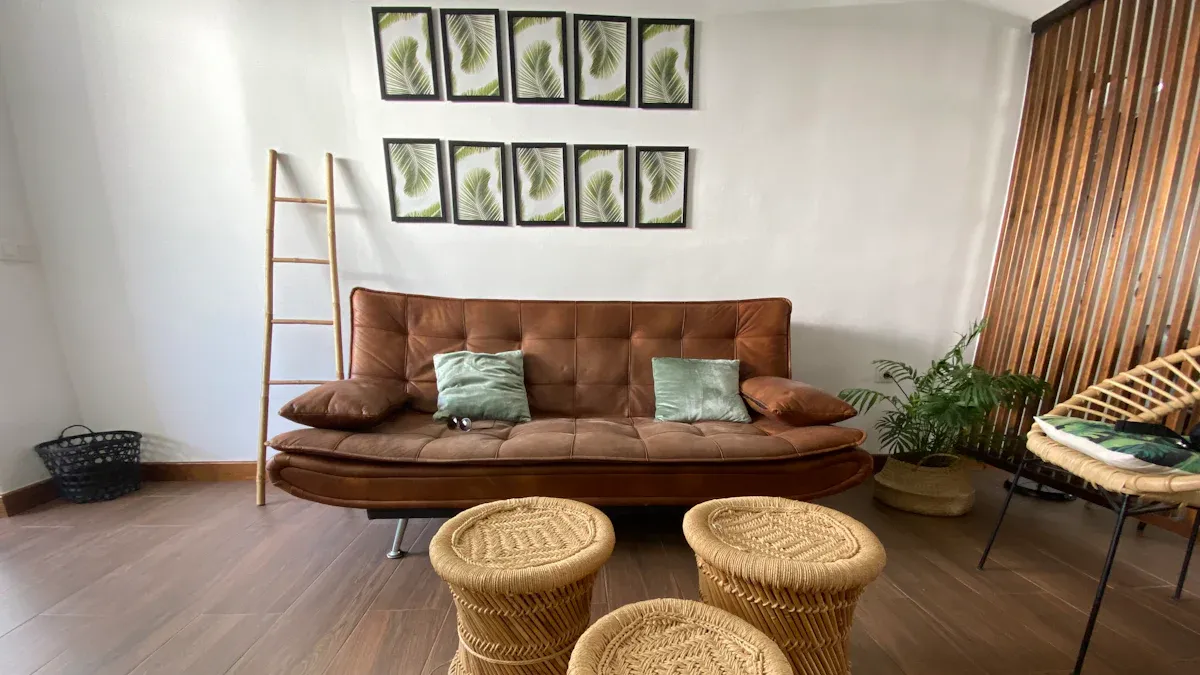
You can use loose lay vinyl flooring in many rooms at home or work. This flooring works well in bedrooms, living rooms, and offices. You get comfort and quiet in these spaces. Bathrooms, laundry rooms, and kitchens also benefit from loose lay vinyl because it resists water. Basements are another good choice since the planks handle moisture. Many people use this flooring for quick updates or temporary spaces, such as rental units or pop-up shops.
Tip: Loose lay vinyl flooring is a smart pick for rooms where you want easy repairs. You can lift and replace a plank if it gets damaged.
Subfloor and Surface Requirements
Loose lay vinyl flooring needs a good base to perform its best. You should check your subfloor before you start. Here are the main requirements:
- The subfloor must be clean, dry, smooth, and level.
- Concrete subfloors should be level within 3/16 inch for every 10 feet.
- Moisture control is important. Too much moisture can damage the planks.
- You can install over concrete, ceramic tile with grout lines, or textured vinyl.
- The surface should be smooth. Rough spots can snag or wear down the backing.
- Use self-leveling compounds if your floor is uneven.
- Leave expansion gaps around the edges to let the planks move.
- In high-traffic areas, use full-spread adhesive for better stability.
- After installation, seal the edges with a bead of silicone.
A good subfloor helps your new floor last longer and look better.
When to Consider Other Flooring Options
Loose lay vinyl flooring does not fit every situation. You should look at other options if you have a large room or a space with heavy foot traffic. In these places, seams can open up over time. If you want tile shapes instead of planks, you may need a different product. Some people find the installation tricky if they do not have experience. You might also want more choices in design or need extra durability. In these cases, glue-down or click-lock vinyl flooring could work better for you.
Loose lay vinyl flooring works best if you want easy DIY installation, comfort, and a wide range of styles at a lower cost. You save money on installation and repairs, but you need a smooth subfloor and careful placement to avoid shifting.
Quick Checklist Before You Decide:
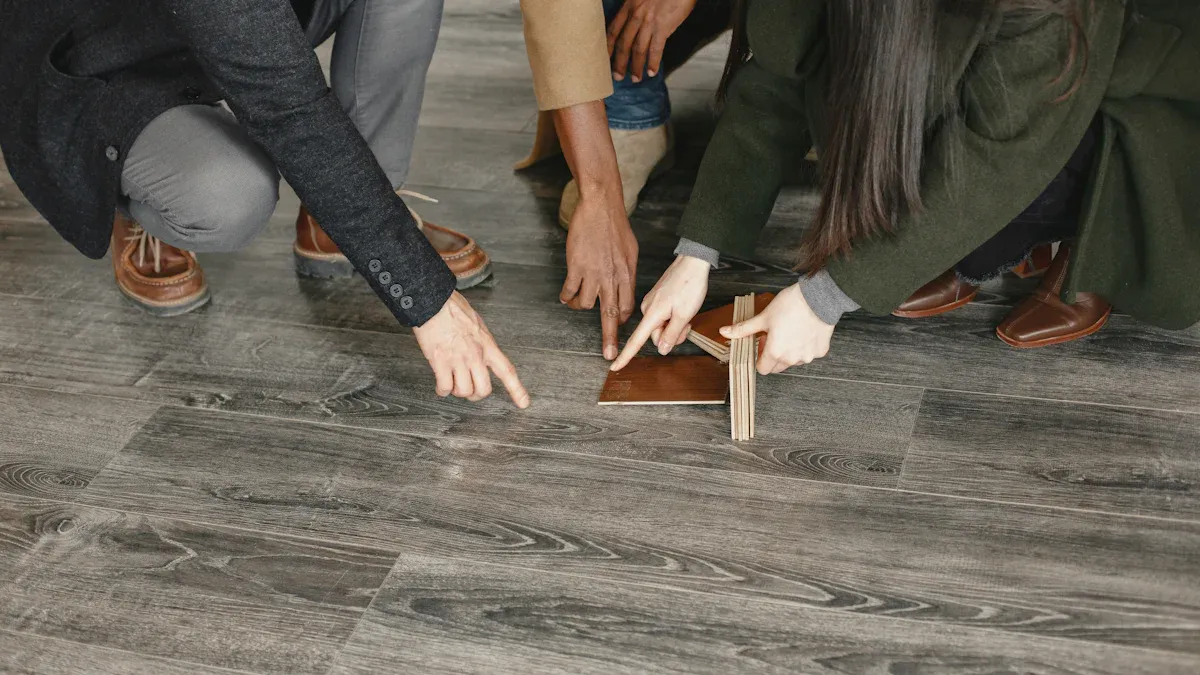
- Test samples in your room and check them under different lights.
- Scratch and wet-test samples for durability.
- Confirm your subfloor is smooth and dry.
- Choose the right wear layer for your home’s traffic.
- Review warranty and comfort features.
Think about your lifestyle, room use, and budget. Weigh the pros and cons to see if loose lay vinyl flooring fits your needs.
FAQ
How do you clean loose lay vinyl flooring?
You can sweep or vacuum the floor daily. Use a damp mop with a mild, pH-neutral cleaner. Avoid steam mops and harsh chemicals. Wipe up spills right away to prevent stains.
Can you install loose lay vinyl flooring over existing floors?
Yes, you can install it over many surfaces like tile, concrete, or old vinyl. Make sure the subfloor is clean, dry, and level. Remove any loose debris before starting.
Does loose lay vinyl flooring need underlayment?
Most loose lay vinyl flooring has a built-in backing. You do not need extra underlayment in most cases. If your subfloor is uneven, use a self-leveling compound first.
How long does loose lay vinyl flooring last?
You can expect it to last 15 to 20 years in homes. In busy commercial spaces, it usually lasts 10 to 15 years. Regular cleaning and proper installation help extend its life.
What should you do if a plank gets damaged?
You can lift the damaged plank and replace it with a new one. No glue or nails make repairs easy. Always keep a few extra planks for quick fixes.




