
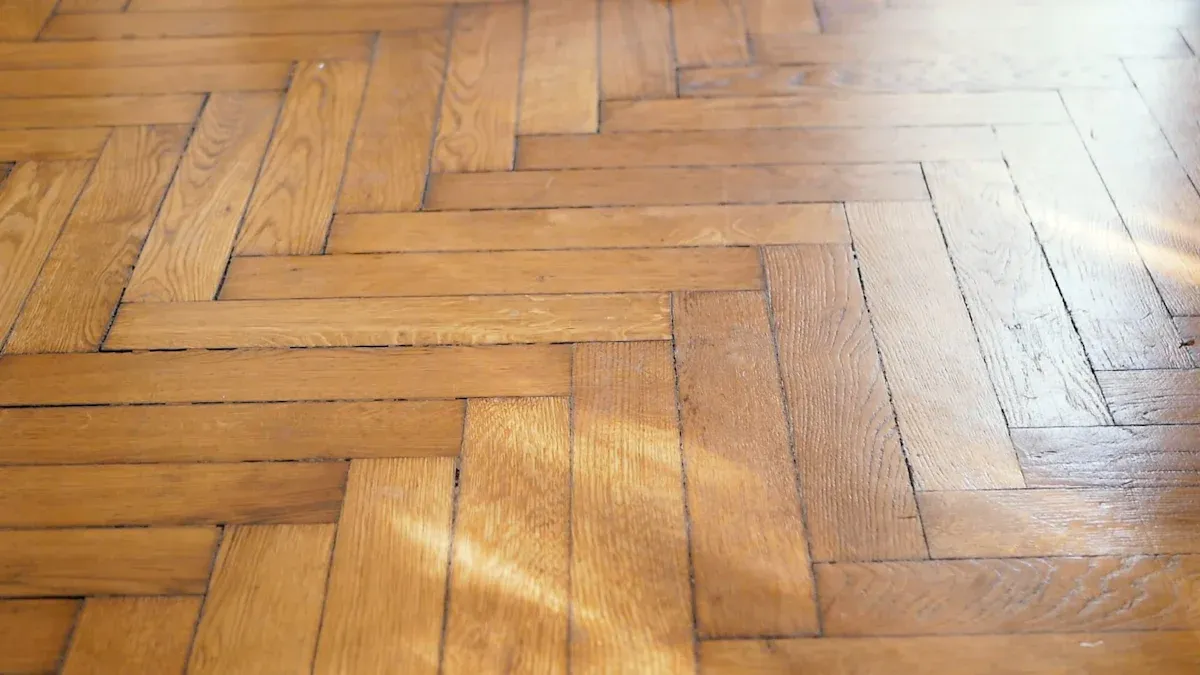
When you face the decision of laminate vs vinyl hardwood for your home, you want the best value. Many homeowners choose vinyl for its tough surface and water resistance. Laminate vs vinyl hardwood often comes down to where you install the flooring. You may prefer laminate if you love a real wood look. Vinyl gives you peace of mind in high-moisture spaces. Laminate vs vinyl hardwood can change the feel of your home. You see a difference in durability, comfort, and style when you compare laminate vs vinyl hardwood. Your flooring choice matters. Laminate vs vinyl hardwood gives you options for every room. Vinyl stands out in places where moisture is a concern. Laminate vs vinyl hardwood both bring unique benefits to your home.
Laminate vs Vinyl Hardwood: What Are They?
Laminate Flooring Overview
When you look at laminate flooring, you see a product made from several layers. The base layer gives strength. The core is usually made from high-density fiberboard. The top layer has a printed image that looks like wood. A clear wear layer protects the surface. Laminate flooring is popular because it is affordable and easy to install. You can find many styles and colors. Laminate works well in dry rooms. It resists scratches, which is one of the key benefits of laminate. If you want a wood look without the high price, laminate is a smart choice.
Vinyl Hardwood Flooring Overview
Vinyl flooring has changed a lot in recent years. Today, you can choose from vinyl plank flooring, luxury vinyl plank, and luxury vinyl flooring. These products use several layers. The core is waterproof. The top layer has a realistic wood image. Vinyl plank flooring feels soft under your feet. Luxury vinyl plank flooring is thicker and more durable. You can use vinyl flooring in almost any room. It stands up to water, spills, and heavy use. Many homeowners pick vinyl for kitchens, bathrooms, and basements. Vinyl flooring is easy to clean and lasts a long time.
Key Differences in Home Applications
When comparing vinyl and laminate flooring, you need to think about where you will use them. Vinyl plank flooring and luxury vinyl plank work best in places with lots of moisture. Laminate flooring does not handle water as well. If you spill water on laminate, you need to clean it up fast. Vinyl flooring is 100% waterproof. You can use it in kitchens, bathrooms, and basements without worry. Laminate is better for bedrooms, living rooms, or upstairs spaces.
Here is a quick comparison to help you decide:
| Feature | Vinyl Hardwood (LVP) | Laminate Hardwood |
|---|---|---|
| Water Resistance | 100% waterproof; ideal for kitchens, bathrooms, basements | Water-resistant but can warp if spills not cleaned quickly; better for dry areas like guest rooms or upstairs |
| Durability | Extremely durable, flexible, handles dents and scratches well; good for busy homes with kids and pets | Scratch-resistant and budget-friendly; rigid but can chip if heavy objects drop |
| Comfort and Sound | Softer, quieter, more flexible; comfortable underfoot especially with underlayment | More rigid, can feel hollow unless paired with premium underlayment; less comfortable |
| Style and Aesthetic | Offers more texture variation and deeper embossing for a realistic hardwood look | Offers realistic wood appearance but less texture depth; budget-friendly styles available |
| Installation | Easy to install, especially click-lock; waterproof allows seamless use throughout home | Quick installation; often chosen for affordability in less moisture-exposed areas |
| Cost | Generally higher upfront cost but better long-term investment due to waterproof and durability | Lower price point; good value for dry, low-moisture areas |
When comparing vinyl and laminate flooring, you see that vinyl flooring, especially luxury vinyl plank, gives you more options for wet areas. Laminate flooring is a good pick for dry spaces and tight budgets. You can choose the best flooring for each room by thinking about water, comfort, and style.
Comparing Vinyl and Laminate Flooring: Cost and Value
Upfront Costs for Homeowners
When you plan a new floor for your home, you want to know the cost right away. Laminate flooring and vinyl flooring both offer affordable choices. You can find laminate in many thicknesses and styles. The price changes based on thickness and quality. Vinyl flooring, including luxury vinyl plank, also comes in a wide range of prices.
Here is a table to help you compare the cost per square foot for laminate and vinyl flooring in 2025:
| Flooring Type | Price Range per Square Foot (Materials Only) | Price Range per Square Foot (Including Installation) |
|---|---|---|
| Laminate (basic to premium) | $1.00 – $4.00 | $3.00 – $9.00 (varies by style and thickness) |
| Vinyl Hardwood Flooring (approximate) | $0.75 – $3.50 | N/A |
You can see that laminate flooring starts at about $1.00 per square foot for basic options. Thicker laminate, like 12 mm, can cost up to $6.00 per square foot. Vinyl flooring, including luxury vinyl plank, starts even lower at $0.75 per square foot. Most luxury vinyl plank flooring falls between $2.00 and $3.50 per square foot.
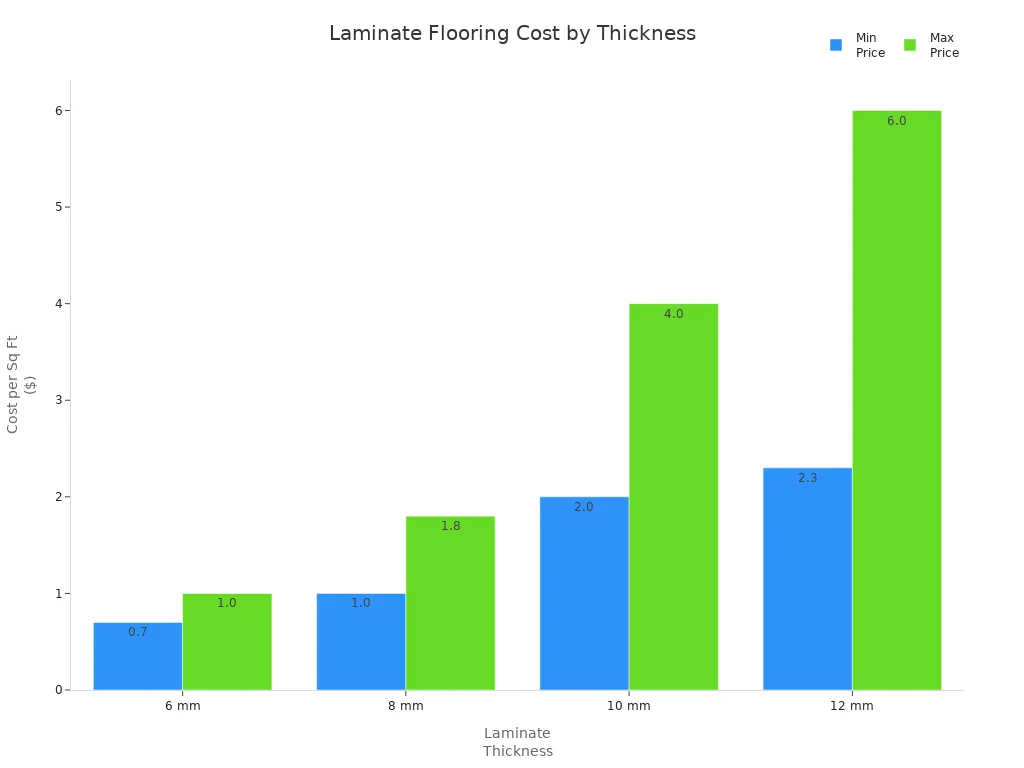
You may notice that installation costs for laminate flooring can add up, especially for thicker or premium products. Vinyl flooring often has lower installation costs because it is easier to install. Many homeowners choose luxury vinyl plank for DIY projects to save money.
If you want a great value and need to cover a large area, vinyl flooring and laminate flooring both give you budget-friendly options. You can pick the style and thickness that fits your needs and your wallet.
Long-Term Value and Investment
You want your new floor to last. Laminate flooring and vinyl flooring both offer long-term value, but they perform differently over time. Laminate resists scratches and dents, which helps it look good in busy rooms. Vinyl flooring, especially luxury vinyl plank, stands up to water and heavy use. You can use luxury vinyl plank flooring in kitchens, bathrooms, and basements without worry.
When you look at long-term value, you should think about how often you need to replace or repair your floor. Vinyl flooring lasts longer in wet areas. Laminate flooring works best in dry rooms. If you want a floor that keeps its value, luxury vinyl plank flooring gives you more protection against spills and moisture. This means you spend less on repairs and replacements.
A cost and value analysis shows that vinyl flooring, especially luxury vinyl plank, gives you more years of use in high-traffic or wet spaces. Laminate flooring gives you good value in bedrooms and living rooms where water is not a problem. Both types of flooring help you save money compared to hardwood.
Impact on Home Resale Value
You may wonder how your flooring choice affects your home’s resale value. Laminate flooring and vinyl flooring both improve the look of your home. Buyers like clean, modern floors. Laminate flooring often gives a higher resale value than older or cheaper vinyl floors. Luxury vinyl plank flooring has become very popular with buyers because it is waterproof and easy to care for.
According to experts, hardwood floors give the highest return on investment. Laminate and luxury vinyl plank do not reach the same level, but they still add value. Many buyers see luxury vinyl plank flooring as a smart, budget-friendly option. Laminate flooring also helps your home stand out if you choose a quality product.
Here is a quick look at how each flooring type affects resale value:
| Flooring Type | Typical ROI / Resale Value Impact | Notes |
|---|---|---|
| Laminate Flooring | Higher resale value than cheaper vinyl flooring | Budget-friendly; generally lower resale value than solid or engineered wood |
| Luxury Vinyl Flooring | No specific ROI percentage given; popular and durable | Budget-friendly alternative to hardwood; waterproof and easy to maintain |
You can see that both laminate flooring and luxury vinyl plank flooring help your home look modern and clean. Buyers like floors that are easy to care for and last a long time. If you want to boost your home’s value, luxury vinyl plank and laminate flooring both make smart choices.
Tip: Choose a flooring style and color that matches most homes. Neutral colors and wood looks appeal to more buyers and help your home sell faster.
A cost analysis shows that both laminate and vinyl flooring give you a strong return for your investment. You get a new look, better comfort, and more value for your home.
Performance Comparison: Durability and Lifespan
Resistance to Scratches and Dents
When you choose new flooring, you want it to stay looking good, even in busy areas. Laminate flooring stands out for its durability and scratch resistance. It has a tough wear layer that protects against pet claws, moving furniture, and heavy foot traffic. The high-density fiberboard core helps prevent dents from dropped objects. Vinyl hardwood flooring is also durable and flexible. It resists stains and does not crack easily under heavy furniture. However, vinyl does not match laminate’s scratch resistance in high-traffic spaces. If you have kids or pets, laminate flooring often performs better for durability and scratch resistance.
Tip: Place felt pads under furniture legs to help both laminate and vinyl floors last longer.
Wear and Tear Over Time
Both laminate and vinyl hardwood flooring can handle daily use, but they show wear differently. Laminate flooring uses the AC Rating System to measure durability. You can see ratings from AC1 (light use) to AC6 (heavy commercial use). Higher AC ratings mean better durability for busy homes. Vinyl hardwood flooring does not use this system, but it is known for being waterproof and flexible. Over time, you may notice issues like warping, gaps, or squeaky boards if the installation is not perfect. Common problems include:
- Moisture damage in laminate from spills or leaks
- Warping in vinyl due to temperature changes
- Gaps or unevenness from poor subfloor preparation
- Squeaky floors from loose boards
Proper installation and care help both types of flooring last longer.
| Flooring Type | Durability Rating System | Description | Rating Range / Example Values |
|---|---|---|---|
| Laminate Flooring | AC Rating System | Measures abrasion resistance and durability | AC1 (light) to AC6 (heavy commercial) |
| Vinyl Hardwood Flooring | N/A | No formal rating system | N/A |
Expected Lifespan in the Home
You want your flooring to be a good investment. Laminate flooring usually lasts 15 to 25 years in homes, depending on quality, installation, and care. Vinyl hardwood flooring, including luxury vinyl plank, lasts about 10 to 20 years. The lifespan depends on the type of vinyl, how much traffic the room gets, and how well you maintain it.
| Flooring Type | Average Lifespan (Years) | Key Factors Affecting Lifespan |
|---|---|---|
| Laminate Flooring | 15 to 25 | AC rating, moisture, installation, maintenance |
| Vinyl Flooring | 10 to 20 | Type, traffic, maintenance, coating durability |
If you want the most durable option for busy homes, look for laminate with a high AC rating. For rooms with water or spills, vinyl hardwood flooring gives you peace of mind. Both options offer strong performance and value, but your choice depends on your needs.
Laminate vs Vinyl Hardwood: Water Resistance
Handling Everyday Spills
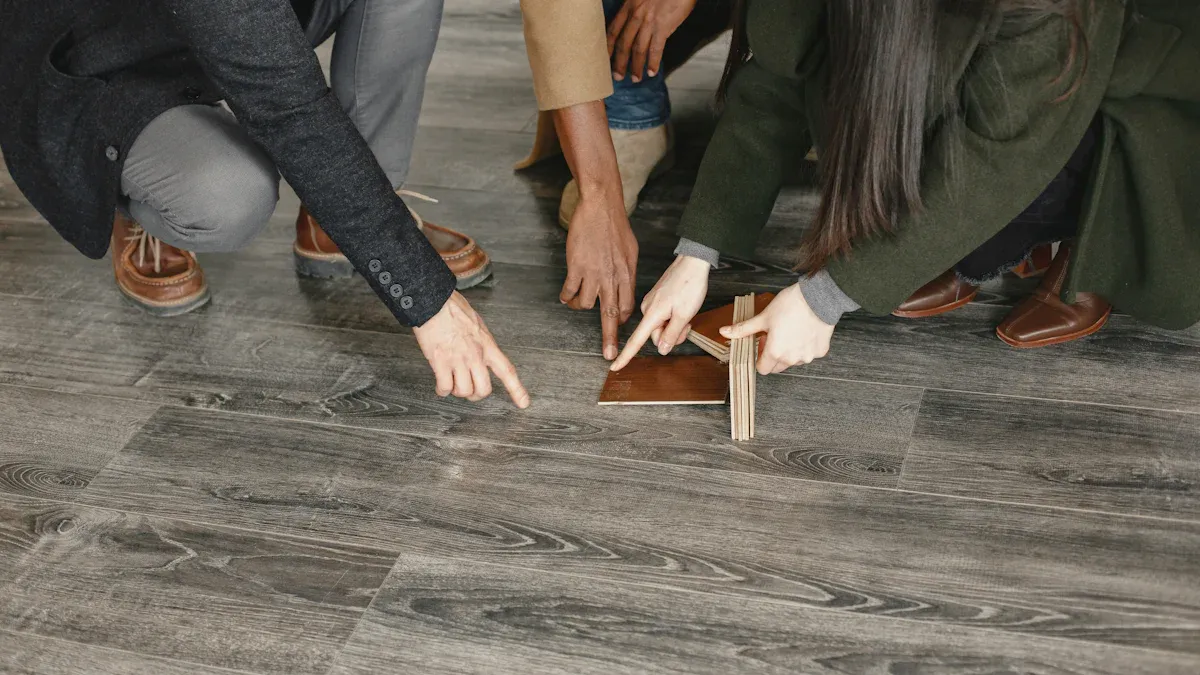
You want your floors to handle daily life. Spills happen in every home. Laminate flooring can resist small spills if you clean them up quickly. The top layer protects against water for a short time. If water sits on laminate, it can seep into the seams and cause swelling. Vinyl flooring gives you more peace of mind. You can wipe up spills without worry. The waterproof core in vinyl keeps water from reaching the subfloor. This makes vinyl a better choice for busy kitchens or dining rooms where accidents are common.
Tip: Always clean up spills right away to keep your flooring looking new.
Performance in High-Moisture Areas
High-moisture areas like laundry rooms and mudrooms test your floors. Standardized water resistance tests show how well each type of flooring stands up to water. Laminate flooring goes through tests for water absorption and dimensional stability. These tests prove that laminate can resist water, but it is not fully waterproof. Vinyl flooring, especially luxury vinyl plank, passes even tougher tests. The wear layer in vinyl flooring is 100% waterproof. You can use vinyl in places where water is always present. The table below shows how each type performs:
| Feature | Laminate Flooring (AC Rating) | Vinyl SPC Flooring (Wear Layer) |
|---|---|---|
| Water Resistance Level | Highly water-resistant but not fully waterproof | 100% waterproof |
| Suitable Environments | Kitchens, laundry rooms, bathrooms (with care) | Kitchens, bathrooms, basements, commercial spaces |
You see that vinyl flooring outperforms laminate in high-moisture spaces. This is one of the key benefits of lvp.
Suitability for Wet Rooms in the Home
Bathrooms and basements need special care. Cheaper laminate flooring often fails in these rooms. Water can cause warping and swelling. You may need to replace laminate after only a few years if it gets wet often. Vinyl flooring works much better in wet rooms. You can install vinyl flooring in bathrooms, basements, and laundry rooms without worry. Vinyl resists mold and keeps its shape even when exposed to water. Stone plastic composite vinyl flooring lasts even longer in these spaces. Proper installation helps both types last, but vinyl gives you the best long-term value in wet rooms.
Note: Choose vinyl flooring for any room where water is a daily concern. You will save money and avoid repairs.
Appearance and Realism: Comparing Vinyl and Laminate Flooring
Authentic Wood Look and Texture
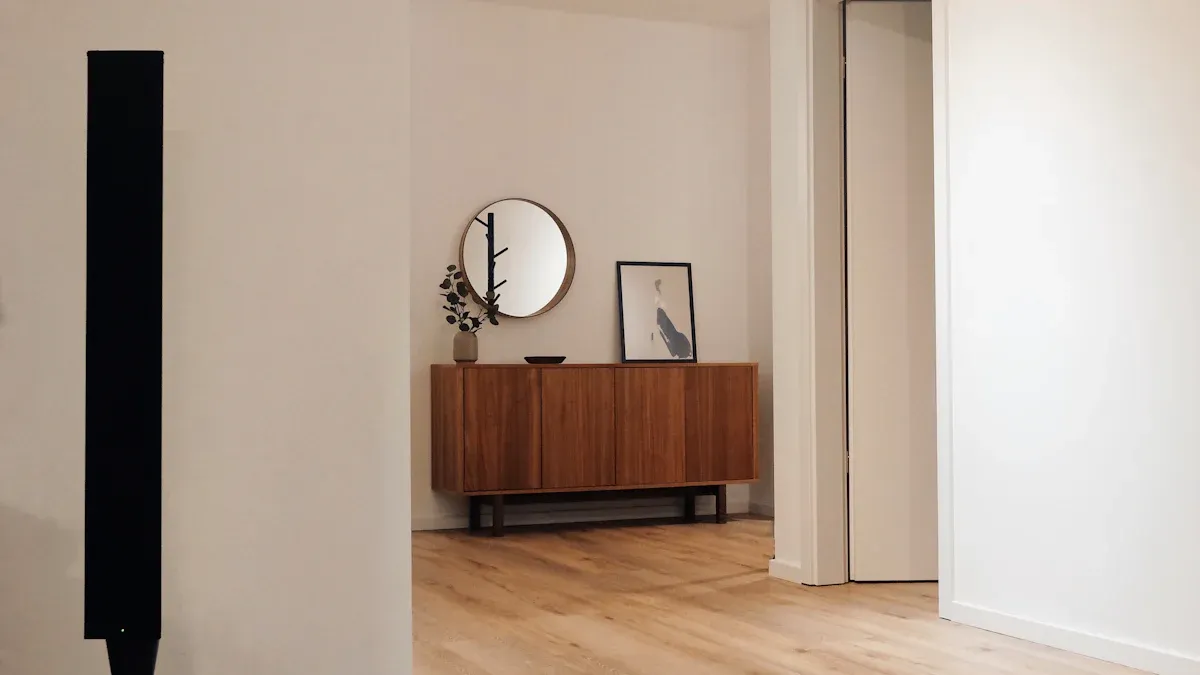
You want your flooring to look and feel like real wood. Laminate flooring uses a high-resolution image layer to copy the look of hardwood. This layer sits under a clear, protective top. You see detailed wood grain and knots. Some laminate even has embossed textures that match the printed pattern. Vinyl flooring also tries to mimic wood. It uses a printed design layer and a vinyl core. Vinyl plank flooring often shows realistic wood grain patterns. You may notice that vinyl sometimes feels smoother than laminate. Laminate can offer more texture, but vinyl gives you a softer touch underfoot.
Style, Color, and Design Options
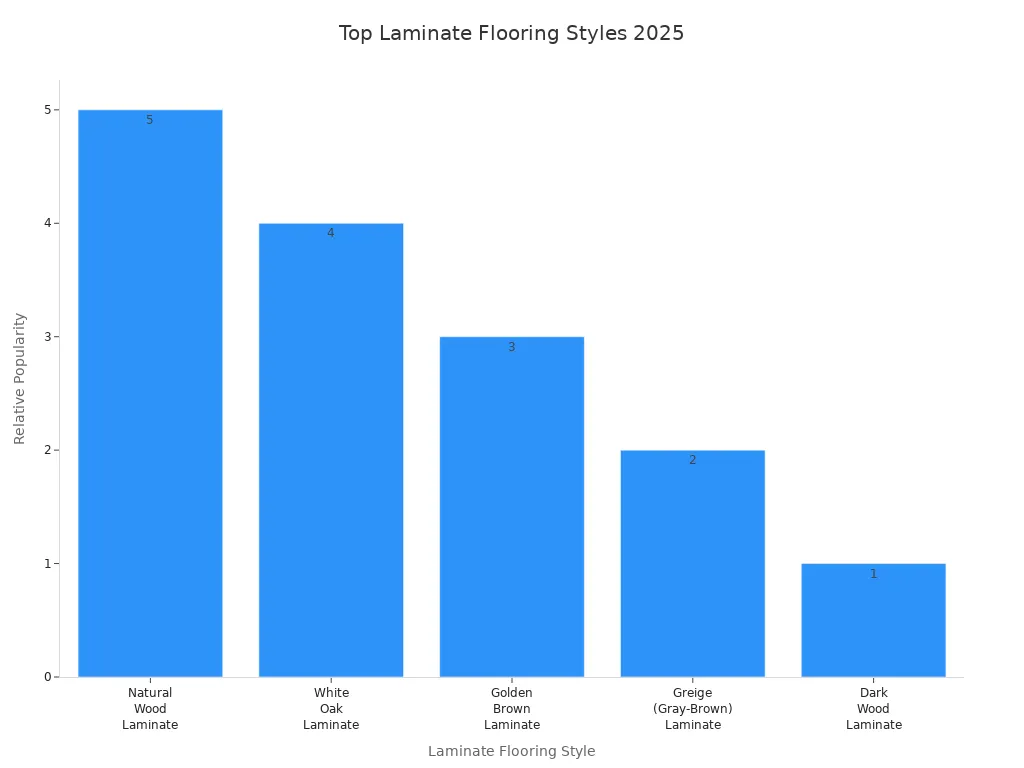
You have many choices when picking laminate or vinyl flooring. Both types come in a wide range of colors and styles. Laminate flooring stands out for its variety. You can find natural wood looks, white oak, golden brown, greige, and dark wood. These styles fit almost any room or taste. The table below shows popular laminate flooring options for 2025:
| Popular Laminate Flooring Color/Style | Description | Popularity Reason |
|---|---|---|
| Natural Wood Laminate | Timeless, detailed textures, wide planks, very close to real wood appearance | Consistently top choice for authenticity and classic look |
| White Oak Laminate | Light color, hides dust, enhances natural light, opens up space | Resembles authentic hardwood, brightens rooms, versatile for large and small spaces |
| Golden Brown Laminate | Rustic charm with deeper knotholes, simple and authentic | Versatile with any color scheme, warm and inviting |
| Greige (Gray-Brown) Laminate | Blend of natural wood and modern gray, bright and airy | Trendy alternative to solid gray or natural wood, suits clean aesthetics and open spaces |
| Dark Wood Laminate | Rich, warm walnut oak tones, highlights wood details | Creates bold, rustic charm, enhances modern or rustic interiors |
Vinyl flooring also offers many choices. You can pick from classic oak, modern gray, or bold walnut. Both laminate and vinyl let you match your flooring to your style. You can see the popularity of laminate flooring styles in this chart:
Realism Compared to Traditional Hardwood
You may wonder how close laminate and vinyl flooring come to real hardwood. Vinyl plank flooring often shows realistic wood grain and color. It gives you a strong hardwood look at a lower cost. Laminate flooring uses high-quality images to copy hardwood. You get a wide range of styles and colors. The table below compares how each type matches real wood:
| Feature | Vinyl Plank Flooring | Laminate Flooring |
|---|---|---|
| Material Composition | Multiple layers including vinyl core and printed design layer mimicking wood grain | Fiberboard core with high-resolution image layer resembling hardwood |
| Look (Appearance) | Realistic wood grain patterns, wide color choices, mimics hardwood well | High-resolution image layer offers a wide range of styles and colors resembling hardwood |
| Texture Authenticity | May lack the natural texture and authenticity of real wood | Versatile textures available, but texture authenticity compared to hardwood or vinyl not explicitly detailed |
You get strong aesthetics and appearance with both options. Vinyl flooring often leads in mimicking the look of hardwood, while laminate flooring gives you more choices in appearance and design. You can choose the best fit for your home and style.
Comfort and Sound in the Home
Underfoot Feel and Comfort
When you walk on laminate flooring, you notice a solid and sturdy feel. The thicker, wood-based core gives you strong support under your feet. This makes laminate a good choice if you want a floor that feels firm and stable. You may find that laminate feels warmer than vinyl, especially in cooler months. Vinyl hardwood flooring, especially luxury vinyl plank, gives you a softer step. It absorbs some of the impact when you walk, which can make it more comfortable if you stand for long periods. If you have kids or pets running around, vinyl can feel gentle and forgiving. You can add area rugs or underlayment to both types for extra comfort.
Noise Levels and Acoustics
You want a quiet home, especially in bedrooms or living rooms. Laminate flooring can sound hollow or loud when you walk on it, especially if you do not use a good underlayment. Shoes, pet nails, and dropped items can make sharp sounds on laminate. Vinyl hardwood flooring helps reduce noise. The softer surface absorbs sound, so footsteps and playtime are quieter. This makes vinyl a smart pick for busy homes or apartments where you want to keep noise down.
Tip: Use a quality underlayment with either floor to lower noise and make your home feel more peaceful.
Warmth and Insulation Value
Laminate flooring often feels warmer underfoot because of its wood-based core. This core helps keep heat in your room, which can make your space feel cozy. Vinyl hardwood flooring usually feels cooler, especially in rooms without rugs. If you want to boost warmth, you can add a thick underlayment or use area rugs. While both floors help insulate your home, laminate tends to give you a warmer feel, while vinyl focuses on softness and sound absorption. You can choose the best option based on what matters most for your comfort.
Installation and Maintenance: Performance Comparison
DIY Installation Ease
You can install both laminate and vinyl hardwood flooring yourself. Most products use a click-lock system, which makes the process simple. You do not need glue or nails for most modern flooring. Both types usually take 1 to 3 days to install, depending on the size of your room and how much old flooring you need to remove. If your subfloor is uneven, you may spend extra time on preparation. Complex patterns or transitions between rooms can also add time.
| Flooring Type | Typical Installation Time | Factors Affecting Installation Time |
|---|---|---|
| Laminate | 1-3 days | Square footage, existing floor removal, subfloor prep, complexity |
| Luxury Vinyl Plank/Tile (LVP/LVT) | 1-3 days | Square footage, existing floor removal, subfloor prep, complexity |
Tip: Always read the manufacturer’s instructions before you start your flooring project. This helps you avoid mistakes and get the best results.
Cleaning and Everyday Upkeep
You want your flooring to look good with little effort. Laminate and vinyl hardwood flooring both need regular sweeping or vacuuming. You should use soft tools to avoid scratches. Laminate flooring needs careful cleaning. Use a damp mop or microfiber cloth for spills, and avoid too much water. Vinyl flooring lets you use a damp mop with mild detergent, but you should never let water pool on the surface.
| Aspect | Laminate Flooring | Vinyl Flooring |
|---|---|---|
| Cleaning Frequency | Regular sweeping/vacuuming with soft tools | Regular sweeping/vacuuming |
| Water Usage | Minimal water; immediate spill cleanup with damp mop or microfiber cloth; not waterproof | Avoid water pooling; damp mop with mild detergent for deep cleaning; spills blotted immediately |
| Cleaning Products | Mild cleaners like water and vinegar; avoid abrasive cleaners and scouring pads | Mild detergent; avoid harsh chemicals like bleach and ammonia |
| Sensitivity | Sensitive to scratches and dents; use furniture pads and doormats; repair damages promptly | Sensitive to heat and sunlight; protect from hot objects and UV exposure; use doormats and furniture pads |
| Maintenance Frequency | Requires cautious cleaning and quick repair of damages due to moisture and scratch sensitivity | Low maintenance but requires care to avoid water damage and discoloration |
| Precautions | Avoid dragging heavy objects; protect from sharp objects like pets’ claws and high heels | Avoid excessive heat; do not place hot items directly; protect from sunlight |
You should protect both types of flooring with doormats and furniture pads. Laminate needs more careful moisture control, while vinyl flooring allows for slightly more robust cleaning.
Repair and Replacement Value
You want to know how easy it is to fix your flooring if something goes wrong. Laminate flooring repairs can cost between $60 and $375 for common problems. Small fixes may cost $50 to $120, but large jobs can reach $4,000 or more, especially if the subfloor is damaged. You can replace individual laminate planks if you have matching material. Vinyl flooring is more water-resistant, so you may face fewer repairs in wet areas. The cost and time for vinyl repairs depend on the type and extent of the damage, but you often find it easier to replace a damaged plank or tile.
Note: Always keep a few extra planks after your installation. This makes repairs much easier and helps you match your existing flooring.
When you compare installation and cost, both laminate and vinyl flooring offer good value for DIY projects. You save money on labor and enjoy a fresh look in your home.
Eco-Friendliness and Home Health
Materials and Manufacturing Impact
You might wonder how laminate and vinyl hardwood flooring affect the environment. Laminate flooring uses wood byproducts, resins, and adhesives. Manufacturers often source wood from managed forests, but some products may use chemicals that are not eco-friendly. Vinyl hardwood flooring comes from synthetic materials like PVC. The production of vinyl can create more pollution and use more energy than laminate. If you want a greener choice, look for floors with certifications like FloorScore or GreenGuard Gold. These labels show that the product meets strict environmental and health standards.
Recyclability and Disposal
When you replace your floors, you need to think about what happens to the old material. Laminate flooring is not always easy to recycle because of its mixed layers and adhesives. Some recycling centers accept laminate, but many do not. Vinyl hardwood flooring faces similar challenges. Most vinyl planks go to landfills after use. Some companies now offer recycling programs for vinyl, but these are not common everywhere. To reduce waste, you can:
- Choose flooring with recycled content.
- Ask local centers about recycling options.
- Reuse leftover planks for small projects or repairs.
Tip: Always check with your local waste facility before disposing of old flooring. This helps you make the best choice for the environment.
Indoor Air Quality Considerations
You want your home to have clean, healthy air. Both laminate and vinyl hardwood flooring can release volatile organic compounds (VOCs) into the air. VOCs come from adhesives and chemicals used in manufacturing. High levels of VOCs can affect your health. You can lower this risk by choosing certified low-emission products. Here are some key points:
- Laminate flooring can emit VOCs, especially from adhesives.
- Low-emission laminate, like GreenGuard Gold certified, reduces VOC impact.
- Vinyl flooring, especially older or low-quality types, may release VOCs and phthalates.
- Choosing vinyl that meets strict emission standards helps indoor air quality.
- Both types affect air quality, but certified products and proper installation help keep your home healthy.
You can protect your family by picking floors with low VOC emissions and following safe installation practices.
Best Value by Room: Laminate vs Vinyl Hardwood
Kitchens
You want your kitchen to handle spills, heavy use, and lots of foot traffic. Vinyl flooring gives you the best value in this space. You get a surface that is 100% waterproof, so you do not have to worry about standing water or splashes from cooking. Vinyl’s flexible PVC core hides wear and tear, which helps your floor look new for years. You may pay a bit more upfront for vinyl, but you save money over time because you avoid costly repairs and replacements.
- Vinyl flooring stands up to water and humidity.
- You can clean vinyl easily, even after big spills.
- Vinyl feels soft and warm underfoot, which makes long hours in the kitchen more comfortable.
- Laminate flooring costs less at first and gives you a real wood feel, but it does not resist water as well. If you spill water and do not clean it up fast, laminate can swell or warp.
- Laminate works best in dry kitchens, but you may need to replace it sooner if your kitchen gets wet often.
Tip: For kitchens with lots of cooking and cleaning, vinyl flooring gives you peace of mind and long-term savings.
Bathrooms
Bathrooms need flooring that can handle water every day. Vinyl flooring is the top choice here. You get a floor that resists water, mold, and stains. Vinyl does not buckle or swell, even if you have a steamy shower or a splashy bath. Laminate flooring often fails in bathrooms because moisture can seep into the seams and cause buckling or soft spots. You may see swelling near tubs or sinks if you use laminate.
| Cause | Signs | Typical Locations |
|---|---|---|
| Excessive Humidity | Swelling across multiple planks | Near windows and exterior walls |
| Plumbing Leaks | Localized buckling with soft spots | Around appliances and bathrooms |
| Poor Installation | Buckling along edges | Throughout the room |
| Subfloor Issues | Uneven or bouncy areas | Random spots across the floor |
Vinyl flooring problems in bathrooms usually involve surface discoloration from sunlight or harsh cleaners, which you can prevent with simple care. Laminate flooring problems often cost more to fix, especially if water damage spreads. You protect your home and your wallet by choosing vinyl for bathrooms.
Living Rooms
You want your living room to feel cozy and look beautiful. Laminate flooring gives you a realistic wood look with deep textures and natural colors. You get comfort underfoot, which makes it a great choice for relaxing or entertaining guests. Laminate works well in living rooms because these spaces stay dry most of the time. Vinyl flooring also fits well in living rooms, especially if you want easy cleaning and extra durability.
| Aspect | Laminate Flooring | Vinyl Flooring |
|---|---|---|
| Comfort | Comfortable on the feet; suitable for living rooms | Durable but can dent; less comfortable texture |
| Appearance | More realistic wood look with detailed embossing | Wide design options including wood, stone, tile; less realistic wood texture |
| Maintenance | Less water-resistant; may need replacement sooner | Highly water-resistant; easy to clean and maintain |
You can choose laminate if you want a classic wood style and comfort. You can pick vinyl if you need a floor that handles spills and is easy to maintain. Both options add value to your home, but your choice depends on your needs and style.
Bedrooms
You want your bedroom to feel calm and comfortable. Both laminate and vinyl hardwood flooring work well in this space. Laminate flooring gives you a warm, wood-like look. It feels sturdy under your feet. You can choose from many colors and textures to match your style. Laminate resists scratches, so it stays looking nice even if you move furniture or have pets.
Vinyl hardwood flooring also fits well in bedrooms. It feels softer and quieter than laminate. You can walk barefoot and enjoy a gentle step. Vinyl flooring comes in many designs, including wood and stone looks. If you want a floor that is easy to clean, vinyl makes daily care simple. Bedrooms usually stay dry, so you do not need to worry much about water damage. Both options help create a cozy space where you can relax at the end of the day.
Tip: Add an area rug for extra warmth and comfort in your bedroom.
Basements
Basements often face moisture and temperature changes. You need flooring that can handle these challenges. Luxury vinyl flooring (LVF) stands out as a top choice for basements. It is 100% waterproof, so you do not have to worry about leaks or spills. LVF comes in planks or tiles and can look like wood or stone. You get a stylish floor without the worry of damage from water.
- LVF feels comfortable underfoot, especially if you add padding.
- It is easy to install and maintain, which saves you time and effort.
- Vinyl flooring resists scratches and dents, making it durable for busy areas.
- You should use a moisture barrier under both laminate and vinyl to protect your home from subfloor moisture.
Waterproof laminate flooring also works in basements with low moisture. It has a strong top layer that resists spills better than regular laminate. However, it is not fully waterproof. If your basement has frequent moisture, vinyl flooring gives you better protection. You may need extra subfloor preparation for vinyl, but it handles basement conditions well. Both options help you create a useful and comfortable space in your home.
You want the best value for your home. Vinyl hardwood stands out in 2025 for water resistance and durability. Laminate works well in dry rooms where comfort and a wood look matter most. Experts and homeowners agree on these points:
| Feature | Vinyl Hardwood (LVP) | Laminate Flooring |
|---|---|---|
| Waterproof | Yes | No |
| Durability | High | High |
| Comfort | Varies | More comfortable |
| Cost | Higher | Lower |
| Best Use | Wet areas, pets | Dry rooms, bedrooms |
Choose based on your needs, room use, and what you value most—cost, appearance, or performance.
FAQ
Can you install laminate or vinyl hardwood over existing floors?
You can install both over many existing floors. Make sure the surface is clean, dry, and level. Avoid installing over carpet. Always check the manufacturer’s instructions for best results.
Which flooring is better for homes with pets?
Vinyl hardwood works best for homes with pets. It resists scratches, stains, and water. Laminate also resists scratches but can swell if it gets wet. Vinyl gives you more peace of mind.
How do you clean laminate and vinyl hardwood floors?
- Sweep or vacuum regularly.
- Use a damp mop for both types.
- Avoid soaking laminate with water.
- Use mild cleaners.
Tip: Never use harsh chemicals or steam mops.
Does either flooring type add value to your home?
Both can boost your home’s appeal. Buyers like clean, modern floors. Vinyl hardwood stands out in wet areas. Laminate shines in dry rooms. Choose neutral colors for the best resale value.




