
You may see the terms vinyl flooring and PVC flooring used for the same products, but they are not exactly the same. Vinyl describes a group of flooring products made mostly from polyvinyl chloride (PVC), while PVC flooring highlights the material itself. To help you understand the market, here is a quick comparison:
| Aspect | PVC Flooring | Vinyl Flooring |
|---|---|---|
| Market Size (2024) | US$ 43.1 million | USD 25.37 billion |
| Leading Segment | Sheet or tile form | Luxury vinyl tiles (LVT), 64.7% share |
| Key Features | Water, fire resistance, easy cleaning | Affordability, durability, design |
Knowing the difference in vinyl vs pvc helps you select the right flooring for your space.
Vinyl Flooring: What Is It?
Definition and Composition of Vinyl Flooring
When you ask, “what is vinyl?” or “what is vinyl flooring?”, you discover a material made for durability and style. Vinyl flooring uses polyvinyl chloride (PVC) resin as its main ingredient. Manufacturers add plasticizers to make the vinyl soft and flexible. Stabilizers help prevent damage from heat and light. Pigments give color, and fillers like limestone or clay add strength. These ingredients combine to create a flooring product with impressive properties. You get water resistance, comfort, and long-lasting performance. The unique properties of vinyl flooring come from this careful blend of materials.
- Vinyl flooring is made from:
- PVC resin
- Plasticizers for flexibility
- Stabilizers for durability
- Pigments for color
- Fillers for strength
Types of Vinyl Flooring: Sheet, Plank, and Tile
You can choose from several types of vinyl flooring, each with its own properties and benefits. Sheet vinyl comes in large rolls and covers wide areas with few seams. Vinyl tiles and planks, including lvt and lvp flooring, offer more design options. Luxury vinyl tile flooring (lvt flooring) and luxury vinyl plank (lvp) mimic wood or stone. Lvp flooring and lvt flooring both provide realistic textures and patterns. Sheet vinyl is seamless and easy to clean, but harder to repair. Vinyl tiles and planks are easier to install and replace if damaged.
| Type | Features & Properties | Best For |
|---|---|---|
| Sheet Vinyl | Seamless, water-resistant, affordable | Kitchens, bathrooms |
| LVT Flooring | Realistic stone/tile look, durable, easy to replace | Living rooms, offices |
| LVP Flooring | Wood-look, comfort, sound insulation | Bedrooms, hallways |
Common Applications of Vinyl Flooring
Vinyl flooring fits many applications because of its versatile properties. You see it in homes, offices, hospitals, and schools. Lvt and lvp flooring work well in living rooms, kitchens, and bedrooms. Commercial spaces use luxury vinyl for its durability and easy cleaning. Industrial and institutional settings choose vinyl flooring for its safety and hygiene. You also find special types, like conductive vinyl, in labs and data centers. The global market for vinyl flooring keeps growing as more people choose it for renovation and new construction. Its properties—like water resistance, comfort, and design—make it a top choice for many applications.
Tip: When you select vinyl flooring, think about the room’s needs. Lvt and lvp flooring offer style and strength for busy spaces, while sheet vinyl works best where you want seamless coverage.
PVC Flooring: What Sets It Apart?
Polyvinyl Chloride vs Vinyl: Understanding the Terms
You may wonder about the difference between polyvinyl chloride vs vinyl. Polyvinyl chloride is a specific polymer made by joining vinyl chloride molecules. This process gives pvc its unique properties. Scientific research shows that polyvinyl chloride has a well-defined structure. Vinyl, on the other hand, is a broader term. It can refer to any product containing the vinyl group or made from pvc. Polyvinyl chloride vs vinyl often confuses buyers because both share similar properties like durability and water resistance. However, polyvinyl chloride stands out for its chemical resistance, fire resistance, and cost-effectiveness. You find both rigid and flexible forms of pvc, each with different applications. Polyvinyl chloride vs vinyl is a key topic when you compare flooring options.
Types of PVC Flooring Products
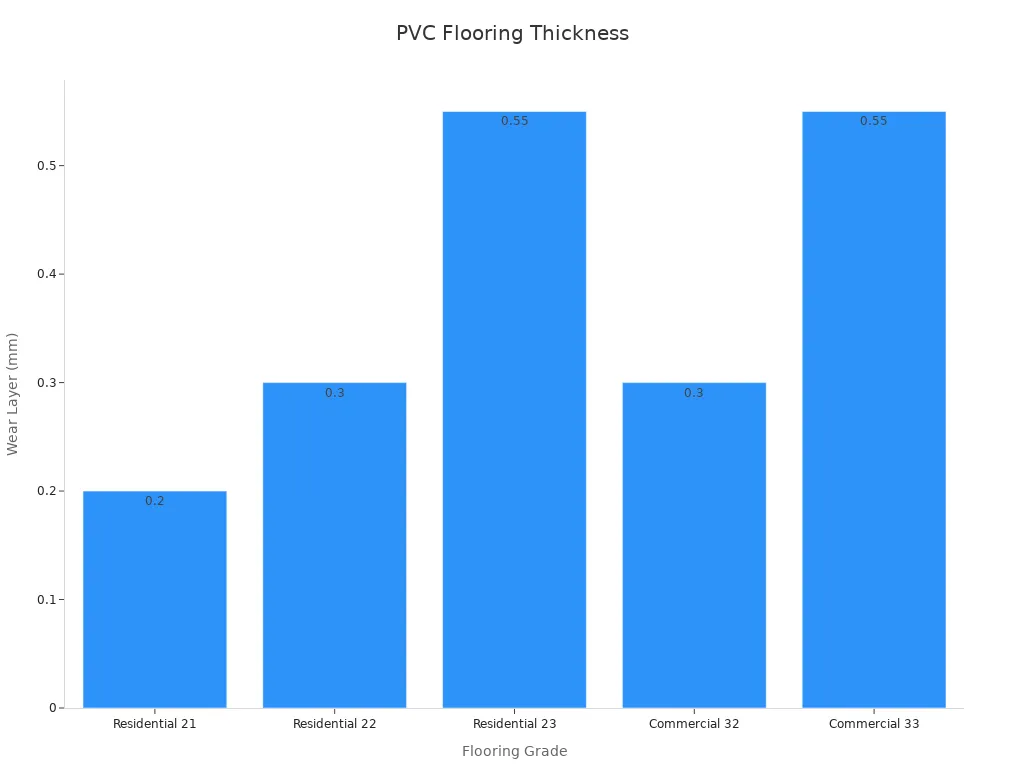
When you look at pvc flooring, you see many product types. Manufacturers offer sheet, tile, and plank forms. Each type uses polyvinyl chloride as the main material. The properties of pvc flooring include high durability, water resistance, and easy maintenance. You also find innovative installation methods like click-lock systems. These make pvc flooring simple to install and reduce labor costs. The market for pvc flooring grows quickly, especially in commercial applications. Sustainability trends push companies to use recycled materials and eco-friendly formulations. You can choose from a wide range of designs that mimic wood or stone. The table below shows how different grades of pvc flooring match various applications and performance needs:
| PVC Flooring Grade | Usage Class Description | Typical PVC Wear Layer Thickness | Typical Applications | Performance Characteristics |
|---|---|---|---|---|
| Residential 21 | Light residential | 0.2 mm | Attics, guest rooms | Suitable for low traffic, stain and water resistant |
| Residential 22 | Normal residential | 0.3 mm | Bedrooms, hallways, baby rooms, washing rooms | Durable, easy maintenance |
| Residential 23 | Intensive residential | 0.55 mm | Kitchens, living rooms, hallways | Comparable to light commercial, high durability |
| Commercial 32 | Normal commercial | 0.3 mm | Offices, retail stores, beauty salons, hairdressers | Balances durability and design |
| Commercial 33 | Intensive commercial | 0.55 mm | Busy offices, restaurants, gyms, event spaces | High durability, slip resistance |
| Industrial 41 | Light industrial | N/A | Packaging, storage | Resistant to wear, chemicals, impact |
| Industrial 43 | Heavy industrial | N/A | Warehousing, production | Heavy-duty, slip-resistant, easy to clean |
Typical Uses of PVC Flooring
You see pvc flooring in many applications. Polyvinyl chloride vs vinyl matters most when you pick flooring for specific needs. In homes, you use pvc flooring in kitchens, bathrooms, and hallways. Commercial spaces like offices, retail stores, and hospitals rely on pvc flooring for its hygienic properties and easy cleaning. Industrial applications include packaging areas and warehouses, where the properties of polyvinyl chloride provide resistance to chemicals and heavy wear. The demand for pvc flooring rises in Asia-Pacific, especially in China, due to rapid urbanization and new construction. You also find pvc flooring in hospitality and healthcare, where safety and durability are top priorities. Sustainability trends encourage the use of recycled polyvinyl chloride in flooring applications. When you choose pvc flooring, you benefit from its cost-effectiveness, design variety, and long-lasting properties.
Tip: Always check the grade of pvc flooring to match the properties you need for your specific applications.
Vinyl vs PVC: Key Differences in Flooring
Material Composition and Structure
When you compare vinyl vs pvc, you notice key differences in how each flooring type is made. Polyvinyl chloride is a unique plastic. You can change its properties by adding different fillers and additives. Pure pvc flooring uses only polyvinyl chloride, so it can be either soft or rigid. Vinyl flooring, including lvt and lvp, uses polyvinyl chloride as the main ingredient but adds materials like calcium carbonate or wood powder. These additives change how flexible or strong the flooring feels. For example, luxury vinyl tile (lvt flooring) combines polyvinyl chloride with a printed design layer and a tough wear layer. This layered structure gives you durability and a realistic look. Polyvinyl chloride vs vinyl comes down to how much the product relies on pure pvc or mixes in other materials. You get different results in flexibility, strength, and appearance.
| Flooring Type | Primary Composition | Additives/Fillers | Resulting Properties |
|---|---|---|---|
| PVC Flooring | Pure polyvinyl chloride (PVC) | None or minimal | Flexible or rigid depending on formulation |
| LVT | Mainly PVC | Small amount of calcium carbonate powder | Semi-rigid, flexible sheet flooring |
| SPC | 25% PVC | 75% calcium carbonate powder | Rigid sheet flooring, less flexible |
| WPC | PVC | Wood powder or stone powder | Semi-rigid, wood-like structure |
Tip: If you want a softer floor, choose pure pvc flooring. For more realistic wood or stone looks, luxury vinyl products like lvt or lvp work best.
Manufacturing Process
The manufacturing process also shows major differences between polyvinyl chloride vs vinyl. You see that pvc flooring uses pure polyvinyl chloride, sometimes with adhesives and formaldehyde. This process can make the flooring softer but may release more gases. Vinyl flooring, especially lvp and lvt, uses layers of polyvinyl chloride exposed to high heat. Manufacturers add printed designs and wear layers to create luxury vinyl. Lvp and lvt flooring use fewer harmful adhesives, so they often have fewer emissions. When you look at spc, you find a hybrid process that mixes compressed limestone and plastic for extra rigidity. Polyvinyl chloride vs vinyl in manufacturing affects how the floor feels, how easy it is to install, and even its environmental impact.
| Aspect | Vinyl Flooring (LVP) | PVC Flooring | SPC Flooring (for context) |
|---|---|---|---|
| Backing Material | Simple PVC backing, soft and flexible | PVC material, softer and less rigid | Composite of compressed limestone and plastic |
| Core Composition | Flexible PVC layer | PVC-based | Dense, rigid hybrid of limestone and plastic |
| Rigidity | Soft and malleable | Soft, less rigid | Stiff and rigid |
| Manufacturing Technique | Uses PVC layers, exposed to high temperatures | Uses PVC with formaldehyde and adhesives | Hybrid manufacturing with compressed stone and plastic |
| Environmental Concerns | Generally fewer harmful emissions | May emit harmful gases and use formaldehyde | Avoids harmful adhesives, more environmentally friendly |
| Installation Tolerance | Can accommodate slight subfloor waviness | Soft, can be laid on uneven surfaces | Requires very flat subfloor due to rigidity |
| Performance | Durable, water-resistant, longer warranties | More prone to wear due to softness | High hardness, dent resistant |
Note: When you choose between pvc vs vinyl, think about installation and air quality. Luxury vinyl often offers a safer and easier option.
Product Forms and Varieties
You find many product forms when you explore vinyl vs pvc. The vinyl flooring market includes luxury vinyl tile (lvt), vinyl sheets, and vinyl composition tile (vct). Lvt leads the market because it looks like real wood or stone and lasts a long time. Vinyl sheets give you a seamless, water-resistant surface, perfect for kitchens or hospitals. Vct works well in schools and stores because it resists heavy wear and comes in many colors. Polyvinyl chloride vs vinyl matters here because pure pvc flooring usually comes in simple sheets or tiles, while luxury vinyl offers more choices in design and texture. Lvp and lvt flooring give you the look of hardwood or stone with the benefits of polyvinyl chloride. You can pick from flexible, semi-rigid, or rigid products, depending on your needs.
| Product Type | Market Share (2024) | Key Characteristics and Applications |
|---|---|---|
| Luxury Vinyl Tile (LVT) | 65.4% | Dominates market; versatile, durable, mimics natural materials (wood, stone); water-resistant; used in high-traffic and moisture-prone areas; favored for aesthetics and ease of installation. |
| Vinyl Sheets | N/A | Seamless, economical; water-resistant; used in kitchens, bathrooms, healthcare, hospitality; hygienic and easy to clean. |
| Vinyl Composition Tile (VCT) | N/A | Durable, cost-effective; used in commercial/industrial settings; resilient to heavy wear; available in many colors and patterns; improved scratch and stain resistance. |
Callout: The key differences in product forms help you match the right flooring to your space. Luxury vinyl gives you more design options, while pvc flooring offers simple, durable solutions.
Side-by-Side Comparison: Vinyl vs PVC Flooring
Durability and Lifespan
When you compare vinyl vs pvc flooring, you want to know which one lasts longer and stands up to daily wear. Durability plays a big role in your decision. Luxury vinyl, especially types like SPC (Stone Plastic Composite) and LVT (Luxury Vinyl Tile), leads the market for durability and maintenance. SPC flooring has a rigid core and a thicker wear layer, which means it resists dents and scratches better than standard pvc flooring. You see this difference in real-world settings. For example, a hospital with SPC flooring showed almost no wear after five years, while a hotel with LVT needed replacement in busy areas after only three years.
You can see the main differences in the table below:
| Flooring Type | Dent Resistance (psi) | Scratch Resistance (Pencil Hardness) | Wear Layer Thickness | Expected Lifespan (Commercial) | Indentation Recovery |
|---|---|---|---|---|---|
| SPC | 1500 | 4H | 20+ mil | 15-25 years | 100% |
| LVT | 800 | 3H | 12-28 mil | 10-15 years | 85-95% |
| PVC Flooring | 800 | 3H | 0.2-0.3 mm | 10-15 years | 85-95% |
Luxury vinyl products like SPC offer the best for durability. You get longer longevity, better resistance to dents, and less risk of scratches. SPC also handles temperature changes well, so you see less warping or damage over time. If you want flooring that lasts in high-traffic areas, luxury vinyl SPC stands out as the best for durability and maintenance.
Note: ASTM F1914 and EN 16094 tests confirm that SPC flooring outperforms standard pvc flooring in durability and lifespan.
Water and Stain Resistance
You want flooring that can handle spills and stains, especially in kitchens, bathrooms, or entryways. Both vinyl and pvc flooring offer strong moisture resistance, but luxury vinyl products like SPC and LVT take it a step further. These floors are nearly 100% waterproof, so you do not need to worry about water damage or swelling. Tests like EN ISO 26987 show that most stains, even from tough substances, wipe away easily from luxury vinyl and pvc flooring. Only harsh chemicals like concentrated acids leave marks if left for a long time.
- Water and stain resistance tests for vinyl and pvc flooring include:
- ASTM D2842 Water Absorption
- ASTM D570 Water Absorption
- EN 438-2:2016 Stain Test
- EN ISO 26987 Chemical Resistance
Luxury vinyl flooring, especially SPC and LVT, shows almost no swelling after soaking in water. You can clean up most spills without leaving stains. This makes luxury vinyl and pvc flooring a smart choice for families, pet owners, and anyone who wants easy cleaning.
Tip: If you need waterproof flooring for bathrooms or kitchens, luxury vinyl SPC or LVT gives you the best protection.
Installation Methods
Ease of installation matters when you choose new flooring. You want a product that saves you time and money. Luxury vinyl flooring, including LVT and SPC, often uses click-lock systems. You can install these floors without glue or nails. This method works well for DIY projects and reduces installation costs. Standard pvc flooring may come in sheets or tiles that need adhesive. This process takes more time and skill.
You can see the main installation methods below:
- Luxury vinyl (LVT, SPC, LVP):
- Click-lock floating installation (best for installation)
- Loose lay (no adhesive needed)
- Glue-down (for commercial spaces)
- PVC flooring:
- Glue-down (most common)
- Loose lay (less common)
- Heat-welded seams (for hospitals or labs)
Luxury vinyl gives you more options for installation. You can often install it over existing floors, which saves time. PVC flooring usually needs a smooth, clean surface and professional help. If you want the best for installation and ease of installation, luxury vinyl click-lock systems make the process simple and fast.
Callout: Choose luxury vinyl if you want a quick, easy, and mess-free installation. For large commercial spaces, glue-down pvc flooring may work better.
Comfort and Feel Underfoot
When you walk on different types of flooring, you notice how each one feels under your feet. Vinyl flooring stands out for its comfort, especially when compared to harder surfaces like tile or hardwood. Many luxury vinyl products, including lvp, have special layers that make them softer and quieter. You often find acoustic layers in vinyl flooring. These layers help reduce noise from footsteps and impacts, which is important in apartments or multi-story buildings.
You also get more comfort from the padded backing in newer vinyl floors. This backing gives a cushioned feel, making it easier to stand for long periods. If you spend a lot of time in the kitchen or work in retail, you will appreciate this extra support. The slight flexibility in luxury vinyl planks and tiles helps reduce pressure on your joints and feet. This design can help prevent fatigue and discomfort.
- Vinyl flooring with acoustic layers lowers noise and adds comfort.
- Padded backing in luxury vinyl makes standing easier on your feet.
- Flexible vinyl planks and tiles help reduce joint and foot pressure.
- Click-lock and loose-lay installation methods create a stable, comfortable surface.
- Anti-fatigue mats made from vinyl or rubber are recommended by health organizations to reduce discomfort from standing.
Studies show that cushioned flooring, like padded vinyl, can help reduce pain and fatigue. Hospitals and workplaces use these types of floors to support people who stand for hours. You get both comfort and sound absorption with luxury vinyl, making it a smart choice for busy homes and commercial spaces.
Tip: If you want the best for appearance and comfort, choose luxury vinyl with a padded backing. This option gives you a soft feel and helps keep your space quiet.
Cost and Value
You want flooring that fits your budget and gives you good value. Vinyl flooring, especially luxury vinyl and lvp, offers a strong balance between cost and quality. Most luxury vinyl tiles cost between $2 and $5 per square foot, including installation. This price is much lower than hardwood or ceramic tile, which can cost up to $20 per square foot. You save money not only on materials but also on installation. Many luxury vinyl products use click-and-lock systems, so you can install them quickly and sometimes without professional help.
Vinyl flooring gives you value in other ways. It lasts a long time, needs little maintenance, and comes in many designs. You can find luxury vinyl that looks like wood or stone, giving you the best for appearance without the high price. Commercial spaces choose vinyl because it stands up to heavy use and resists water. Quick installation means less downtime for businesses.
- Luxury vinyl tiles and planks offer affordable prices and easy installation.
- Vinyl flooring mimics high-end materials, giving you style at a lower cost.
- Commercial spaces use vinyl for its durability and fast installation.
- The global vinyl flooring market keeps growing because of its value and versatility.
- Supply chain changes and regulations can affect prices, but vinyl remains a cost-effective choice.
You get the most value from luxury vinyl if you want a stylish, durable floor without spending too much. Lvp and other vinyl options work well for both homes and businesses.
Note: You can save even more by installing luxury vinyl yourself, thanks to easy click-lock systems.
Environmental Impact
You may wonder about the environmental impact of vinyl and pvc flooring. Studies show that most of the impact comes from the design and manufacturing stages. The way companies make vinyl and pvc products affects energy use, emissions, and waste. Some studies look at the full life cycle of flooring, from raw materials to recycling or disposal.
Researchers found that service life plays a big role in environmental impact. If your vinyl flooring lasts 20 to 50 years, you reduce the need for replacement and lower your overall footprint. Some companies now use recycled pvc in their products, which helps reduce waste. Newer studies also look at circular life cycles, where old flooring gets reused or recycled instead of going to a landfill.
- Life cycle assessments compare vinyl and pvc flooring from production to disposal.
- Most environmental impact happens during manufacturing.
- Longer-lasting flooring reduces the need for replacement and waste.
- Some vinyl and pvc floors use recycled materials.
- Circular approaches, like recycling, help lower the ecological footprint.
You can make a difference by choosing vinyl flooring with recycled content or by recycling old floors when possible. Always check for eco-friendly labels and ask about recycling programs in your area.
Callout: Choosing durable, recyclable vinyl or pvc flooring helps protect the environment and supports a more sustainable future.
Common Misconceptions About Vinyl and PVC Flooring
Are Vinyl and PVC Flooring the Same?
Many people think vinyl and pvc flooring are identical. You might see both terms used for the same product, but they are not always the same. Vinyl flooring covers a wide range of products made with polyvinyl chloride. PVC flooring refers more directly to the material, polyvinyl chloride, used in the floor. Product testing shows that vinyl flooring, especially types like SPC (Stone Plastic Composite), offers better durability and water resistance than standard pvc flooring. The table below highlights some key differences:
| Performance Aspect | Vinyl Flooring (including SPC) | PVC Flooring |
|---|---|---|
| Durability | SPC is more durable and stable | Softer, less durable |
| Moisture Resistance | 100% waterproof | Less water-resistant |
| Installation | Interlocking system, no glue needed | Adhesive backing, peel and stick |
| Environmental Impact | Safer materials, fewer harmful chemicals | May use adhesives with formaldehyde |
| Foot Comfort | Thicker, harder options available | Softer, more comfortable underfoot |
| Warranty and Maintenance | Longer warranties, easier maintenance | Shorter warranties, more care needed |
Misleading Labels and Marketing
You may notice that some brands use the terms vinyl and pvc interchangeably. This can make shopping confusing. Many consumers believe that heavier pvc floors mean better quality. In reality, lighter weight in homogeneous transparent pvc flooring often means higher quality. Lighter floors contain more polyvinyl chloride and less stone powder filler. Stone powder makes the floor heavier but can lower the quality. Here are some common misconceptions:
- Heavier pvc flooring is not always better. More weight can mean more stone powder and less polyvinyl chloride.
- Some people think SPC flooring is just a fancy vinyl. SPC has a rigid core that changes how it feels and performs.
- Many believe vinyl flooring is always cheap or low quality. Modern luxury vinyl can look and perform as well as SPC.
- You might think vinyl floors cannot handle heavy furniture or pets. High-quality vinyl and SPC can manage these challenges.
Tip: Always check the product details and ask about the amount of polyvinyl chloride in the flooring before you buy.
Health and Safety Considerations
You want safe flooring for your home. Studies show that both vinyl and pvc flooring can release chemicals called phthalates. These chemicals can move into the air and dust in your home. Research found that children living with vinyl flooring have higher levels of phthalates in their bodies. Some studies link polyvinyl chloride flooring to a higher risk of asthma and breathing problems, especially in children. Hospitals and offices with pvc flooring also show more asthma symptoms in adults. The Healthy Building Network suggests using phthalate-free options and recommends pvc as a last resort because of health concerns.
Many manufacturers now make vinyl flooring with safer materials. Certifications like FloorScore and GREENGUARD test for harmful emissions. These programs help you find flooring that meets strict safety standards. You can protect your family by choosing vinyl or pvc flooring with these certifications and by asking about phthalate-free options.
Note: Always look for certified low-emission vinyl or pvc flooring to help keep your indoor air clean and safe.
How to Choose: PVC vs Vinyl Flooring for Your Needs
Best Uses for Vinyl Flooring
You can use vinyl flooring in many rooms because it offers both style and strength. Luxury vinyl works well in kitchens, bathrooms, and laundry rooms. These spaces often get wet, but luxury vinyl resists water and stains. You also find luxury vinyl in living rooms and bedrooms. The soft surface and sound absorption make it comfortable underfoot. If you want a floor that looks like wood or stone, luxury vinyl tile and plank give you realistic designs. You can install luxury vinyl yourself with click-lock systems, which saves money. The multi-layer construction of luxury vinyl includes a tough wear layer, a print layer for design, a strong core, and an underlayment for comfort. This makes luxury vinyl a good choice for high-traffic areas and homes with kids or pets.
| Criteria | Standard Vinyl Flooring | Luxury Vinyl (LVT/LVP) |
|---|---|---|
| Durability | 10-15 years | 20-25 years |
| Cost (Material) | $0.50 – $2 per sq ft | $2 – $4 per sq ft |
| Installation | Glue-down | Click-lock, DIY friendly |
| Comfort & Sound | Harder, colder | Softer, better sound absorption |
Tip: Choose luxury vinyl for rooms where you want easy cleaning, comfort, and a stylish look.
Best Uses for PVC Flooring
PVC flooring, made from polyvinyl chloride, stands out for its resilience and ability to handle heavy use. You often see pvc flooring in schools, hospitals, and offices. These places need floors that resist dents and recover shape after impact. PVC works well in areas with rolling chairs or carts. You should protect new pvc floors from heavy loads for the first 72 hours. In bright rooms, use coatings or special glass to prevent UV damage. PVC flooring also helps with light reflectance, making offices brighter. You can choose low-VOC pvc for better indoor air quality, which is important in sensitive spaces.
- PVC flooring fits high-traffic commercial spaces.
- It works well in healthcare and education settings.
- Choose pvc for areas needing easy cleaning and strong wear resistance.
Factors to Consider: Room, Budget, Durability
When you pick between vinyl and pvc flooring, think about the room’s needs, your budget, and how long you want the floor to last.
- Assess the room. Kitchens and bathrooms need moisture resistance. Living rooms and bedrooms need comfort and sound absorption.
- Check your budget. Vinyl plank and luxury vinyl cost less than tile or hardwood. PVC flooring offers a cost-effective option for large spaces.
- Think about durability. Luxury vinyl lasts up to 25 years. PVC flooring handles heavy loads and frequent cleaning.
- Consider installation. Luxury vinyl is easy for DIY projects. PVC flooring may need professional help.
- Look at maintenance. Both types are easy to clean, but luxury vinyl is easier to repair if damaged.
Note: Match the flooring type to your lifestyle, room function, and budget for the best results.
Tips for Making the Right Flooring Choice
Choosing the right floor for your space can feel overwhelming. You want a surface that looks good, lasts long, and fits your lifestyle. Start by thinking about where you plan to install the floor. High-traffic areas like kitchens, hallways, or stores need strong materials. Luxury vinyl works well in these spots because it resists dents and scratches. If you want a soft, flexible option for a playroom or bedroom, pvc flooring gives you comfort underfoot.
Experts suggest you always check how easy it is to clean your floor. Luxury vinyl and pvc both offer simple cleaning routines. You can sweep or mop them without much effort. Some brands, like Mannington Commercial, recommend reviewing maintenance guidelines before you buy. This helps you keep your floor looking new for years.
You should also think about allergies. Carpets trap dust and bacteria, but luxury vinyl and pvc do not. These floors help keep your home healthier. If you have pets or kids, luxury vinyl stands up to spills and messes. You can wipe away stains without worry.
A table can help you compare your options:
| Feature | PVC | Vinyl | Luxury Vinyl |
|---|---|---|---|
| Durability | Good | Good | Excellent |
| Water Resistance | High | High | Highest |
| Comfort | Soft | Varies | Cushioned |
| Design Choices | Limited | Many | Most |
| Installation | Glue-down | Glue-down or loose | Click-lock, DIY |
You should match your floor to your style and brand needs. Luxury vinyl comes in many designs, so you can find wood or stone looks. For commercial spaces, pvc flooring handles carts and wheelchairs well. Always ask about the wear layer and warranty. These details show how long your floor will last.
Tip: Talk to a flooring professional if you feel unsure. They can help you choose between pvc, vinyl, and luxury vinyl based on your space and needs.
You see clear differences between vinyl and PVC when you shop for new floors. Vinyl offers many choices, but luxury vinyl stands out for comfort, design, and easy installation. Luxury vinyl gives you a soft feel underfoot and comes in styles that look like wood or stone. You find luxury vinyl in living rooms, bedrooms, and even kitchens. PVC works well in busy spaces and costs less, but it may not look as high-end as luxury vinyl. Always check product labels so you know if you are getting true luxury vinyl or basic vinyl. Some luxury vinyl options use recycled materials and low VOCs, which help your home stay healthy. If you want a stylish, durable, and easy-to-clean floor, luxury vinyl is the best choice for most homes.
Tip: Match luxury vinyl to your room’s needs for the best results. Look for thicker wear layers and low-VOC labels for a safer, longer-lasting floor.
| Aspect | PVC Flooring | Vinyl Flooring |
|---|---|---|
| Advantages | Affordable, durable, water-resistant, easy to install, versatile designs | Versatile designs including luxury options, comfortable underfoot, durable, DIY-friendly |
| Disadvantages | Less luxurious appearance, potential wear in high-traffic areas, not fully waterproof | Quality varies widely, potential water damage from standing water, some types require professional installation |
| Best Residential Use | Affordable option for moderate use areas | Living rooms and bedrooms for comfort and design variety |
| Best Commercial Use | Healthcare facilities for affordability and maintenance | Offices for professional look and easy maintenance |
| Moisture Resistance | Water-resistant but not fully waterproof | Durable and resistant but some types vulnerable to standing water |
| Durability | Durable but may show wear over time | Durable, scratch-resistant options available |
| Environmental Considerations | Not highlighted as eco-friendly | Some options made from recycled materials, low VOC options available |
| Installation | Easy, DIY-friendly | Some types may require professional installation |
FAQ
What is the main difference between vinyl and PVC flooring?
Vinyl flooring refers to a broad category of products made with PVC as the main ingredient. PVC flooring highlights the chemical material itself. You see more design options with vinyl, while PVC flooring focuses on durability and cost.
Can you install vinyl or PVC flooring yourself?
You can install many vinyl floors yourself, especially those with click-lock systems. PVC flooring often needs glue and may require a professional. Always check the manufacturer’s instructions before you start.
Is vinyl or PVC flooring safe for homes with kids and pets?
Most modern vinyl and PVC floors are safe if you choose low-VOC and phthalate-free options. Look for certifications like FloorScore or GREENGUARD. These labels help you find products with fewer harmful emissions.
How do you clean and maintain vinyl or PVC flooring?
You can sweep or vacuum daily. Use a damp mop with mild soap for deeper cleaning. Avoid harsh chemicals or abrasive tools. Quick cleanup of spills helps prevent stains and keeps your floor looking new.
Which flooring lasts longer: vinyl or PVC?
Luxury vinyl flooring, such as SPC or LVT, usually lasts longer than standard PVC flooring. You can expect up to 25 years with proper care. PVC flooring works well in commercial spaces but may show wear sooner in busy homes.




