
Polishing your vinyl tiles can enhance their beauty and longevity. If you’re wondering how to polish vinyl tiles effectively, regular polishing not only brings out a brilliant shine but also protects against wear. To make vinyl floors shiny, start with a simple routine. Here are a few quick tips on how to polish vinyl tiles:
- Sweep or vacuum regularly to remove dirt.
- Use a damp mop with a mild cleaner to maintain the shine.
- Avoid harsh chemicals that can dull the surface.
By following these steps on how to polish vinyl tiles, you can keep your floors looking new and vibrant.
Essential Supplies to Clean Vinyl Floors

To keep your vinyl floors looking shiny and new, you need the right supplies. You can choose between natural cleaning supplies and commercial cleaning products. Each option has its benefits, so let’s explore both.
Natural Cleaning Supplies
Natural cleaning supplies are eco-friendly and often safe for your family and pets. Here are some recommended options:
- Baking Soda: This versatile powder lifts tough stains like red pasta sauce or wine. Mix two tablespoons with one teaspoon of water to create a paste.
- Baby Oil: Use this to restore shine to dull vinyl floors. Mixing it with vinegar enhances its cleaning power.
- Rubbing Alcohol: This is effective for removing stubborn stains like grease or ink.
- Vinegar Solution: Combine one cup of distilled white vinegar with a gallon of warm water for an eco-friendly cleaner.
Using these natural supplies can help you clean vinyl floors without harsh chemicals.
Commercial Cleaning Products
If you prefer commercial cleaners, many options are available that effectively clean commercial vinyl tile floors. Here’s a table of some popular products based on consumer reviews:
| Product Name | Price | Key Features |
|---|---|---|
| Basic Coatings Squeaky Cleaner 32 oz | $9.08 | Low-VOC, cuts through dirt, no residue, works on multiple surfaces, no-rinse cleaner. |
| COREtec Encore 12x Clean Spray 32 oz | $14.99 | pH neutral, low-VOC, no residue, rapid dry time, effective on various hard surfaces. |
| Bona Pro Stone, Tile & Laminate Cleaner 32 oz | $8.29 | Low-VOC, water-based, quick drying, leaves no residue, good scent, effective on many surfaces. |
When you clean commercial vinyl floors, these products can save you time and effort. They are designed to tackle tough dirt and grime while maintaining the integrity of your floors.
Using the right supplies, whether natural or commercial, will help you keep your vinyl floors clean and shiny.
How to Clean Vinyl Floors with Natural Solutions
Cleaning vinyl floors with natural solutions can be effective and safe for your home. Here are three popular methods you can use to keep your floors shiny and fresh.
Vinegar and Water Solution
A vinegar and water solution is a common choice for cleaning vinyl floors. This mixture can help remove dirt and grime without harsh chemicals. To create your cleaning solution, follow this simple ratio:
This ratio is recommended for effective cleaning. However, some manufacturers caution against using vinegar on vinyl flooring. For instance, Life Proof flooring advises against vinegar due to potential long-term effects. While many people use vinegar without issues, it’s wise to consider these warnings before proceeding.
Tip: Always test a small area before applying the solution to your entire floor. This way, you can ensure it won’t cause any damage.
Baking Soda Paste
Baking soda paste is another excellent option for cleaning vinyl floors. This paste is particularly effective for removing stains and scuffs. To make the paste, mix:
- 2 tablespoons of baking soda with 1 teaspoon of water.
Apply the paste to the stained area and let it sit for a few minutes. Then, scrub gently with a soft cloth or sponge. Compared to other natural solutions like vinegar, baking soda is noted for its superior stain removal capabilities. Many users find it works wonders on tough stains, making it a go-to choice for cleaning vinyl flooring.
Essential Oils for Freshness
Adding essential oils to your cleaning routine can enhance the freshness of your vinyl floors. Certain oils not only provide a pleasant scent but also offer antimicrobial properties. Here’s a table of some commonly recommended essential oils:
| Essential Oil | Antimicrobial Efficacy | Common Uses |
|---|---|---|
| Pine Oil | Potent antibacterial, antiviral, and deodorizing properties. | Disinfecting surfaces, neutralizing odors, breaking down oils and grease. |
| Camphor | Highly effective against bacteria and fungi, strong disinfectant. | Surface cleaners, soaps, and pet shampoos. |
| Eucalyptus Oil | Strong antimicrobial properties, effective for disinfecting surfaces. | Multi-surface cleaners and floor solutions. |
To use essential oils, add a few drops to your vinegar and water solution or your baking soda paste. This addition will not only clean your floors but also leave them smelling fresh.
By utilizing these natural solutions, you can effectively clean your vinyl floors while keeping them shiny and new.
Cleaning Methods Using Commercial Solutions
When it comes to maintaining the shine of your vinyl floors, commercial solutions can be highly effective. These products are specifically designed to clean and polish vinyl surfaces, making your cleaning routine easier and more efficient.
Recommended Floor Cleaners
Several floor cleaners stand out for their effectiveness on vinyl surfaces. Here are some top recommendations:
- Quick Shine® Multi-Surface Floor Finish: This product works well on various sealed hard surfaces, including vinyl. It provides a protective layer that enhances shine.
- Quick Shine® Multi-Surface Floor Cleaner: This cleaner is effective for achieving a streak-free finish on vinyl. It helps remove dirt and grime without leaving residue.
- Armstrong Products: These cleaners and sealers are specifically designed for maintaining Armstrong floors. They are reliable options for keeping your vinyl floors in top shape.
- Basic Coatings Squeaky Cleaner: A favorite among flooring installers, this cleaner is easy to use and effective on vinyl. It helps maintain the floor’s appearance without harsh chemicals.
Using these recommended products can simplify your cleaning routine and keep your vinyl floors looking their best.
How to Use Floor Polish
Applying floor polish is an essential step in maintaining the shine of your vinyl floors. Here’s how to do it effectively:
- Choose the Right Polish: Select a high-quality vinyl polish. Brands like ‘Hilway Direct’ are known for their durability and can last up to a year in high-traffic areas.
- Prepare the Floor: Clean the floor thoroughly before applying polish. Use a suitable vinyl floor solution to remove any dirt or residue.
- Apply the Polish: Pour a small amount of polish onto the floor. Use a clean mop or applicator to spread it evenly. Work in small sections to ensure complete coverage.
- Allow to Dry: Let the polish dry completely before walking on the floor. This usually takes about 30 minutes, but check the product instructions for specific drying times.
- Frequency of Application: The frequency of applying floor polish depends on the traffic your floors experience. Regular maintenance is crucial. For high-traffic areas, consider polishing every few months. For less busy spaces, you might only need to polish once or twice a year.
By following these steps, you can effectively use a polish solution to enhance the shine and longevity of your vinyl floors.
Techniques for Removing Scuffs and Stains from Vinyl Floors
Maintaining the beauty of your vinyl floors involves knowing how to tackle scuffs and stains effectively. Here are some techniques to help you keep your floors looking pristine.
Common Scuff Removal Techniques
Scuffs can occur from various sources, such as furniture, pets, or dropped objects. Here are some effective methods to remove scuffs from vinyl floors:
- Tennis Balls: Rubbing a tennis ball against scuff marks can effectively remove them. The soft texture of the ball lifts the marks without damaging the floor.
- Melamine Foam Eraser: For tougher marks, use a melamine foam eraser. Gently rub it in circular motions over the scuff to lift stubborn stains.
- Vinegar Solution: Mix equal parts white vinegar and water in a spray bottle. Spray the solution on the scuff marks and let it sit for a few minutes. Then, gently scrub the floor with a microfiber cloth in circular motions. Rinse with clean water and dry thoroughly. For persistent marks, use rubbing alcohol on a cotton ball.
Tip: Avoid using abrasive cleaning tools, as they can scratch the surface of your vinyl flooring. Scratches can lead to unsightly marks that attract more dirt, complicating future cleaning.
Stain-Specific Solutions
Different stains require specific approaches for effective removal. Here are some recommended solutions for common household spills:
- Baking Soda Paste (for general stains): Mix baking soda with water to create a paste. Apply it to the stain, let it sit for a few minutes, scrub gently, rinse, and dry.
- Vinegar Solution (for grease and food stains): Combine equal parts of vinegar and water. Spray the mixture on the stain, let it sit, wipe away, rinse, and dry.
- Dish Soap Solution (for general stains): Dilute dish soap in warm water. Apply it to the stain, scrub gently, rinse, and dry.
Common causes of stains include food and beverage spills, dirt tracked in from outside, and chemical spills. By knowing how to remove stains from vinyl, you can keep your floors looking new and vibrant.
Maintenance Tips to Keep Vinyl Floors Shiny
Regular Cleaning Schedule
Establishing a regular cleaning schedule is crucial for maintaining the shine of your vinyl floors. Professional cleaners recommend the following practices:
- Sweep Daily: Sweep at least once a day to prevent dirt and debris from scratching the surface.
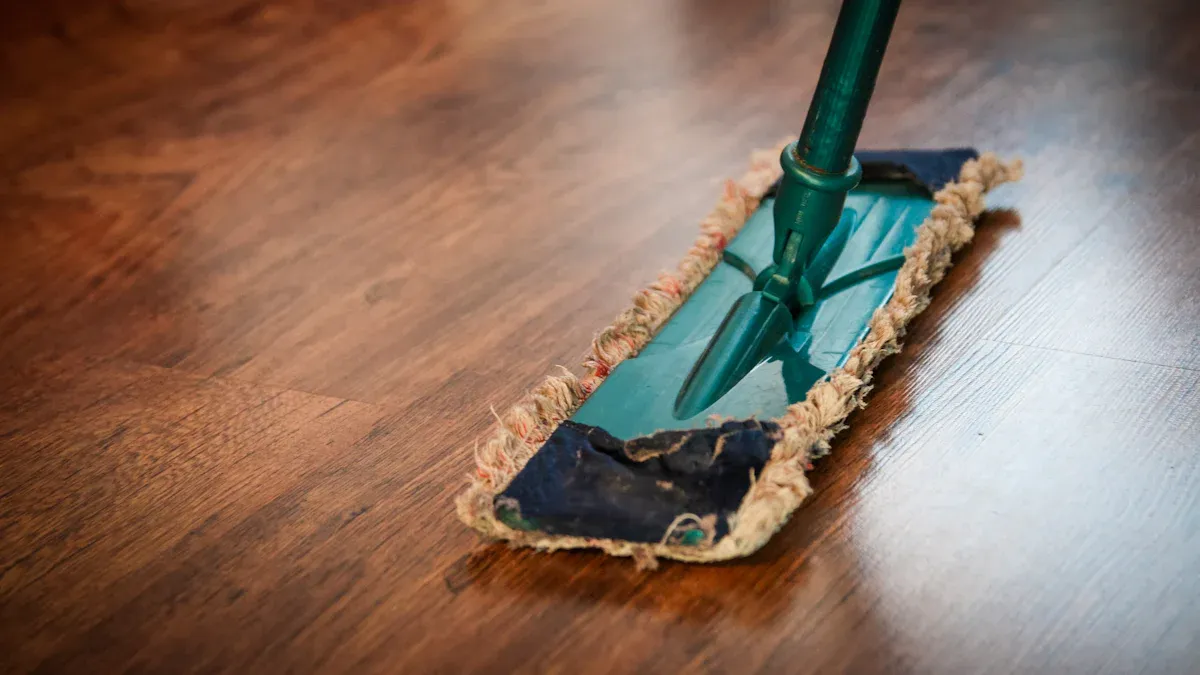
- Damp Mop Weekly: Use a damp mop with a microfiber cloth at least once a week. Choose a mild, vinyl-safe cleaner to keep your floors looking their best.
- High-Traffic Areas: In high-traffic areas, sweep or vacuum daily and mop weekly. For low-traffic rooms, mopping every other week suffices.
- Immediate Spill Cleanup: Clean spills immediately to prevent staining. The sooner you address a spill, the easier it is to remove.
By following these steps, you can significantly extend the lifespan of your vinyl floors. Regular vinyl floor maintenance can add 5–7 years to their life compared to those with minimal care.
Preventive Measures for Damage
Taking preventive measures can help you avoid damage to your vinyl floors. Here are some effective strategies:
- Avoid Soaking Mops: Do not use a soaking mop or harsh cleaners that can damage the flooring.
- No Abrasive Tools: Refrain from using scrub brushes or abrasive pads that can scratch the surface.
- Regular Dusting and Sweeping: Use a soft-bristled broom or vacuum to prevent scratches from dirt.
- Use pH-Balanced Cleaners: Employ cleaners specifically designed for vinyl to maintain integrity. Avoid harsh chemicals.
- Protect High-Traffic Areas: Place rugs in busy areas to minimize wear and tear.
- Manage Temperature and Humidity: Maintain a steady indoor climate to prevent expansion and contraction of flooring.
| Preventive Measure | Description |
|---|---|
| Protecting Entry Points | Use mats at doors to capture dirt and moisture before it reaches the floor. |
| Lifting Instead of Dragging | Lift heavy furniture to avoid scratches and dents. |
| Using Coasters or Floor Protectors | Place under heavy items to distribute weight and prevent damage. |
By implementing these preventive measures, you can help bring back the shine and keep your vinyl floors looking new for years to come.
To keep your vinyl floors shiny and new, follow these key steps to polish them effectively:
- Start with a thorough cleaning using a vinyl-specific cleaner. Sweep or vacuum first, then mop the floor and let the cleaner sit for a few minutes.
- After the floor dries, apply a high-quality polish evenly with a mop or applicator pad.
- Allow the polish to dry completely before walking on it to avoid streaks.
- For the best results, apply multiple thin layers of polish instead of one thick layer.
- Maintain the shine with regular light cleaning and periodic reapplications of polish.
Regular maintenance is crucial for enhancing the appearance of your vinyl floors. It removes dirt, protects against damage, and promotes longevity. Choose cleaning products that are pH-neutral and free from harsh chemicals to ensure the safety of your flooring. By following these tips, you can enjoy beautiful, shiny vinyl floors for years to come.
FAQ
How often should I clean my vinyl floors?
You should clean your vinyl floors at least once a week. Regular sweeping or vacuuming helps prevent dirt buildup. For high-traffic areas, consider cleaning more frequently to maintain their shine.
Can I use bleach on vinyl floors?
Avoid using bleach on vinyl floors. Bleach can damage the surface and cause discoloration. Instead, opt for pH-balanced cleaners designed specifically for vinyl to keep them looking new.
What should I do if my vinyl floors start to fade?
If your vinyl floors start to fade, consider applying a vinyl floor polish. This product can restore shine and protect against further fading. Regular maintenance also helps prevent this issue.
Are there any specific tools I should use for cleaning?
Use a soft-bristled broom or a vacuum with a soft attachment for cleaning. A damp microfiber mop works well for mopping. Avoid abrasive tools that can scratch your vinyl floors.
How can I prevent scratches on my vinyl floors?
To prevent scratches, place mats at entry points to catch dirt. Lift heavy furniture instead of dragging it. Use coasters under furniture legs to distribute weight evenly.




