
You often hear footsteps, voices, or loud music in apartment living. Many people feel frustrated by noisy neighbors. Over 25% of Americans who dislike a neighbor say noise is the main reason. A vinyl floor pad gives you a practical way of reducing noise, especially impact sounds like footsteps. Renters and homeowners can use this solution to create a quieter space and enjoy peace at home.
Acoustic Performance of Vinyl Floor Pad
Types of Noise: Impact and Airborne
You hear many types of noise in apartments. The most common are impact noise and airborne noise. Impact noise comes from footsteps, moving chairs, or dropping objects. Airborne noise includes voices, music, or television sounds that travel through the air. Both types can disturb your peace at home.
A vinyl floor pad helps you control these noises. It works best for impact noise, which is often the loudest in apartment buildings. The pad absorbs the shock from footsteps and moving furniture. This reduces the sound that travels to rooms below you. For airborne noise, the pad adds a layer that helps block some sounds from passing through the floor.
You can see the main acoustic properties that make a vinyl floor pad effective in the table below:
| Acoustic Property | Description |
|---|---|
| Impact Insulation Class (IIC) | Measures a floor’s ability to reduce impact sounds; higher ratings indicate better sound reduction. |
| Noise Reduction Coefficient (NRC) | Assesses how well a floor absorbs sound within a room; higher ratings indicate better sound absorption. |
| Vinyl with Foam Backing | Provides superior sound absorption and dampening properties, enhancing overall noise reduction. |
The impact insulation class rating is important for apartments. A higher rating means less noise from footsteps and dropped items. The noise reduction coefficient shows how well the floor absorbs sound in your room. Foam-backed vinyl pads give you extra comfort and better acoustic performance.
Reducing Noise in Real Apartment Settings
You want your apartment to feel quiet and comfortable. In real life, you deal with sounds from hard-soled shoes, pets, and moving furniture. These noises can echo and become louder with hard floors. A vinyl floor pad, especially with foam backing, gives you a cushioned surface. This surface absorbs vibrations and reduces the sound you hear.
Many people use soundproof mats under their vinyl flooring. These mats help reduce both impact and airborne noise. You notice less noise from foot traffic and moving chairs. The mats also make your floor feel softer and more comfortable.
- Vinyl floor pads, especially those with soundproof mats, lower both impact and airborne noise.
- These pads improve the acoustic comfort of your apartment.
- Acoustical mats absorb vibrations and reduce noise from daily activities.
Tip: Choose a vinyl floor pad with a high impact insulation class rating for the best results in noisy apartments.
You can enjoy a quieter home with the right acoustic solution. A good vinyl floor pad helps you block unwanted sounds and create a peaceful space.
Vinyl Floor Pad vs. Other Flooring for Reducing Noise
Vinyl vs. Carpet for Acoustic Control
You may wonder how a vinyl floor pad compares to carpet when it comes to noise control. Both options help reduce sound, but they work in different ways. Carpet feels soft and absorbs sound well. It is a popular choice for bedrooms and living rooms. Vinyl, especially with a quality underlayment, can also provide strong sound dampening.
Here is a table that shows how these two flooring types perform:
| Flooring Type | IIC Rating | Decibel Reduction |
|---|---|---|
| Standard Carpet + Pad | 50-55 | Significant impact noise reduction |
| Luxury Vinyl + Mass Loaded Vinyl | 60-65 | Higher impact noise reduction |
You can see that luxury vinyl with a good underlayment can actually reduce more impact noise than standard carpet and pad. Some underlayments, like Whisper Step®, can lower in-room noise by up to 10 decibels. You may also notice up to 25% less noise between floors.
When you compare comfort and maintenance, carpet feels softer underfoot and is great for sitting or playing. Vinyl is firmer, but a good underlayment adds comfort. You will find vinyl much easier to clean and maintain, which is important for busy homes.
| Feature | Carpet | Vinyl |
|---|---|---|
| Comfort | Soft and cushioned, ideal for walking and sitting | Firmer but can be comfortable with good underlayment |
| Noise Control | Excellent sound absorption, reduces footstep noise | Performs well with underlayment but less effective than carpet |
| Maintenance | Requires regular cleaning and care | Easier to clean and maintain |
Note: If you want a balance of noise control and easy cleaning, vinyl with a quality pad is a smart choice for apartments.
Vinyl vs. Laminate for Reducing Noise
You may also consider laminate flooring for your apartment. Laminate is durable and often includes a built-in liner to help reduce sound. However, laminate can sometimes create a hollow sound when you walk on it. Adding a quality underlayment helps, but vinyl flooring with foam backing offers a more cushioned surface.
Here is a comparison of their sound insulation features:
| Flooring Type | Sound Insulation Characteristics |
|---|---|
| Laminate Flooring | Moderately quiet, designed for durability, includes a built-in liner to reduce sound transmission. |
| Luxury Vinyl Plank (LVP) | Known for noise-reducing qualities, especially effective in busy households, can significantly reduce footfall noise when paired with padding. |
- Laminate flooring can reduce hollow percussive sounds with quality underlayment.
- Vinyl flooring with foam backing provides a cushioned surface that aids in sound reduction.
Laminate flooring benefits from underlayment, which helps reduce the hollow sounds from footsteps. Vinyl, especially with a foam-backed pad, gives you better sound dampening and a softer feel underfoot. This makes vinyl a strong choice for apartments where noise is a concern.
Vinyl vs. Hardwood for Apartment Soundproofing
Hardwood floors look beautiful and last a long time. However, they do not block noise as well as other flooring types unless you add a special underlayment. Vinyl flooring, especially luxury vinyl plank, is known for its noise-reducing qualities. It works well in busy apartments and helps keep footfall noise low.
Here is a quick look at their soundproofing effectiveness:
| Flooring Type | Soundproofing Effectiveness |
|---|---|
| Vinyl Flooring (LVP) | Noted for noise-reducing qualities, effective in busy households or apartments. |
| Hardwood Flooring | May not offer the same level of sound insulation unless paired with appropriate underlayment. |
- Luxury vinyl plank is effective in reducing footfall noise when paired with built-in padding or underlayment.
- Hardwood flooring requires additional underlayment to achieve similar sound insulation levels.
If you want a quieter apartment, you will find that a vinyl floor pad offers better sound control than hardwood alone. You get the look of wood with the added benefit of noise reduction, making your living space more peaceful.
Advantages of Vinyl Floor Pad for Noise-Sensitive Apartments
Cost-Effective Acoustic Solution
You want a quiet apartment without spending too much. A vinyl floor pad gives you strong acoustic benefits at a lower price than many other flooring options. You can see how different products compare in cost:
| Product Collection | Size | With Acoustic Pad | Average Retail Price |
|---|---|---|---|
| KATAVIA | 6 x 48 | No | $ |
| GLENRIDGE | 6 x 48 | No | $$ |
| WILMONT | 7 x 48 | No | $$ |
A vinyl floor pad offers high mass in a thin profile. This means you get effective noise reduction without losing much floor height. You can cut and fit it to your space, which makes installation simple. Many options use non-invasive methods, so you do not need to damage your floor. This is great for renters and landlords.
| Benefit | Description |
|---|---|
| High mass in a thin profile | Provides effective noise reduction without taking up much space. |
| Flexibility | Conforms to various surfaces and can be cut on site, making installation easier. |
| Non-invasive installation options | Many installations only require surface attachment, ideal for renters and landlords. |
Easy Installation and Maintenance
You can install a vinyl floor pad quickly. Most acoustic underlayment options do not need glue or nails. You just lay them down and place your flooring on top. This saves you time and effort. If you move, you can remove the pad without leaving marks. Cleaning is easy, too. You only need to sweep or mop the surface. This makes it a smart choice for busy people.
Tip: Choose an acoustic underlayment that matches your floor type for the best results.
Enhanced Noise Reduction with Underlayment
You can boost the acoustic performance of your floor with acoustic underlayment. This layer sits under your vinyl floor pad and adds extra sound dampening. Acoustic underlayment helps in several ways:
- It minimizes sound transfer between floors, measured by Sound Transmission Class (STC) values.
- It reduces ambient noise, measured by Impact Insulation Class (IIC) values.
- Noise Guard underlayment can lower in-room noise by up to 10 decibels.
- It can improve noise reduction between floors by 25%.
You can check the table below to see how acoustic underlayment improves your living space:
| Rating Type | Description | Importance |
|---|---|---|
| Sound Transmission Class (STC) | Measures how well a partition blocks airborne sound. A higher rating indicates better sound insulation. | Reduces transmission of conversations and airborne noises between rooms. |
| Impact Insulation Class (IIC) | Measures effectiveness in reducing impact noises like footsteps. A higher rating means better insulation. | Enhances living experience in multi-story buildings by reducing disruptive noises. |
| Delta IIC | Measures additional improvement in impact noise isolation provided by underlayment. | Useful for comparing performance of different underlayment options. |
You get a quieter home when you use acoustic underlayment with your vinyl floor pad. This combination gives you the best sound dampening for noise-sensitive apartments.
Practical Tips for Maximizing Acoustic Benefits
Installation Tips for Reducing Noise
You can get the best sound control from your vinyl floor pad by following smart installation steps. Start by rolling out the underlayment across the subfloor. Make sure the edges meet but do not overlap. Trim any extra material around walls or obstacles for a neat fit. Use strong tape to secure the seams. This step keeps moisture out and helps the pad stay in place.
Before you begin, check that your underlayment matches your subfloor type. Let the underlayment sit in the room for a day so it can adjust to the temperature and humidity. Overlapping the edges just a little can boost sound insulation.
Tip: Always test the subfloor for moisture. Too much moisture can cause bubbling or peeling, which reduces the pad’s effectiveness.
Clean and level the subfloor before you start. An uneven surface can lead to cracks or discomfort. Make sure to leave enough space for the floor to expand. This prevents damage and keeps your floor looking good.
What to Look for in a Vinyl Floor Pad
You want a vinyl floor pad that works well for reducing noise. Look for these key features:
- Impact Insulation Class (IIC): A higher IIC rating means better control of impact sounds like footsteps.
- Noise Reduction Coefficient (NRC): A higher NRC value shows the pad absorbs more sound in the room.
- Density and Thickness: Thicker and denser pads give you better sound absorption and comfort.
- Material Quality: Foam-backed vinyl and pads with mass loaded vinyl (MLV) offer strong soundproofing.
- Moisture Resistance: Choose a pad that blocks moisture, especially for kitchens or basements.
- Acoustic Adhesives: These adhesives help reduce sound transfer between the floor and subfloor.
A quality vinyl floor pad with these features will help you create a quieter and more comfortable apartment.
Why Choose skspcflooring for Acoustic Vinyl Floor Pad Solutions
Quality Standards and Certifications
When you choose a floor pad, you want to know it meets high standards. skspcflooring follows strict quality rules to make sure you get safe and durable products. The company uses international certifications that focus on durability, air quality, and environmental impact. These certifications help you trust that your floor pad will last and keep your home healthy.
Here is a table showing some important certifications and what they mean for you:
| Certification/Standard | Focus Area | Description |
|---|---|---|
| QB UPEC | Durability | Ensures the floor pad lasts at least 10 years in normal use. |
| Grade A+ | VOC Emissions | Keeps total VOC emissions very low for better indoor air. |
| Floorscore | VOC Emissions | Checks VOC levels with outside lab tests. |
| Blue Angel | VOC Emissions | Uses strict rules to measure VOCs after 3 and 28 days. |
| M1 Finnish Certification | VOC Emissions | Tests for VOCs, formaldehyde, ammonia, and odors after 28 days. |
| HQE | Environmental Quality | Helps buildings get certified for comfort and low environmental impact. |
| LEED | Environmental Quality | Gives points for using eco-friendly materials in buildings. |
You can feel confident that skspcflooring products meet these standards. This means your acoustic floor pad will help create a safe and quiet home.
Product Range and Customization Options
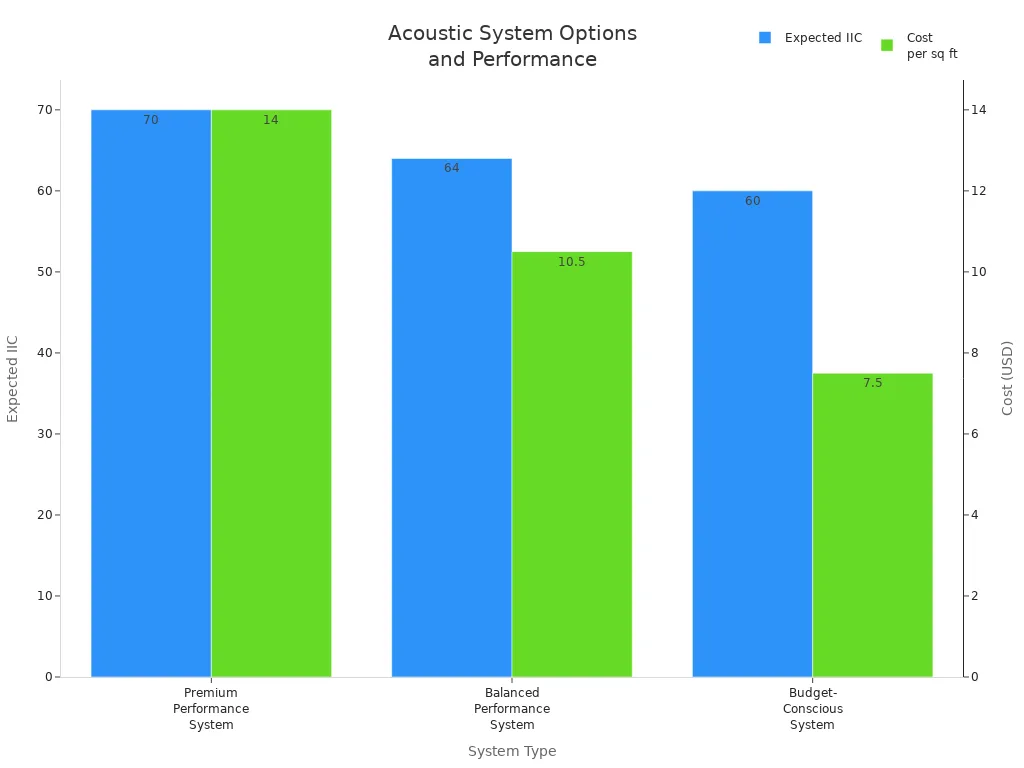
skspcflooring gives you many choices to fit your needs. You can pick from different systems based on your budget and the level of noise control you want. Each system uses special materials and underlayments to boost acoustic performance.
| System Type | Surface Material | Underlayment Type | Expected IIC | Cost Range |
|---|---|---|---|---|
| Premium Performance System | 6mm cork tiles with urethane finish | 5mm closed-cell rubber, 90 kg/m³ | 68-72 | $12-16 per sq ft installed |
| Balanced Performance System | 4mm cork planks with water-based finish | 3mm recycled rubber crumb, 80 kg/m³ | 62-66 | $9-12 per sq ft installed |
| Budget-Conscious System | Cork-composite tiles with coating | 2mm high-density foam with vapor barrier | 58-62 | $6-9 per sq ft materials only |
You can see how each system compares in this chart:
skspcflooring also helps you with the right installation steps. You need a flat surface, low moisture, and tight seams for the best results. After you install the floor pad, you can expect a big drop in noise. In over 500 apartments, these systems cut impact noise by up to 28 decibels. Most people stop hearing their neighbors after just one month.
Tip: Choose the system that matches your needs and budget. You will enjoy a quieter and more comfortable apartment with the right acoustic solution from skspcflooring.
You can trust a vinyl floor pad to help you create a quieter home. Many people have seen real results after installing acoustic flooring from skspcflooring.
| Case Study | Background | Challenge | Solution | Investment | Results |
|---|---|---|---|---|---|
| Senior Resident Sleep Quality Recovery | Elderly resident below young professional tenants | Unable to sleep due to late-night foot traffic | Acoustic flooring installation mandated by building management | $3,200 for 300 sq ft | Resident sleep quality improved dramatically, no further complaints |
| Young Family Transformation | Two-bedroom apartment, twin toddlers | Daily neighbor complaints | 6mm cork with 5mm rubber underlayment throughout main living areas | $2,400 for 200 sq ft | Zero complaints after installation, children play freely without restrictions |
| Pet-Friendly Installation Success | Large breed dog in second-floor apartment | Dog’s running caused ceiling vibrations in unit below | High-density rubber system in main traffic paths | $1,800 for 150 sq ft | Neighbor reported 80% noise reduction, pet owner gained peace of mind |
You can install and maintain these pads easily. If you want a peaceful space, skspcflooring offers proven solutions for noise-sensitive apartments.
FAQ
How does a vinyl floor pad reduce noise in apartments?
You get less noise because the pad absorbs vibrations from footsteps and moving furniture. This stops sound from traveling to other rooms or floors. You enjoy a quieter home.
Can you install a vinyl floor pad yourself?
Yes, you can. Most vinyl floor pads use a simple lay-down method. You only need basic tools. You do not need glue or nails. You save time and money.
What features should you look for in a vinyl floor pad?
Look for these features:
- High IIC rating
- Good moisture resistance
- Dense, thick material
- Easy installation
These features help you get the best noise reduction.
Is a vinyl floor pad safe for people with allergies?
Yes. Many vinyl floor pads have low VOC emissions. They do not trap dust or allergens like carpet. You breathe cleaner air and feel more comfortable.




