
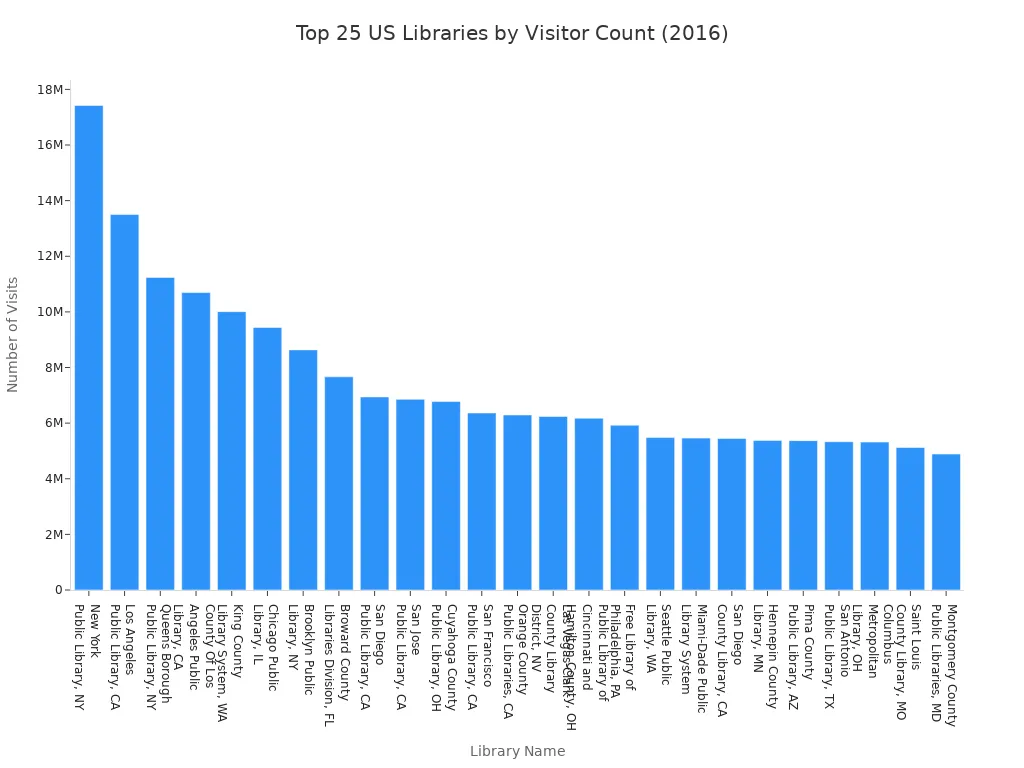
Choosing the right flooring is key for a modern library. A hybrid approach offers the most effective solution. This strategy combines carpet tile in quiet zones with luxury vinyl tile (LVT) in high-traffic areas. This mix balances noise control, design, and durability. Your library handles heavy foot traffic, making functional flooring essential. Top US libraries see millions of visitors annually.
This plan creates a strategic library flooring design.
Key Factors for Your Library Flooring Project
You must consider several key factors for a successful library renovation. Your flooring choice impacts daily operations, patron experience, and your budget. Addressing your specific library needs from the start ensures a functional and lasting result.
Balancing Acoustics and Noise Reduction
A library requires excellent acoustics. The right flooring is crucial for managing sound and creating a peaceful environment. You should aim for specific noise levels in different zones.
- Absolute Quiet Zones: 0–25 decibels for focused work.
- Considerate Zones: 26–40 decibels for quiet conversation.
Carpet tile is a great tool for achieving acoustic comfort. Its fibers trap sound waves and muffle footsteps. This reduces echo in large, open spaces and improves speech clarity. Better sound control helps patrons concentrate and feel more comfortable.
Ensuring Durability and Easy Maintenance
Your library flooring must withstand constant foot traffic. Balancing comfort and durability is essential. Different materials offer varying lifespans. You can compare the average lifespan of common commercial flooring options.
| Flooring Type | Average Lifespan (Years) |
|---|---|
| Carpet | 8-10 |
| Tile | 20-30 |
| Vinyl | 10-20 |
Some materials, like Terrazzo, offer exceptional durability, lasting 75 years or more. Choosing a resilient flooring material reduces long-term maintenance costs and keeps your library looking its best.
Enhancing Design and Atmosphere
The right flooring enhances your library’s atmosphere. Your design choices can make the space feel modern, traditional, or playful. A thoughtful flooring design guides visitors through the library. It can define spaces for children, teens, and adults. This creates a welcoming and intuitive environment for everyone.
Comparing Top Library Flooring Materials
You have many flooring options for your library. Each material offers unique benefits. Understanding the strengths of top contenders like carpet tile, LVT, and rubber helps you make the best choice for each zone in your building.
Carpet Tile: The Acoustic Champion
Carpet tile is your best tool for creating quiet spaces. Its primary job in a library is to control sound. The soft fibers absorb sound waves, reduce echoes, and muffle footsteps. This creates the perfect atmosphere for reading and study areas. Carpet’s effectiveness at absorbing sound is measured by its Noise Reduction Coefficient (NRC). A higher NRC rating means better sound absorption. Commercial carpet tiles typically have an NRC rating between 0.25 and 0.45. The backing makes a big difference in performance.
| Material | NRC |
|---|---|
| Carpet, indoor-outdoor | 0.15 – 0.20 |
| Carpet, heavy on concrete | 0.20 – 0.30 |
| Carpet, heavy on foam rubber | 0.30 – 0.55 |
Beyond acoustics, carpet tile offers exciting design possibilities. Modern trends allow you to use flooring to enhance your library’s look and function.
- Define Zones with Patterns: Use bold geometric patterns or colors to visually separate the children’s section from teen spaces or quiet study zones. This helps guide patrons without needing walls.
- Embrace Sustainable Design: Many manufacturers now offer eco-friendly options. You can choose tiles made from recycled fibers and installed with low-VOC adhesives. This improves indoor air quality and supports a greener future.
- Add Texture and Depth: New designs feature high-low pile contrasts and woven effects. These textural layers add visual interest and a sophisticated feel to any room.
Luxury Vinyl Tile (LVT): The Durability Powerhouse
Luxury vinyl tile (LVT) is built to handle your library’s busiest areas. Think entrances, main walkways, and circulation desks. Its strength comes from its multi-layer construction, especially its protective wear layer. The wear layer is the top surface that guards the flooring against scratches, scuffs, and stains.
A thicker wear layer provides more protection and a longer lifespan. For high-traffic commercial spaces, you should look for a wear layer of at least 20 mil. This thickness is the industry standard for environments like a busy library. LVT with a proper wear layer can last from 10 to 25 years. Commercial warranties often cover this flooring for 7 to 10 years in light commercial settings.
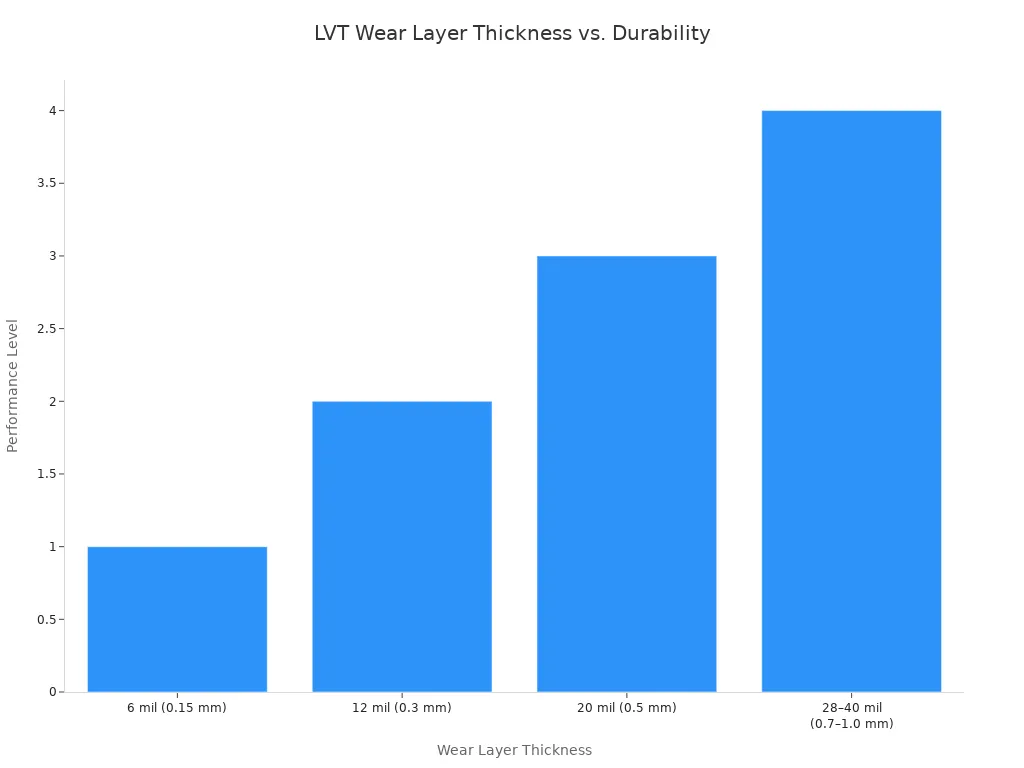
This chart shows how wear layer thickness directly impacts performance. A thicker layer ensures your flooring can withstand heavy use for years.
| Wear Layer Thickness | Typical Use | Performance Notes |
|---|---|---|
| 12 mil (0.3 mm) | Light commercial | Acceptable for lower-traffic areas |
| 20 mil (0.5 mm) | Standard commercial | Industry standard for most commercial spaces |
| 28–40 mil (0.7–1.0 mm) | Heavy commercial | Best-in-class for extreme traffic and wear |
Rubber Flooring: The Resilient All-Rounder
Rubber flooring is a versatile choice that combines durability, comfort, and sustainability. It works well in children’s play areas, multipurpose rooms, and staff work zones. Its natural elasticity provides a comfortable cushion underfoot. This reduces leg fatigue for staff who stand for long hours. It also offers excellent slip resistance, making it a safe option for all ages.
One of the biggest advantages of rubber is its positive environmental impact. This sustainable library flooring is often made from recycled materials, giving new life to old products.
♻️ Eco-Friendly Fact: Choosing recycled rubber flooring helps reduce landfill waste. The EPA notes that about 290 million scrap tires are generated in the U.S. each year. Using recycled rubber repurposes these tires, conserves natural resources, and lowers the carbon footprint associated with manufacturing new materials. Many rubber flooring products also have low VOC emissions, which contributes to healthier indoor air quality for your patrons and staff.
Engineered Hardwood: The Classic Accent
You can use engineered hardwood to bring a timeless, sophisticated feel to select areas of your library. This flooring adds a touch of elegance perfect for a director’s office, a boardroom, or a quiet reading room for special collections. While not suited for high-traffic zones, it creates a warm and prestigious atmosphere where you want to make a classic impression.
Engineered hardwood has a special construction. It features a top layer of real hardwood over a core of multiple, cross-layered plywood or fiberboard sheets. This structure gives it more stability against moisture changes compared to solid wood. However, you must still manage your building’s climate carefully. Uncontrolled humidity is the biggest threat to any wood floor.
You need to watch for several humidity-related problems:
- Cupping: The edges of the boards rise higher than the center. This happens when the wood absorbs too much moisture.
- Crowning: The center of the board swells, becoming higher than the edges. This can occur if a cupped board’s surface dries too quickly.
- Gapping: Spaces appear between boards. This is a result of the wood shrinking in a dry environment.
- Buckling: The floor lifts completely off the subfloor. This is a severe reaction, usually caused by extreme moisture or flooding.
💡 Climate Control is Key To protect your investment, you must maintain consistent indoor humidity levels between 35% and 55% all year. Use your HVAC system, humidifiers, and dehumidifiers to keep the environment stable. An unstable climate can cause permanent damage and may even void your product warranty.
Proper installation is just as important as climate control. You should allow the new wood to acclimate, or adjust, to your library’s environment for at least 72 hours before installation. Professionals must measure the moisture content of the wood and the subfloor before they begin. Guessing or “eyeballing” the conditions is risky and can lead to costly failures down the road. Engineered hardwood is a beautiful but demanding flooring choice that requires careful planning and a controlled environment to succeed.
How to Implement a Zoned Flooring Plan
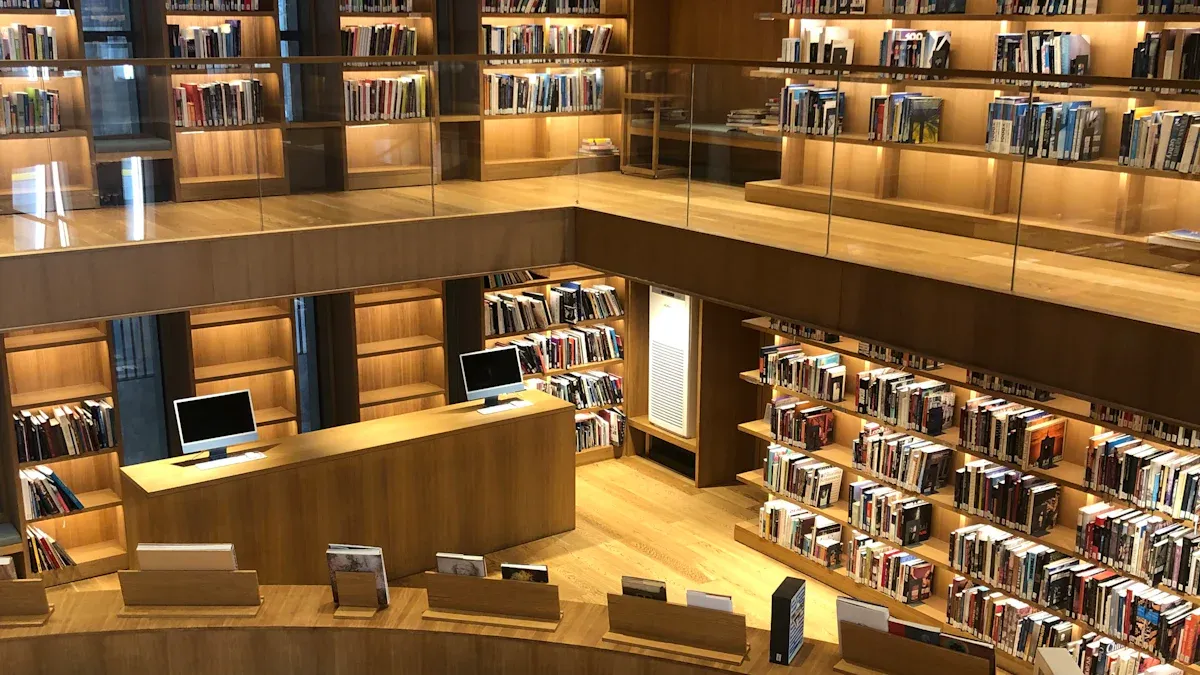
A successful zoned flooring plan turns your library into a more intuitive and functional space. You can guide patrons, control sound, and improve durability by placing the right materials in the right zones. This strategic approach starts with understanding how people use your building.
Mapping Your Library’s Traffic Zones
First, you need to map your library’s activity zones. This helps you decide where to place durable flooring for heavy traffic areas and where to use softer flooring for quiet. You can use modern tools to gather precise data on how patrons move through your space.
- People Counting Systems: These tools measure foot traffic and show you which areas are busiest. You can see traffic patterns for specific days and times.
- Visitor Analytics: This data helps you identify bottlenecks or crowded spots. You can use this information to improve visitor flow and arrange furniture more effectively.
- Geospatial Tools: These advanced tools help predict traffic trends. They allow you to analyze seasonal patterns and better understand patron preferences.
By analyzing this data, you can clearly define your library’s zones. For example, you will see high traffic at entrances and check-out desks, while reading rooms remain quiet.
| Zone | Purpose | Flooring Considerations |
|---|---|---|
| Quiet Zone | Focused study & reading | Acoustic materials like carpet tile |
| Group Zone | Collaboration & tutoring | Durable, easy-to-clean surfaces |
| Kids’ Zone | Learning & play | Soft, safe, and colorful flooring |
| Tech Zone | Digital use & creation | Durable surfaces with easy power access |
Combining Materials for a Cohesive Look
After mapping your zones, you can combine different flooring materials to create a unified design. A cohesive look makes the entire library feel connected, even with multiple flooring types. You can use color and texture to build a harmonious environment.
Design Tip: Create a cohesive look by using a neutral foundation. Shades of cream, beige, or soft gray can serve as a base. You can then add color and pattern with accent materials. This strategy allows you to blend different textures, like smooth LVT and soft carpet, without the space feeling chaotic. Avoid using more than three primary materials in one area to prevent an overwhelming look.
Managing Transitions Between Floor Types
Proper transitions are essential for safety and a professional finish. When you combine different flooring materials, like LVT and carpet tile, you must manage the height difference between them. This prevents tripping hazards and ensures accessibility for everyone.
According to ADA guidelines, any change in floor height greater than a half-inch must be treated as a ramp. For smaller changes, a beveled edge is required.
💡 ADA Compliance is Crucial
- A height change up to ¼ inch needs no special transition.
- A change between ¼ and ½ inch requires a beveled edge with a 1:2 slope.
- A change over ½ inch needs a ramp with a maximum 1:12 slope.
Using a gradual, ramp-style transition strip is the best way to connect different flooring types. These strips, often made of metal or PVC, create a smooth and safe path between materials.
Budgeting for Your Library Flooring
Creating a budget for your library flooring project requires looking beyond the initial price tag. You need to balance upfront costs with long-term value to make a smart financial decision. A well-planned budget ensures your new flooring serves the library for years to come.
Comparing Upfront Material Costs
Your first step is to compare the material costs per square foot. Commercial vinyl planking (LVT) typically costs between $4 and $8 per square foot. Rubber flooring is priced a bit higher, around $10 per square foot. Commercial carpet tiles offer a wide price range. Basic options start around $1.78 per square foot, while high-end designs can cost over $5 per square foot.
Calculating Long-Term Maintenance Value
Upfront cost is only part of the story. You must also calculate the long-term maintenance expenses. Some materials cost more to maintain than others. Over time, these costs can significantly impact your overall budget. Vinyl flooring is generally less expensive to care for than carpet.
| Flooring Type | Estimated Annual Maintenance Cost per Square Foot |
|---|---|
| Vinyl Flooring (LVT and LVP) | $0.10 to $0.25 |
| Carpet Flooring | $0.25 to $1.00 |
Choosing a material with lower annual maintenance can lead to substantial savings over the life of the floor.
Maximizing Your Return on Investment
To maximize your return on investment (ROI), you should project your total costs over a 10-year period. This includes installation, maintenance, and potential replacement. While some materials have a higher initial cost, their durability and low upkeep often make them more affordable in the long run.
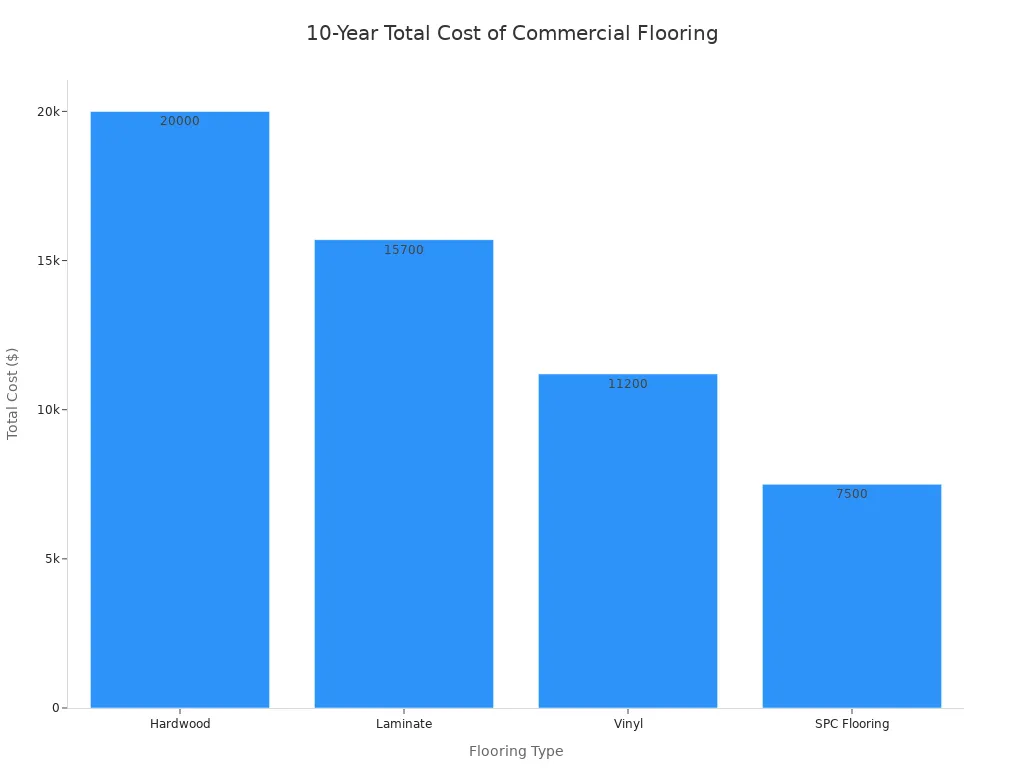
SPC flooring delivers 25-40% better ROI than traditional flooring options over a 10-year period, making it the smart choice for budget-conscious businesses.
You can also explore funding opportunities to help with your library renovation. Programs funded through the Library Services and Technology Act (LSTA) may offer grants through your state library agency, helping you invest in a high-quality solution for your library.
A successful library flooring strategy moves beyond a single-source flooring solution. You should combine durable LVT in high-traffic areas with acoustic carpet tile in quiet zones. William Paterson University’s library used this zoned design to create a more engaging space for students. This approach makes your library more functional and welcoming.
Your first step is to assess your library’s unique zones. This helps you create a flooring plan that is both functional and inspiring for every patron.
FAQ
How can I make a zoned floor plan work in a small library?
You can use color and pattern to define zones in a smaller space. Use a different colored carpet tile to mark a quiet reading corner. A distinct LVT pattern can show the main path from the door to the desk. This creates visual separation without needing physical walls.
What is the best flooring for a collaborative student area?
LVT is an excellent choice for a collaborative environment. It resists scuffs from moving chairs and is easy to clean. Many students use these areas for group projects. LVT’s durability handles the high activity, while its design options can create an energetic, modern look for your collaborative space.
How do I clean different flooring types together?
You should create a maintenance plan for each flooring type. Use vacuums designed for commercial carpet and microfiber mops for LVT.
Cleaning Tip: Schedule deep cleaning for each zone separately. This allows you to use the correct methods for each material without disrupting the entire library at once.
Can I install new flooring without closing the library?
Yes, you can complete the installation in phases. Work on one zone at a time during off-peak hours or overnight. This phased approach minimizes disruption for your patrons. Clear communication with signs helps guide visitors around the work area, keeping the library open and functional.




