
Stone plastic composite flooring, often called SPC, offers you a tough and modern solution for your home or business. In 2025, you see spc flooring gaining attention for its strong resistance to water and wear. The global market is set to reach around USD 3.28 billion, with rapid growth in countries like the U.S., China, and India.
- You benefit from SPC if you need:
- Cost-effective and durable floors
- Easy maintenance
- Solutions for busy spaces
| Key Factors for Popularity | Description |
|---|---|
| Material Advances | Use of recycled content and advanced polymers for sustainability. |
| Durability and Cost | Enhanced durability and low maintenance appeal to consumers. |
| Urbanization | Increased demand due to rapid urban development. |
Composition of Stone Plastic Flooring
Core Materials in SPC Flooring
When you look at stone plastic flooring, you find that the core is what makes it special. The core of spc flooring uses a mix of limestone or calcium carbonate and polyvinyl chloride (PVC). This blend creates a dense and heavy base. The limestone or calcium carbonate gives the floor its strength and weight. The PVC adds flexibility and helps the floor resist moisture. You do not see any wood content in spc, which makes it different from other types like wood plastic composite. The right balance between limestone and PVC means your spc flooring can handle heavy loads without bending or cracking. This strong core is why you can trust stone plastic composite flooring in busy homes and businesses.
Layer Structure of Stone Plastic Composite Flooring
Stone plastic flooring has a layered design that gives it both beauty and strength. You usually see four main layers in spc flooring, but sometimes there is an extra layer for added comfort. Here is a simple table to help you understand each layer:
| Layer | Function |
|---|---|
| Wear Layer | Protects against scratches, stains, and daily wear. |
| Vinyl Layer | Gives the floor its color and pattern. |
| SPC Core | Provides stability, impact resistance, and keeps the floor rigid. |
| Backing Layer | Adds support and blocks moisture from below. |
Most spc flooring comes in thicknesses from 3mm to 8mm, but you can also find options as thin as 2mm or as thick as 8mm or more. The wear layer on top keeps your floor looking new by stopping scratches and stains. The underlayment, which is sometimes attached, helps with sound absorption and makes the floor feel softer under your feet.
Tip: The wear layer and underlayment work together to make your stone plastic flooring last longer and feel more comfortable.
How SPC Differs from Other Flooring Types
You might wonder how stone plastic flooring stands out from other floors like luxury vinyl flooring or engineered wood. The main difference is in the core. SPC uses a core made mostly of limestone and PVC, while luxury vinyl tile (LVT) often has more PVC and sometimes wood-like materials. This makes spc flooring much denser and more rigid than LVT. You get complete waterproofing with spc, which is not always the case with other types.
Here is a quick comparison:
| Feature | Stone Plastic Composite (SPC) | Luxury Vinyl Tile (LVT) |
|---|---|---|
| Core Composition | ~60% calcium carbonate, PVC, plasticizers | PVC, calcium carbonate, plasticizers, foaming agent, wood-like materials |
| Density | Thin yet very dense | Less dense |
| Waterproofing | Fully waterproof | Usually waterproof |
| Strength | High strength and versatility | Good, but less than SPC |
When you compare spc flooring to engineered wood, you see even bigger differences. Engineered wood uses wood fibers and thermoplastics, which can make it less stable and less resistant to dents. Stone plastic composite flooring, with its stone-based core, gives you better durability and stability. You can use spc in places where water or heavy use would damage other floors.
You may also hear the term “rigid core flooring” when shopping for spc. This name comes from the hard, stone-based core that keeps the floor flat and strong, even in tough conditions. Stone polymer composite is another name for this type of flooring, showing its mix of stone and plastic materials.
If you want a floor that is tough, waterproof, and easy to care for, stone plastic flooring is a smart choice. It works well in homes, offices, and busy stores. You get the look of luxury vinyl flooring with the strength of stone.
Manufacturing Process of SPC Flooring
How Stone Plastic Flooring Is Made
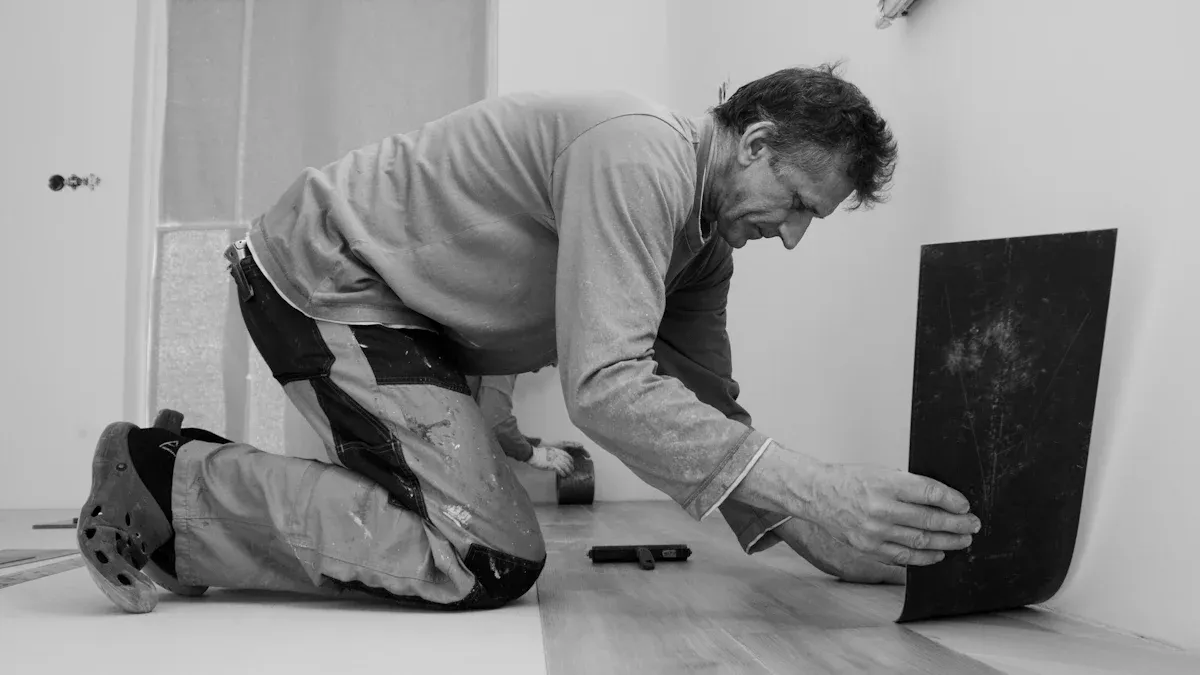
You see spc flooring made through a series of precise steps. Manufacturers start by mixing raw materials like limestone powder, PVC resin, stabilizers, and plasticizers. This blend forms the base of spc and gives it strength. The mixture moves into an extrusion machine, where heat and pressure shape it into flat sheets. Heated rollers, called calenders, help control the thickness and smoothness of each sheet.
Here is a simple breakdown of the process:
- Mixing raw materials: Limestone powder, PVC, stabilizers, and plasticizers combine in exact amounts.
- Extrusion: The heated mixture forms into sheets with controlled thickness.
- Calendaring: Heated rollers shape the sheets and create a smooth surface.
- Lamination: Decorative and wear layers are added for style and protection.
- Cooling and cutting: Sheets cool quickly and are cut into panels.
- UV coating: A special layer protects spc flooring from sunlight and scratches.
- Embossing: Textures are pressed onto the surface for a realistic look.
Tip: The UV coating helps your spc flooring resist fading and wear, making it last longer in busy spaces.
Manufacturers use advanced technologies to keep each step consistent. You get spc flooring with uniform thickness and strong layers because of these careful controls.
| Technology/Process | Description |
|---|---|
| Material Innovation | SPC uses limestone powder, PVC, and stabilizers for a tough core. |
| High-Temperature Pressing | Layers fuse under heat and pressure, creating a dense and stable product. |
| Precision Cutting | Machines cut panels to exact sizes for easy installation. |
| Protective Wear Layer | A clear layer shields spc from scratches and stains. |
| UV Coating | Protects against fading from sunlight exposure. |
Quality Control and Industry Standards
You want spc flooring that meets high standards. Manufacturers follow strict rules to make sure each panel is safe and durable. International standards like ISO, EN, and ASTM guide the production process. These standards set requirements for thickness, strength, and safety.
Manufacturers test spc flooring for water resistance, scratch resistance, and impact strength. Third-party labs check the products and give certifications if they pass. You see spc flooring used in places like hospitals and kitchens because it meets industry-specific certifications.
Quality control uses advanced technology. Automated systems and real-time monitoring catch problems early. Employees receive training to spot issues and follow procedures. Manufacturers also build strong relationships with suppliers to get the best raw materials.
Note: Regular testing and continuous improvement help spc flooring stay reliable and safe for your home or business.
You can trust spc flooring because it passes many tests and meets global standards. This means you get a product that lasts and performs well in any setting.
Durability and Performance of SPC Flooring
Wear and Tear Resistance
You want a floor that stands up to daily life. Stone plastic flooring gives you impressive wear and tear resistance. The dense core and tough wear layer protect your floor from scratches, stains, and scuffs. You see this in homes, schools, and busy stores. SPC flooring often lasts between 10 and 25 years. High-quality options can reach 25 years or more with proper care. Lower-quality products may show signs of wear after 5 to 10 years.
- SPC flooring generally has a life expectancy of 10 to 25 years.
- High-quality SPC often comes with warranties ranging from 5 to 25 years for residential use.
- Well-maintained SPC flooring can last up to 25 years or longer.
- The average lifespan of stone plastic composite flooring is typically between 15 to 25 years under normal residential use.
- Premium SPC products can exceed 25 years in moderate-use residential settings.
- Factors influencing lifespan include product quality, thickness of the wear layer, and foot traffic levels.
- Proper maintenance is crucial for maximizing the lifespan of SPC flooring.
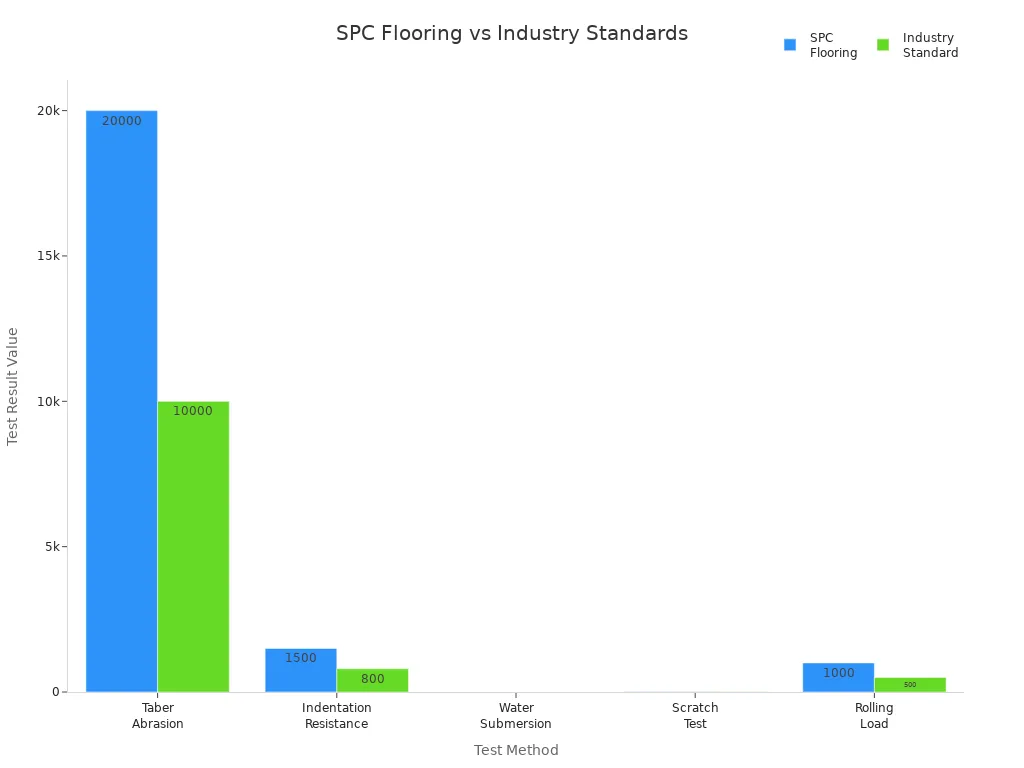
You see SPC flooring tested in labs for abrasion and indentation resistance. The results show strong performance compared to industry standards.
| Test Method | SPC Flooring | Industry Standard | Real-World Equivalent |
|---|---|---|---|
| Taber Abrasion (Cycles) | 20,000+ | 10,000 | 10 years retail traffic |
| Indentation Resistance (PSI) | 1,500 | 800 | Gym equipment impact |
| 72-Hour Water Submersion | 0% Expansion | 0.5% Max | Spill/cleaning damage |
| Scratch Test (Mohs Scale) | 6.5 Rating | 5.0 | Pet claws/key scratches |
| Rolling Load (1,000 passes) | No Visible Wear | 500 Passes | Cart/rack movement |
Tip: You can extend the life of your stone plastic flooring by cleaning regularly and using mats in high-traffic areas.
Waterproof and Moisture Protection
You need a floor that handles spills and moisture. SPC flooring is completely water-resistant. The resin core blocks water from reaching the surface or the subfloor. You can install stone plastic flooring in kitchens, bathrooms, laundry rooms, and basements without worry. The multi-layer structure, including the wear layer, decorative vinyl, rigid SPC core, and backing, keeps moisture out.
Stone plastic composite flooring uses a unique core made from PVC plastic and stone powder. This design makes it 100% waterproof. You do not see swelling or warping, even after long exposure to water. The rigid core gives you better protection than wood or laminate floors. You get peace of mind in areas prone to spills or humidity.
Note: SPC flooring is designed for temperature and humidity stability. You do not need to worry about changes in weather or indoor climate.
Impact and Scratch Resistance
You want a floor that resists dents and scratches. SPC flooring is highly impact resistant. The dense core absorbs shocks and prevents dents from heavy furniture or dropped objects. You see stone plastic flooring used in hospitals, gyms, and busy stores because it can withstand up to 1,500 psi pressure. Case studies show minimal wear after years of use in high-traffic environments.
- Highly impact resistant
- The dense core absorbs shocks
- Resists dents
- Suitable for high-traffic areas
SPC flooring also stands out for scratch resistance. The tough wear layer protects against pet claws, keys, and everyday use. Laminate flooring may show scratches more quickly, but stone plastic composite flooring is less prone to damage. You get a durable surface that stays looking new for years.
| Flooring Type | Scratch Resistance | Durability | Impact Resistance |
|---|---|---|---|
| SPC Flooring | Less prone to scratches | High | High |
| Laminate Flooring | More prone to scratches | Moderate | Moderate |
You see SPC flooring outperform luxury vinyl tile in high-traffic areas. LVT may show wear patterns and need replacement sooner. SPC flooring keeps its shape and appearance, even with carts, racks, and heavy equipment moving across it.
Callout: You can trust stone plastic flooring to handle busy households, pets, and commercial spaces. The combination of durability, waterproofing, and impact resistance makes it a top choice for modern flooring needs.
Applications and Installation of Stone Plastic Composite Flooring
Residential Uses of SPC Flooring
You can use spc flooring in almost every room of your home. Many homeowners choose spc for kitchens, bathrooms, and basements because it resists water and stains. You get a floor that stands up to spills, muddy shoes, and pet accidents. The easy installation process lets you update your space quickly. You do not need special tools or skills. The click-lock system allows you to lay each plank with little effort. You can even install spc over most existing floors. This makes it a smart choice for remodeling projects.
Tip: Use area rugs and mats in entryways to keep your spc flooring looking new.
Commercial and High-Traffic Applications
You see spc flooring in many commercial spaces. Offices, retail stores, restaurants, and healthcare facilities often use spc because it handles heavy foot traffic. The tough surface resists scratches and dents, even in busy places. You do not have to worry about spills or moisture in these environments. Spc flooring works well in high-traffic areas like lobbies and hallways. Many business owners pick spc for its long-lasting performance and easy cleaning. You can rely on spc to keep its appearance, even with carts and equipment moving across it.
Installation Methods for SPC Flooring
You will find that spc flooring offers easy installation. The click-lock system lets you snap planks together without glue or nails. This method saves time and effort. You can finish a room in less time than with traditional floors. You do not need to be a professional to get good results. For large commercial projects, you should:
- Check that the subfloor is clean, flat, and dry.
- Leave a 1/4 inch expansion gap around the edges.
- Use a moisture barrier on concrete subfloors.
- Avoid installing over sloped or unstable floors.
- Protect the floor from direct sunlight.
- Mix planks from different boxes for a natural look.
Spc flooring is more forgiving of small bumps or dips in the subfloor. You do not need to spend hours on prep work. This makes spc a favorite for both DIY and professional installers.
Note: Always follow the manufacturer’s instructions for best results and longer-lasting spc flooring.
Maintenance and Cleaning Tips
You want your spc flooring to look new for years. You can follow simple steps for easy maintenance. You do not need special cleaners or tools. Most dirt and dust come off with regular sweeping or vacuuming. You can use a soft broom or a vacuum with a hard floor setting. This keeps your spc floor free from scratches.
You can mop your spc flooring with warm water and a mild cleaner. Avoid harsh chemicals or wax. These products can damage the wear layer. You should wring out the mop so it is damp, not wet. Too much water can leave streaks. You can clean up spills right away. SPC flooring does not absorb liquids, so you do not see stains.
Tip: You can use a microfiber cloth for spot cleaning. This helps remove sticky spots without harming the surface.
You can protect your spc floor from heavy furniture. Place felt pads under chair and table legs. You can use mats at entryways to catch dirt and moisture. This keeps your spc flooring safe from scratches and grit.
Here is a quick table for your daily and weekly cleaning routine:
| Task | How Often | What to Use |
|---|---|---|
| Sweep/Vacuum | Daily | Soft broom/vacuum |
| Mop | Weekly | Damp mop, mild cleaner |
| Spot Clean | As needed | Microfiber cloth |
| Check Furniture Pads | Monthly | Felt pads |
You do not need to polish or refinish spc flooring. The surface stays shiny with regular care. You can enjoy easy maintenance and a clean look. SPC flooring gives you a simple way to keep your home or business fresh.
Callout: You can keep your spc flooring in top shape with these easy steps. Regular maintenance helps your floor last longer and look better.
Pros and Cons of SPC Flooring
Key Benefits of Stone Plastic Composite Flooring
You find many benefits of stone plastic flooring when you choose it for your home or business. Industry experts highlight these top five advantages:
- 100% Waterproof: You can install spc in kitchens, bathrooms, and basements without worry. Water spills do not damage the floor.
- Super Strong Wear Resistance: Stone plastic flooring lasts up to 20 years. It stands up to heavy foot traffic and daily use.
- Environmentally Friendly: You get a floor with no added formaldehyde. This makes it safe for families, children, and pets.
- Easy Installation: The locking system lets you install spc quickly. You do not need glue or special tools.
- Realistic Textures: High-definition printing gives you many styles. You can enjoy the look of wood or stone with the strength of spc.
You also help the environment when you pick stone plastic composite flooring. Many spc products use non-toxic, recyclable materials. They have low VOC emissions, which means fewer harmful chemicals in your home. Some brands even have FloorScore or GREENGUARD certification for better indoor air quality.
Tip: The benefits of stone plastic flooring include easy cleaning, long life, and a wide range of design choices.
Potential Drawbacks to Consider
You should know the downsides of stone plastic flooring before you buy. Some users report that spc feels hard underfoot. This can make it less comfortable in bedrooms or playrooms. While spc is water-resistant, long exposure to moisture may cause swelling or warping. The surface resists scratches, but it is not scratch-proof. Heavy impacts or sharp objects can leave marks.
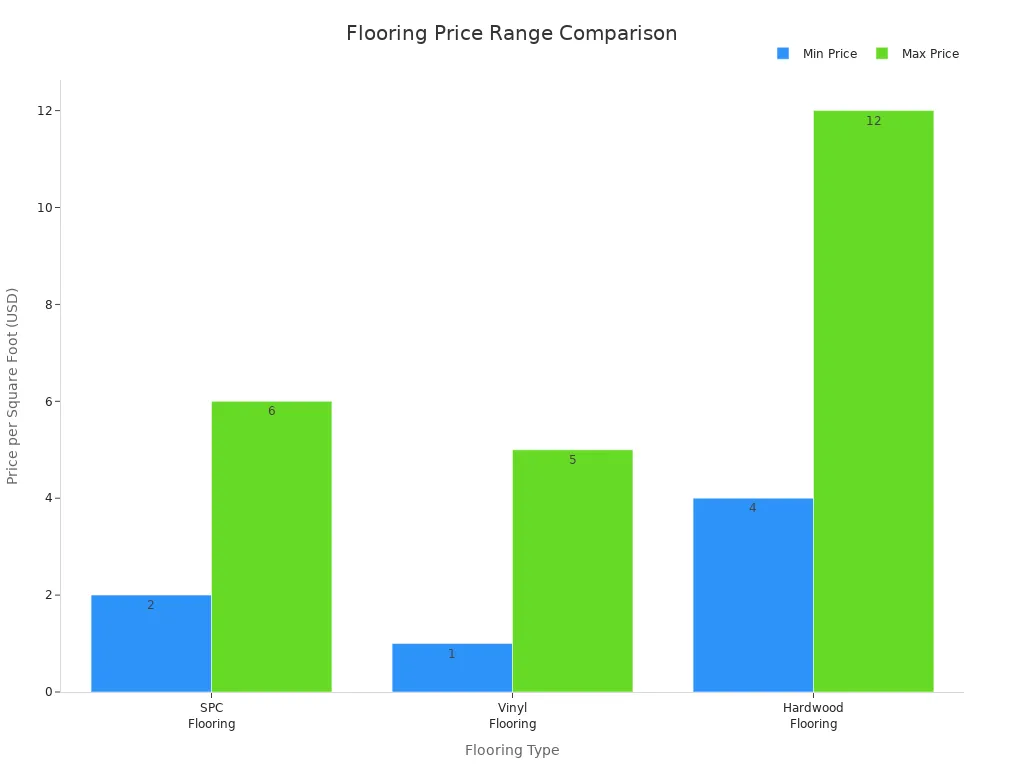
Sound can travel through spc more than through softer floors. This may be a concern in apartments or multi-story homes. The cost of spc flooring is higher than standard vinyl but less than hardwood. See the price comparison below:
| Flooring Type | Price Range (per square foot) | Comparison to SPC Flooring |
|---|---|---|
| SPC Flooring | $2 to $6 | More expensive than standard vinyl, less than hardwood |
| Vinyl Flooring | $1 to $5 | Generally more affordable than SPC, but high-end options can be close in price |
| Hardwood Flooring | $4 to $12+ | Usually more expensive than SPC, especially solid hardwood |
You may also find that removing or replacing spc can be difficult. Professional help is often needed. Some people worry about the use of PVC in spc, but most modern products are low in VOCs and safe for indoor use.
Note: Weigh the benefits of stone plastic flooring against the downsides of stone plastic flooring to decide if it fits your needs.
You want a floor that lasts, looks great, and needs little care. Stone plastic composite flooring gives you these benefits. Use this table to help decide if spc fits your needs:
| Factor | Description |
|---|---|
| Durability | Handles heavy foot traffic and daily wear. |
| Low Maintenance | Needs only simple cleaning to stay strong. |
| Thickness & Stability | Thicker planks offer better performance and longer life. |
| Waterproof | Resists spills and moisture in any room. |
| Design and Aesthetics | Comes in many styles to match your space. |
- Superior durability for busy spaces
- Enhanced stability in changing temperatures
- Better sound absorption for quiet rooms
- Eco-friendly and stylish options
Choose spc flooring for a smart, modern solution in 2025.
FAQ
What makes SPC flooring different from regular vinyl flooring?
SPC flooring uses a stone and plastic core. This core makes it stronger and more stable than regular vinyl. You get better water resistance and durability. SPC flooring also feels firmer under your feet.
Can you install SPC flooring over existing floors?
Yes, you can install SPC flooring over most existing floors. You need a clean, flat, and dry surface. The click-lock system makes installation easy. You do not need glue or nails.
Is SPC flooring safe for homes with pets and children?
SPC flooring is safe for families. It does not contain harmful chemicals like formaldehyde. The tough wear layer resists scratches from pets and stands up to spills from children.
How do you clean and maintain SPC flooring?
You can sweep or vacuum your SPC floor daily. Use a damp mop and mild cleaner for deeper cleaning. Avoid harsh chemicals and wax. Quick cleanup of spills keeps your floor looking new.
Does SPC flooring fade in sunlight?
SPC flooring has a UV coating that protects against fading. You can use it in rooms with lots of sunlight. For extra care, use curtains or blinds during peak sunlight hours.




