
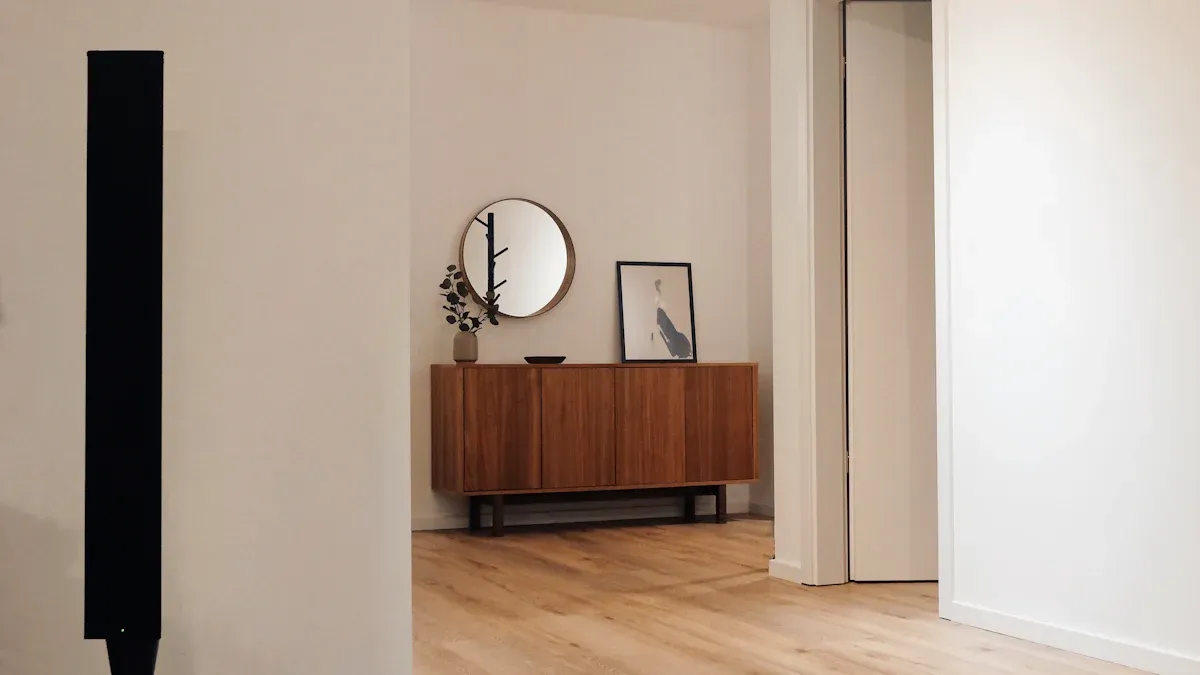
You face a big choice when comparing wpc vs spc vinyl flooring. WPC has a wood-plastic composite core. SPC uses a stone-plastic composite core. This change in material gives each flooring type a unique feel. You may notice that wpc feels softer underfoot. SPC offers a harder surface. Both options resist water well and work in many spaces. Your needs will help you decide which type fits best.
WPC vs SPC Core Composition
WPC Core Structure
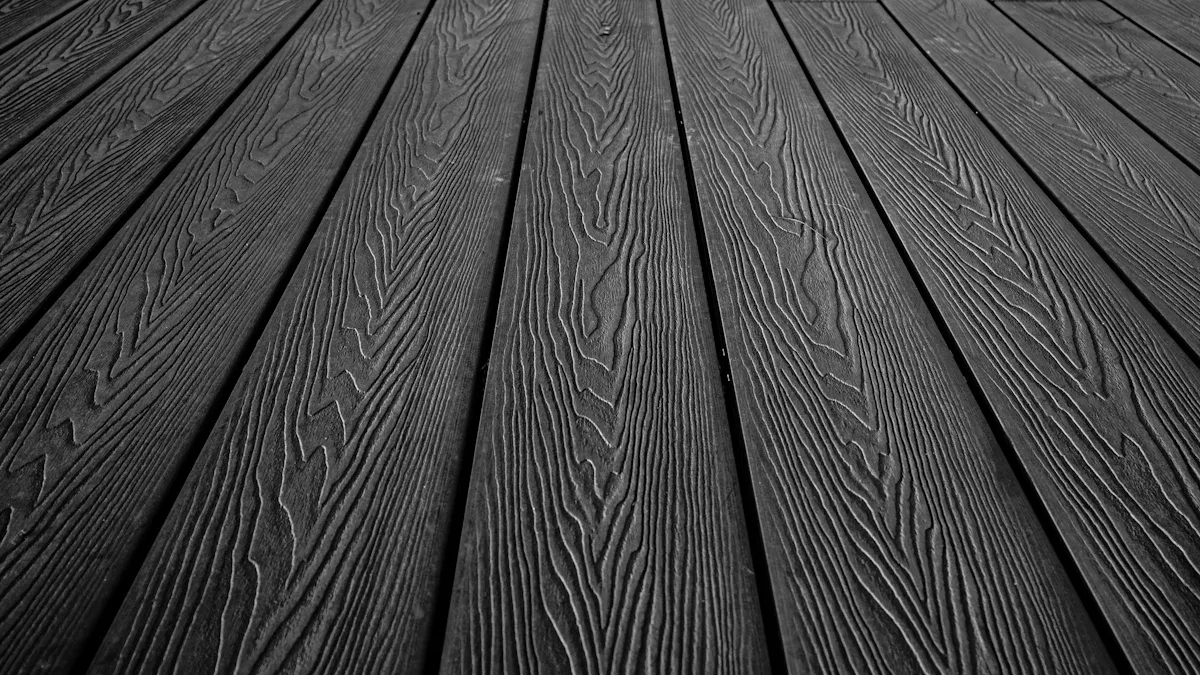
You will notice that wood plastic composite (WPC) flooring has a unique core. Manufacturers blend wood-like materials with plasticizers, polyvinyl chloride, calcium carbonate, and a foaming agent. This mix creates a lighter, less dense core. The foaming agent makes the flooring softer and more comfortable underfoot. You can walk on WPC luxury vinyl flooring and feel a cushion-like effect.
WPC flooring goes through several steps during production:
- Raw material processing
- Calendering or extrusion
- Lamination
- Finishing operations
Additives play a big role in WPC core performance. You will find lubricants, colorants, coupling agents, UV stabilizers, blowing agents, foaming agents, light stabilizers, pigments, and fungicides in the core. These additives improve durability, color, and resistance to sunlight and fungi. Recent advancements include stone powder and virgin plastics, which boost moisture resistance and stability. This makes WPC waterproof and suitable for kitchens or bathrooms.
SPC Core Structure
Stone plastic composite (SPC) flooring uses a mineral-based core. You get a dense and rigid structure because manufacturers use limestone (calcium carbonate) and PVC resin. The limestone gives SPC luxury vinyl flooring its strength and durability. The PVC resin adds flexibility, so the flooring resists cracking. SPC flooring is heavier and denser than WPC. You will notice that SPC is less likely to expand or contract with temperature changes.
SPC flooring absorbs and dampens impact sounds due to its dense structure. The core layer contains limestone powder and PVC resin, which help with sound insulation. You can use SPC in busy areas or commercial spaces where durability and stability matter most.
Core Materials and Construction Comparison
You can compare WPC vs SPC flooring by looking at their core materials and construction. The table below highlights the main differences:
| Feature | Wood-Plastic Composite (WPC) | Stone-Plastic Composite (SPC) |
|---|---|---|
| Core Composition | Contains wood-like materials and plasticizers | Mineral-based core (limestone, calcium carbonate) |
| Density | Lighter and less dense | Denser and heavier |
| Durability | Less durable, prone to indentation | More durable, higher indentation resistance |
| Comfort Underfoot | Softer feeling underfoot | Less comfortable due to direct attachment of design layer to core |
| Stability | Less stable due to lower density | More stable due to higher density |
| Recycled Content | Contains some percentage of recycled wood content | Composed mainly of minerals and plasticizers |
You will see that WPC flooring has a core thickness between 5.5 to 8 mm, while SPC flooring ranges from 3.2 to 7 mm. The higher density of SPC means better resistance to dents and scratches. WPC is less dense, so it feels softer and provides better sound insulation.
Thermal expansion rates also differ:
| Material | Thermal Expansion Rate |
|---|---|
| WPC | 0.10 mm/m/°C |
| SPC | 0.05 mm/m/°C |
SPC luxury vinyl flooring expands less with temperature changes, making it more stable in environments with fluctuating heat. WPC luxury flooring offers superior sound insulation, which is ideal for multi-level homes or apartments. Both WPC and SPC are waterproof, so you can use them in areas prone to spills.
Tip: If you want a softer, quieter floor for bedrooms or living rooms, choose WPC. If you need a tough, stable floor for kitchens, bathrooms, or commercial spaces, SPC is the better option.
WPC vs SPC Performance Differences
Comfort and Feel Underfoot
When you walk on luxury vinyl flooring, you notice the difference between wpc and spc right away. WPC flooring feels softer and warmer underfoot. This comfort comes from its foam-injected limestone core. You get a cushioned step that makes standing or walking for long periods much easier. Many homeowners choose wpc for bedrooms, living rooms, and other spaces where comfort matters most.
SPC flooring feels firmer and cooler. The dense stone-plastic composite core gives you a solid surface. You may hear more walking noise with spc, and the floor feels less forgiving if you stand for a long time. This makes spc less ideal for areas where you want a cozy, quiet feel.
| Feature | SPC Flooring | WPC Flooring |
|---|---|---|
| Comfort | Harder, cooler | Softer, warmer |
You can also see the difference in softness and warmth:
| Flooring Type | Softness | Warmth |
|---|---|---|
| WPC | Higher | Warmer |
| SPC | Lower | Colder |
- WPC flooring is praised for its comfortable underfoot feel and warmth, making it ideal for residential settings.
- Users describe spc flooring as feeling harder and colder underfoot, which may not be as comfortable for prolonged standing or walking.
- SPC flooring transmits more walking noise, which can be less desirable in quiet environments.
Note: If you want a quieter, softer, and warmer floor, wpc is the better choice for your home.
Durability and Impact Resistance
Durability is a key factor when you compare wpc vs spc. SPC flooring stands out for its strength. The dense core made from limestone and PVC gives spc excellent resistance to dents, scratches, and heavy impacts. In laboratory tests, high-quality spc flooring shows minimal dents or damage even when a heavy object drops on it. This makes spc a top pick for high-traffic areas, busy households, and commercial spaces.
WPC flooring, while still durable, has a softer core. You may notice more dents or scratches if you drop something heavy or move furniture across the floor. WPC is less resistant to static loads, so heavy furniture can leave marks over time. Warranty claims for spc flooring are lower because of its superior durability. WPC flooring has a higher risk of claims due to its softer core, but it still offers good performance for most homes.
- SPC flooring has superior resistance to dents, scratches, and static loads, leading to a lower claim rate for durability issues.
- WPC flooring, with its softer core, is more susceptible to dents and scratches, resulting in a higher risk of warranty claims.
- Impact resistance is crucial for determining the durability of spc flooring, especially in high-traffic areas.
Tip: Choose spc if you need a tough, long-lasting floor for kitchens, hallways, or commercial spaces. Pick wpc for areas with less foot traffic where comfort is more important than maximum durability.
Water Resistance and Stability
Both wpc and spc flooring are waterproof, but their performance in wet or humid conditions is not exactly the same. SPC flooring has a 24-hour water absorption expansion rate of 0%. This means spc does not swell or change shape when exposed to water. You can use spc in bathrooms, kitchens, or basements without worrying about water damage.
WPC flooring is also water resistant, with a water absorption rate of less than 2% according to ASTM D570. While this is very low, it is not as perfect as spc. WPC can handle spills and moisture, but it may expand slightly in very wet conditions.
Stability is another area where spc shines. The dense core made from natural limestone powder and PVC gives spc superior dimensional stability. You will see less expansion and contraction with temperature or humidity changes. WPC provides a comfortable walking experience, but it does not match the rigidity and density of spc. This can affect its performance in environments with high humidity or big temperature swings.
- WPC flooring has a water absorption rate of less than 2%.
- SPC flooring shows a 24-hour water absorption expansion rate of 0%, indicating excellent waterproof performance.
- SPC flooring demonstrates superior dimensional stability in humid conditions compared to wpc flooring.
Note: For areas with lots of moisture or temperature changes, spc luxury vinyl flooring gives you the best stability and waterproof protection.
Installation and Use Cases for WPC and SPC Flooring
Installation Methods
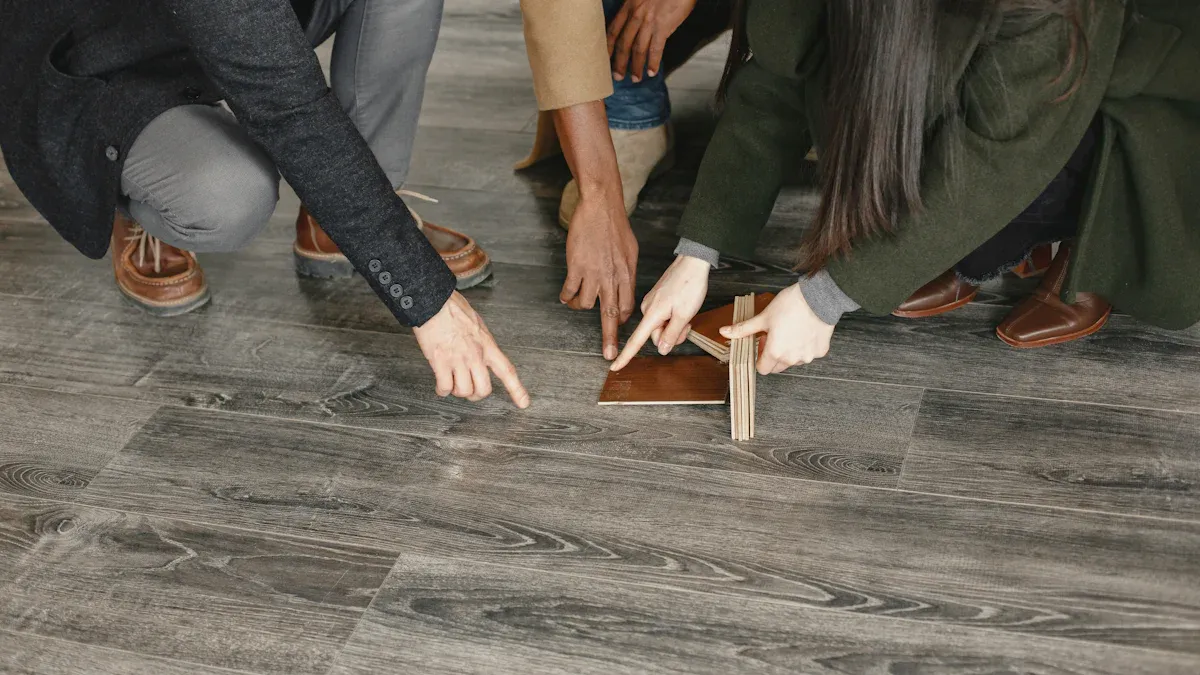
You will find that both wpc and spc flooring offer easy installation. These luxury vinyl options use a floating installation method. You do not need nails, glue, or fasteners. You can lay the planks over most existing floors. This saves you time and labor.
- You must start with a clean, dry, and level surface.
- Both wpc and spc flooring can be installed below grade, on grade, or above grade.
- You should mix planks from several cartons to get a natural color blend.
- Always check that your subfloor is flat within 3/16″ in 10′ or 1/8″ in 6′.
- For basements or crawl spaces, use a 6-mil moisture barrier to keep the area dry.
Tip: You do not need to remove your old floor if it is smooth and in good shape. This makes installation faster and easier.
Best Applications for WPC Flooring
Wpc flooring works well in many residential and commercial applications. You will see it often in bedrooms, kitchens, living rooms, and basements. Its soft, cushioned feel makes it a favorite for family homes. Wpc is also family-friendly, pet-proof, and moisture-resistant.
- Many people use wpc in multi-family housing, condos, and suburban homes.
- In commercial spaces, you will find wpc in offices, retail stores, and restaurants.
- Its waterproof nature and easy maintenance make it a smart choice for busy areas.
| Commercial Space | Why Choose WPC? |
|---|---|
| Offices | Durable, attractive, easy to clean |
| Retail Spaces | Handles high traffic, practical option |
| Restaurants | Water-resistant, simple upkeep |
Best Applications for SPC Flooring
Spc flooring stands out in tough environments. You can use it in high-traffic commercial settings because it resists scratches and dents. Its stone-plastic core gives it strength and stability.
- Spc is perfect for kitchens, bathrooms, and sunrooms.
- You can install spc in humid or high-temperature areas.
- It works well in both homes and businesses due to its waterproof and low-maintenance features.
| Environment Type | Why Use SPC? |
|---|---|
| High Temperature Areas | No warping or deformation |
| Humid Areas | Durable in moisture-rich spaces |
| Kitchens and Bathrooms | Handles moisture and temperature changes |
| Sunrooms | Withstands sunlight and weather shifts |
| Residential/Commercial | Versatile, easy to care for |
Note: If you want luxury vinyl flooring that is truly waterproof and tough, spc is your best pick for demanding applications.
WPC vs SPC Flooring Cost and Value
Price Comparison
When you compare the cost of luxury flooring, you notice a clear difference between wpc and spc. The price for spc flooring usually falls between $3.50 and $7 per square foot for materials. Wpc flooring costs more, ranging from $4 to $12 per square foot. You can see the price ranges in the table below:
| Type | Cost per Sq.Ft. (Materials Only) |
|---|---|
| SPC | $3.50 – $7 |
| WPC | $4 – $12 |
You also need to think about installation costs. Both spc and wpc flooring have similar installation prices. Most installers charge about $4.50 to $5.00 per square foot. If you want to cover a 10’x10’ room, you will likely pay between $500 and $600 for labor. Wpc flooring often costs more overall because of higher production expenses and materials.
Tip: If you want to save money on your luxury vinyl project, spc flooring gives you a lower starting price.
Long-term Value
You want your new luxury flooring to last. Both spc and wpc flooring offer long lifespans. Most manufacturer warranties show that spc flooring lasts 20 to 30 years. Some high-end spc products can even reach 40 years. Wpc flooring also lasts 20 to 30 years, with some premium options matching the 40-year mark if you care for them well.
Maintenance costs can add up over time. Spc flooring needs less upkeep. You spend about $0.05 per square foot each year on maintenance. Wpc flooring can cost $0.15 or more per square foot every year. This happens because wpc may need more repairs from wear or water damage. Over ten years, you save more with spc flooring because it is more durable and waterproof.
- SPC flooring offers a lower total cost of ownership.
- WPC flooring gives you comfort but may cost more to maintain.
Note: If you want a luxury floor that is tough, waterproof, and budget-friendly over time, spc flooring stands out as a smart choice.
WPC vs SPC Pros and Cons Summary Table
When you compare WPC and SPC flooring, you see that each type offers unique benefits and drawbacks. You can use the table below to understand the most important features. This summary helps you decide which flooring fits your needs best.
| Feature | SPC Flooring | WPC Flooring |
|---|---|---|
| Advantages | ||
| Durability | Highly durable, ideal for heavy foot traffic | Excellent water resistance |
| Waterproof | Suitable for moisture-prone areas | Highly water-resistant |
| Stability | Exceptional stability with stone composite core | Comfort underfoot due to softer feel |
| Installation | Easy click-lock installation | Versatile installation over uneven subfloors |
| Design Options | Wide variety of designs | |
| Disadvantages | ||
| Hardness | Can feel hard underfoot | Vulnerable to temperature changes |
| Environmental Impact | Contains PVC, limited eco-friendliness | Contains synthetic materials, limited eco-friendliness |
You notice that SPC flooring stands out for its strength and stability. You can install it in busy areas like hallways or commercial spaces. The stone composite core resists dents and scratches. You get a wide range of design choices, so you can match your style easily. However, SPC feels harder underfoot, which may not suit every room.
WPC flooring gives you a softer, more comfortable surface. You enjoy better sound insulation, which makes it perfect for bedrooms and living rooms. You can install WPC over uneven subfloors, making it flexible for older homes. Still, WPC may react to temperature changes, and it uses synthetic materials.
Consumer reviews highlight these points:
- WPC Flooring: You prefer this option for comfort and quiet. Many homeowners choose WPC for its luxury feel and attractive look.
- SPC Flooring: You value SPC for its toughness and lower price. People often pick SPC for high-traffic areas and commercial settings.
Tip: If you want a cozy, quiet floor, WPC works well. If you need a strong, budget-friendly surface, SPC is the smart choice.
When you compare wpc vs spc, you see clear differences in comfort, durability, and best use cases. The table below highlights important factors:
| Factor | WPC Flooring | SPC Flooring |
|---|---|---|
| Environment | Best for controlled indoor settings | Superior in challenging environments |
| Traffic Levels | Moderate-traffic residential spaces | High-traffic commercial environments |
| Installation | Careful subfloor preparation | Installs over imperfect subfloors |
| Budget | Higher investment, more comfort | More economical, tough for business |
You can make the right decision by thinking about your needs:
- For busy homes with kids or pets, choose SPC for toughness or WPC for comfort.
- For kitchens or bathrooms, SPC works best in wet areas.
- For bedrooms or quiet spaces, WPC gives you warmth and sound insulation.
- For entryways or commercial spaces, SPC stands up to heavy use.
FAQ
What is the main difference between wood plastic composite and stone plastic composite flooring?
You will notice that wood plastic composite uses a foamed core with wood-like materials, while stone plastic composite has a dense limestone core. This side-by-side comparison shows that each type of rigid core vinyl flooring offers unique benefits for different applications.
Can I use luxury vinyl flooring in wet areas like bathrooms?
Yes, you can use luxury vinyl flooring in bathrooms and kitchens. Both types offer waterproof capabilities. You get strong waterproofing and water resistant features, which help protect your floor from spills and moisture.
How easy is the installation process for WPC and SPC flooring?
You will find installation simple with both WPC and SPC flooring. Most products use a click-lock system. You can install them over many subfloors. This makes the process fast and easy for most homeowners.
How do I choose between WPC and SPC for my home?
You should think about your needs and the room’s use. If you want comfort and luxury, choose WPC. For high-traffic or wet areas, SPC works best. Making the right decision depends on your lifestyle and where you plan to install the flooring. Explore our spc and wpc flooring options to find the best fit.




