
You can easily give your vinyl flooring a fresh look with a few simple steps. Studies show that refurbishing worn-out vinyl saves you money and time. Many places have seen great results:
- Biddle Sport finished a deep clean and refurbishment in five days for half the cost of new flooring.
- Oslo National Museum renewed damaged vinyl and prevented 30 tons of CO2 emissions.
- Havasu Regional Medical Center cut renovation time and costs by using modern systems.
- Sunnyside Unified School District saved over $40,000 with a durable and cohesive update.
If you want to know how to refurbish vinyl flooring, start with a deep clean and follow proven methods for lasting results.
Why Does Vinyl Flooring Become Dull?
Common Causes of Dull Vinyl Flooring
You may notice your vinyl floors lose their shine over time. Several factors can cause dull vinyl flooring in your home or business. Here are the most common reasons:
- Dirt and grime build up on the surface, making the floor look cloudy.
- Cleaning products sometimes leave a sticky residue that dulls the finish.
- Scratches and scuffs from shoes, furniture, or pets can reduce shine.
- Skipping regular maintenance allows dust and debris to collect.
- Sun exposure fades the color and makes the surface look tired.
Tip: Always use the right cleaning products for vinyl to avoid residue and keep your floors looking bright.
Environmental factors also play a big role in dull vinyl flooring.
- Sunlight can fade the color and break down the protective layer.
- Chemical spills may stain or dull the surface.
- Moisture can create dark spots if you do not clean it up quickly.
You can see that dull vinyl flooring often results from a mix of daily habits and environmental effects. If you want to keep your floors looking new, you need to pay attention to these causes.
Everyday Wear and Tear
Every day, your vinyl flooring faces many challenges. The wear layer protects against scratches, scuffs, and stains. When this layer wears down, dull vinyl flooring becomes more noticeable. High foot traffic, moving furniture, and pet claws all speed up this process.
- Fine dirt and grit can scratch the surface, making it look less shiny.
- Using harsh cleaners can strip away the protective layer, leaving a haze.
- In busy areas, the flooring may lose its sheen faster.
Luxury vinyl flooring has extra layers to handle more foot traffic, but even these floors can become dull without proper care. If you want to avoid dull vinyl flooring, clean regularly and use gentle products. Protect your floors from direct sunlight and heavy impacts to keep them looking their best.
How to Refurbish Vinyl Flooring: Step-by-Step Cleaning

Learning how to refurbish vinyl flooring starts with a deep and careful cleaning routine. You can bring back the shine and extend the life of your floors by following these simple steps.
Sweeping and Vacuuming
You should always begin by removing loose dirt and dust. Sweeping and vacuuming are the first steps in how to refurbish vinyl flooring. Use a soft-bristle broom for quick clean-ups of visible debris. For a deeper clean, use a vacuum without a beater bar. This method removes fine particles and allergens that sweeping might miss.
| Area Type | Frequency | Reason |
|---|---|---|
| General Areas | Once a week | Keeps floors looking great |
| High-Traffic Areas | Twice a week | Prevents dirt buildup |
| Homes with Pets/Allergies | Two to three times a week | Reduces pet hair and allergens |
You should sweep or vacuum daily in busy areas to prevent micro-scratches. Always reach under furniture and along baseboards. Avoid vacuums with stiff brush rolls, as they can scratch the surface.
Tip: Vacuuming is more effective than sweeping for deep cleaning and removing fine dust.
Mopping with the Right Solution
After you remove loose dirt, you need to mop the floor. Choosing the right cleaner is important when learning how to refurbish vinyl flooring. Always use a mild cleaning solution or a pH-neutral cleaner. Harsh chemicals like bleach or ammonia can damage the floor and cause fading.
Some recommended cleaners for vinyl flooring include:
| Cleaner Name | Features |
|---|---|
| Basic Coatings Squeaky Cleaner | Cuts through dirt, dries quickly, no residue |
| COREtec Encore 12x Clean Spray | pH neutral, low-VOC, rapid dry time |
| Bona Pro Stone, Tile & Laminate | Low-VOC, quick-drying, GREENGUARD certified |
To mop your floor, follow these steps:
- Vacuum or sweep to remove surface dirt.
- Spray the cleaner on the floor or use a damp microfiber mop.
- Wipe the floor, making sure not to soak it with water.
- Dry the floor with a clean towel to prevent water spots.
Note: Avoid steam mops and excessive water. Too much moisture can loosen the adhesive and damage the subfloor.
Using a mild cleaning solution helps protect the finish and keeps your vinyl looking new. Always rinse the floor after mopping to remove any leftover cleaner.
Tackling Tough Stains
Sometimes, regular cleaning is not enough. You may find stains that need special attention. Knowing how to refurbish vinyl flooring means you must handle tough stains the right way.
Here are some proven methods for removing stubborn marks:
- Mix mild detergent with warm water, apply with a cloth, rinse, and dry.
- For acidic stains like wine or juice, make a baking soda paste with water. Apply it to the stain, scrub gently, rinse, and dry.
- Use a solution of equal parts white vinegar and water for general stains. Spray, wipe, rinse, and dry.
- For ink or makeup stains, dab with rubbing alcohol mixed with warm water and detergent, then wipe and dry.
- To remove scuff marks, spray WD-40 on the spot, rub gently, then clean with soapy water.
- For tough marks, use acetone-based nail polish remover. Dab the stain, clean with detergent, rinse, and dry.
| Product/Method | Use Case |
|---|---|
| Baking soda paste | Acidic stains like wine or juice |
| Rubbing alcohol | Ink, paint, or lipstick stains |
| Commercial vinyl floor cleaner | General tough stains |
| Isopropyl alcohol | Grease or dye stains |
| White vinegar and water | Everyday stains |
“Harsh cleaning solutions will break down the floor’s sealant over time, putting the floor at greater risk for scratching and allowing spots to sink below the surface where they can cause permanent discoloration.”
Always test any cleaner on a small, hidden area first. Avoid abrasive tools and harsh chemicals. These can scratch or dull your vinyl flooring.
By following these steps, you will master how to refurbish vinyl flooring and keep your floors looking their best.
Removing Stains and Scuffs from Dull Vinyl Flooring
Spot Cleaning Techniques
You can tackle stains on vinyl flooring with the right spot cleaning methods. Each type of stain needs a specific approach. If you see food or beverage spills, grab a damp microfiber cloth and mild soap. For light stains, mix dish soap with warm water, spray the area, scrub gently, rinse, and dry. Stubborn stains respond well to a paste made from baking soda and water. Apply the paste, let it sit, scrub gently, rinse, and dry.
Here is a quick guide for different stains:
| Stain Type | Recommended Technique |
|---|---|
| Food and Beverage | Wipe with a damp microfiber cloth and mild soap |
| Light Stains | Mix dish soap with warm water, spray, scrub gently, rinse, and dry |
| Stubborn Stains | Make a paste of baking soda and water, apply, let sit, scrub gently, rinse, and dry |
| Ink and Permanent Marker | Dab with rubbing alcohol on a cotton ball, rinse with water after treatment |
| Organic Stains (pet stains) | Soak a cloth with 3% hydrogen peroxide, place over the stain, check progress, rinse |
| Grease | Mix vinegar with warm water and dish soap, scrub, rinse, and dry |
Professional cleaning services often use pH-neutral and eco-friendly products to protect your vinyl. You can also use commercial cleaners like Bona Vinyl Floor Cleaner, which is safe for children and pets. For tough stains, rubbing alcohol works well, especially on ink or grease.
Tip: Always test any cleaner on a small hidden spot before using it on the whole stain.
Dealing with Scuff Marks
Scuff marks can make your vinyl flooring look dull and worn. You can remove light scuffs by dabbing jojoba oil on a soft cloth and rubbing gently. Clean the area afterward with a vinegar and water solution. For tougher scuff marks, use WD-40 on a towel and rub until the marks disappear. Magic erasers also work well for stubborn scuffs.
Here is a table showing how different scuff marks respond to cleaning:
| Type of Scuff Mark | Cleaning Technique | Additional Notes |
|---|---|---|
| Light Scuff Marks | Jojoba Oil | Dab on a soft cloth, rub gently, then clean with vinegar and water |
| Tougher Scuff Marks | WD-40 | Apply on a towel, rub until marks disappear, or use jojoba oil |
You should avoid abrasive pads, which can scratch the surface. If you use gentle products and soft cloths, you keep your vinyl flooring looking fresh and free of marks.
Restoring Shine and Repairing Minor Damage
Applying a Vinyl Floor Restorer
You can restore shine to your vinyl flooring by using a vinyl floor restorer. This product works well for floors that look dull or have light scratches. Start by cleaning the floor with a cleaner made for vinyl. This step removes dirt and grime, which helps the restorer work better. Next, apply a high gloss polish or vinyl flooring wax. These products fill in small scratches and give your floor a smooth, shiny look.
Here are some benefits of using a vinyl floor restorer:
| Benefit | Description |
|---|---|
| Versatility | Works on many floor types, including vinyl, hardwood, and laminate. |
| Non-toxic formula | Safe for your home and family. |
| Easy application | You only need a microfiber mop or cloth. |
| Durable finish | Leaves your floor shiny and helps it last longer. |
| No sanding or sealing needed | You do not need heavy tools or messy steps. |
A vinyl floor restorer can help you restore shine quickly. You do not need special skills or tools. The liquid bonds to the floor, fills in scratches, and dries to a glossy finish.
Buffing for Extra Gloss
Buffing is another way to restore shine and make your vinyl floor look new. You should avoid using buffing machines because they can damage vinyl. Instead, use a soft microfiber cloth or mop. Apply a product like Bona Hard Surface Floor Polish or Quickshine. These products add extra gloss and protect the surface.
You can also make a homemade polish. Mix 4 tablespoons of baking soda with 3 liters of warm water. Mop the floor with this solution to restore shine. For even more gloss, use a liquid acrylic finish. Apply it with a mop and let it dry.
Tip: Always let the floor dry completely before walking on it. This step helps you keep the shine longer.
Repairing Small Scratches and Tears
Small scratches and tears can make your floor look old. You can fix these problems at home. First, clean and dry the damaged area. Next, apply a concealer or filler that matches your floor color. Use a soft cloth to remove extra product. Gently buff the area and let it dry.
For deeper scratches, use a vinyl repair kit. These kits include paint and filler. Follow these steps:
- Clean the area and let it dry.
- Buff the scratch with a scouring pad.
- Apply paste wax or concealer.
- Remove extra wax and buff again.
- Let the area set for an hour, then check your work.
When you repair small damage and restore shine, your vinyl floor will look fresh and last longer.
Maintenance Tips to Prevent Dull Vinyl Flooring
Regular Cleaning Habits
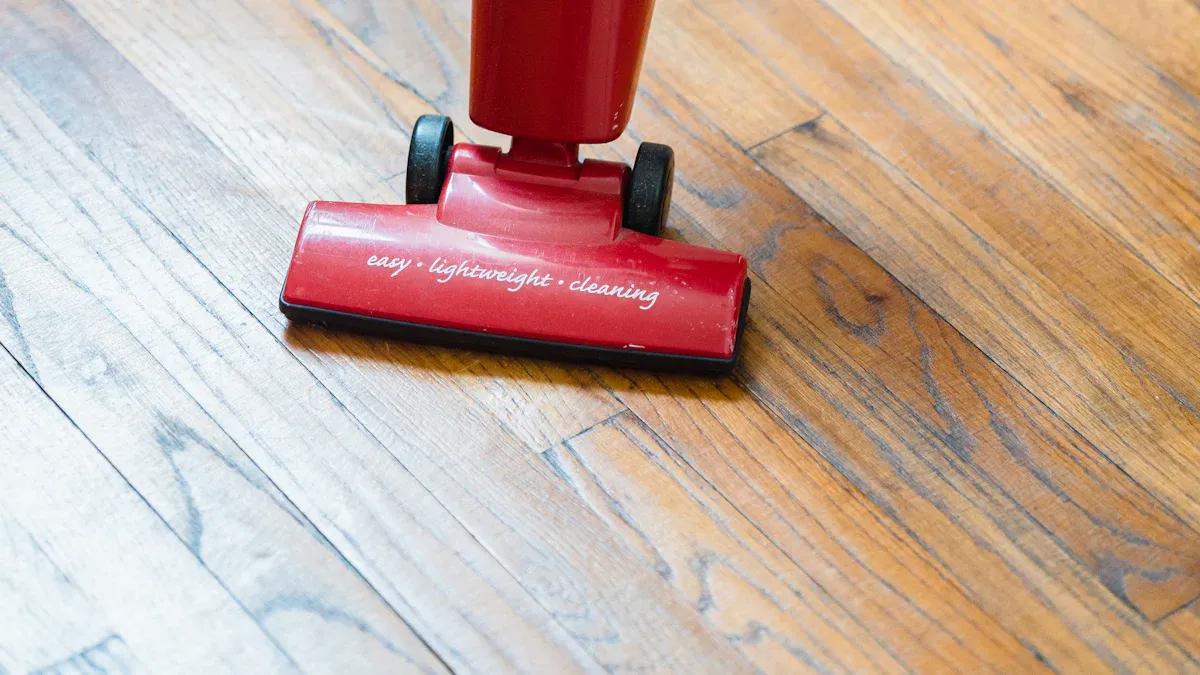
You can keep your vinyl floors looking bright with regular cleaning. Dirt and grit scratch the surface and make floors dull. Sweep with a soft-bristle broom every day. Vacuum with a hard floor setting to avoid damage. Wipe up spills right away using a damp cloth or mop. Weekly damp mopping removes grime and keeps the finish shiny. Use a pH-neutral cleaner designed for luxury vinyl flooring. These habits help prevent stains and extend the life of your floors.
Maintenance plays a huge role. Simple habits—like sweeping regularly, wiping spills immediately, and avoiding harsh cleaners—can add years to your vinyl’s life.
Protective Measures
You can protect vinyl floors from scratches and dents by using smart strategies. Place floor mats at doorways to trap dirt before it reaches your floors. Always lift furniture instead of dragging it. Use protective pads under furniture legs to prevent marks. Close curtains or blinds during peak sunlight hours to stop fading. These steps help you avoid damage and keep your floors looking new.
| Protective Measure | Benefit |
|---|---|
| Floor mats at entrances | Traps dirt and grit |
| Furniture pads | Prevents scratches and dents |
| Lifting furniture | Avoids surface damage |
| Closing curtains/blinds | Reduces fading from sunlight |
What to Avoid
You should avoid harsh chemicals and abrasive tools when cleaning vinyl floors. Bleach, ammonia, and strong detergents can break down the finish. Steam mops and soaking with water may loosen the adhesive and harm the subfloor. Never use abrasive pads or steel wool, which scratch the surface. Clean spills with a damp cloth and mild detergent instead. Apply 2-3 coats of floor-restoring polish only when needed to restore gloss.
Tip: Regular maintenance and cleaning help you prevent dullness and damage before it starts.
You can revive your vinyl flooring with a few easy steps. Clean your floors well, remove stains quickly, and use a restorer to bring back the shine. Keep up with regular care to protect your floors from damage.
- Deep cleaning keeps your floors bright.
- Spot cleaning removes tough stains.
- Floor polish restores shine.
Consistent care helps your vinyl flooring look fresh and new for years.
FAQ
How often should you deep clean vinyl flooring?
You should deep clean vinyl flooring every month. Regular cleaning removes dirt and prevents scratches. This habit keeps your floors looking shiny and new. You can use a pH-neutral cleaner for best results.
Can you use a steam mop on vinyl flooring?
You should avoid using a steam mop on vinyl flooring. Steam can damage the adhesive and cause the floor to warp. Use a damp microfiber mop instead. This method protects the finish and extends the life of your floor.
What is the best way to remove scuff marks from vinyl floors?
You can remove scuff marks by rubbing the area with a soft cloth and a small amount of WD-40. Wipe the spot with soapy water afterward. Magic erasers also work well for stubborn marks.
How do you fix small scratches in vinyl flooring?
You can fix small scratches by cleaning the area and applying a vinyl repair kit or concealer. Buff the spot gently with a soft cloth. This process helps hide damage and restores the floor’s appearance.
What are the top vinyl care tips for long-lasting floors?
You should sweep daily, mop weekly, and use mats at entrances. Lift furniture instead of dragging it. Avoid harsh chemicals and abrasive tools. These vinyl care tips help you keep your floors bright and damage-free.




