
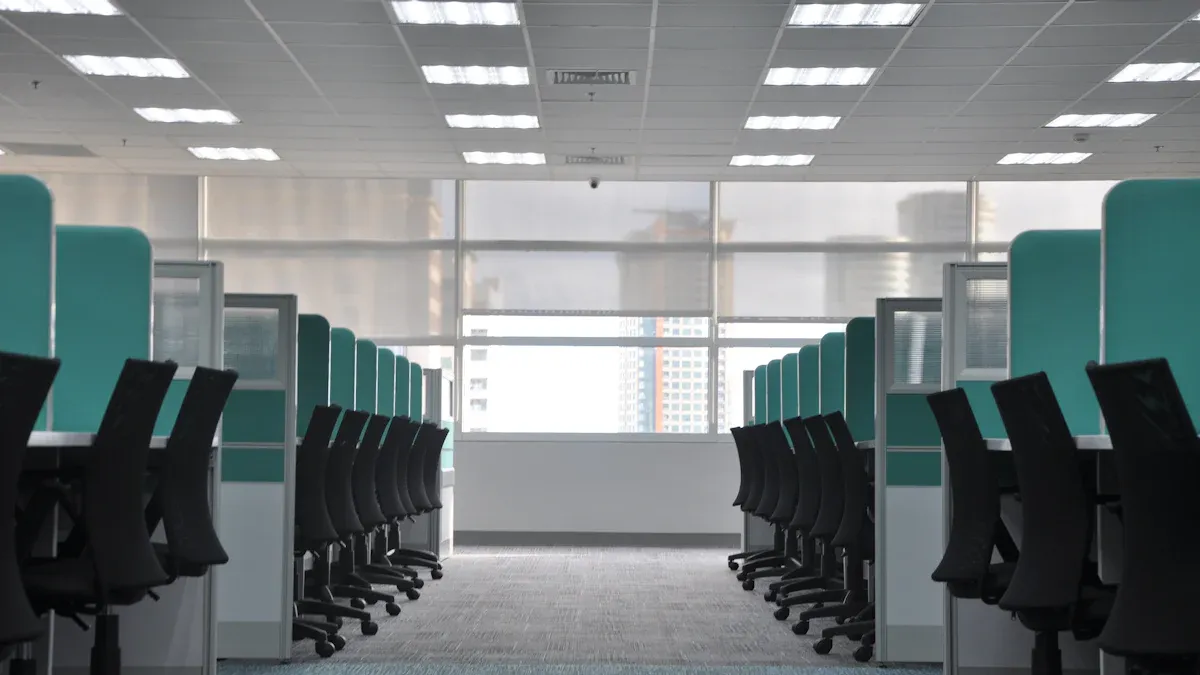
You want the best flooring option for your business—one that stands up to daily wear, looks appealing, and fits your budget. Commercial sheet vinyl often wins for most businesses because it combines durability, design versatility, and easy maintenance. Advances in digital printing and eco-friendly materials give you the look of natural flooring without the high cost. When you choose commercial flooring, focus on durability, maintenance, cost, aesthetics, and how well the flooring options suit your business environment.
Key Decision Factors in Commercial Flooring
Durability
When you choose commercial flooring, durability should be one of your top priorities. In high-traffic areas, you need a surface that can handle constant foot traffic, rolling carts, and heavy equipment. Durable flooring helps you avoid frequent repairs and replacements, which saves money over time. Experts say that durability affects the lifetime cost of your flooring because it impacts how often you need to maintain or replace it. For example, wear resistance, impact resistance, and stain resistance all play a role in how long your flooring will last.
Over 65% of architecture firms in North America reported increased demand for resilient flooring materials like vinyl in commercial interiors in 2023. This trend shows that businesses want flooring that stands up to daily use and keeps looking good in high-traffic environments.
| Durability Criterion | Definition | Testing Method | Impact on Long-Term Performance |
|---|---|---|---|
| Wear Resistance | Ability to resist surface wear | Abrading surface with sandpaper | Shows how flooring handles foot traffic |
| Impact Resistance | Resistance to dents or fractures | Ball impact tests | Measures ability to withstand dropped objects |
| Stain Resistance | Resistance to discoloration | Exposure to chemicals | Ensures flooring stays clean and attractive |
Maintenance
You want commercial flooring that is easy to clean and maintain, especially in high-traffic areas. Simple maintenance routines help you save time and reduce labor costs. Many businesses choose sheet vinyl because it resists stains and does not need special cleaning products. In healthcare and education, easy-to-maintain flooring is critical for hygiene and safety.
Environmental regulations and sustainability pressures are pushing manufacturers to create flooring that is both easy to maintain and eco-friendly. This means you can find options that support both your cleaning needs and your sustainability goals.
Cost
Cost is more than just the price you pay at the start. You need to think about both upfront costs and the lifetime cost of your flooring. Life Cycle Cost Analysis (LCCA) helps you compare the total cost over the life of the floor, including installation, maintenance, repairs, and replacement. Studies show that initial purchase price often makes up less than one-third of the total lifetime cost. For example, sheet vinyl may have lower upfront costs, but more durable flooring like tile can have a lower lifetime cost because it lasts longer and needs less maintenance.
Tip: Always balance upfront costs with expected maintenance and replacement expenses to get the best value for your business.
Aesthetics
You want your business to make a great first impression. The look of your flooring plays a big role in how customers feel when they walk in. Clean, attractive floors show that you care about your space and your brand. Many businesses use commercial flooring to create a welcoming atmosphere and support their brand image.
- Clean, well-maintained carpets make customers feel welcome.
- Research shows 92% of customers notice the cleanliness of a business, so flooring matters.
- Spotless carpets show professionalism and attention to detail.
- Poor flooring can make customers worry about hygiene.
- Regular carpet care builds trust and loyalty.
Hardwood flooring can also help your brand. For example, Starbucks uses dark wood floors to create a cozy feeling. Apple stores use hardwood to look modern and clean. These choices help customers remember the brand and feel comfortable. In hospitals, designers now use flooring that looks more like home. This helps patients and visitors feel relaxed and safe. You can use flooring to match your business style and make people want to return.
Tip: Choose flooring colors and patterns that fit your brand and make your space feel inviting.
Suitability for Business Environments
You need flooring that fits your business needs. Different types of commercial flooring work better in certain places. Vinyl flooring is strong and resists water, so it works well in areas that get wet. Laminate flooring looks nice but does not handle water as well. Tile flooring is tough and easy to clean, making it good for busy places. Carpet flooring feels soft and helps with noise, so it works in offices or hotels.
Research shows that wood-based flooring can be strong and good for the environment. Tests measure how well these floors hold up over time. Some businesses choose wood flooring because it helps people feel calm and happy. Moisture testing is also important. If you put flooring on a wet surface, it might not last. Experts use special tools to check for moisture before installing new floors. This helps your flooring last longer and perform better.
| Flooring Type | Best For | Key Benefit |
|---|---|---|
| Vinyl | Wet, busy areas | Water resistance |
| Laminate | Offices, retail | Looks like wood |
| Tile | Hospitals, kitchens | Easy to clean |
| Carpet | Offices, hotels | Comfort, quiet |
| Hardwood | Cafes, retail, offices | Warm, elegant look |
Note: Always match your flooring choice to your business needs and the space where you will use it.
Commercial Sheet Vinyl vs. Other Commercial Flooring Options
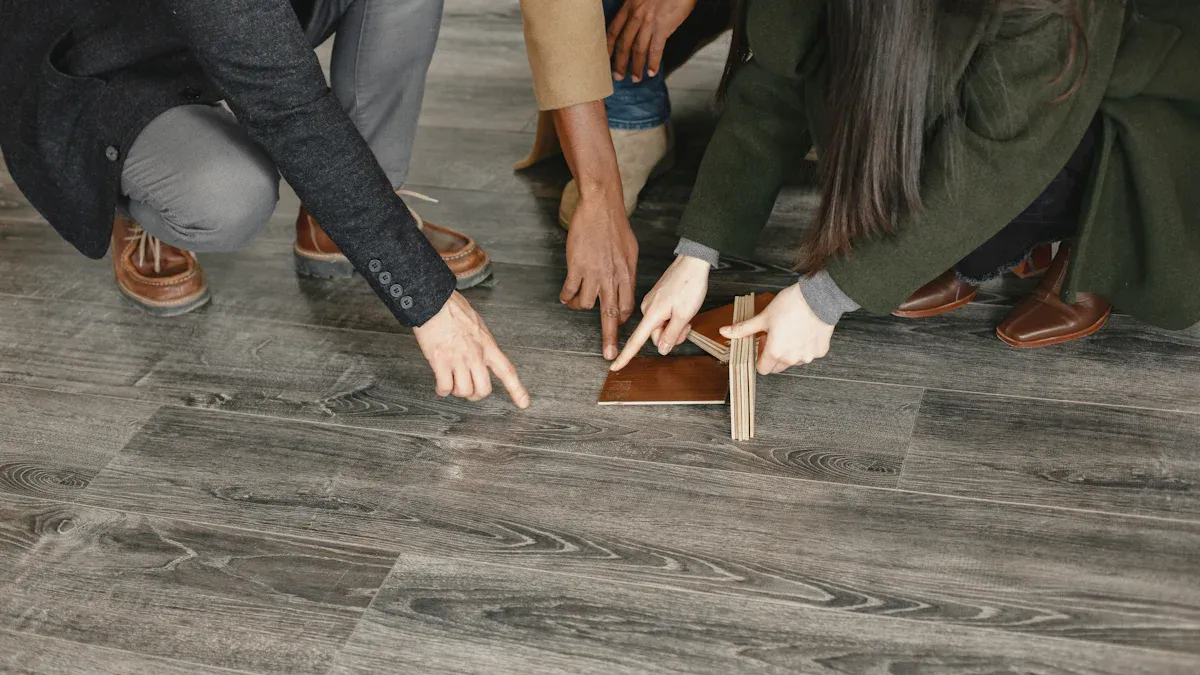
Commercial Sheet Vinyl vs. Luxury Vinyl Tile (LVT)
When you compare commercial sheet vinyl to luxury vinyl tile (LVT), you see both share strong water resistance and easy cleaning. However, each has unique strengths that may fit your business needs better.
- Vinyl sheet flooring gives you a seamless surface. This makes it a top choice for spaces where spills happen often, like healthcare or food service. You can clean it quickly, and germs have fewer places to hide.
- Luxury vinyl tile stands out for its scratch resistance. If you expect heavy foot traffic or moving furniture, LVT can handle it well. You can replace single tiles if they get damaged, which saves time and money.
- Sheet vinyl usually costs less per square foot. However, you often need a professional to install it because cutting and fitting large rolls takes skill.
- LVT costs more upfront, but you can install it yourself if you have some experience. This can lower your total project cost.
- Both options last a long time. Sheet vinyl often lasts up to 25 years in commercial settings. LVT can last even longer, with some warranties reaching 50 years.
Here is a quick comparison:
| Feature | Commercial Sheet Vinyl | Luxury Vinyl Tile (LVT) |
|---|---|---|
| Durability | Durable, but scratches are hard to fix | Scratch-resistant, easy to replace damaged tiles |
| Water Resistance | Waterproof, seamless | Waterproof, but has seams |
| Installation | Professional, glue-down, complex | Easier, click-lock or glue-down, DIY possible |
| Warranty | Up to 25 years | Up to 50 years |
| Cost | Lower per square foot, higher labor | Higher per square foot, lower labor if DIY |
| Lifespan | About 25 years | Can be longer with proper care |
Tip: Choose vinyl sheet flooring for seamless protection in wet or messy areas. Pick luxury vinyl flooring if you want easy repairs and more design choices.
Commercial Sheet Vinyl vs. Laminate Flooring
You may wonder how vinyl sheet flooring compares to laminate flooring. Both offer attractive looks, but their performance differs in key ways.
- Vinyl sheet flooring resists water and stains. You can use it in kitchens, bathrooms, or medical spaces without worry.
- Laminate flooring looks like wood, but water can damage it. If you spill something, you need to clean it up fast to avoid swelling or warping.
- Vinyl sheet flooring lasts longer in tough environments. Some users report it lasting up to 50 years, even with heavy use like wheelchairs.
- Laminate flooring works well in offices or retail spaces with less risk of spills. It costs less than hardwood but does not match the durability of commercial vinyl flooring.
- Installing vinyl sheet flooring takes skill. You need to heat-weld seams for a smooth finish. Laminate flooring uses a click-lock system, so you can install it yourself if you follow the instructions.
| Flooring Type | Material Cost per sq ft | Installation Difficulty | Maintenance Difficulty | Durability and Notes |
|---|---|---|---|---|
| Vinyl Sheet Flooring | $1 to $2 | High | Medium to High | Seamless, water-resistant, durable, but hard to repair; used in medical and high-traffic settings. |
| Laminate Flooring | $1 to $3 | Low | Low | Easy to install, looks like wood, but not water-resistant; best for dry, low-traffic areas. |
Note: If you expect spills or need a floor that lasts under heavy use, vinyl sheet flooring is a better option. Laminate works best in dry, low-traffic spaces.
Commercial Sheet Vinyl vs. Tile Flooring
Tile flooring is another popular choice among commercial flooring options. You might see it in hospitals, kitchens, or schools. How does it compare to vinyl sheet flooring?
-
Vinyl sheet flooring needs less maintenance. You do not have to strip, wax, or polish it like you do with vinyl composition tile (VCT).
-
Tile flooring, especially VCT, starts out cheaper. However, the cost of regular maintenance adds up over time.
-
If you damage vinyl sheet flooring, you often need to replace a whole section. With tile, you can swap out single tiles, but you may see seams or color differences.
-
Inlaid vinyl tiles have extra wear layers. These tiles last longer and keep their color, making them good for busy places like malls or hospitals.
-
Both vinyl sheet flooring and tile flooring now come with advanced coatings. These coatings fight stains, germs, and fading, which helps your floors look better for longer.
-
Vinyl sheet flooring gives you a smooth, seamless look. This helps prevent dirt and germs from hiding in cracks.
-
Tile flooring offers more design patterns. You can create custom looks, but you may need to clean grout lines more often.
Tip: Use vinyl sheet flooring if you want easy cleaning and fewer maintenance tasks. Choose tile flooring if you want more design options and do not mind extra upkeep.
Commercial Sheet Vinyl vs. Carpet Flooring
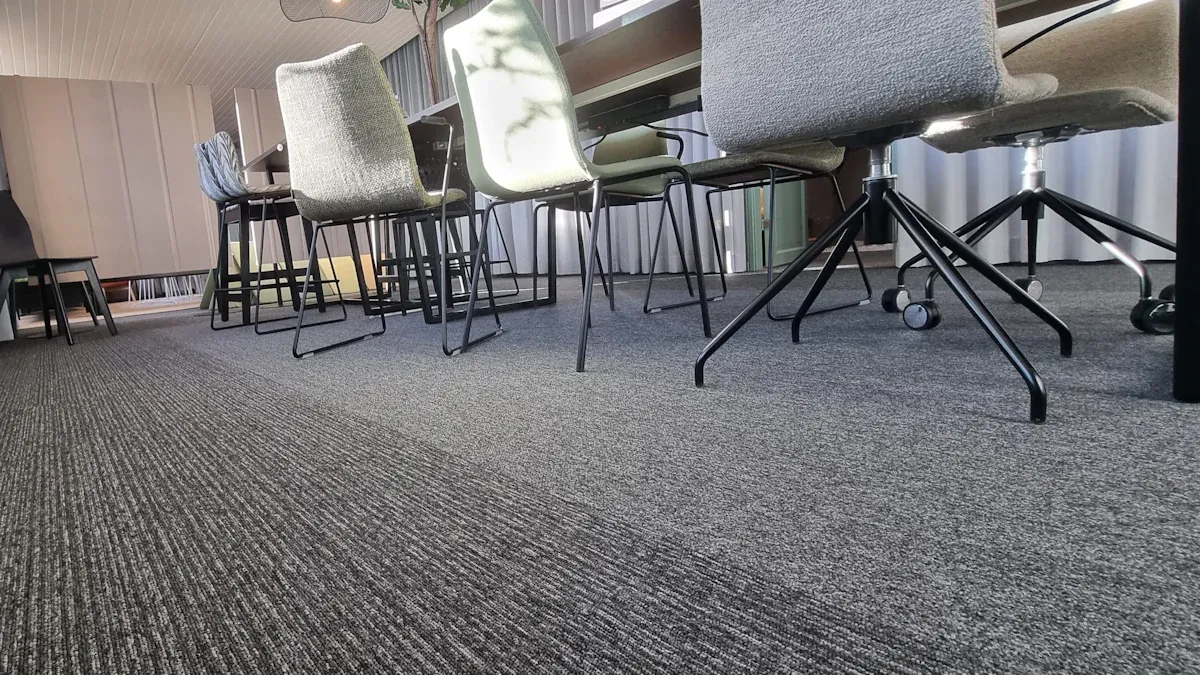
When you compare commercial sheet vinyl and carpet flooring, you notice important differences in how they perform in business spaces. Carpet flooring feels soft and absorbs sound well, which helps reduce noise in offices or hotels. However, commercial sheet vinyl also offers strong noise reduction, especially when you add special underlayments. The difference in sound absorption is small, with carpet at 60 dB and commercial sheet vinyl at 58 dB. You can create a quiet environment with either option.
Installation costs matter for your budget. Carpet flooring usually costs less to install, about $2.50 per square foot. Commercial sheet vinyl costs a bit more at $3.50 per square foot, but its click-lock system can save you time and reduce business downtime. You might pay more upfront, but you gain efficiency during installation.
Durability is a key factor for busy businesses. Carpet flooring lasts about 10 years before it shows wear, stains, or needs replacement. Commercial sheet vinyl lasts up to 20 years, even in high-traffic areas. It resists scratches, dents, and water, so you spend less on repairs and replacements. Maintenance is also easier with commercial sheet vinyl. You only need to sweep and mop, while carpet traps dirt and needs deep cleaning. Over time, you save money because commercial sheet vinyl has lower maintenance costs.
Water resistance is another big difference. Carpet flooring absorbs spills and can stain or grow mold if it gets wet. Commercial sheet vinyl is 100% waterproof, so you do not have to worry about moisture damage. This makes it a better choice for restaurants, healthcare, or any place where spills happen.
Here is a quick comparison to help you decide:
| Feature | Commercial Sheet Vinyl | Carpet Flooring | Notes |
|---|---|---|---|
| Noise Reduction (IIC) | 58 dB | 60 dB | Carpet is slightly better, but vinyl with underlayments is close |
| Installation Cost ($/sqft) | $3.50 | $2.50 | Vinyl costs more, but click-lock saves time |
| Durability (Years) | 20 | 10 | Vinyl lasts twice as long |
| Maintenance Cost ($/sqft/year) | $0.50 | $0.80 | Vinyl is easier and cheaper to maintain |
| Water Resistance | 100% | 20% | Vinyl is fully waterproof, carpet is not |
Tip: If you want a long-lasting, easy-to-clean, and water-resistant flooring option, commercial sheet vinyl gives you more value over time than carpet flooring.
Commercial Sheet Vinyl vs. Hardwood Flooring
You may love the classic look of hardwood flooring. Many businesses choose hardwood for its warm, natural beauty. However, commercial sheet vinyl gives you a strong alternative, especially in busy or wet areas.
Commercial sheet vinyl uses advanced layers, including a tough wear layer that protects against scratches and stains. This makes it much more durable than hardwood in high-traffic spaces. You do not have to worry about dents from heavy furniture or scratches from shoes. Vinyl flooring also stands up to water and spills. It is 100% waterproof, so you can use it in kitchens, bathrooms, or entryways without fear of warping or damage. Hardwood flooring does not handle moisture well. Water can cause it to swell, warp, or stain, which means more repairs and higher costs.
Vinyl flooring comes in many designs and colors. You can choose patterns that look like real wood, stone, or tile. This gives you more flexibility to match your brand or style. While hardwood offers a unique, authentic look, vinyl gives you more options for design and color. You can keep your space looking fresh and modern for years.
Maintenance is simple with commercial sheet vinyl. You only need to sweep and mop. Hardwood needs regular polishing and special cleaners to keep its shine. Over time, vinyl flooring keeps its appearance with less effort and cost.
Note: If you want the look of wood but need a floor that resists water, scratches, and heavy use, commercial sheet vinyl is a smart choice for your business.
Pros and Cons of Commercial Vinyl Flooring
Advantages of Commercial Sheet Vinyl
You will find many reasons why commercial vinyl flooring stands out in business spaces. This flooring type gives you a seamless surface, which blocks moisture and bacteria. You can keep your space clean and safe with less effort. Vinyl sheet flooring resists water, making it perfect for healthcare, education, and food service areas. You do not have to worry about spills or stains.
- You can choose from many designs. Vinyl flooring can look like wood, stone, or tile, so you can match your brand style without paying for expensive materials.
- Vinyl sheet flooring meets strict standards for durability. Products with a Class 33 rating and R10 slip resistance work well in busy places with heavy foot traffic.
- Cleaning is simple. You only need to sweep and mop. Protective coatings mean you do not need wax or polish.
- Some vinyl flooring uses recycled materials, which helps your business meet sustainability goals.
- You can replace damaged sections of vinyl sheet flooring without changing the whole floor. This saves money and time.
Here is a table that shows key advantages:
| Advantage | Why It Matters |
|---|---|
| Seamless application | Blocks moisture and bacteria, supports hygiene |
| Water resistance | Prevents damage from spills, ideal for wet areas |
| Hygienic benefits | Antimicrobial finishes reduce germs |
| Durability | Withstands heavy use, resists scratches and stains |
| Easy maintenance | No need for wax or polish, quick cleaning |
| Design flexibility | Mimics wood or stone, fits any business style |
| Sustainability | Some products use recycled materials |
Market studies show that demand for commercial vinyl flooring keeps growing. Businesses choose it for its durability, design options, and easy care.
Disadvantages of Commercial Sheet Vinyl
You should also know the limits of commercial vinyl flooring. Sharp objects like knives or high heels can puncture or tear vinyl sheet flooring. If this happens, you may need to replace a whole section, which can be hard if patterns or colors do not match.
- Vinyl sheet flooring needs a smooth subfloor. Any bumps or dents will show through and cause uneven wear.
- Large spaces may need more than one sheet. Seams can trap dirt or moisture if not sealed well.
- Sunlight can fade or discolor vinyl flooring over time. You may see dull spots in areas with lots of sun.
- Some cleaning products, like bleach or ammonia, can damage the surface. You must use pH-neutral cleaners to keep your floor looking good.
- Vinyl flooring uses PVC, which raises environmental concerns. It does not break down easily and recycling options are limited.
You may also find that repairs and installation take skill. Cutting and fitting vinyl sheet flooring needs precision, especially during patching.
Note: Weigh the pros and cons before you choose cost-effective commercial vinyl flooring for your business. Think about your space, traffic, and long-term needs.
Best-Use Scenarios for Commercial Flooring Options
You want to choose the right flooring for your business. Each business sector has unique needs. The best flooring depends on how you use your space, how much traffic you expect, and what matters most for your business.
Here is a table that shows which flooring options work best in different business sectors:
| Business Sector | Flooring Considerations | Recommended Flooring Types |
|---|---|---|
| Healthcare | Durability, infection control, easy cleaning, long-term value | Rubber (corridors), vinyl sheet flooring (patient rooms), terrazzo (lobbies), carpet tiles (waiting areas) |
| Education | Tough surfaces, budget limits, easy maintenance | VCT, porcelain, linoleum, carpet tiles, terrazzo, polished concrete, rubber, wood (gyms) |
| Retail | Aesthetics, branding, frequent updates | Carpet tile, natural stone, wood, polished concrete, LVT, porcelain tile |
| Workplace | Brand image, function, durability by space | Carpet tile, broadloom, no-wax vinyl sheet, stone, porcelain, wood, cork |
| Hospitality & Sports | Frequent updates (hotels), heavy use (sports), vibrant designs | Broadloom, carpet tile, stone (hotels); polished concrete, rubber, hardwood, carpet tile (sports) |
You see that high-traffic areas like hospitals, schools, and sports venues need floors that last and clean easily. Vinyl sheet flooring works well in patient rooms because it blocks moisture and germs. Rubber flooring stands up to heavy use in corridors and gyms. In retail, you want floors that look good and match your brand. LVT and polished concrete give you style and handle high-traffic commercial applications.
If you run an office, you may want carpet tiles for comfort and noise control. No-wax vinyl sheet flooring gives you easy care and a clean look. Hotels and sports centers need floors that handle crowds and still look fresh. Polished concrete and hardwood work well in these busy spaces.
Tip: Always test flooring samples in your own space. Involve your maintenance team to see which option fits your cleaning routine and budget.
Choosing the right floor helps you save money over time. You get better long-term value when you match your flooring to your business needs and the amount of foot traffic you expect.
Quick-Reference Comparison Chart
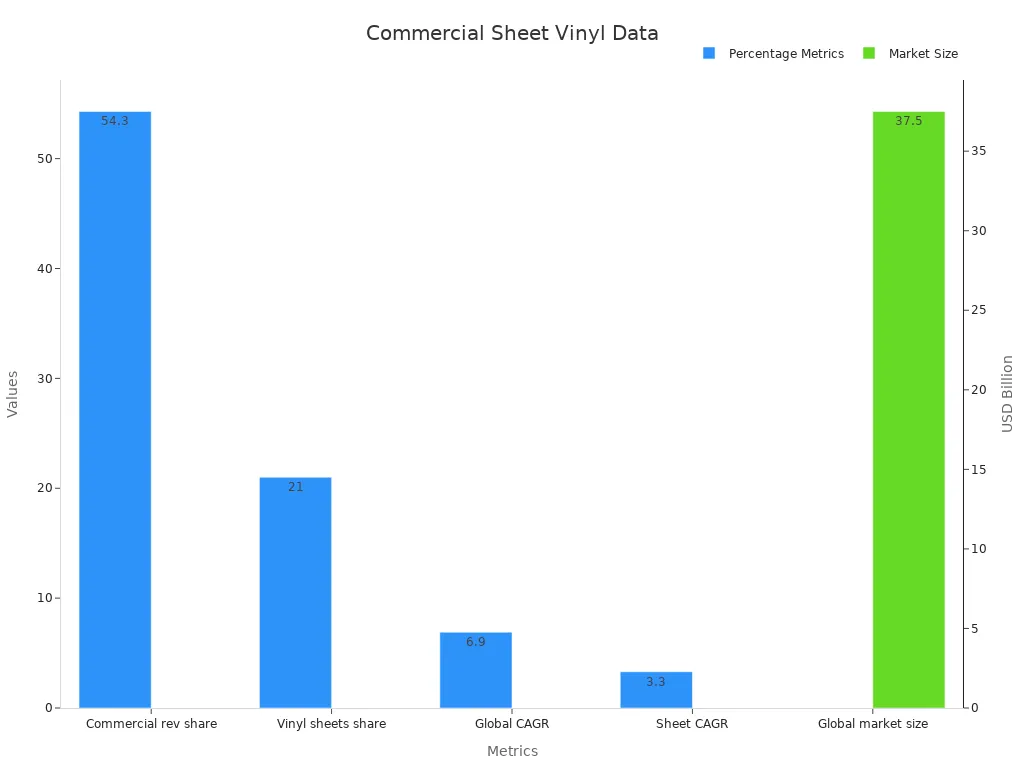
You want to make smart choices for your business flooring. A quick-reference comparison chart helps you see the main differences between commercial sheet vinyl and other popular flooring types. Market experts create these charts by collecting data from industry reports, technical studies, and interviews with flooring professionals. They use information like revenue, growth rates, and customer preferences to show which flooring works best in different settings. You can trust these charts because experts check the data with manufacturers, suppliers, and even company leaders.
Here is a simple chart to help you compare your options:
| Flooring Type | Durability | Water Resistance | Maintenance | Cost (per sq ft) | Design Options | Best Use Areas |
|---|---|---|---|---|---|---|
| Sheet Vinyl | High | Excellent | Easy | $1–$2 | Many | Healthcare, kitchens |
| Luxury Vinyl Tile (LVT) | Very High | Excellent | Easy | $2–$5 | Many | Retail, offices |
| Laminate | Medium | Low | Easy | $1–$3 | Some | Offices, dry areas |
| Tile | Very High | Excellent | Moderate | $3–$7 | Many | Bathrooms, schools |
| Carpet | Medium | Low | Hard | $2–$4 | Many | Offices, hotels |
| Hardwood | Medium | Low | Moderate | $5–$10 | Some | Cafes, retail |
Tip: Use this chart to match your business needs with the right flooring. For example, if you need easy cleaning and water resistance, sheet vinyl or tile may work best.
- Market research teams gather facts from many sources, including expert interviews and company data.
- They update these charts often to reflect new trends and products.
- You get a clear view of your choices, which helps you plan and budget with confidence.
A quick-reference chart saves you time. You can compare features at a glance and choose the flooring that fits your business goals.
You want the best flooring option for your business. Studies show that luxury vinyl tile (LVT) offers top durability, low maintenance, and strong design flexibility. Vinyl sheet flooring also works well in healthcare because it has fewer seams. The table below compares key features:
| Flooring Type | Upfront Cost | Maintenance | Durability & Performance | Design Versatility | Sustainability |
|---|---|---|---|---|---|
| VCT | Lowest | High | Durable, less used | Limited | Higher lifetime cost |
| Vinyl Sheet Flooring | Moderate | Minimal | Durable, less repairable | Moderate | Moderate lifetime cost |
| LVT | Highest | Minimal | Superior, heavy-duty | Highest | Best long-term value |
You should always match flooring to your business needs. For the best results, consult a commercial flooring professional.
FAQ
What makes commercial sheet vinyl a good choice for high-traffic areas?
You get a tough surface that resists scratches, dents, and stains. Sheet vinyl stands up to heavy foot traffic. You clean it easily. It works well in busy places like hospitals, schools, and retail stores.
Can you install commercial sheet vinyl over existing floors?
You can install sheet vinyl over many existing floors if the surface is smooth, clean, and dry. You must fix any bumps or cracks first. Always check the manufacturer’s guidelines before starting installation.
How does commercial sheet vinyl handle spills and moisture?
Sheet vinyl is 100% waterproof. You do not need to worry about spills or moisture damage. You wipe up messes quickly. This makes it a smart choice for kitchens, bathrooms, and healthcare spaces.
Is commercial sheet vinyl environmentally friendly?
Some brands use recycled materials and low-VOC adhesives. You can find eco-friendly options. Always look for certifications like FloorScore or GreenGuard to make sure your flooring meets environmental standards.
How long does commercial sheet vinyl last compared to other flooring?
You can expect commercial sheet vinyl to last 15 to 25 years with proper care. It often outlasts carpet and laminate. Tile and hardwood may last longer, but they need more maintenance.




