
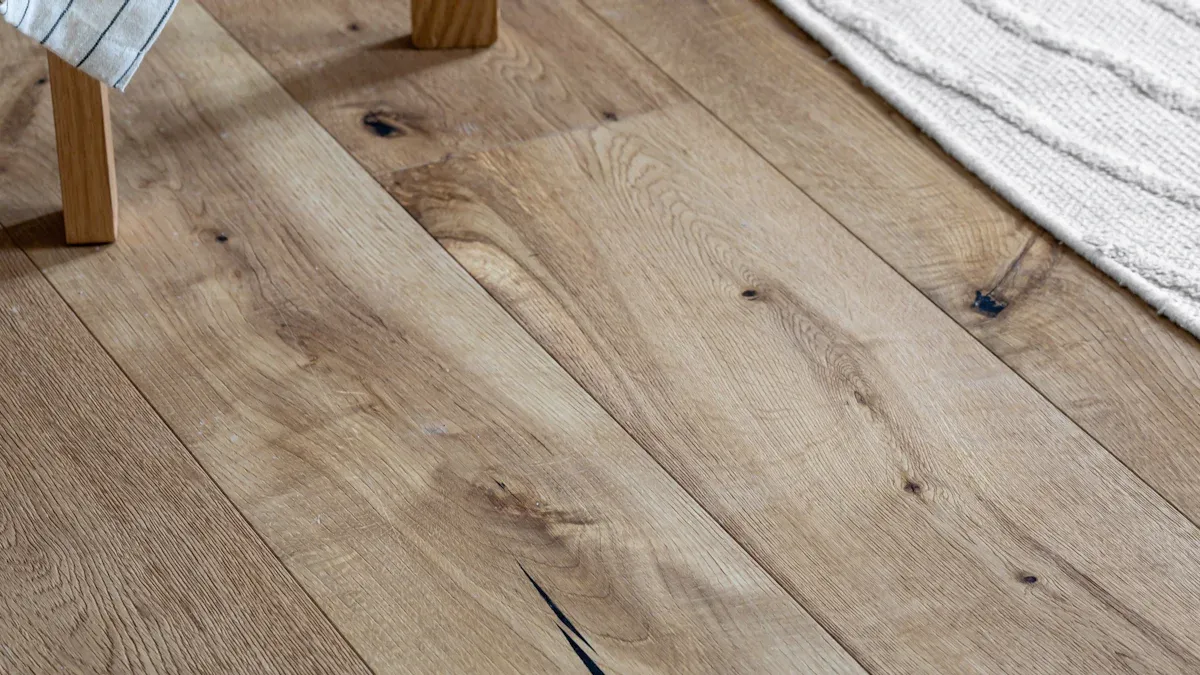
When you ask what is spc vinyl flooring, you discover a strong, rigid core luxury vinyl flooring with a stone plastic composite core. This type of flooring uses several layers, including a waterproof core and a tough wear layer, to offer you both durability and water resistance. Many people choose what is spc vinyl flooring for its realistic look and outstanding water resistance, especially in areas with high foot traffic. The popularity of lvp, including spc vinyl flooring, keeps growing. You can see this in the table below:
| Metric/Aspect | Detail/Statistic |
|---|---|
| Vinyl Plank Flooring Market | $8,301.5 million in 2025 |
| Projected CAGR | 6.2% from 2025 to 2033 |
| SPC Segment Position | Dominant due to water resistance |
You get a flooring option that combines luxury vinyl flooring style with top performance.
What Is SPC Vinyl Flooring?
Definition and Core Features
When you explore what is spc vinyl flooring, you find a modern type of lvp flooring that stands out for its strength and stability. This flooring uses a special core made from stone and plastic, which gives it a rigid feel and makes it different from other lvp options. You get a floor that looks like wood or stone but performs much better in tough conditions.
Here are the core features that set spc vinyl flooring apart:
- Multi-layer construction: Each plank has a wear layer, a decorative vinyl layer, a rigid core, and a backing layer.
- Rigid core: The center uses limestone powder and PVC, making it dense, stable, and waterproof.
- Wear layer: A clear top coat protects against scratches and stains.
- Backing layer: This part adds sound insulation and helps prevent mold and mildew.
- Stability and durability: The floor resists dents, scratches, and changes in temperature or humidity.
- Waterproof: The core and layers keep water out, so you can use it in kitchens, bathrooms, and basements.
Tip: If you want lvp flooring that can handle heavy traffic and moisture, spc vinyl flooring is one of the best choices.
What Does “SPC” Stand For?
You might wonder what the letters “SPC” mean when you hear about what is spc vinyl flooring. SPC stands for Stone Plastic Composite. This name comes from the main materials in the core—limestone (stone) and plastic (PVC). These materials work together to create a floor that is both tough and waterproof.
- The term “SPC” appears in many flooring market reports and product guides. You see it used in North America and around the world as a standard category for lvp flooring.
- Flooring companies and industry standards use “SPC” to describe this type of rigid core lvp flooring. You can find it listed in technical documents, product certifications, and quality control processes.
Here is a table showing some of the main standards and certifications for spc vinyl flooring:
| Aspect | Standard/Certification | What It Means for You |
|---|---|---|
| Fire Resistance | EN 13501-1, ASTM E648-06 | Safe for homes and businesses |
| Slip Resistance | EN 13893, ASTM D2047-93 | Reduces risk of slipping in wet areas |
| Chemical Resistance | EN 423, ASTM F925 | Resists stains from common chemicals |
| Wear Resistance | EN 13329, ASTM F1700 | Handles heavy foot traffic |
| Impact Resistance | ASTM F1265, ASTM D2632 | Withstands drops and impacts |
| Dimensional Stability | EN 434, ASTM F2199 | Stays flat and stable over time |
| Toxicity | EN 71-3 | Safe for families and pets |
| Certifications | FloorScore, GreenGuard Gold | Meets indoor air quality standards |
How SPC Vinyl Flooring Works
You might ask how spc vinyl flooring can stay strong and waterproof, even in places where other lvp flooring might fail. The answer lies in its engineering and the way each layer works together.
SPC vinyl flooring uses an extrusion process. Manufacturers combine PVC and limestone powder, then heat and press the layers together. This process creates a dense, stable core that does not need glue. The wear layer and decorative layer are added using a calendering process, which makes the surface tough and attractive.
- The rigid core blocks water from getting inside the plank. You can install lvp flooring in bathrooms, kitchens, and basements without worrying about swelling or warping.
- The backing layer adds comfort and reduces noise. You get a softer step and less sound when you walk.
- The wear layer protects against scratches, stains, and fading. Your floor keeps looking new, even in busy areas.
Note: Engineering tests show that spc vinyl flooring resists mold, mildew, and changes in temperature or humidity. You can use it in hotels, hospitals, shopping malls, and homes with confidence.
When you choose what is spc vinyl flooring, you get a type of lvp flooring that combines the beauty of luxury vinyl flooring with the strength of stone and plastic. This makes it a smart choice for anyone who wants a floor that lasts.
Structure and Composition of SPC Vinyl Flooring
Layer Breakdown
When you look at SPC vinyl flooring, you see a smart design with several layers. Each layer has a special job. This structure makes lvp flooring stand out from other types of floors. Here is a simple breakdown of the main layers you will find in most SPC lvp:
- Wear Layer: This is the top layer. It protects your floor from scratches, stains, and daily wear.
- Printed Design Layer: Under the wear layer, this part uses advanced printing to create realistic wood, stone, or tile looks.
- SPC Core: The heart of SPC lvp flooring. It contains a mix of limestone powder (about 60-65%), PVC, and plasticizing agents. This core gives the floor its rigid feel and strong durability.
- Backing Layer: This is the bottom layer. It often includes EVA foam padding. The backing adds comfort, sound absorption, and helps with installation.
You get a floor that is not only beautiful but also tough and stable. The high stone content in the core is key. It keeps your lvp flooring from moving or changing shape when temperatures go up or down. This is why many people choose SPC lvp for places where other floors might fail.
Role of Each Layer
Each layer in SPC lvp flooring has a clear purpose. You can see how these layers work together in the table below:
| Layer | Composition/Features | Functional Role |
|---|---|---|
| Wear Layer | Polyurethane (PU), ceramic bead or aluminum oxide | Shields against scratches, stains, and wear; boosts water resistance |
| Printed Design Layer | High-resolution imagery | Gives your floor realistic wood, stone, or tile looks |
| SPC Core | 60-65% limestone, PVC, plasticizing agents | Provides rigidity, durability, and water resistance |
| Backing Layer | EVA foam or solid base | Adds comfort, sound insulation, and helps with easy installation |
The wear layer is your first line of defense. It keeps your lvp flooring looking new, even in busy rooms. The printed design layer lets you match your floor to any style you want. The SPC core is the reason your floor feels solid underfoot. It also makes your lvp resistant to dents and moisture. The backing layer gives you a softer step and helps reduce noise.
Tip: If you want a floor that is both stylish and tough, pay attention to the thickness of the wear layer. Thicker wear layers offer better protection and longer durability.
How Structure Impacts Performance
The way SPC lvp flooring is built affects how it performs in your home or business. The dense core, made mostly of limestone and PVC, gives your floor excellent durability. You do not have to worry about dents or scratches from heavy furniture or high foot traffic. The rigid core also keeps your lvp flooring stable, so it does not expand or contract much when temperatures change.
You will notice that SPC lvp flooring is highly resistant to water. The multi-layer design blocks moisture from getting inside. This makes it a great choice for kitchens, bathrooms, and basements. The wear layer adds another level of protection, making your floor resistant to stains and easy to clean.
Here are some key ways the structure boosts performance:
- The thick, stone-filled core increases durability and keeps your lvp flooring from warping.
- The wear layer and surface treatments make the floor scratch-resistant and easy to maintain.
- The backing layer improves comfort and reduces noise, so your space feels quieter.
- The whole structure supports water resistance, so you can use lvp in wet areas without worry.
- The use of recyclable and non-toxic materials means you get a floor that is safe for your family and better for the environment.
You get a high-quality floor that looks great and stands up to daily life. The smart structure of SPC lvp flooring gives you peace of mind, knowing your floor will last for years.
Pros and Cons of SPC Vinyl Flooring
Main Advantages
You get many benefits when you choose SPC vinyl flooring for your home or business. This flooring stands out for its durability and water resistance. The rigid core, made from limestone and PVC, makes it resistant to dents, scratches, and impacts. You can install it in kitchens, bathrooms, and basements because it is 100% water resistant. The click-lock system allows for easy DIY installation, and you do not need glue or nails. Cleaning is simple—just sweep and mop with a pH-neutral cleaner. The flooring is also eco-friendly and hypoallergenic, supporting better indoor air quality.
Here are some main advantages:
- Completely waterproof, perfect for moisture-prone areas
- Scratch and dent-resistant surface
- Easy to install with a click-lock system
- Low maintenance and easy to clean
- Long-lasting and durable
Tip: Many manufacturers offer FloorScore or GREENGUARD Gold certifications, so you can trust the air quality in your space.
Main Disadvantages
You should also consider the cons when looking at the pros and cons of SPC flooring. The rigid core makes the floor harder and colder underfoot compared to WPC or standard vinyl. You may want to use area rugs or underlayment for extra comfort. The planks are heavier, which can make handling and cutting more difficult during installation. SPC flooring is usually thinner than WPC, so it may not work for every renovation. The price is higher than standard vinyl or laminate, but you get better durability and water resistance.
| Flooring Type | Pros of SPC Flooring Compared to Others | Cons of SPC Flooring Compared to Others |
|---|---|---|
| Standard Vinyl | More durable and waterproof; more realistic texture; DIY installation possible | Slightly more expensive; harder and colder underfoot; requires precise cutting due to rigid core |
| WPC | Better temperature stability; more durable and waterproof; compatible with underfloor heating | Less sound absorbent (noisier); harder and colder underfoot compared to WPC |
| Laminate | Waterproof; more durable and resistant to dents and scratches; suitable for moisture-prone areas | May lack the softer, more natural feel of laminate |
| Engineered Wood | Waterproof and more dimensionally stable; mimics natural wood appearance with high-definition printing | Cannot be sanded or refinished; less natural warmth and texture; SPC is more practical for wet areas |
Durability and Water Resistance
SPC vinyl flooring offers outstanding durability and water resistance. The stone-plastic composite core makes the planks resistant to heavy loads, sharp impacts, and high humidity. You can trust this flooring to keep its shape, even on uneven surfaces. Laboratory tests show that SPC flooring does not crack or break easily. The surface layer is resistant to scratches and stains, so your floor looks new for years. The flooring is 100% water resistant, making it ideal for kitchens, bathrooms, and basements. The core does not absorb water, and the joints stay tight, even after hours of exposure to moisture. You get a floor that is both durable and easy to maintain.
Comfort and Maintenance
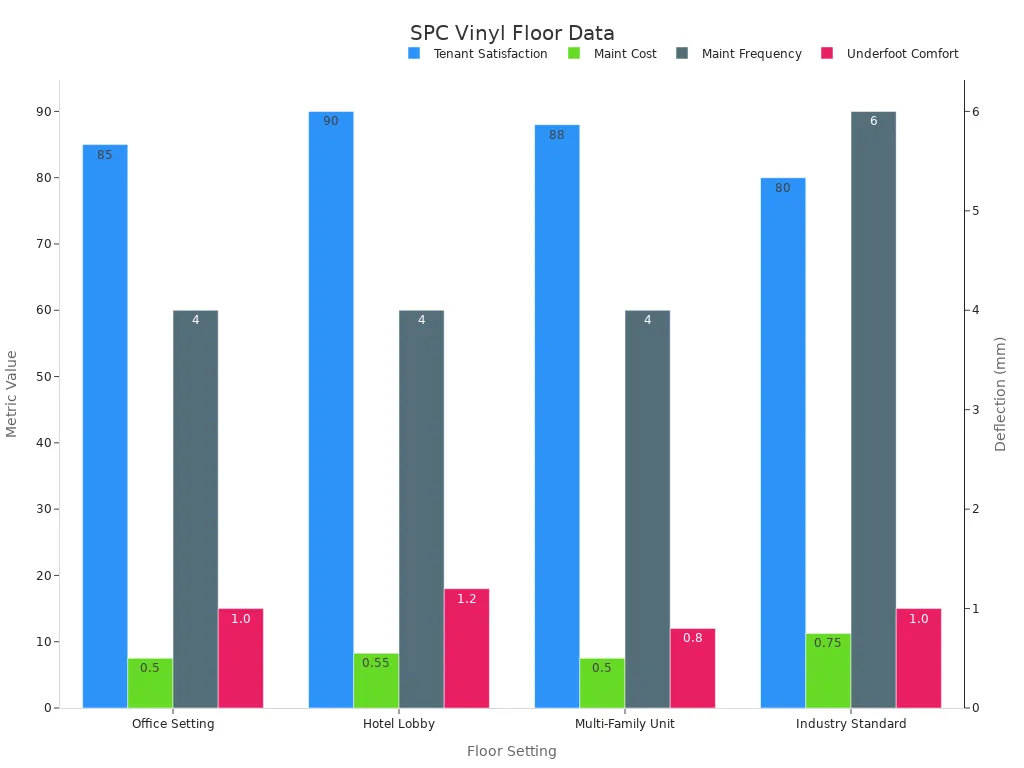
You want your floors to feel good under your feet and stay looking great with little effort. SPC vinyl flooring gives you both comfort and simple care. The rigid core makes the floor stable, but the backing layer adds a soft touch. Many SPC floors use EVA or IXPE foam underlayments. These materials give you a gentle cushion when you walk. In a hotel lobby, the underfoot comfort measures about 1.2 mm of deflection with IXPE. In offices, you get 1.0 mm with EVA. This means you feel less strain on your legs, even if you stand for a long time.
Cleaning SPC vinyl flooring is easy to do. You only need to sweep or vacuum to remove dust. For spills, just use a damp mop and a mild cleaner. The surface does not trap dirt or stains. Many people say SPC floors are easy to clean and keep looking new. You do not need wax or polish. This saves you time and money.
Surveys from 2023 show high satisfaction with SPC vinyl flooring in different places. In hotel lobbies, 90% of tenants feel happy with their floors. Offices and multi-family units also report high satisfaction, at 85% and 88%. Maintenance costs stay low, about $0.50 to $0.55 per square foot each year. You only need to clean the floor about four times a year, which is less than the industry standard.
| Metric | Office Setting | Hotel Lobby | Multi-Family Unit | Industry Standard |
|---|---|---|---|---|
| Tenant Satisfaction (%) | 85% | 90% | 88% | 80% |
| Maintenance Cost ($/sqft/yr) | 0.50 | 0.55 | 0.50 | 0.75 |
| Maintenance Frequency (times/year) | 4 | 4 | 4 | 6 |
| Underfoot Comfort (mm deflection) | 1.0 (EVA) | 1.2 (IXPE) | 0.8 (IXPE) | 1.0 |
Tip: Place mats at entryways to catch dirt and grit. This helps your SPC vinyl flooring last even longer.
You get a floor that feels comfortable and stays clean with little work. SPC vinyl flooring makes daily life easier for busy families and businesses.
Installation and Suitability of SPC Vinyl Flooring
Installation Methods
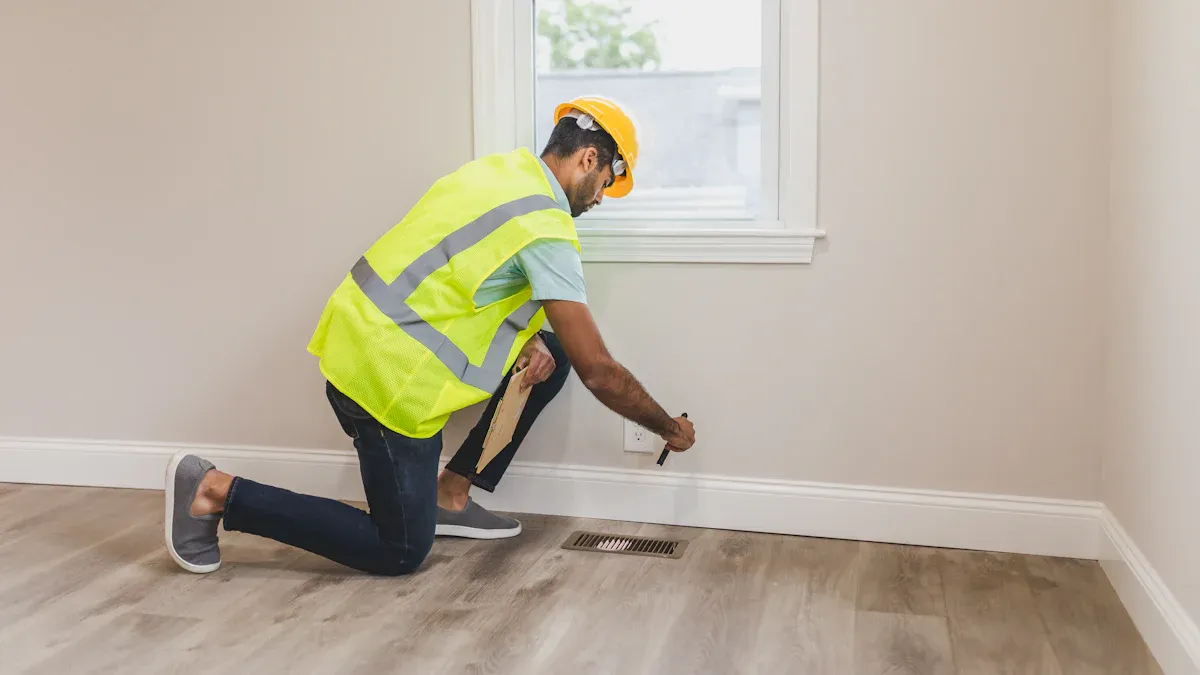
You can choose from two main methods when you want to know how to install spc flooring: floating installation and glue down installation. Floating installation is the most popular because it is easy to install and does not need glue or nails. You leave a 1/4-inch expansion gap around the edges. This gap lets the lvp planks move as temperatures change. You start at one side of the room, use spacers at the edges, and lock each plank by angling the tongue into the groove. You tap the planks with a hammer and tapping block to avoid gaps. Doorjambs must be undercut so the planks can slide underneath.
Glue down installation is another way to install lvp. You can use this method over wood or concrete. You spread adhesive, lay the planks into the wet glue, and roll the floor with a heavy roller. You still need to leave a 1/4-inch gap at the edges. Both methods require you to stagger the planks in a brick pattern for strength and a natural look. If you want to know how to install spc flooring on sloped or uneven floors, you should hire a professional. Industry case studies show that professional installers handle alignment and expansion issues better, especially in hotels and commercial spaces. They also help you avoid safety problems and make sure your lvp lasts longer.
Tip: Choose high-quality lvp for easy installation and better long-term results. Regular inspection after installation helps you catch any issues early.
Where SPC Vinyl Flooring Works Best
You get the best performance from lvp in places with heavy foot traffic and moisture. SPC vinyl flooring works well in kitchens, bathrooms, basements, and laundry rooms because the waterproof core keeps water out. Many hotels, offices, and retail stores use lvp because it stands up to dents, scratches, and frequent cleaning. In a luxury resort lobby, lvp improved guest satisfaction and made cleaning faster. A budget hotel chain saved 40% on maintenance costs after switching to lvp.
The table below shows where lvp performs best:
| Environment | Performance Benefit | Why Choose SPC Vinyl Flooring? |
|---|---|---|
| Retail spaces | Excellent dent resistance | Handles heavy carts and foot traffic |
| Offices | 100% indentation recovery | Moves with furniture, stays smooth |
| Warehouses | High wear layer durability | Lasts 15-25 years under heavy use |
| Bathrooms/Kitchens | Superior water resistance | No swelling or warping |
| Hospitals | Minimal wear over time | Easy to clean, safe for patients |
You can trust lvp to keep its finish and structure in busy places. The easy to install click-lock system means you can finish projects faster than with tile or hardwood. Lvp also works in commercial kitchens and healthcare settings, where water and spills are common. If you want a floor that looks good and lasts, lvp is a smart choice for both homes and businesses.
How Much Does SPC Flooring Cost?
Price Range and Factors
When you ask how much does spc flooring cost, you find that prices usually range from $3 to $7 per square foot for materials. If you add professional installation, the total can reach $6 to $12 per square foot. The final cost depends on several important factors. You should look at these before making a decision:
- Raw material prices change often, especially for PVC. This can make the cost go up or down.
- Some brands use recycled PVC, while others use non-recycled PVC. Non-recycled PVC is usually cheaper, but recycled options are becoming more popular for people who care about the environment.
- New technology in design and durability can add value and increase the price.
- Factories that focus on eco-friendly materials and sustainable processes may charge more.
- Most SPC flooring comes from China and Southeast Asia. Where your flooring is made can affect the cost.
- Strong competition in the market helps keep prices fair, but higher quality often means a higher cost.
- Companies must follow rules about PVC content and indoor air quality. Meeting these standards can raise production costs.
- SPC flooring is often less expensive than natural stone or hardwood, which makes it a cost-effective choice for many homes.
Tip: Always ask your supplier what is included in the price. Some brands offer underlayment or extra features at no extra cost.
Cost Compared to Other Flooring Types
You might wonder how much does spc flooring cost compared to other popular floors. SPC flooring gives you a good balance between price and performance. Here is a table to help you compare:
| Flooring Type | Material Cost (per sq ft) | Installed Cost (per sq ft) | Water Resistance | Durability |
|---|---|---|---|---|
| SPC Vinyl Flooring | $3 – $7 | $6 – $12 | Excellent | Very High |
| Laminate | $1 – $4 | $3 – $8 | Poor to Good | Moderate |
| WPC Vinyl | $4 – $8 | $7 – $13 | Excellent | High |
| Hardwood | $6 – $15 | $10 – $20 | Poor | High |
| Tile | $2 – $10 | $8 – $20 | Excellent | Very High |
You see that SPC flooring costs less than hardwood and tile but offers better water resistance than laminate. You get a strong, waterproof floor without paying the highest price. This makes SPC a smart choice for kitchens, bathrooms, and busy areas in your home.
SPC Vinyl Flooring vs. Other Flooring Types
SPC vs. LVP (Luxury Vinyl Plank)
When you compare SPC to other lvp flooring, you notice some important differences. SPC uses a stone plastic composite core, which makes it much more rigid than standard lvp. This rigid core helps SPC resist dents and keeps it stable even when temperatures change. You get a floor that stays flat and looks new for a long time. Standard lvp flooring feels softer underfoot and gives you more cushion, which some people like for comfort in living rooms or bedrooms.
SPC lvp flooring is 100% waterproof. You can use it in bathrooms, kitchens, and basements without worry. Regular lvp flooring is water-resistant but not fully waterproof, so it may not last as long in wet areas. Installation is easier with SPC because the click-lock system works well with the rigid planks. You do not need as much subfloor prep as you do with flexible lvp flooring.
Here is a quick comparison:
| Factor | SPC Flooring | LVP Flooring |
|---|---|---|
| Core | Stone plastic composite, rigid | Flexible vinyl core |
| Comfort | Firmer underfoot | Softer, more cushioned |
| Waterproof | 100% waterproof | Water-resistant |
| Durability | Highly resistant to dents and wear | Durable, but less than SPC |
| Installation | Click-lock, easy alignment | May need more subfloor prep |
| Cost | Slightly higher | More affordable |
Note: SPC lvp flooring may cost more at first, but you save money over time because it lasts longer and needs less repair.
SPC vs. WPC (Wood Plastic Composite)
You might see both SPC and WPC called lvp flooring, but they have different cores. SPC uses stone and plastic, while WPC uses wood and plastic. This makes SPC denser and more rigid. WPC lvp flooring feels softer and warmer underfoot, which can be nice in bedrooms or family rooms.
SPC lvp flooring works better in places with lots of water, like bathrooms or kitchens. It does not swell or warp when wet. WPC lvp flooring can handle some moisture, but it is not as waterproof as SPC. SPC also lasts longer and resists scratches and dents better. You get a floor that can handle heavy traffic and pets.
Here is a table to help you compare:
| Performance Metric | SPC (Stone Plastic Composite) | WPC (Wood Plastic Composite) |
|---|---|---|
| Core Material | Denser, stone-plastic core | Wood-plastic core with foaming agent |
| Comfort Underfoot | Less comfortable, harder feel | More comfortable, cushier feel |
| Water Resistance | Completely waterproof | Less water-resistant |
| Durability & Lifespan | Longer lifespan, more impact and scratch resistant | Shorter lifespan, less resistant |
| Cost | Higher upfront cost, lower maintenance | Lower initial cost, higher maintenance |
Tip: Choose SPC lvp flooring for bathrooms, kitchens, and basements. Pick WPC lvp flooring if you want more comfort in dry areas.
SPC vs. Laminate and Tile
You may wonder how SPC lvp flooring compares to laminate and tile. SPC lvp flooring gives you a waterproof surface, while laminate can swell and get damaged if it gets wet. Tile is also waterproof, but it feels cold and hard underfoot. SPC lvp flooring feels warmer and softer than tile, but firmer than laminate.
Laminate costs less than SPC lvp flooring, but it does not last as long in busy or wet areas. Tile lasts a long time, but it can crack if you drop something heavy. SPC lvp flooring resists dents and scratches, making it a good choice for homes with kids or pets. You also find that SPC lvp flooring is easier to install than tile, and you do not need grout.
- SPC lvp flooring: Waterproof, durable, easy to install, good for any room.
- Laminate: Cheaper, not waterproof, softer feel, not for wet areas.
- Tile: Waterproof, very durable, cold and hard, harder to install.
If you want a floor that handles water, heavy use, and looks great, SPC lvp flooring gives you the best mix of features.
You get a flooring solution that stands out for durability, water resistance, and style. SPC vinyl flooring uses advanced technology and a unique structure to give you reliable performance in homes and businesses. The market for lvp keeps growing, with a CAGR of 5.24% for vinyl flooring and over 500 million square feet sold in waterproof core products. You see lvp priced between $3 and $7 per square foot, making it cost-effective.
| Statistic/Metric | Value/Insight | Relevance to SPC Vinyl Flooring Benefits |
|---|---|---|
| CAGR of Vinyl Flooring Segment | 5.24% | Indicates strong growth driven by durability and cost |
| Sales Volume of Waterproof Core Flooring (WPC/SPC) in 2019 | >500 million sq. ft. | Demonstrates widespread acceptance due to waterproof and durable nature |
| Price Range of LVT | $3 to $7 per sq. ft. | Shows cost-effectiveness compared to hardwood or stone |
You find lvp leading future trends with better durability, eco-friendly materials, and easier installation. The market expects global growth between 5.6% and 9.2% through 2033. New lvp features include smart technology, antimicrobial surfaces, and larger tile formats.
| Future Trend Category | Details |
|---|---|
| Technological Innovation | Enhanced durability (scratch, stain, water resistance); advanced printing for realistic designs |
| Sustainability Focus | Increased use of recycled materials; eco-friendly manufacturing; compliance with environmental regulations |
| Installation Improvements | Simplified click-lock systems enabling easier and faster installation |
| Market Growth | CAGR between 5.6% and 9.2% (2025-2033); growth driven by residential, commercial, industrial demand globally |
You should consider your needs, budget, and installation skills before choosing lvp. This flooring gives you a smart, long-lasting choice for many environments.
FAQ
What makes SPC vinyl flooring different from regular vinyl?
SPC vinyl flooring uses a stone-plastic core. This core makes the floor stronger and more stable than regular vinyl. You get better water resistance and durability. Regular vinyl feels softer, but SPC lasts longer in busy or wet areas.
Can you install SPC vinyl flooring over old floors?
Yes, you can install SPC vinyl flooring over many old floors. Make sure the surface is clean, dry, and flat. You do not need to remove most tile, vinyl, or concrete floors before installing SPC.
How do you clean and care for SPC vinyl flooring?
You only need to sweep or vacuum to remove dust. For spills, use a damp mop and mild cleaner. Avoid harsh chemicals. > Tip: Place mats at doors to keep dirt away.
Is SPC vinyl flooring safe for pets and kids?
Yes, SPC vinyl flooring is safe for pets and kids. Many brands use non-toxic materials and meet indoor air quality standards. The surface resists scratches from pet nails and is easy to clean after spills.
Does SPC vinyl flooring fade in sunlight?
SPC vinyl flooring resists fading, but strong sunlight can cause some color change over time. You can use curtains or blinds to protect your floor. > Note: Most brands add UV protection to help prevent fading.




