EIR SPC Flooring vs Standard Embossed SPC: What’s the Difference?
Table of Contents
The texture on EIR SPC flooring is pressed into the vinyl layer at exactly the same registration point where the printed wood grain below it sits — a mechanical alignment that standard embossed SPC skips entirely. That one manufacturing step is what separates a plank that reads as genuine hardwood from one that reads as a photograph of hardwood under plastic.
If you’re specifying SPC flooring for a residential renovation or a commercial project and can’t decide between EIR and standard embossed, the short answer is this: EIR SPC flooring replicates natural wood grain texture far more convincingly, while standard embossed SPC costs less per square foot and performs just as well structurally.
The right choice depends on where the floor will live and how much the visual result matters to occupants.
For a deeper look at the shared construction beneath both surface finishes, see how SPC rigid core flooring affects stability and overall floor performance.
Key facts at a glance
EIR = Embossed in Register — texture pressed to align exactly with the printed wood grain design
Standard embossed SPC = a uniform surface texture applied across the entire plank, not tied to the printed pattern
Both sit on the same rigid core SPC construction: stone-plastic composite core, wear layer, printed film, UV coating
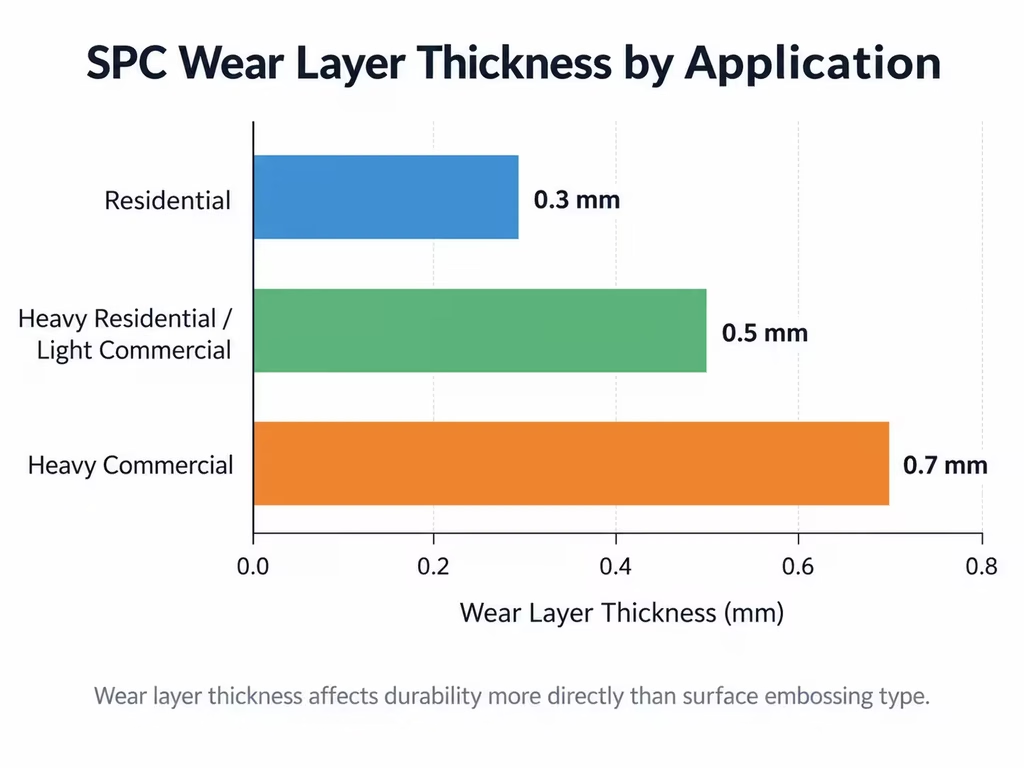
EIR SPC typically carries a 0.3 mm–0.5 mm wear layer; standard embossed often ranges the same but with shallower surface relief
Both are 100% waterproof — the rigid core and vinyl layers repel moisture at the subfloor level
How the two surface methods actually differ
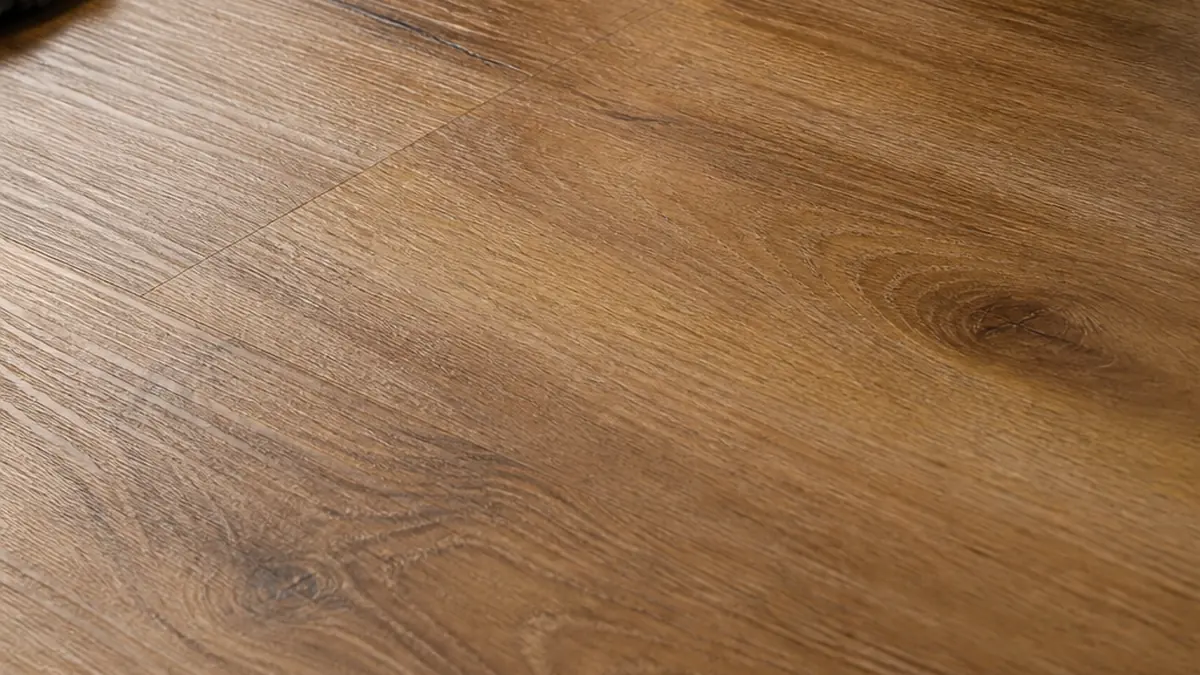
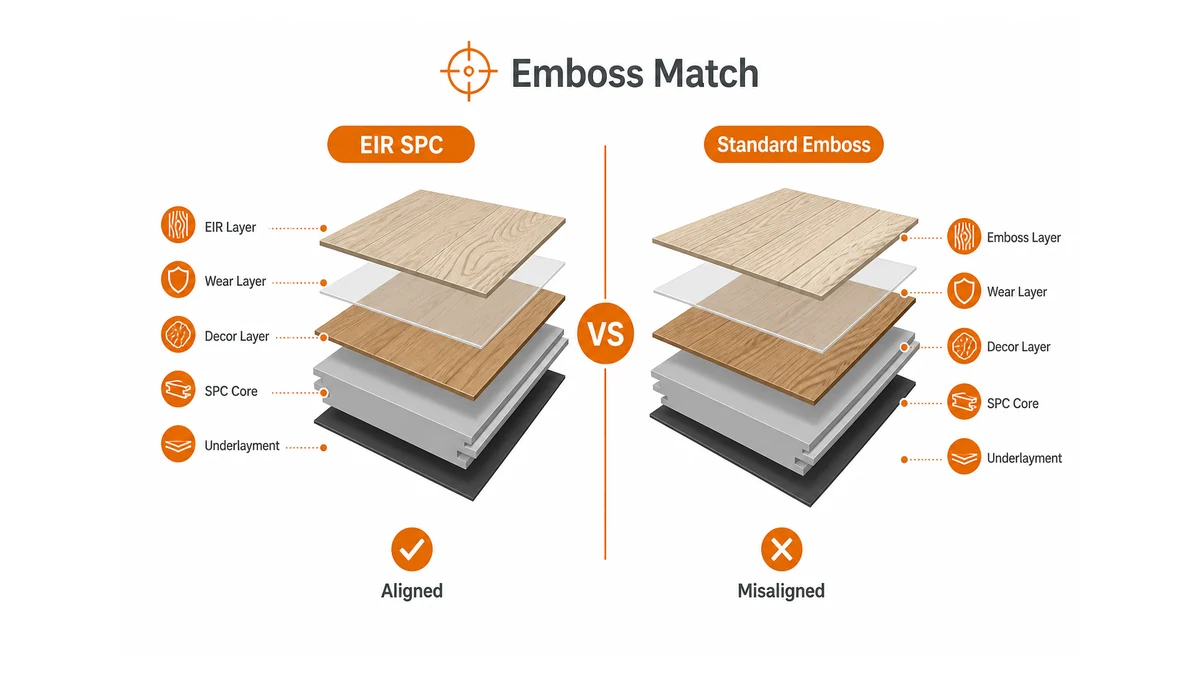
EIR SPC flooring wins on realism. The embossing die is registered to the printed wood design underneath, so every knot, grain line, and color variation has a corresponding raised or recessed texture exactly where you’d expect it on real wood. Run your hand across it and the texture follows the print.
Video: What is EIR (embossed in register) in SPC flooring?
Standard embossed SPC uses a generic texture roller — often a fine cross-hatch or uniform wood-grain pattern — applied regardless of what the printed film shows. The visual and the tactile tell different stories. From across a room it’s fine; up close or in raking light, the disconnect becomes obvious.
🎯 Key point: EIR is a press-alignment technology, not a different core material. The SPC rigid core, wear layer, and waterproof construction are identical between the two — only the surface texture method changes.
The key to EIR SPC flooring’s realism is what happens between the printed film and the press. A standard embossed vinyl plank runs the surface through a textured roller after the layers are laminated together. EIR uses a digitally controlled embossing press that reads the position of the printed design and stamps the texture to match it — grain by grain, knot by knot.
The layer stack in EIR SPC flooring runs: UV coating → wear layer (0.3–0.5 mm) → EIR surface emboss → printed wood film → SPC rigid core → IXPE or EVA underlayment.[5] The emboss lives at the interface between the wear layer and the printed film, so it doesn’t compromise wear layer thickness.
That matters because the ASTM F3261 standard[1] for rigid core vinyl plank flooring governs wear layer performance independently of surface texture — meaning an EIR plank and a standard embossed plank can carry identical wear ratings.
What EIR adds is a depth of surface relief that ranges from 0.1 mm to 0.3 mm depending on the species being replicated.[6] Heavily textured species like hand-scraped oak push toward the deeper end. Smooth species like maple stay shallow.
What is the best quality SPC flooring?
Answer first: quality in SPC flooring is defined by wear layer thickness, core density, and surface finish accuracy — not brand name alone.
A 0.5 mm wear layer is the practical threshold for commercial flooring applications[2], where foot traffic and rolling loads are constant. Residential installations typically work well with 0.3 mm. Core density matters because a denser SPC core resists denting under point loads (furniture legs, chair casters) better than a lighter formulation.
EIR SPC flooring adds a third quality variable: registration accuracy. A poorly made EIR plank — where the emboss is off-register by even 1–2 mm — looks worse than a clean standard embossed product. At SK-Floor, our 10 production lines run ISO9001-certified quality control checkpoints specifically for emboss registration, because a misaligned EIR plank is more visually disruptive than no EIR at all.
What thickness of SPC flooring is best?
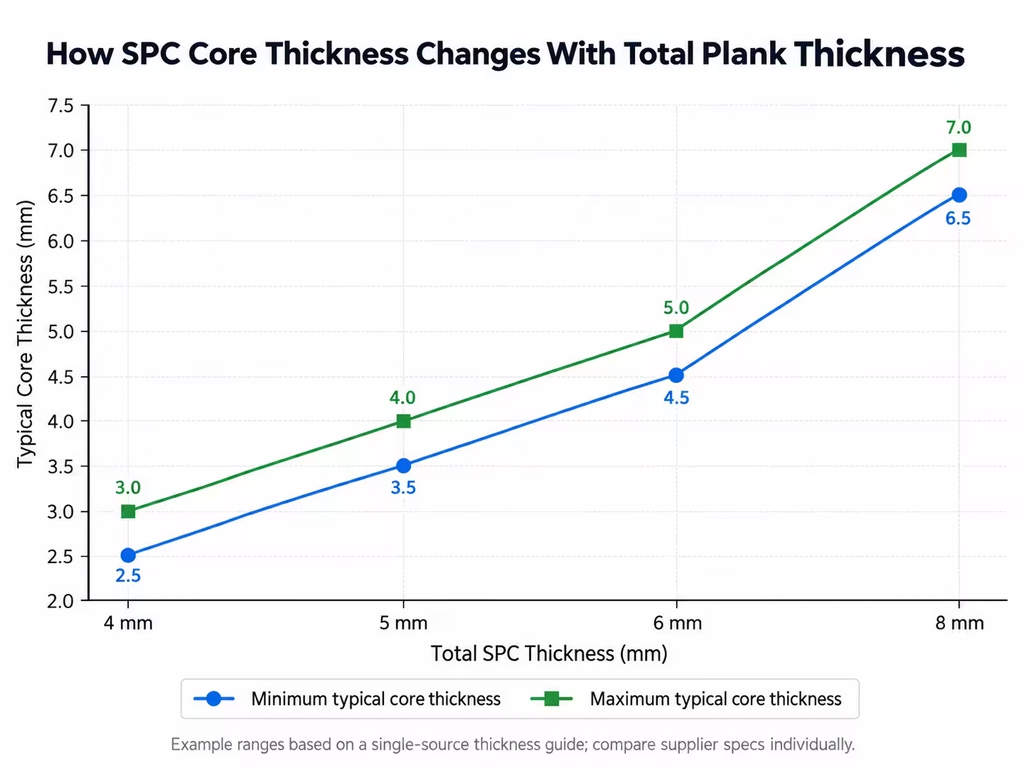
4 mm: subfloor must be very flat; suits apartments and new construction with level concrete
5 mm: the most common residential choice; tolerates minor subfloor variation
6 mm: better sound attenuation; preferred under large open-plan areas
8 mm: commercial-grade; absorbs the most subfloor irregularity; highest cost per plank
Thickness affects the rigid core depth, not the wear layer. A 6 mm EIR SPC plank and a 6 mm standard embossed plank have the same core thickness — only the surface texture method differs. For most US residential projects, 5 mm or 6 mm is the practical sweet spot regardless of whether you choose EIR or standard embossed.
🧨 Common failure: Specifying 4 mm SPC flooring over an unleveled subfloor. The rigid core does not flex to compensate — high spots telegraph through the plank and wear layer cracking follows within 12–18 months.
What are the different types of SPC flooring?
SPC flooring splits along two axes: surface finish and installation format.
Surface finish types:
– EIR (Embossed in Register) — texture registered to the print
– Standard embossed — uniform texture across the plank
– Hand-scraped — manual or mechanical scraping effect, often combined with EIR
– High-gloss — smooth surface, minimal texture, typically for modern interiors
Installation formats:
– Click-lock vinyl plank — floating floor, no adhesive needed
– Loose lay vinyl plank — friction-held, easier to replace individual planks
– Glue-down LVT — adhered directly to subfloor, used in high-traffic commercial settings
EIR is a surface finish option that can be applied to any installation format. You can source EIR SPC flooring in click-lock, loose lay, or glue-down configurations — the surface treatment is independent of the locking system.
Where to use EIR SPC flooring
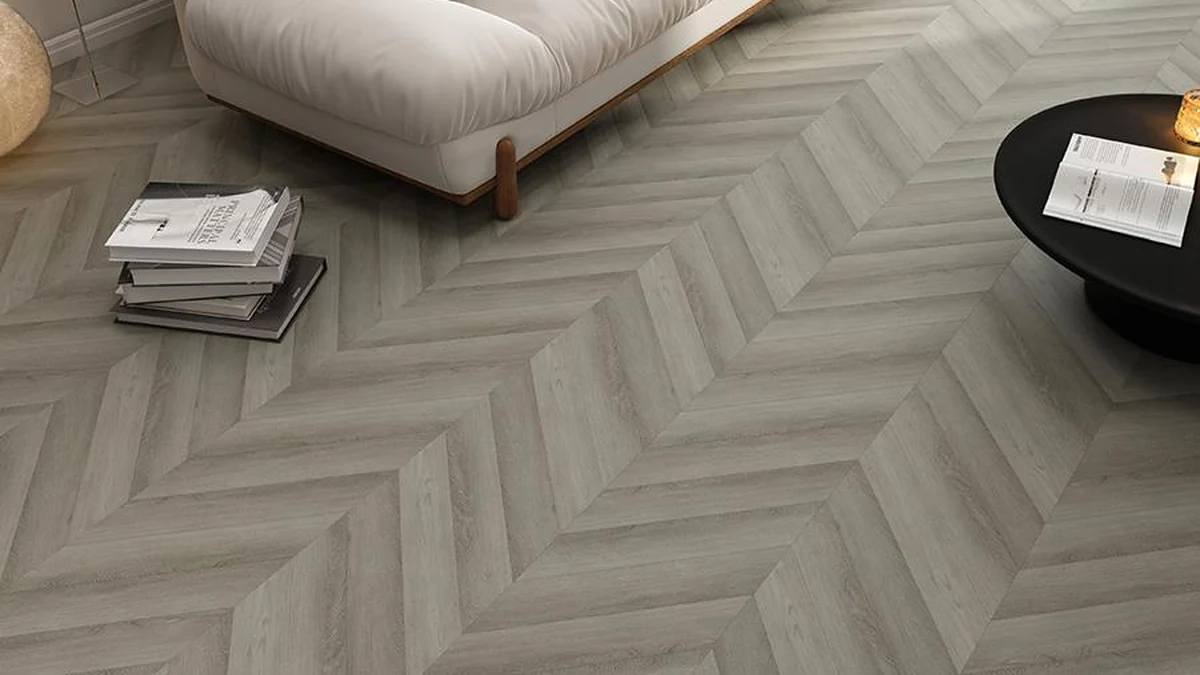
EIR SPC flooring earns its cost premium in spaces where occupants interact with the floor at close range. Living rooms, primary bedrooms, open-plan kitchen-dining areas — anywhere a person sits on the floor, walks barefoot, or simply spends time looking down at it.
Standard embossed SPC is the rational choice for utility spaces: laundry rooms, secondary bathrooms, rental unit hallways, basement playrooms. These spaces prioritize waterproof performance and durability over tactile realism. The visual gap between EIR and standard embossed is nearly invisible in a 10-foot-wide utility corridor with overhead fluorescent lighting.
For commercial projects — retail showrooms, hotel lobbies, restaurant dining rooms — EIR SPC flooring makes a measurable difference in how a space is perceived. Designers specifying wood-look vinyl flooring for hospitality clients consistently prefer EIR because the texture survives scrutiny from guests who crouch down to inspect it.
What are the downsides of SPC flooring?
SPC flooring — both EIR and standard embossed — shares the same structural limitations:
Thermal expansion: SPC rigid core expands and contracts with temperature. Installations in spaces that swing between 50°F and 100°F need larger expansion gaps at perimeter walls.
Hard underfoot: the rigid core offers no cushioning. Standing for long periods on SPC flooring is harder on joints than cork or engineered wood. An IXPE underlayment mitigates this but does not eliminate it.
Cannot be refinished: unlike solid hardwood, neither EIR SPC nor standard embossed SPC can be sanded and refinished. When the wear layer is gone, the plank is replaced.
Hollow sound: in floating installations without dense underlayment, foot traffic produces a hollow click. This is more pronounced with thinner 4 mm planks.
EIR SPC flooring adds one specific downside: off-register embossing is a quality defect that’s invisible in product photos but obvious in person. Always request a physical sample before committing to an EIR SPC order — a 12″ × 12″ sample under raking light reveals registration quality that a product image cannot.
🧰 Field note: Request samples from at least two different planks in the same box. EIR registration consistency varies across a production run, and a single sample can be unrepresentative of the full batch.
Who should choose EIR SPC flooring?
EIR SPC flooring is the right specification when visual authenticity is a project requirement, not just a preference. That covers a specific set of buyers:
Homeowners replacing hardwood in a primary living area who want the result to hold up to direct comparison with real wood
Interior designers and architects specifying wood-look vinyl flooring for hospitality or high-end residential work where the texture will be examined at close range
Commercial buyers outfitting showrooms, model units, or retail spaces where flooring contributes to brand perception
Renovation contractors who’ve had clients complain that previous vinyl plank “looks fake” — EIR addresses exactly that complaint
Standard embossed SPC is the better choice when the project is budget-constrained, the space is functional rather than experiential, or the floor will be covered by rugs and furniture for most of its visible area. There’s no point paying the EIR premium for a basement storage room.
Decision matrix: which SPC flooring fits your project?
If your project…
Choose
Requires wood-look vinyl flooring that passes close visual inspection
EIR SPC Flooring
Has a tight per-sq-ft budget and prioritizes durability over realism
Standard Embossed SPC
Is a hospitality or retail commercial space
EIR SPC Flooring
Is a utility room, rental unit, or secondary bathroom
Standard Embossed SPC
Involves an interior designer specifying for a client presentation
EIR SPC Flooring
Needs maximum waterproof performance at lowest cost
Standard Embossed SPC
Will be inspected by end buyers (model home, showroom)
EIR SPC Flooring
Is EIR SPC flooring worth the cost premium?
For the right project, yes — unambiguously.
The 15–25% cost premium over standard embossed SPC buys one thing: a surface that reads as wood rather than a printed wood image under plastic. In spaces where that distinction matters — primary living areas, hospitality environments, design-forward commercial projects — the premium pays back through perceived quality.
In spaces where it doesn’t matter, the premium is waste. A laundry room doesn’t need EIR. A hotel lobby does.
At SK-Floor, we produce both EIR SPC flooring and standard embossed SPC across our 10 production lines, built on manufacturing infrastructure that’s been refined over more than 30 years. Our EIR series meets ASTM F3261[3] and ISO 9001[4] quality benchmarks — the same certifications that govern our standard embossed products. The core, wear layer, and waterproof construction are identical.
The embossing process is where the lines diverge, and it’s a divergence worth understanding before you write your next flooring specification.
Request a physical sample of both formats from the same wood species design. Hold them under a single light source at a 45-degree angle. The difference will be immediately clear — and so will the decision.
Have a project or a spec sheet in hand? Talk to skspcflooring — real engineers answer.
EIR embossing itself does not normally “wear off” because the texture is pressed into the flooring surface rather than applied as a separate coating. However, the visible texture can become less pronounced if the wear layer is heavily scratched or abraded after years of use. The actual durability depends more on wear layer thickness, surface coating quality, and traffic level than on whether the SPC uses EIR or standard embossing.
Is EIR SPC flooring harder to clean than standard embossed SPC?
Not significantly. EIR SPC can have deeper and more detailed surface texture, so dust or residue may collect slightly more easily in pronounced grain patterns. For normal maintenance, regular vacuuming or sweeping followed by a damp microfiber mop is usually sufficient. Avoid abrasive brushes and excessive water, especially around plank joints.
Does EIR SPC flooring scratch more easily than standard embossed SPC?
Not necessarily. Scratch resistance is mainly determined by the wear layer and protective surface coating rather than the embossing method itself. An EIR plank with a high-quality 0.5 mm wear layer can be more scratch resistant than a standard embossed plank with a thinner wear layer. Buyers should compare wear layer thickness and abrasion specifications instead of assuming EIR is automatically more or less durable.
How can you tell if EIR embossing is properly aligned before buying?
Check a physical sample under angled light and compare the raised or recessed texture with the printed wood grain underneath. On properly registered EIR SPC, knots, grain lines, and texture should line up closely with the printed pattern. If the texture clearly sits beside the printed grain or looks unrelated to it, the embossing may be off-register. For bulk orders, inspect samples from more than one plank before final approval.
Install loose lay vinyl flooring yourself in a weekend with basic tools. Follow simple steps for a smooth, durable floor and professional-looking results.
Vinyl flooring with adhesive can work over old tile if the surface is clean, level, and grout lines are filled, ensuring a smooth, lasting installation in 2026.