
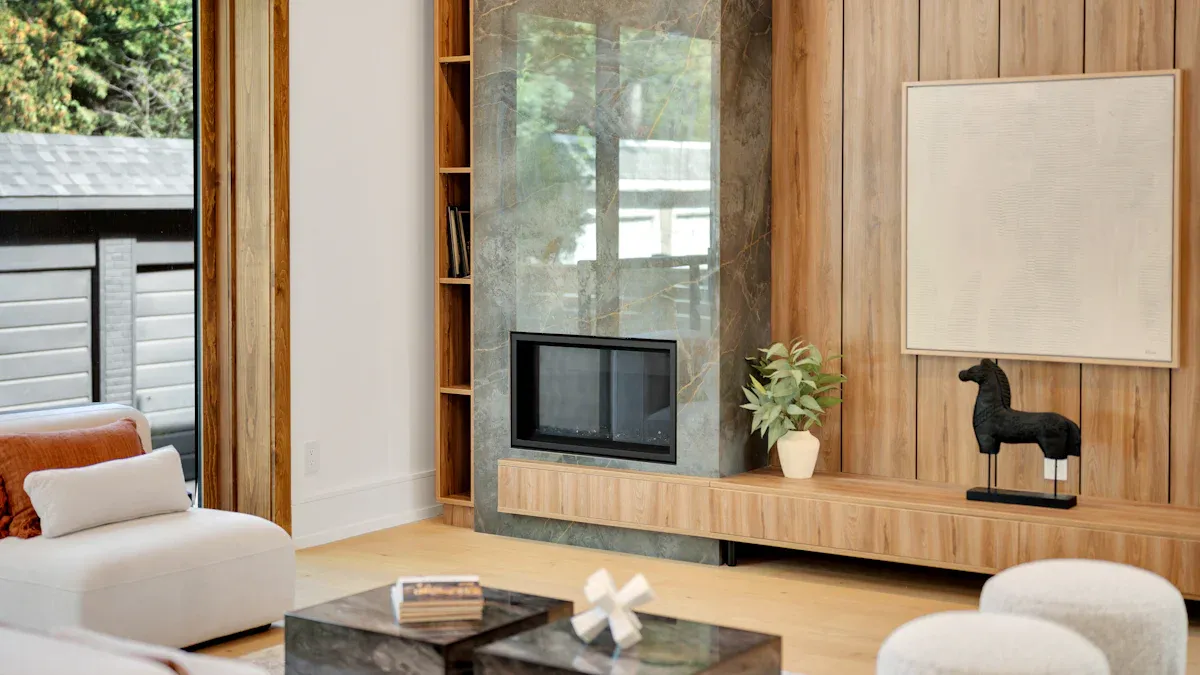
You want flooring that can handle daily life and look stylish at the same time. SPC floors meet these needs with new features in 2025. Modern waterproof finishes protect your home from spills. Eco-friendly materials let you support the planet. Improved printing technology gives you floors that look just like real wood or stone. Thicker wear layers mean your floors last longer. Bold colors and patterns help you create a unique space.
SPC Floors Deliver Unmatched Durability
Superior Resistance to Scratches and Dents
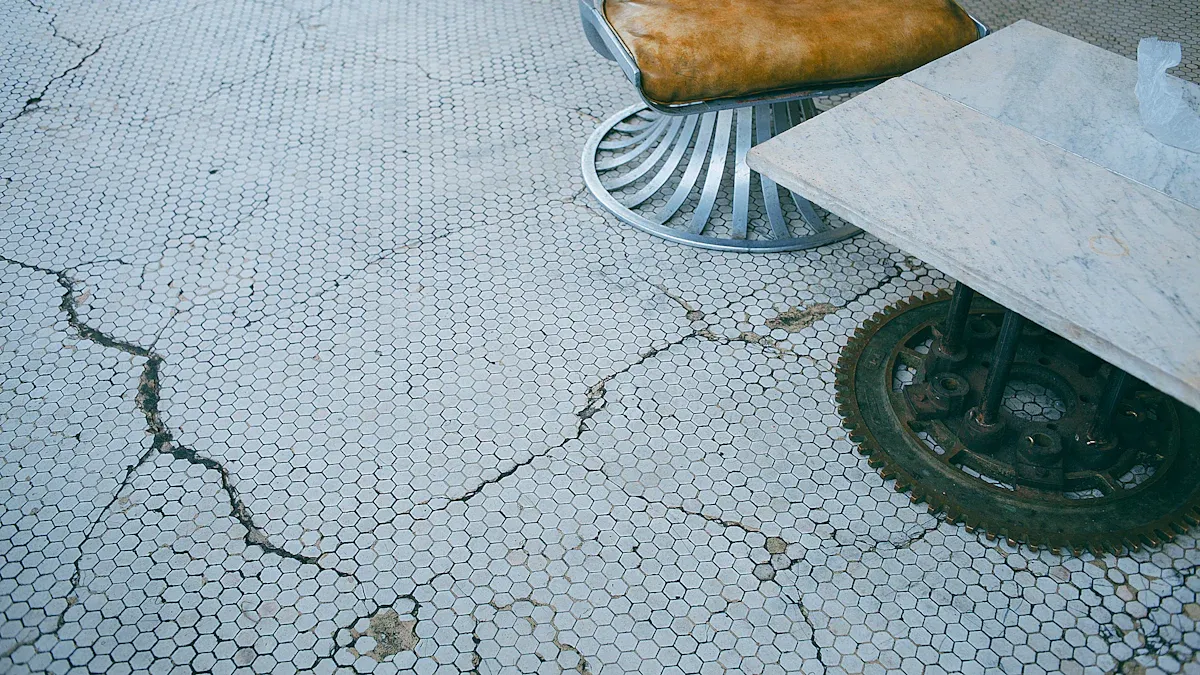
You want floors that can handle the demands of daily life. SPC floors give you peace of mind because they resist scratches and dents better than many other flooring types. The secret lies in their tough wear layer, which usually measures between 0.3mm and 0.7mm thick. This layer protects your floor from scuffs, pet claws, and dropped objects.
- SPC flooring stands out for its strong resistance to impact, scratches, and dents.
- Many families with pets or children choose SPC floors because they stay looking new, even in busy homes.
- Laminate flooring has a protective layer, but it does not match the impact resistance of SPC floors.
Industry tests, such as the Taber abrasion test, show that SPC floors keep their appearance and function after years of use. Standards like EN 13329 and ASTM F1700 set high benchmarks for wear resistance. SPC floors meet or exceed these standards, so you know you are getting a product built to last.
Tip: If you have an active household, SPC floors help you avoid the worry of visible damage from daily activities.
100% Waterproof Core for Any Room
Moisture can ruin many types of flooring, but SPC floors have a 100% waterproof core. This means you can install them in kitchens, bathrooms, basements, or laundry rooms without fear. The core is non-porous, so it does not absorb water. Even if you spill a drink or your pet has an accident, the floor will not swell or warp.
- SPC flooring does not expand or change shape when exposed to water, unlike wood floors.
- The sealed edges and click-lock system keep water from seeping through the seams.
- Water immersion tests show that SPC floors keep their structure, with a water absorption rate of less than 0.1% after 72 hours.
- SPC flooring comes in board format, which makes it more water-resistant than traditional vinyl sheets.
- The stone-plastic composite core gives extra durability and moisture protection.
If your home ever faces a flood, you can often reuse SPC floors after they dry. Hardwood or carpet usually needs replacement, but SPC floors dry quickly and keep their strength.
Long-Lasting Performance in High-Traffic Areas
You need a floor that lasts, especially in busy spaces like hallways, kitchens, and entryways. SPC floors deliver long-term performance, even when many people walk on them every day. Their tough construction and strong wear layer help them resist wear and tear.
| Flooring Type | Average Lifespan (Years) |
|---|---|
| SPC | 20 to 25 |
| Vinyl | 10 to 20 |
| Laminate | 15 to 25 |
| Hardwood | 20 to 100 |
Many top manufacturers back SPC floors with long warranties. For example:
| Manufacturer | Warranty Type | Coverage Duration | Application Type |
|---|---|---|---|
| Décor Flooring LLC | Limited Residential Warranty | 25 Years | Residential use |
| L.W. Mountain, Inc. | Lifetime Structural Warranty | Lifetime | Residential use |
| L.W. Mountain, Inc. | Lifetime Finish Wear-Through | Lifetime | Residential use |
These warranties show that companies trust SPC floors to perform well for many years. You can feel confident choosing SPC floors for any room that sees a lot of activity.
SPC Floors Offer Versatile Style Options
Wide Range of Designs and Finishes
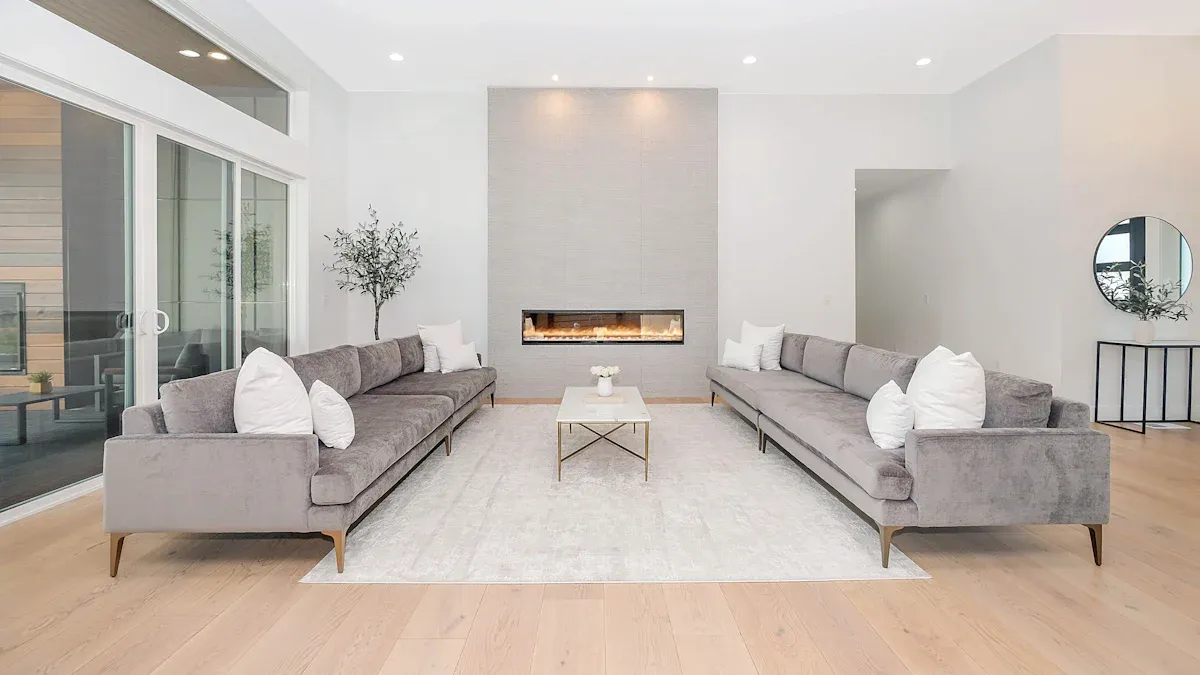
You can choose from a huge variety of designs and finishes when you select SPC floors. In 2025, manufacturers offer options that look and feel like real wood or stone. You will find embossed wood grain, stone patterns, and even finishes that mix matte and gloss styles. These choices help you match your floor to your home’s décor and lighting. Some surfaces feel smooth, while others have a texture that looks just like natural materials. This wide selection lets you create a space that feels personal and unique.
Here are some of the most popular trends for SPC flooring in 2025:
| Trend | Description |
|---|---|
| Sustainability | Eco-friendly materials and practices are in high demand. |
| Warm Earthy Tones | Colors that make your home feel cozy and inviting. |
| Textured Surfaces | Designs that add depth and interest to your floors. |
| Innovative Patterns | Creative patterns that help you personalize your space. |
You can also pick bold colors or styles that make your floor stand out. Many homeowners love how these floors combine style with easy care.
Seamless Floor-to-Wall Integration
You can create a smooth, continuous look by matching your SPC flooring with your walls. This design trick makes your rooms look bigger and more inviting. When you use the same finish for both the floor and the wall, you reduce the number of joints and lines. This helps your space feel open and modern.
- Achieve a cohesive look between your floor and wall for a stylish design.
- Use light-colored SPC flooring to make your room appear larger.
- Keep patterns and colors consistent for a harmonious effect.
Tip: Seamless floor-to-wall integration works especially well in small rooms or open-plan spaces.
Customization for Modern Interiors
You have many ways to customize SPC floors to fit your style. Choose from soft gray, whitewashed, rich brown, or even black tones. If you want something bold, try mixed-color flooring or vibrant patterns for an eclectic look. Herringbone and chevron styles add movement and energy to your space. You can also pick calming greens, earthy browns, or soft blues to match the latest trends.
- Mix and match colors for a unique design.
- Try bold patterns for a modern, artistic feel.
- Select classic styles like herringbone for timeless appeal.
SPC floors give you the freedom to design a home that matches your taste and lifestyle.
SPC Floors Support Eco-Friendly Living
Sustainable and Recyclable Materials
You help the planet when you choose flooring made from sustainable and recyclable materials. SPC floors use stone and plastic composite, which does not require cutting down trees. This means you avoid the deforestation linked to hardwood flooring. You also get a product that lasts longer than many other options. When you finish using SPC floors, you can recycle them through closed-loop systems. This reduces waste and keeps materials out of landfills.
Here is a comparison of environmental impacts for popular flooring types:
| Feature | SPC Flooring | Hardwood | Laminate | Vinyl |
|---|---|---|---|---|
| Deforestation Impact | None | High | Moderate | None |
| Lifespan (Years) | 15-25 | 10-15 | 8-12 | 5-10 |
| Water Resistance | Excellent | Poor | Good | Excellent |
| Recyclability | High | Low | Medium | Low |
| Carbon Footprint (kg CO2/sq ft) | 2.1 | 3.8 | 2.9 | 3.2 |
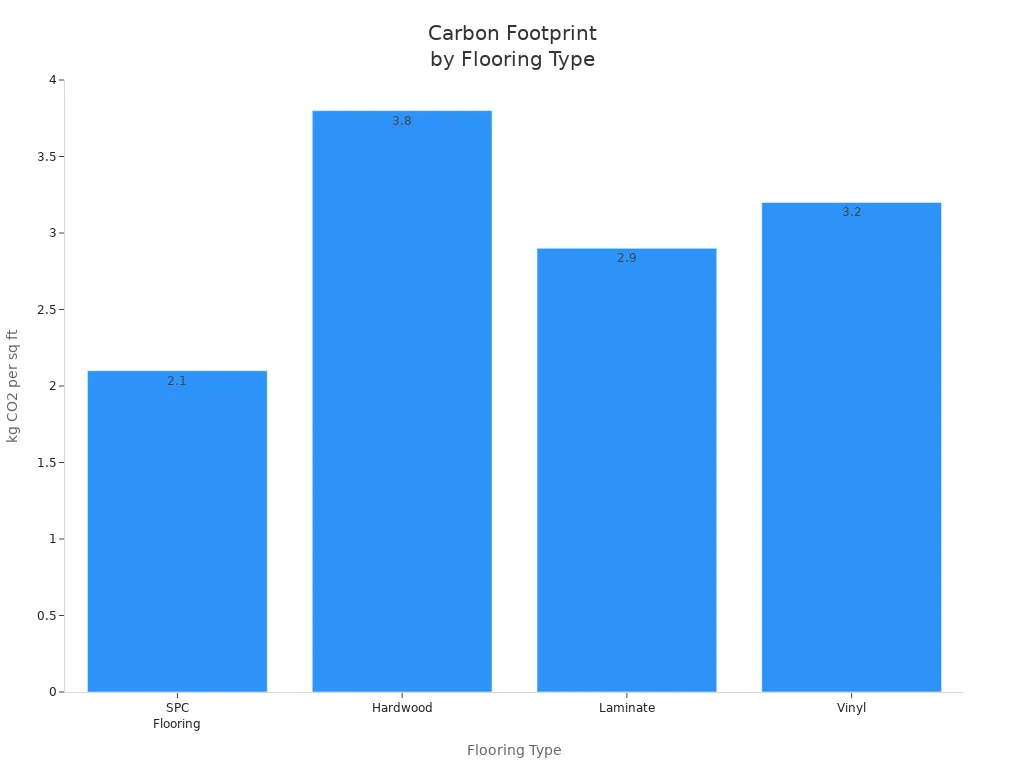
Choosing SPC floors helps you lower your carbon footprint and protect forests.
Low VOC for Healthier Homes
You want a healthy home for your family. SPC floors contain very low levels of volatile organic compounds (VOCs). These chemicals can pollute indoor air and cause health problems. SPC flooring keeps VOCs below 0.5 parts per million. The EPA says this can cut indoor air pollution by half. You also get a surface that does not trap allergens or dust. This makes cleaning easier and helps reduce allergy symptoms. The waterproof core stops mold and mildew from growing, which is important in rooms with moisture.
| Health Benefit | Description |
|---|---|
| Improved Indoor Air Quality | SPC flooring has VOC levels below 0.5 parts per million, significantly reducing indoor air pollution. The EPA states it can cut indoor air pollution by up to half. |
| Allergen Resistance | The surface of SPC flooring does not absorb allergens, making it easier to clean and reducing allergy symptoms by 20-30%. |
| Mold Resistance | Its waterproof nature prevents mold and mildew growth, which is crucial for maintaining good indoor air quality, especially in moisture-prone areas. |
You create a safer and cleaner space for everyone when you install low-VOC flooring.
Green Certifications and Environmental Impact
You can trust SPC floors to meet strict environmental standards. Many products carry certifications that prove their safety and sustainability. FloorScore® checks for indoor air quality. Greenguard and Greenguard GOLD show that the flooring meets tough chemical emission rules. CARB Compliant means the product follows California’s formaldehyde limits. Phthalate-Free Certification confirms there are no harmful phthalates. ASSURE Certified is specific to SPC and WPC flooring and checks for heavy metals and ortho-phthalates.
| Certification Name | Criteria Description |
|---|---|
| FloorScore® Certification | Ensures compliance with strict indoor air quality emissions criteria. |
| Greenguard and Greenguard GOLD | Meets stringent standards for chemical emissions, with GOLD for sensitive environments. |
| CARB Compliant | Adheres to formaldehyde emissions standards set by the California Air Resources Board. |
| Phthalate-Free Certification | Confirms absence of harmful phthalates in the flooring product. |
| ASSURE Certified | Specific to SPC and WPC flooring, ensuring low levels of heavy metals and ortho-phthalates. |
Look for these certifications when you shop for flooring. They help you make choices that are better for your health and the environment.
SPC Floors Are Affordable and Easy to Maintain
Cost-Effective Alternative to Hardwood and Tile
You want a floor that looks great but does not break your budget. SPC floors give you that option. When you compare the cost per square foot, you see real savings:
| Flooring Type | Cost per Square Foot |
|---|---|
| SPC Flooring | $2 to $7 |
| Hardwood Flooring | $5 to $15 |
| Ceramic Tiles | $1 to $10 |
SPC flooring costs less than hardwood and often less than ceramic tile. You also save money over time. SPC floors last for decades and do not need expensive repairs or refinishing. You avoid the yearly upkeep that hardwood requires. The table below shows how SPC compares to other popular floors:
| Flooring Type | Cost per Square Foot | Lifespan | Maintenance Needs |
|---|---|---|---|
| SPC | $2.00 – $6.00 | 20 – 25+ years | Minimal upkeep, no sealing or refinishing |
| Hardwood | $4.00 – $12.00+ | 25+ years | Annual maintenance required |
| Laminate | $1.50 – $4.00 | 10 – 15 years | Prone to water damage, needs underlayment |
| Luxury Vinyl | $1.00 – $5.00 | 10 – 20 years | Varies, but generally higher upkeep |
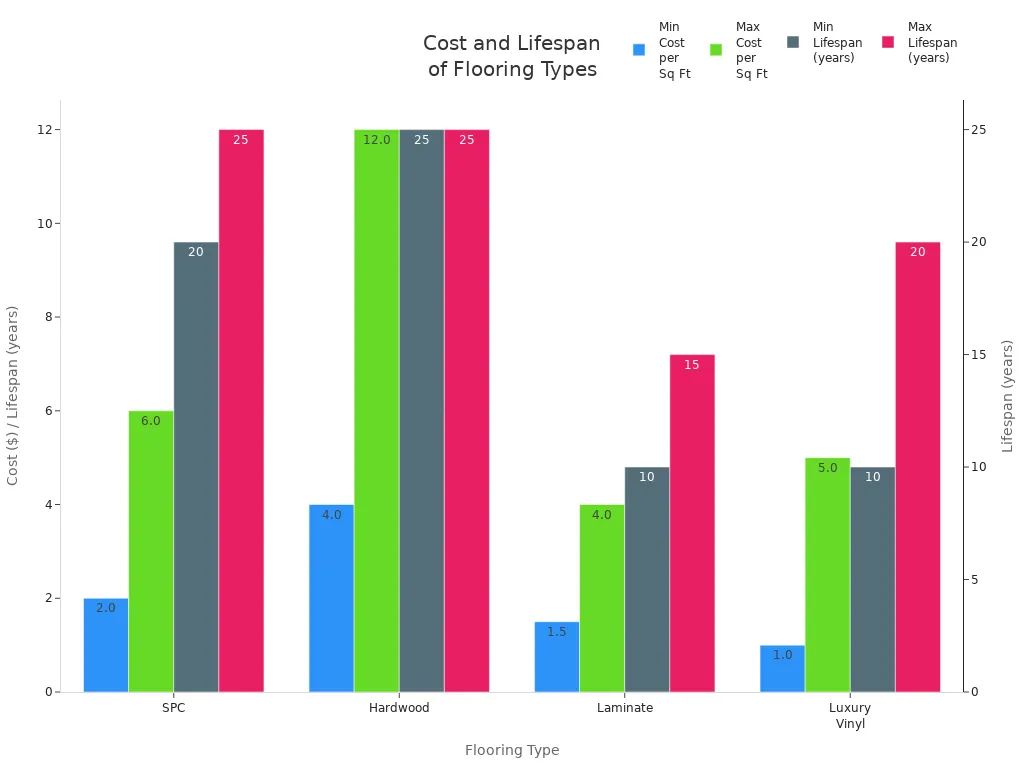
You get a floor that stands up to daily life and saves you money in the long run.
Simple Cleaning and Maintenance
You want a floor that is easy to keep clean. SPC floors make your job simple. Daily sweeping with a microfiber mop removes dust and dirt. Weekly mopping with a pH-neutral cleaner keeps the surface looking fresh. You do not need wax, polish, or special treatments. The routines are easy to follow and take less time than caring for hardwood or tile.
| Routine Type | Frequency | Recommended Tools | Purpose |
|---|---|---|---|
| Damp Mopping | Weekly | pH-neutral cleaner | Preserves wear layer |
| Deep Cleaning | Monthly | Soft-bristle brush | Removes embedded grime |
| Protective Coating | Annually | SPC-specific polish | Enhances shine and protection |
| Inspection for Damage | Quarterly | Visual check | Prevents costly repairs |
- Daily sweeping with a microfiber mop is quick and easy.
- Weekly mopping prevents scratches and keeps your floor looking new.
- You spend less time and effort on maintenance compared to other floors.
DIY-Friendly Installation Process
You can install SPC floors yourself, even if you have never done flooring before. The boards use a click-lock system that snaps together without glue or nails. You can cut the planks with a simple utility knife. Most rooms take only a day to finish. You do not need special tools or professional help.
Many homeowners choose SPC flooring because they can save on installation costs and enjoy a quick, mess-free process.
Innovations and Trends in SPC Floors for 2025
Smart Flooring Technologies and Comfort Features
You now have access to smart flooring features that make your home safer and more comfortable. Many new SPC floors include built-in sensors that track heat, dampness, and even foot traffic. Some floors can monitor temperature and humidity, which helps you keep your home at the right comfort level. In moisture-prone areas, these floors can detect water leaks before they cause damage. Some advanced models even offer wireless charging through special materials in the floor.
- Built-in sensors track heat, dampness, and foot traffic.
- Wireless charging is possible with conductive materials.
- Systems monitor temperature and humidity.
- Water leak detection protects your home from damage.
Comfort features have also improved. The latest SPC floors use foam underlayment for extra support and warmth. This makes walking on the floor more pleasant and helps keep your home quiet. The table below shows some of the top comfort features you can expect:
| Comfort Feature | Description |
|---|---|
| Increased walking comfort | Foam underlayment adds support and insulation for warmth. |
| Reduced noise | Less walking noise for a quieter home. |
| Enhanced energy efficiency | Thicker floors provide better insulation and reduce heat loss. |
| Improved appearance | Covers subfloor flaws for a smoother look. |
| Tighter moisture barrier | Shields subfloors from spills and moisture. |
| Easy installation | Smooth surface reduces prep work and saves time. |
| Enhanced durability | Extra barrier lowers the risk of cracks and flaws. |
Enhanced Textures and Realistic Looks
You want your floors to look and feel like real wood or stone. New printing and texture technology in 2025 brings you ultra-realistic wood grains and 3D patterns. These designs make your floors look more natural and stylish. Many homeowners enjoy the authentic look, but some still feel that real wood or stone has a unique warmth and texture.
SPC flooring offers a wide range of designs, including those that mimic natural wood and stone. However, despite technological advancements in printing, some homeowners feel that SPC can’t completely replicate the warmth and texture of real wood or stone.
Still, the latest SPC floors give you a close match to natural materials, with less maintenance and more durability.
Trending Colors and Patterns
You can choose from many new colors and patterns for your floors in 2025. Warm beiges remain the most popular in homes, creating a calming and welcoming space. Terracottas and deep emeralds add earthy or luxurious touches. Rich navies are popular in offices and commercial spaces, giving a professional look. Cool grays offer a modern and clean style.
| Color Family | Residential Popularity | Commercial Popularity | Psychological Effect |
|---|---|---|---|
| Warm Beiges | 85% | 70% | Calming, welcoming |
| Terracottas | 65% | 45% | Earthy, grounded |
| Deep Emeralds | 30% | 55% | Luxurious, stable |
| Rich Navies | 25% | 60% | Professional, trustworthy |
| Cool Grays | 15% | 30% | Modern, clean |
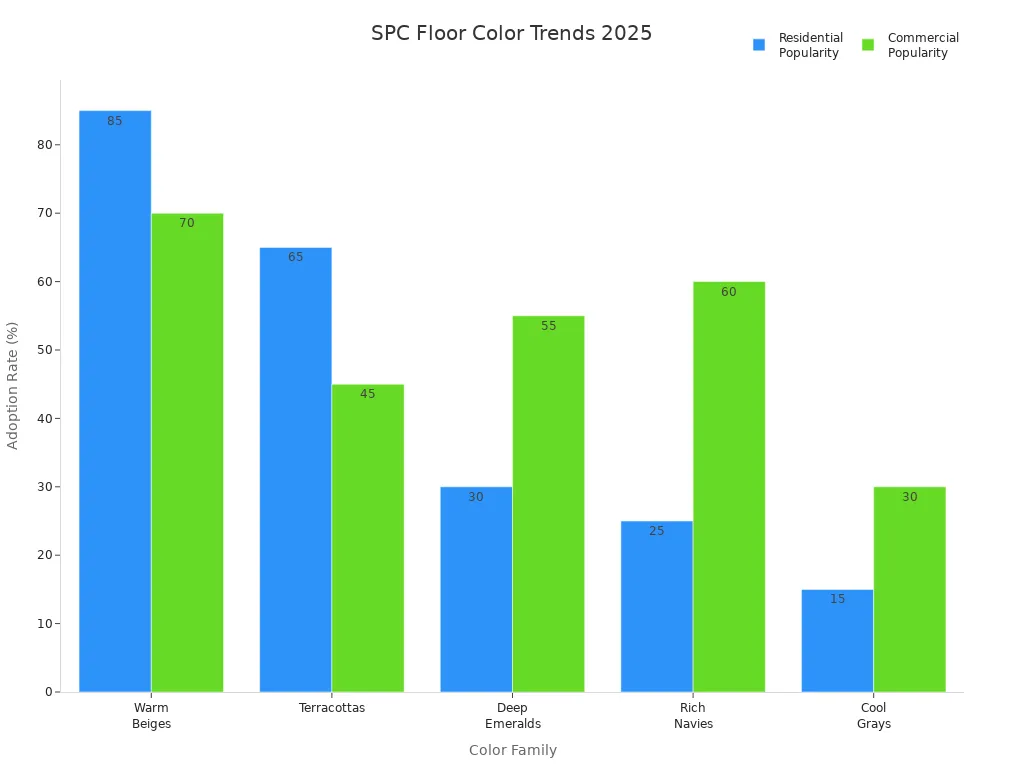
You can also find floors with innovative 3D patterns and ultra-realistic wood grains. These trends help you create a space that matches your style and needs.
Considerations When Choosing SPC Floors
Performance in Extreme Temperatures
You want your floors to stay strong in any climate. SPC floors handle both heat and cold better than many other options. They do not warp in high temperatures or crack in freezing weather. You can see how they compare in the table below:
| Aspect | SPC Flooring Performance |
|---|---|
| Heat Resistance | Endures moderately high temperatures without warping. |
| Cold Resistance | Remains stable in cold, does not crack or shrink. |
| Comparison to Alternatives | Performs better than traditional vinyl or laminate flooring. |
| Limitations | Prolonged exposure to >120°F may cause slight expansion. |
| Advantages | More stable than traditional options, suitable for diverse climates. |
| Disadvantages | Requires proper acclimation for optimal performance in extreme cold. |
You should let your new flooring adjust to the room’s temperature before installation. This helps prevent problems in very hot or cold spaces.
Subfloor Preparation and Installation Tips
Proper subfloor preparation makes your new floor last longer. You need to make sure the surface is clean, flat, and dry. Follow these steps for the best results:
- Make sure the subfloor is smooth, permanently dry, and clean.
- Fill any depressions or cracks with a leveling compound.
- Conduct moisture and alkalinity tests to ensure compliance with standards.
Tip: Basements and crawl spaces must stay dry. Cover the earth in crawl spaces with a 6 mil black polyethylene sheet.
Check that the subfloor is flat. It should not have more than 3/16″ variation in 10 feet or 1/8″ in 6 feet. Remove all dust, wax, paint, and old adhesives. Moisture vapor emissions should not go above 80% RH. A strong, hard subfloor gives your floor the best support.
Comparing SPC Floors to Other Flooring Types
You have many choices for flooring. Compare features to find what fits your needs. The table below shows how SPC flooring stacks up against other popular types:
| Feature | Engineered Hardwood | Luxury SPC Vinyl |
|---|---|---|
| Cost | Varies widely; generally higher than SPC | Generally lower price-point than engineered hardwood |
| Durability | Can last for years; refinishing possible depending on wear layer | Extremely scratch resistant; plank replacement is easy |
| Maintenance | Requires regular cleaning; can use hardwood cleaning products | Non-porous surface; easy to clean with sweeping and washing |
You should also think about moisture resistance and installation. SPC floors work well in bathrooms and kitchens because they resist water. Laminate flooring does not handle moisture as well. Both SPC and laminate are easy to install, but SPC offers better durability for the price. Always consider the room type, your budget, and your style preferences before making a decision.
You can transform your home with spc floors in 2025. These floors offer durability, style, and eco-friendly benefits. Many experts praise their scratch resistance, easy installation, and affordable price. You can use them in any room, from bathrooms to living spaces. The table below shows why homeowners and designers choose this flooring:
| Advantage | Benefit |
|---|---|
| Durability | Resists scratches and water |
| Eco-Friendly | Uses recyclable materials |
| Style Variety | Matches many design tastes |
| Affordability | Costs less than hardwood |
| Easy Installation | Simple for homeowners |
| Versatile Use | Fits any room in your home |
FAQ
What makes SPC flooring different from regular vinyl flooring?
SPC flooring uses a stone-plastic composite core. This core gives you more strength and stability than regular vinyl. You get better resistance to dents, scratches, and water.
Can you install SPC floors over existing tile or wood?
Yes, you can install SPC floors over most hard surfaces. Make sure the old floor is clean, dry, and level. You do not need to remove tile or wood in most cases.
How do you clean and care for SPC floors?
Sweep your floor daily with a soft broom or microfiber mop. Use a damp mop and a pH-neutral cleaner for deeper cleaning. Avoid wax, polish, or harsh chemicals.
Tip: Place mats at entrances to catch dirt and protect your floor.
Are SPC floors safe for homes with pets and children?
Yes, SPC floors work well in homes with pets and kids. The tough surface resists scratches and stains. The waterproof core stops spills from causing damage. You get a safe and easy-to-clean floor.




