
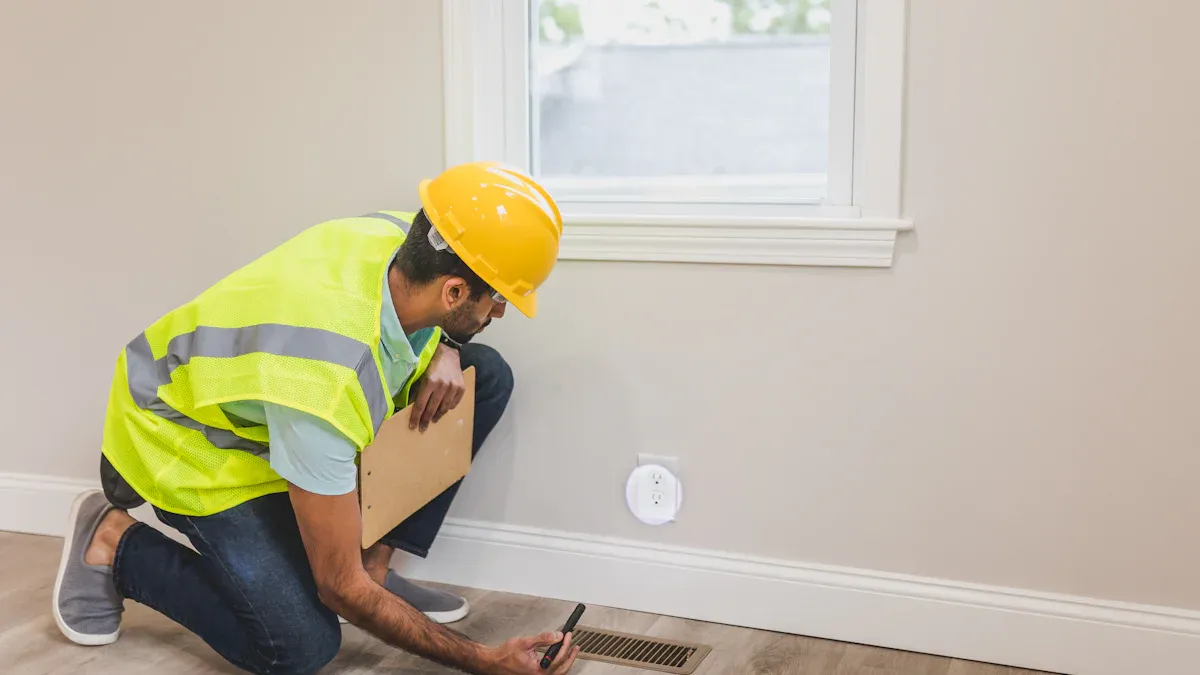
You see manufacturers use advanced technology in pvc floor manufacturing to protect your health. They follow strict safety standards and check each step for safety. You can trust that vinyl flooring goes through many safety checks. Safety teams monitor raw materials, equipment, and finished vinyl products. They test for safety every day.
Safety remains the top priority, so you get reliable floors in your home or business.
PVC Floor Manufacturing and Safety Importance
What Is Vinyl Flooring and PVC Floor Manufacturing?
You see vinyl flooring in homes, schools, and offices. It looks like wood or stone, but it uses synthetic materials. The vinyl flooring manufacturing process starts with mixing polyvinyl chloride (PVC) with other safe ingredients. You get strong, flexible sheets that resist water and stains. PVC floor manufacturing stands out because it always improves safety protocols. Manufacturers replace harmful ingredients with safer options. This focus on safety makes PVC floors different from other types of vinyl flooring. You benefit from floors that meet strict safety standards and protect your health.
Tip: When you choose vinyl flooring, you select a product made with advanced safety measures. Manufacturers work hard to keep dangerous chemicals out of your home.
Why Quality and Safety Standards Matter
You want floors that last and keep you safe. Quality and safety standards help you avoid health risks from substandard products. If you pick low-quality PVC flooring, you may face problems like:
- Phthalates used as plasticizers can disrupt hormones.
- Some phthalates may harm reproductive health, especially in boys.
- Cheap materials can release harmful chemicals or pollutants.
- Off-gassing from recycled PVC affects indoor air quality.
- Phthalate plasticizers in low-cost flooring link to breathing problems and hormone disruption.
Manufacturers follow safety standards to protect you from these risks. You get peace of mind knowing your vinyl flooring meets strict safety checks. Safety teams test every batch and inspect each step. You enjoy clean air and safe surfaces in your space.
Key Safety Standards and Certifications in PVC Floor Manufacturing
International Standards (ISO, EN, IEC)
You rely on international standards to keep your vinyl flooring safe. These standards guide manufacturers in every step of pvc floor manufacturing. ISO standards set the rules for quality, safety, and environmental care. You see these standards in action when companies test materials, monitor energy use, and check for workplace hazards. The table below shows important ISO standards and what they require:
| ISO Standard | Key Requirements |
|---|---|
| ISO 9001 | Establish a robust Quality Management System; Continuous monitoring and improvement of production processes; Documented processes for quality checks and customer feedback. |
| ISO 14001 | Conduct an environmental impact assessment; Implement measures to minimize pollution and waste; Maintain documentation of environmental management practices. |
| ISO 45001 | Identify and mitigate workplace hazards; Develop a safety policy and provide regular training; Ensure compliance with occupational health and safety regulations. |
| ISO 50001 | Assess current energy usage and identify areas for improvement; Set measurable energy performance goals; Maintain records of energy management initiatives. |
| ISO 21702 | Conduct rigorous testing for antiviral properties; Adhere to protocols for non-porous surface evaluation. |
| ISO 178 | Perform flexural testing to measure material resistance; Document results to verify product strength and compliance. |
You benefit from these standards because they help manufacturers create safe, strong, and reliable vinyl flooring. EN and IEC standards also support safety by setting rules for product performance and electrical safety in flooring systems.
Tip: Look for ISO certification on product labels. This shows the manufacturer follows strict safety standards and quality checks.
Regional and National Standards (ASTM, FloorScore, CE, GB4085-83)
You see regional and national standards protect you from unsafe flooring. ASTM sets rules for material strength, fire resistance, and chemical safety. FloorScore certification checks indoor air quality, making sure your vinyl flooring does not release harmful chemicals. CE marking shows the product meets European safety standards. GB4085-83 is a Chinese standard that covers safety and performance for PVC floors.
Manufacturers follow these standards to keep you safe. You get floors that resist wear, do not pollute your air, and meet strict safety requirements. These standards help you trust the quality of your flooring.
- ASTM standards test for strength and safety.
- FloorScore checks for low emissions and clean air.
- CE marking proves the product meets European safety rules.
- GB4085-83 sets safety standards for PVC floors in China.
Industry-Specific Certifications and Eco-Labels
You want flooring that is safe for your family and the environment. Industry-specific certifications and eco-labels help you choose products that meet high safety and quality standards. These certifications show that manufacturers care about your health and the planet.
Here are some important eco-labels and what they require:
| Eco-Label | Criteria |
|---|---|
| Nordic Swan Ecolabel | High proportion of renewable/recycled materials, no harmful chemicals, low emissions, energy-efficient manufacturing, good durability, independent certification. |
| The Blue Angel | Low emissions, low pollutant content, no adverse health impacts. |
| Österreichisches Umweltzeichen | Holistic evaluation on energy, toxicity, emissions, recycling, product longevity, and repairability. |
| Declare Red List Free | Evaluation of product ingredients reported by the manufacturer. |
| Indoor Air Comfort Gold | Compliance with VOC requirements and various national/international standards. |
| UL certified Environmental Product Declaration | Quantified environmental data based on Life Cycle Assessment, covering raw material acquisition, energy use, emissions, and waste generation. |
You see these labels on safe vinyl flooring. They prove the product meets strict safety and environmental rules. You can trust certified flooring to protect your health and support sustainability.
- Industry-specific certifications ensure that PVC flooring products meet quality, safety, and environmental standards.
- Certifications like FloorScore and ISO 14001 validate product durability and performance, enhancing consumer confidence.
- Eco-conscious consumers are more likely to trust products that demonstrate a commitment to sustainability through recognized certifications.
Note: When you choose certified vinyl flooring, you support safer homes and a cleaner environment.
PVC Floor Manufacturing Process and Integration of Safety Protocols
Raw Material Selection and Sourcing for Quality
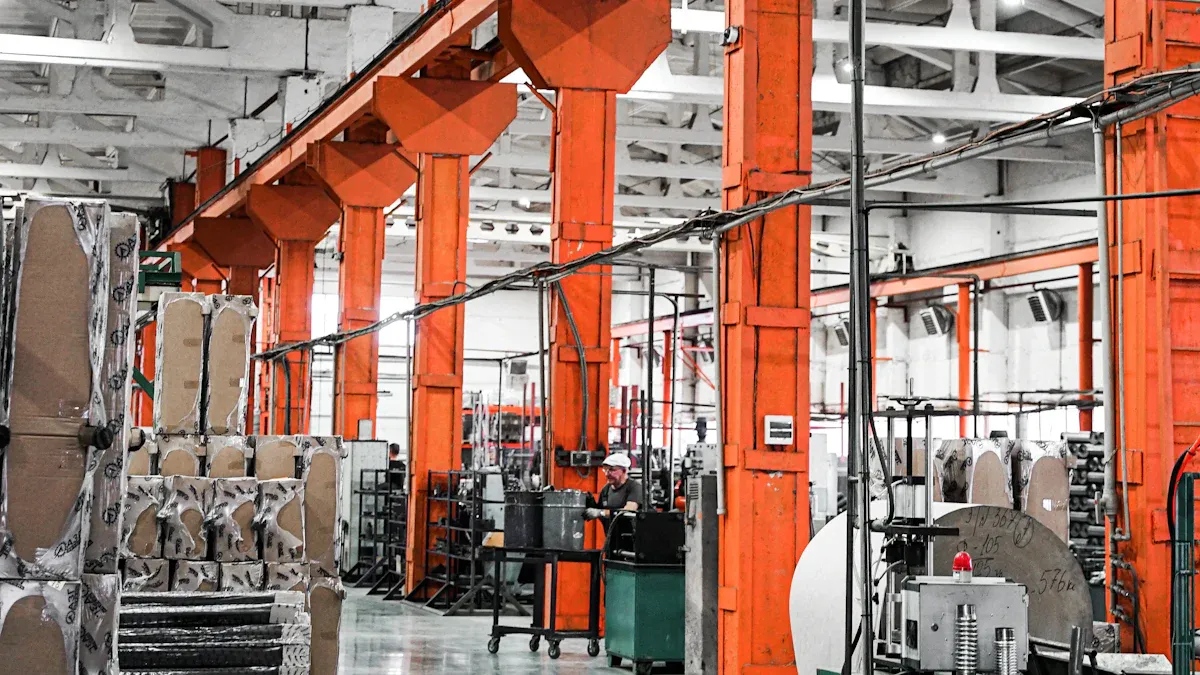
You start with the most important step in pvc floor manufacturing: choosing the right raw materials. Manufacturers know that safety begins with what goes into your vinyl flooring. They test and inspect every batch of raw materials to find impurities or contaminants. This careful process helps keep your floors safe and strong. You benefit because only high-quality materials enter the manufacturing processes.
Manufacturers work with reliable suppliers who provide consistent quality. They check the specifications of each material and audit suppliers regularly. You get peace of mind because trusted suppliers meet strict safety standards. The selection process also follows environmental rules, so your pvc flooring supports a safer planet.
Tip: When you see certification on your flooring, you know the manufacturer checked every ingredient for safety and quality.
Mixing, Compounding, and Sheet Formation
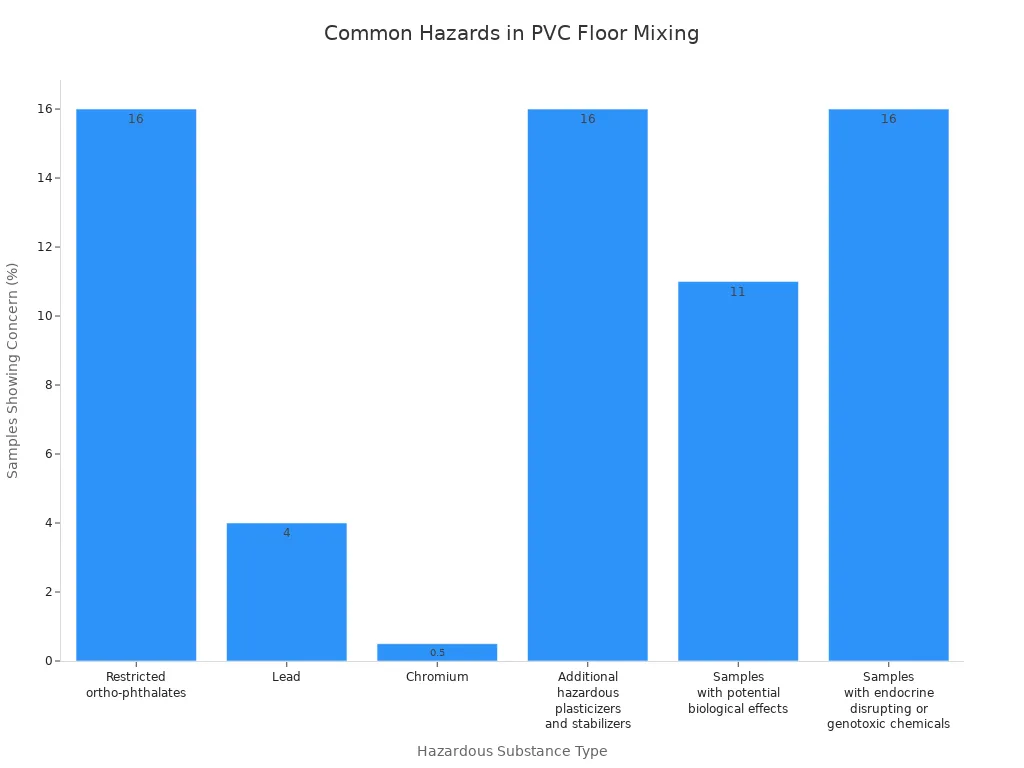
You watch as the raw materials move to the mixing and compounding stage. Here, manufacturers blend pvc with other safe ingredients to create a strong base. Safety is a top priority during this step. Workers monitor the mixture for hazardous substances, such as restricted ortho-phthalates, lead, and chromium. The table below shows how often these substances appear in samples:
| Hazardous Substance Type | Percentage of Samples Showing Concern |
|---|---|
| Restricted ortho-phthalates | 16% |
| Lead | 4% |
| Chromium | 0.5% |
| Additional hazardous plasticizers and stabilizers | 16% |
| Samples with potential biological effects | 11% |
| Samples with endocrine disrupting or genotoxic chemicals | 16% |
You see manufacturers use strict control to keep these risks low. They check the mix for purity and composition. Suppliers provide certificates to prove the materials are safe. Workers receive training to spot problems early. During sheet formation, manufacturers monitor the extrusion process to keep thickness and density consistent. This step helps your vinyl flooring stay stable and safe.
Manufacturers use several inspection methods to maintain quality and safety:
| Inspection Method | Purpose |
|---|---|
| Mix Check | Ensures correct formulation of materials |
| Thickness Check | Maintains consistent product dimensions |
| Surface Inspection | Detects defects like bubbles or unevenness |
| Regular Testing | Confirms compliance with safety standards |
| Traceability Systems | Tracks batches for quick issue resolution |
| Worker Training | Keeps staff updated on quality standards |
| Audits and Reviews | Identifies areas for improvement over time |
Note: You get safer floors because manufacturers control every step and train workers to follow safety standards.
Printing, Embossing, and Finishing and Quality Control
You notice the next stage adds beauty and texture to your vinyl flooring. Manufacturers use advanced printing and embossing technologies to create realistic designs. Embossed In Register (EIR) matches the texture with the printed pattern, so your floor looks and feels like natural wood or stone. EIR also aligns the embossing with the attractive paper underlayment, giving you a perfect fit between shade and surface.
Manufacturers use these technologies to deliver the look of oak, marble, or ceramic tiles. You enjoy floors that are not only safe but also stylish. The embossment reflects the printing, enhancing the overall appearance and depth of color.
Quality control continues during finishing. Manufacturers inspect each sheet for defects, such as bubbles or uneven surfaces. They test for durability and safety. You see regular audits and reviews to improve processes. Certification proves that your flooring meets strict safety standards.
Callout: You get floors that look great and keep you safe because manufacturers combine advanced technology with strong safety protocols.
Curing, Cutting, Packaging, and Final Inspections
You see the final stages of pvc floor manufacturing focus on making sure your vinyl flooring meets the highest safety and quality standards. After the finishing and quality control steps, the flooring moves to curing. During curing, manufacturers use controlled heat to harden the surface and lock in durability. This process helps your floors resist scratches and stains, so you get long-lasting performance.
Next, workers cut the cured sheets into precise sizes. They use advanced machines to make sure each piece matches the required dimensions. You benefit from floors that fit together perfectly, with no gaps or uneven edges. The cutting process also includes checks for straightness and embossing depth, which add to the realistic look and feel of your vinyl flooring.
Packaging comes after cutting. Workers inspect each piece for pattern, brightness, and surface condition. They confirm the quantity in every pack and check for height differences between boards. You get products that look great and perform well because of these careful inspections.
Before shipping, manufacturers complete a final inspection. They move the finished products to a special area and check the outer boxes for damage, moisture, and secure seals. Multiple rounds of inspections happen from raw materials to finished products. This ensures you receive safe, high-quality flooring every time.
Here is a table that shows the standard procedures for final inspections before packaging and shipping:
| Step | Description |
|---|---|
| Quality Check | Each flooring piece is inspected for pattern, size, and surface condition. |
| Finished Product Area | After inspection, pieces are moved to the finished product area for shipment. |
| Final Loading Inspection | Outer boxes are checked for damage, moisture, and secure seals before loading. |
| Multiple Rounds of Inspections | Inspections are conducted at various stages from raw materials to finished products to ensure quality. |
You can also see these important checks in the process:
- Confirm quantity of each pack of floors.
- Check for brightness, straightness, and embossing depth.
- Inspect for height differences and gaps between boards.
- Evaluate flame retardancy properties, dimensional stability, and density.
Tip: When you choose vinyl flooring from certified manufacturers, you know every piece has passed strict safety and quality checks.
Safety Protocols at Every Step
You trust vinyl flooring manufacturers to protect your health and safety at every stage. They use strict safety protocols from the moment they select raw materials until the final product leaves the factory. These protocols help prevent accidents, reduce risks, and ensure your floors meet all safety standards.
At the start, manufacturers carefully source and inspect pvc resin, plasticizers, stabilizers, pigments, and fillers. They use precise heating and continuous monitoring during calendering and extrusion. This keeps the material consistent and safe. During lamination, workers check that each layer sticks together properly. In the finishing stage, they apply protective coatings to shield your floors from scratches and stains.
Quality control teams inspect for visual defects, color consistency, and dimensional stability. They test for flame retardancy and durability. These steps help you get floors that last and keep your space safe.
Here are the most critical safety protocols you can expect in the manufacturing processes:
- Careful sourcing and inspection of all raw materials.
- Heating to precise temperatures and continuous monitoring for quality and consistency.
- In-process inspection to ensure proper adhesion between layers.
- Application of protective coatings for extra safety and durability.
- Rigorous inspection for visual defects, color consistency, and dimensional stability.
Manufacturers also document every step to prove compliance with safety standards. They keep detailed records of production, testing, and quality control. Regular internal audits help them find ways to improve. Third-party inspections from independent organizations verify that the products meet all safety requirements. Employees receive training on safety protocols and best practices.
Here is a table showing how manufacturers document compliance:
| Evidence Type | Description |
|---|---|
| Documented Processes | Manufacturers must document all processes related to product quality, including production, testing, and quality control procedures. |
| Internal Audits | Regular internal audits are conducted to review quality management systems and identify areas for improvement. |
| Third-Party Inspections | Independent organizations conduct inspections to verify compliance with safety standards. |
| Safety Protocols in Manufacturing | Strict safety protocols are adhered to in manufacturing plants to prevent accidents. |
| Employee Training and Safety Programs | Comprehensive training programs are implemented to educate workers on safety protocols and practices. |
Note: You get peace of mind knowing that every step in the pvc floor manufacturing process follows strict safety protocols and documentation. This commitment to safety, quality, and certification means you can trust your vinyl flooring to protect your home or business.
Quality Control, Compliance, and Auditing in Vinyl Flooring

In-Process Inspections and Testing
You see quality control measures in action during every stage of vinyl flooring production. In-process inspections help you catch safety issues before they reach your home. Workers use several types of inspections to keep your flooring safe and reliable.
| Inspection Type | Description |
|---|---|
| Visual Inspection | Focuses on the external condition of products, checking for surface defects and alignment issues. |
| Dimensional Testing | Measures physical dimensions to ensure they meet specified tolerances using tools like calipers. |
| Functional Testing | Evaluates performance under simulated operational conditions, including stress and leakage tests. |
You notice that in-process quality checks happen throughout the SPC flooring production process. These checks monitor thickness, color consistency, and texture. Regular testing ensures your flooring meets safety standards and stays consistent from batch to batch.
Tip: Frequent inspections help you avoid problems with your floors later.
Third-Party Audits and ISO Certifications
You trust vinyl flooring manufacturers who invite third-party audits. These audits give you confidence that the company follows safety standards and meets compliance rules. Independent experts check the manufacturing process, spot issues early, and verify that products meet legal and market requirements.
| Role of Third-Party Audits | Importance |
|---|---|
| Independent evaluation of manufacturing processes | Ensures adherence to regulatory requirements |
| Identifies potential issues early | Helps maintain product quality |
| Verifies compliance with safety standards | Minimizes defects and prevents safety hazards |
| Builds customer confidence | Ensures products meet market and legal requirements |
Many manufacturers hold ISO 9001 or ISO 14001 certification. For example, Changlong, Giqiu, Indian Flooring, and SPC Floor Factory have earned these certifications. You benefit from their commitment to quality control and environmental care.
Employee Training and Safety Culture
You rely on trained workers to keep your flooring safe. Companies invest in hands-on training, OSHA 10 courses, and first aid programs. They encourage open communication, so you can trust that employees report unsafe conditions. Mobile learning and short training videos help workers learn on the go. Regular safety audits and feedback sessions improve the safety culture.
- Hands-on training and employee empowerment
- OSHA 10, first aid, CPR, and AED training
- Open communication for reporting safety concerns
- Mobile learning and short safety videos
- Documented standard work and skills tests
You see that a strong safety culture protects you and everyone in the factory. Consistent training and open feedback keep safety at the center of every job.
Real-World Examples of PVC Floor Manufacturing Meeting Safety Standards
Case Study: Achieving FloorScore Certification in Vinyl Flooring
You want to know how a manufacturer earns FloorScore certification for vinyl flooring. This process involves many steps that focus on safety and product quality. You see each stage designed to protect your health and ensure clean indoor air. Here is how the journey unfolds:
- Apply for Certification
You start by submitting an application to the certifying body. - Data Collection
You gather detailed information about materials and production methods. - Onsite Audit
Auditors visit the factory to check safety protocols and manufacturing practices. - Product Testing
You test flooring samples for emissions and harmful substances. - Audit Results
Auditors review findings and highlight areas for improvement. - Reporting
You prepare reports that show compliance with safety standards. - Certification Decision
The certifying body decides if your flooring meets all requirements. - Certification Maintenance and Renewal
You continue regular testing and audits to keep your certification active.
You see that each step puts safety first. The manufacturer must prove that their vinyl flooring meets strict standards for indoor air quality and chemical safety. This process helps you trust the product in your home or school.
Industry Success Stories in Quality and Compliance
You notice that industry leaders have shaped the way vinyl flooring manufacturers approach safety. Many companies work together to raise standards and protect your health. Over 150 firms signed a pledge for healthier materials, showing a strong commitment to safety. Organizations like the American Institute of Architects (AIA) encourage transparency and better choices.
| Evidence Type | Description |
|---|---|
| Industry Initiatives | Over 150 firms signed a ‘Materials Pledge’ for healthier materials, driven by organizations like AIA. |
| Market Demand | Increased demand for PVC-free alternatives due to health concerns over phthalates in vinyl flooring. |
| Regulatory Influence | Germany’s safety regulations compel manufacturers to innovate and adhere to higher safety standards. |
You see the architecture and design community push for safer materials. This demand leads manufacturers to create new products that meet higher safety standards. Germany’s strict regulations also drive innovation. Manufacturers must update their processes and use advanced safety technologies to comply with new rules.
Note: When you choose products from leading vinyl flooring manufacturers, you support a safer environment and healthier spaces.
You see modern PVC floor manufacturing put your safety first at every step. Manufacturers use strict safety checks and advanced technology to keep your floors safe. You benefit from strong quality control and finishing measures that protect your health.
Safety teams inspect materials, equipment, and finished products daily.
You can trust the industry to keep improving safety standards. You will notice future trends focus on higher safety, better sustainability, and stronger ISO standards.
- You get reliable flooring because safety always comes first.
- You support a safer environment when you choose certified products.
FAQ
What safety certifications should you look for in vinyl flooring?
You should check for certifications like FloorScore, ISO 9001, and CE marking. These labels show that the flooring meets strict safety and quality standards. You can trust certified products to protect your health and indoor air quality.
Tip: Always ask your supplier for certification documents before buying.
How do manufacturers test PVC flooring for safety?
Manufacturers use visual inspections, chemical tests, and durability checks. You see workers measure thickness, check for harmful substances, and test flame resistance. These steps help you get safe, reliable flooring for your home or business.
| Test Type | Purpose |
|---|---|
| Chemical Analysis | Detects toxins |
| Durability Check | Ensures long-lasting |
| Visual Inspection | Finds defects |
Can you install PVC flooring in rooms with high moisture?
You can install PVC flooring in kitchens, bathrooms, and basements. The material resists water and stains. You get a safe surface that does not warp or swell when exposed to moisture.
Note: Always follow the manufacturer’s installation guide for best results.
Are there eco-friendly options for PVC flooring?
You can choose eco-friendly vinyl flooring with certifications like Nordic Swan or Blue Angel. These products use recycled materials and avoid harmful chemicals. You help protect the environment and keep your space safe.
- Look for eco-labels on packaging.
- Ask about recycled content.
How often should you clean and maintain your vinyl flooring?
You should sweep or vacuum your vinyl flooring every week. Use a damp mop for deeper cleaning. You keep your floors safe and looking new by following simple care routines.
Cleaning tip: Avoid harsh chemicals. Use mild soap and water for best results.




