

If you want easy installation and quick updates, loose lay vinyl sheet flooring works well. You do not need glue or nails. Traditional vinyl sheet flooring uses adhesive and provides a more permanent finish. Loose lay vinyl fits best if you rent or like to change styles often. Traditional vinyl sheet flooring suits you if you want a long-lasting floor. Both types offer strong vinyl flooring options that fit different needs and budgets. This comprehensive comparison helps you pick the right flooring for your space.
Loose Lay Vinyl Sheet Flooring Overview
What Is Loose Lay Vinyl Sheet Flooring
You may notice that loose lay vinyl sheet flooring looks like other types of vinyl flooring. This flooring comes in large, flexible sheets. You do not need glue or nails to keep it in place. The weight of the vinyl and the special backing help it stay flat on the floor. Loose lay vinyl sheet flooring gives you a simple way to update your space. You can use it in bedrooms, kitchens, or even living rooms. Many people choose this type of vinyl sheet flooring because it is easy to install and remove. If you rent your home or want to change your style often, this flooring works well for you.
Loose lay vinyl sheet flooring offers many designs. You can find patterns that look like wood, stone, or tile. The surface feels soft under your feet. You also get a floor that resists water and stains. This makes it a good choice for busy homes.
How Loose Lay Vinyl Sheet Flooring Works
Loose lay vinyl sheet flooring uses a unique method to stay in place. You lay the vinyl sheet directly over the subfloor. The special backing grips the surface, so the flooring does not slide. You do not need to use glue across the whole floor. Instead, you only use acrylic double-faced tape at the seams. This method makes installation quick and easy.
Here is a table that shows how loose lay vinyl sheet flooring installation compares to other vinyl flooring methods:
| Feature | Loose Lay Vinyl Sheet Flooring | Traditional Vinyl Sheet Flooring |
|---|---|---|
| Adhesive Needed | Only at seams (tape) | Full spread adhesive |
| Installation Type | Floating | Glued down |
| Subfloor Gap | 1/4 inch at walls | Usually no gap |
| Cabinets on Top Allowed | No | Yes |
| Seam Restrictions (Wood Subfloor) | One seam | No restriction |
You must leave a 1/4 inch gap at walls or other vertical surfaces. This gap lets the flooring move if the subfloor shifts. You should not put base cabinets on top of loose lay vinyl sheet flooring. This type of vinyl flooring works best when you want a less permanent floor. You can remove or replace it without much trouble. If you want a floor that adapts to changes, loose lay vinyl sheet flooring gives you that flexibility.
Tip: Always let your vinyl sheet flooring adjust to the room temperature before you install it. This step helps prevent problems with seams or edges later.
Vinyl Sheet Flooring Overview
What Is Traditional Vinyl Sheet Flooring
Traditional vinyl sheet flooring gives you a classic and practical option for many rooms in your home. You get this flooring in large, flexible sheets that often come with a felt or fiberglass backing. The top layer has a printed design, and a clear glaze protects it from scratches and stains. You can choose from many patterns, including those that look like wood, stone, or tile. This type of vinyl flooring works well in kitchens, bathrooms, and laundry rooms because it resists water and moisture.
Here is a table that shows the main characteristics of traditional vinyl sheet flooring:
| Characteristic | Description |
|---|---|
| Construction | Flexible sheets with felt or fiberglass backing; prints on upper layer with protective glaze |
| Size & Texture | Rolls typically 6-12 feet wide; thin material with limited cushioning |
| Moisture Resistance | High resistance; suitable for bathrooms, kitchens, laundry rooms |
| Lifespan | About 10-15 years depending on quality |
| Installation | Glued down with acrylic resins or adhesives |
| Cost | Affordable, $0.50 to $2 per square foot |
| Cleaning | Easy to clean with regular mopping and mild solutions |
You will notice that vinyl sheet flooring feels thinner than some other flooring types. It does not have much cushioning, especially if you install it over concrete. Still, you can keep it clean with simple sweeping and mopping. This makes it a good choice for busy homes.
How Traditional Vinyl Sheet Flooring Works
You install traditional vinyl sheet flooring by gluing it down to the subfloor. You can use different installation methods, and each one affects how the flooring performs over time.
- The full spread adhesive method covers the entire subfloor with glue. You press the vinyl sheet into place and use a heavy roller to secure it. This method gives you a strong, stable floor that lasts longer, even in high-traffic or wet areas.
- The perimeter bond method uses glue only at the edges and seams. This option costs less and works for rooms with less foot traffic, but it may not last as long in busy spaces.
- The loose lay method lets you lay the vinyl without glue, using tape or releasable adhesive at the edges. This makes installation and removal easy, but it works best in small, low-traffic rooms.
- The modified loose lay method combines edge adhesive with a loose center. You get more stability than with loose lay alone, and you can still remove the flooring if needed.
You must prepare the subfloor before you install vinyl sheet flooring. Make sure it is flat, clean, and dry. Let the vinyl adjust to the room temperature before you start. These steps help your flooring last longer and look better.
Tip: Always check the manufacturer’s instructions for the best installation method for your space. The right method helps your vinyl flooring resist moisture and wear for many years.
Installation Comparison
Loose Lay Vinyl Sheet Flooring Installation Steps
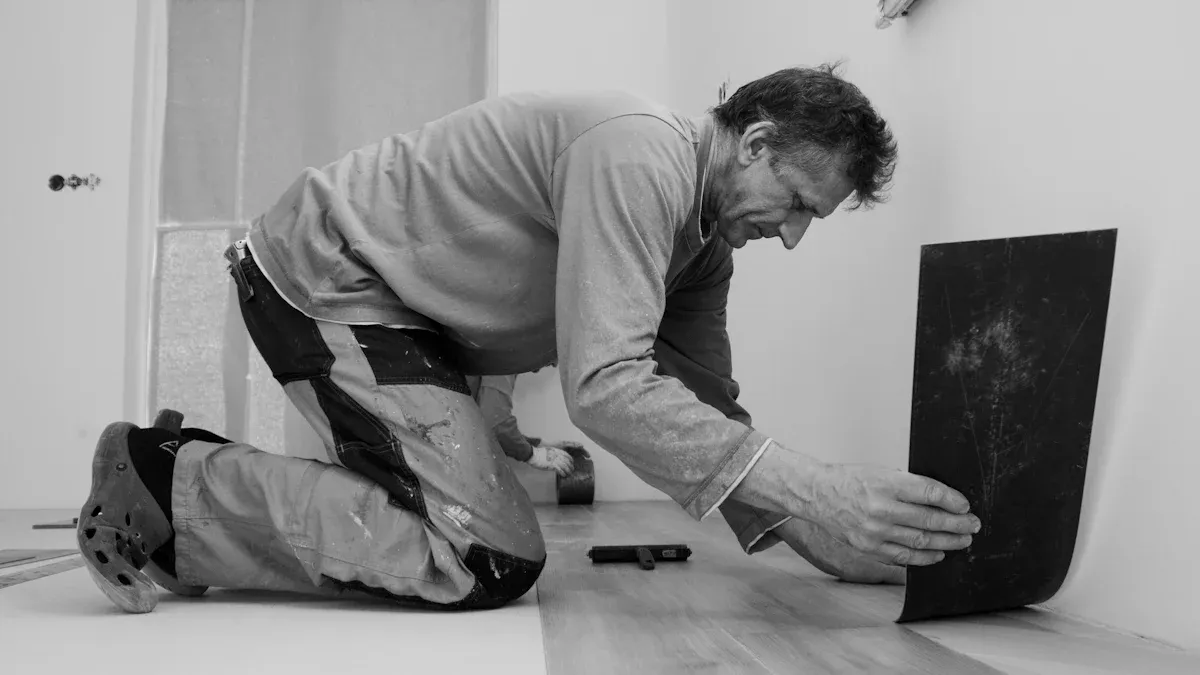
You can install loose lay vinyl sheet flooring with a few simple steps. This method does not require glue across the entire floor, so you can finish the job quickly. Here is a step-by-step guide that many professional installers follow:
- Roll out the vinyl sheet in your chosen area. Make sure it sits square and let the extra material run up the wall.
- Use a sharp utility knife to cut around corners, pipes, or toilets. Leave a small gap (about 0.31cm to 0.63cm) between the sheet and the subfloor. This helps the flooring stay flat.
- Trim the extra vinyl along the walls. Keep the expansion gap recommended by the manufacturer.
- For the modified loose lay method, apply double-sided vinyl tape around the room’s edge. Press the tape firmly to the subfloor.
- Unroll the vinyl sheet onto the tape, working section by section. Press down to make sure it sticks.
- In areas with moisture, apply silicone sealant around the edges. This step keeps water from getting under the flooring.
- Use a 100-pound floor roller to press the vinyl sheet down. This helps the flooring bond well to the subfloor.
Note: You usually have only one large seam with this method. If you need more seams, you may need a different installation process.
You need a few tools for this job: a sharp utility knife, double-sided vinyl tape, silicone sealant, and a heavy floor roller. Always prepare your subfloor before you start. If you skip this step, you might see lifting or curling at the edges. Problems like moisture or old adhesive can cause the flooring to fail. If you see small lifted edges, you can fix them with adhesive and weight. For bigger problems, you may need a professional.
Traditional Vinyl Sheet Flooring Installation Steps
Traditional vinyl sheet flooring uses a more detailed installation process. You need to follow each step carefully for the best results:
- Learn about the specific installation process for your vinyl flooring product. Check the room for moisture and look at any fixtures.
- Clear the area. Remove all furniture, appliances, and old flooring if needed.
- Take off baseboards and trim if you want to reuse them.
- Check the subfloor. Make sure it is dry, clean, and flat. Fix any problems before you start.
- Gather your tools and materials. You will need adhesives, cutting knives, double-faced tape, and a 100-pound roller.
- Let the vinyl sheet relax and flatten in the room. This step is called acclimation and helps prevent problems later.
- Cut and fit the vinyl sheet. Follow the instructions for seams and adhesive use.
- After you finish, clean and seal the seams as the manufacturer suggests. Wait for the floor to set before moving furniture back.
- Use the right cleaning products to keep your new flooring in good shape.
You may face some common errors during this installation. The table below shows frequent mistakes and how you can avoid them:
| Common Installation Errors | How to Avoid Them |
|---|---|
| Skipping subfloor preparation | Clean, dry, and level the subfloor. Remove debris and old adhesive. Use leveling compound if needed. |
| Incorrect adhesive use | Use the correct amount. Spread it evenly. Follow the instructions. Test a small patch if unsure. |
| Air bubbles under vinyl | Smooth the vinyl from the center outward. Use a roller to press out air. |
Tip: Always store vinyl rolls upright. This prevents flat marks and keeps the flooring looking even.
DIY Friendliness
Loose lay vinyl sheet flooring is one of the easiest types for you to install yourself. You do not need glue or special locking systems. The weight and backing keep the flooring in place. If you make a mistake, you can lift the sheet and try again. You only need basic tools, so most homeowners can handle this installation process. You should watch for gaps or seams, but you can fix these with patience.
Traditional vinyl sheet flooring is harder for DIY projects. You need to use adhesives and handle large sheets. You must avoid bubbles and wrinkles. If your vinyl has a complex pattern, matching seams can be tricky. Many people find this installation process challenging and hire a professional. If you want a smooth, long-lasting floor, you may want expert help.
If you want a quick update and easy repairs, loose lay vinyl sheet flooring is a great choice for DIY. If you want a permanent, seamless look, traditional vinyl sheet flooring may need a pro.
Tools and Materials Needed
Before you start your flooring project, you need to gather the right tools and materials. The items you choose depend on whether you install loose lay vinyl sheet flooring or traditional vinyl sheet flooring. Having the correct supplies helps you finish the job faster and with fewer mistakes.
Basic Tools for Both Flooring Types
You will use some tools for both types of vinyl sheet flooring. These tools help you measure, cut, and fit the flooring into your space.
- Tape measure: You need this to measure your room and the vinyl sheets.
- Utility knife: Use a sharp blade to cut the vinyl sheets to the right size.
- Straight edge or metal ruler: This tool helps you make straight cuts.
- Pencil or marker: Mark your measurements on the vinyl sheet.
- Safety gloves: Protect your hands when cutting and handling materials.
- Broom or vacuum: Clean the subfloor before you begin.
Tip: Always double-check your measurements before you cut the vinyl. Mistakes can waste material and slow down your installation.
Extra Tools for Loose Lay Vinyl Sheet Flooring
Loose lay vinyl sheet flooring does not need glue for most of the floor. You only need a few extra items to complete the installation.
- Double-sided vinyl tape: Use this tape at the seams and edges to keep the flooring in place.
- 100-pound floor roller: This heavy roller presses the vinyl down and removes air pockets.
- Silicone sealant: Apply this around the edges in wet areas to stop water from getting under the floor.
Extra Tools for Traditional Vinyl Sheet Flooring
Traditional vinyl sheet flooring needs more tools because you use adhesive for the whole floor. You must work carefully to get a smooth finish.
- Acrylic adhesive: This glue holds the vinyl sheet to the subfloor.
- Notched trowel: Use this tool to spread the adhesive evenly.
- Seam sealer: This liquid seals the seams and keeps water out.
- Knee pads: Protect your knees when you work on the floor for a long time.
- Putty knife: Use this to press down edges or fix small bubbles.
Here is a table to help you see which tools you need for each type of flooring:
| Tool/Material | Loose Lay Vinyl Sheet | Traditional Vinyl Sheet |
|---|---|---|
| Tape measure | ✅ | ✅ |
| Utility knife | ✅ | ✅ |
| Straight edge/ruler | ✅ | ✅ |
| Double-sided tape | ✅ | ❌ |
| Acrylic adhesive | ❌ | ✅ |
| Notched trowel | ❌ | ✅ |
| 100-pound roller | ✅ | ✅ |
| Silicone sealant | ✅ | ✅ |
| Seam sealer | ❌ | ✅ |
| Knee pads | ❌ | ✅ |
| Putty knife | ❌ | ✅ |
Note: Always read the manufacturer’s instructions for your flooring. Some brands may suggest special tools or extra steps for installation.
When you have all your tools and materials ready, you can focus on a smooth installation. Good preparation makes the work easier and helps your new floor last longer.
Durability and Performance
Wear and Tear Resistance
When you choose vinyl flooring, you want it to stand up to daily life. Both loose lay vinyl sheet flooring and traditional vinyl sheet flooring offer good resistance to scratches and dents. The top layer protects against scuffs from shoes and moving furniture. If you have pets or kids, you will notice that these floors handle most accidents well. Luxury vinyl flooring has a thicker wear layer, which means it can last longer in busy homes. Traditional sheet vinyl usually lasts up to 15 years with proper care. You can expect both types to keep their look in high-traffic areas, but luxury vinyl options may give you extra durability.
Water and Moisture Resistance
Vinyl flooring is known for its ability to resist water. Both loose lay vinyl sheet flooring and traditional vinyl sheet flooring can handle spills and moisture. You can use them in kitchens, bathrooms, and laundry rooms without worry. However, these floors are not fully waterproof. If water sits on the seams for a long time, it can seep through and cause damage. You should clean up spills quickly to protect your floor. SPC flooring, which is a different type, is completely waterproof because of its stone-like core. For most homes, vinyl sheet flooring gives you enough protection against water, but you need to avoid letting water pool on the surface.
Tip: Always check the seams after cleaning. Keeping them sealed helps your flooring last longer in wet areas.
Stability Over Time
You want your flooring to stay flat and smooth for years. Glass-backed and felt-backed sheet vinyl flooring are known for their dimensional stability. These products lie flat and do not shift much, even in busy rooms. Loose lay vinyl flooring uses a special backing that grips the subfloor, so it stays in place without glue. If you install it in high-traffic areas, you can add tape or glue at the edges for extra hold. While there are no direct long-term tests comparing loose lay vinyl sheet flooring to traditional vinyl, both types have a strong reputation for stability. You can trust them to keep their shape and look good over time.
Maintenance and Cleaning
Day-to-Day Care
You will find that both loose lay vinyl sheet flooring and traditional vinyl sheet flooring offer easy maintenance. These floors work well for busy homes because you do not need special products or tools. For daily cleaning, follow these simple steps:
- Sweep the floor each day with a soft broom or use a vacuum without a brush roll. This removes dirt, dust, and crumbs.
- Always dry clean before you use any water. This keeps grit from scratching the vinyl surface.
- Wipe up spills right away with a damp mop or rag and plain water.
If you want a deeper clean, you can use a neutral pH cleaner. Mop the floor with this solution, but do not flood the surface. After mopping, dry the floor with a clean towel or let it air dry. Fans can help speed up drying. These steps help keep your vinyl looking new and make it a true low-maintenance flooring choice.
Tip: Avoid using harsh chemicals or abrasive pads. These can damage the finish and shorten the life of your floor.
Dealing with Spills and Stains
Spills happen in every home. Vinyl flooring makes cleaning up easy. When you see a spill, act fast. Use a damp cloth or mop to wipe up liquids. For sticky spots or stains, use a water-based cleaner or denatured alcohol on a clean cloth. Gently rub the area and buff it dry. If the stain is stubborn, you can use a non-abrasive scrubbing pad. Repeat the process if needed.
Always follow safety rules during cleaning. Place wet floor signs if the area is slippery. Never mix bleach with ammonia or acidic cleaners. Quick action keeps your floor safe and helps with long-term maintenance.
Repair and Replacement
Vinyl flooring stands up well to daily use, but sometimes you may need to repair a small area. If you see a scratch or gouge, you can use a vinyl repair kit. These kits match the color and texture of your floor. For loose lay vinyl, you can lift and replace a damaged section with ease. Traditional vinyl sheet flooring may need a patch or professional help for larger repairs.
If a section wears out or gets stained beyond cleaning, you can replace just that part. This makes vinyl a smart choice for easy maintenance and long-term value.
Note: Regular cleaning and quick repairs help your floor last longer and look its best.
Cost Comparison
Material Costs
When you shop for new flooring, you want to know how much you will spend on materials. Both loose lay vinyl sheet flooring and traditional vinyl sheet flooring offer a budget-friendly option for your home. You can expect to pay between $1 and $2 per square foot for either type. Loose lay vinyl sheet flooring sometimes costs a little more because of its special backing and thicker wear layer. Traditional vinyl sheet flooring usually falls at the lower end of the range. If you want to stick to your budget, both types give you affordable choices.
Here is a quick look at average material prices:
| Flooring Type | Average Material Cost (per sq. ft.) |
|---|---|
| Traditional Vinyl Sheet | $1.00 – $1.50 |
| Loose Lay Vinyl Sheet | $1.00 – $2.00 |
Tip: Always check the thickness and quality before you buy. Higher quality vinyl may last longer and save you money over time.
Installation Costs
You also need to think about installation when planning your budget. Traditional vinyl sheet flooring often needs glue and careful fitting. This can make installation more labor-intensive. You might pay up to $2 per square foot for professional installation. Loose lay vinyl sheet flooring is easier to install, so you may save on labor if you do it yourself. If you hire a pro, the cost is similar to traditional vinyl, but you might finish the job faster. DIY installation helps you keep your project within budget.
Long-Term Value
You want your flooring to last and give you good value for your money. Standard vinyl sheet flooring lasts about 10 to 15 years with proper care. It can get dents or scratches more easily. Loose lay vinyl sheet flooring, which is a luxury vinyl, can last up to 25 years. Its thicker wear layer and better materials make it more durable. Both types are a budget-friendly option, but loose lay vinyl gives you better long-term value. Vinyl flooring does not add much resale value to your home, but it helps you stay on budget and enjoy a good-looking floor for many years.
Note: If you want the best value for your budget, choose loose lay vinyl sheet flooring for its longer lifespan and easy repairs.
Pros and Cons
Loose Lay Vinyl Sheet Flooring Pros and Cons
You will find that loose lay vinyl sheet flooring offers many benefits, but it also has some drawbacks. The table below helps you see the main pros and cons at a glance:
| Aspect | Pros | Cons |
|---|---|---|
| Affordability | You get an affordable flooring option. | |
| Waterproof | This flooring is fully waterproof, so you can use it in kitchens, bathrooms, and laundry. | |
| Maintenance | You will find it easy to clean and maintain. | |
| Style Variety | You can choose from a wide variety of colors and styles, including photo-realistic looks. | |
| Installation | DIY-friendly installation. You do not need glue for most jobs. | The floor can shift or move more than glued-down vinyl. |
| Durability | Prone to cuts, scratches, and dents, especially in busy areas or homes with pets. | |
| Subfloor Requirements | Needs a flat, level subfloor. Dips or bumps will show through the vinyl. | |
| Sunlight & Heat Impact | Direct sunlight or heat can cause fading or damage over time. | |
| Furniture Protection | Heavy furniture may scratch the surface. Use felt or plastic protectors to prevent marks. |
Tip: If you want easy installation and a variety of colors and styles, loose lay vinyl sheet flooring gives you flexibility. Watch out for shifting and protect your floor from sharp objects.
Traditional Vinyl Sheet Flooring Pros and Cons
Traditional vinyl sheet flooring also brings its own set of pros and cons. You will notice that this flooring works well for large spaces. The seamless look makes your room feel bigger and cleaner. You can pick from many styles and colors, so matching your home is easy. The flooring is budget-friendly and simple to clean. It resists water, so you can use it in kitchens and bathrooms. You will also enjoy the sound-absorbing quality, which makes rooms quieter.
However, there are some drawbacks. Installation can be tricky and often needs a professional. The flooring is less durable than vinyl plank, so dents and punctures may happen in high-traffic areas. Too much sunlight or heat can damage the surface. If you want a floor that lasts longer in busy spaces, you may need to look at other options.
Remember: Both types of vinyl flooring offer a variety of colors and styles, but you should weigh the benefits and drawbacks before you choose.
Best Use Cases

High Traffic Areas
You want a floor that stands up to busy spaces. Both loose lay vinyl sheet flooring and traditional vinyl sheet flooring work well in high-traffic areas. Loose lay vinyl handles rolling carts, hospital beds, and heavy furniture without tearing. The special backing keeps the floor stable, even when people walk or move items often. Traditional vinyl sheet flooring, when glued down, also resists wear from constant foot traffic. You can choose from many styles and colors to match your space. These options give you the benefits of durability and easy cleaning. If you need a quick installation, loose lay vinyl lets you use the room right away, which is helpful in places that cannot close for long.
Tip: For schools, hospitals, or busy hallways, select a heavy-duty vinyl with a thick wear layer for the best results.
Wet Areas (Kitchens, Bathrooms)
You need water-resistant flooring in kitchens and bathrooms. Building codes and experts do not recommend carpet or wood-based materials in these rooms because they can get damaged by moisture and grow mold. Vinyl flooring, including both loose lay and traditional sheet types, is a top choice for wet areas. It resists water and is easy to clean. You can install it wall to wall, seal the edges, and protect your home from water damage. Other good options include ceramic tile, stone, and sealed concrete. Vinyl gives you many styles and colors, so you can match your design while keeping your floors safe from spills.
Note: Always seal around plumbing and use water-resistant baseboards to keep your floor in good shape.
Temporary or Rental Spaces
Loose lay vinyl sheet flooring offers special benefits for renters and people who like to change their decor. You can install it directly over a clean floor without glue or staples. The backing grips the subfloor, so you do not damage the surface underneath. This makes it easy to remove or replace when you move out or want a new look. Traditional vinyl sheet flooring uses glue, so it is harder to remove and better for permanent spaces. Loose lay vinyl is popular for events, studios, and rental homes because you can roll it out and pick it up without leaving marks.
- You save time and money on installation.
- You avoid damage to the original floor.
- You can update your space with new styles whenever you want.
If you rent or need a quick flooring change, loose lay vinyl gives you flexibility and convenience.
Permanent Installations
When you want a floor that lasts for many years, you need to think about permanent installations. Traditional vinyl sheet flooring works well for this purpose. You glue it down to the subfloor, which creates a strong bond. This method keeps the floor in place, even in busy rooms. You do not have to worry about shifting or curling at the edges.
Loose lay vinyl sheet flooring can also work for permanent spaces, but you must follow the manufacturer’s instructions. Some brands allow you to use extra adhesive or tape at the seams and edges. This step adds more stability. If you want to install cabinets or heavy furniture, traditional vinyl sheet flooring gives you better support. You can place cabinets right on top of the glued-down floor. This makes it a good choice for kitchens, bathrooms, and laundry rooms.
Here is a quick comparison to help you decide:
| Feature | Loose Lay Vinyl Sheet Flooring | Traditional Vinyl Sheet Flooring |
|---|---|---|
| Glue Required | No (except seams/edges) | Yes (full spread) |
| Cabinets on Top | Not recommended | Allowed |
| Lifespan | 15-25 years | 10-15 years |
| Best for Permanent Installations | Sometimes | Yes |
Tip: Always check your subfloor before you start. A flat and clean surface helps your flooring last longer.
You should choose traditional vinyl sheet flooring if you want a permanent solution. It gives you a seamless look and stands up to daily use. Loose lay vinyl works best if you want flexibility, but it can serve as a long-term option with the right preparation.
You have two strong options for your next flooring project. Loose lay vinyl sheet flooring gives you fast, easy installation and simple repairs. Traditional vinyl sheet flooring offers a seamless, water-resistant surface that lasts in busy spaces.
| Choose This If You Want… | Loose Lay Vinyl Sheet Flooring | Traditional Vinyl Sheet Flooring |
|---|---|---|
| Quick, DIY installation | ✅ | |
| Seamless look and high durability | ✅ | |
| Easy removal or replacement | ✅ | |
| Permanent, secure flooring | ✅ |
- Pick loose lay vinyl if you rent, want easy updates, or need fast results.
- Choose traditional vinyl sheet flooring for permanent spaces or large, high-traffic rooms.
For most homes, you get great value and easy care with either vinyl sheet flooring.
FAQ
Can you install loose lay vinyl sheet flooring over old vinyl plank flooring?
Yes, you can install loose lay vinyl sheet flooring over old vinyl plank flooring if the surface is clean, flat, and dry. Make sure you remove any debris. This helps your new floor stay smooth and last longer.
How does luxury vinyl plank compare to vinyl sheet flooring for durability?
Luxury vinyl plank offers more durability than most sheet vinyl. You get a thicker wear layer and better resistance to scratches. If you want a floor for high-traffic areas, luxury vinyl plank gives you a strong and long-lasting option.
Is vinyl plank flooring waterproof like luxury vinyl plank?
Vinyl plank flooring and luxury vinyl plank both resist water well. You can use them in kitchens and bathrooms. Luxury vinyl plank often has a waterproof core, which gives you extra protection against spills and moisture.
Can you repair damaged luxury vinyl plank or vinyl sheet flooring?
You can repair luxury vinyl plank by replacing single planks. For vinyl sheet flooring, you may need to patch or replace a section. Both options let you fix small areas without changing the whole floor.




